
 zarkam21:
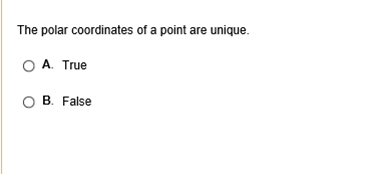
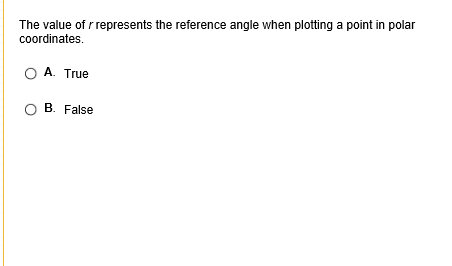
True?
 zarkam21:
@Vocaloid
 Vocaloid:
remember that angles can be re-written by adding/subtracting 2pi so a set of polar coordinates can be written with multiple angle values
zarkam21:
OH okay so false
Vocaloid:
yup
 zarkam21:
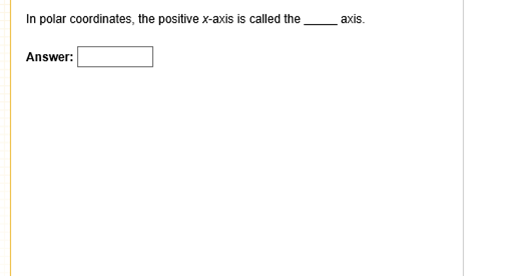
polar?
Vocaloid:
good
 zarkam21:
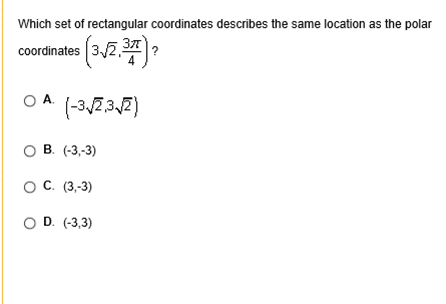
B
Vocaloid:
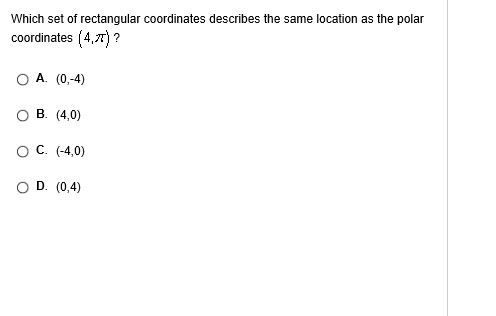
hm. almost. you have (r, theta) to convert to rectangular you need to find (r*cos(theta) , rsin(theta)) as your coordinates
zarkam21:
D
Vocaloid:
good
 zarkam21:
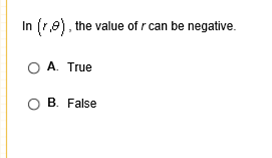
True
Vocaloid:
good
 zarkam21:
F
Vocaloid:
good
 zarkam21:
D
Vocaloid:
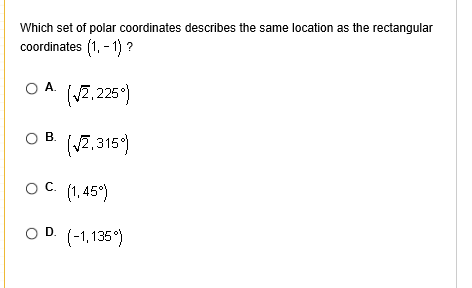
hm. if r = sqrt(x^2 + y^2) what is r?
zarkam21:
sqrt 2
Vocaloid:
good so that eliminates C and D now if theta = arctan(y/x) what is theta?
zarkam21:
-pi/4
Vocaloid:
good, let's convert that to degrees since the answers are all in degrees -pi/4 = -45 degrees, add 360 to that since we don't have -45 as one of the choices
zarkam21:
315
zarkam21:
B
Vocaloid:
awesome
 zarkam21:
C
Vocaloid:
good
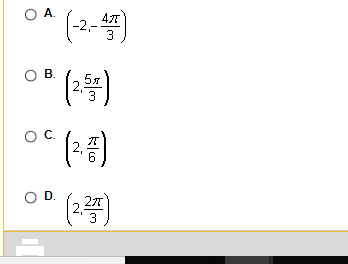 zarkam21:
B
Vocaloid:
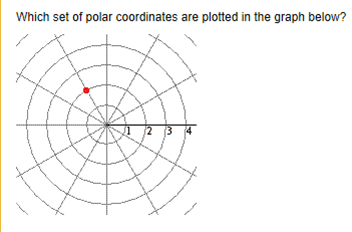
good guess but 5pi/3 is greater than pi so that would put it below the x-axis as a hint, notice how that 90 degree angle (or pi/2 angle) is made of three segments, divide pi/2 by 3, then multiply by the number of segments between the polar axis and the point
Vocaloid:
|dw:1527606160471:dw|
Vocaloid:
|dw:1527606164630:dw|
zarkam21:
pi/6
Vocaloid:
good start, that's one of the segment angle values, then just multiply that by 4 since we have four segments
zarkam21:
2pi/3
zarkam21:
d
Vocaloid:
awesome, well done
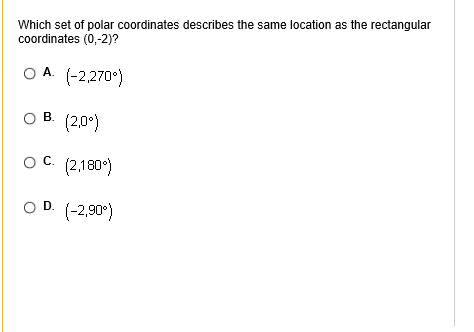 zarkam21:
D
Vocaloid:
good
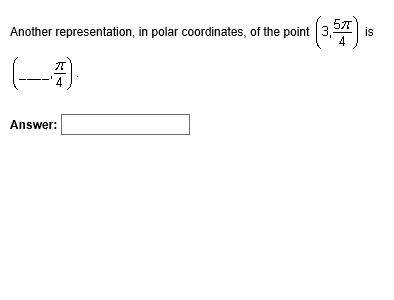 zarkam21:
confused on this
Vocaloid:
to go from positive to negative r values you have to subtract pi from the angle since that's already been done you just have to multiply the r-value by -1
zarkam21:
the r value is the x value?
Vocaloid:
we're in polar so the coordinate given is (r, theta)
zarkam21:
-5pi/4
Vocaloid:
the first number is r so you would multiply 3 by -1 to get the solution
zarkam21:
-3
Vocaloid:
good
Join our real-time social learning platform and learn together with your friends!
 KBaby:
Verse 1 We left our names in the dust of the driveway Watched the old town shrink
KBaby:
Lyrics Generator Use AI to write the lyrics for a song. Suggested Genres: Pop Hip
KBaby:
Verse 1 We left our names in the dust of the driveway Watched the old town shrink
KBaby:
Lyrics Generator Use AI to write the lyrics for a song. Suggested Genres: Pop Hip

 aitexturegenerator:
How are you all handling AI-generated textures for 3D models and game assets without losing the hand-made feel? I've been doing a small stylized environment
aitexturegenerator:
How are you all handling AI-generated textures for 3D models and game assets without losing the hand-made feel? I've been doing a small stylized environment

 Demon25:
Woke up feeling like that girl and that dude well he still aint crap pluse the du
Demon25:
Woke up feeling like that girl and that dude well he still aint crap pluse the du
 playtsec:
how do I get rid of stress from teachers... I just feel like running out the classroom and leaving on my own.
playtsec:
how do I get rid of stress from teachers... I just feel like running out the classroom and leaving on my own.
 JohnnyLFowler0812:
What type of gamer would play something and then get off for a while. Why not sta
JohnnyLFowler0812:
Which is better? Metallica Rap Country R&B hiphop Medal Gospel Chill Which 3 opti
JohnnyLFowler0812:
What type of gamer would play something and then get off for a while. Why not sta
JohnnyLFowler0812:
Which is better? Metallica Rap Country R&B hiphop Medal Gospel Chill Which 3 opti