
 princeevee:
i need some answers checked
 princeevee:
@Vocaloid
 Vocaloid:
good
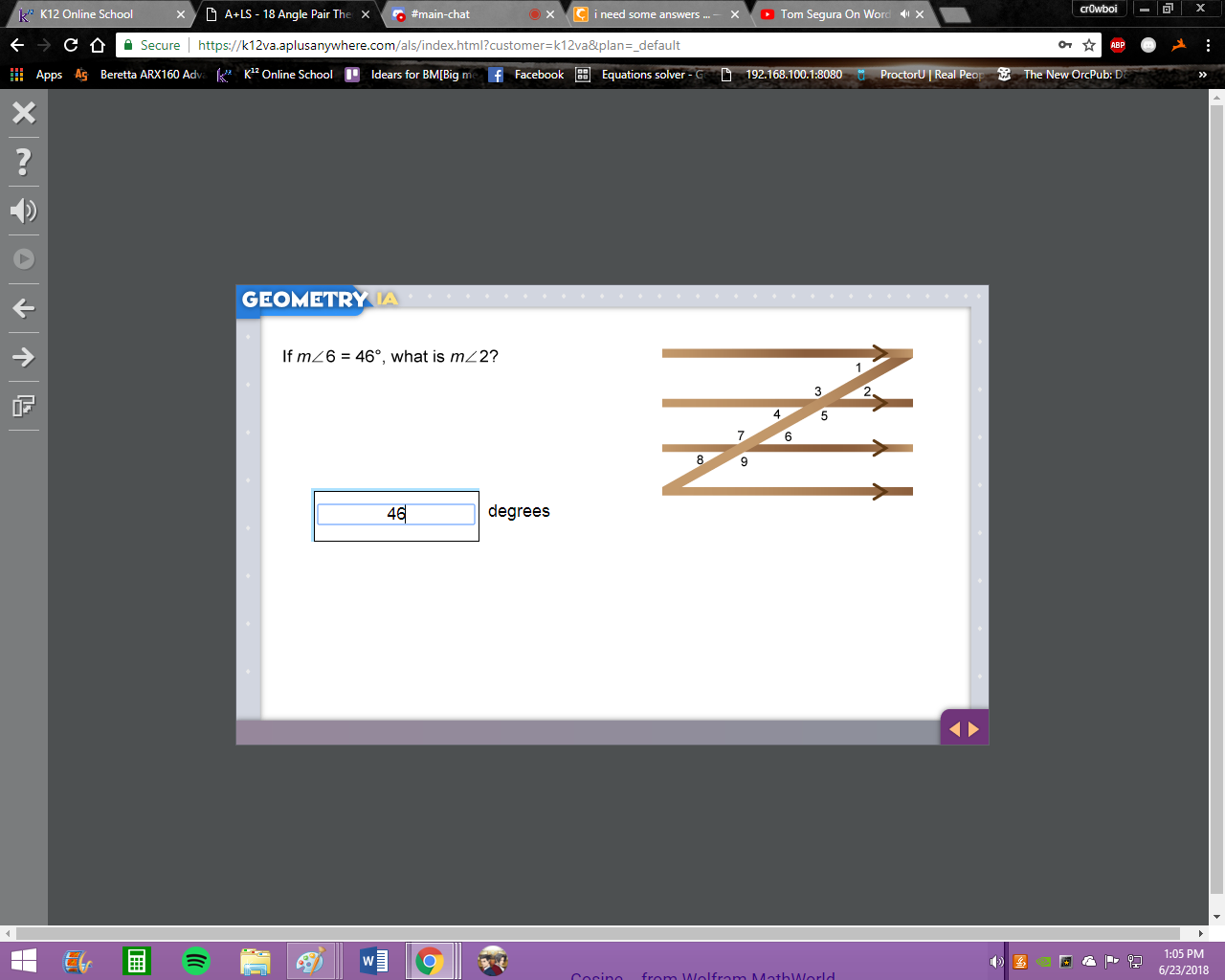 Vocaloid:
good
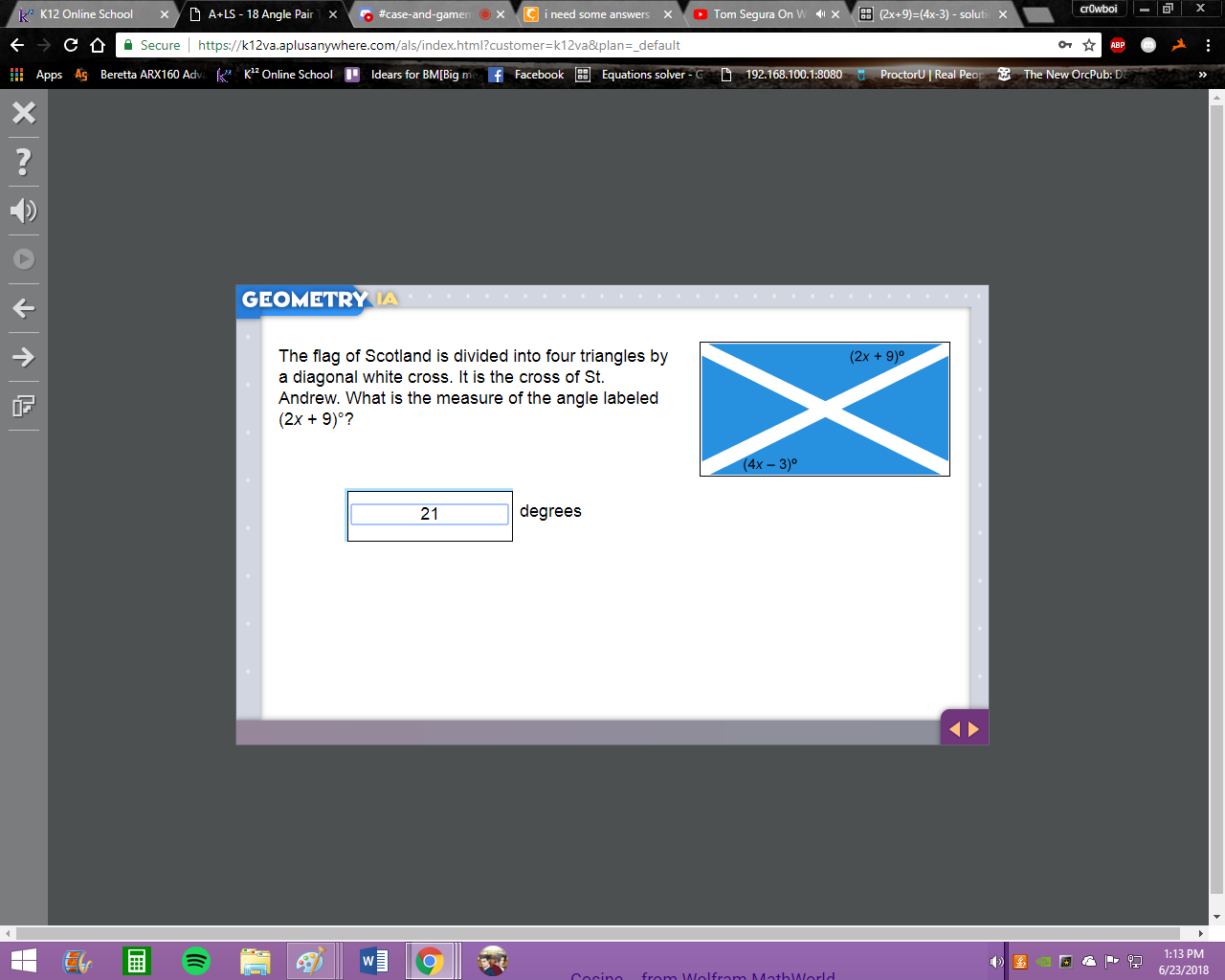 Vocaloid:
good
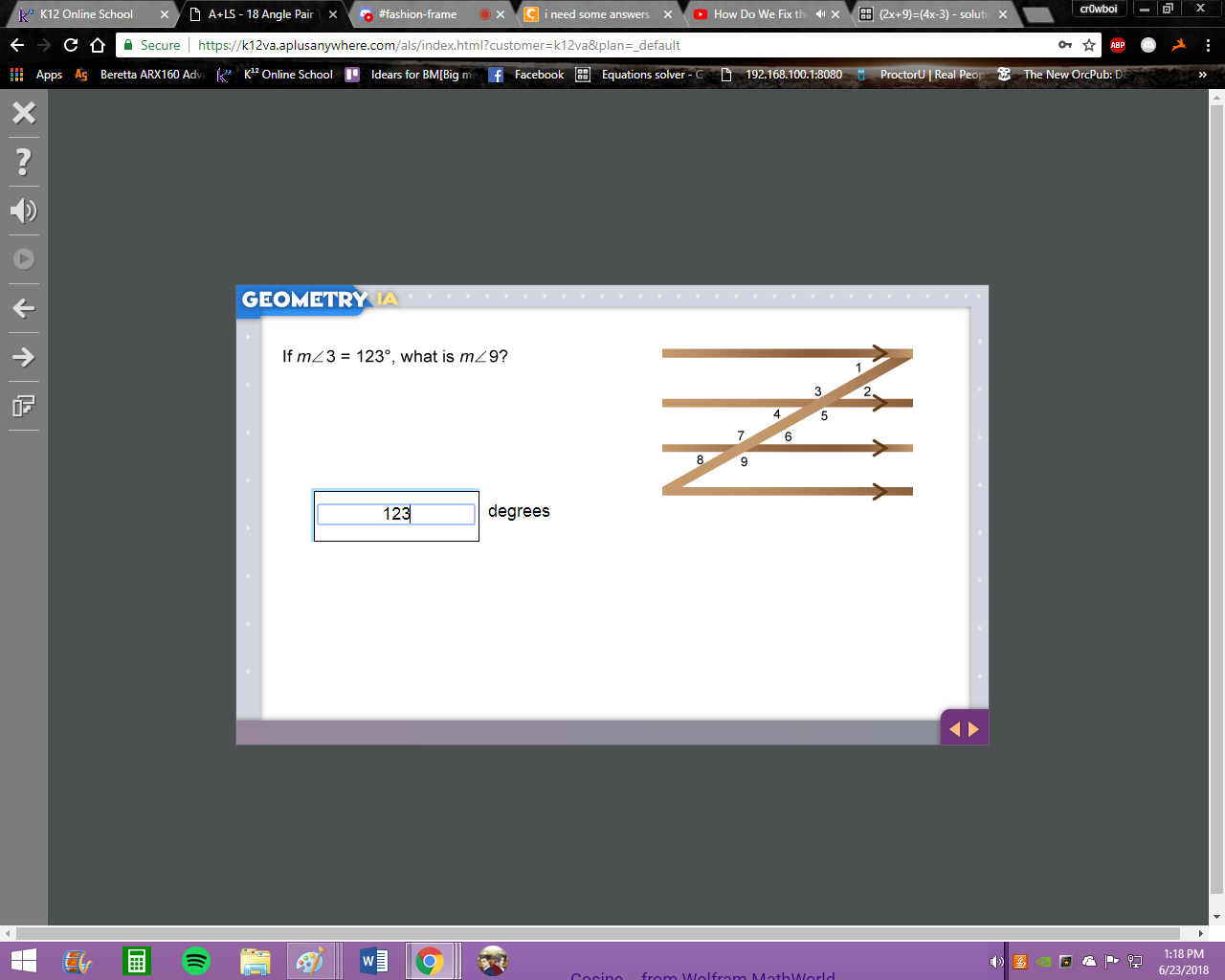 Vocaloid:
good
 Vocaloid:
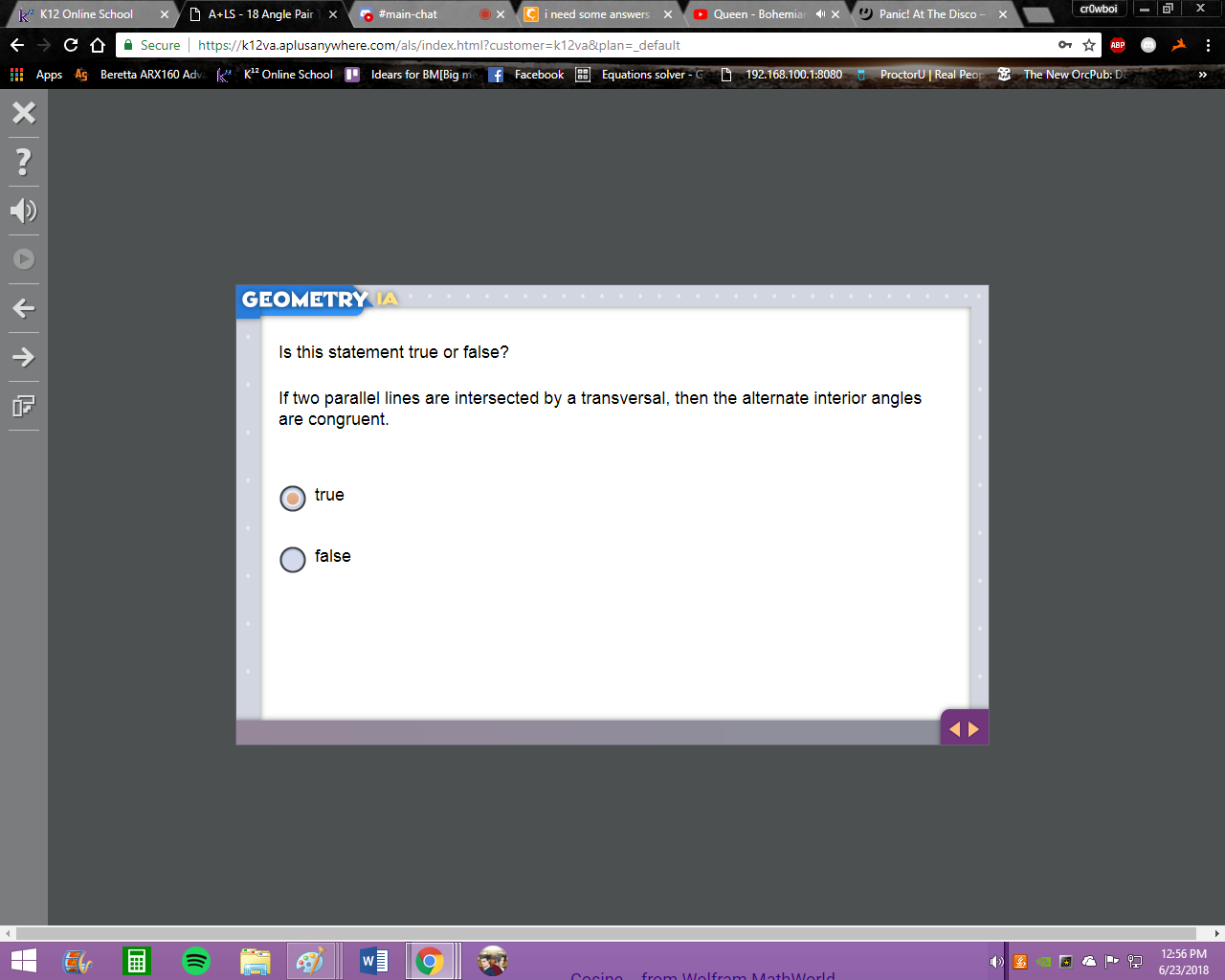
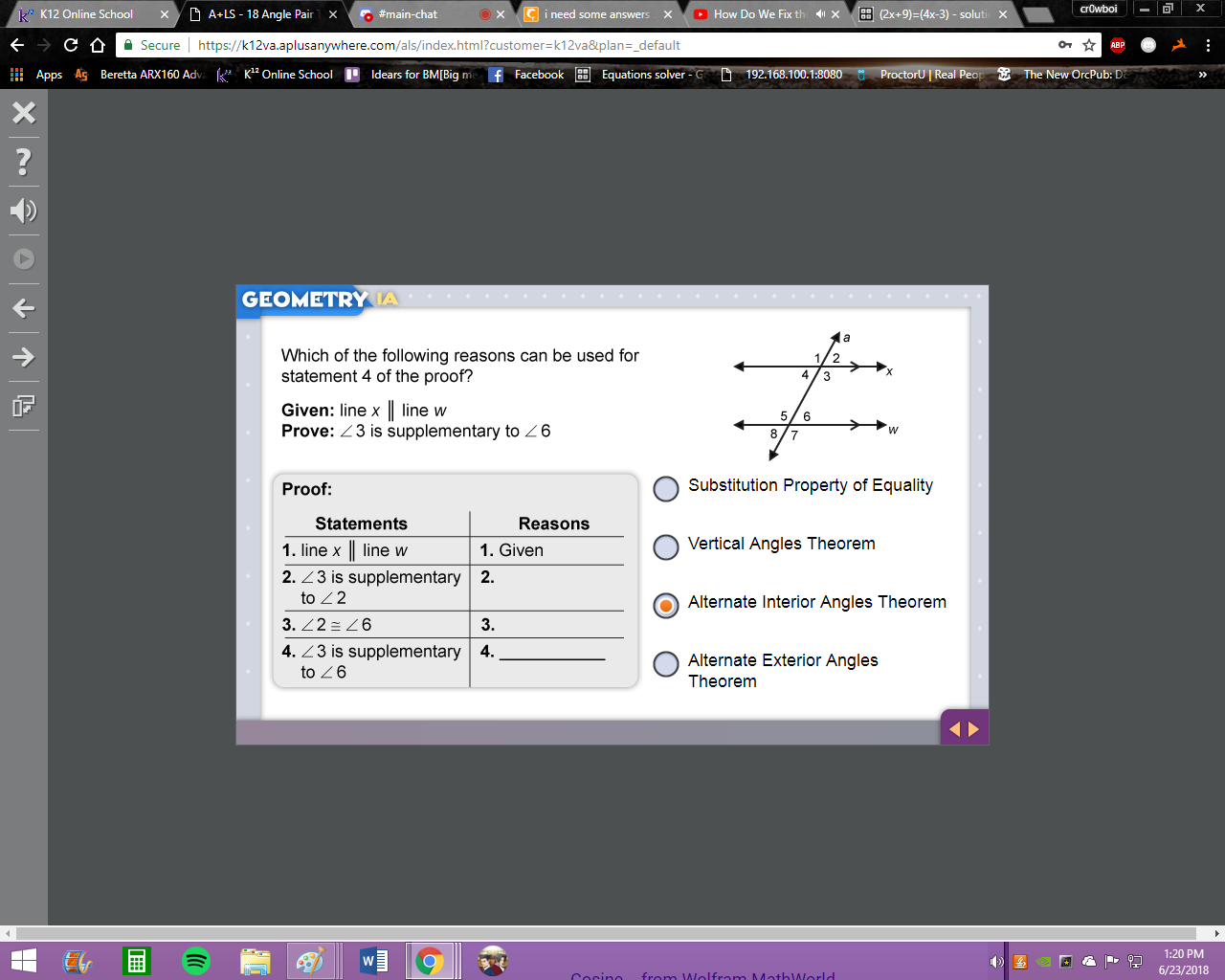
<3 and <6 are not alternate interior angles (otherwise they would be congruent) notice how they ~substituted~ angle 6 for angle 2 into statement 2 to get statement 4
princeevee:
alright
 Vocaloid:
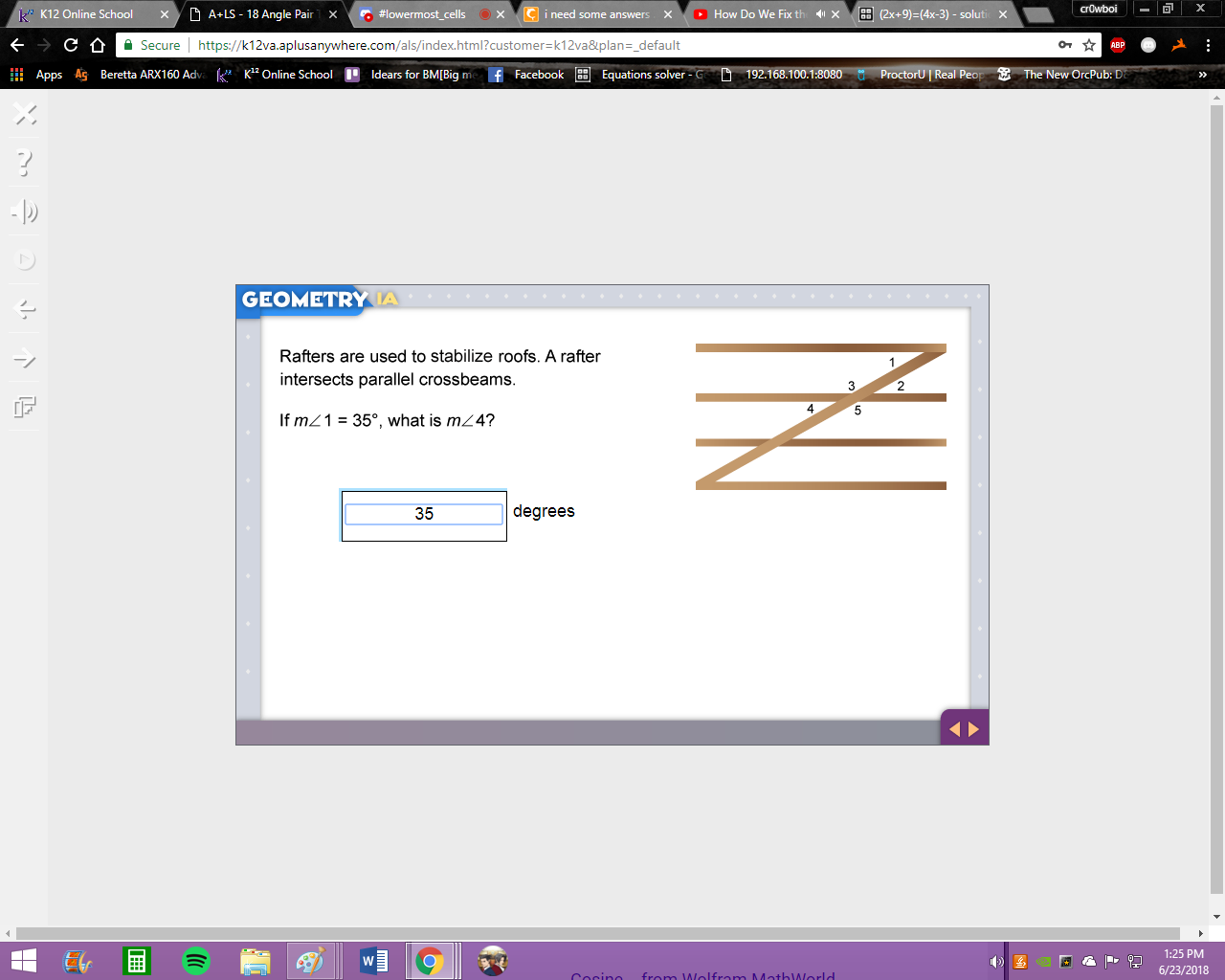
good
 Vocaloid:
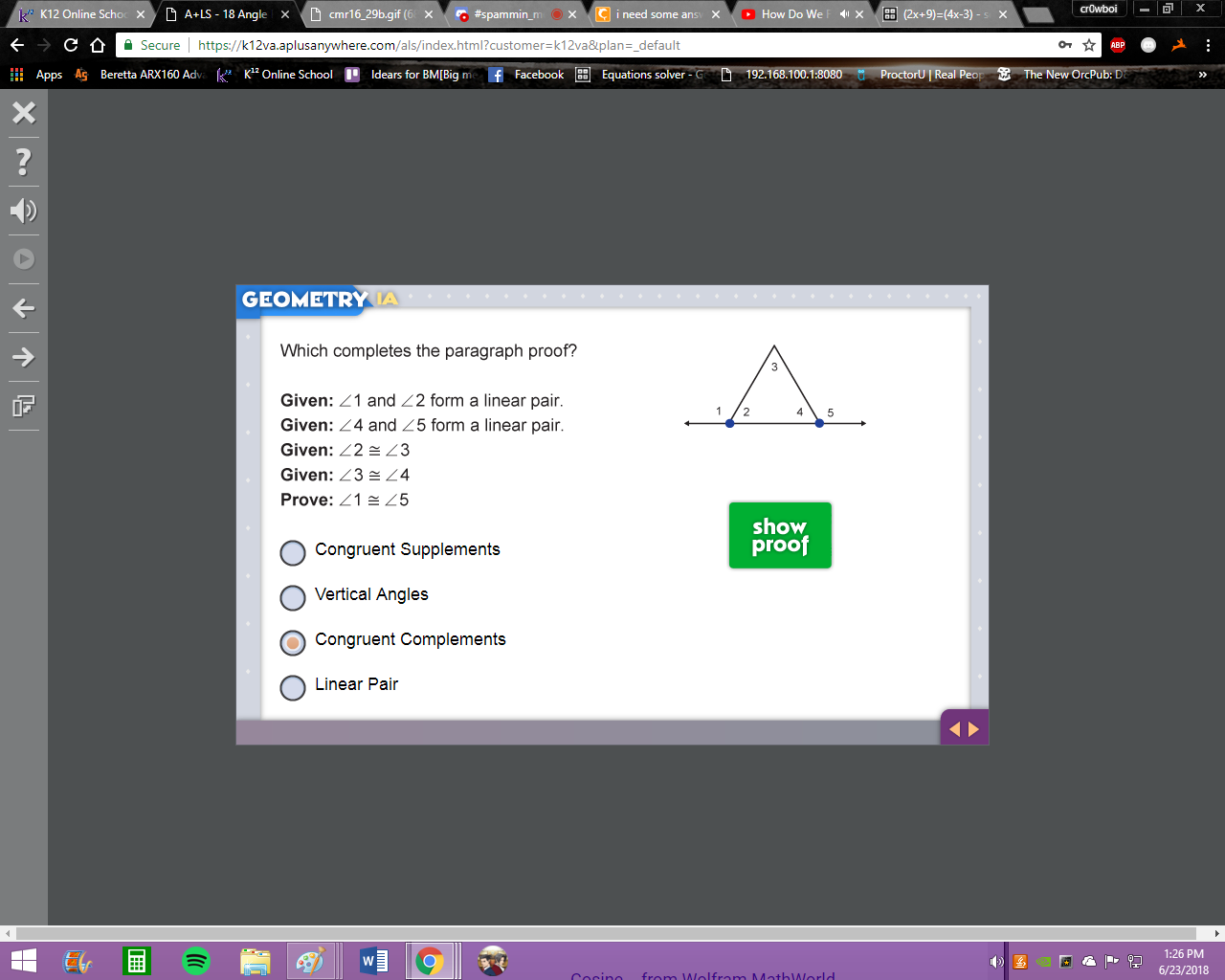
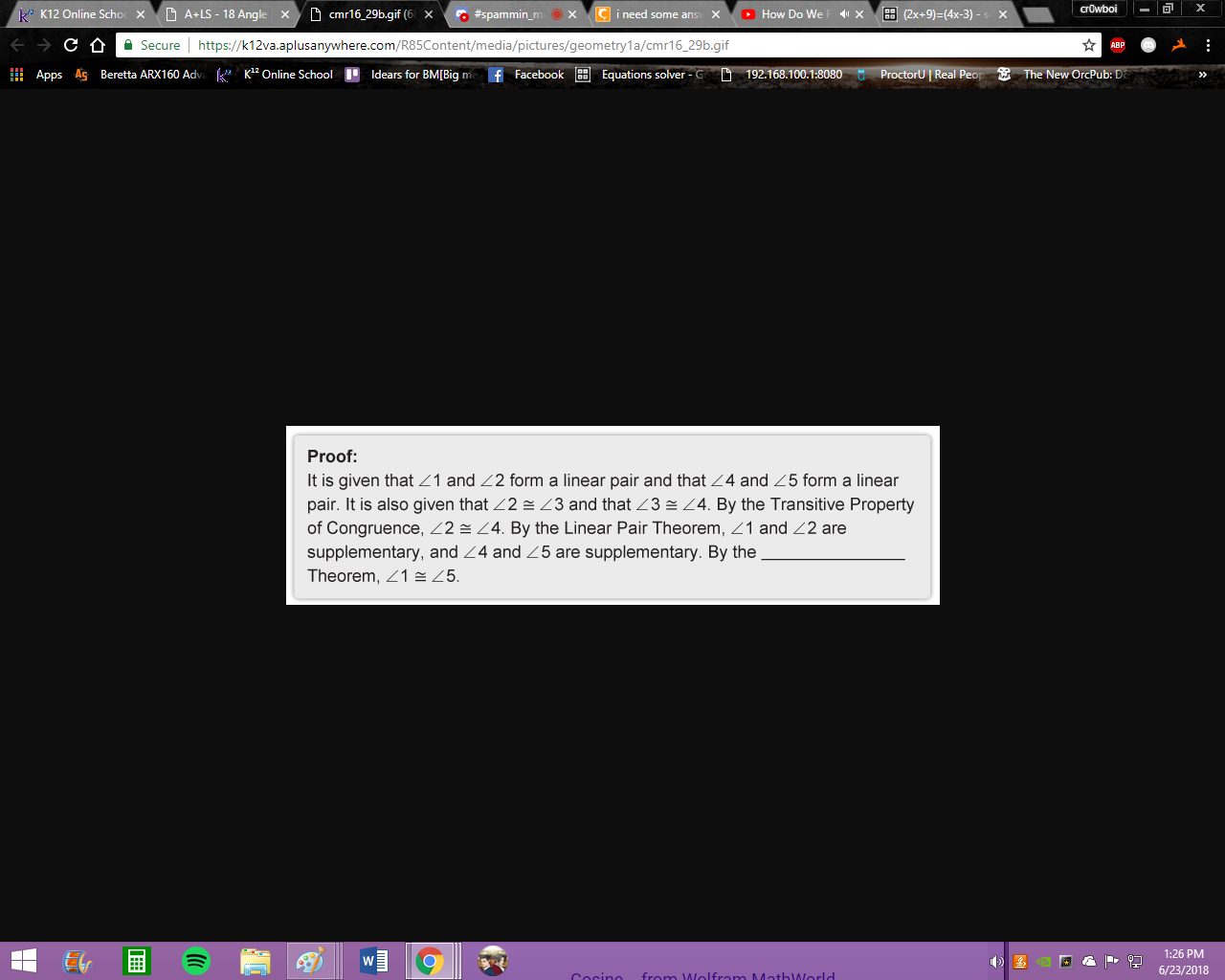
they both add up to 180 not 90 so they're supplements not complements
 Vocaloid:
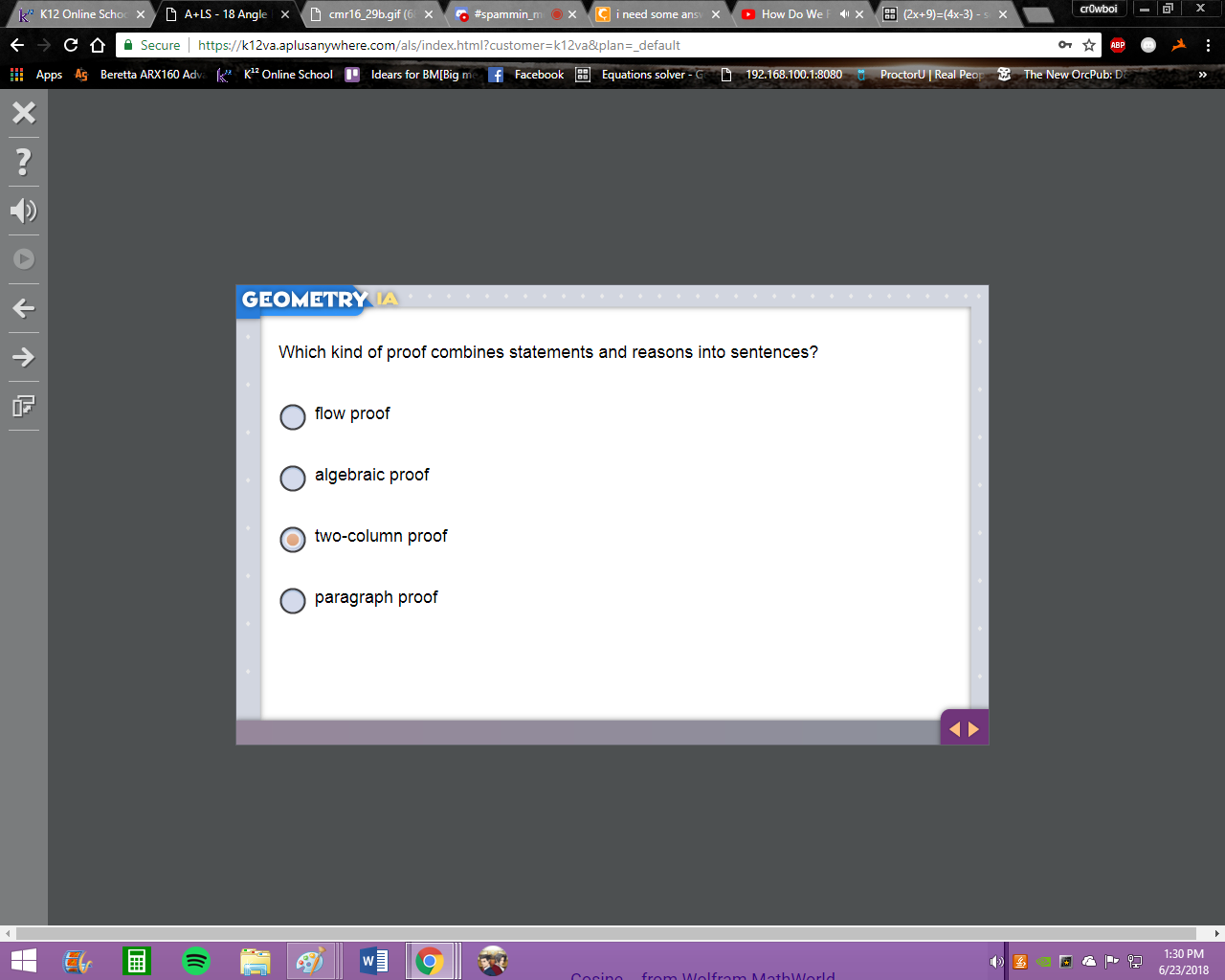
uh I'm not 100% sure but a two column proof doesn't actually use complete sentences a paragraph proof combines the info in a two column proof and puts it into sentences so paragraph proof is a bit better matching the description
 Vocaloid:
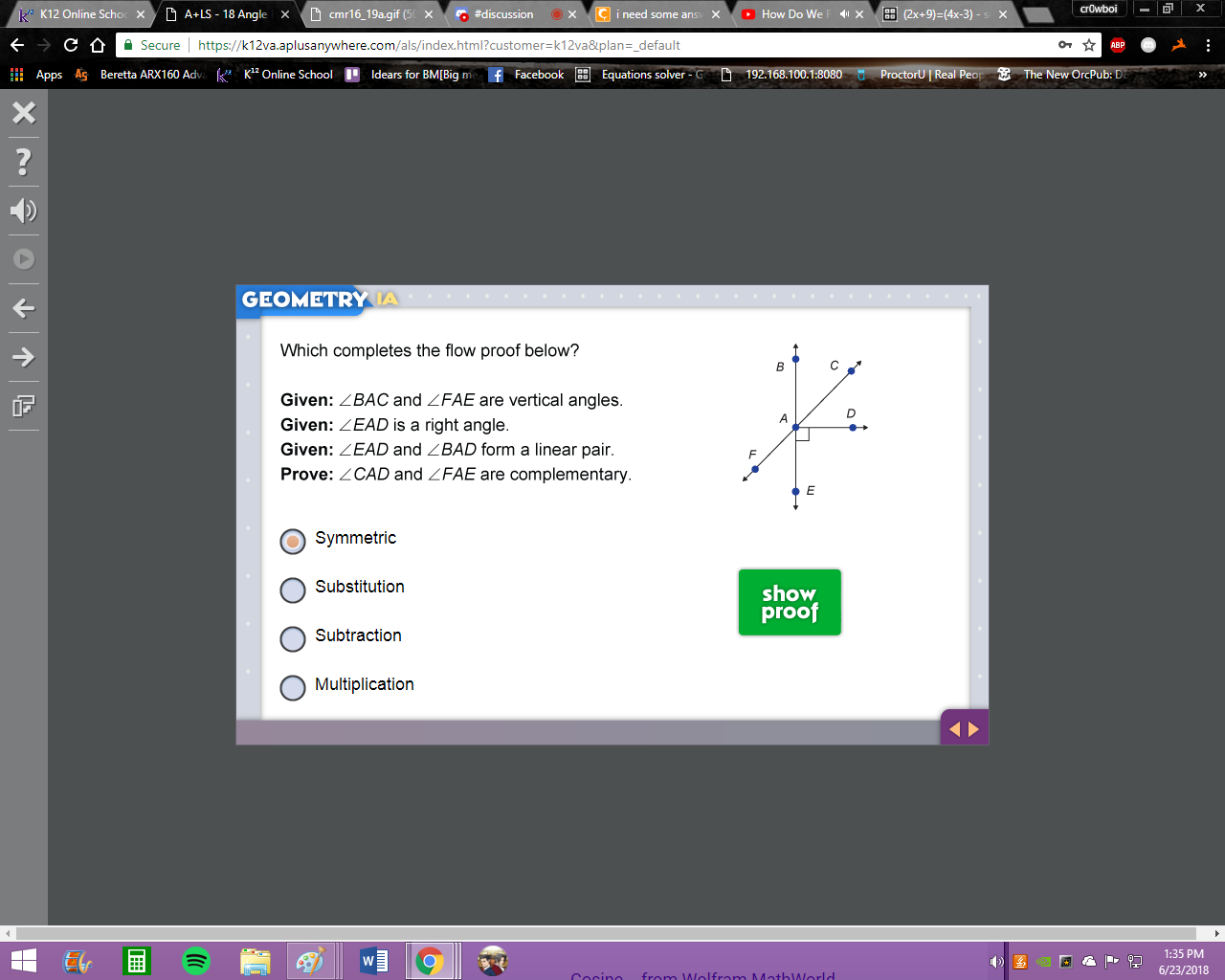
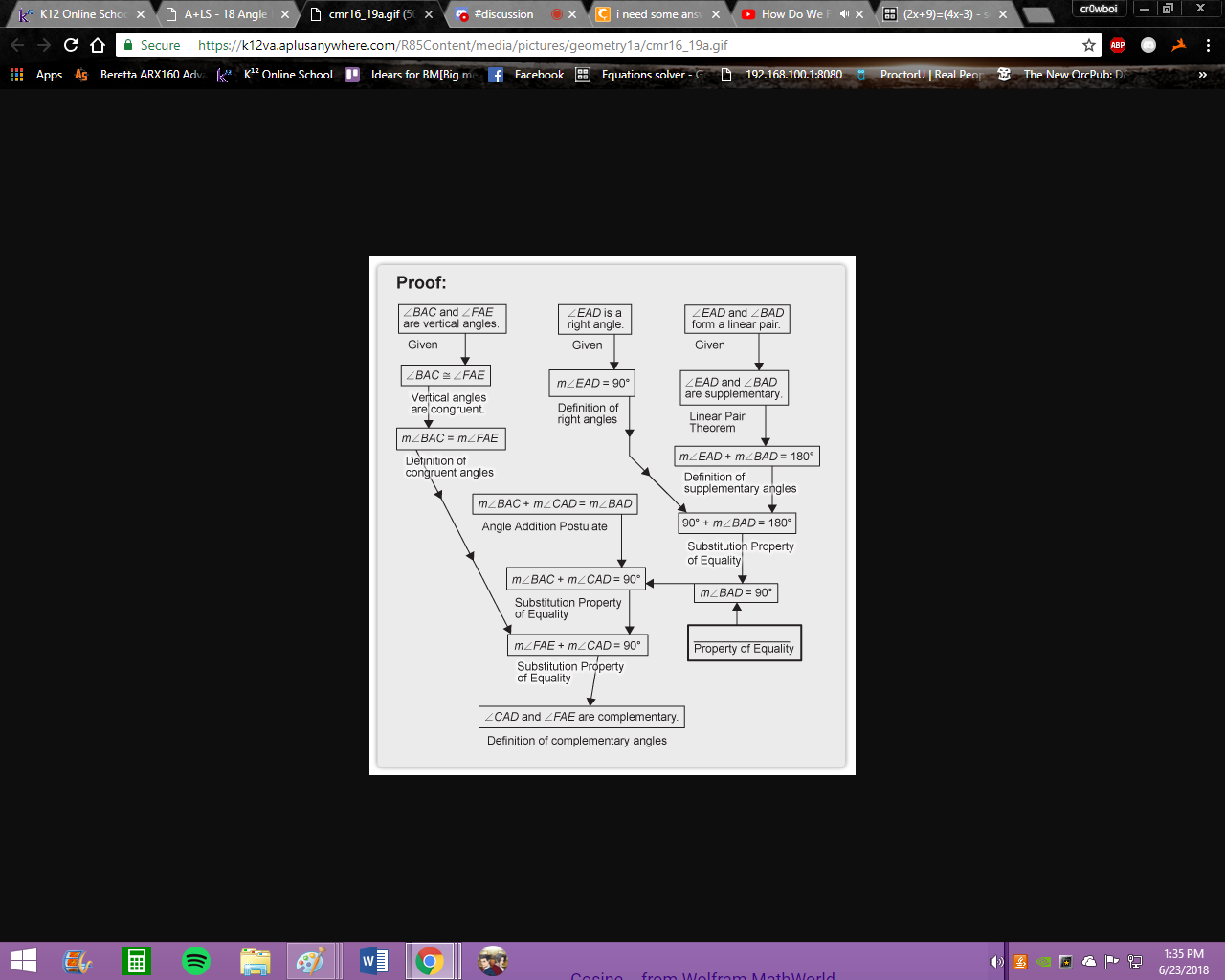
I really wouldn't know this one (not sure how this proof works) but they already used substitution property of equality so I guess symmetric is a better choice
 Vocaloid:
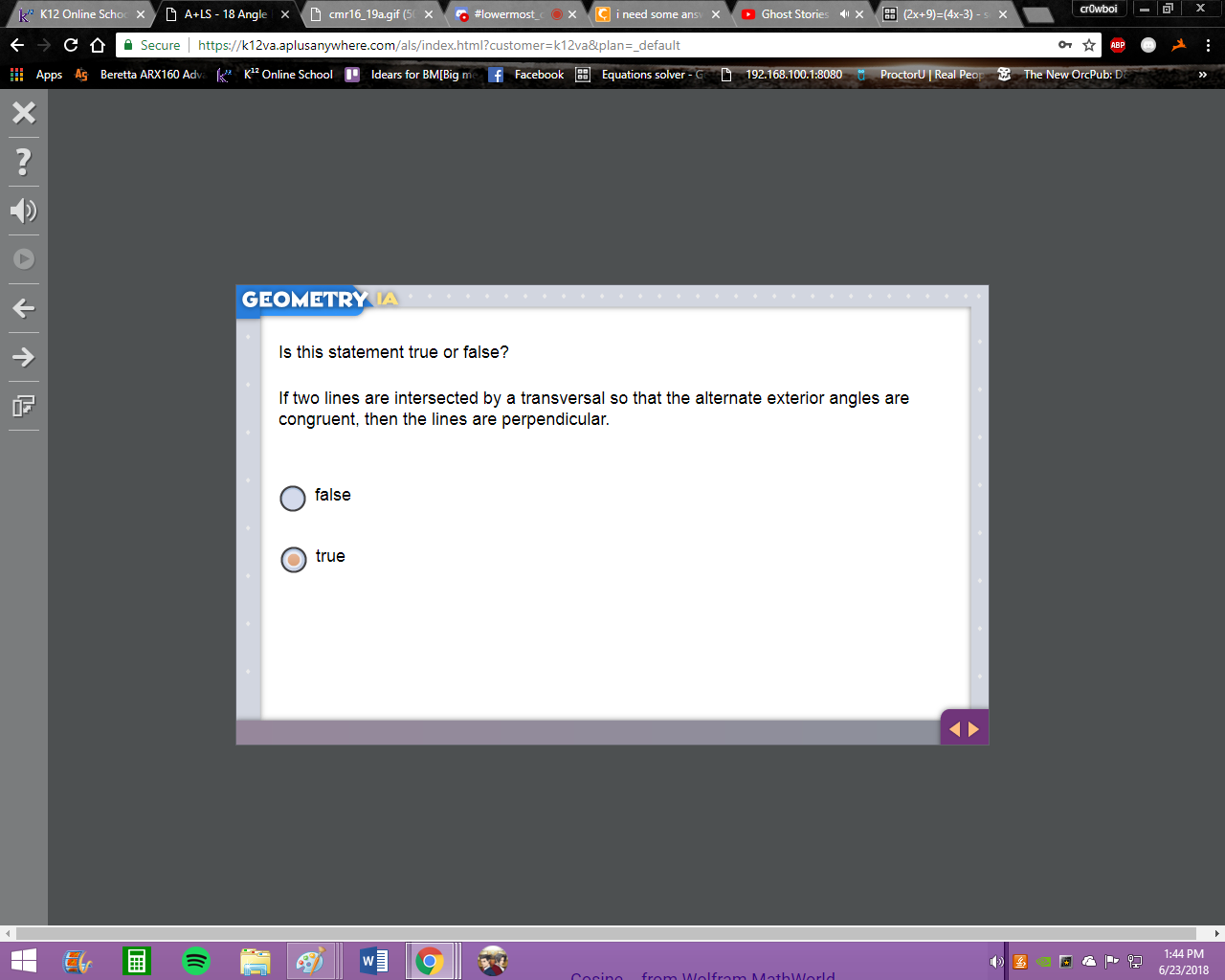
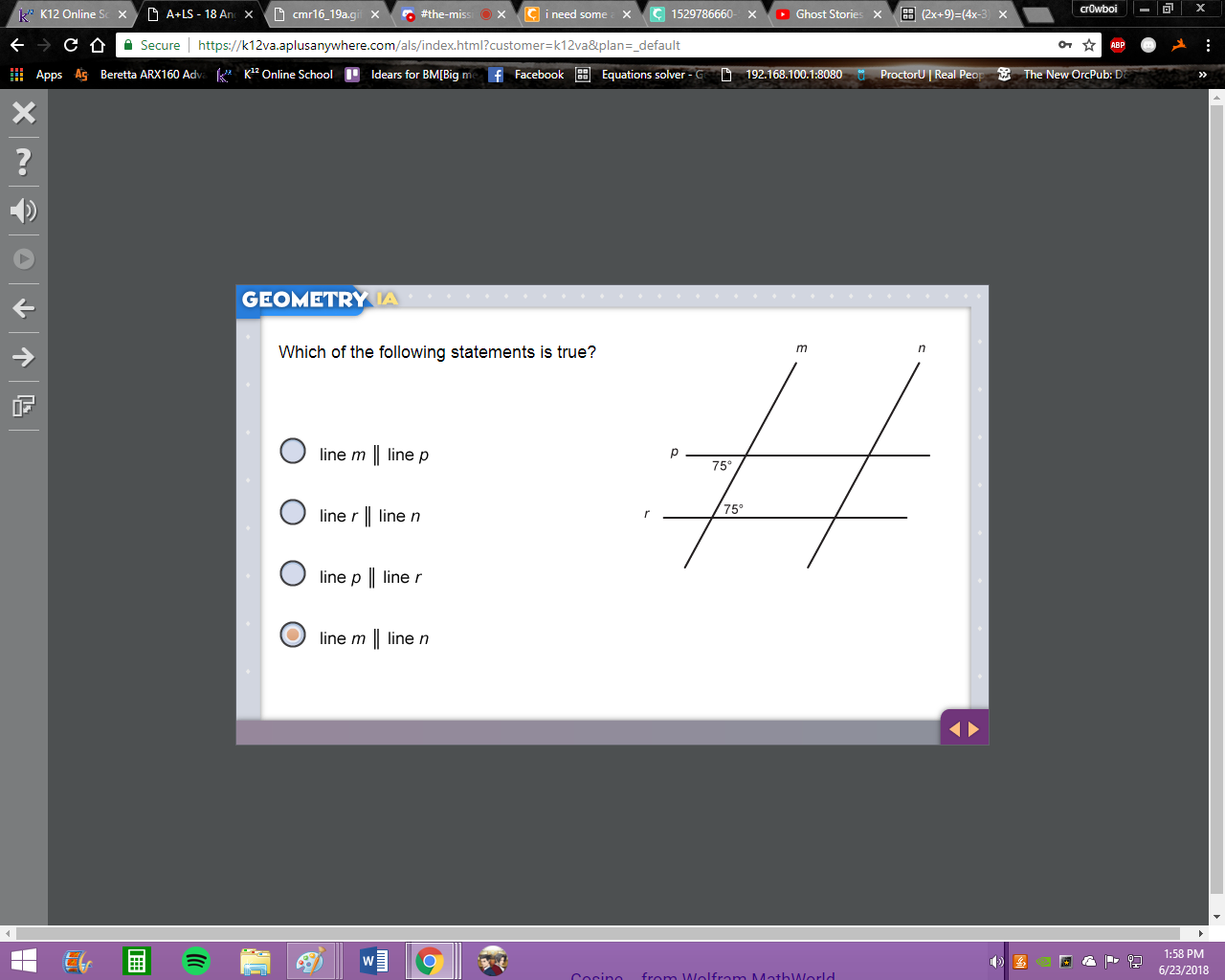
for a transversal the two lines are parallel not perpendicular so false
 jhonyy9:
your answer is right but there is again one right too
Vocaloid:
good
jhonyy9:
@princeevee ok ?
jhonyy9:
@princeevee how you think what chice may be right again ?
jhonyy9:
choice
Vocaloid:
let's let princeeevee have a little time to think/get the next question ready
 Vocaloid:
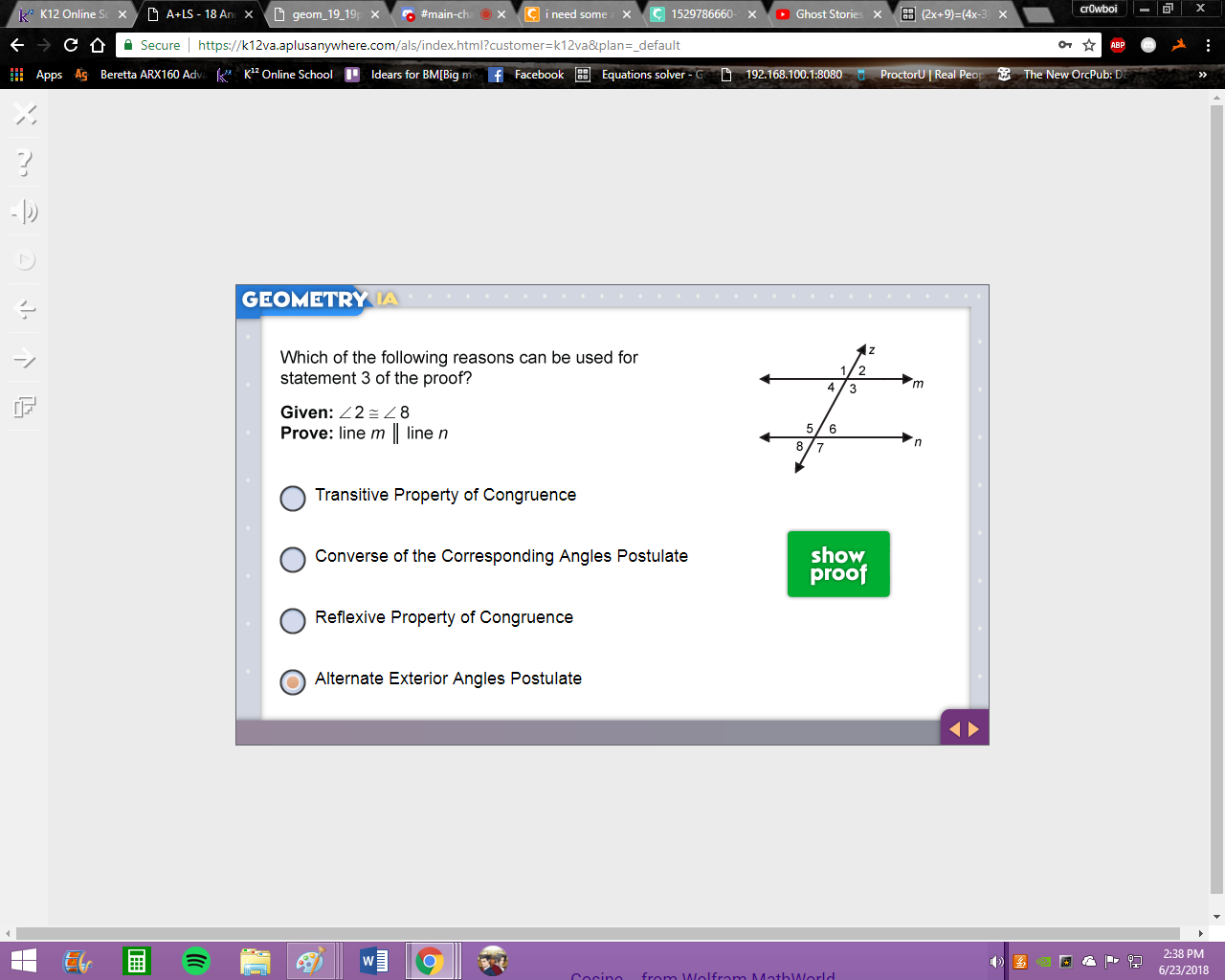
have to be careful with this one 2 and 8 are alternate exterior angles but that's not the logic they used to prove it they used the fact that 2 is congruent to 6 6 is congruent to 8 therefore 2 is congruent to 8 remember what this property is?
princeevee:
B?
Vocaloid:
it's in the form if A then B, if B then C, therefore if A then C which is the transitive property
princeevee:
alright..
 Vocaloid:
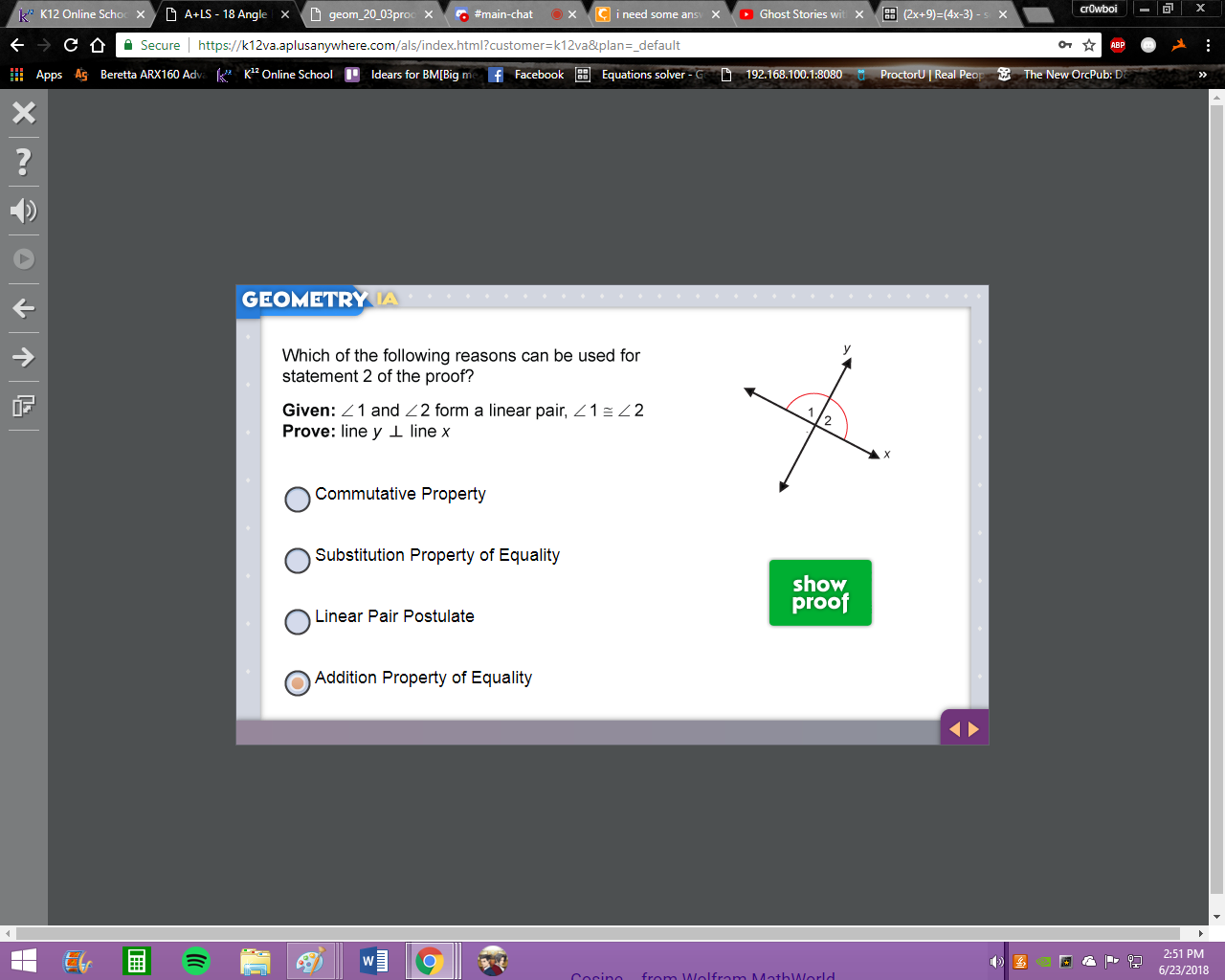
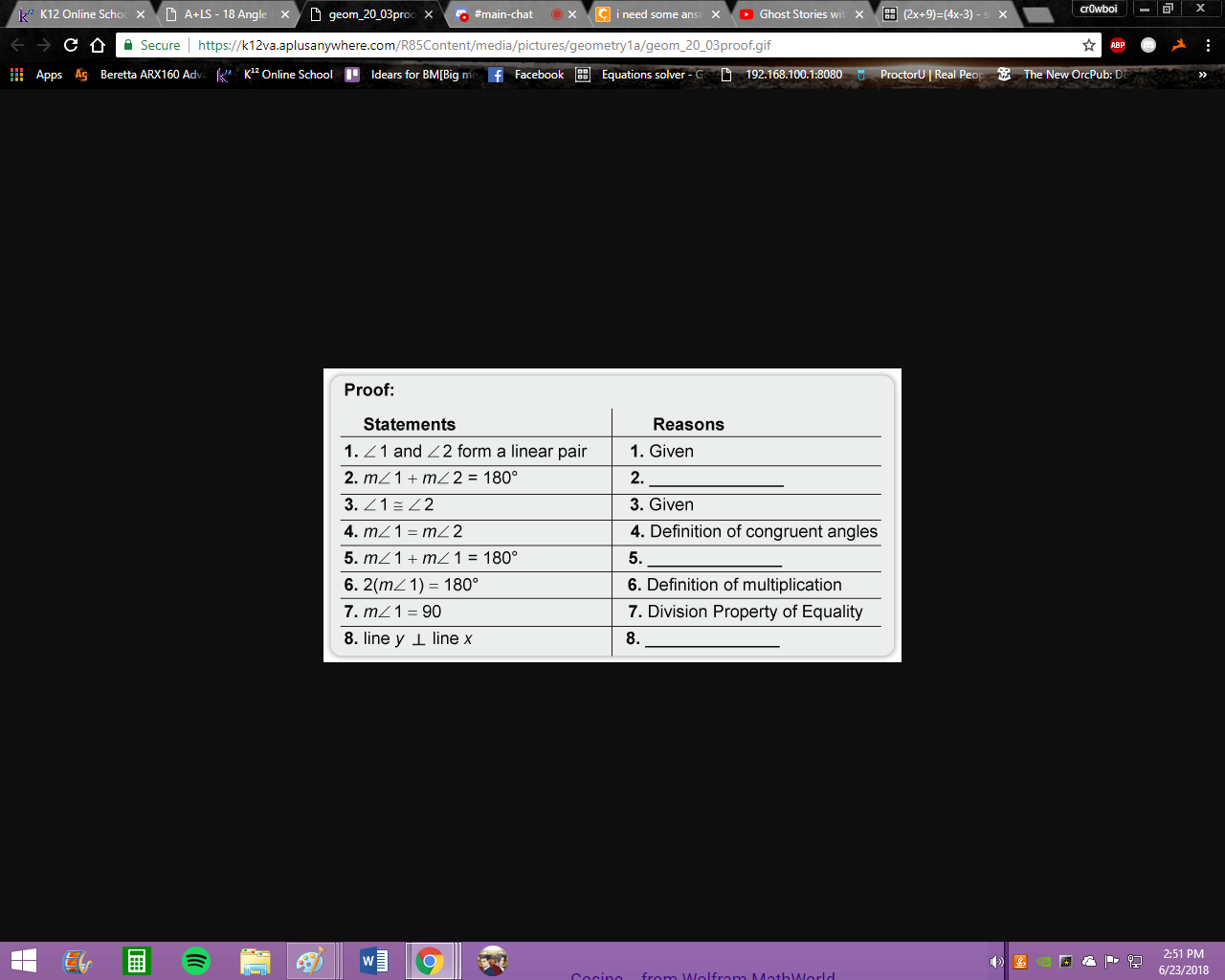
that's not quite how the addition property of equality works, just because there's a plus sign and equals doesn't mean that's the property being used addition property of equality would be taking a statement like A = B and stating that A + C = A + B
Vocaloid:
|dw:1529790791093:dw| since the original statement is saying that <1 and <2 are a linear pair thus adding up to 180 this is the linear pair postulate
Vocaloid:
** addition property of equality would be taking a statement like A = B and stating that A + C = B + C
princeevee:
oh, alright
 Vocaloid:
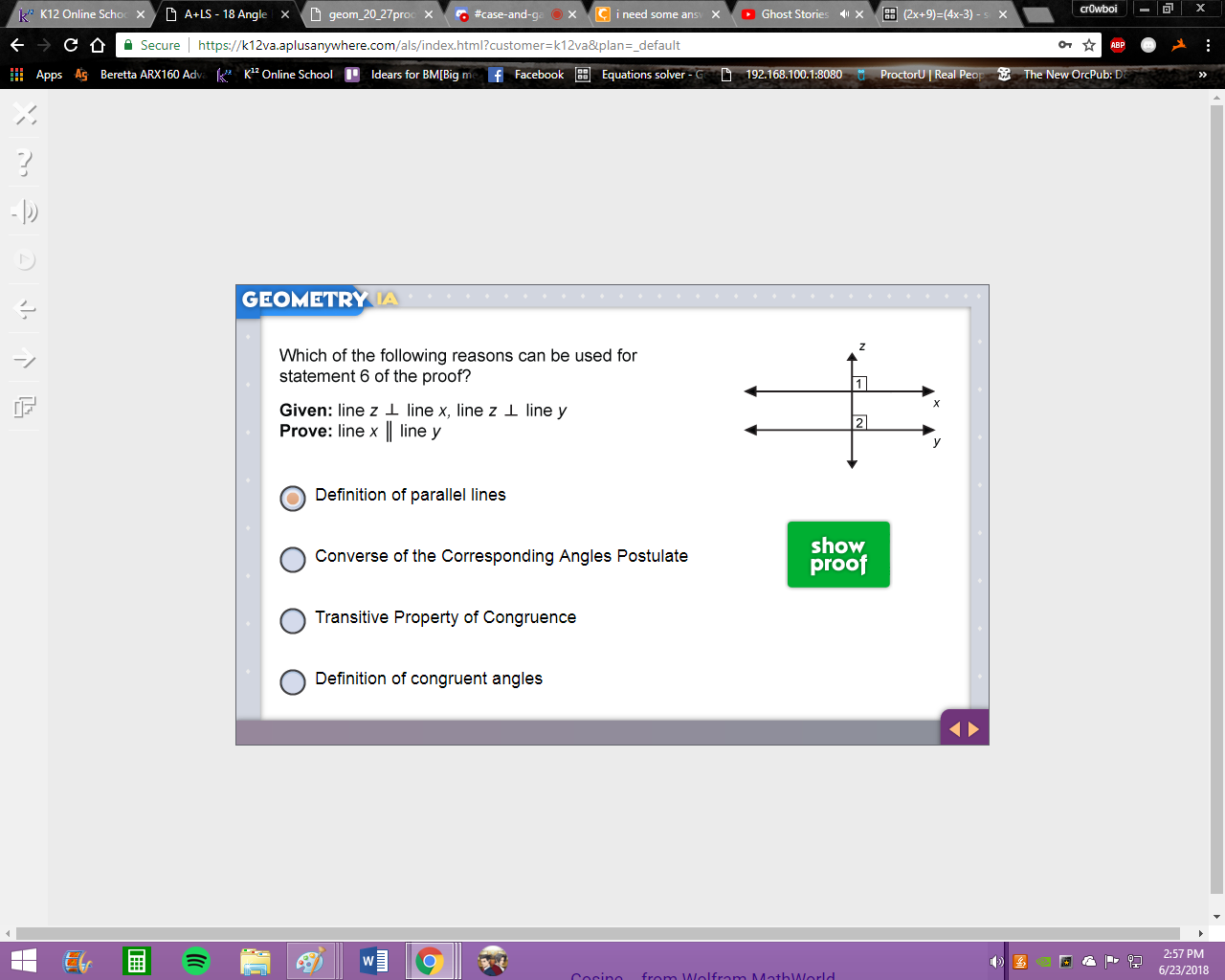
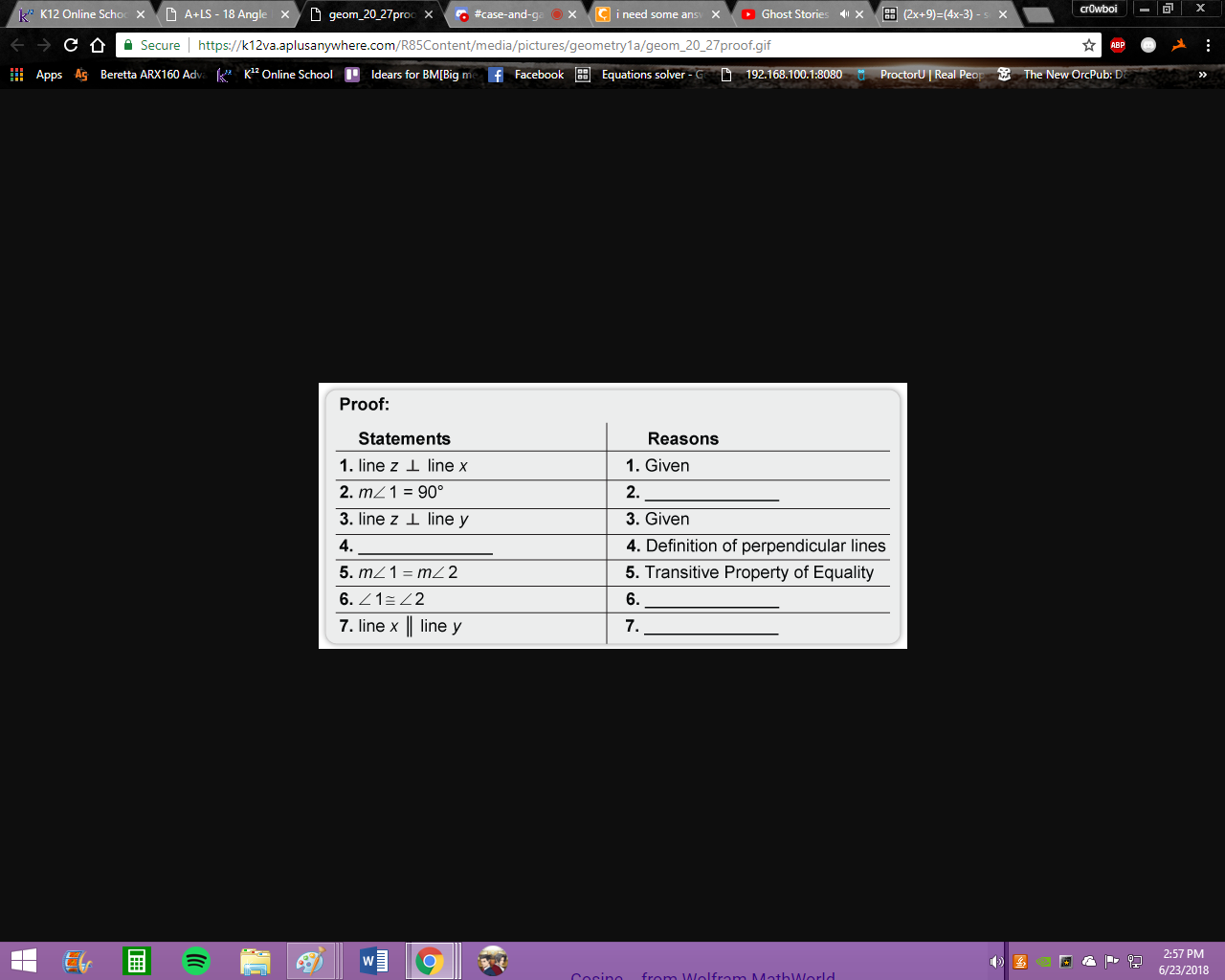
not quite, statement 6 hasn't yet proven that the lines are parallel statement 5 is saying that angle 1 and 2 have equal measures therefore statement 6 is saying that they're congruent this is the definition of congruent angles
 Vocaloid:
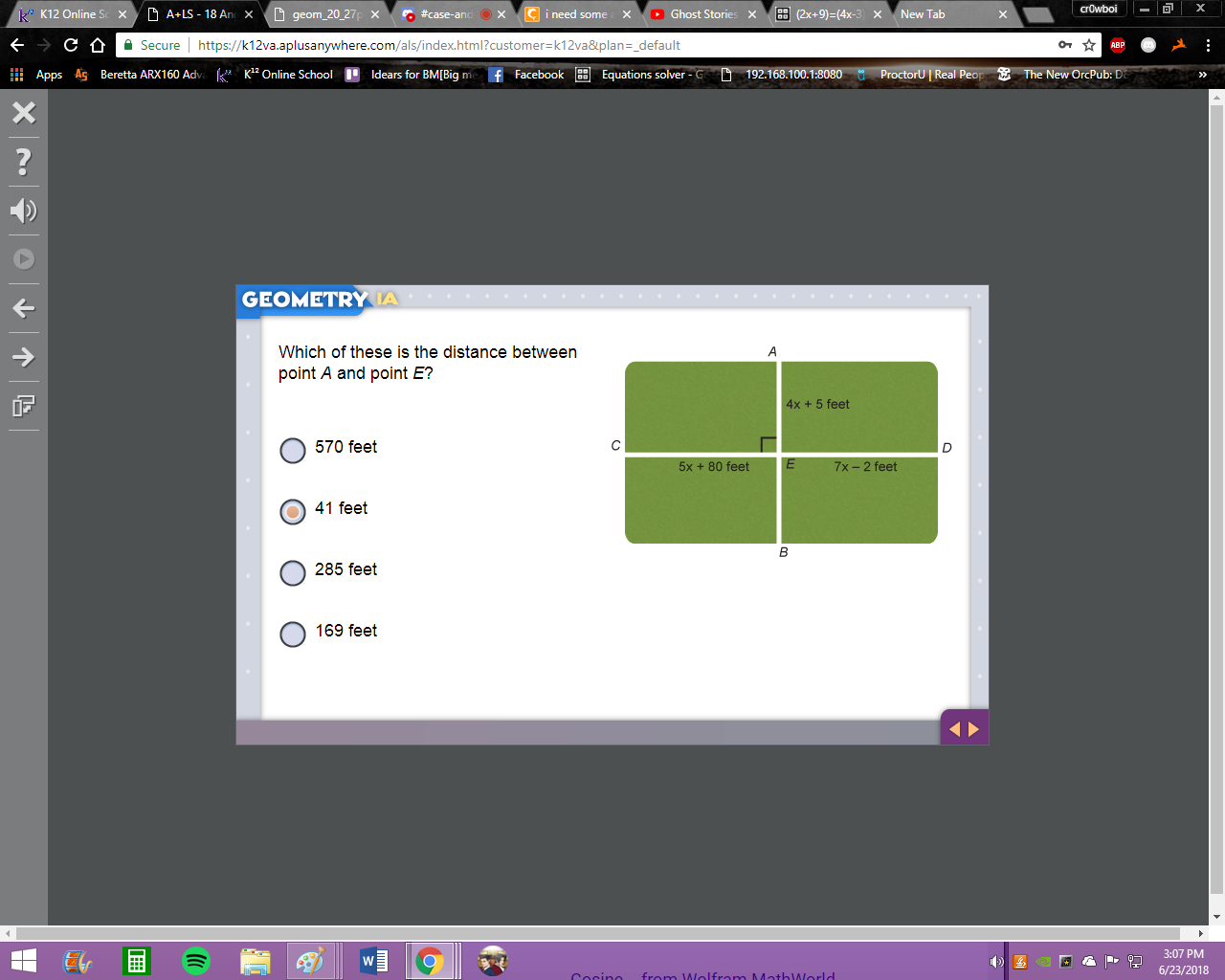
hm, not quite you solved for x and got 41 but it's not asking for x, it's asking for AE so you need to calculate 4x + 5
Vocaloid:
if x = 41 4x + 5 = ?
Vocaloid:
if x = 41 you can replace "x" with "41" therefore 4x + 5 = 4(41) + 5 = ?
princeevee:
110?
Vocaloid:
order of operations 4 * 41 then add 5
princeevee:
169
Vocaloid:
good so 169 = your sol'n
 Vocaloid:
good
 Vocaloid:
excellent
 Vocaloid:
good
 Vocaloid:
good
 Vocaloid:
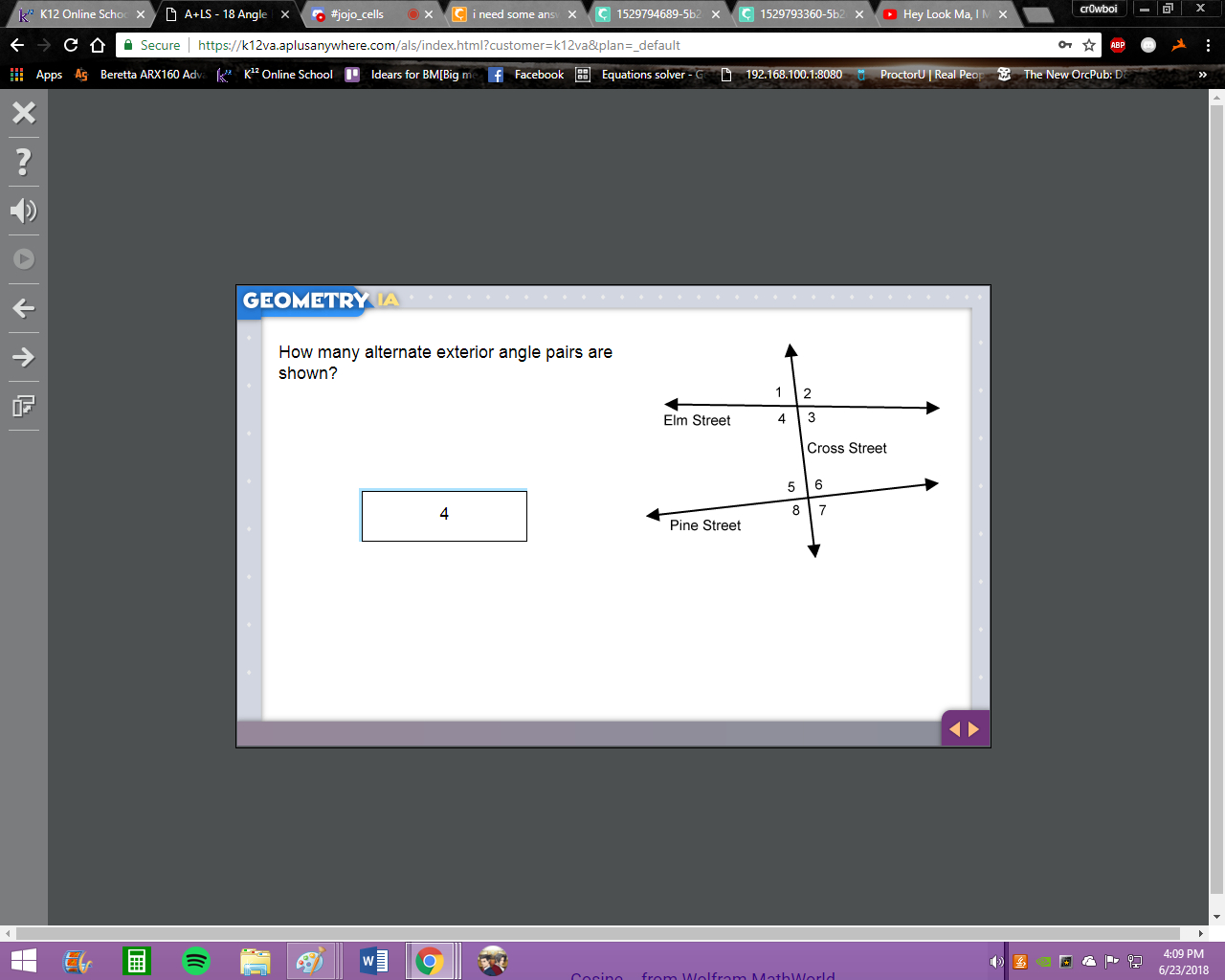
|dw:1529795518110:dw| hm, not quite. "exterior" means they need to be on the outside of the two parallel lines. (so only angles 1,2,7,8) how many pairs is this?
princeevee:
4, yeah.
Vocaloid:
4 total angles "how many pairs" a pair is 2 so 4/2 = 2 pairs
 Vocaloid:
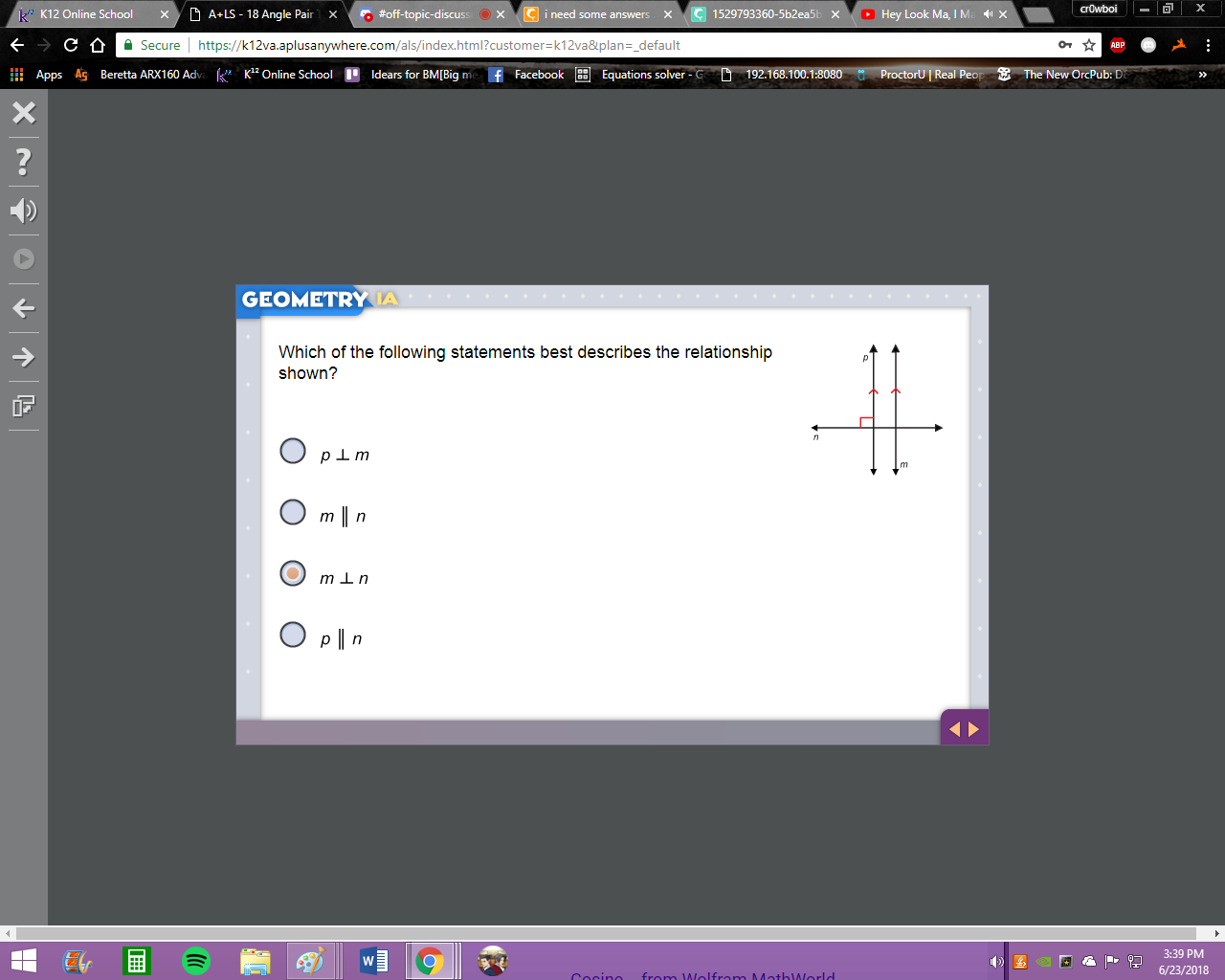
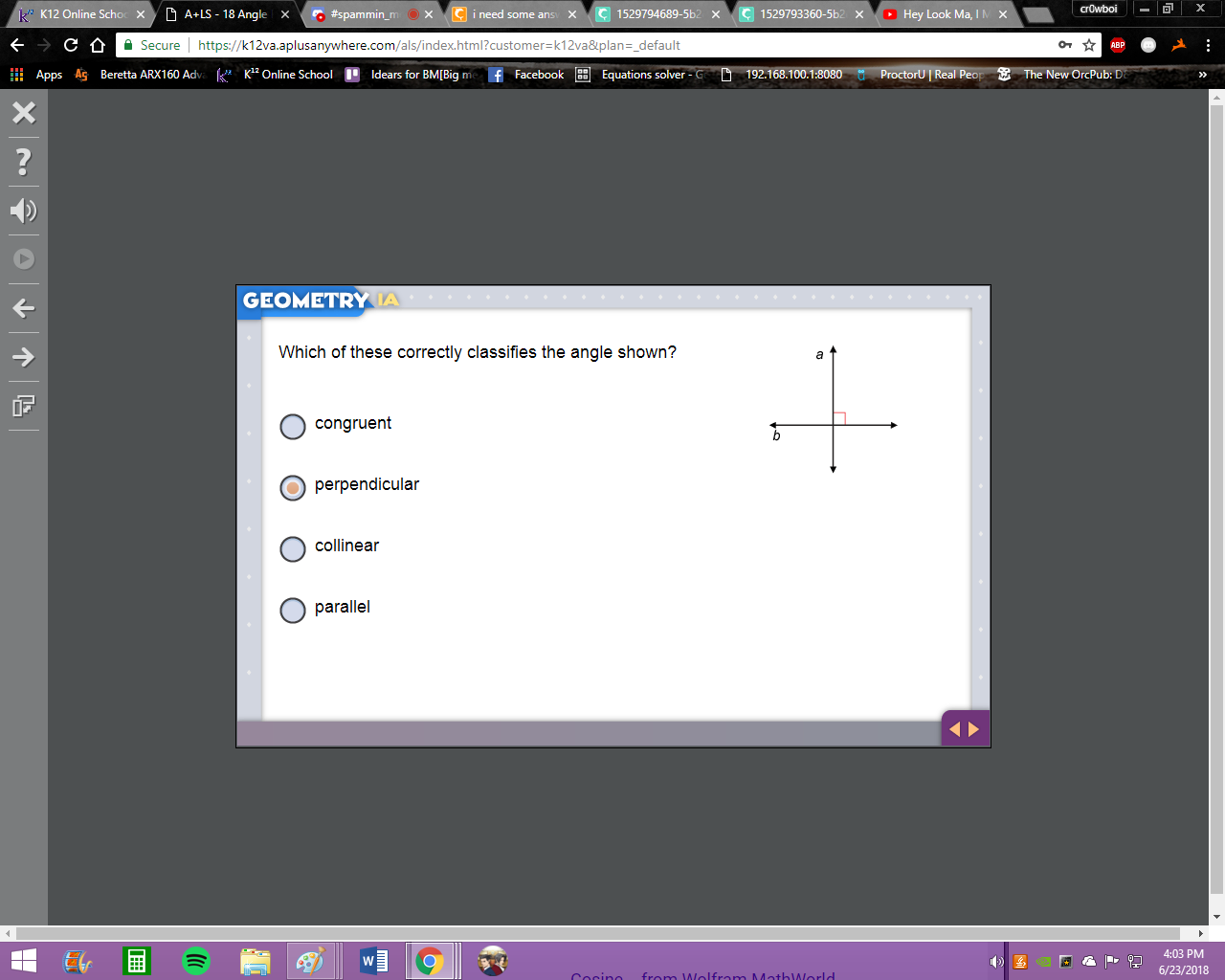
perpendicular lines ~have~ to intersect at 90 (otherwise they're not perpendicular) so false
 princeevee:
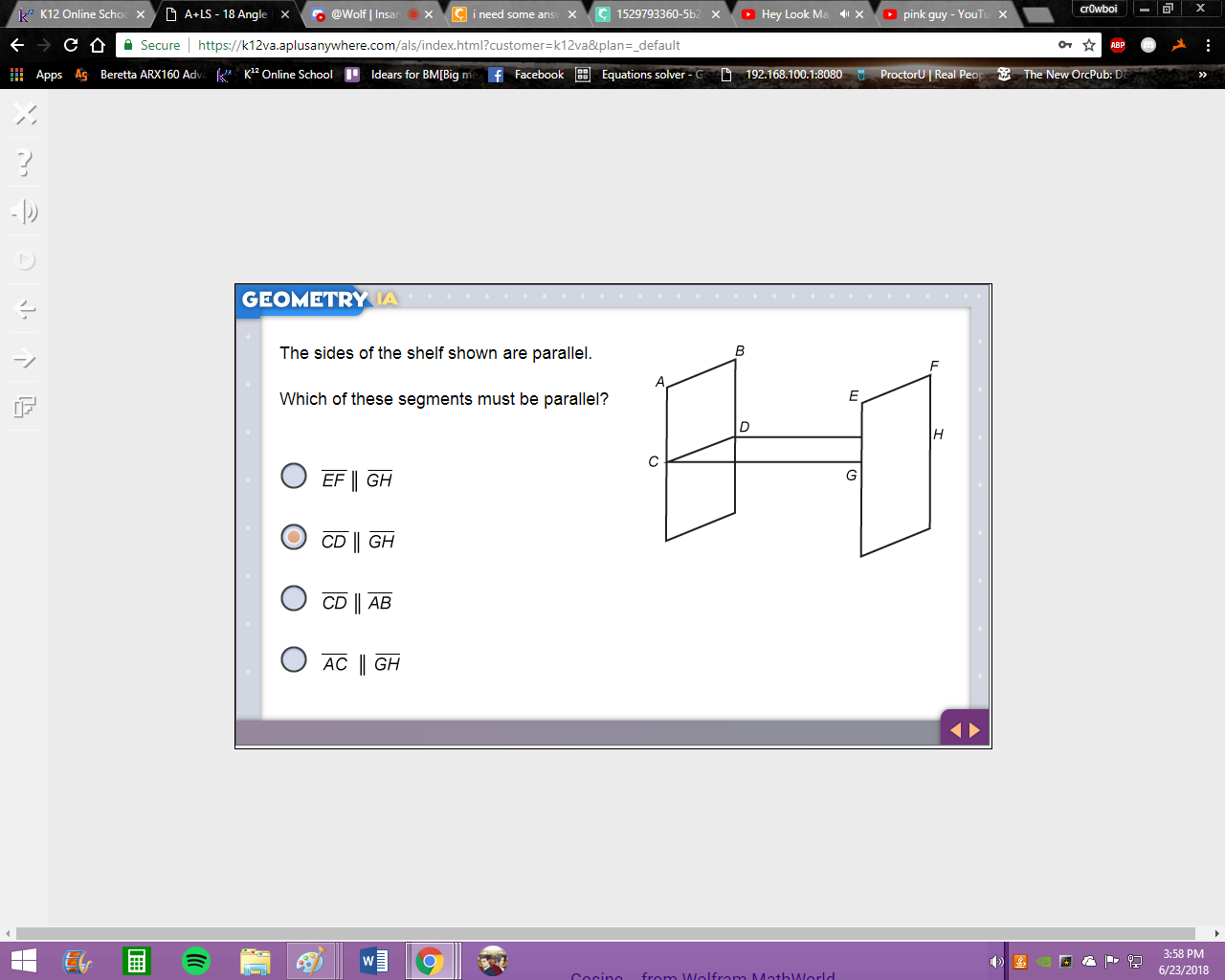
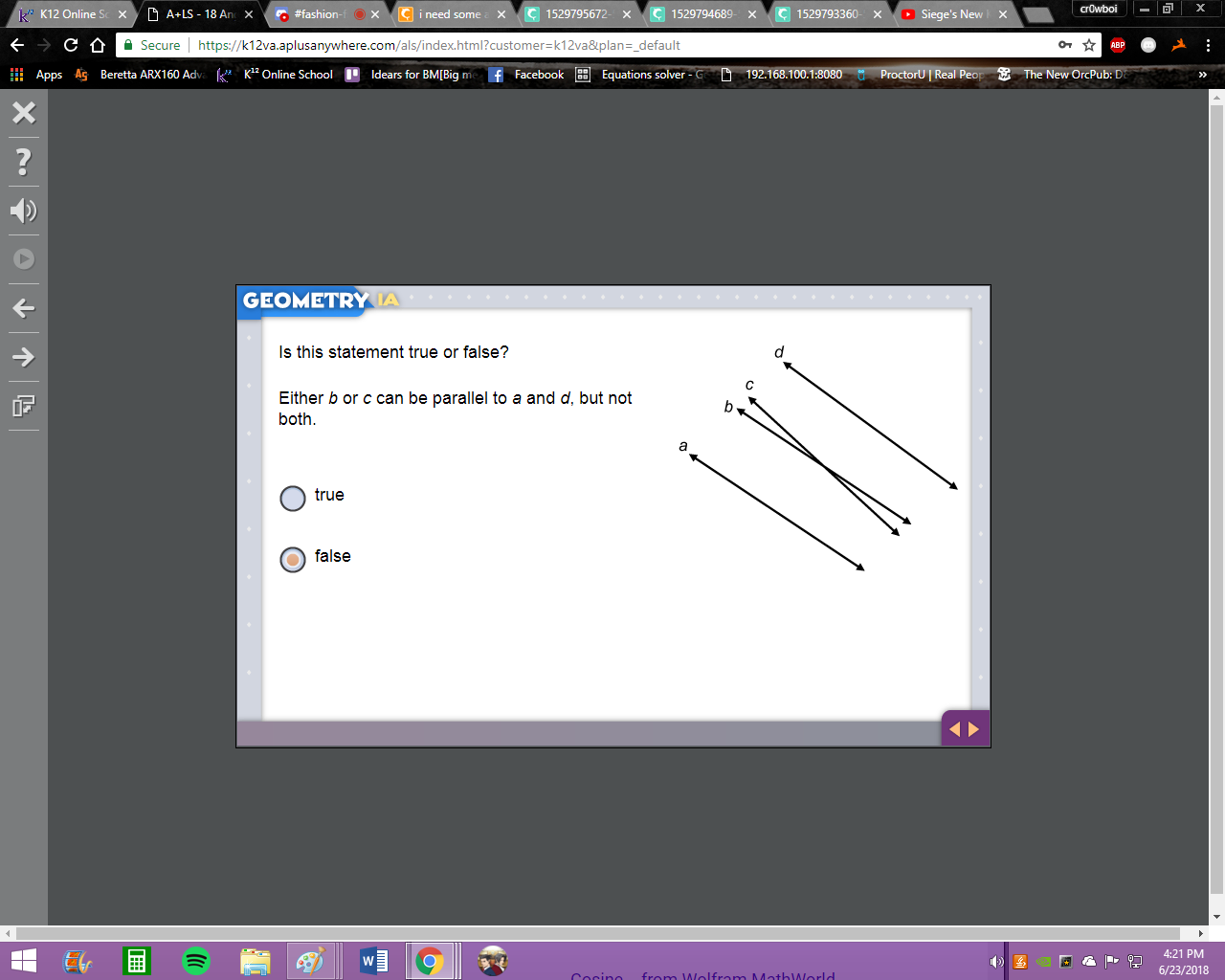
this one is false because C cant be parallel to anything
Vocaloid:
hm. :S depends on how literally they want you to interpret the question. generally in math we don't assume something is parallel just because it looks parallel.
princeevee:
so i'ts true?
Vocaloid:
let's go with false for now i guess :S poorly worded question
jhonyy9:
@princeevee my opinion that is true
jhonyy9:
bc. b is parallel to a and d
Vocaloid:
alright, thank you, I wasn't quite sure about this one (they never actually stated that a and d were parallel which confused me)
jhonyy9:
ok i understand but in this case how is this that there is attached an image so from this image is clearly that b is parallel to a and d
Join our real-time social learning platform and learn together with your friends!
 KBaby:
Verse 1 We left our names in the dust of the driveway Watched the old town shrink
KBaby:
Lyrics Generator Use AI to write the lyrics for a song. Suggested Genres: Pop Hip
KBaby:
Verse 1 We left our names in the dust of the driveway Watched the old town shrink
KBaby:
Lyrics Generator Use AI to write the lyrics for a song. Suggested Genres: Pop Hip

 aitexturegenerator:
How are you all handling AI-generated textures for 3D models and game assets without losing the hand-made feel? I've been doing a small stylized environment
aitexturegenerator:
How are you all handling AI-generated textures for 3D models and game assets without losing the hand-made feel? I've been doing a small stylized environment

 Demon25:
Woke up feeling like that girl and that dude well he still aint crap pluse the du
Demon25:
Woke up feeling like that girl and that dude well he still aint crap pluse the du
 playtsec:
how do I get rid of stress from teachers... I just feel like running out the classroom and leaving on my own.
playtsec:
how do I get rid of stress from teachers... I just feel like running out the classroom and leaving on my own.
 JohnnyLFowler0812:
What type of gamer would play something and then get off for a while. Why not sta
JohnnyLFowler0812:
Which is better? Metallica Rap Country R&B hiphop Medal Gospel Chill Which 3 opti
JohnnyLFowler0812:
What type of gamer would play something and then get off for a while. Why not sta
JohnnyLFowler0812:
Which is better? Metallica Rap Country R&B hiphop Medal Gospel Chill Which 3 opti