
 zarkam21:
help w/ written activity
 zarkam21:
@Vocaloid
 Vocaloid:
huh I'm familiar with the terms, just trying to come up with something that wouldn't be in a psych textbook, like pavlov's dog or skinner box
zarkam21:
Someone who has been in a bad car accident may not want to sit in a car
zarkam21:
i know
zarkam21:
when you smell food you are hungry
zarkam21:
or when you see someone throwing up you may feel the need to throw up
Vocaloid:
yeah that's good, I can work w/ that unconditioned stimulus ---> car accident unconditioned response ---> fear caused by accident neutral stimulus ---> sitting in a a car, which also becomes the conditioned stimulus when the person starts associating the car itself w/ the accidnet conditioned response ---> feeling fear when sitting in a car
Vocaloid:
or you can use the other examples, that's fine too
 zarkam21:
An example of observational learning may be to cook. A child may watch his mom cook food and learn her tricks and her recipes by watching her. The child watches his/her mother and picks up on the way she acts
zarkam21:
Would this be a good example? :/
Vocaloid:
yup that's good
zarkam21:
or should i add something
Vocaloid:
that's probably fine as is
zarkam21:
the next acitivcty is timed sojust a heads up :)
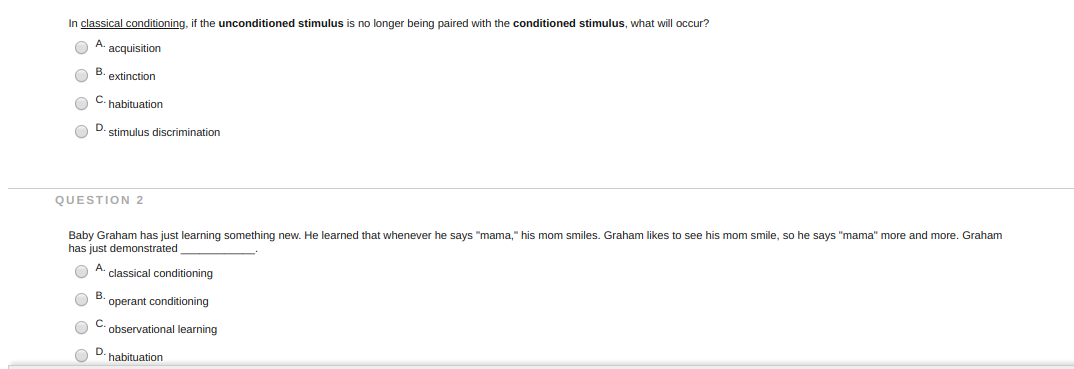 Vocaloid:
any ideas?
Vocaloid:
for question 1 you just need to remember the definitions of these words, and for 2) the key to remember is that the behavior is being reinforced
zarkam21:
extinction
zarkam21:
for 1
Vocaloid:
good
zarkam21:
operant?
zarkam21:
for 2
Vocaloid:
good
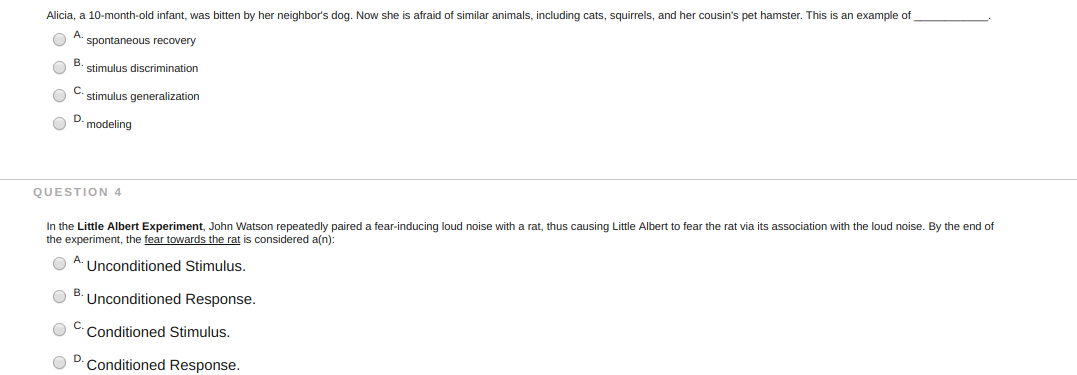 zarkam21:
B for thefirstone
zarkam21:
d for second
Vocaloid:
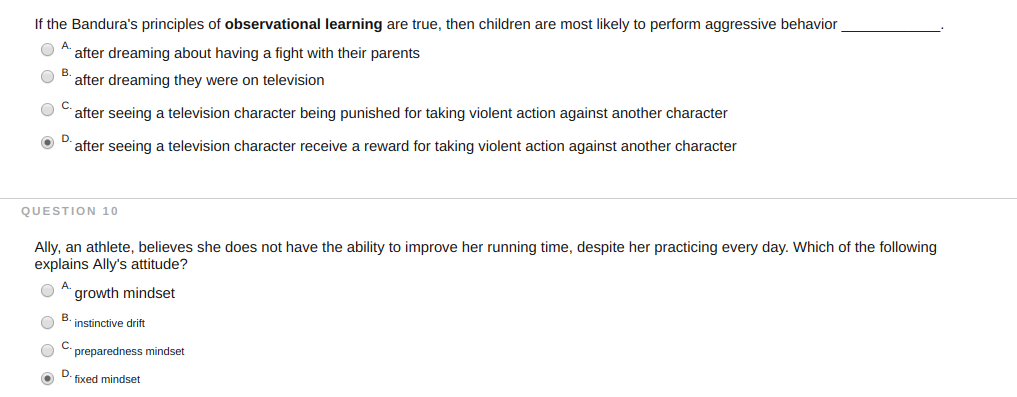
almost, for the animals question, she's extending the fear towards other animals, making the response more general, so generalization not discrimination
Vocaloid:
other one is good
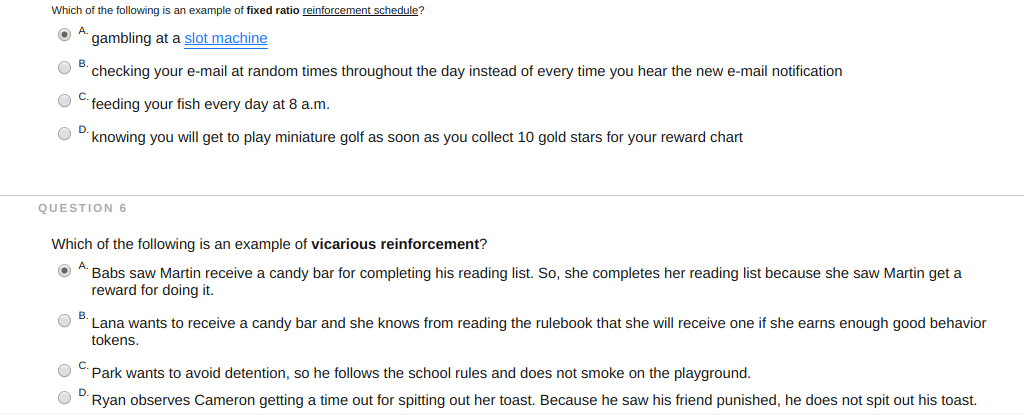 Vocaloid:
almost for the first question, fixed ratio means the behavior is being rewarded for every set number of actions. gambling machine would be variable. D is a better choice because the behavior is being rewarded every 10 gold stars
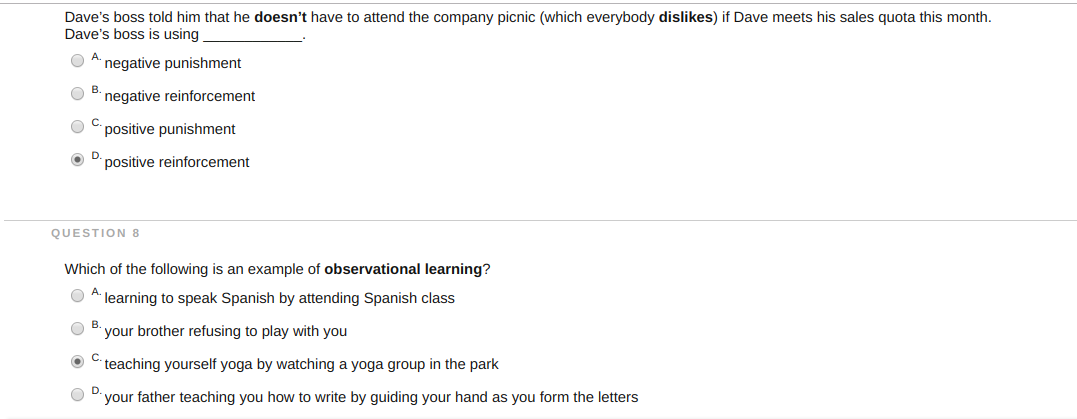
 Vocaloid:
Dave's boss question: he is taking away a bad thing to reinforce a good behavior --> negative reinforcement other ones are good
Join our real-time social learning platform and learn together with your friends!
 KBaby:
Verse 1 We left our names in the dust of the driveway Watched the old town shrink
KBaby:
Lyrics Generator Use AI to write the lyrics for a song. Suggested Genres: Pop Hip
KBaby:
Verse 1 We left our names in the dust of the driveway Watched the old town shrink
KBaby:
Lyrics Generator Use AI to write the lyrics for a song. Suggested Genres: Pop Hip

 aitexturegenerator:
How are you all handling AI-generated textures for 3D models and game assets without losing the hand-made feel? I've been doing a small stylized environment
aitexturegenerator:
How are you all handling AI-generated textures for 3D models and game assets without losing the hand-made feel? I've been doing a small stylized environment

 Demon25:
Woke up feeling like that girl and that dude well he still aint crap pluse the du
Demon25:
Woke up feeling like that girl and that dude well he still aint crap pluse the du
 playtsec:
how do I get rid of stress from teachers... I just feel like running out the classroom and leaving on my own.
playtsec:
how do I get rid of stress from teachers... I just feel like running out the classroom and leaving on my own.
 JohnnyLFowler0812:
What type of gamer would play something and then get off for a while. Why not sta
JohnnyLFowler0812:
Which is better? Metallica Rap Country R&B hiphop Medal Gospel Chill Which 3 opti
JohnnyLFowler0812:
What type of gamer would play something and then get off for a while. Why not sta
JohnnyLFowler0812:
Which is better? Metallica Rap Country R&B hiphop Medal Gospel Chill Which 3 opti