
 princeevee:
i need some help please
 princeevee:
@Vocaloid
 Vocaloid:
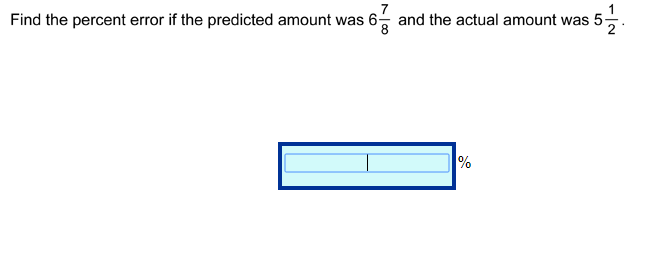
in general % error = 100*(actual-predicted)/predicted
Vocaloid:
this can get a bit fuzzy because some teachers want you to report either positive or negative percentages while some want only positive percentages
princeevee:
uh...i'm confused still..
Vocaloid:
just start by plugging the numbers into this % error = 100*(actual-predicted)/predicted
princeevee:
so 100*(5 1/2)/ 6 7/8?
Vocaloid:
keep in mind the numerator is (actual - predicted) not just actual
Vocaloid:
\[\frac{ 5\frac{ 1 }{ 2 }-6\frac{ 7 }{ 8 } }{ 6\frac{ 7 }{ 8 } }*100\]
princeevee:
-20?
Vocaloid:
good after doing a bit of research it seems like most people agree that percent error should be positive, so you would just take the absolute value of -20 to get 20 as the solution
princeevee:
so just 20
Vocaloid:
yes
princeevee:
says it's incorrect.
Vocaloid:
.. oh? does -20 work?
princeevee:
no..
princeevee:
...
Vocaloid:
hm :/ wouldn't know what it would be besides those two options do they give you a different formula?
princeevee:
not at all, though i just simplified the equation
Vocaloid:
strange. I can ask for another opinion but it's probably an error with the system/answer key if you have other questions I'd be happy to help
princeevee:
i do, but they might not be the ones you can answer
Vocaloid:
oh. well, it doesn't really hurt to post, either I or someone else might take a look
 Vocaloid:
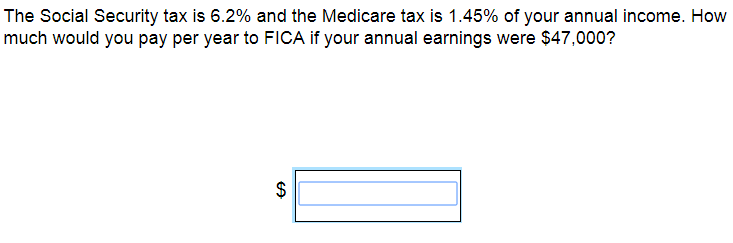
oh, I would just calculate 6.2% of 47,000 and 1.45% of 47,000 and then just add the results together, however i don't know if the problem is that simple
princeevee:
3595.5
Vocaloid:
yeah that's what I got as a tentative solution, I wouldn't try unless you have multiple attempts left
 Vocaloid:
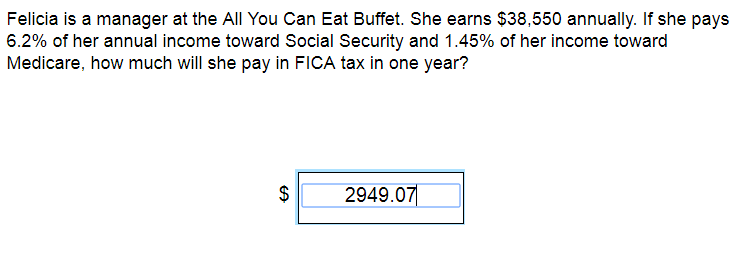
technically 0.075 rounds up to 0.08 not 0.07 so just change the last digit to an 8
 princeevee:
now this one is just strange
princeevee:
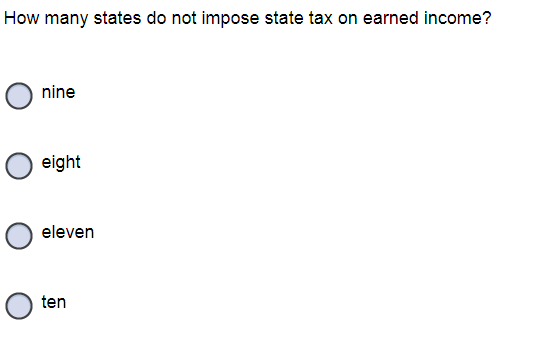
the answer is 7 but...
Vocaloid:
it's possible that the source material for this question is outdated. hm.
princeevee:
i'm thinking it's eight
princeevee:
wait, it cant be since the source is from 2018
Vocaloid:
I wouldn't really know either way so go with your best instinct
 Vocaloid:
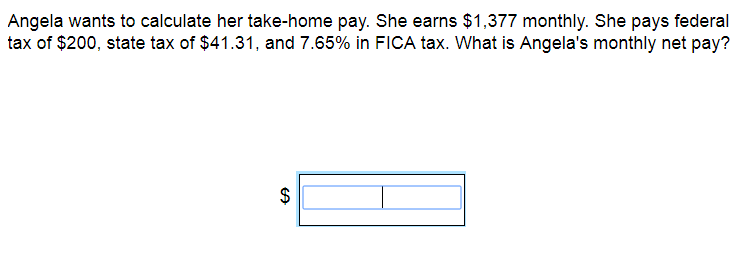
I ***Believe*** you would just subtract 1377 minus the federal, state, and FICA tax
princeevee:
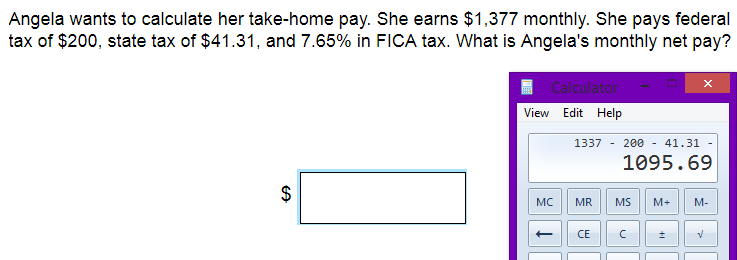
so just subtract 1337 with the taxes
Vocaloid:
yes
 princeevee:
so it's 7.65% of this number?
princeevee:
so 83.82?
Vocaloid:
nah, the FICA tax is taken from the original income so 1377 - 41.31 - 200 - (7.65/100)*1377
princeevee:
1030.34?
Vocaloid:
.35 after rounding but yes
 Vocaloid:
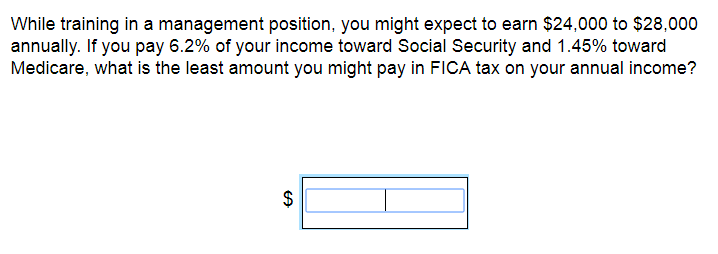
it wants the least amount of tax, so you'd use the least income possible (24,000) so just calculate (6.2 + 1.45)% of 24,000
Vocaloid:
actually yeah that's how you'd do it, proceed
princeevee:
1836
princeevee:
that it?
Vocaloid:
yea
 Vocaloid:
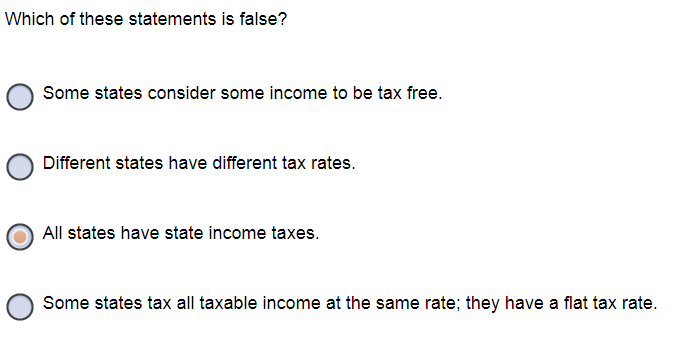
good
 Vocaloid:
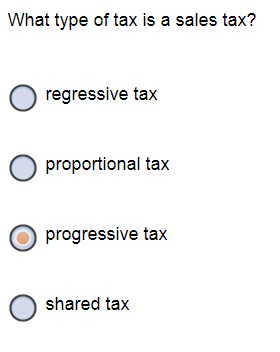
quick google search tells me sales tax is considered regressive because it is a larger share of income at lower-income brackets https://investinganswers.com/financial-dictionary/tax-center/sales-tax-1533
Vocaloid:
if your notes/textbook/whatever says its progressive then go with progressive
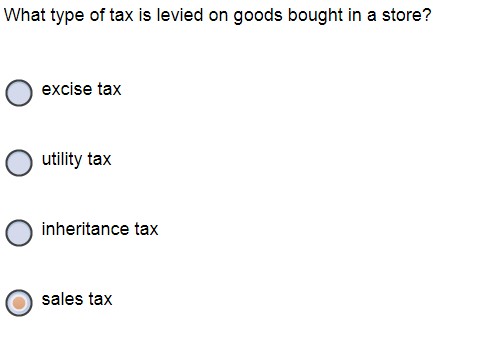 Vocaloid:
good
 Vocaloid:
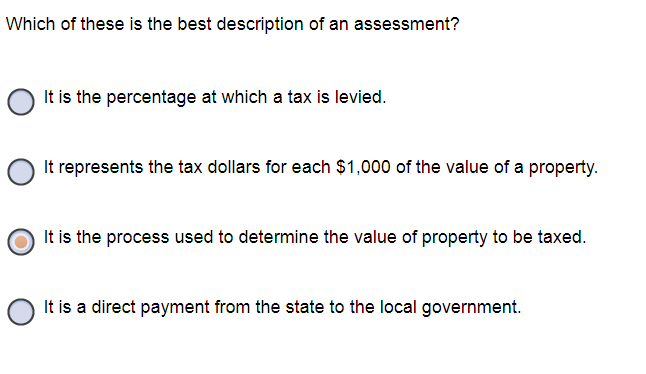
quick search tells me that should be good
 Vocaloid:
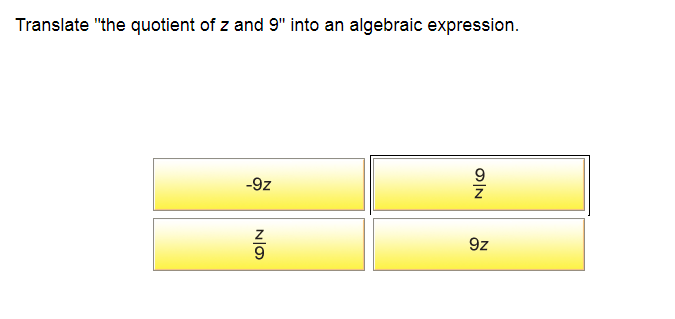
order is important, "quotient of z and 9" means z/9 because z comes first
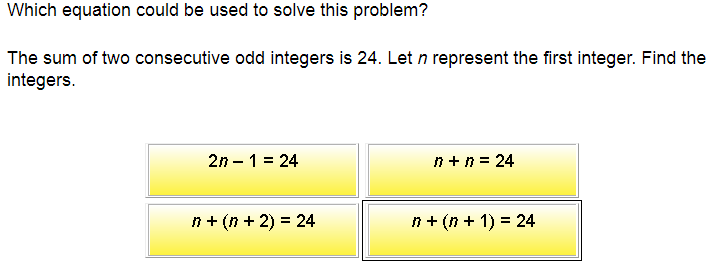 Vocaloid:
good attempt but it wants 2 consecutive odd integers if you just add 1 to an odd integer you'll get an even integer so to turn odd integer n into the next highest odd integer, you gotta add 2 to get n + 2
princeevee:
so bottom left
Vocaloid:
yes
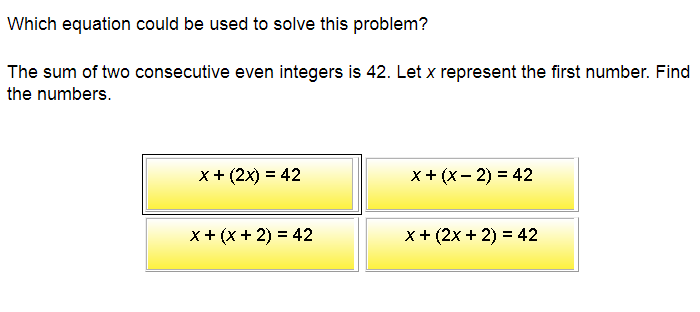 Vocaloid:
following the logic from the previous problem if an even integer is x, the next consecutive even integer is (x+2) not 2x
princeevee:
bottom right again?
Vocaloid:
there's no 2x term, it's just first even integer = x second even integer = x + 2 x + (x+2) = 42
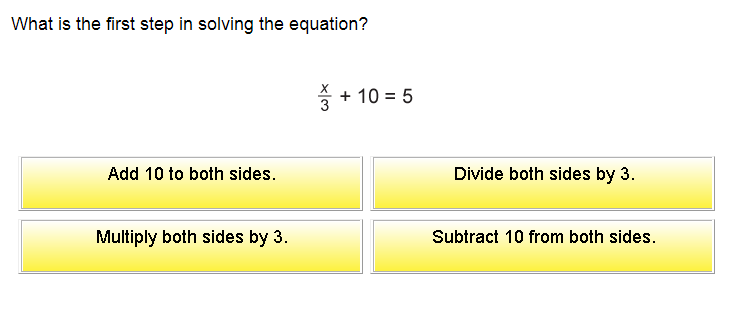 Vocaloid:
well you'd want to somehow get "x" by itself, the first obstacle is the +10 standing in the way so do the opposite of + 10
princeevee:
so subtract
Vocaloid:
exactly, you'd just subtract 10
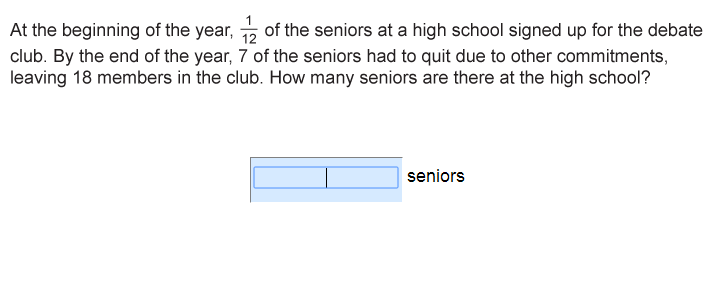 Vocaloid:
let x be the original # of high school seniors "1/12 of the seniors signed up for debate" so start with (1/12)x "7 seniors quit" so subtract 7 "leaving 18" so putting it all together (1/12)x - 7 = 18 solve for x
princeevee:
300
Vocaloid:
good
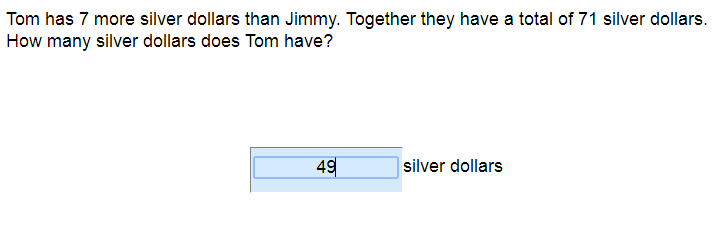 Vocaloid:
might have made a mistake with your equation somewhere let x = Jimmy's dollars x + 7 = Tom's dollars x + (x+7) = 71 it wants tom's dollars so solve for x, then find (x+7)
princeevee:
i subtracted 7 from the original and divided by 2
princeevee:
i got 64, and half that is 42
princeevee:
add 7 and that's 49
princeevee:
right?
Vocaloid:
71 - 7 = 64 64/2 = 32 32 + 7 = 39 not 49
princeevee:
i just realized my mistake,
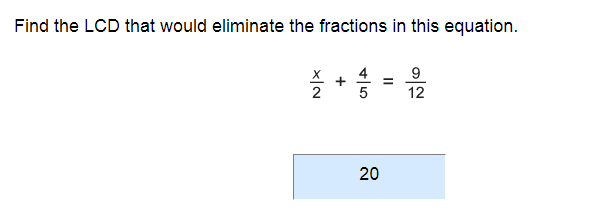 Vocaloid:
20 won't work because 20 is not a multiple of 12 start listing out multiples of 12 and stop when you get a multiple that is divisible by both 2 and 5
princeevee:
60?
Vocaloid:
perfect, so 60 is your sol'n
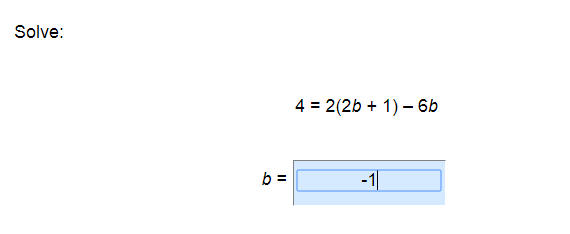 Vocaloid:
good
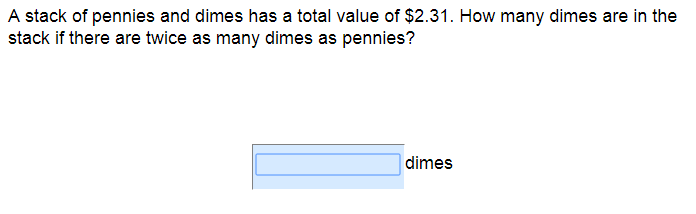 Vocaloid:
we'll need two equations, one for the total # of coins and one for the total $$$ let p = num. of pennies and d = num. of dimes "twice as many dimes as pennies" so d = 2p "total value of 2.31" so (0.01)p + (0.10)d = 2.31, since obv. a penny is 0.01 of a dollar and a dime is 0.10 of a dollar
Vocaloid:
since we know that d = 2p, we can replace "d" with "2p" in the second equation, therefore (0.01)p + (0.10)d = 2.31 becomes (0.01)p + (0.10)(2p) = 2.31 at this point you can solve for p the question, however, asks for dimes, so you just have to double the number of pennies to get dimes
princeevee:
22?
Vocaloid:
good
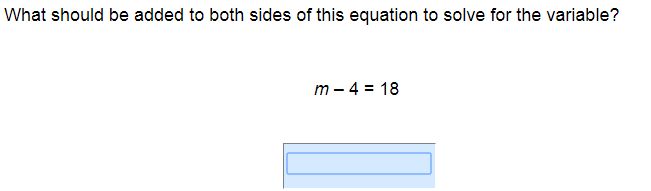 Vocaloid:
well you have a -4, right? so what can you add to "eliminate" it?
princeevee:
positive 4?
princeevee:
wait or is it a negative?
Vocaloid:
well, if we subtracted -4 we would just get m-8=14 which doesn't help but if we add 4 to both sides we get m = 22 which solves the equation so adding positive 4 is the best course of action here
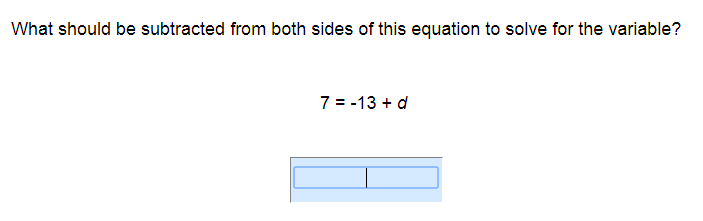 Vocaloid:
notice you have 7 = -13 + d if we "take away" the -13 we would just get d by itself on the right side so you can subtract -13
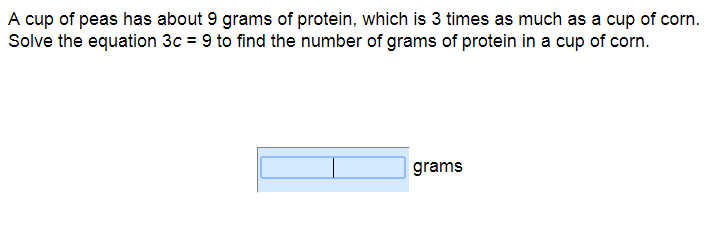 Vocaloid:
3c = 9 we want "c" by itself, so we have to "undo" the multiplication by 3 the opposite of multiplication is, of course, division, so you can just divide both sides by 3 to get c by itself
princeevee:
would that still be 3 though?
Vocaloid:
good, 9/3 = 3
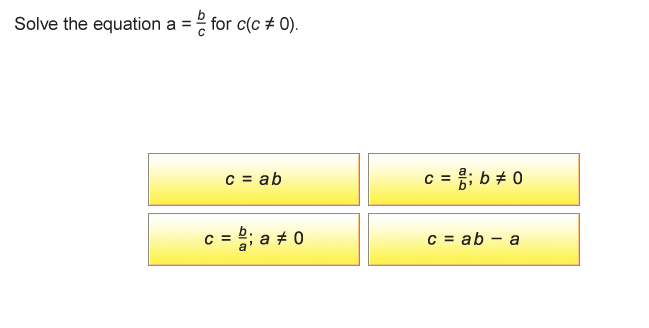 Vocaloid:
as a shortcut method if you have a situation like this you can switch the number on the left with the denominator in other words, you can switch a and c and the equation still holds
princeevee:
bottom left?
Vocaloid:
good
 Vocaloid:
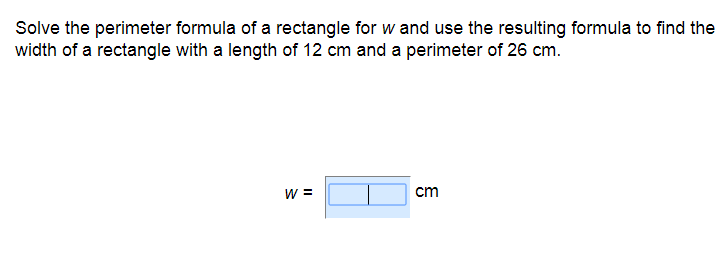
P = 2L + 2W you're given P= 26 and L = 12, plug in, solve for W
princeevee:
1?
Vocaloid:
good
 Vocaloid:
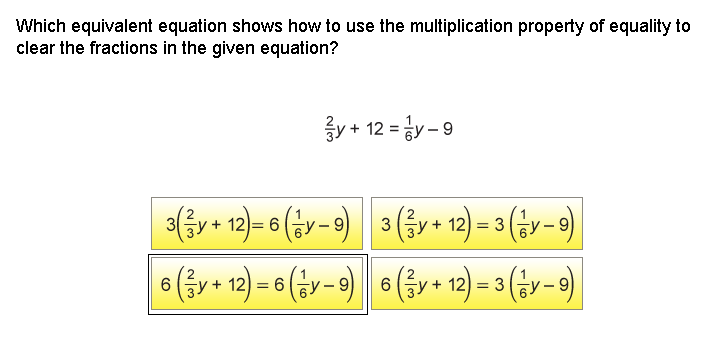
good
 Vocaloid:
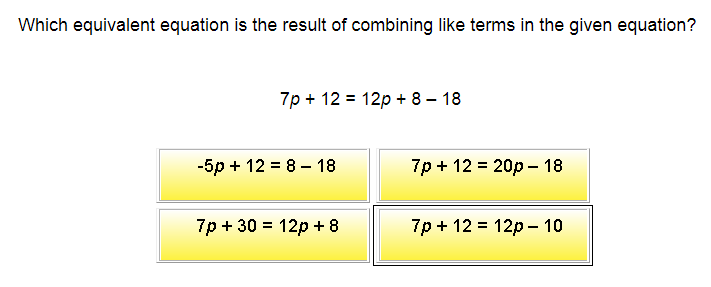
good
 Vocaloid:
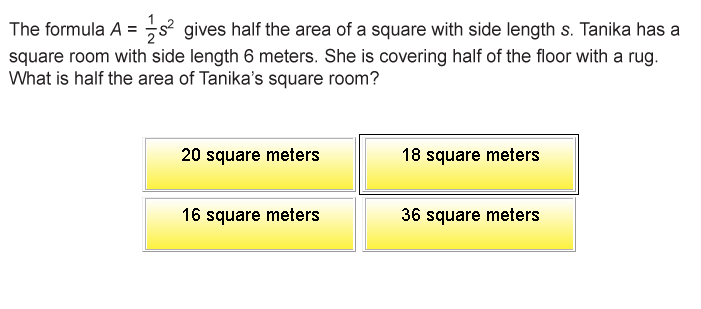
good
Join our real-time social learning platform and learn together with your friends!
 Demon25:
For a hoco proposal with a cheerleader and football player, what else should be a
Demon25:
For a hoco proposal with a cheerleader and football player, what else should be a

 Breathless:
TOC: "MGF any confirmation on the commander? we require confirmation as soon as[radio static].
Breathless:
TOC: "MGF any confirmation on the commander? we require confirmation as soon as[radio static].
 EdwinJsHispanic:
I wrote something that I don't know if I want it as a poem or song, Please let me know on yours thoughts about it, I'm still doing this! "Broken promises an
EdwinJsHispanic:
I wrote something that I don't know if I want it as a poem or song, Please let me know on yours thoughts about it, I'm still doing this! "Broken promises an
 thehearken:
hi um I don't know if this is the right section for this, but can someone go over my poem and tell me if its good enough to give my English professor for a
thehearken:
hi um I don't know if this is the right section for this, but can someone go over my poem and tell me if its good enough to give my English professor for a
 heartlessprophet:
Aye what's 19z%u00f74p=9u03c0 my teacher thinking of impossible questions for us
heartlessprophet:
Aye what's 19z%u00f74p=9u03c0 my teacher thinking of impossible questions for us
 kippppp:
does anyone have any good tips for writing stories? i'm trying to write a dnd campaign but i'm not that great of a writer yet.
kippppp:
does anyone have any good tips for writing stories? i'm trying to write a dnd campaign but i'm not that great of a writer yet.
 GRIZZLEY19:
Y'all let me know what y'all think about this beat I made I took me like a hour maybe rate it 0/10 https://drive.
GRIZZLEY19:
Y'all let me know what y'all think about this beat I made I took me like a hour maybe rate it 0/10 https://drive.
 Ultrilliam:
Welcome to the 10th Anniversary Update! (Part 2) Sorry this one passed the date a
Ultrilliam:
Welcome to the 10th Anniversary Update! (Part 2) Sorry this one passed the date a
 Twaylor:
was walking downtown and my adhd brain wanted to make some (rock?) lyrics: There'
Twaylor:
was walking downtown and my adhd brain wanted to make some (rock?) lyrics: There'