
 nekoguy:
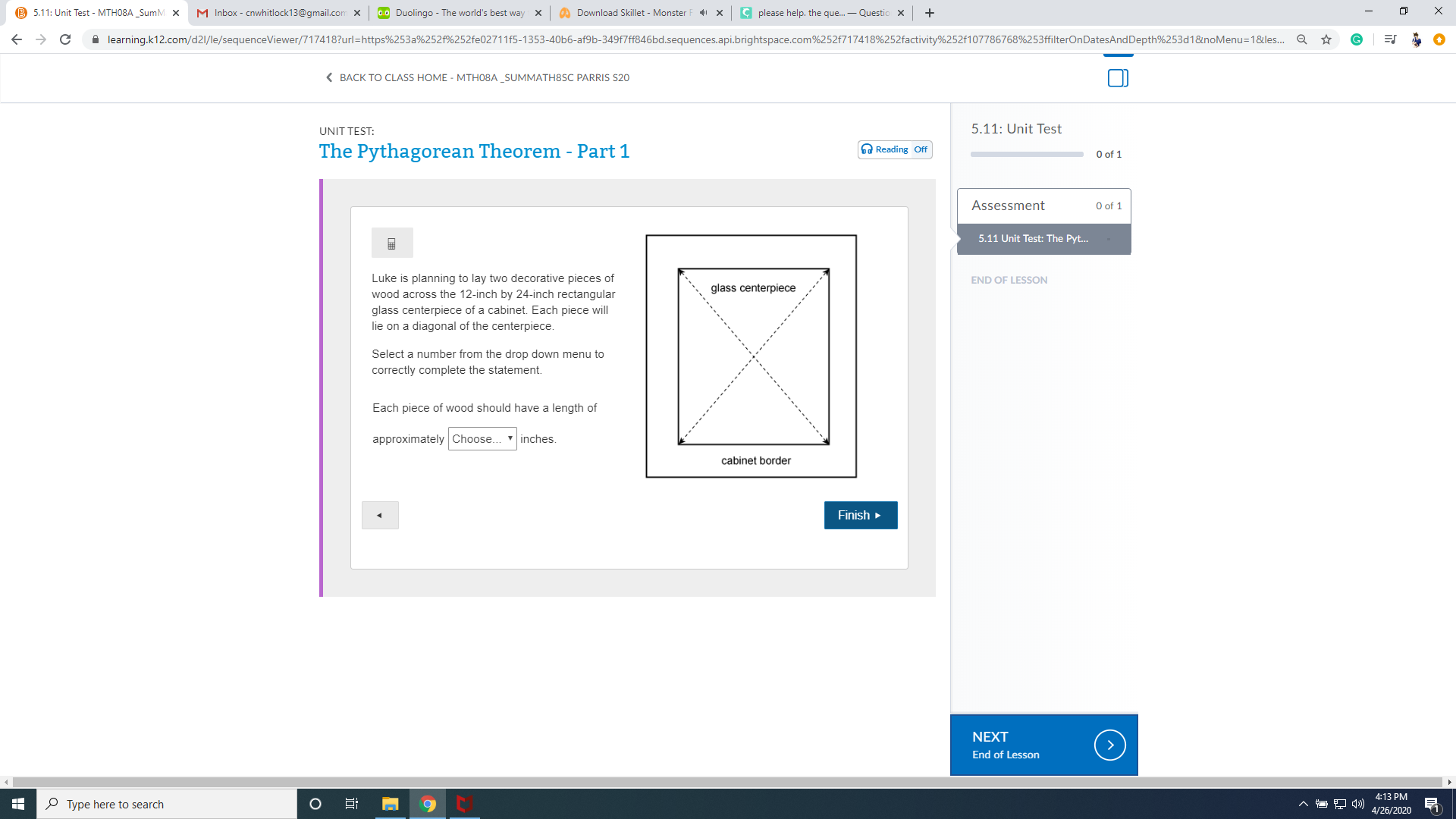
please help. the questions will be in the screenshots





 InsatiableSuffering:
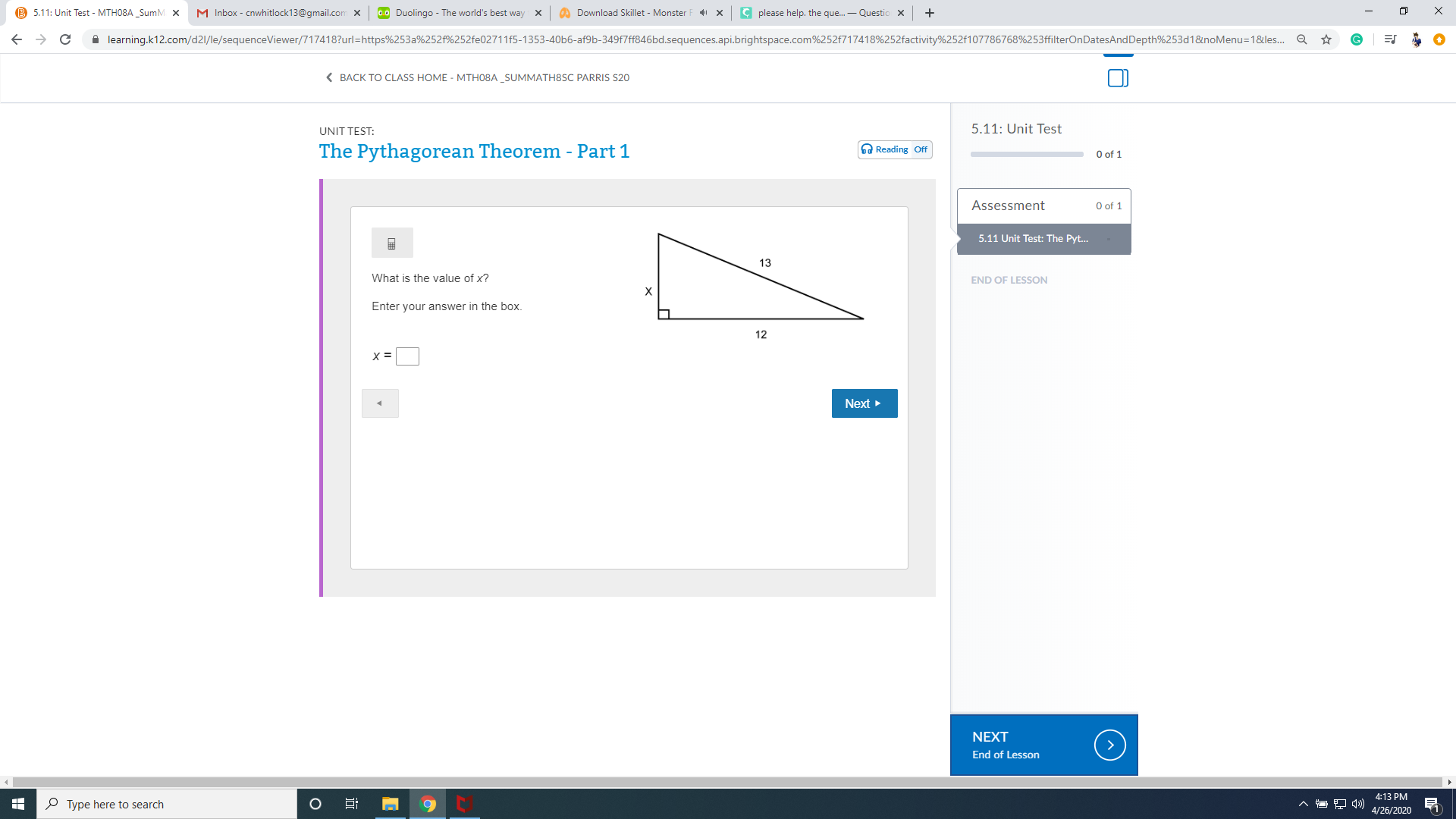
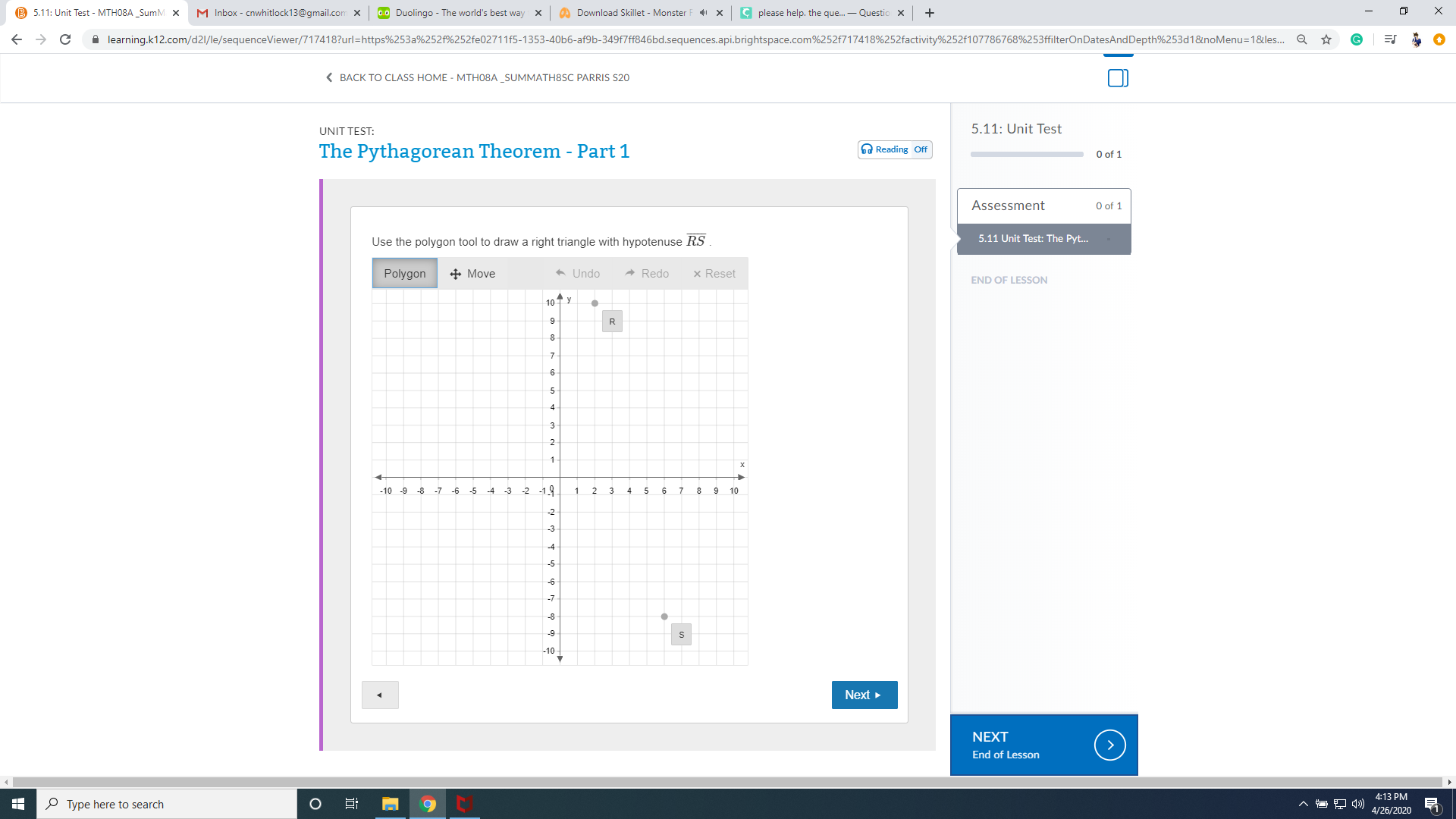
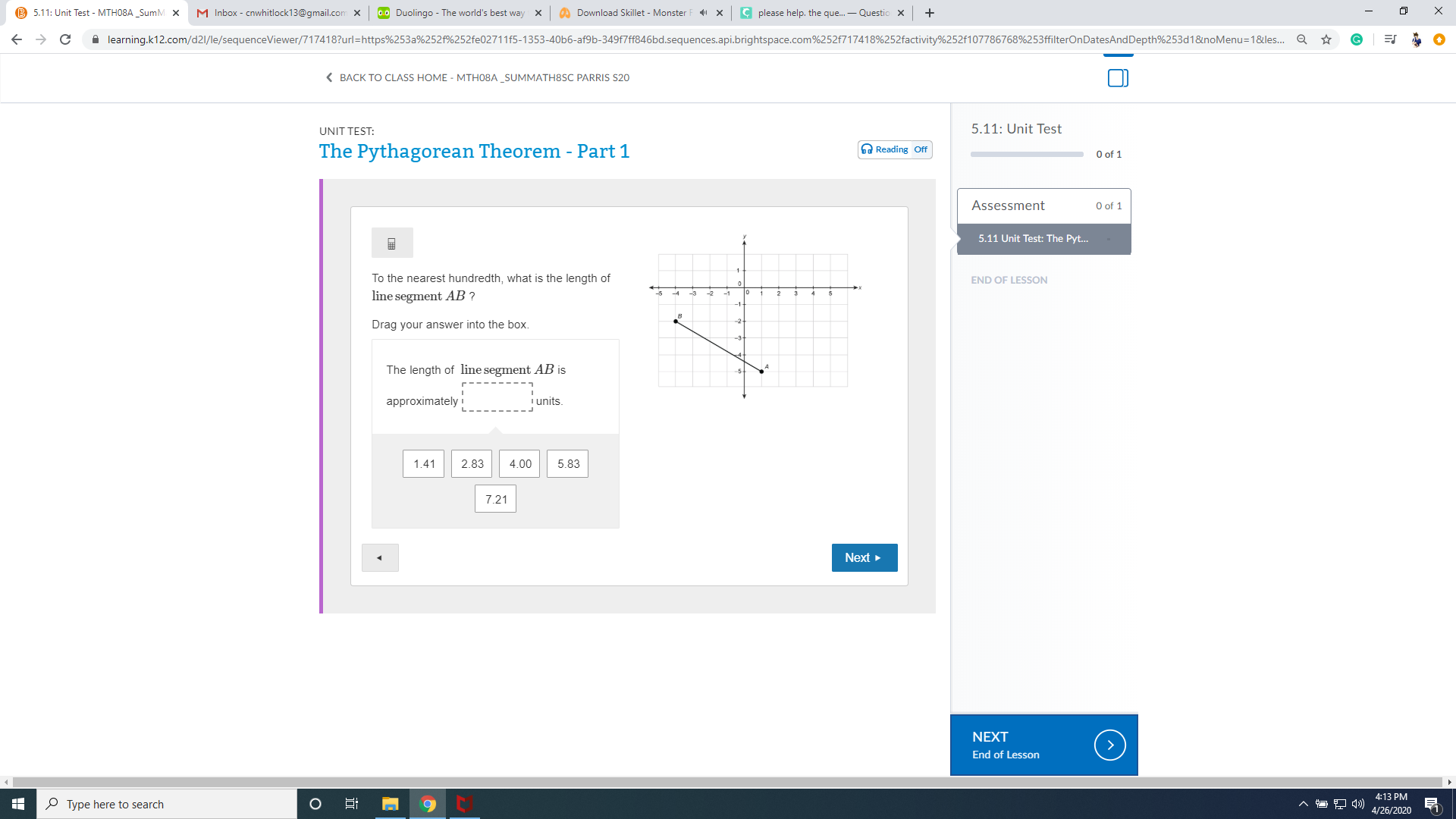
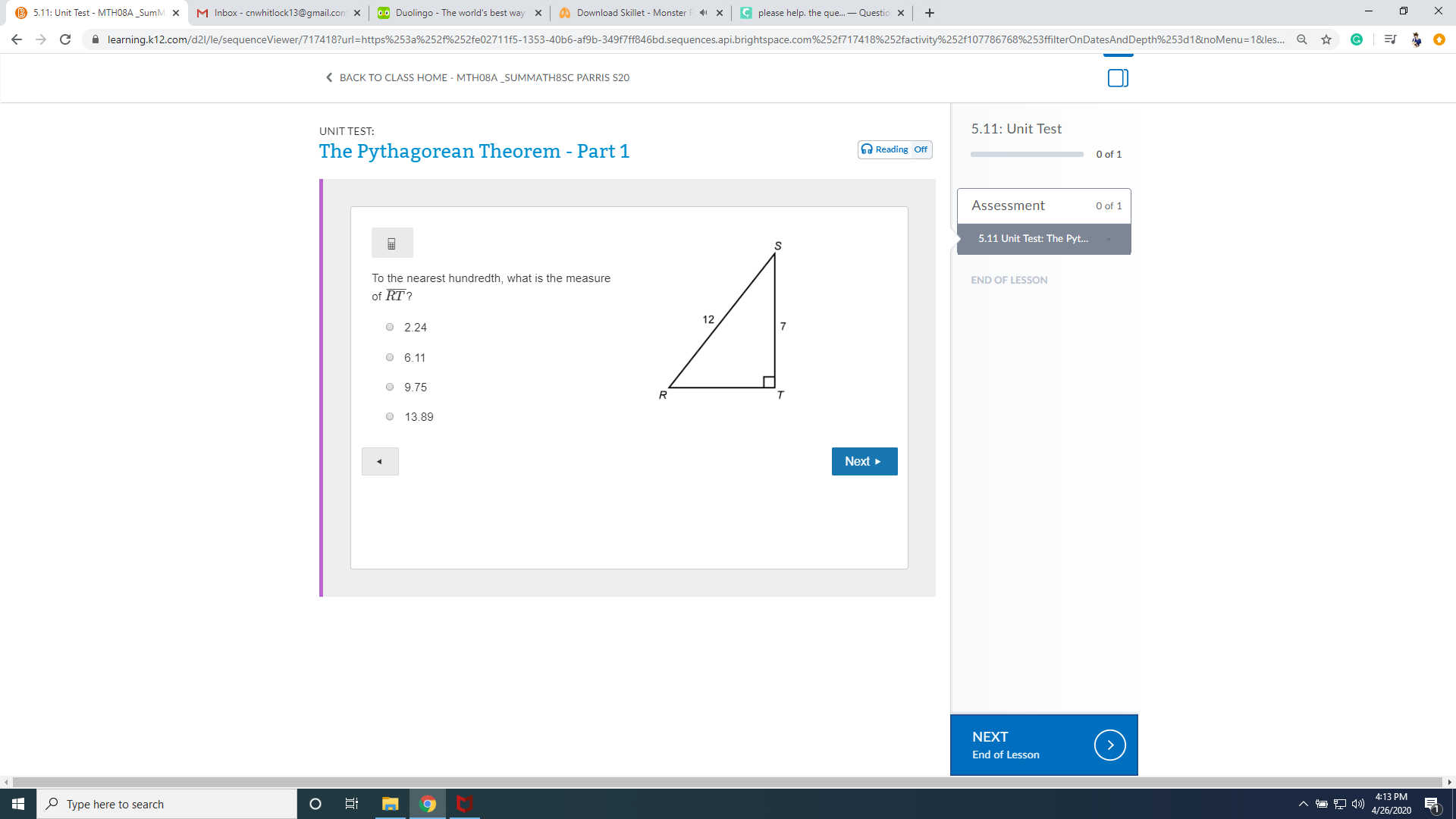
So do you know the Pythagorean theorem? It simply just states that the length of the two legs of the triangle, when squared and added together, are equivalent to the length of the hypotenuse squared. In other words, the general formula is \[a ^{2}+b ^{2} = c ^{2}\] Where a and b are two side lengths of a triangle and c is the length of the hypotenuse. Now keep in mind that this ONLY applies to RIGHT triangles. This equation will not work for any other triangles. I believe that with this knowledge, you would be able to solve most, if not all of your problems. In case you're stuck here's a hint. Remember that if you are given 2 side lengths of a triangle or 1 side length and a hypotenuse, you can simply plug those values in for a, b, and c respectively. Your unknown variable will be the one you are not given. So let's take screenshot 59 as an example. We're given a leg to be 12 units long and the hypotenuse to be 13 units long. In our equation, we will have \[a ^{2} + 12^{2} = 13^{2}\] It does not matter if you use a or b to represent one of the side lengths, as the algorithm for solving each will remain the same. Finish what I set up and try the other ones.
InsatiableSuffering:
As a side note, remember that the hypotenuse is always the LONGEST side of the triangle. It just so happens to be the side that is farthest away from the right angle. In terms of different triangles, it is just simply the longest side of the triangle.
Join our real-time social learning platform and learn together with your friends!
 KBaby:
Verse 1 We left our names in the dust of the driveway Watched the old town shrink
KBaby:
Lyrics Generator Use AI to write the lyrics for a song. Suggested Genres: Pop Hip
KBaby:
Verse 1 We left our names in the dust of the driveway Watched the old town shrink
KBaby:
Lyrics Generator Use AI to write the lyrics for a song. Suggested Genres: Pop Hip

 aitexturegenerator:
How are you all handling AI-generated textures for 3D models and game assets without losing the hand-made feel? I've been doing a small stylized environment
aitexturegenerator:
How are you all handling AI-generated textures for 3D models and game assets without losing the hand-made feel? I've been doing a small stylized environment

 Demon25:
Woke up feeling like that girl and that dude well he still aint crap pluse the du
Demon25:
Woke up feeling like that girl and that dude well he still aint crap pluse the du
 playtsec:
how do I get rid of stress from teachers... I just feel like running out the classroom and leaving on my own.
playtsec:
how do I get rid of stress from teachers... I just feel like running out the classroom and leaving on my own.
 JohnnyLFowler0812:
What type of gamer would play something and then get off for a while. Why not sta
JohnnyLFowler0812:
Which is better? Metallica Rap Country R&B hiphop Medal Gospel Chill Which 3 opti
JohnnyLFowler0812:
What type of gamer would play something and then get off for a while. Why not sta
JohnnyLFowler0812:
Which is better? Metallica Rap Country R&B hiphop Medal Gospel Chill Which 3 opti