
 QueenAngel:
calculus
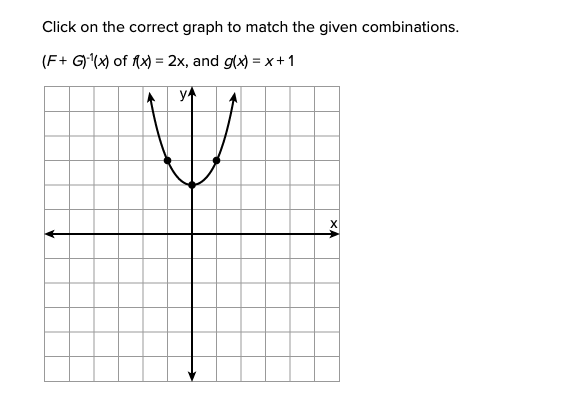
 Timmyspu:
@dude
 NineTailedFox:
@vocaloid
Timmyspu:
@smokeybrown
NineTailedFox:
@thesmartone
 SmokeyBrown:
It seems like an interesting question, but I am having some trouble understanding the formatting. The equations for f(x) and g(x) are given as 2x and x+1, respectively; the question then asks that we choose the graph matching \[(F+G)^{-1}(x)\] of those two equations. For starters, I think it would be good to show the other choices of graphs that we can select. We also need to clarify the meaning of capital F and G and their relation to lowercase f and g
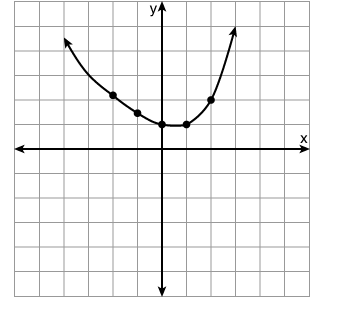
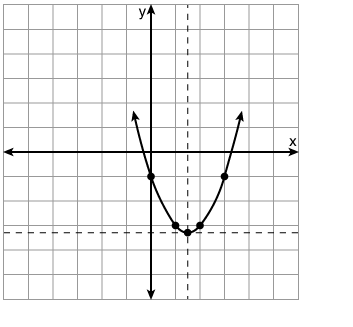 QueenAngel:
B^^
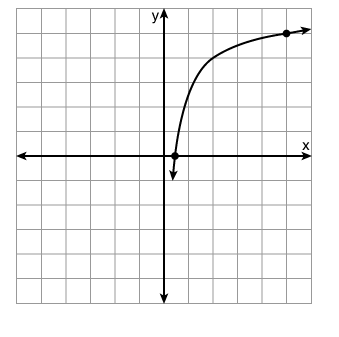
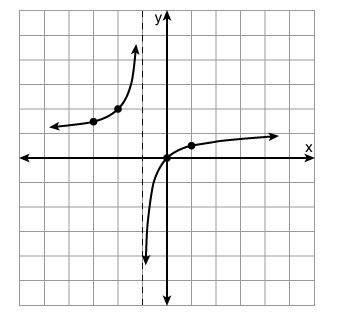
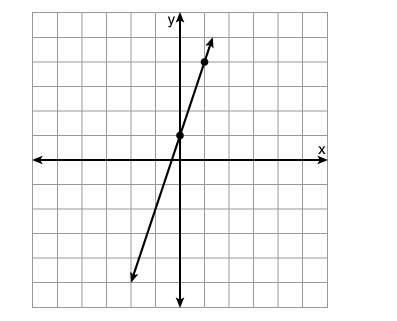
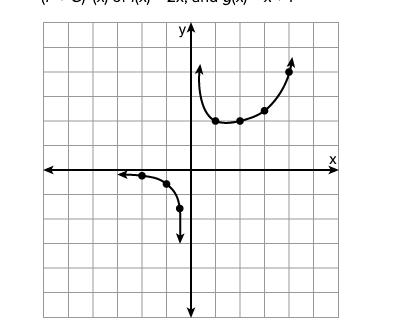
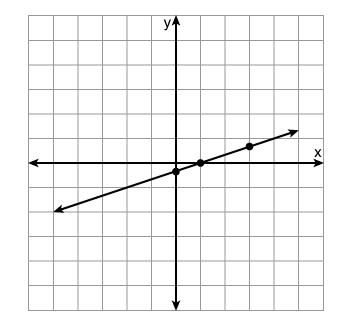 QueenAngel:
**SORRY FOR NOT POSTING GRAPHS, I FOGOT BUT THATS ALL**
SmokeyBrown:
Would it be safe to assume in this case that F(x) and G(x) represent antiderivatives of f(x) and g(x)? If that is the case, then F(x) would resolve to x^2 and G(x) would resolve to 1/2(x^2) + x, I think. Then, (F+G) (x) would be 3/2(x^2) + x, And finally (F+G)^-1(x) would be the inverse of the previous equation, which I am unfortunately not sure how to calculate, whoops I suppose we could try to plug the inverse-equation into a graphing calculator and compare the result to our options, but maybe that would defeat the purpose of the problem?
 Florisalreadytaken:
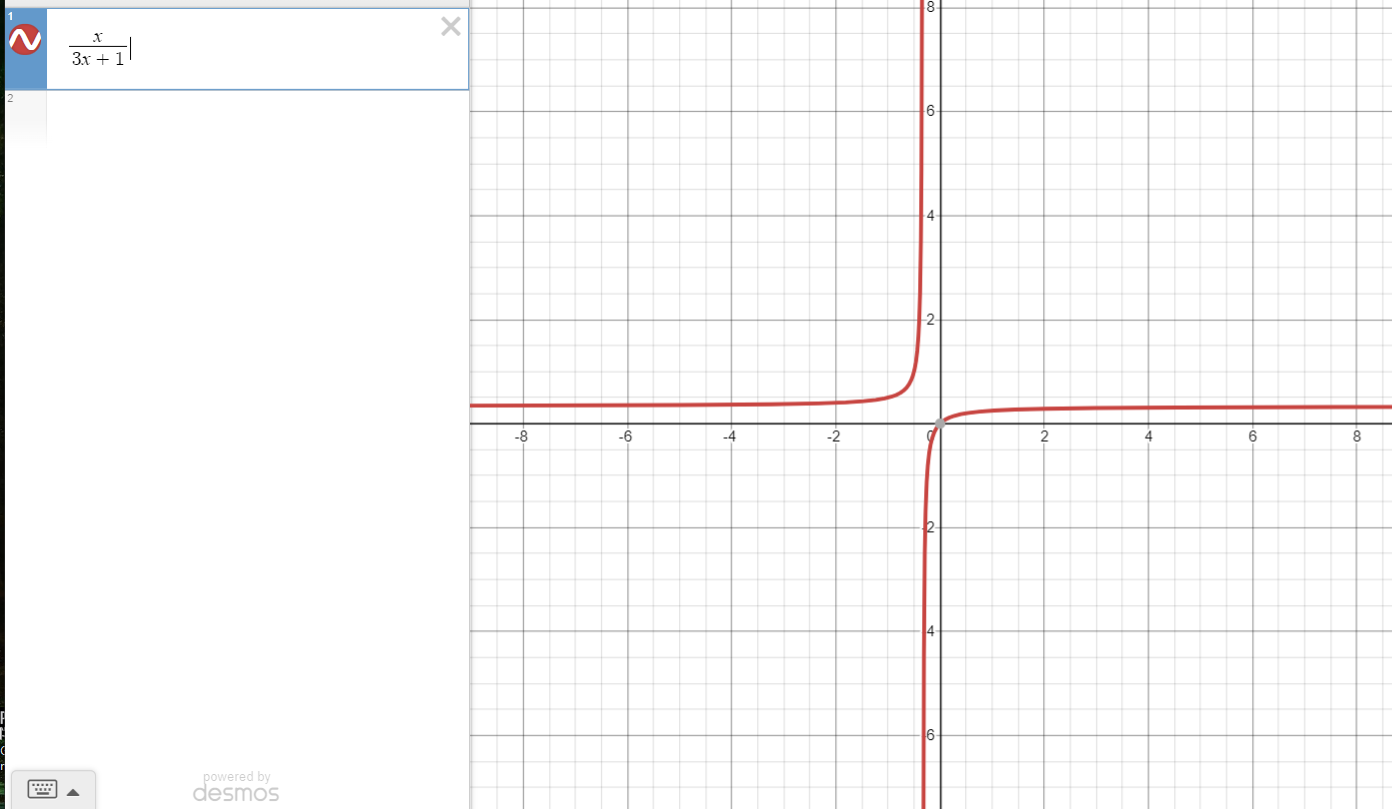
\( \left(f+g\right)^{-1}\left(x\right),\:f\left(x\right)=2x,\:g\left(x\right)=x+1 \) \( \mathrm{first let's find\:}\left(f+g\right)^{-1}\left(x\right)\:\mathrm{given}\:f\left(x\right)=2x,\:g\left(x\right)=x+1 \) that would give us \( \left(2x+x+1\right)^{-1} \) so the function we have so far is \( \left(2x+x+1\right)^{-1}x \) which is the inverse basically -- we can apply the rule of negatative power of one: \( \frac{1}{3x+1}x \ \ \vee \ \ \frac{x}{3x+1} \) i do not want to get into graphing formulas so just used desmos, great website, and got the image attached; now its up to you to pick the answer!!! : )
 QueenAngel:
Thank you Guys, may i have the Desmos Link?
QueenAngel:
Thank you So much
Join our real-time social learning platform and learn together with your friends!
VERNEISH:
Two objects are moving along separate linear paths where each path is described by position, d, and time, t.

 Maci:
what are the best stock apps for people who want to start investing?
Maci:
what are the best stock apps for people who want to start investing?
 Twaylor:
genuienly how do i get better self control i keep watcing youtube and theres this
Twaylor:
genuienly how do i get better self control i keep watcing youtube and theres this
 IzzyCookie:
|dw:1792074056138:dw| Uhm, I don't know where to ask this, but I'm in college welding at my community college, and I need help learning vertical welding for
IzzyCookie:
|dw:1792074056138:dw| Uhm, I don't know where to ask this, but I'm in college welding at my community college, and I need help learning vertical welding for

 thehearken:
not sure if this is considered spam, im sorry if it is, but does anyone have tips
thehearken:
not sure if this is considered spam, im sorry if it is, but does anyone have tips