
 ThisGirlPretty:
Can someone show me how to do these step by step I have a dba coming up
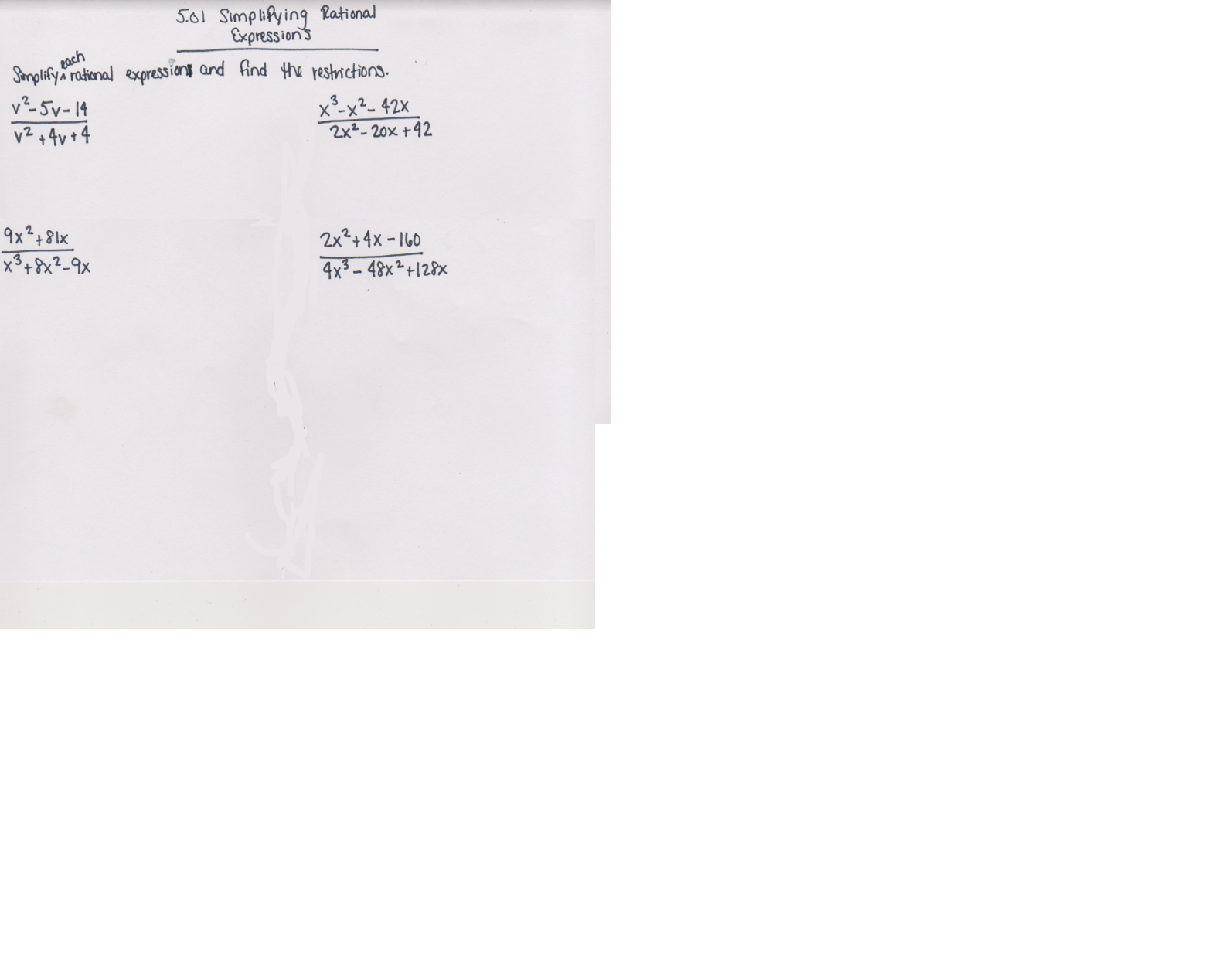 ThisGirlPretty:
@Ultrilliam @YoursTruly @UsArmy3947 @Allison @Aeon @Amythehedgehog @Eiwoh2 @Elsa213 @elektroflow @Kakarot @katiebug2000
 Allison:
Tag Hero when he's online if you don't need this ASAP. But I think Howie or Nick can help you too.
Allison:
@JustSaiyan @eiwoh2
ThisGirlPretty:
ok
 JustSaiyan:
Were any of you online roughly 40 minutes ago, when I stated I needed an Algebra tutor? I am a Science and History guy. Not math. I recommend Evl and Hero for that.
ThisGirlPretty:
Ok
Allison:
@EvL @Warriorz13 @psirockin2
 psirockin2:
Um... As someone who is barely passing math, you might not want me here. Sorry
 Warriorz13:
Oh phuck no ;-; Sorry hun, Math scares me
ThisGirlPretty:
It's ok and ok
 Elsa213:
Eiwoh probably knows how to solve it. o:
psirockin2:
Elsa... what the heck are you voluntelling Howie for? He's too fragile for this
Allison:
Howie is smart. He knows stuffz e.e
Elsa213:
Maybe Aeon could help. e.e
Elsa213:
Have you tried google yet, @ThisGirlPretty ? c:
ThisGirlPretty:
No D:, I'm not good with math it takes me forever to learn it
Allison:
Hero is good at explaining things. Maybe for a little bit for his lunch break. He's probably eating an Avocado sandwich *^*
Allison:
And drinking his Mountain Spring Valley water cx
ThisGirlPretty:
Sounds yummy and that's good :D I need someone to explain it to me because my math teacher wants me too or I would get extra credit D:
Allison:
His lifestyle, Nick.
Elsa213:
Welcome to QuestionCove, @ThisGirlPretty . o;
ThisGirlPretty:
@Elsa213 Thank you :D
 Amythehedgehog:
Oops Sorry I wasnt on >^<
 Nnesha:
First check if there is any common factor in the equation. Take out the common factor. There are different ways to factor the quadratic equation. The headphone method or factor by grouping (both are pretty much the same). Factoring will be easier if the leading coefficient is one \[\rm Ax^2+Bx+C=0\] ^the quadratic equation where `A` is the leading coefficient `B` the coefficient of middle term( x -term) `C` Constant Find two numbers that multiply to `AC` and add up to `B` the factors will be (x+ 1st number)(x+ 2nd number)
Nnesha:
The restriction: We can't divide by zero. To find the restriction on variable, set the denominator equal to zero and solve for the variable. (make sure you simplify the functions first)
Nnesha:
tag me whenever you're free we can solve first question together
Nnesha:
the*
Nnesha:
\[\large\rm Q1: \frac{ v^2-5v-14 }{ v^2+4v+4 }\] lets factor the numerator first. v^2 is same as 1v^2 \[\rm 1v^2-5v+14\] what is the leading coefficient ?? what is B? what number represent the constant term ?
ThisGirlPretty:
Idk >_<
ThisGirlPretty:
|dw:1494879553798:dw| I know you have to factor it but i dont know how to factor these types
Nnesha:
\[\large\rm \color{ReD}{A}x^2+\color{blue}{B}x+ \color{orange}{C}\]\[\large\rm \color{ReD}{1}x^2\color{blue}{-5}x+ \color{orange}{14}\] A is the leading coefficient. so what number is replaced by A??
ThisGirlPretty:
2?
Nnesha:
we are working on this equation \[\large\rm \color{Red}{1}v^2\color{blue}{-5}v+\color{orange}{14}\]
ThisGirlPretty:
1?
Nnesha:
|dw:1494879810138:dw|
Nnesha:
yes correct. and what's C and B?
ThisGirlPretty:
5 and 14?
Nnesha:
-5 for B and yes 14 for C
Nnesha:
now we have to find two numbers who multiply to AC( 1 times 14=14) which is 14 and add up to -5
Nnesha:
A times C is 14
Nnesha:
so what two numbers you should multiply to get 14 but when you add the same numbers you should get -5 ?
ThisGirlPretty:
I know to get 14 is 2 and 7
Nnesha:
opps sorry 14 is negative my bad
Nnesha:
|dw:1494880312834:dw|
ThisGirlPretty:
its ok
Nnesha:
so which number should be negative ??(because we need -14 and -5)
ThisGirlPretty:
7?
ThisGirlPretty:
7?
ThisGirlPretty:
7?
Nnesha:
yes right so the factor for the numerator are (v +1st number )(v+ 2nd number) (v-7)(v+2) now factor the denominator.
Nnesha:
\[\large\rm \color{red}{1}v^2+\color{blue}{4}v+\color{orange}{4} \] a=? b=? c=?
ThisGirlPretty:
idk :?
Nnesha:
|dw:1494881386899:dw| the number in front of the variable `v^2` is the leading coefficient the number with no variable known as constant(C) The number with the `x-term` represent the B value
ThisGirlPretty:
I got it Can you give me an example of a vertical asymptote?
Nnesha:
Vertical asymptote is same as finding the restriction on variable. Set the denominator equal to zero and solve for the variable. for example \[\rm \frac{2x+9}{3x+4}\] \[\rm VA~~~3x+4=0\] solve for x \[\rm VA~~~x=-\frac{4}{3}\]
ThisGirlPretty:
Ok one second
ThisGirlPretty:
Hey @Nnesha Can you give me one example of oblique asymptote please
Nnesha:
For oblique asymptote first make sure the numerator has highest power than the denominator the oblique asymptote will be in linear equation form `y=mx+b` are you familiar with long division ?? or synthetic division ?
Nnesha:
if the function is \[\rm \frac{2x^2+9}{3x+4}\] highest degree at the numerator is 2 which is greater than the highest degree for the function in the denominator divide the function by using long division. The quotient will be the oblique asymptote. I am not sure if you are familiar with long or synthetic division. you will not be able to find oblique asymptote Without knowing how to divide the polynomials.
ThisGirlPretty:
Wait what is there isn't a degree higher than the numerator?
Nnesha:
the degree is the exponent |dw:1494891702218:dw| 2x^2+9 highest degree is 2 3x+4 highest degree is one
Nnesha:
|dw:1494892003108:dw|
Join our real-time social learning platform and learn together with your friends!
 VERNEISH:
Two objects are moving along separate linear paths where each path is described by position, d, and time, t.
VERNEISH:
Two objects are moving along separate linear paths where each path is described by position, d, and time, t.

 Maci:
what are the best stock apps for people who want to start investing?
Maci:
what are the best stock apps for people who want to start investing?
 Twaylor:
genuienly how do i get better self control i keep watcing youtube and theres this
Twaylor:
genuienly how do i get better self control i keep watcing youtube and theres this
 IzzyCookie:
|dw:1792074056138:dw| Uhm, I don't know where to ask this, but I'm in college welding at my community college, and I need help learning vertical welding for
IzzyCookie:
|dw:1792074056138:dw| Uhm, I don't know where to ask this, but I'm in college welding at my community college, and I need help learning vertical welding for

 thehearken:
not sure if this is considered spam, im sorry if it is, but does anyone have tips
thehearken:
not sure if this is considered spam, im sorry if it is, but does anyone have tips