
 princeevee:
help please
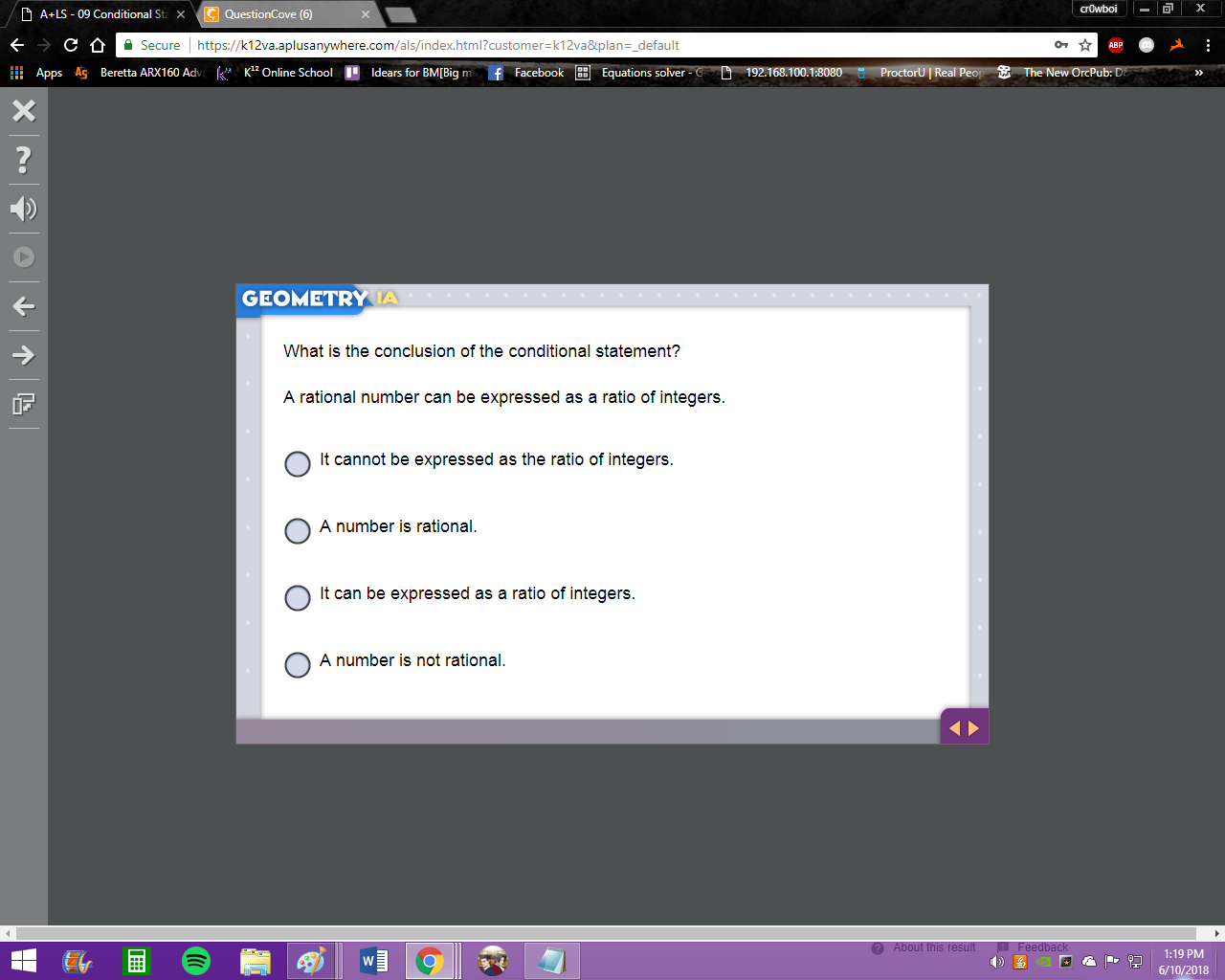 princeevee:
@dude
princeevee:
@Vocaloid
princeevee:
nevermind this, i already solved it, i have a different question though.
 Vocaloid:
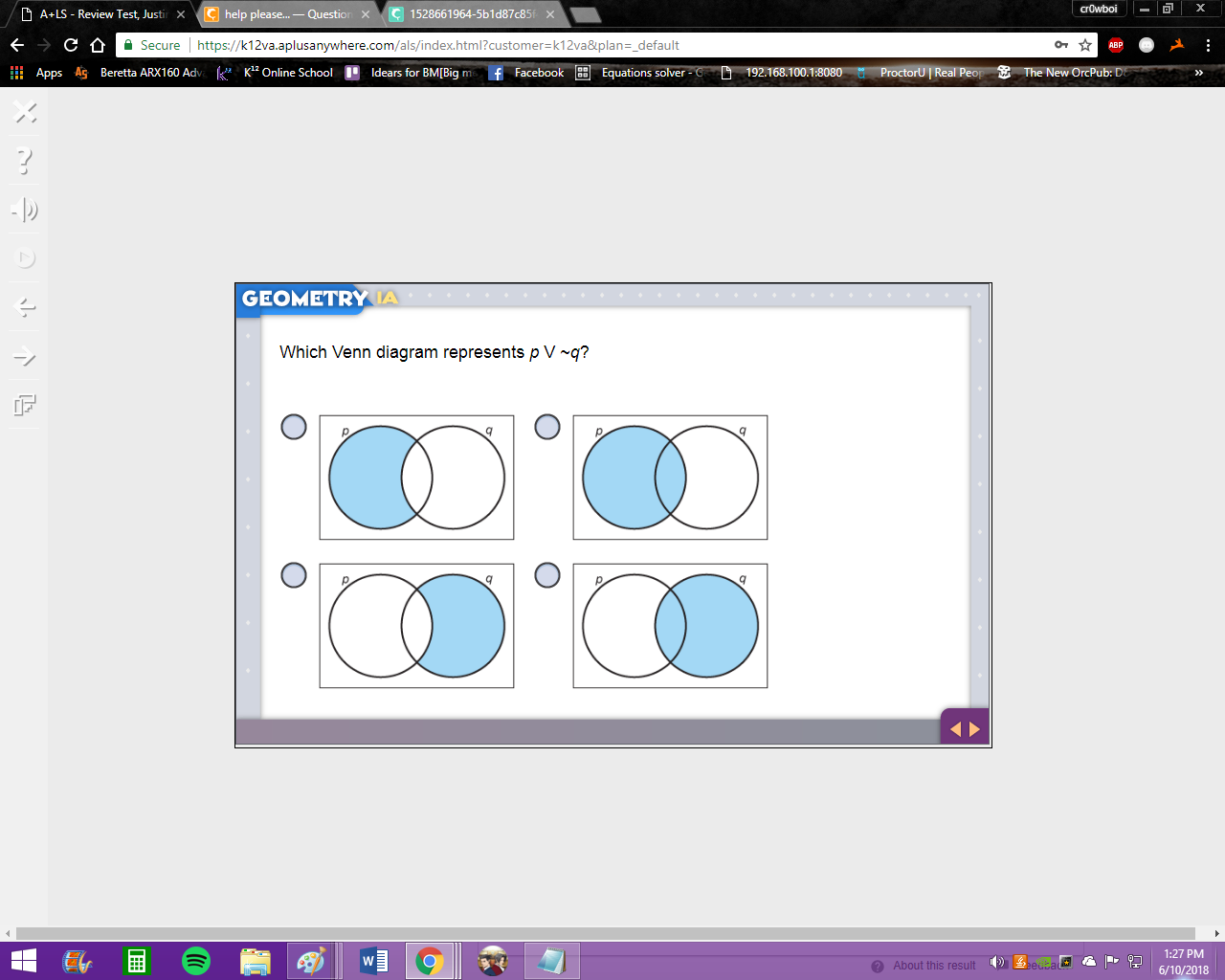
the ~ in front of q means "not q" so everything in p but excluding everything in q
princeevee:
so that means the one on the top right?
Vocaloid:
*excluding everything in q*
princeevee:
so the top left one then
Vocaloid:
good
 princeevee:
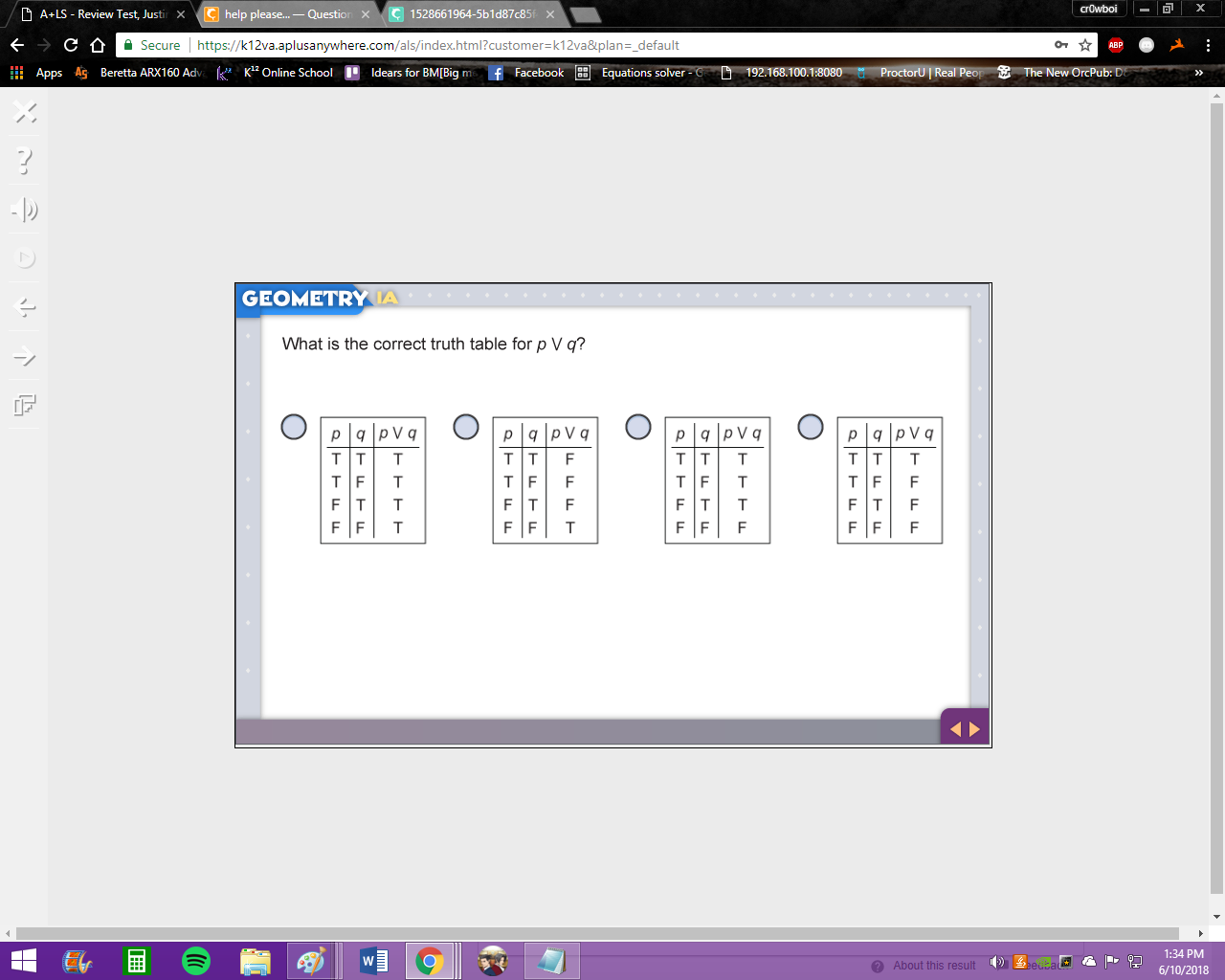
so this one dosent have a ~, which means it includes q, right?
Vocaloid:
right
Vocaloid:
for truth tables, if you have p v q I believe that in order for the result to be true, you need at least one truth value between p and q
princeevee:
so the first one is marked out, because it has an FF, yet it's T
Vocaloid:
yes
princeevee:
same for the second one, i assume also
Vocaloid:
yes
princeevee:
however, the third one looks the most reasonable one
Vocaloid:
good, that's your sol'n
 princeevee:
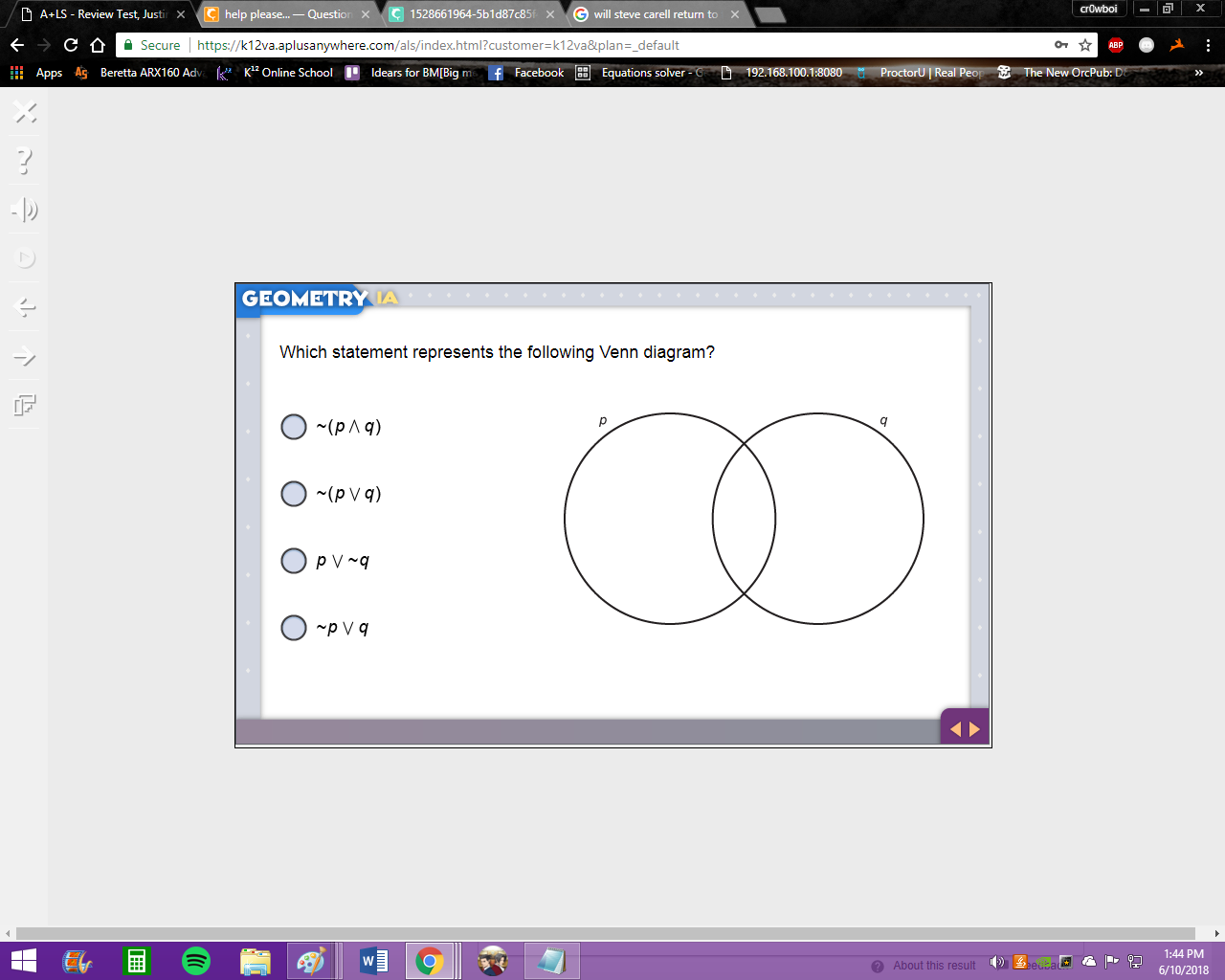
for this one, you need to go back to the first question, right? or is this different?
Vocaloid:
hm. not sure about this one tbh. I'll see what I can find on the web.
Vocaloid:
hm. not sure about this one tbh. I'll see what I can find on the web.
princeevee:
alright
Vocaloid:
asked someone for advice on this one and they suggest ~(p v q) since nothing in the venn diagram is shaded, this statement would exclude everything inside the diagram
 Vocaloid:
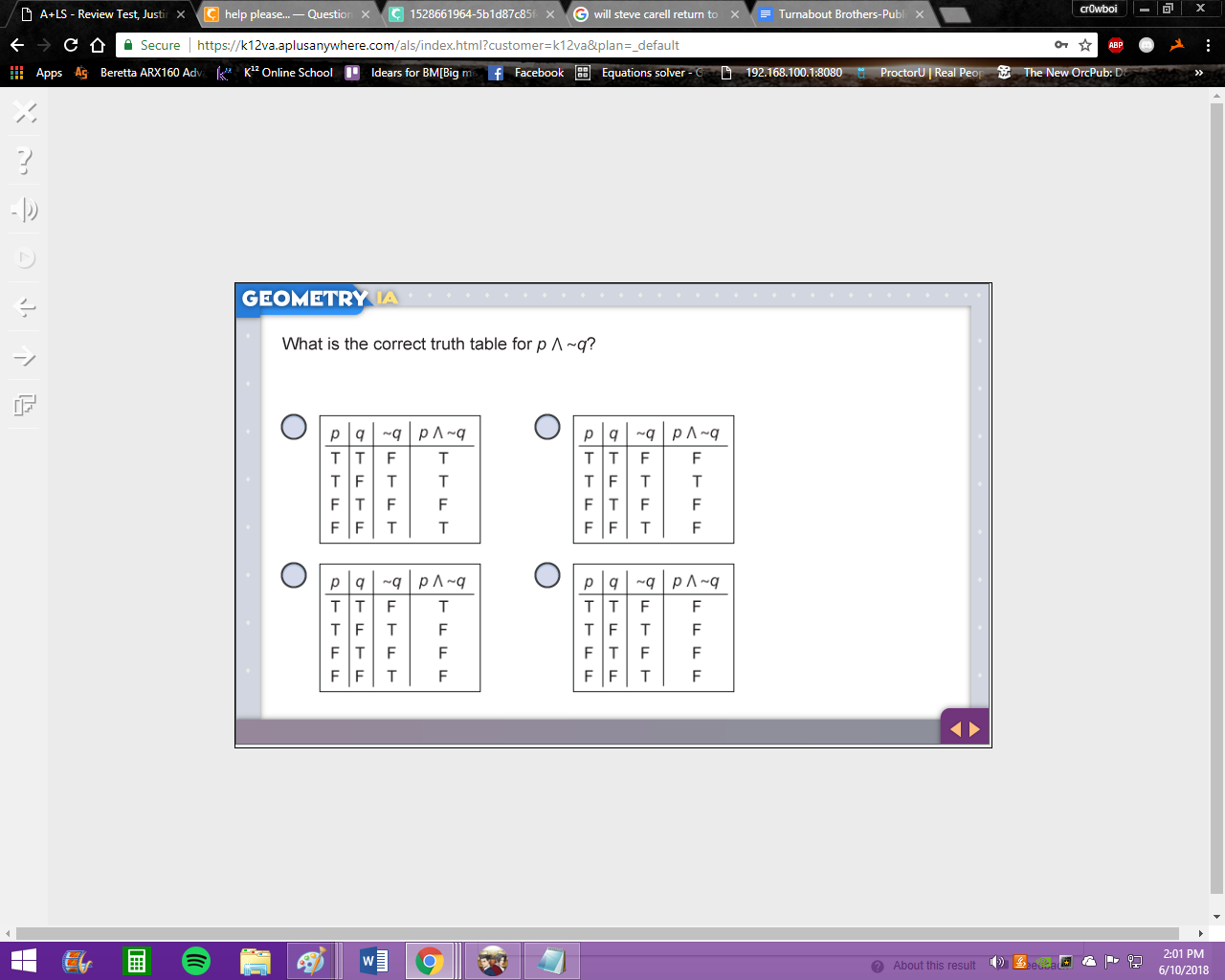
the upside down V symbol /\ means that both p and ~q need to be true in order for the result to be true, otherwise its false make sure you are looking at the ~q column not the q column
princeevee:
ah, so both need to be T to be completely true, or have T in the right columm
Vocaloid:
yes
princeevee:
so the bottom left one?
Vocaloid:
be sure you are looking at the p column and the ~q column not the q column
princeevee:
oh, so both P and ~q need to be T?
Vocaloid:
yes
princeevee:
oh, the top left one then
Vocaloid:
top left has p true Q~ false but the result is still true which cannot be the case notice how the top right has every p/\~q false except when they're both true which matches the original statement, so it has to be the top right
princeevee:
oh, alright
 princeevee:
this one has an arrow, now...
Vocaloid:
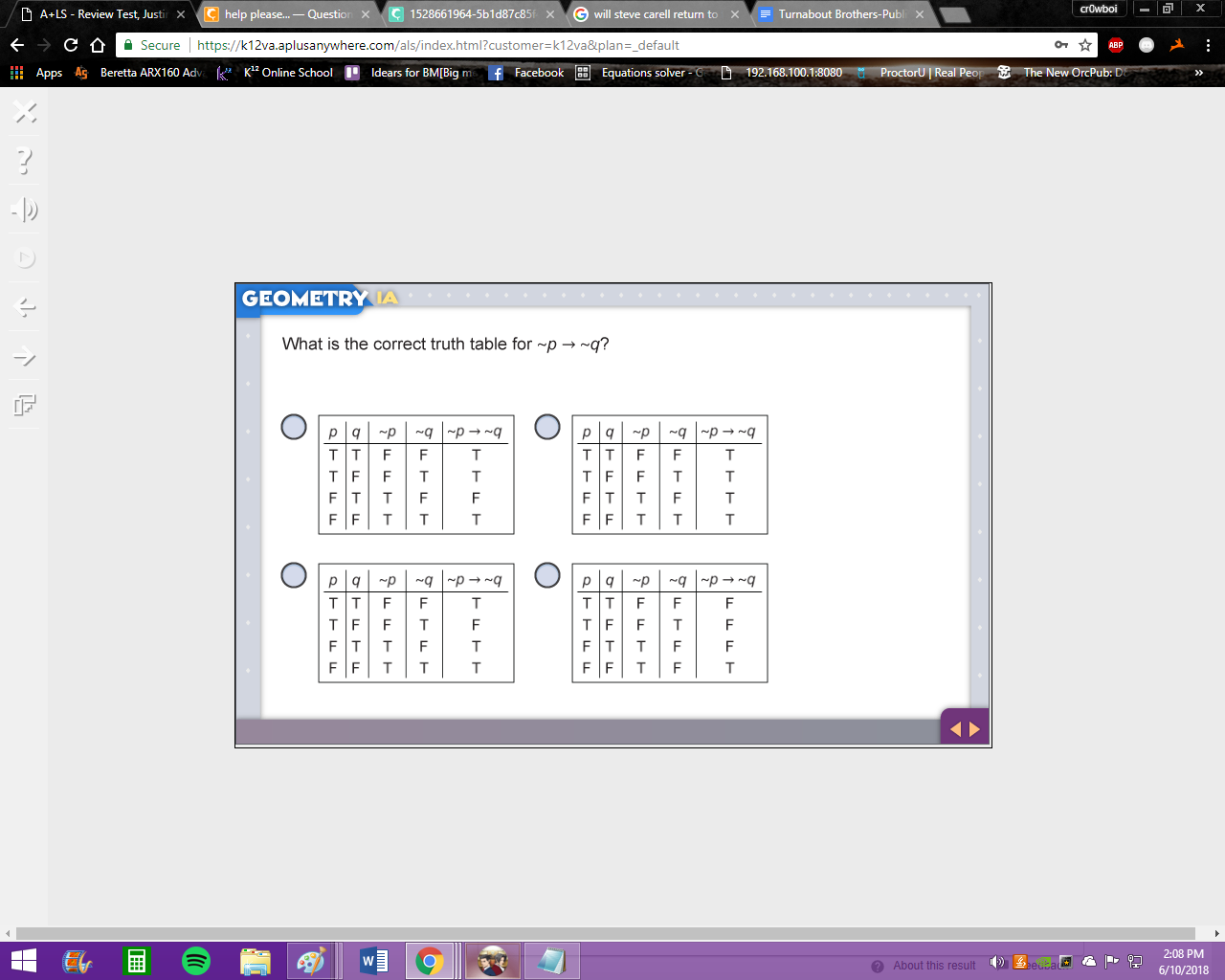
so the arrow is an if-then statement a --> b is true except where a is true and b is false
Vocaloid:
so ~p --> ~q is only false when ~p is true and ~q is false; otherwise the statement is true
Vocaloid:
the correct solution will show ~p T and ~q F ====> F with all the other rows in the table being true
princeevee:
oh,
princeevee:
top right?
princeevee:
@Vocaloid
Vocaloid:
top right cannot be true because it has ~p T and ~q F ====> T instead of F
Vocaloid:
look for the table that shows: ~p T and ~q F ====> F with every row besides that row being true
princeevee:
they all do have that column
Vocaloid:
|dw:1528667346644:dw|
Vocaloid:
|dw:1528667351742:dw|
princeevee:
so it's either the top left or the bottom right.
Vocaloid:
only the top left and bottom right have ~p T and ~q F ====> F
princeevee:
but looking at it more, it's the top left
Vocaloid:
now, between those two, pick the choice where every row except that row is true
Vocaloid:
good, top left
 princeevee:
for this one, we kinda went over it before,
princeevee:
it's pV~q which it's like...
princeevee:
P=t, ~q=f = T?
Vocaloid:
yes
princeevee:
bottom left?
Vocaloid:
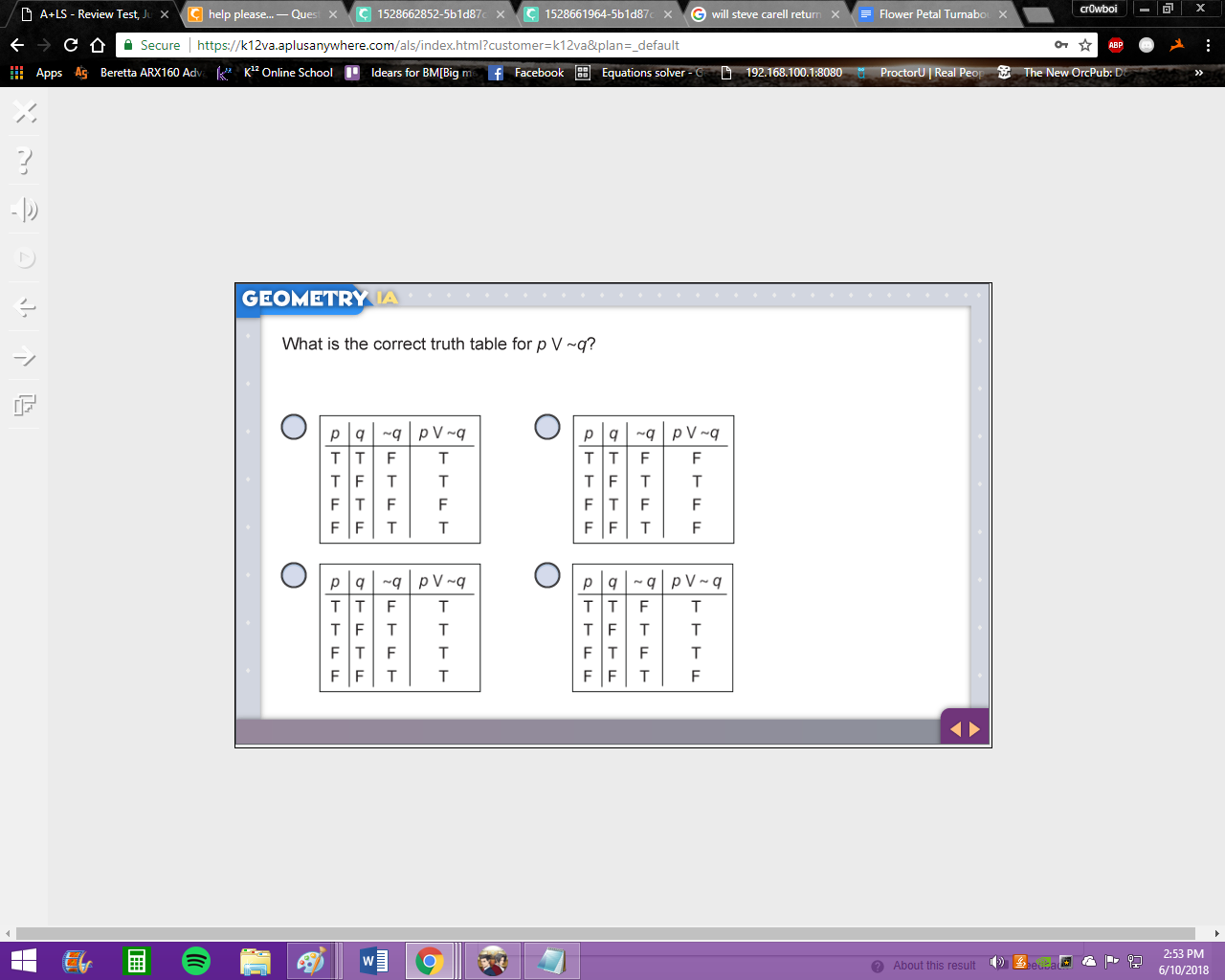
note that if both p and ~q are false the result must be false not true so there must be at least one statement that is F instead of T
princeevee:
so the top right then?
Vocaloid:
for p V ~q the result will be true unless p and ~q are both false you will have three T's and one F
Vocaloid:
be sure you are checking the correct columns
princeevee:
last check would be the bottom right, then,
Vocaloid:
be sure you are looking at the p and the ~q columns not the q column
princeevee:
okay, something strange happened...
princeevee:
i dont know what, but it looked like it resetted and changed during me testing it..
Vocaloid:
uh alright then
princeevee:
anyways....
princeevee:
i guess let's just continue...
 Vocaloid:
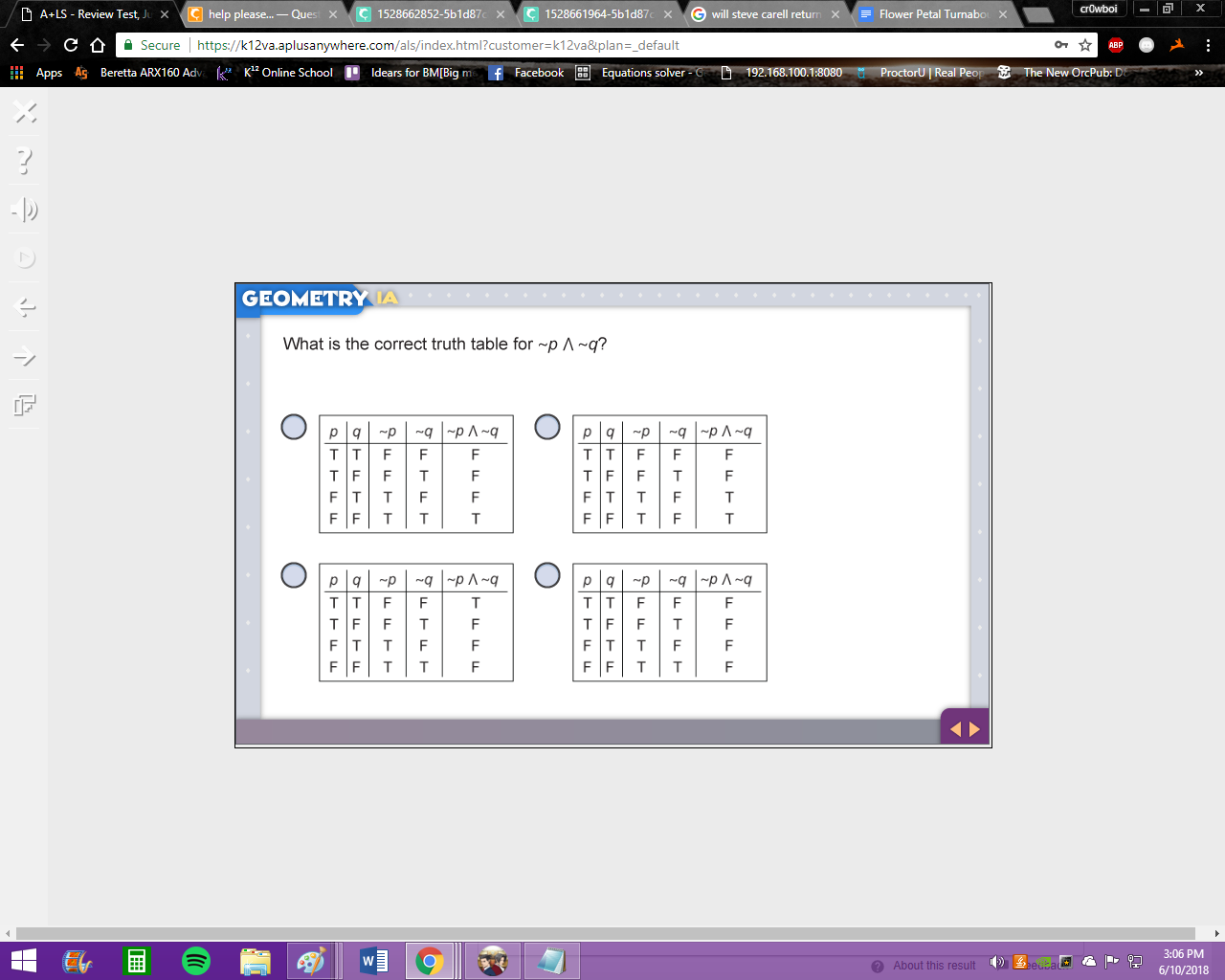
you have the upside down V here which means ~and~ so if ~p and ~q must both be true for the result to be T, otherwise it's F
princeevee:
top left.
Vocaloid:
perfect
 princeevee:
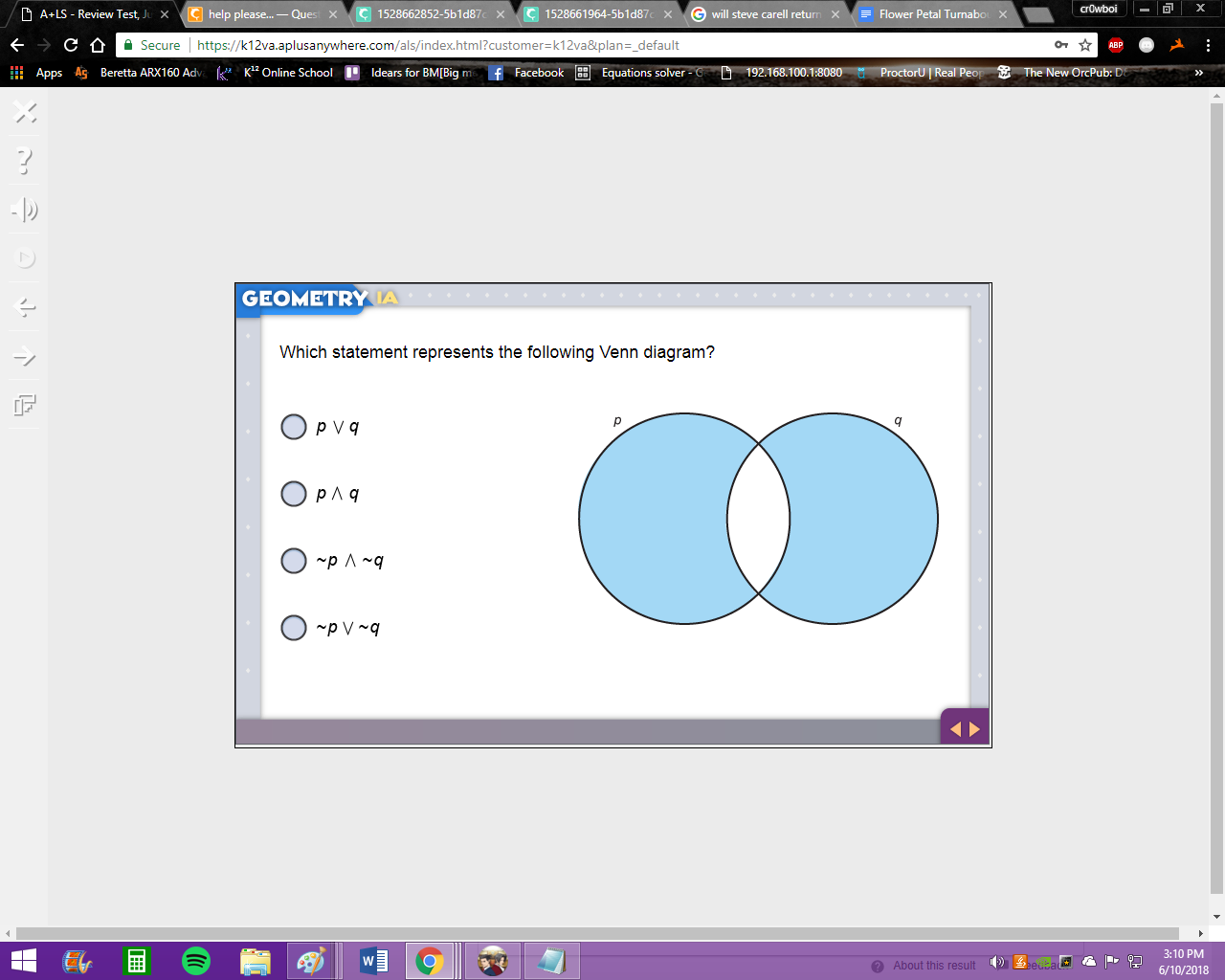
i would guess this one is A?
Vocaloid:
p V q would include the middle section too so it can't be A try to find the statement that will exclude the part where p and q are both true
princeevee:
then B? P /\ q?
princeevee:
that might not be it either..
Vocaloid:
p /\ q would only be the middle section and that's the opposite of what we want
princeevee:
leaves C and D
Vocaloid:
hint: the blue crescent on the left can be described as "not q" and the blue crescent on the right can be described as "not p"
princeevee:
so it's D then
princeevee:
but wait, v means that they have to include the center one
Vocaloid:
p V q must include the center, yes ~p V ~q does not include the center ~p means everything outside p ~q means everything outside q so combining them means everything that is ouside p or outside
Vocaloid:
*or outside q which excludes the center making D the only possible sol'n
 princeevee:
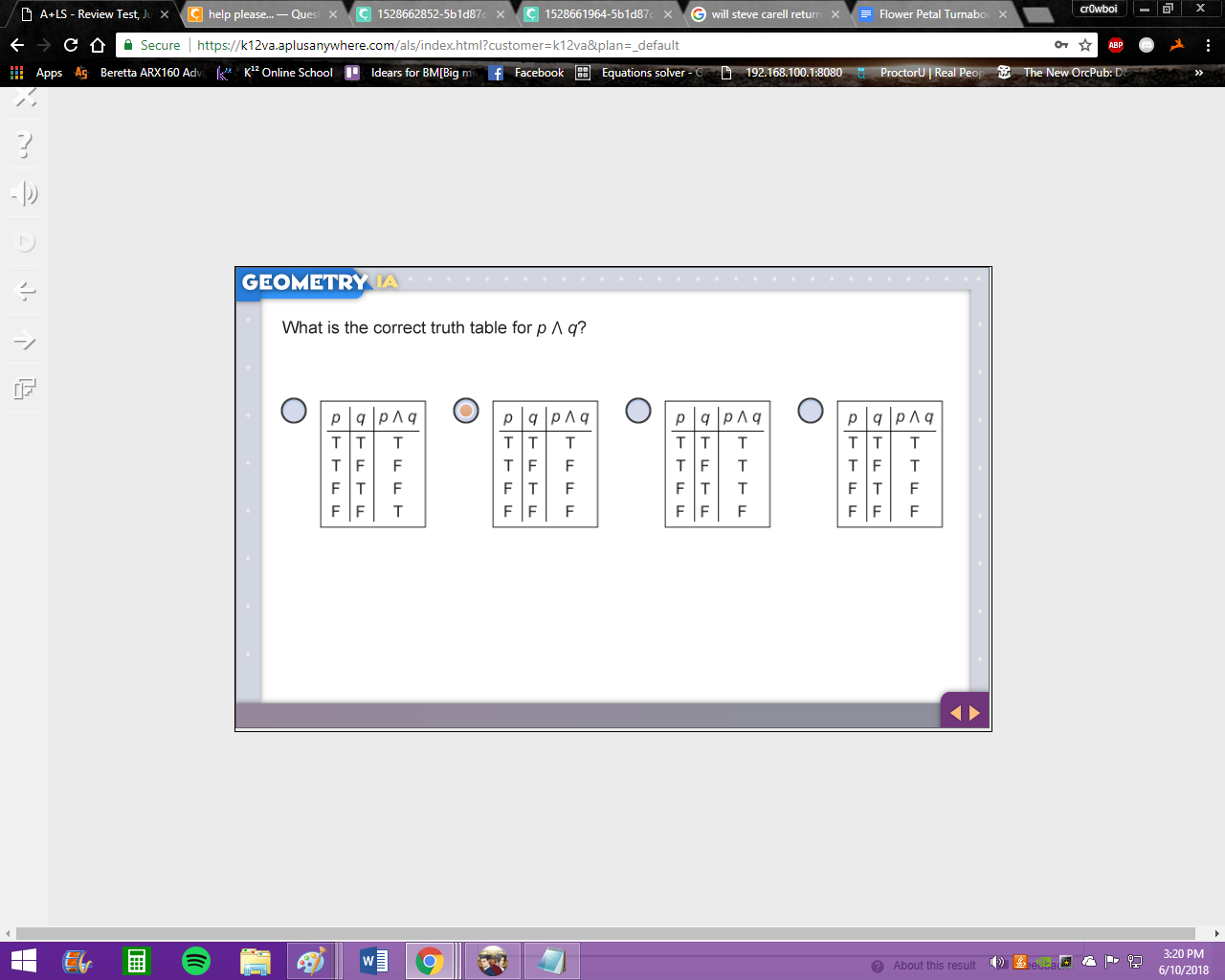
alright so it says p/\q
princeevee:
that means they need to be false to be true?
Vocaloid:
/\ means "and" so both p and q must be true in order for the result to be T otherwise, F
Vocaloid:
so yeah the one you've selected is correct
 princeevee:
@Vocaloid
Vocaloid:
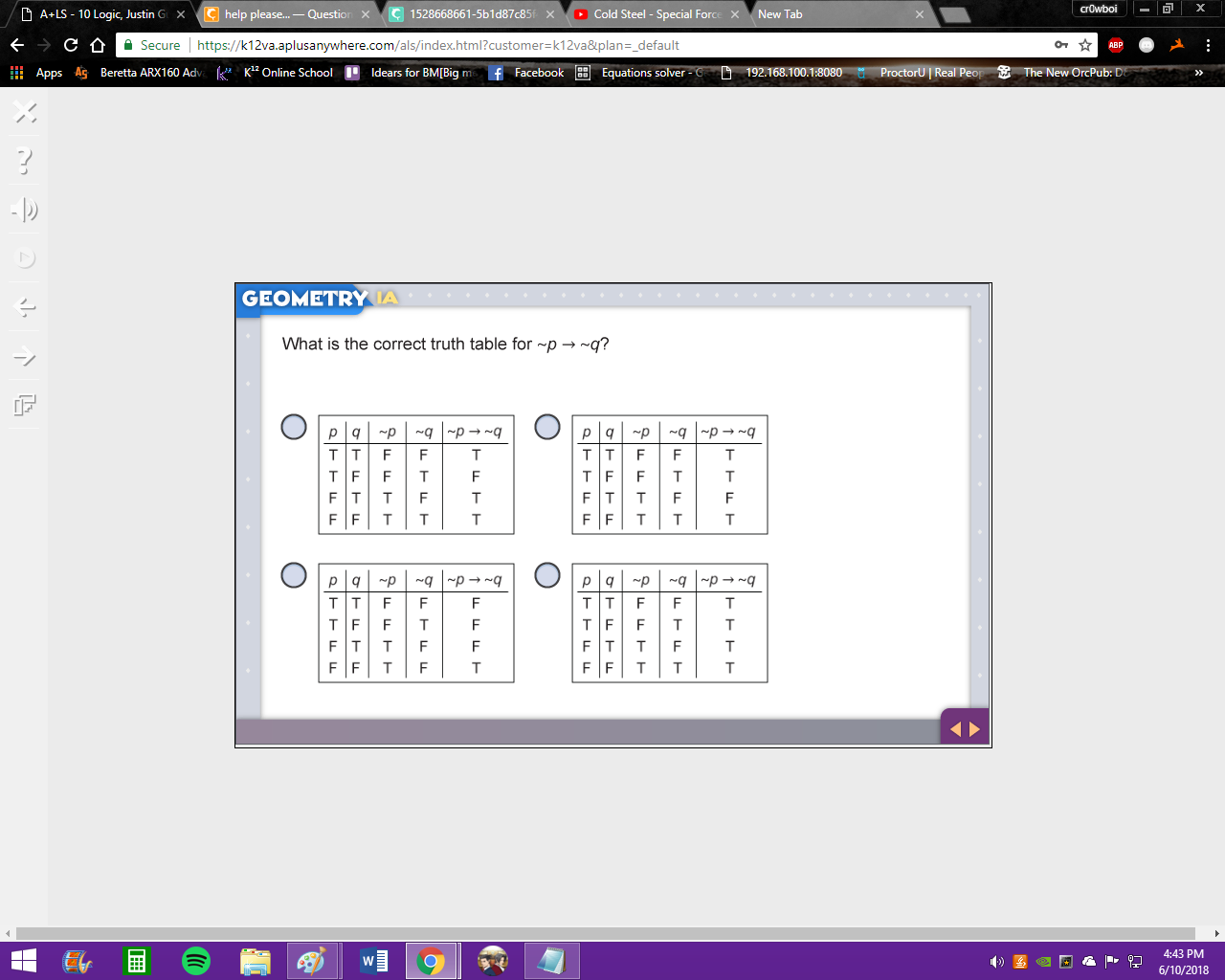
~p --> ~q is only false if ~p = T and ~q = F every other condition of ~p and ~q is T
princeevee:
alright
princeevee:
the top right one then
Vocaloid:
good
 princeevee:
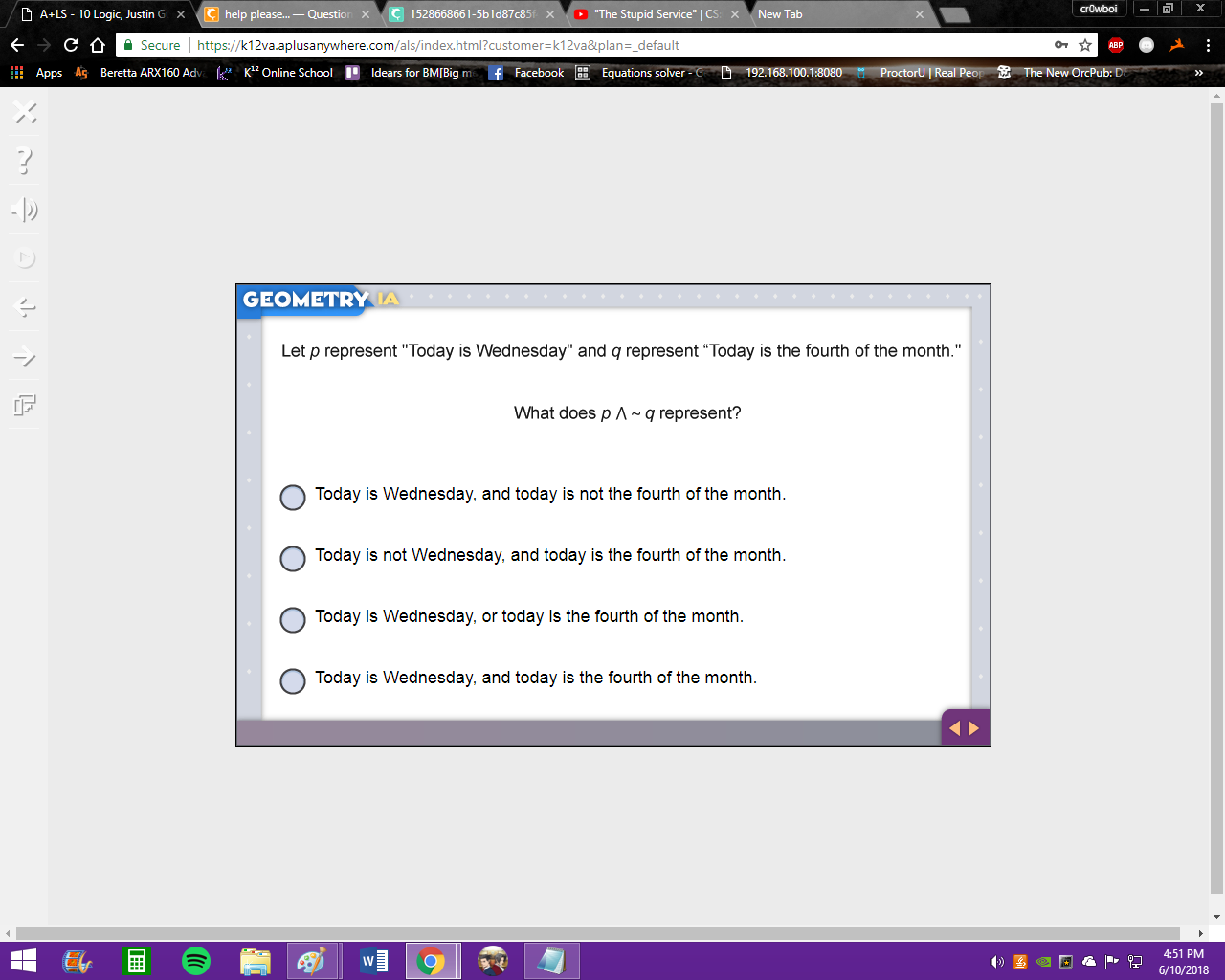
so /\ means "and" right?
Vocaloid:
yes
princeevee:
so A
Vocaloid:
yes
princeevee:
converse means negative, or opposite, right?
Vocaloid:
sort of, if you have an if-then statement you just reverse the if and then parts
princeevee:
so the converse of p -> q is ~p->~q?
Vocaloid:
that would be the inverse not the converse converse would be q -> p
princeevee:
thanks
Join our real-time social learning platform and learn together with your friends!
 Demon25:
For a hoco proposal with a cheerleader and football player, what else should be a
Demon25:
For a hoco proposal with a cheerleader and football player, what else should be a

 Breathless:
TOC: "MGF any confirmation on the commander? we require confirmation as soon as[radio static].
Breathless:
TOC: "MGF any confirmation on the commander? we require confirmation as soon as[radio static].
 EdwinJsHispanic:
I wrote something that I don't know if I want it as a poem or song, Please let me know on yours thoughts about it, I'm still doing this! "Broken promises an
EdwinJsHispanic:
I wrote something that I don't know if I want it as a poem or song, Please let me know on yours thoughts about it, I'm still doing this! "Broken promises an
 thehearken:
hi um I don't know if this is the right section for this, but can someone go over my poem and tell me if its good enough to give my English professor for a
thehearken:
hi um I don't know if this is the right section for this, but can someone go over my poem and tell me if its good enough to give my English professor for a
 heartlessprophet:
Aye what's 19z%u00f74p=9u03c0 my teacher thinking of impossible questions for us
heartlessprophet:
Aye what's 19z%u00f74p=9u03c0 my teacher thinking of impossible questions for us
 kippppp:
does anyone have any good tips for writing stories? i'm trying to write a dnd campaign but i'm not that great of a writer yet.
kippppp:
does anyone have any good tips for writing stories? i'm trying to write a dnd campaign but i'm not that great of a writer yet.
 GRIZZLEY19:
Y'all let me know what y'all think about this beat I made I took me like a hour maybe rate it 0/10 https://drive.
GRIZZLEY19:
Y'all let me know what y'all think about this beat I made I took me like a hour maybe rate it 0/10 https://drive.
 Ultrilliam:
Welcome to the 10th Anniversary Update! (Part 2) Sorry this one passed the date a
Ultrilliam:
Welcome to the 10th Anniversary Update! (Part 2) Sorry this one passed the date a
 Twaylor:
was walking downtown and my adhd brain wanted to make some (rock?) lyrics: There'
Twaylor:
was walking downtown and my adhd brain wanted to make some (rock?) lyrics: There'