
 Nicole:
http://prntscr.com/o11kxn
Nicole:
@Vocaloid
 Ferredoxin4:
You must be familiar with the properties of all regular and basic polygons. The diagonals for an isosceles trapezoid are always congruent. Option B.
Nicole:
@Vocaloid
Ferredoxin4:
3. You must know the properties of all polygons. At least sketch a kite. Diagonals don't bisect. 4. This conditional statement is true.
Nicole:
@Ferredoxin4
Ferredoxin4:
Property of parallelograms: Parallel sides of a parallelogram are always congruent. AB is parallel to CD and BC is parallel to AD. This leads you to the conclusion that AB=CD and BC=AD. We can now formulate the respective equations. (1)...2x-y=7 for AB=CD (2)...x+y=2 for BC=AD I'd now use elimination between the two systems, find x, then plug and chug and find y.
Nicole:
can I just put 2x-y=7 equal to x+y=2 ?
Ferredoxin4:
First you can't really make two systems 'equal' to each other, you can only isolate one variable and then find the other. Second by making them equal, you are implying that AB=AD or CD=BC, which is not necessarily true in all parallelograms.
Ferredoxin4:
I'd suggest using elimination between the two systems and eliminate the y since their coefficients are already opposite values. Then add the x terms and the constants on the other side, find x using division property of equality. Once you have x, I'd substitute that x value in the second equation (or first, whatever is your preference, but I chose second because less math) and find y using subtractive property of equality. You'll get your x and y values then.
Nicole:
Can you help me through it please, because its quite confusing
Ferredoxin4:
Do you understand the logic I used for the parallelogram?
Ferredoxin4:
Given that ABCD is a parallelogram, we can use the property that non-intersection, parallel sides must always be congruent. This is true as long as the polygon is a parallelogram. What are the parallel sides here?
Nicole:
bc and ad?
Ferredoxin4:
correct, what's the other pair?
Nicole:
cd and ba?
Ferredoxin4:
correct. So using the property I gave you, what do you think is true of these pairs?
Ferredoxin4:
The parallel segments would be...
Nicole:
congruent
Ferredoxin4:
correct, so thereby you can imply that the values given are equivalent. You can say that AB=CD and BC=AD do you get that?
Nicole:
Yes
Ferredoxin4:
So you can use the values given: AB=2x-y CD=7 and you know that AB=CD So then you can say that 2x-y=7 correct?
Nicole:
Yes okay
Ferredoxin4:
Apply the same logic with the other pair. BC=AD we know that BC=x+y and AD=2 so x+y=2
Ferredoxin4:
You now have two equations for each pair, AB=CD is 2x-y=7 BC=AD is x+y=2 So now you have a system of linear equations. Do you know how to do those?
Nicole:
Im not sure
Ferredoxin4:
Elimination, substitution, Cramer's rule, etc...you know these terms?
Ferredoxin4:
Okay, not Cramer's rule, but do you recall elimination and substitution from Algebra 1?
Nicole:
Yes I do
Ferredoxin4:
Do you know how to do those, specifically elimination in this case?
Nicole:
I forgot about the elimination method
Ferredoxin4:
Okay so here's what you would do: Your equations are \[(1)...2x-y=7\] \[(2)...x+y=2\] You can add these two without having to change the equations one of the like-variable's coefficients are opposite values of each other (-y and y) 2x-y=7 x+y=2 Add these 2 equations 3x=9 x=3 We have our x value as 3. Now plug and chug in one of the equations and find y. x+y=2 (3)+y=2 y=2-3 y=-1 so x=3 and y=-1. We can ensure these values are correct using inductive reasoning.
Nicole:
So thats the x and y ? so those are the answers?
Ferredoxin4:
yes, x=3 and y=-1
Nicole:
AC = 2x+9 BC = 8x-3 2x+9=8x-3 find x??
Nicole:
x=2
Nicole:
like that?
Ferredoxin4:
yes, but do you know why we did AC=BC?
Nicole:
Point C is on the perpendicular bisector of AB.
Ferredoxin4:
No, there is not enough information to conclude that point C, which lies on segment AC, is a perpendicular bisector of AB.
Ferredoxin4:
The reason why we can do AC=BD is because a property of isosceles trapezoids is that their diagonals are equivalent.
Nicole:
AE = EC 1/2b + 1 = b - 15
Ferredoxin4:
Correct, now do you know why you equate AE to EC?
Nicole:
b = 32
Nicole:
they were both given
Nicole:
AE = EC the same as BE = ED
Ferredoxin4:
yes b is 32 but why?
Ferredoxin4:
No, it's because another property of parallelograms: Diagonals intersect at their midpoints.
Nicole:
yes thats another reason
Nicole:
then to find AE we have to substitute the b
Nicole:
AE = 1/2(32) + 1
Nicole:
AE = 16+1
Nicole:
which is 17
Nicole:
so AE is 17.
Nicole:
Correct?
Nicole:
@Ferredoxin4
Ferredoxin4:
I was away, I'm back. Let me see.
Ferredoxin4:
correct.
Nicole:
34=2x-10 x=22 ?
Ferredoxin4:
yes correct
Nicole:
Measure of L is the same as M. Since M equals 66, then L also is 66.
Ferredoxin4:
correct
Nicole:
y=-x+4, SV=VS, 1=4x-y
Nicole:
y=-x+4 into 1=4x-y 1=4x-(-x+4) => 1=4x+x-4 => 1=5x-4 => 1+4=5x-4+4 => 5=5x => 5/5=5x/5 => x=1
Ferredoxin4:
Correct, due to CPCTC. Now use systems of linear equations (I would use substitution)
Nicole:
x=1 into y=-x+4 y=-x+4=-1+4=3
Nicole:
x=1, y=3 ?
Ferredoxin4:
Correct x=1 and y=3
Ferredoxin4:
We can draw several implications here and eventually conclude that 2x+3=40, then solve for x.
Nicole:
x=37/2
Ferredoxin4:
yes
Ferredoxin4:
Using CPCTC we can conclude that BC=EF. This means that 3x-5=x find x
Nicole:
x=5/2
Ferredoxin4:
correct
Ferredoxin4:
Incorrect. Don't make implications off of the graphic, as it may trick you. It says that ABC=DFE. Using CPCTC, we can say that angle F is equal to angle B, or that 3x-1=100. Now solve for x.
Nicole:
okay 101/3
Ferredoxin4:
yes
Ferredoxin4:
I'd say mark up the diagram so it's easier to understand, or draw it on paper.
Nicole:
wouldnt it just be 4 and 6
Ferredoxin4:
AB of the shorter triangle and AC of the larger triangle are similar segments. Similar segments are a proportion. This means we can say that \[\frac{ AB }{ AC } = \frac{ BE }{ CD }\] Plug in their values AB=4 AC=6 BE=x CD=3
Ferredoxin4:
\[\frac{ 4 }{ 6 }=\frac{ x }{ 3 }\] x would be 2.
Nicole:
Ohh okay that makes sense
Nicole:
16/8 = x/20
Nicole:
x=40
Ferredoxin4:
Correct.
Ferredoxin4:
Use proportions We can say that TV~WS and WR~TR Then make the proportion: \[\frac{ 18 }{ 10 } = \frac{ x+6 }{ x+2 }\] Use cross multiplication and find x
Nicole:
x=3
Ferredoxin4:
yes
Ferredoxin4:
same concept as before, form a proportion on the similar segments
Nicole:
12/8=x+14/x+8 ?
Ferredoxin4:
yes correct
Nicole:
x=4
Ferredoxin4:
yes
Nicole:
5x-6=2x+12?
Ferredoxin4:
correct, do you know why?
Nicole:
because thats the measure of the two triangles
Ferredoxin4:
no, it doesn't have to do with triangles. Since both angles x and y share the same arc, which is arc WZ, we can conclude that angles x and y are congruent.
Nicole:
oh okay
Nicole:
@Ferredoxin4
 Ferredoxin4:
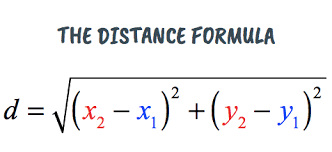
This one doesn't need it though, just imagine the points on the cartesian plane or draw a sketch. It would be 1 unit away.
Ferredoxin4:
So first you can graph the function using a few test points. Do you know how to calculate focus and directrix?
Nicole:
No im not sure
Ferredoxin4:
okay here's how you would do it: 1. First change the equation so it matches this: 4py=x^2, where 4p=a 2. Find p. 3. if a>0, then the focus is k+p and the directrix is y=k-p, where k is from (h,k) Graph them
Ferredoxin4:
Correction to #1, you would convert it to (x-h)^2 = 4p(y-k) if it's a vertical axis I just wrote that because in this case there is no bx or c value.
Ferredoxin4:
4p=a remains the same.
Join our real-time social learning platform and learn together with your friends!
 KBaby:
Verse 1 We left our names in the dust of the driveway Watched the old town shrink
KBaby:
Lyrics Generator Use AI to write the lyrics for a song. Suggested Genres: Pop Hip
KBaby:
Verse 1 We left our names in the dust of the driveway Watched the old town shrink
KBaby:
Lyrics Generator Use AI to write the lyrics for a song. Suggested Genres: Pop Hip

 aitexturegenerator:
How are you all handling AI-generated textures for 3D models and game assets without losing the hand-made feel? I've been doing a small stylized environment
aitexturegenerator:
How are you all handling AI-generated textures for 3D models and game assets without losing the hand-made feel? I've been doing a small stylized environment

 Demon25:
Woke up feeling like that girl and that dude well he still aint crap pluse the du
Demon25:
Woke up feeling like that girl and that dude well he still aint crap pluse the du
 playtsec:
how do I get rid of stress from teachers... I just feel like running out the classroom and leaving on my own.
playtsec:
how do I get rid of stress from teachers... I just feel like running out the classroom and leaving on my own.
 JohnnyLFowler0812:
What type of gamer would play something and then get off for a while. Why not sta
JohnnyLFowler0812:
Which is better? Metallica Rap Country R&B hiphop Medal Gospel Chill Which 3 opti
JohnnyLFowler0812:
What type of gamer would play something and then get off for a while. Why not sta
JohnnyLFowler0812:
Which is better? Metallica Rap Country R&B hiphop Medal Gospel Chill Which 3 opti