
 justjm:
So exactly, does surface area of the molecule (referring to IMF strength really) mean higher or lower MP/BP? I was earlier told that the least compact, least branched, and most linear molecules have greater MP but I just came across an example rather against that..
justjm:
Let me just post the question, just a sec..
justjm:
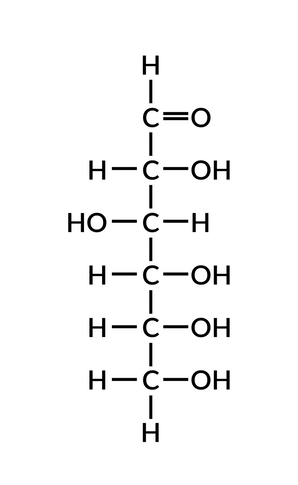
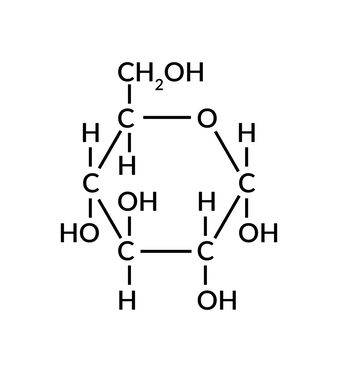
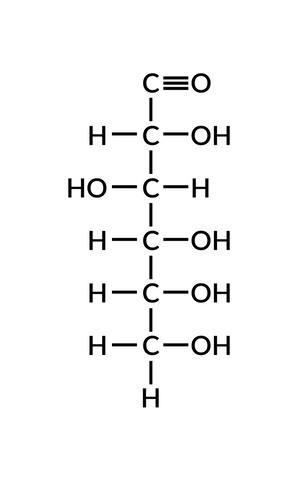
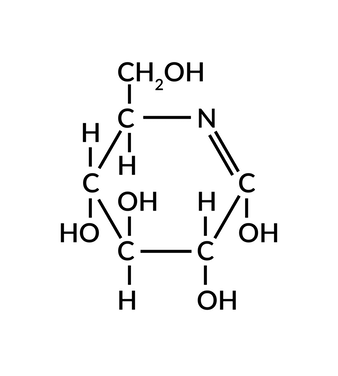
Which of the following substances has the highest melting point?
 justjm:
I knew A and B were off the list because the other two options have greater bond strength. I personally chose C because it was linear and the triple bond between the C and O. Turns out it is D.
justjm:
I knew A and B were off the list because the other two options have greater bond strength. I personally chose C because it was linear and the triple bond between the C and O. Turns out it is D.
justjm:
My question is, does this mean ringed structures have stronger dispersion forces?
 Vocaloid:
didn't trust myself to give a good answer on this so I looked it up "London Dispersion Forces and Cycloalkanes Although alkanes are similar to cycloalkanes, they have higher London Dispersion forces because the ring shape allows for a greater area of contact. Ring strain also causes certain cylcoalkanes to be more reactive. London Dispersion Forces are the attractive or repulsive forces between molecules or between parts of the same molecule. For cycloalkanes, London dispersion forces refer to the repulsive forces between the molecules that cause ring strain." source: https://chem.libretexts.org/Bookshelves/Organic_Chemistry/Supplemental_Modules_(Organic_Chemistry)/Alkanes/Properties_of_Alkanes/Cycloalkanes/Physical_Properties_of_Cycloalkanes
justjm:
Ah thank you for responding, I'll check it out.
Join our real-time social learning platform and learn together with your friends!
 KBaby:
Verse 1 We left our names in the dust of the driveway Watched the old town shrink
KBaby:
Lyrics Generator Use AI to write the lyrics for a song. Suggested Genres: Pop Hip
KBaby:
Verse 1 We left our names in the dust of the driveway Watched the old town shrink
KBaby:
Lyrics Generator Use AI to write the lyrics for a song. Suggested Genres: Pop Hip

 aitexturegenerator:
How are you all handling AI-generated textures for 3D models and game assets without losing the hand-made feel? I've been doing a small stylized environment
aitexturegenerator:
How are you all handling AI-generated textures for 3D models and game assets without losing the hand-made feel? I've been doing a small stylized environment

 Demon25:
Woke up feeling like that girl and that dude well he still aint crap pluse the du
Demon25:
Woke up feeling like that girl and that dude well he still aint crap pluse the du
 playtsec:
how do I get rid of stress from teachers... I just feel like running out the classroom and leaving on my own.
playtsec:
how do I get rid of stress from teachers... I just feel like running out the classroom and leaving on my own.
 JohnnyLFowler0812:
What type of gamer would play something and then get off for a while. Why not sta
JohnnyLFowler0812:
Which is better? Metallica Rap Country R&B hiphop Medal Gospel Chill Which 3 opti
JohnnyLFowler0812:
What type of gamer would play something and then get off for a while. Why not sta
JohnnyLFowler0812:
Which is better? Metallica Rap Country R&B hiphop Medal Gospel Chill Which 3 opti