
 ihavewrizz:
math
ihavewrizz:
i just need a simple answer nun too much
 cdp:
cdp:
im getting you help from my brother it'll be like 10-15 minute maybe less
ihavewrizz:
cdp:
im srry but he doesnt know how to do it
 Itssaiannaa:
ts look hard asab
ihavewrizz:
Itssaiannaa:
 XLynx:
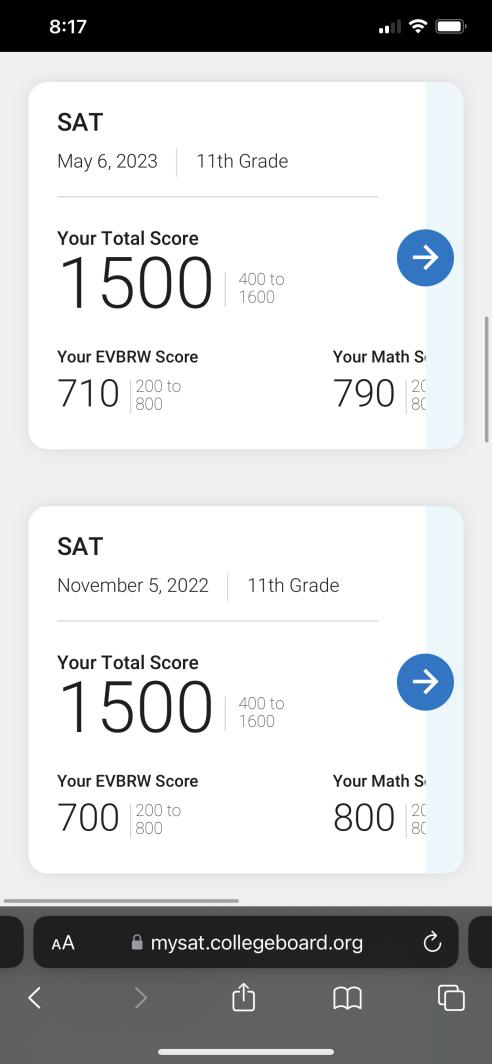
be a bit more like me I got a 1510 on the SAT superscored
ihavewrizz:
ihavewrizz:
 Luigi0210:
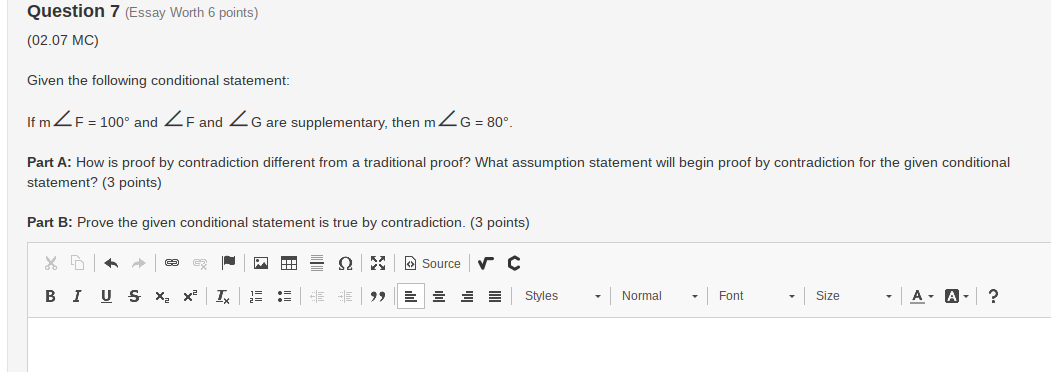
Proof by contradiction is a method that assumes the opposite of what is stated. If a contradiction can be shown, it will indirectly lead to the statement being true. So for this example, the contradiction would: Assume that <G does NOT equal 80 degrees.
ihavewrizz:
ihavewrizz:
and i have to prove the given conditional statement is true by contradiction
Luigi0210:
Traditional proofs: They involve the use of direct, logical statements, theorems, and deductions. Contradiction: It is an indirect proof that assumes the OPPOSITE of what is being statement. The goal of contradiction is to arrive at a false assumption.
ihavewrizz:
Luigi0210:
And to PROVE it by contradiction you have to break it up into two cases: Case 1: Assume that <G is greater than 80 degrees. Assume it is like 90 degrees, that would mean that 100+90 = 190 degrees, making it NOT supplementary. Case 2: Assume that <G is less than 80 degrees. Same as above, it would give a value LESS than 180 degrees, thus also NOT complementary. In both cases, a contradiction, so <G has be 80 degrees.
Luigi0210:
I meant *supplementary not compl. lol
Join our real-time social learning platform and learn together with your friends!
VERNEISH:
Two objects are moving along separate linear paths where each path is described by position, d, and time, t.

 Maci:
what are the best stock apps for people who want to start investing?
Maci:
what are the best stock apps for people who want to start investing?
 Twaylor:
genuienly how do i get better self control i keep watcing youtube and theres this
Twaylor:
genuienly how do i get better self control i keep watcing youtube and theres this
 IzzyCookie:
|dw:1792074056138:dw| Uhm, I don't know where to ask this, but I'm in college welding at my community college, and I need help learning vertical welding for
IzzyCookie:
|dw:1792074056138:dw| Uhm, I don't know where to ask this, but I'm in college welding at my community college, and I need help learning vertical welding for

 thehearken:
not sure if this is considered spam, im sorry if it is, but does anyone have tips
thehearken:
not sure if this is considered spam, im sorry if it is, but does anyone have tips