
 princeevee:
help please
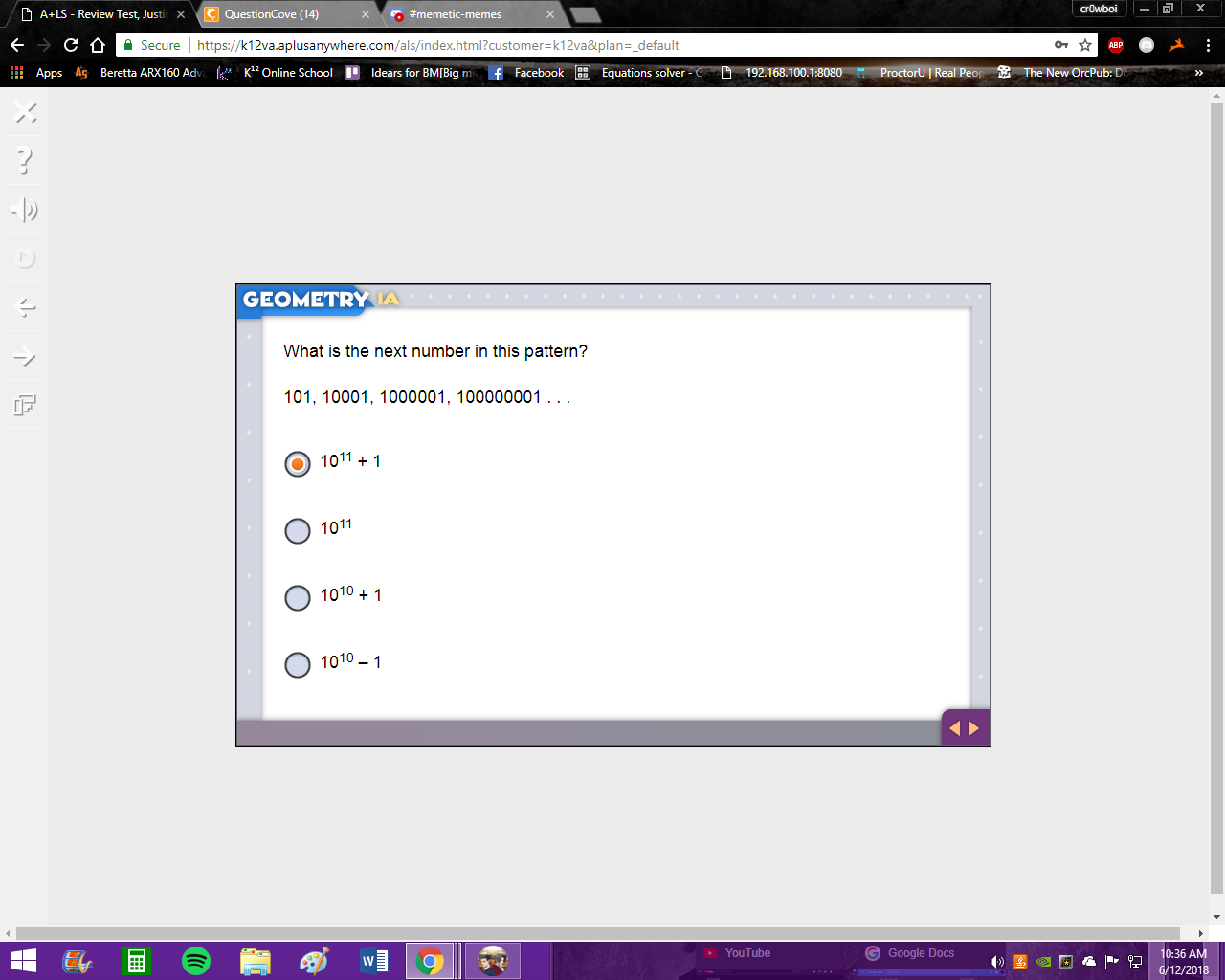 princeevee:
@Vocaloid
 Vocaloid:
hm. didn't get the notification from this for some reason. anyway be careful about the exponents the sequence can be written as 10^2 + 1, 10^4 + 1, 10^6 + 1, 10^8 + 1 so you would expect an even exponent not an odd one
princeevee:
so 10^10 + 1?
Vocaloid:
good
 princeevee:
@Vocaloid
Vocaloid:
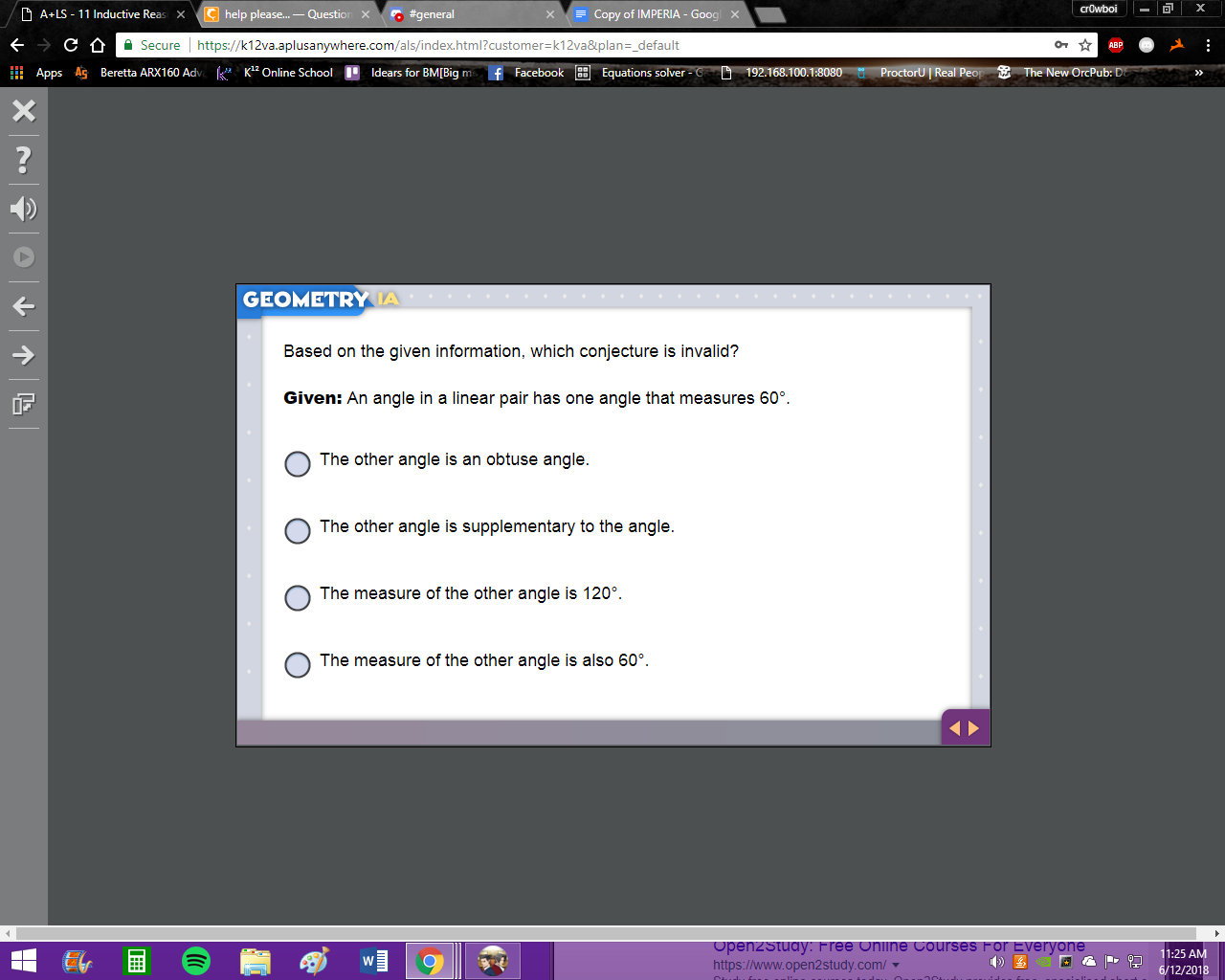
using the fact that linear pair angles add up to 180 which statement is ~false~?
princeevee:
D?
Vocaloid:
good
 Vocaloid:
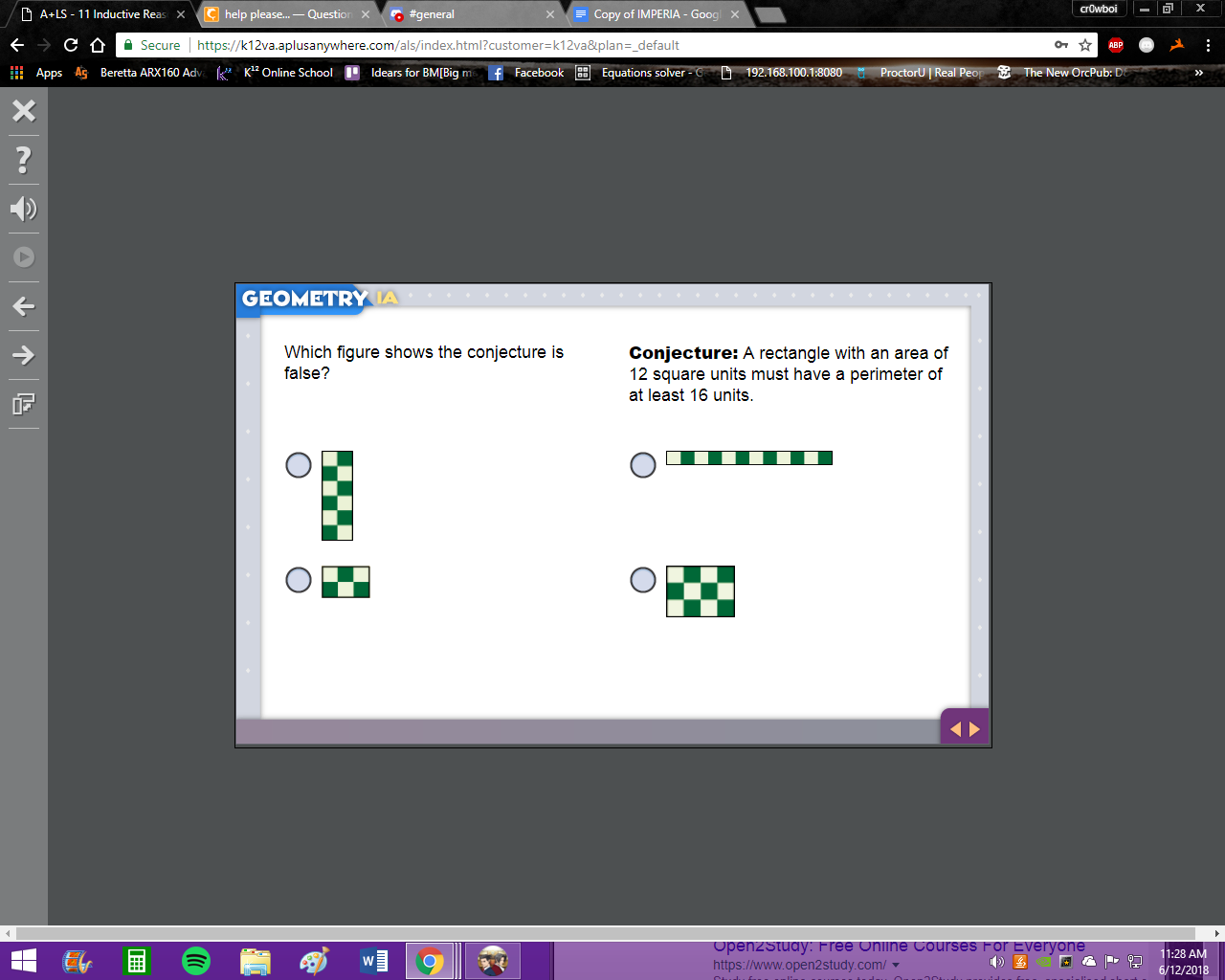
any ideas? to disprove the conjecture you must select the rectangle with at least 12 square units but w/ a perimeter less than 16 remember that perimeter of a rectangle = 2L + 2W
Vocaloid:
*meant to say 16 not 14
princeevee:
the top right one?
Vocaloid:
notice how it has L = 12 and W = 1 perimeter = ?
princeevee:
12?
princeevee:
wait, 14.
Vocaloid:
perimeter = 2L + 2W = ?
princeevee:
wait, it's the bottom right one.
Vocaloid:
good
 princeevee:
oh i just turned purple!
Vocaloid:
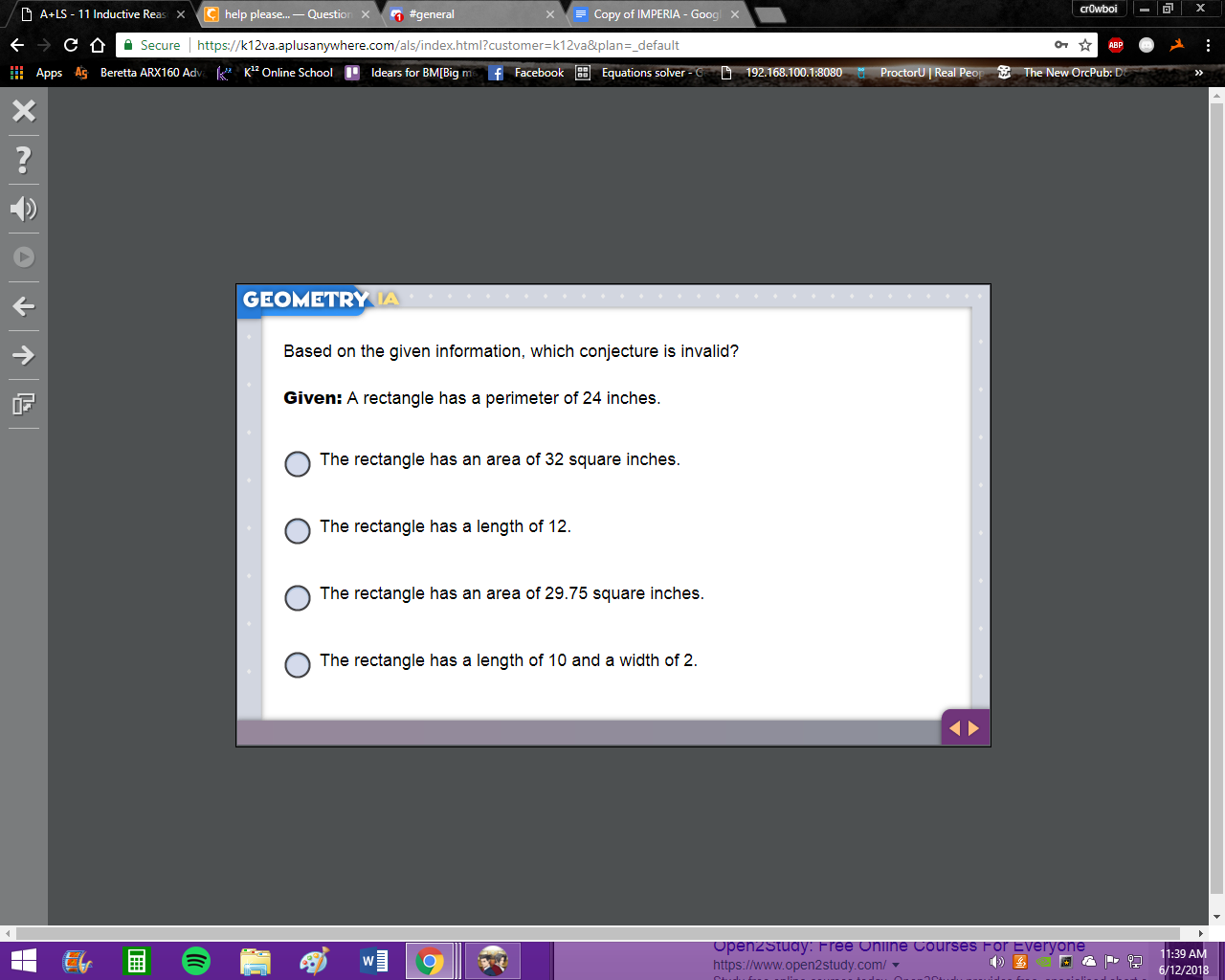
well you are given perimeter = 2L + 2W = 24 so you would go one by one and see which statement is mathematically impossible remember that L and W must both be greater than 0
princeevee:
is it B? 12x2 is 24, so it goes over
Vocaloid:
good, B
princeevee:
thank you, want to help with some more?
Vocaloid:
sure
 princeevee:
@Vocaloid
Vocaloid:
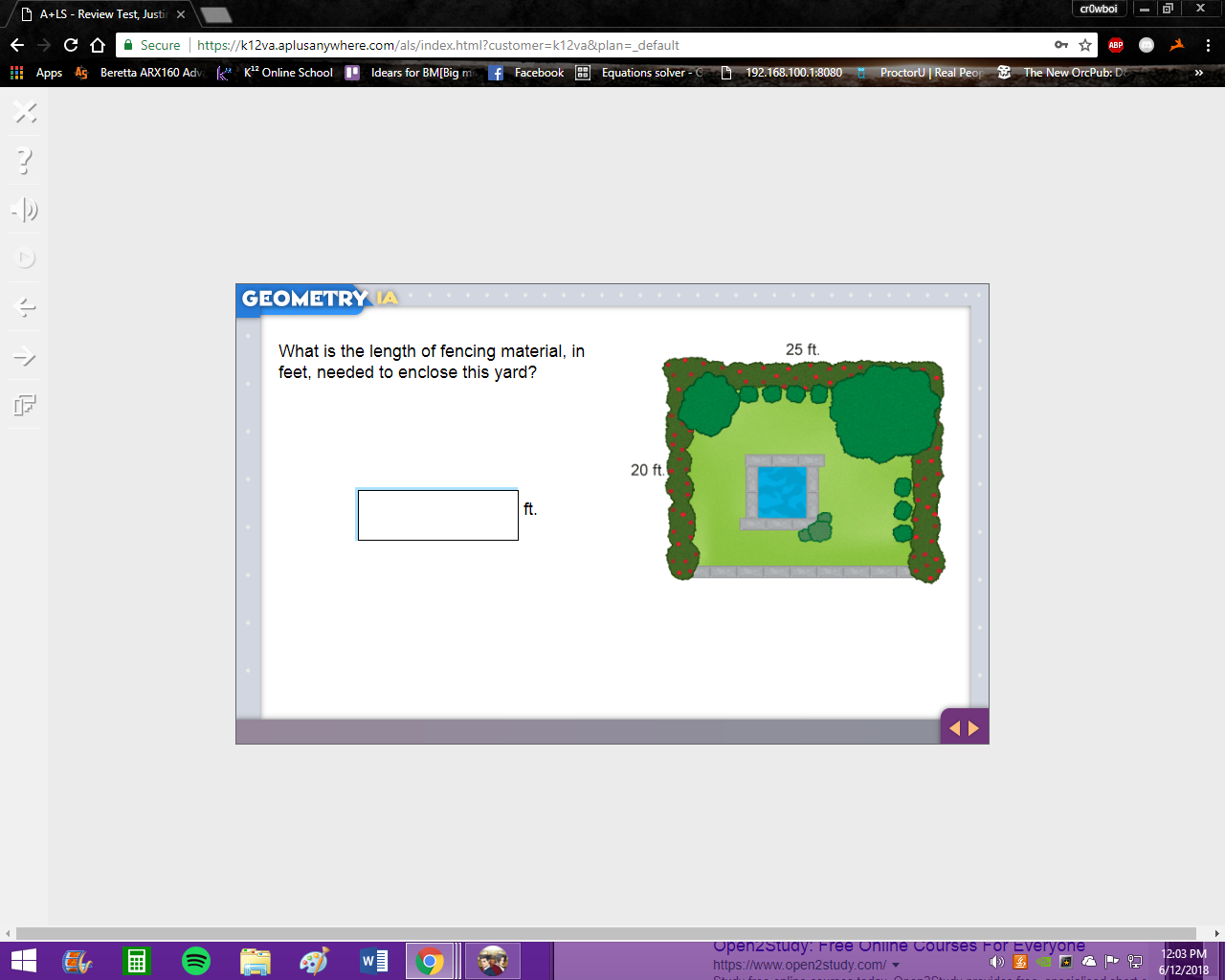
hm. assuming he wants the entire yard fenced it's just perimeter = 2L + 2W
princeevee:
90?
Vocaloid:
good
 princeevee:
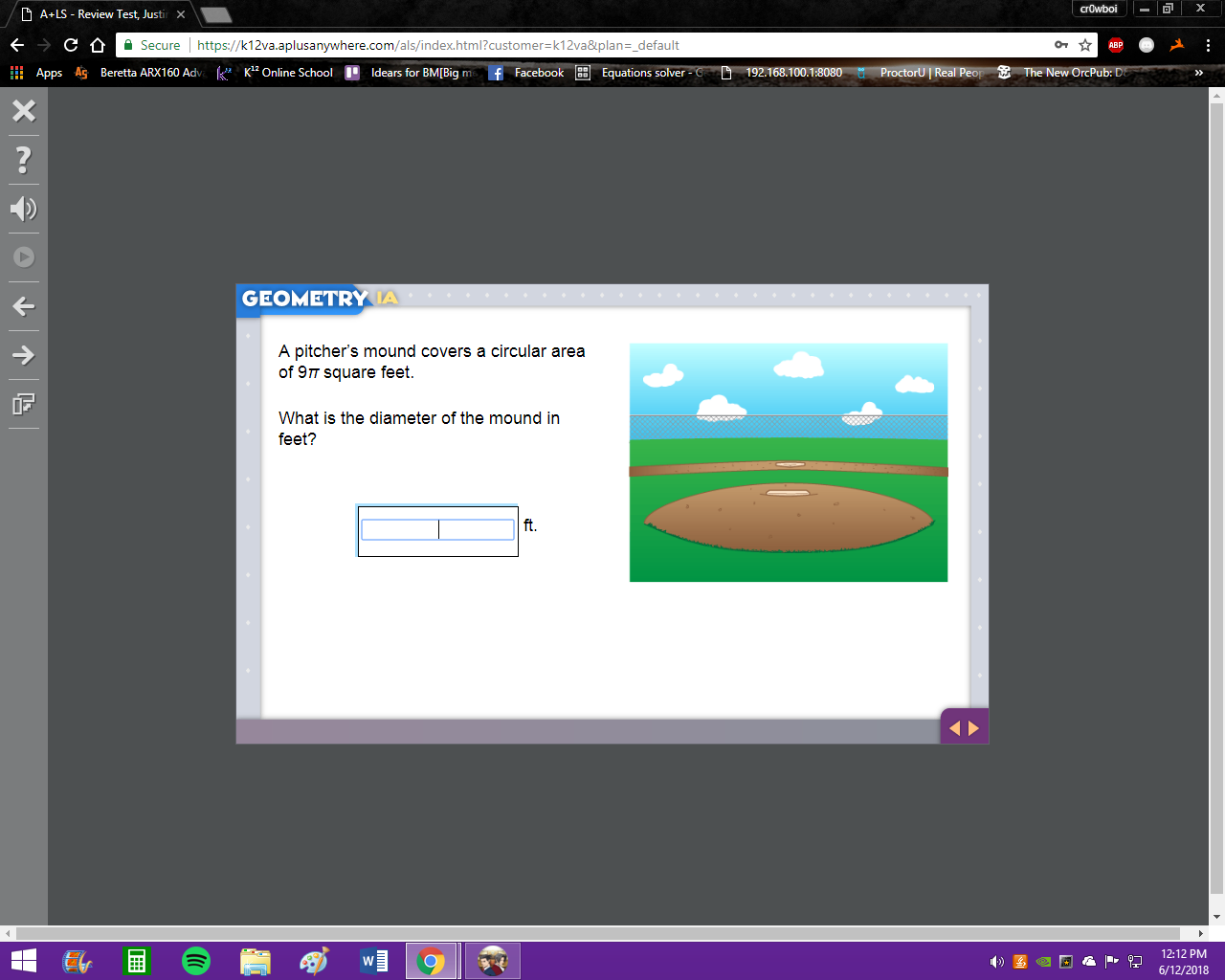
this is 6, right?
princeevee:
@Vocaloid
Vocaloid:
yup good
 Vocaloid:
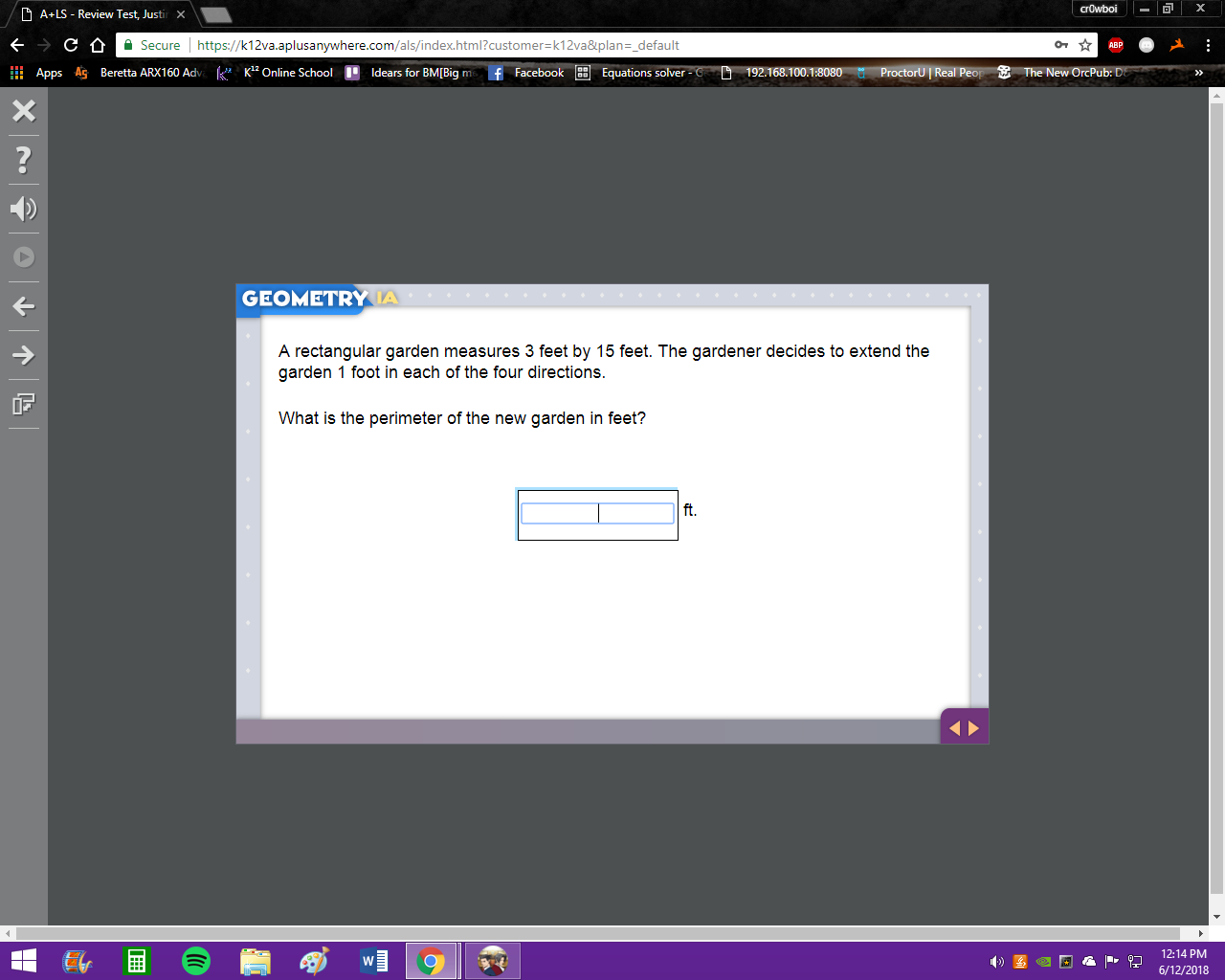
hm. one foot in ~each~ direction seems to imply that both dimensions are increasing by 2 so new length and width become 5 and 17 calculate the new perimeter
princeevee:
44
Vocaloid:
good
 Vocaloid:
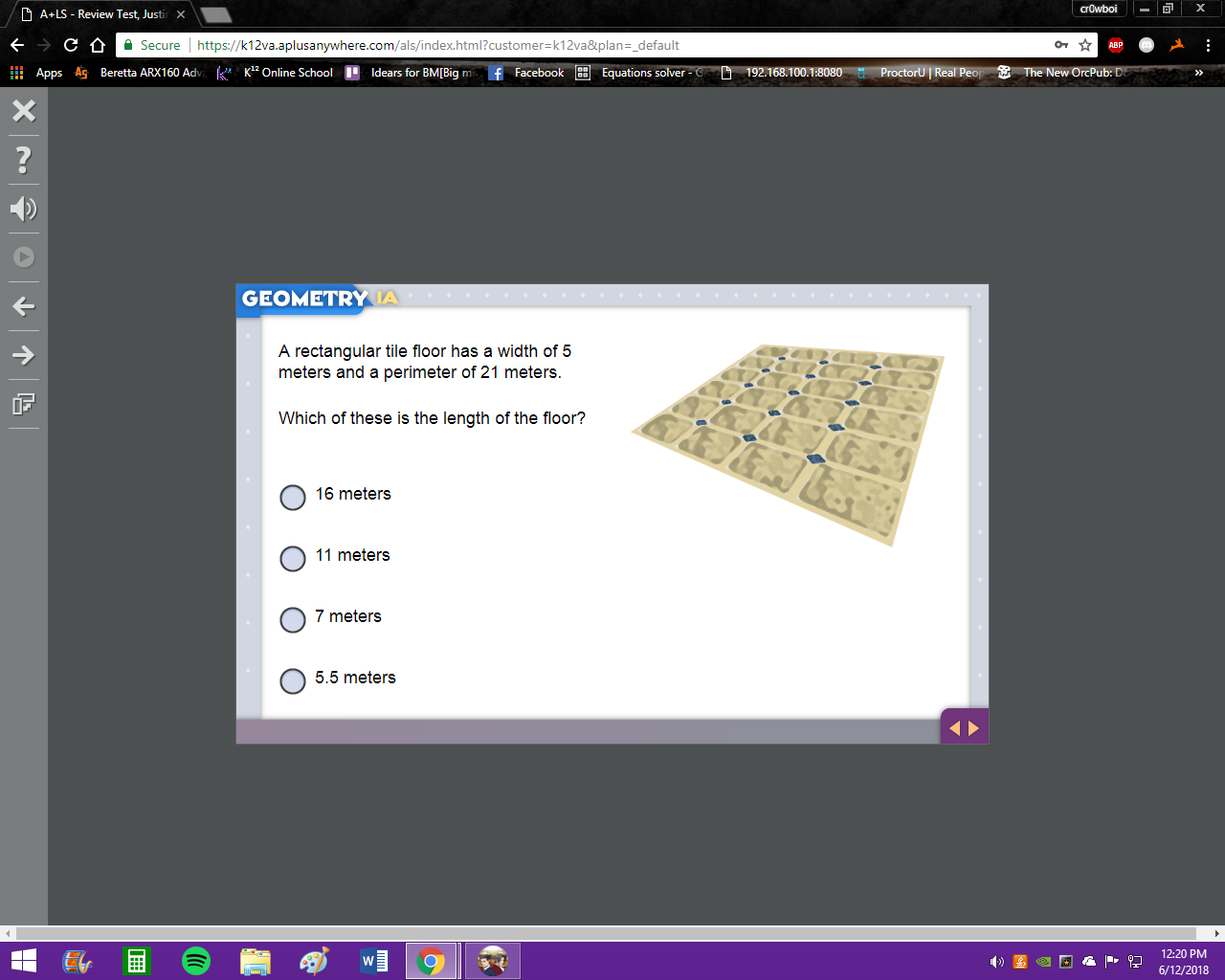
perimeter = 2L + 2W you are given perimeter and width, therefore 21 = 2L + 2(5) solve for L
princeevee:
11, so would it be like, 6?
Vocaloid:
you may have forgotten to divide by 2 at the end 21 = 2L + 2(5) 21 - 10 = 2L 2L = 11 so L = 11/2 = ?
Vocaloid:
11 divided by 2 is 5.5
princeevee:
so the answer is 5.5?
princeevee:
alright
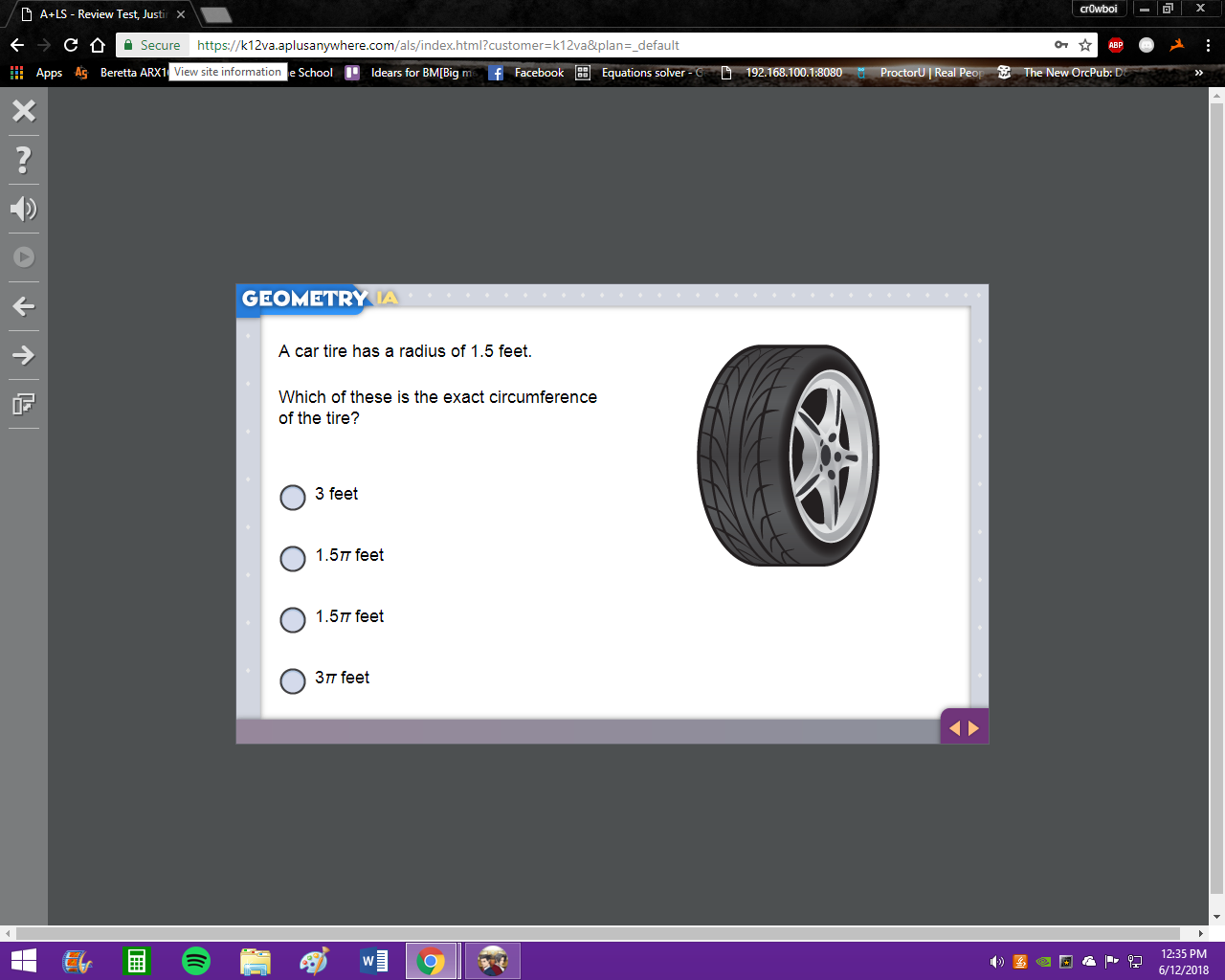 Vocaloid:
circumference = pi * diameter so you will find the diameter first then multiply by pi note: do not convert pi to its decimal form
princeevee:
A?
Vocaloid:
remember it has to have pi in the solution somewhere
princeevee:
oh, 3pi then
Vocaloid:
good
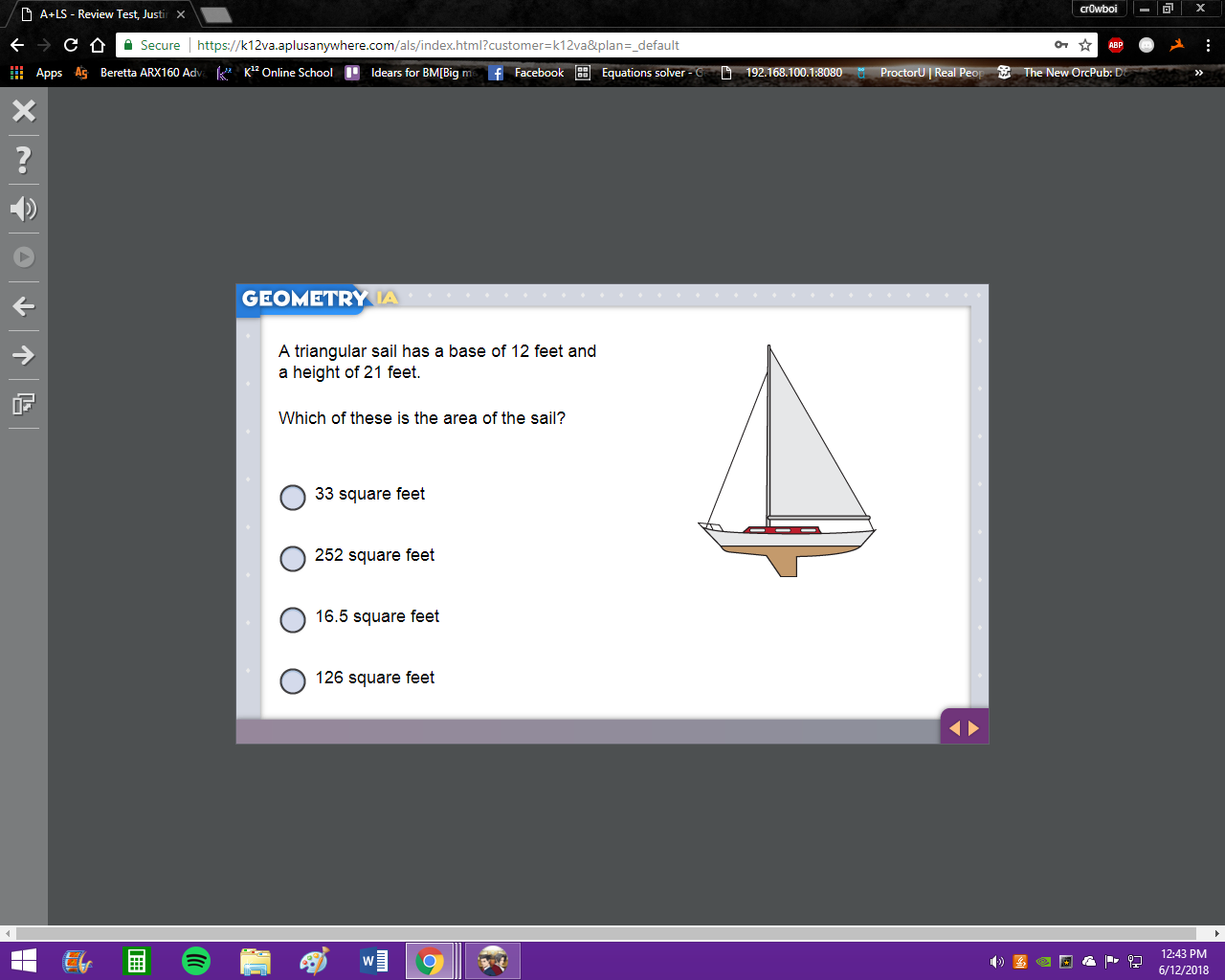 Vocaloid:
area of triangle = (1/2)b*h you are given b and h, find area
princeevee:
126
Vocaloid:
perfect
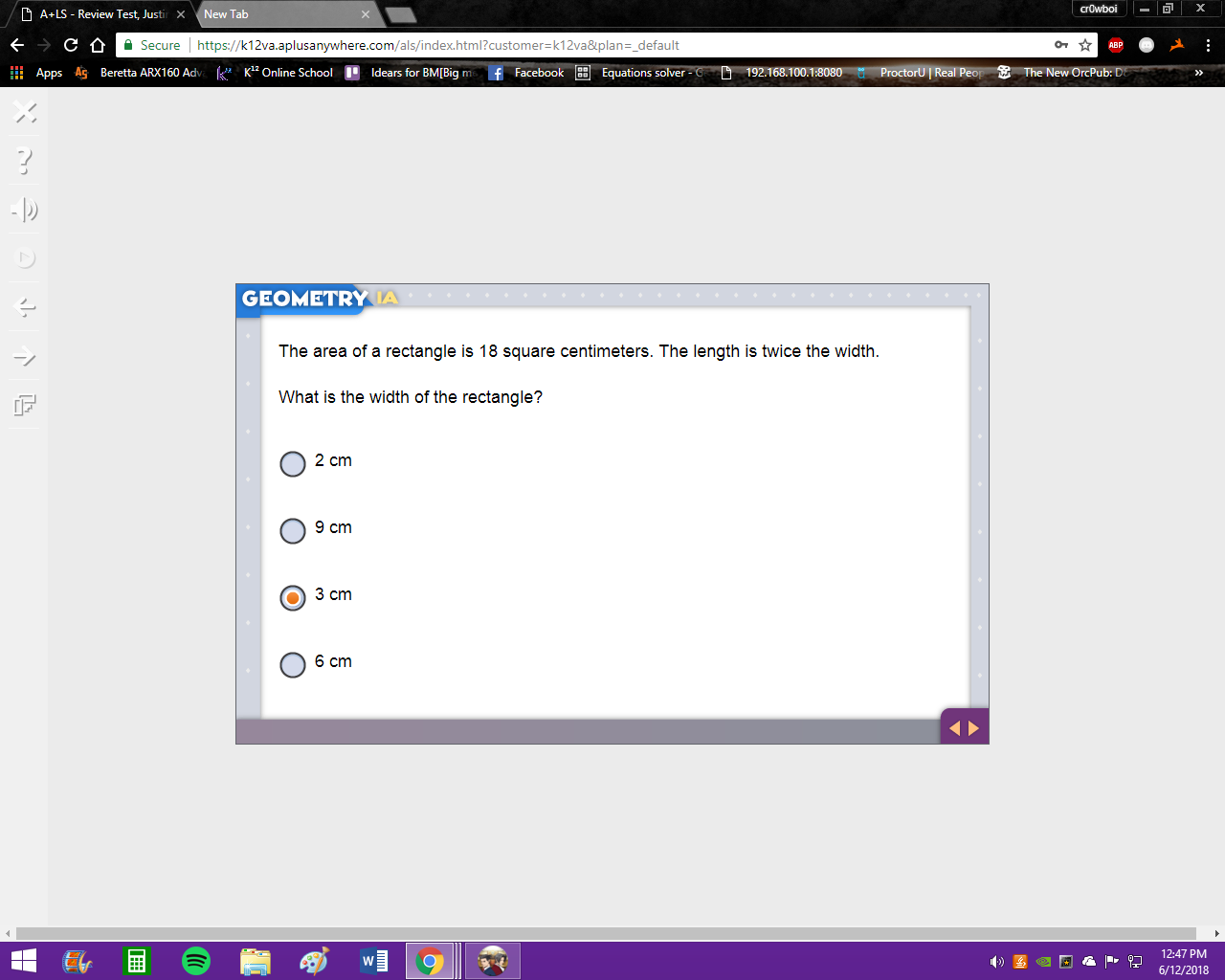 Vocaloid:
good
princeevee:
alright, i thought that one was the right one
princeevee:
nice
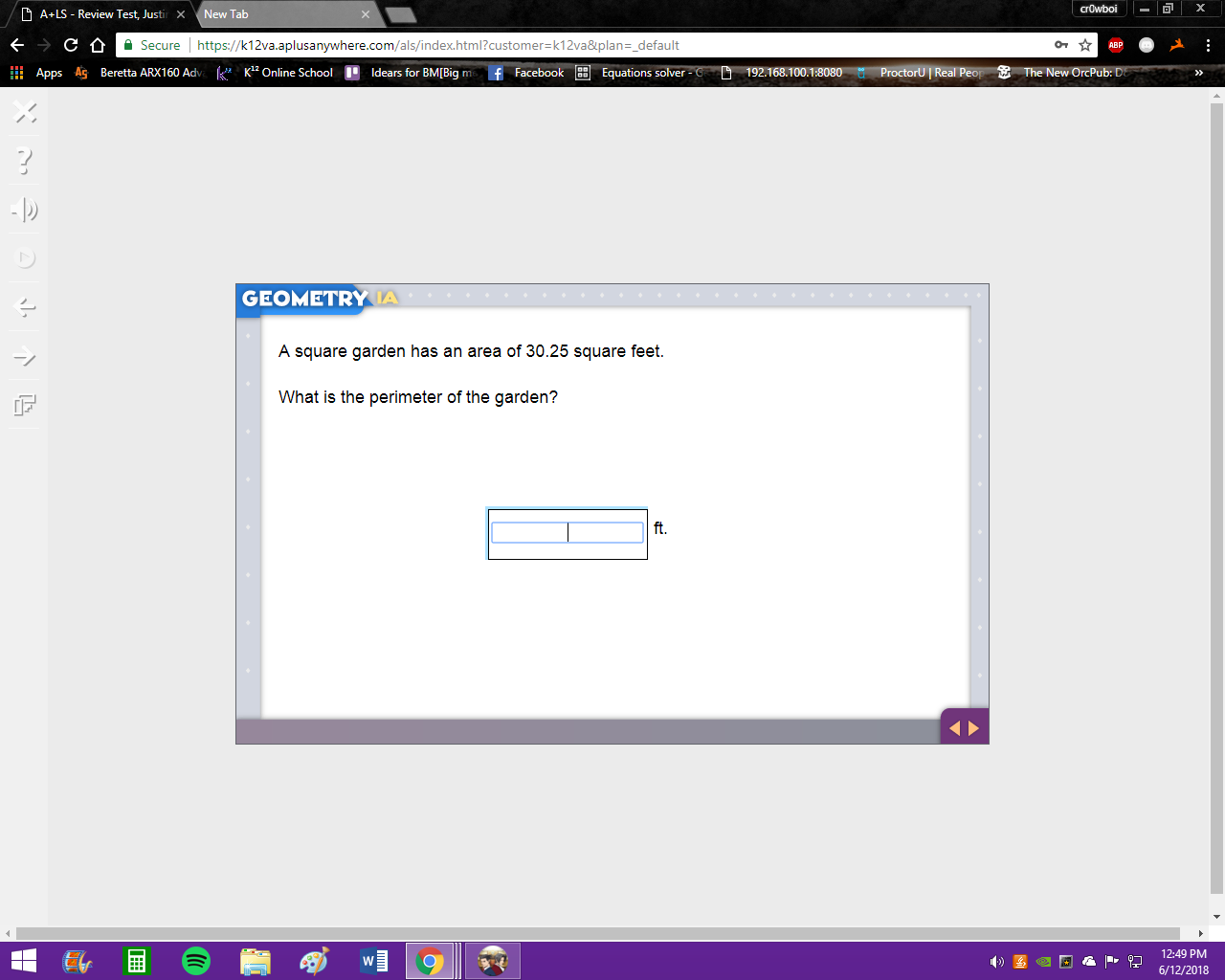 Vocaloid:
for a square area = side length^2 you are given area, find side length then perimeter = 4 * side length = your sol'n
princeevee:
uh..
princeevee:
so i divide the area?
Vocaloid:
if you have area = side length^2 how would you find the side length? what's the "opposite" operation of squaring something?
princeevee:
subtraction?
Vocaloid:
to "undo" a square we would take the ~square root~ of both sides so sqrt(area) = side length find the side length then multiply the result by 4
Vocaloid:
area = 30.25 so what's the square root of 30.25?
princeevee:
5.5
Vocaloid:
good then perimeter = 4 * 5.5 = 22 = your sol'n
 princeevee:
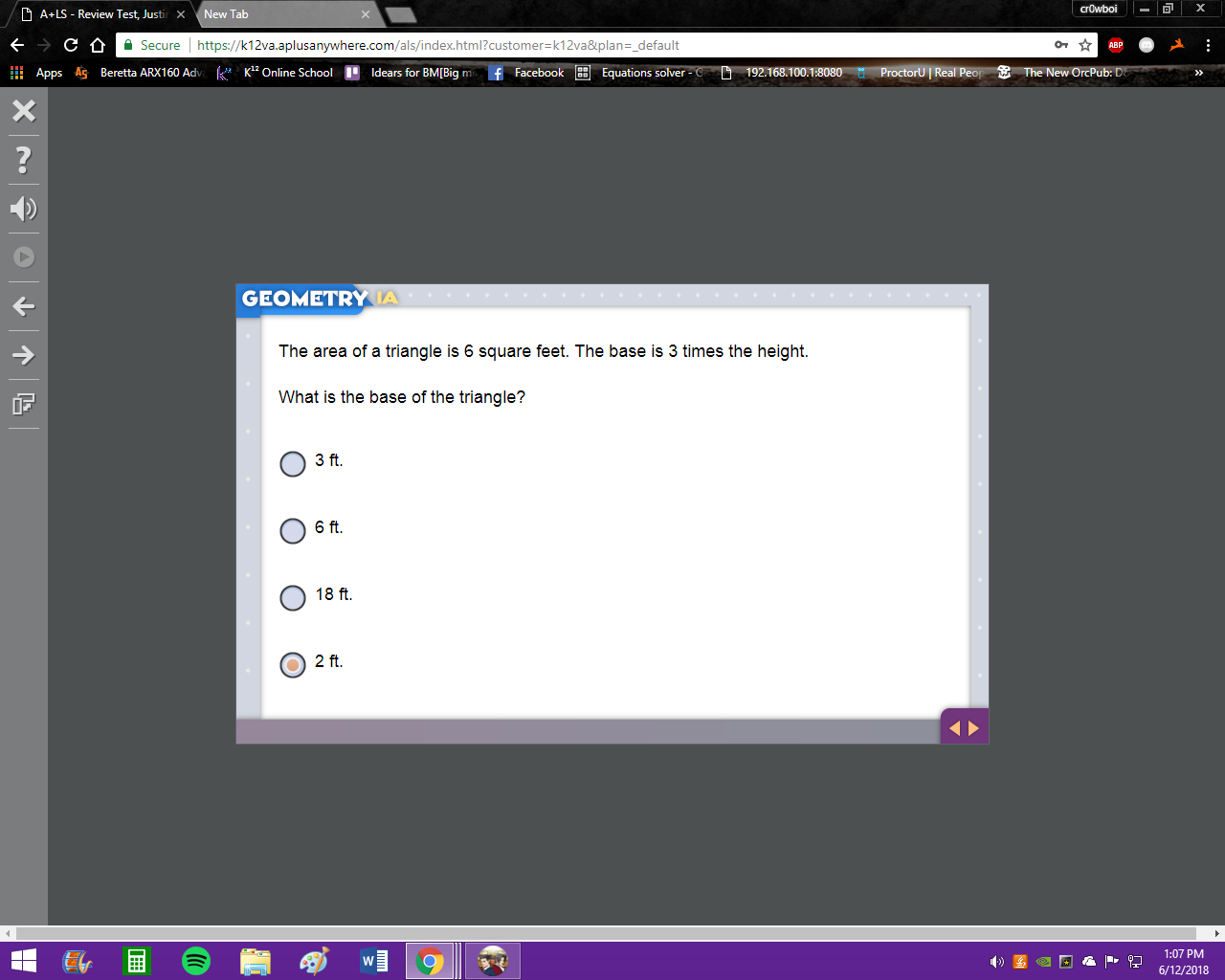
this one correct?
Vocaloid:
have to be careful the height is 2 but it's asking for the base not the height
princeevee:
oh, 18?
Vocaloid:
"the base is 3 times the height"
princeevee:
6 then,
Vocaloid:
good that's it
 Vocaloid:
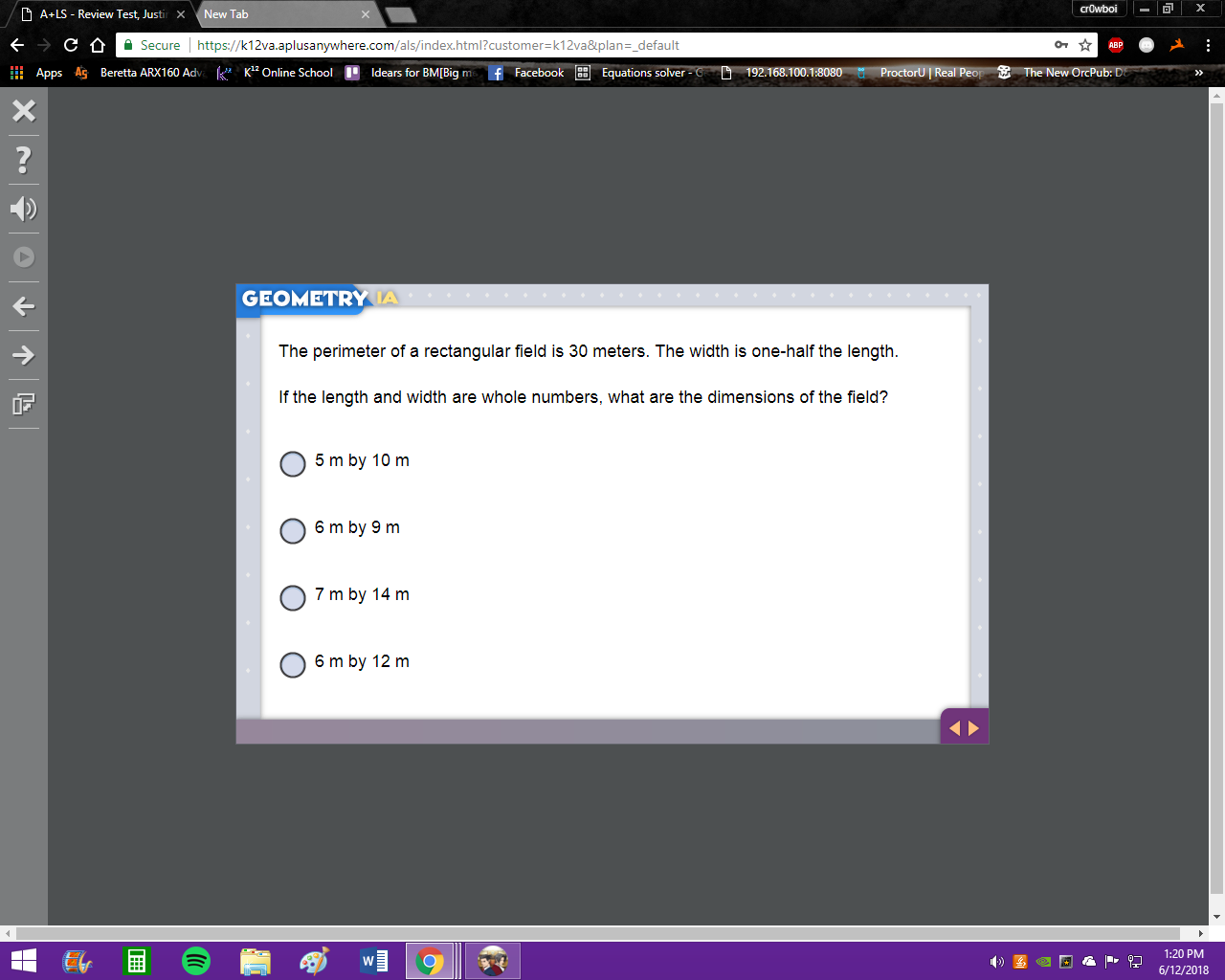
well perimeter = 2L + 2W as usual dividing this by 2 we get (1/2)perimeter = L + W so there are two conditions that must be met: 1) the L + W have to add up to (1/2)(30) = 15 2) one dimension must be exactly half the other dimension
Vocaloid:
any ideas? which answer choice(s) have both dimensions add up to 15?
princeevee:
B?
Vocaloid:
good attempt but remember the other condition one dimension has to be exactly one half the other
Vocaloid:
there's only one other candidate that fits both conditions 10 + 5 = 15 in addition, 5 is exactly one half of 10 so 10 by 5 is the only one that could be the solution.
princeevee:
alright..
 princeevee:
@Vocaloid
Vocaloid:
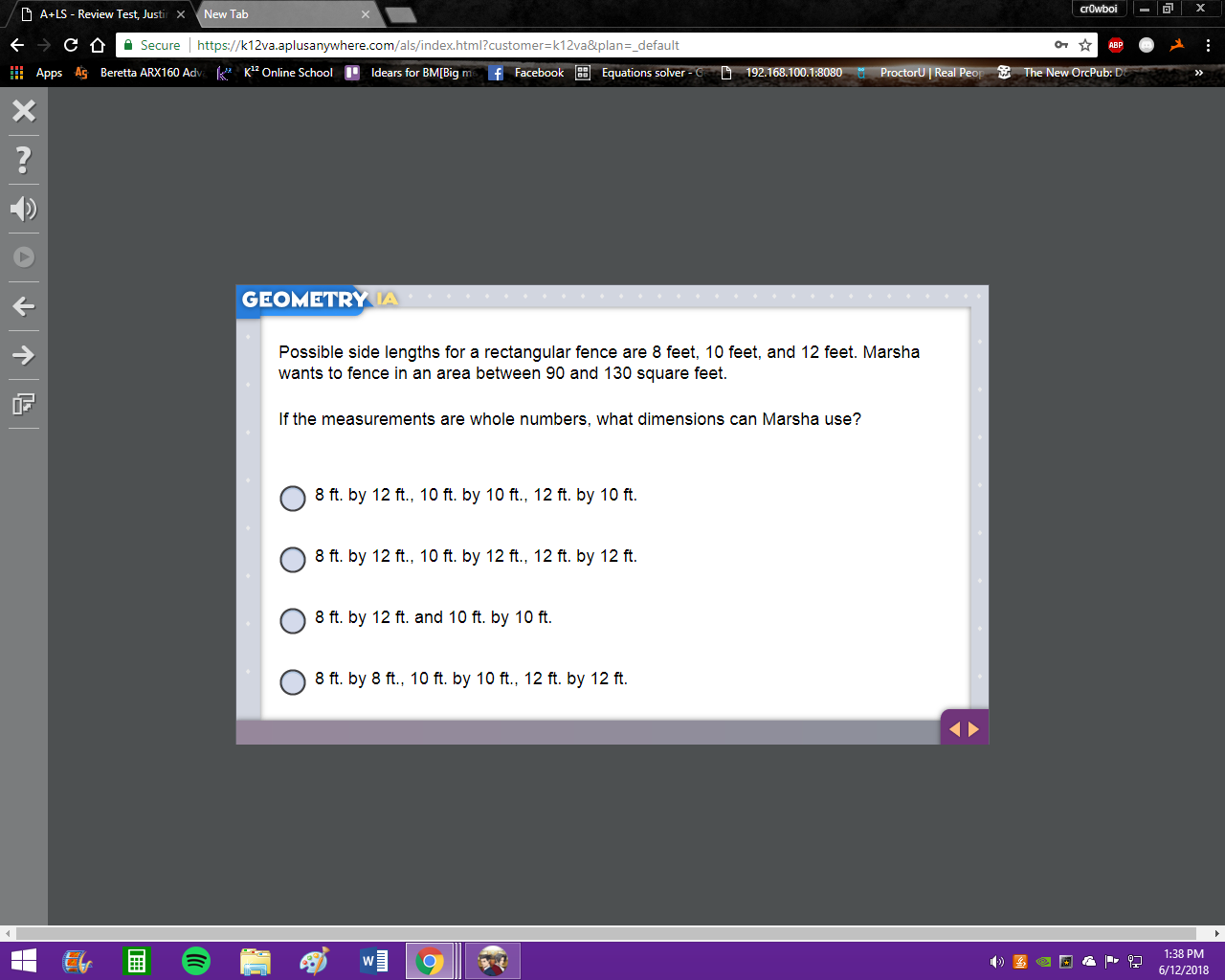
so you'd want the answer choice where every listed combination of dimensions gives area = length*width that is within the bounds of 90 and 130
princeevee:
i got C
Vocaloid:
that's a good attempt but if we include 12 * 10 in the solution we get 120 which is still within 90 and 130 so A is a more inclusive answer
princeevee:
okay
 Vocaloid:
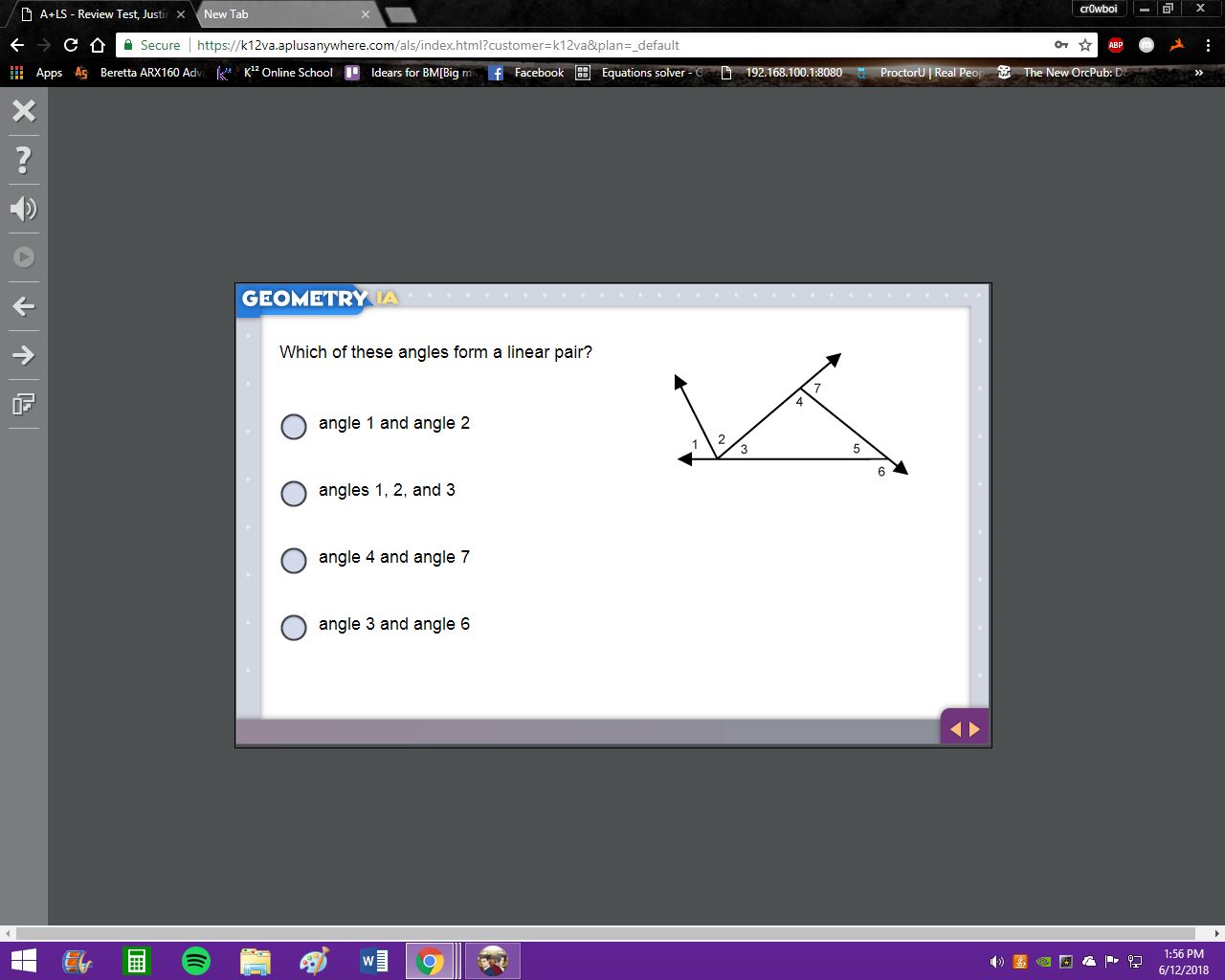
linear pair = two angles that add up to 180 keep in mind only two angles can be included in a linear pair
Vocaloid:
|dw:1528837464333:dw|
Vocaloid:
|dw:1528837701995:dw|
Vocaloid:
|dw:1528837707424:dw| i see a pair of angles here that add up to 180 with that being said what might the answer be?
Vocaloid:
also since we're getting close to 100 replies I would recommend closing this question and re-opening a new one after you've figured this one out ^_^ thanks ~
Vocaloid:
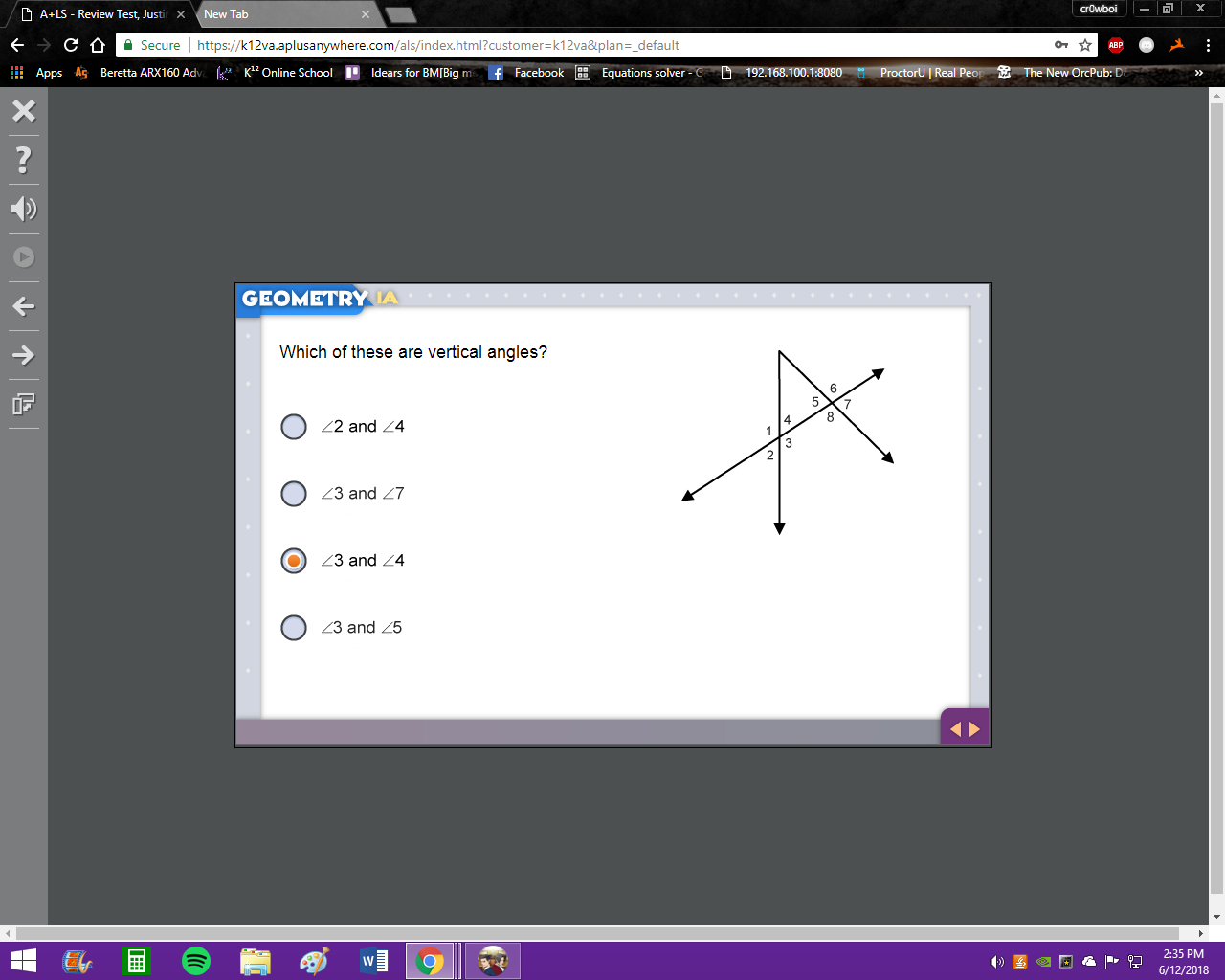
notice how I have circled angle 4 and angle 7 therefore let's try looking for the answer choice that includes angle 4 and angle 7
princeevee:
alright
 Vocaloid:
hm. not quite, it's asking for vertical angles not linear ones|dw:1528839515496:dw|
Vocaloid:
try to find two angles opposite to each other, that are created by two intersecting lines
Vocaloid:
|dw:1528839798572:dw|
princeevee:
so it isnt C?
Vocaloid:
no it is not
Vocaloid:
|dw:1528839846518:dw|
Vocaloid:
|dw:1528839852474:dw|
Vocaloid:
have you tried checking these two angles? <2 and <4?
princeevee:
oh.....
 princeevee:
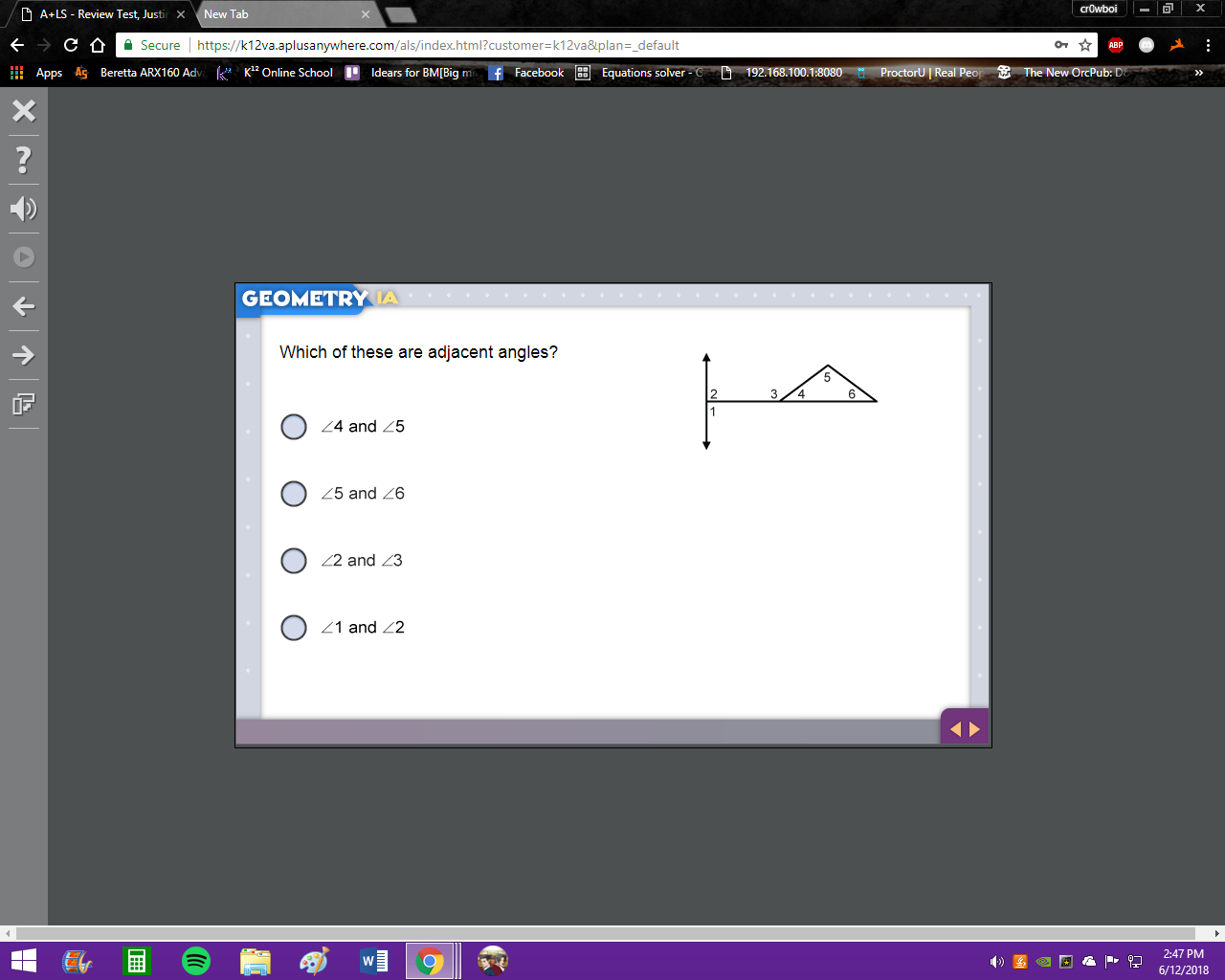
1 and 2 are adjacent, right?
Vocaloid:
yup good
 princeevee:
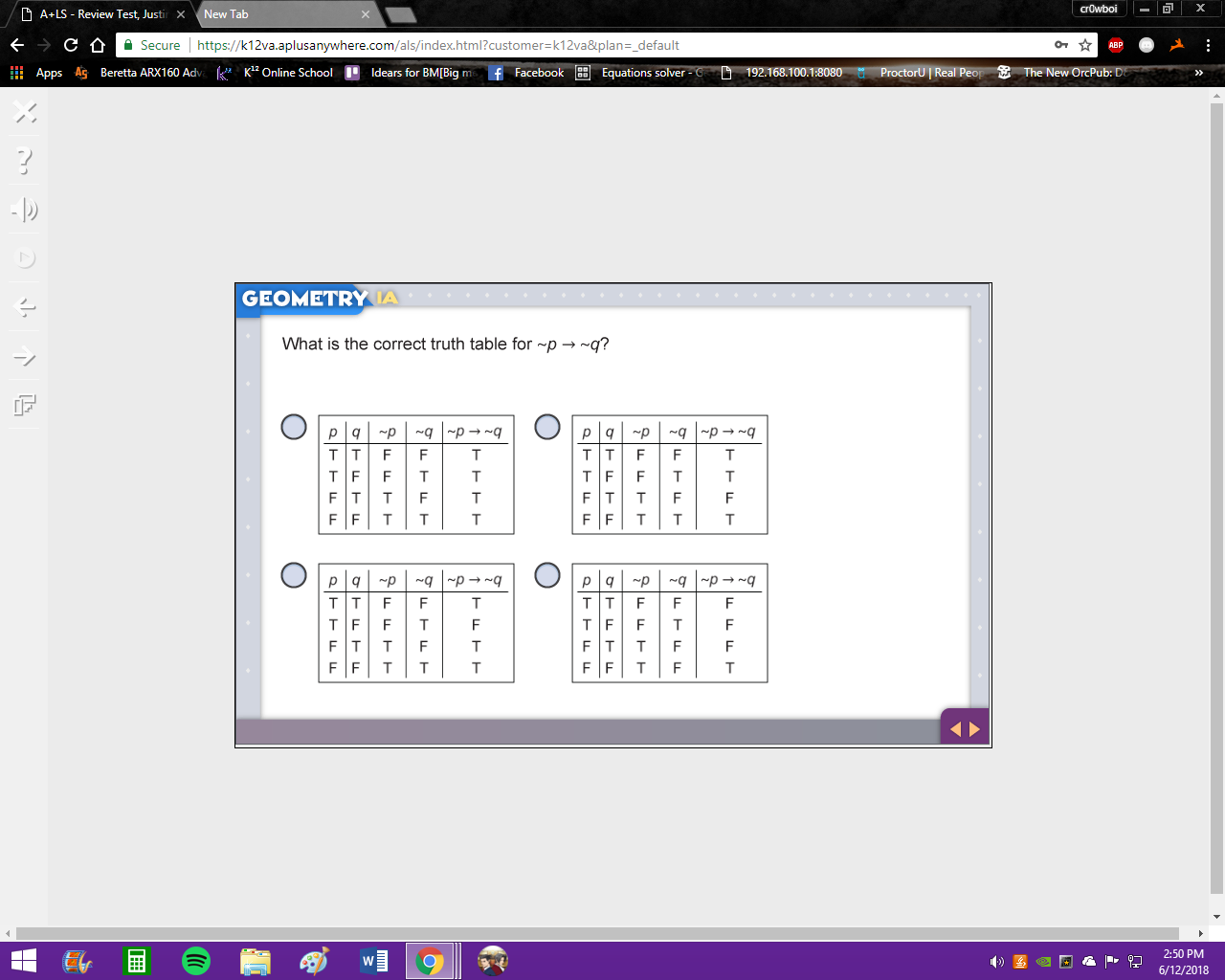
p needs to be T and ~q f, right?
Vocaloid:
in order for the end result to be "F," yes
princeevee:
bottom right?
Vocaloid:
so there's only one condition where the result is F so you should only expect 1 F and the rest being T's
Vocaloid:
there are only two tables where there are 1 F and 3 T's between those you need to use the aforementioned rule to choose between them
princeevee:
so the bottom left
Vocaloid:
remember that ~p must be true and ~q must be false so it's the other one
Vocaloid:
|dw:1528840734734:dw|
 Vocaloid:
good
 princeevee:
A for this one?
Vocaloid:
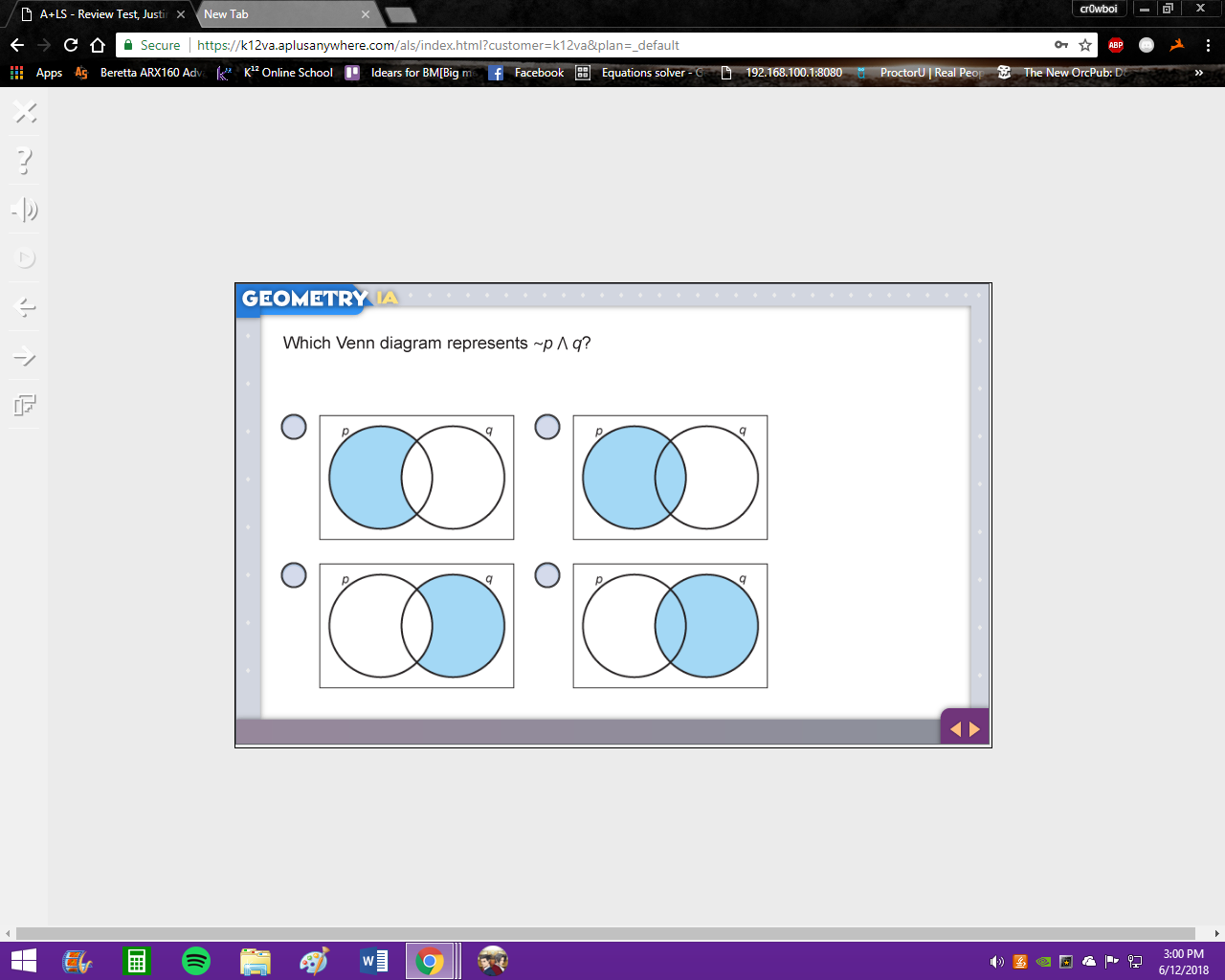
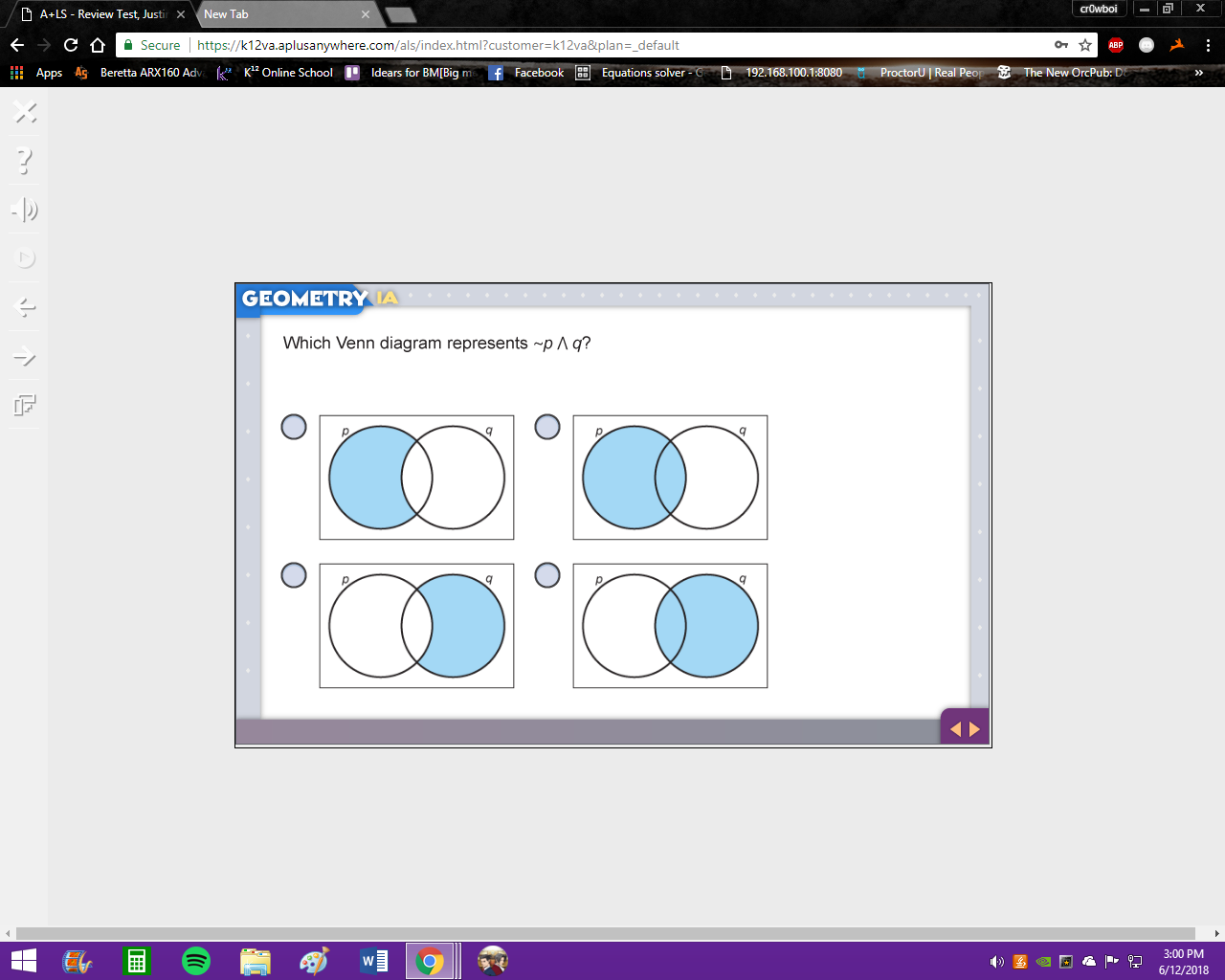
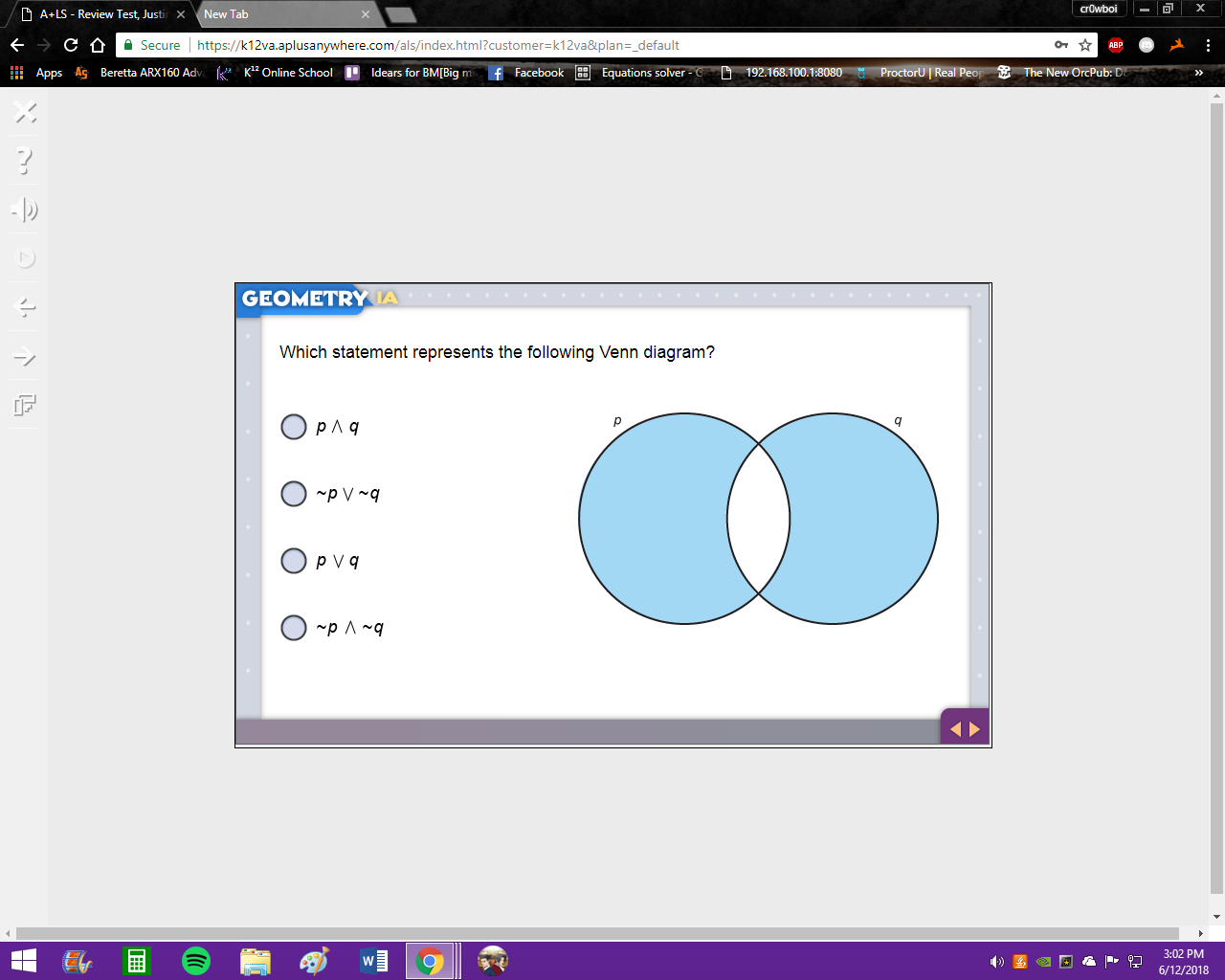
A would be the intersection between p and q so that would only include the sliver in the middle as a hint, you can describe the blue shaded area as the combination of "not p" or "not q"
Vocaloid:
*the union of "not p" or "not q"
princeevee:
so it would be B
Vocaloid:
good
 princeevee:
the second one?
Vocaloid:
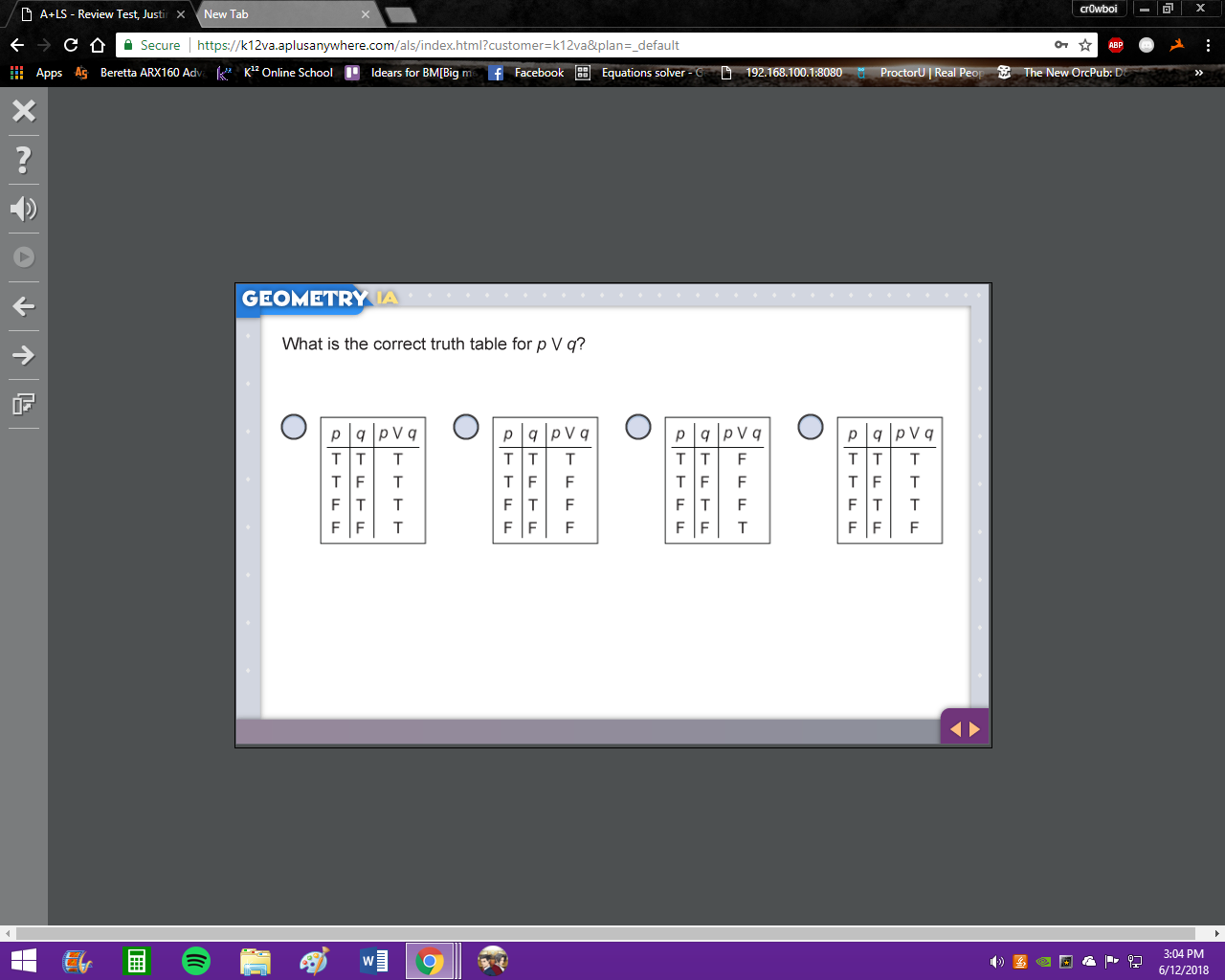
hm. not quite (that would be the intersesction /\) for p V q, as long as either p or q is true the result will also be true if they are both false then the result will also be false
princeevee:
alright
 princeevee:
for this one, i got D
Vocaloid:
good
 Vocaloid:
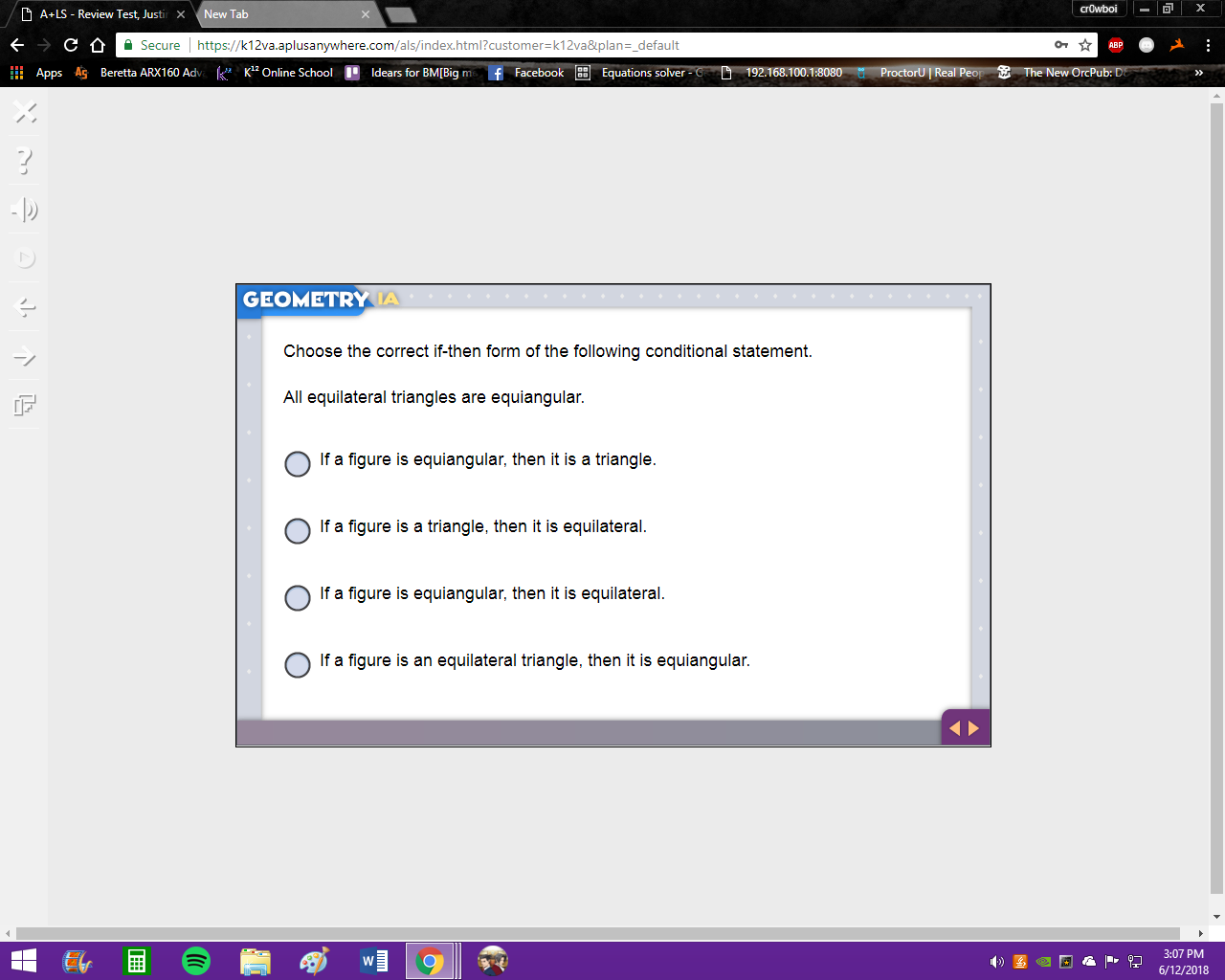
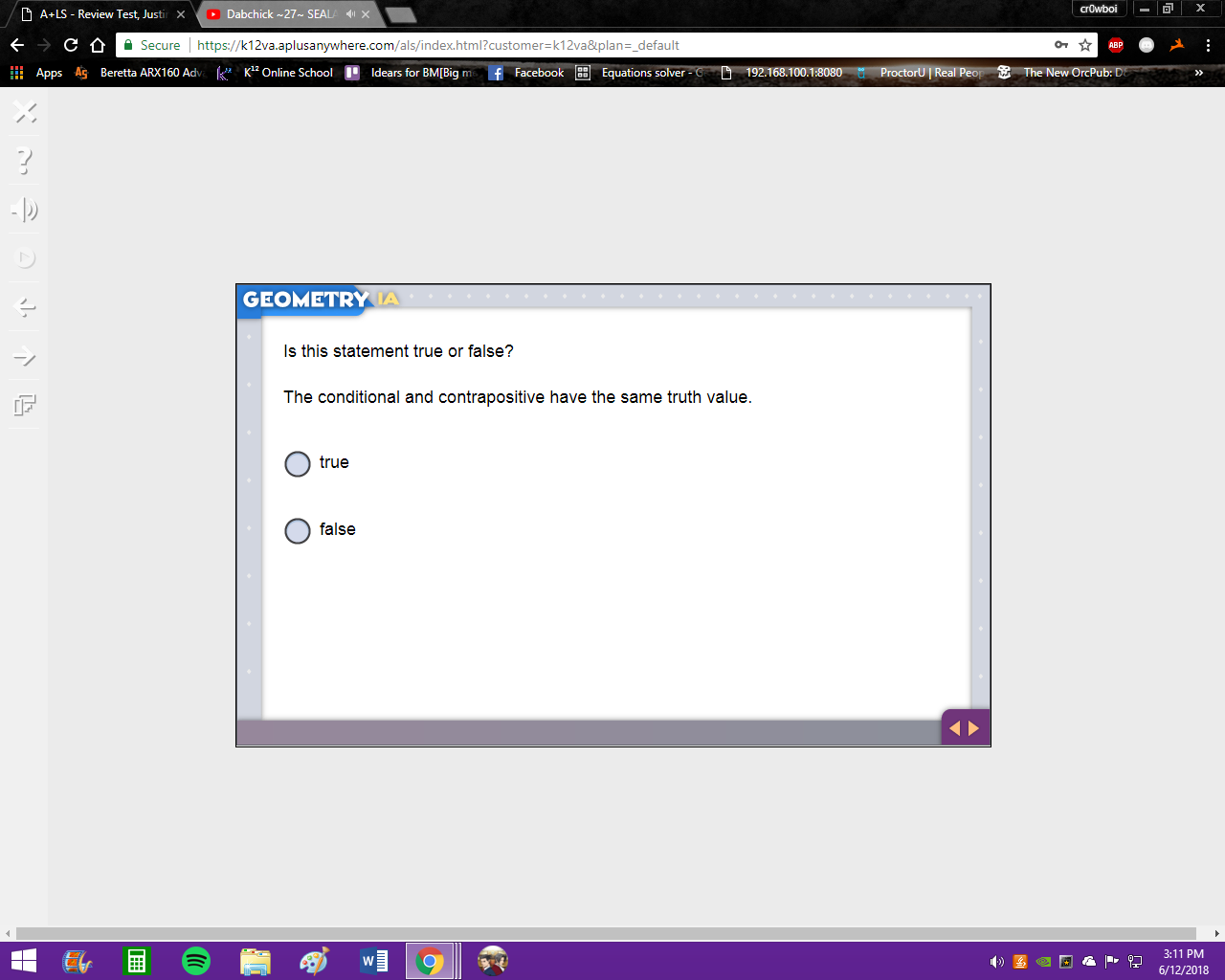
you just have to memorize this, it's true
 princeevee:
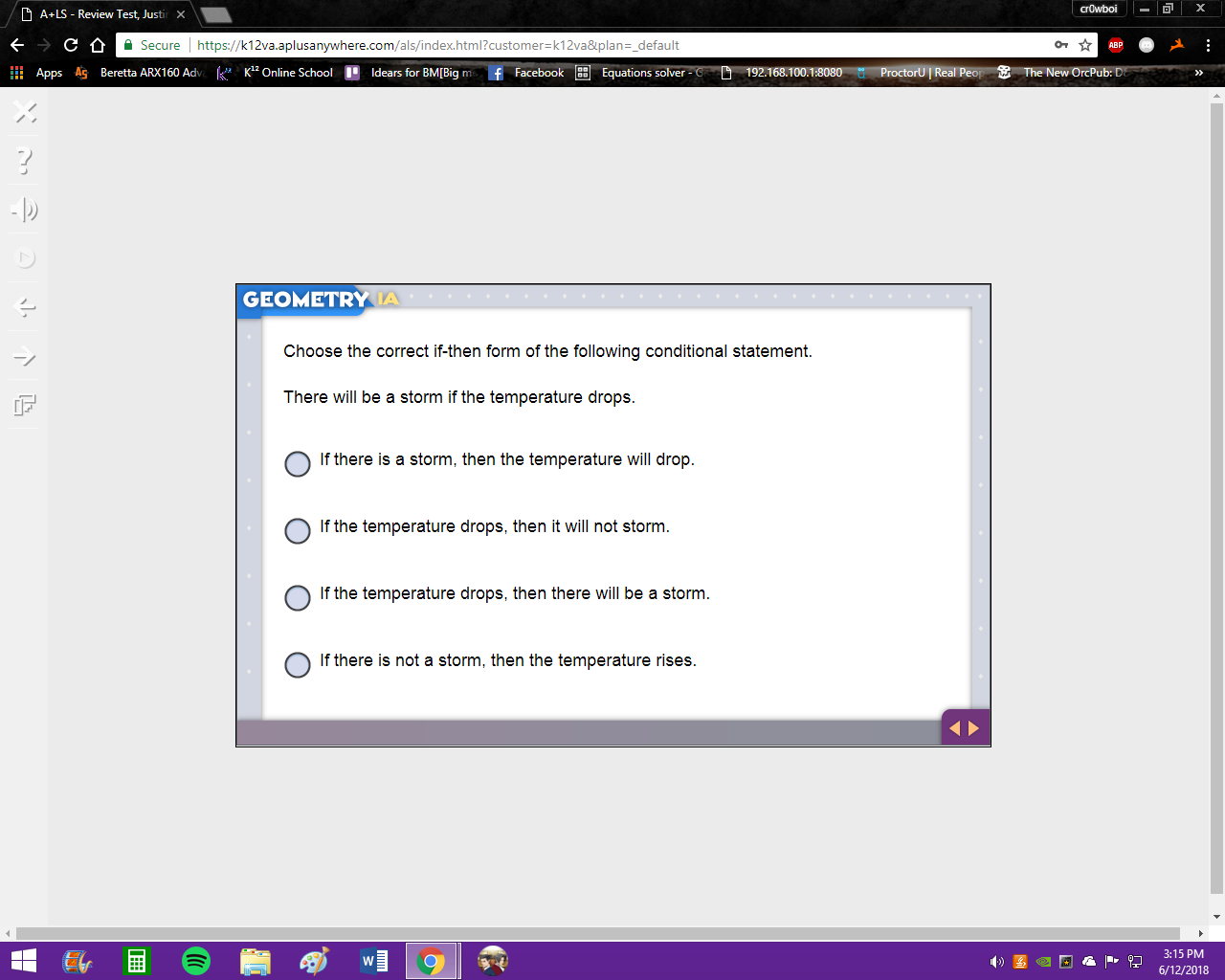
i got C for this, right?
Vocaloid:
good
 princeevee:
this one is fairly simple, it's also C.
Vocaloid:
hm. this one is kind of tricky. "Bicycles have two wheels" can be written as "If an object is a bicycle, it has two wheels" making the two wheels part the conclusion the reason why it can't be "it is a bicycle" is that "If an object has two wheels, it is a bicycle" is incorrect (things other than bicycles may have two wheels)
princeevee:
oh, right.
Vocaloid:
so the two wheels part is the conclusion
princeevee:
oh, alright..
 princeevee:
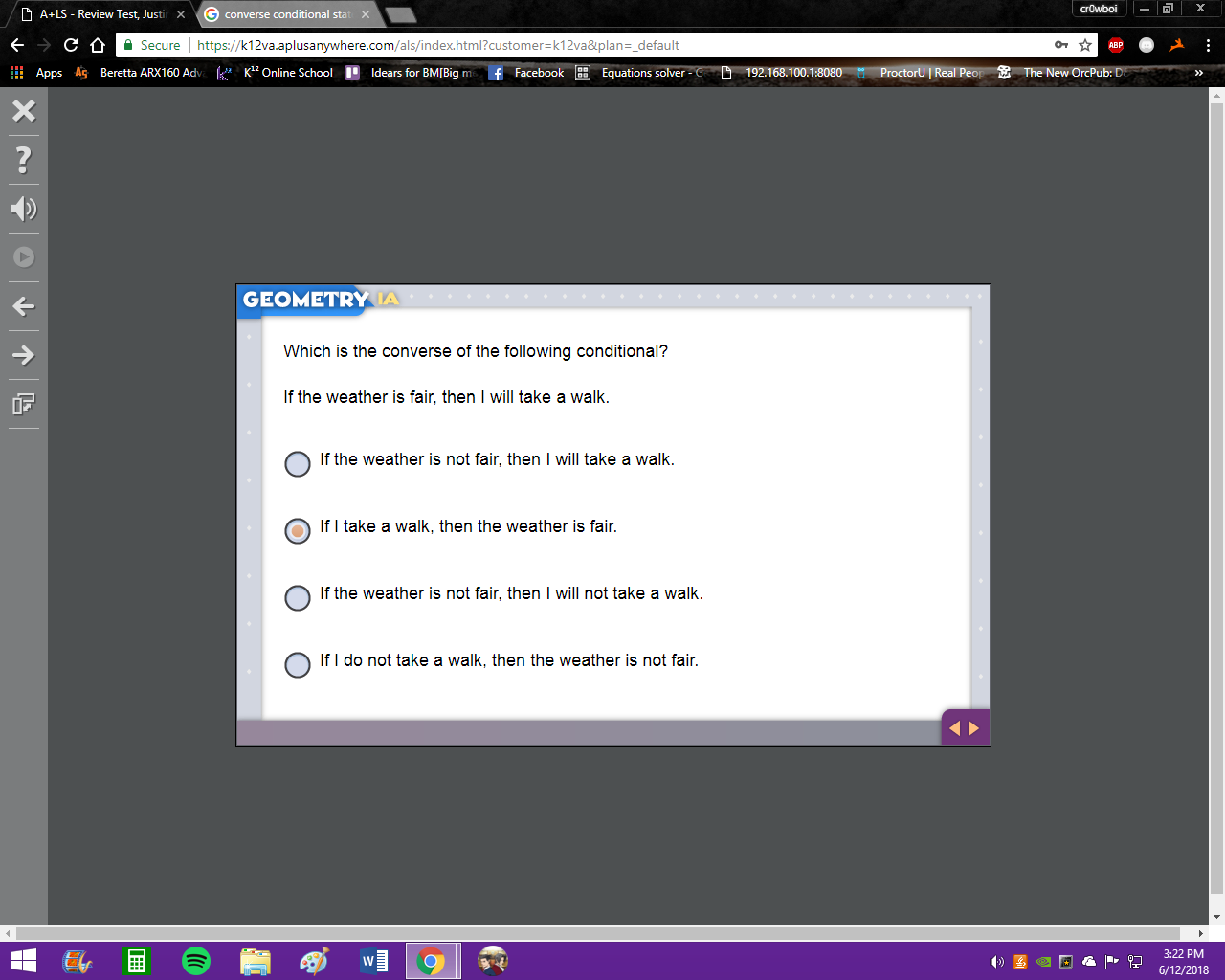
well, this one is B, right?
Vocaloid:
good
princeevee:
alright! thank you so much!
Join our real-time social learning platform and learn together with your friends!
 KBaby:
Verse 1 We left our names in the dust of the driveway Watched the old town shrink
KBaby:
Lyrics Generator Use AI to write the lyrics for a song. Suggested Genres: Pop Hip
KBaby:
Verse 1 We left our names in the dust of the driveway Watched the old town shrink
KBaby:
Lyrics Generator Use AI to write the lyrics for a song. Suggested Genres: Pop Hip

 aitexturegenerator:
How are you all handling AI-generated textures for 3D models and game assets without losing the hand-made feel? I've been doing a small stylized environment
aitexturegenerator:
How are you all handling AI-generated textures for 3D models and game assets without losing the hand-made feel? I've been doing a small stylized environment

 Demon25:
Woke up feeling like that girl and that dude well he still aint crap pluse the du
Demon25:
Woke up feeling like that girl and that dude well he still aint crap pluse the du
 playtsec:
how do I get rid of stress from teachers... I just feel like running out the classroom and leaving on my own.
playtsec:
how do I get rid of stress from teachers... I just feel like running out the classroom and leaving on my own.
 JohnnyLFowler0812:
What type of gamer would play something and then get off for a while. Why not sta
JohnnyLFowler0812:
Which is better? Metallica Rap Country R&B hiphop Medal Gospel Chill Which 3 opti
JohnnyLFowler0812:
What type of gamer would play something and then get off for a while. Why not sta
JohnnyLFowler0812:
Which is better? Metallica Rap Country R&B hiphop Medal Gospel Chill Which 3 opti