
 princeevee:
i need some answers checked
 princeevee:
@Vocaloid
princeevee:
long time no see, how are you?
 Mercury:
|dw:1530719673710:dw|
Mercury:
|dw:1530719678494:dw|
Mercury:
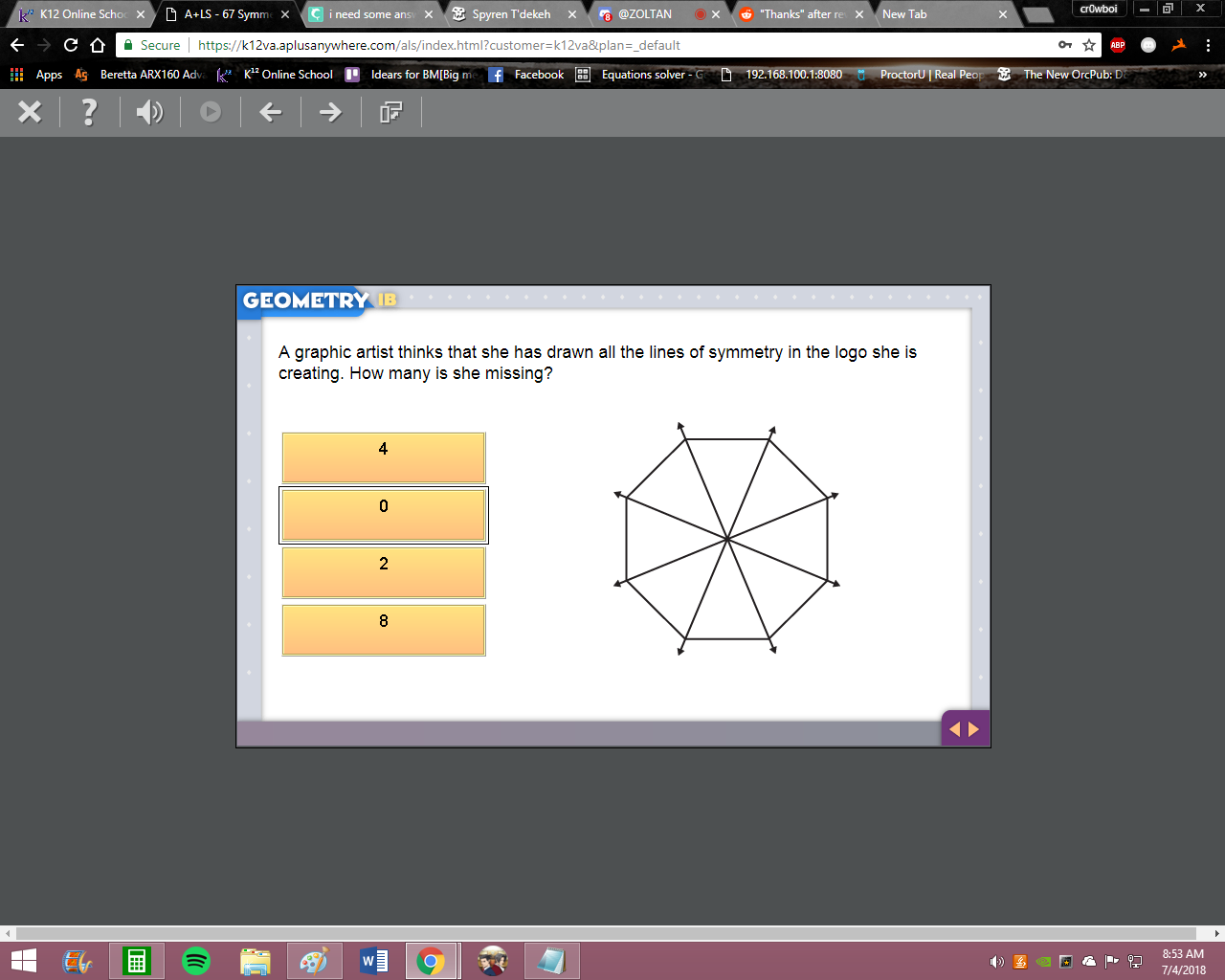
notice how these lines can also be drawn, how many are there? (make sure to count the entire line from end to end)
princeevee:
so she's missing 4?
Mercury:
good
 Mercury:
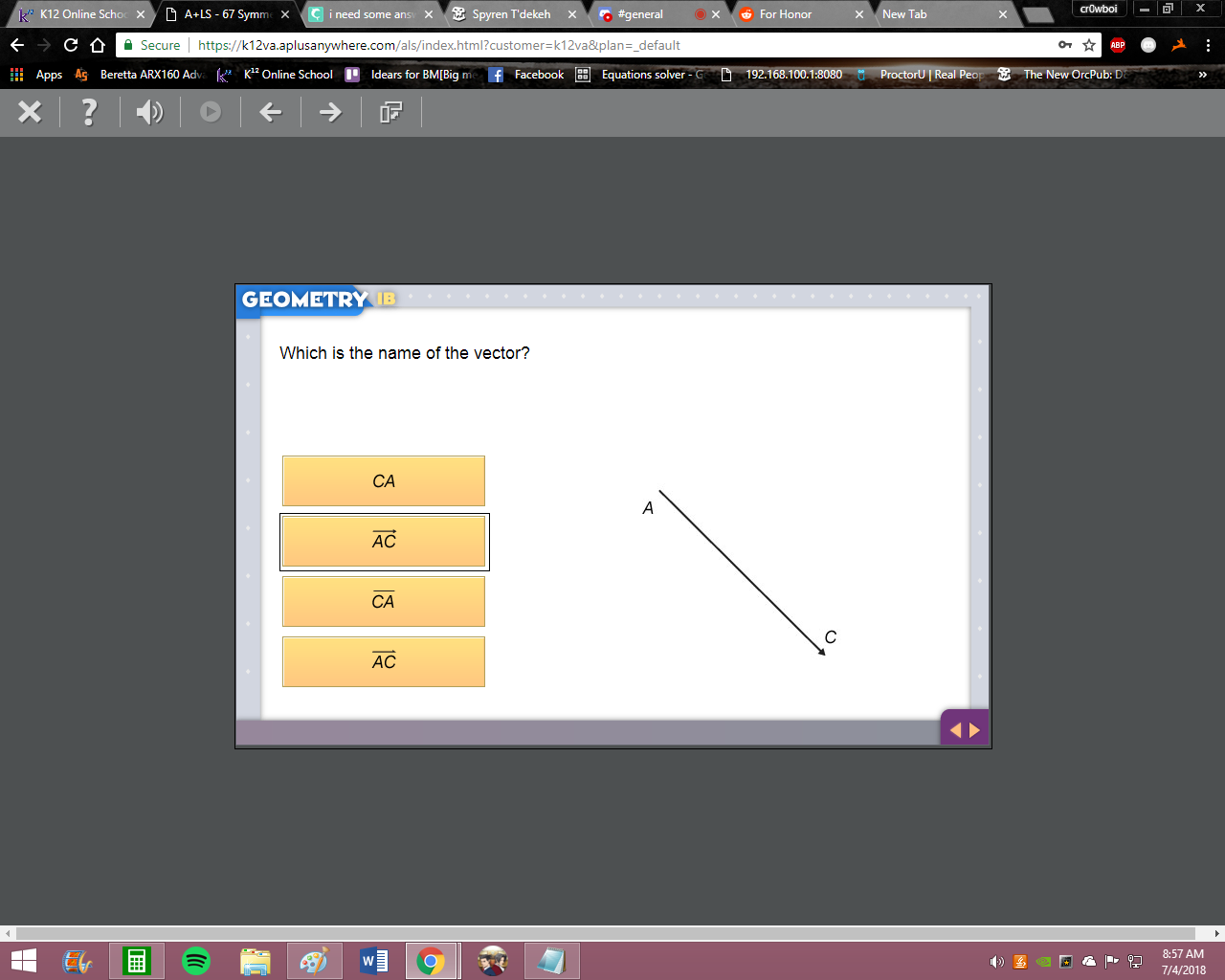
good
 Mercury:
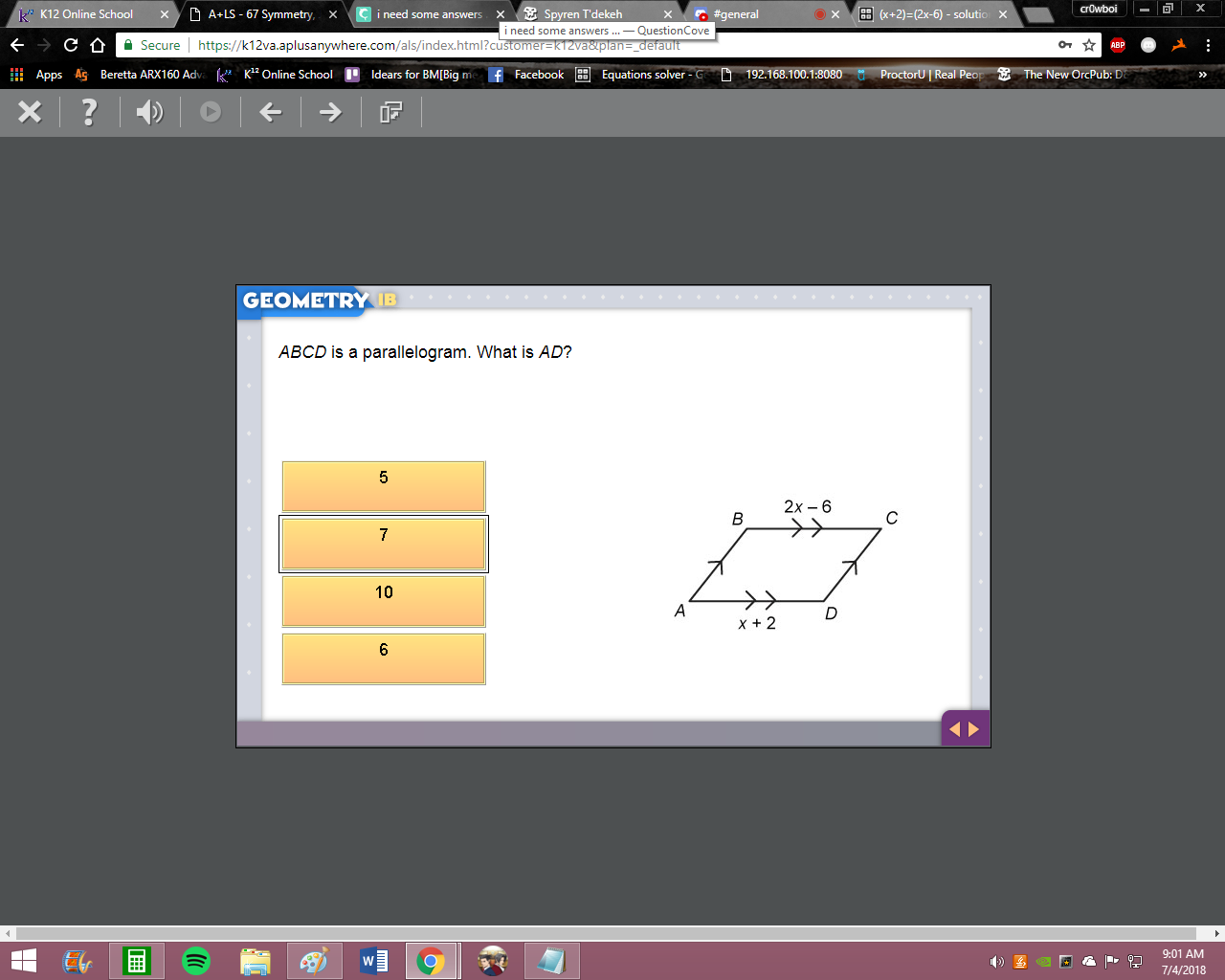
hm not quite check your calculations again if it's a parallelogram then BC and AD are equal therefore 2x - 6 = x + 2 first solve for x, then plug it back into AD
 Mercury:
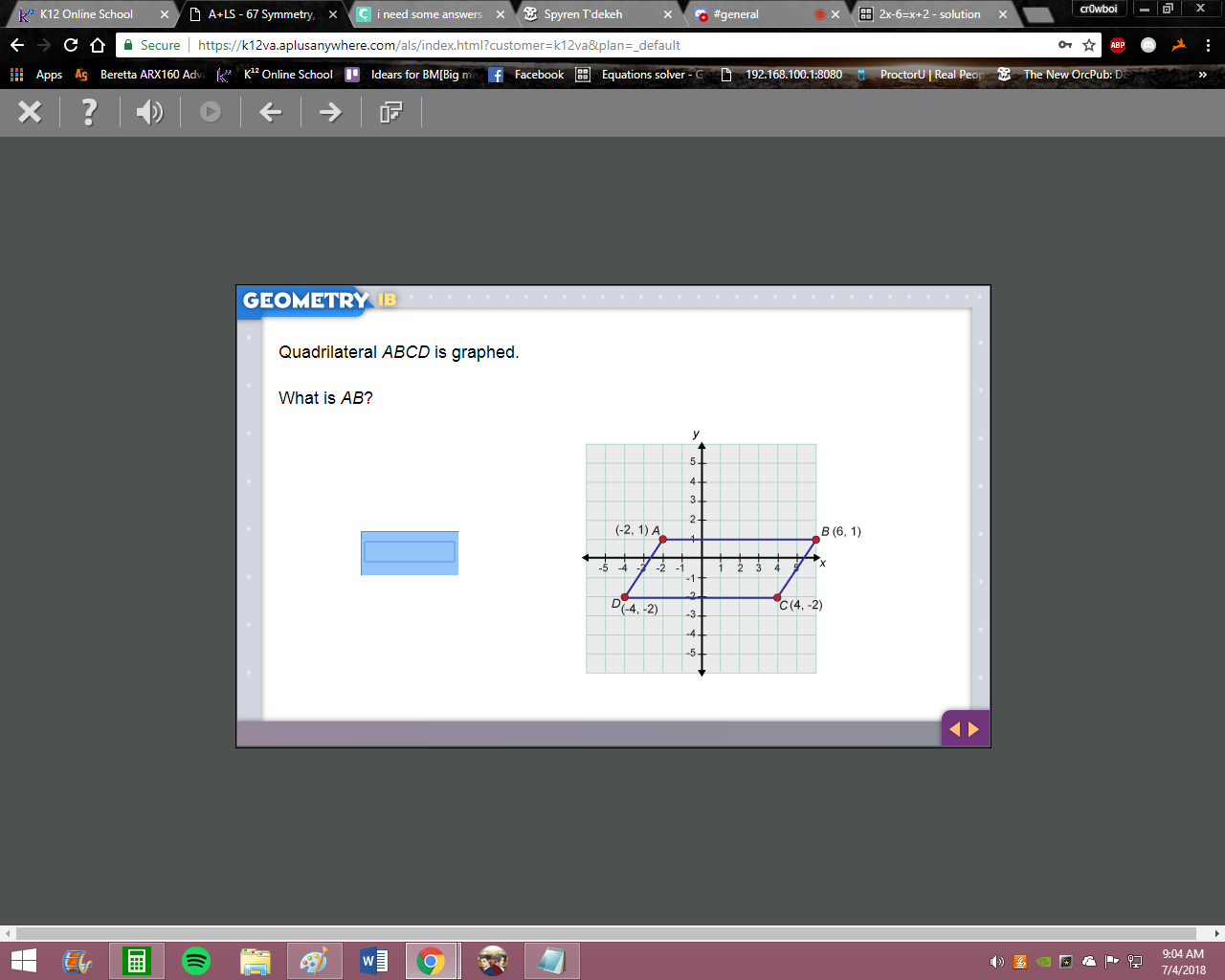
since it's a straight horizontal line you just need to count the number of spaces between A and B
princeevee:
so 3?
Mercury:
3? that's a bit too low if that doesn't work try finding the difference between the x-coordinates 6 - (-2) = ?
princeevee:
8
Mercury:
good so 8 = your sol'n going to lunch be back in like half an hour i gues
princeevee:
okay
princeevee:
@Mercury back?
Mercury:
sure what's the next question
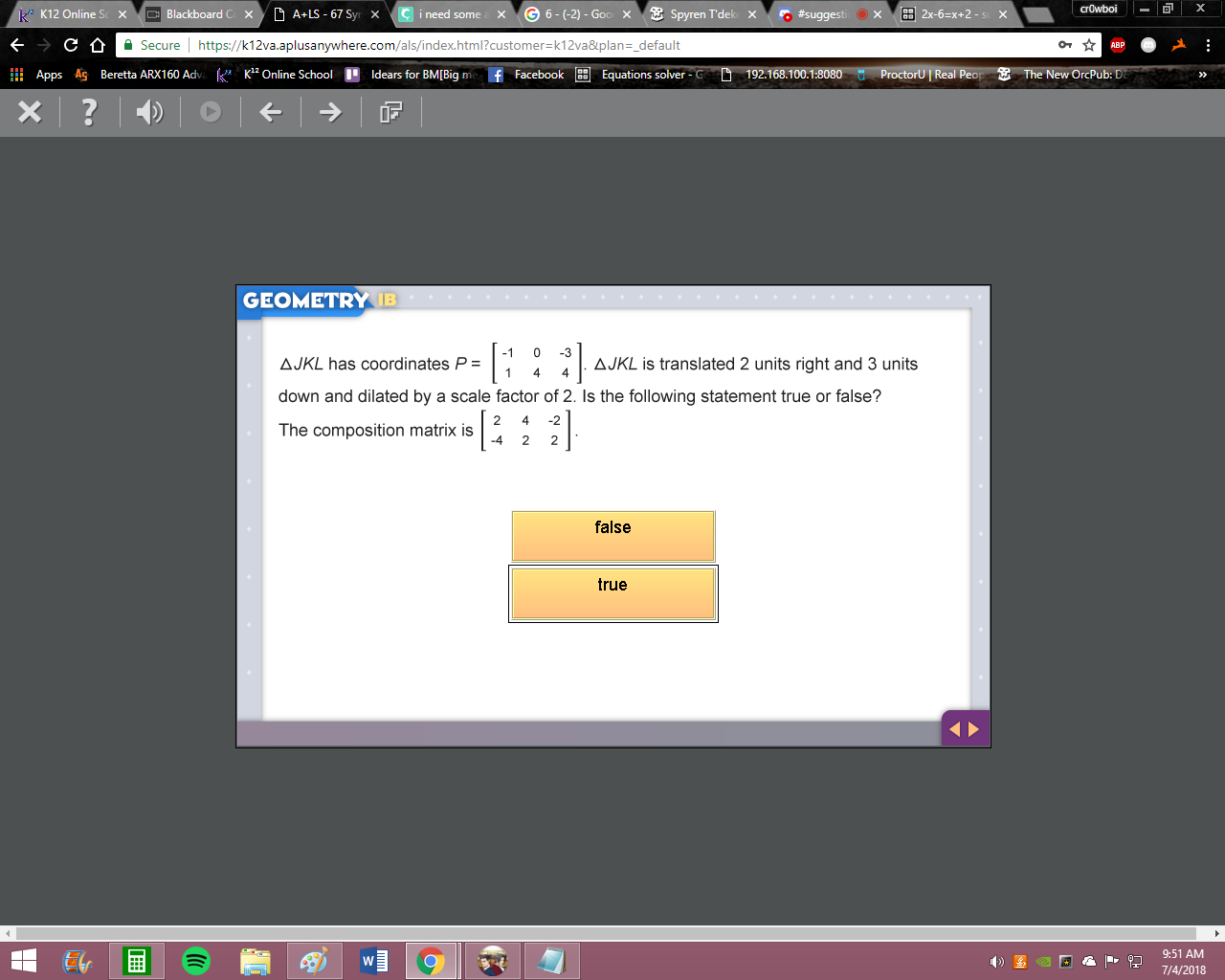 Mercury:
good
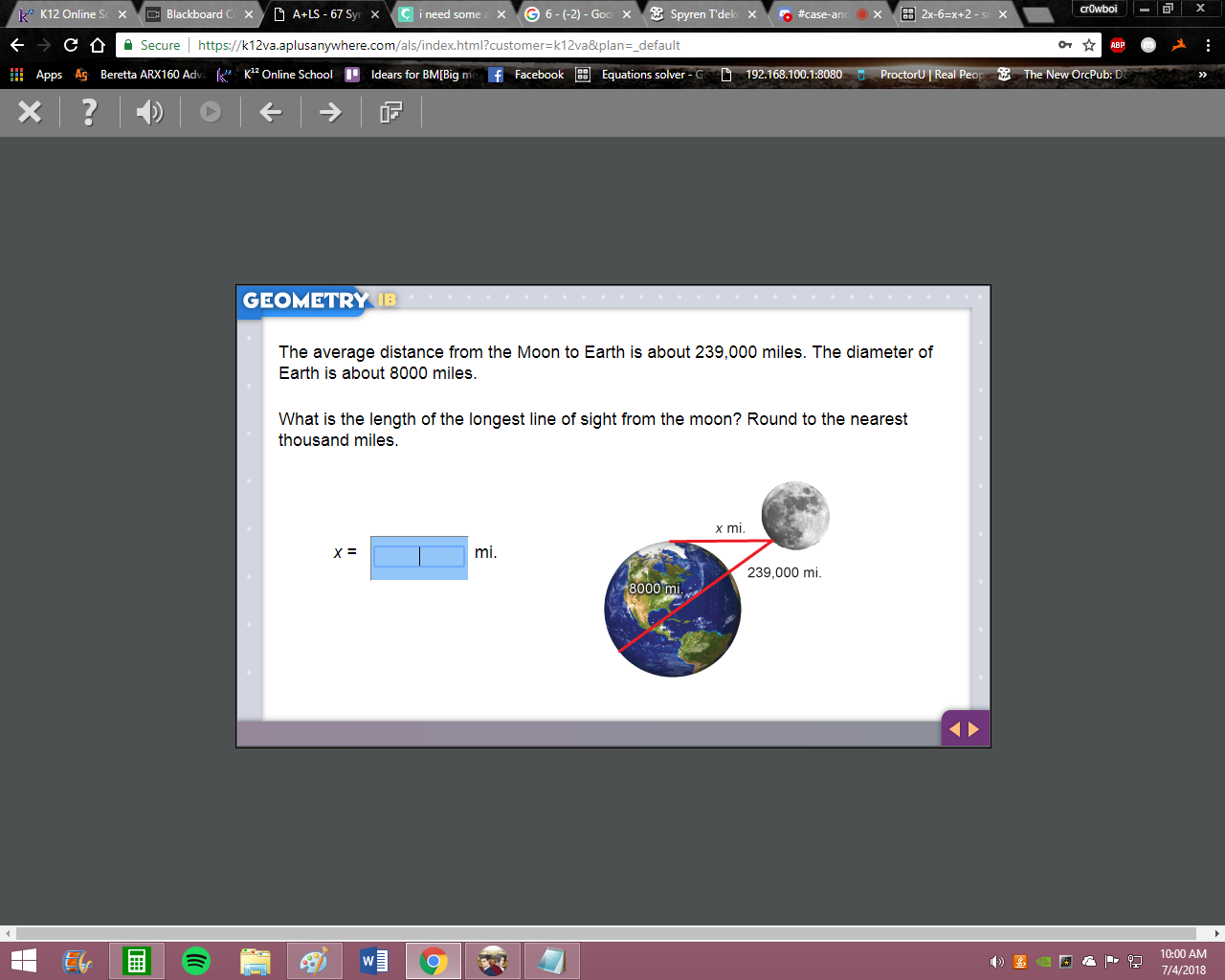 Mercury:
|dw:1530723814526:dw| try to apply this to your problem and set up the appropriate equation
princeevee:
8000 + 239,000?
princeevee:
then multiply it by 239k?
Mercury:
good, almost there notice that C is the small tangent segment which would correspond to x on your diagram therefore x^2 = 239,000(8000+239,000) solve for x
princeevee:
59033000000
Mercury:
close but that's the value of x^2, simply take the square root of that to get x
princeevee:
2.42?
Mercury:
square root of 59033000000 is 242967 which rounds to 243000 to the nearest thousandth as indicated by the problem directions so 243000 = your sol'n
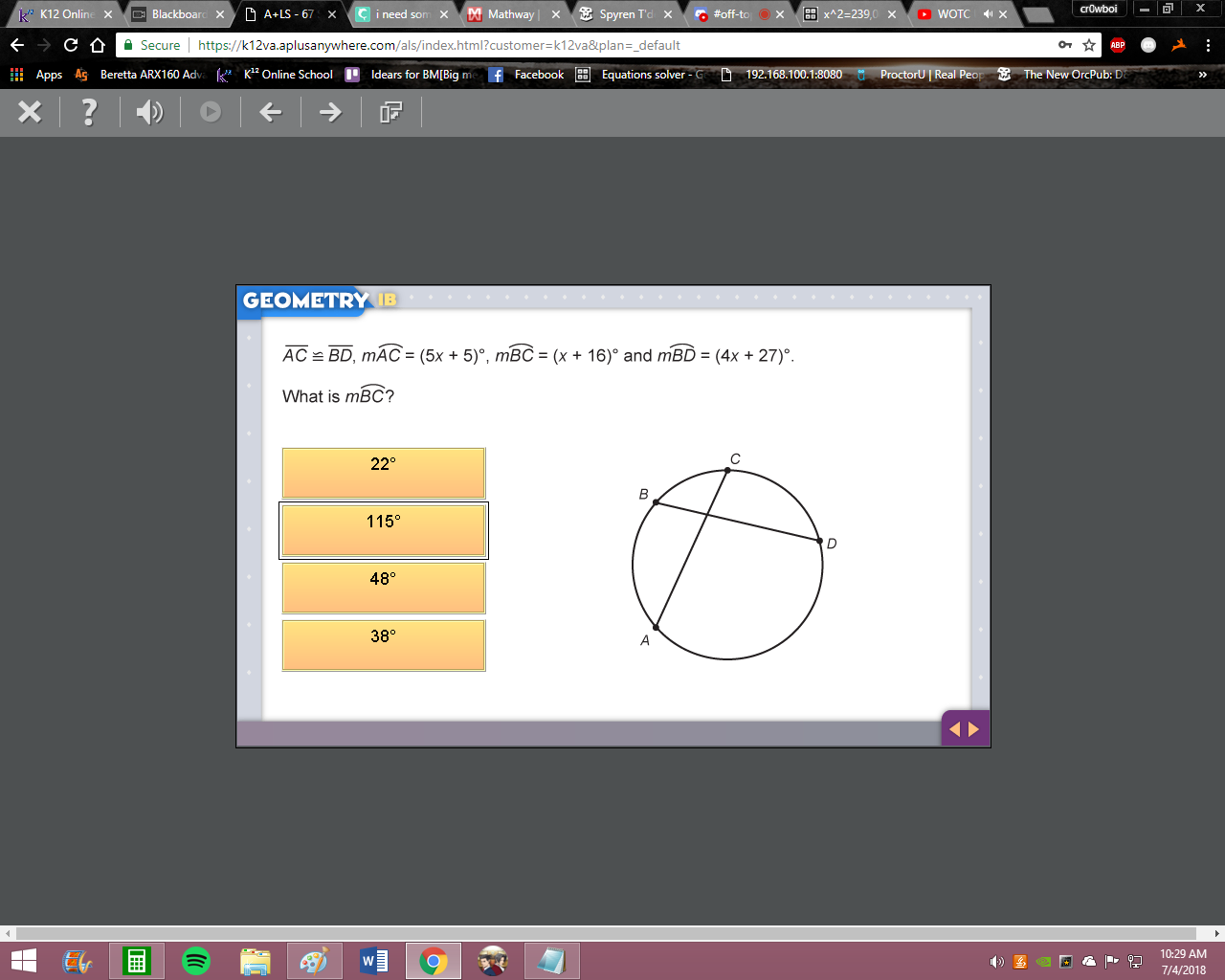 Mercury:
hm not quite they state that AC and BD are congruent so solve 5x + 5 = 4x + 27 for x then plug into bc
princeevee:
22
Mercury:
good then plug that x back into BC
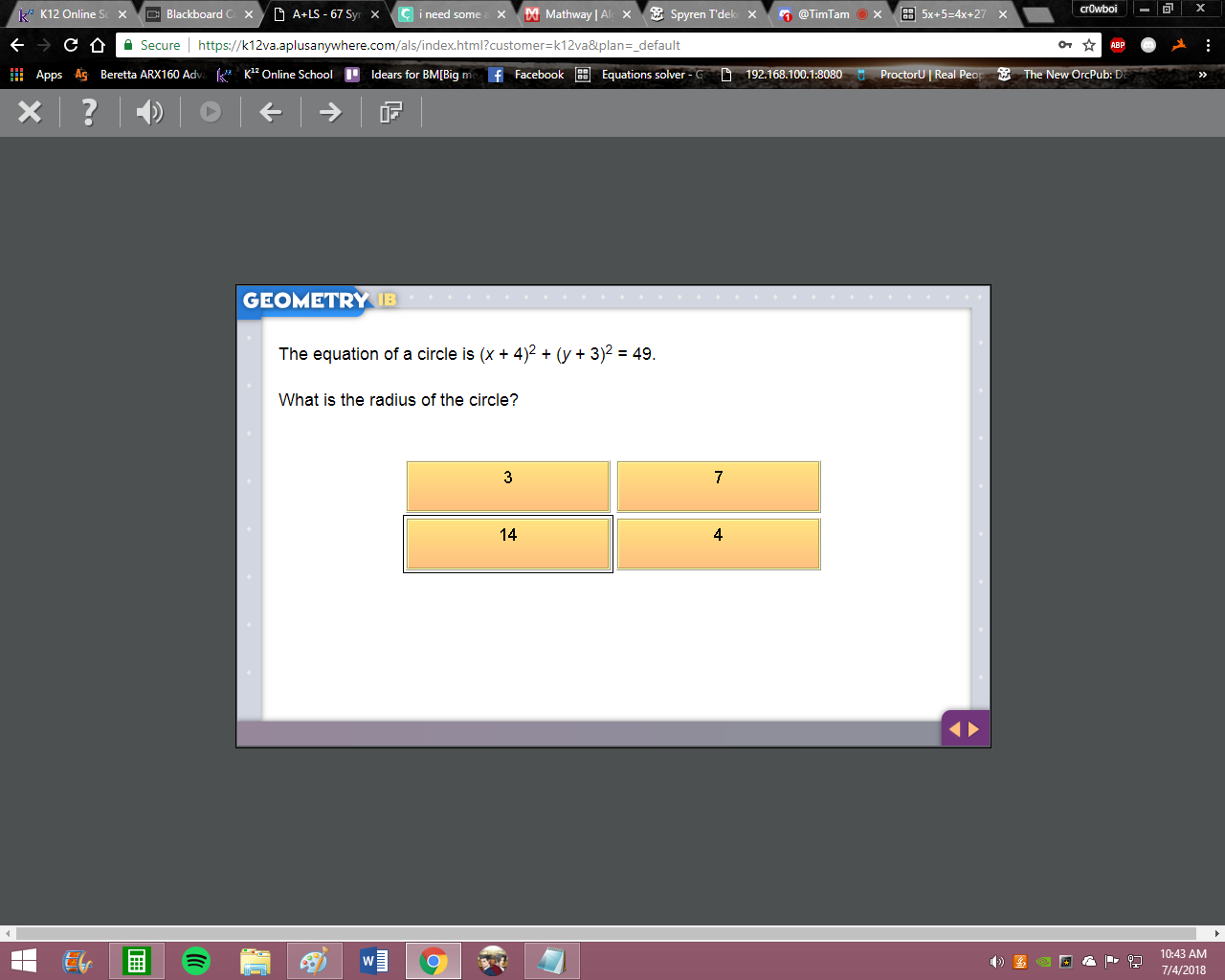 Mercury:
it's asking for the radius not the diameter |dw:1530726306122:dw| compare your equation to this to see what r would be
princeevee:
7
Mercury:
good
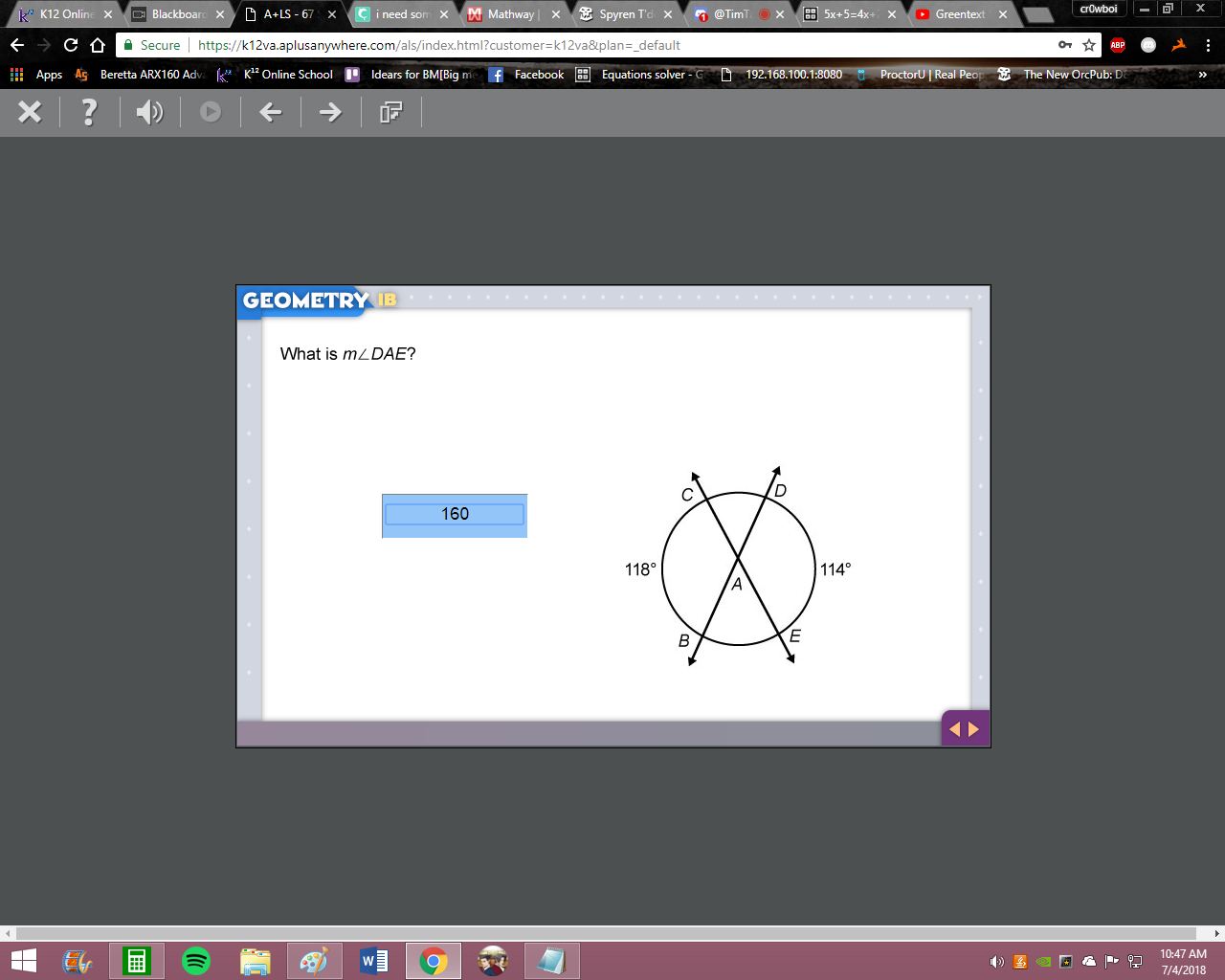 Mercury:
hm not quite for two intersecting chords the angle is the average of the arcs so add the two given arcs & then divide by 2
princeevee:
116
Mercury:
good that's your sol'n
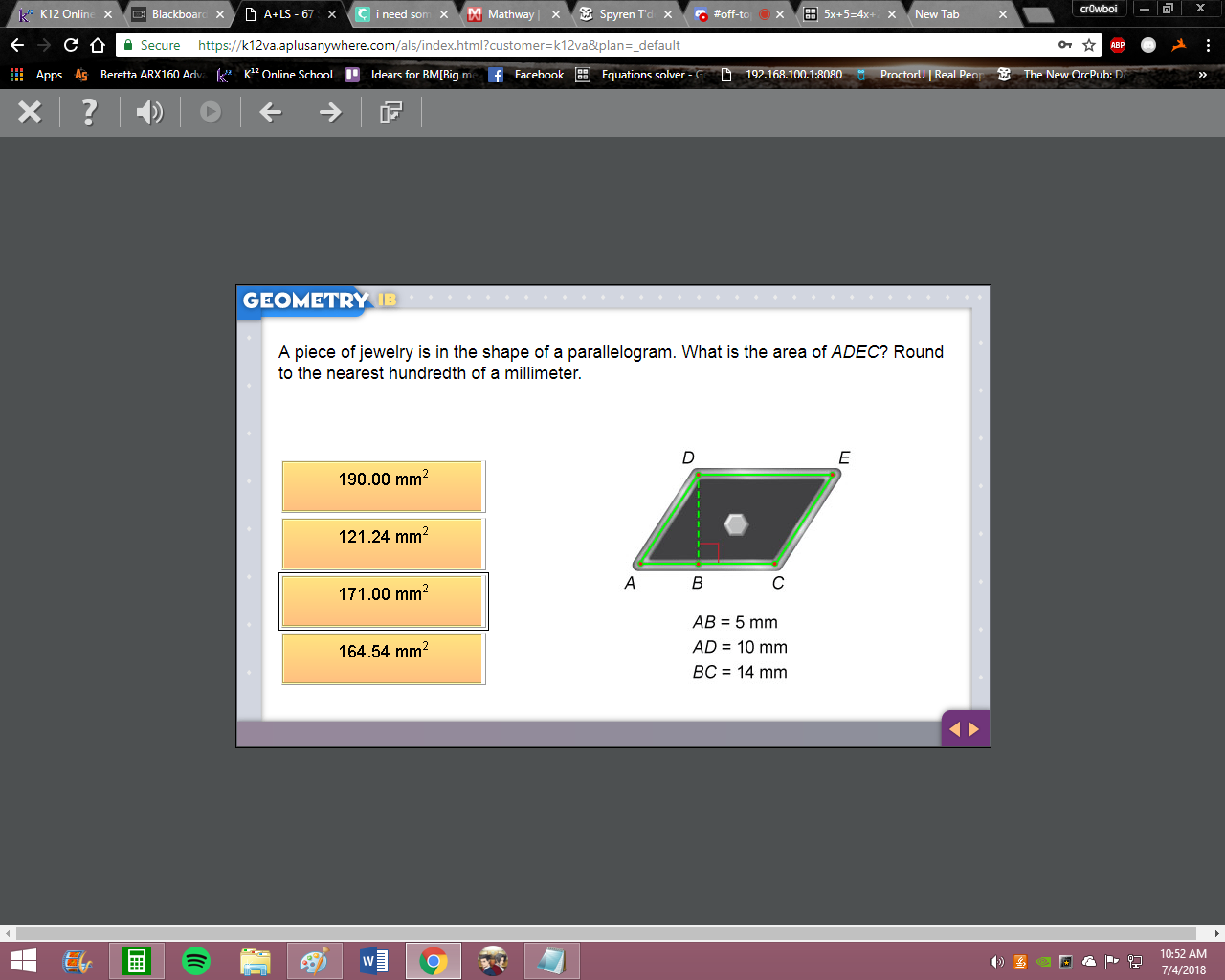 Mercury:
not quite let's start by calculating the length of DB notice that triangle DBA is a right triangle using the pythagorean theorem & the lengths of AD and AB, what's the length of DB?
princeevee:
about like, 190?
Mercury:
notice that AD and AB are only 5 and 10 so 190 is unreasonable
Mercury:
AD is the hypotenuse while DB and AB are the legs therefore AD^2 = DB^2 + AB^2 solve for the length of DB
princeevee:
164?
Mercury:
plugging in the side values 10^2 = DB^2 + 5^2 solve for DB.
princeevee:
ah, alright i got like, 75 x 5
princeevee:
wait, that isnt it..
Mercury:
10^2 = DB^2 + 5^2 subtract 5^2 from both sides
princeevee:
75 and 0?
Mercury:
good so you have 75 = DB^2 solve for DB (leaving in radical form is ok)
Mercury:
notice how you have DB^2 to "undo" a square you just have to take the square root of both sides.
princeevee:
8.66?
princeevee:
so it's 164 then?
Mercury:
good
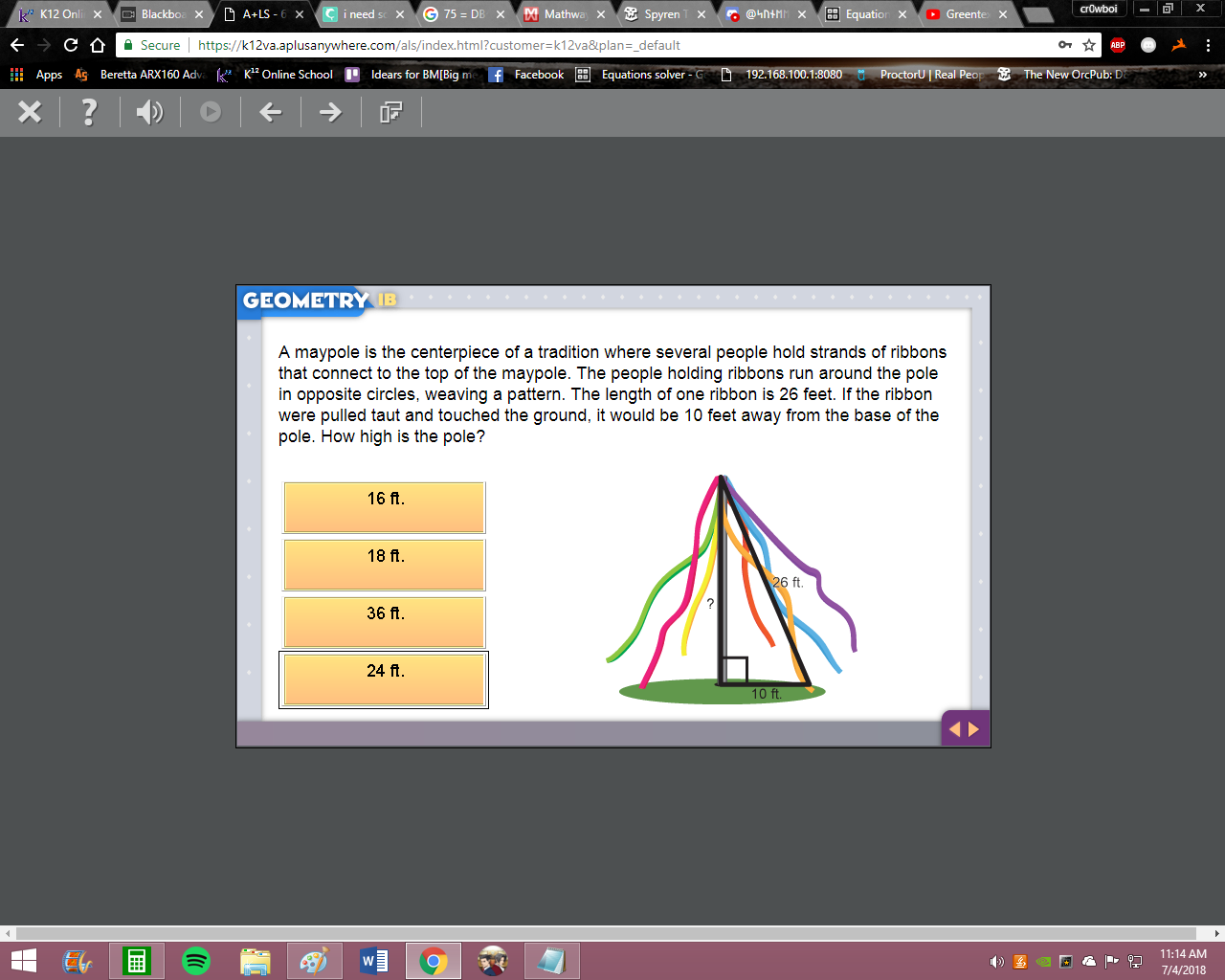 Mercury:
good
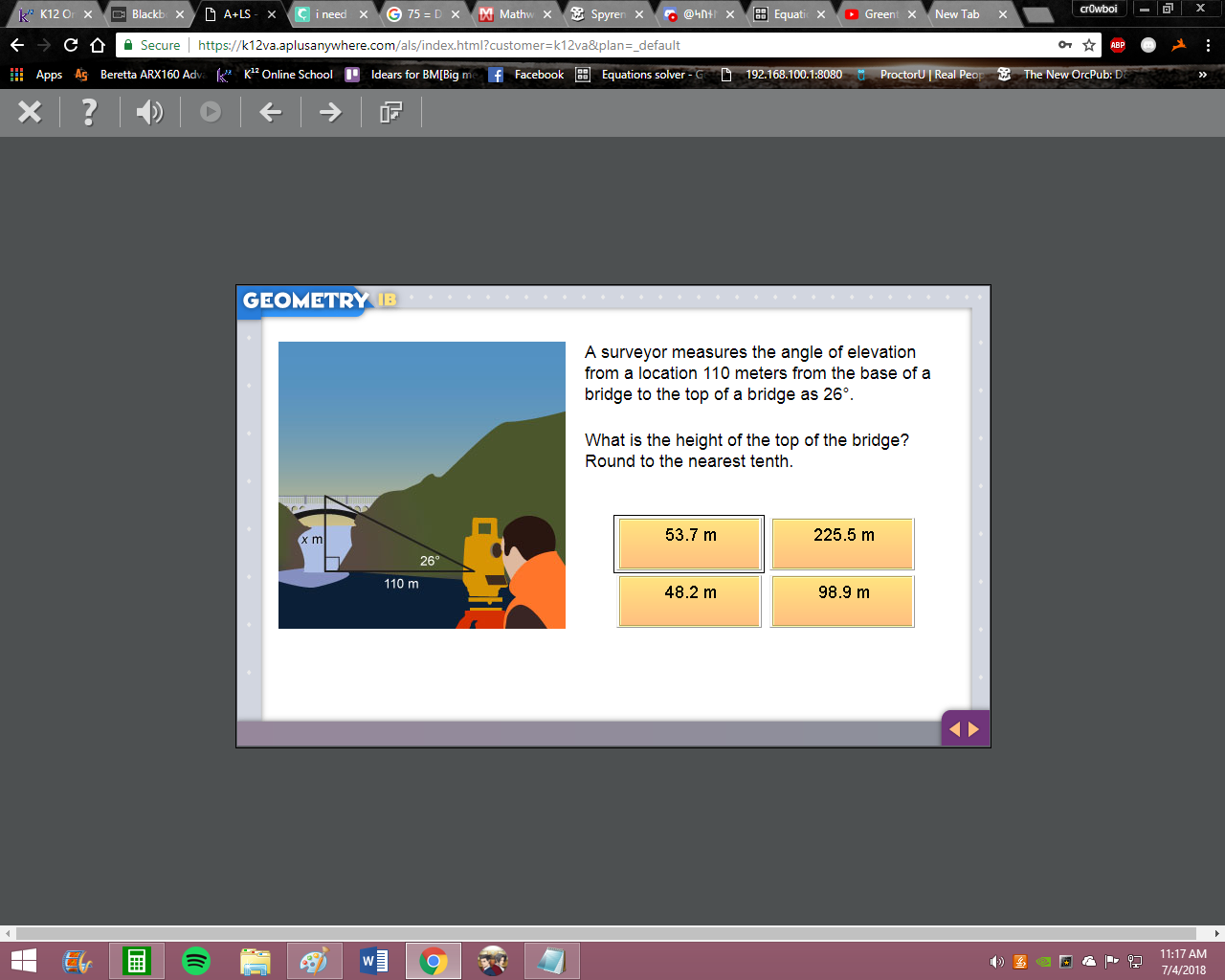 Mercury:
good
 princeevee:
?
Mercury:
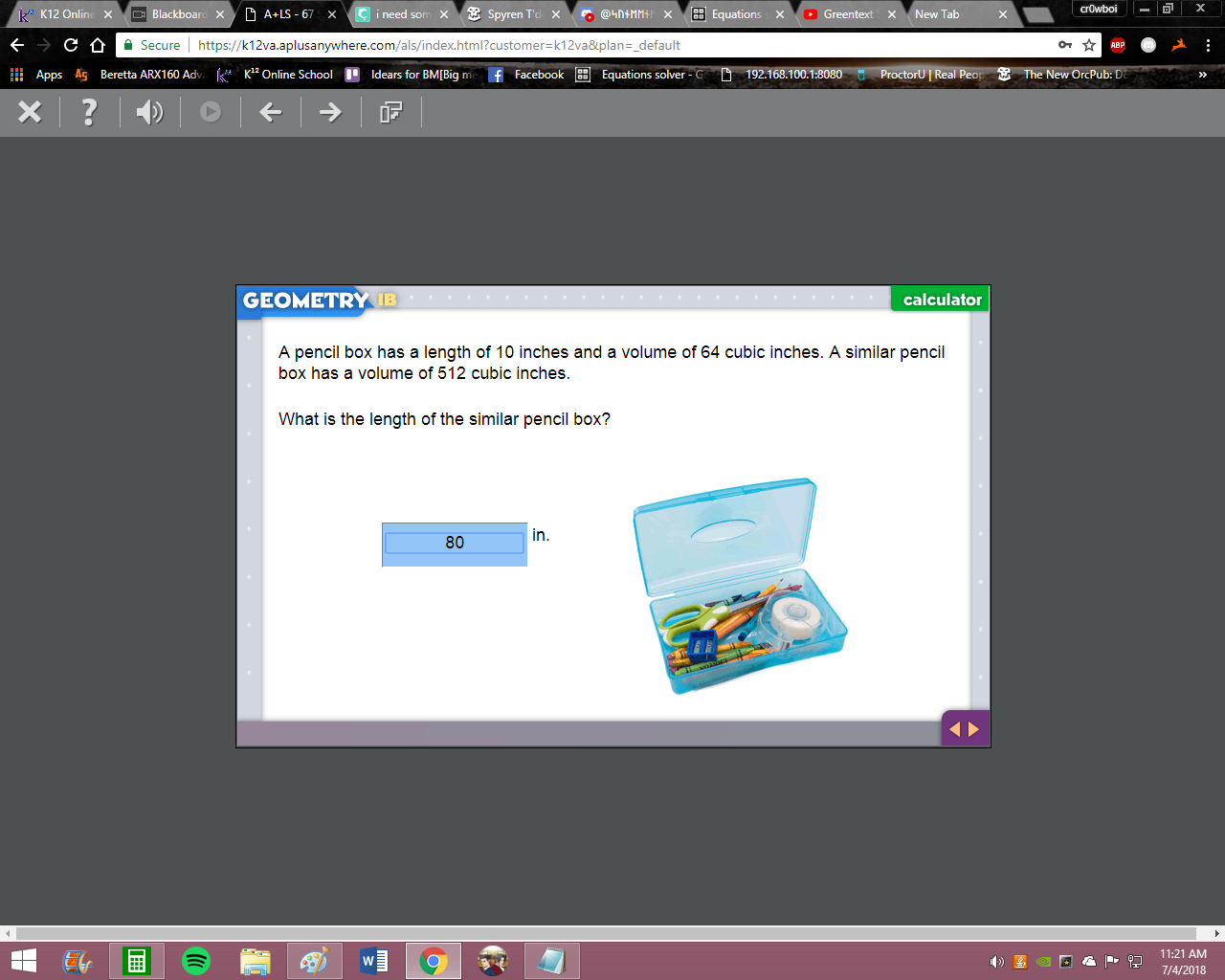
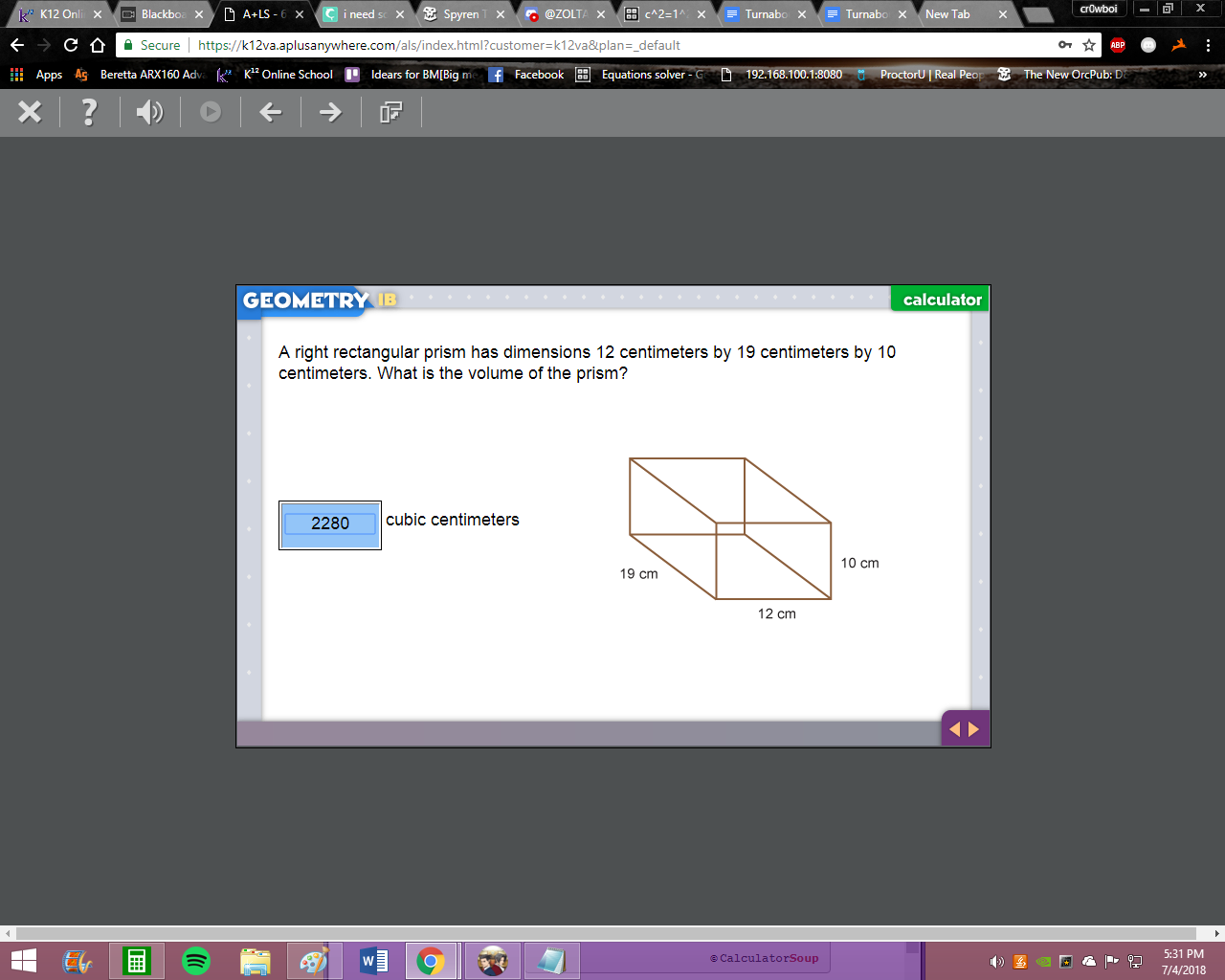
not quite the volume of the big box is 8 times bigger but that doesn't mean the lengths are the ratio of lengths is the cube root of the volume ratio therefore, find the cube root of 8, then multiply that by the old length
Mercury:
start by finding the cube root of 8.
princeevee:
2
Mercury:
good, so that's the length ratio if the old length is 10, then the bigger length must be 2*10 = 20 = your sol'n
 Mercury:
good
 Mercury:
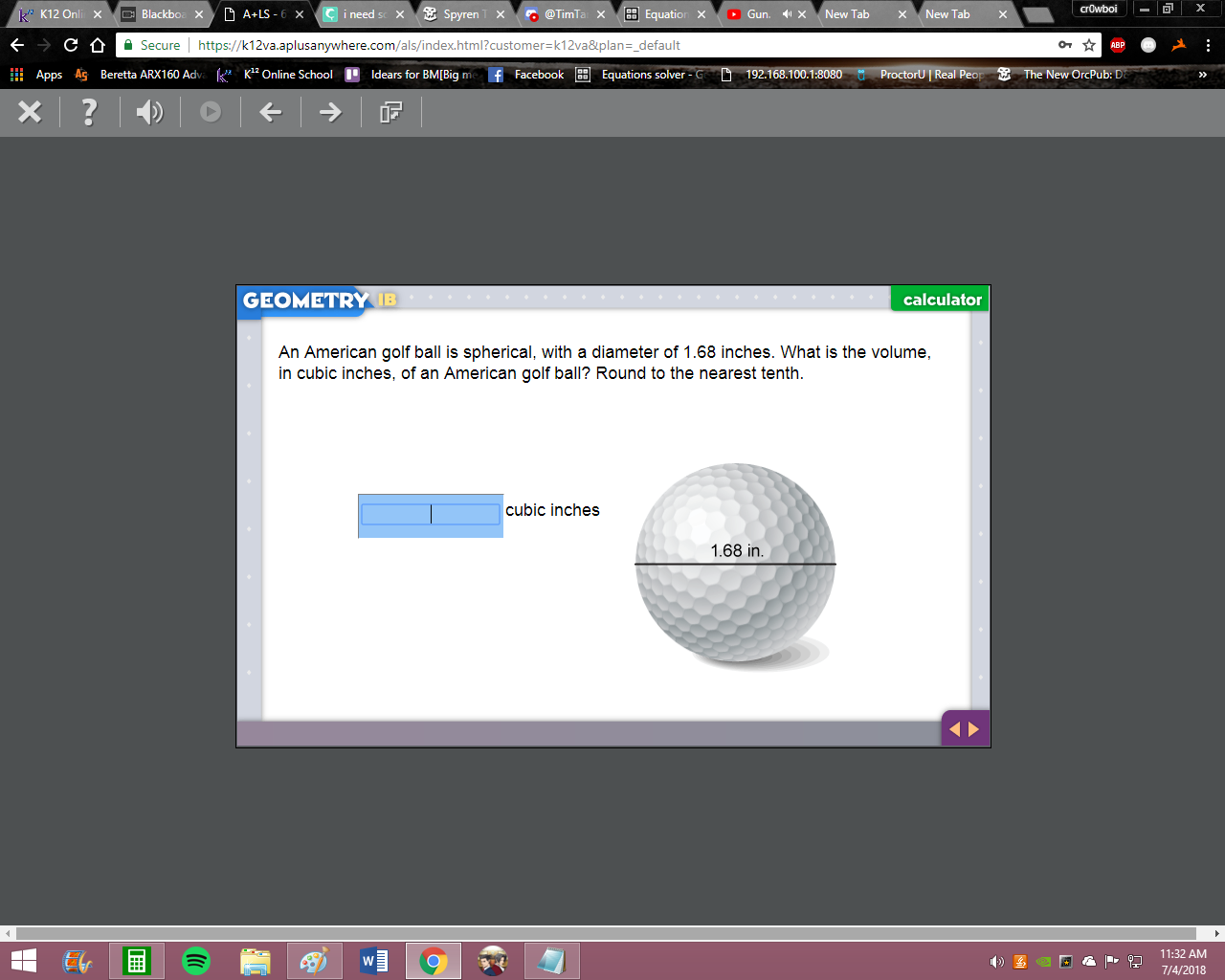
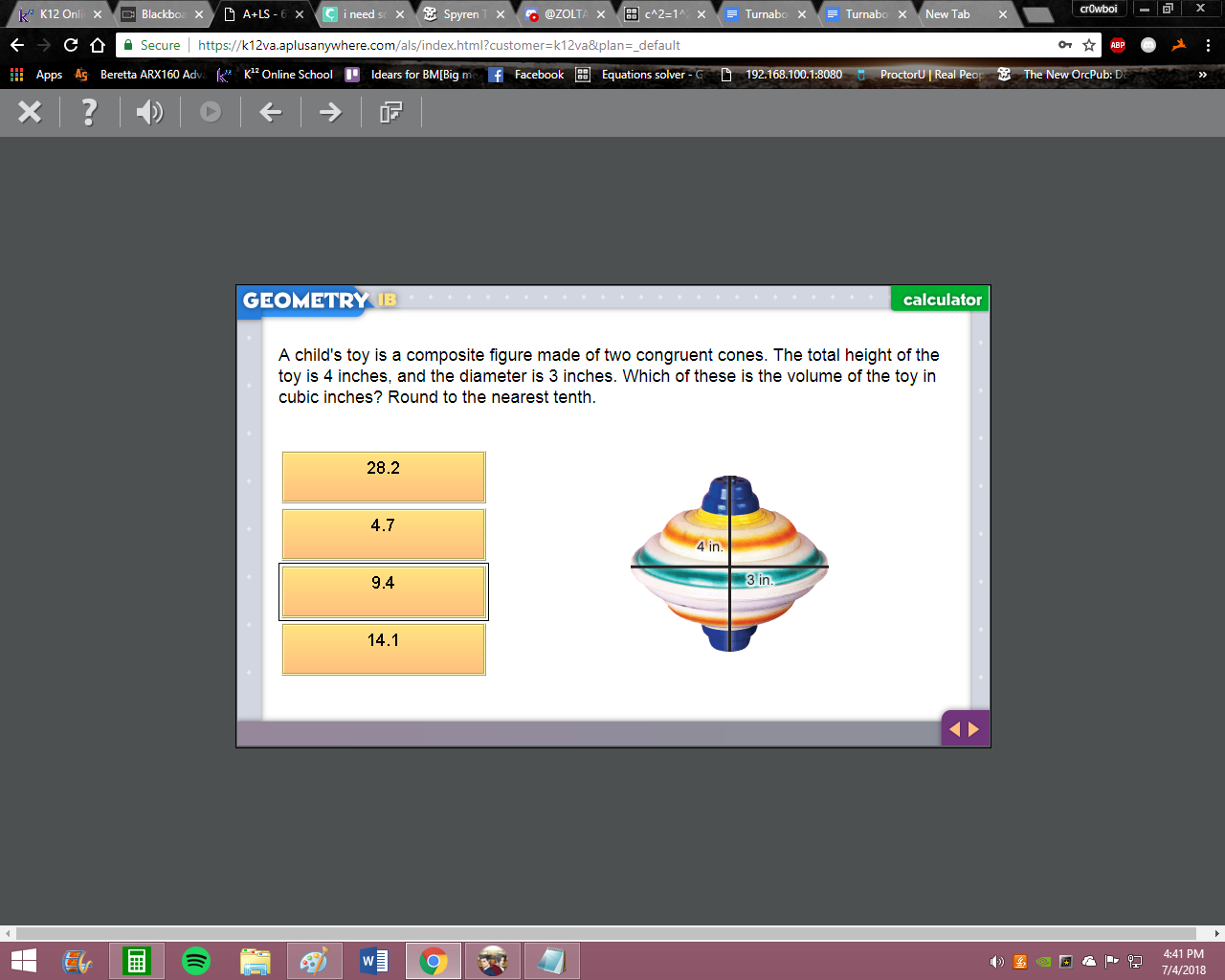
volume = (4/3)pi*r^3 so first find the radius then plug it into the formula
princeevee:
so the radius is half th ediameter right?
Mercury:
yes
princeevee:
0.84
Mercury:
that's the radius, now keep going with the rest of the formula
princeevee:
2.48
Mercury:
good but it wants it to the nearest tenth so 2.5
 Mercury:
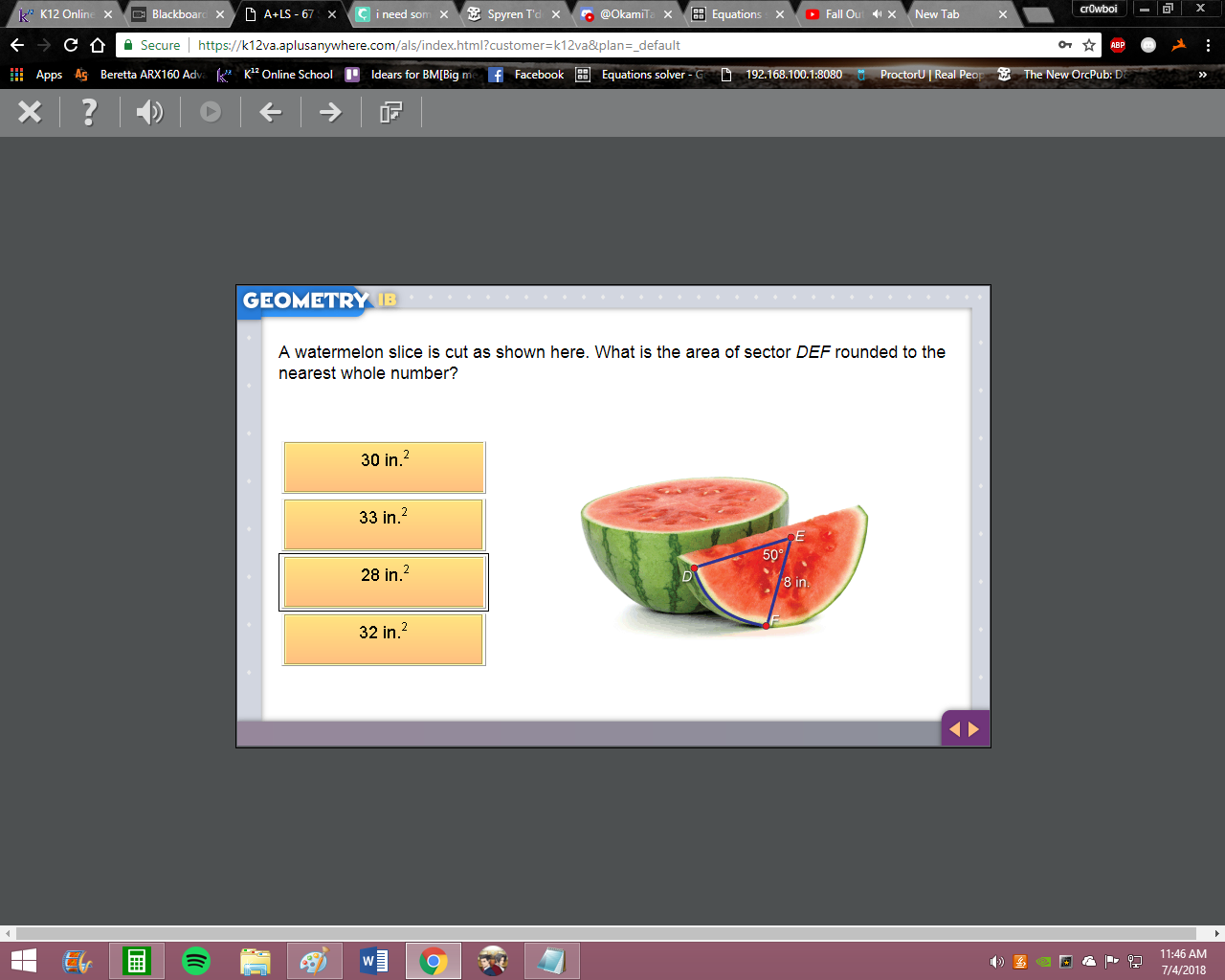
good
 Mercury:
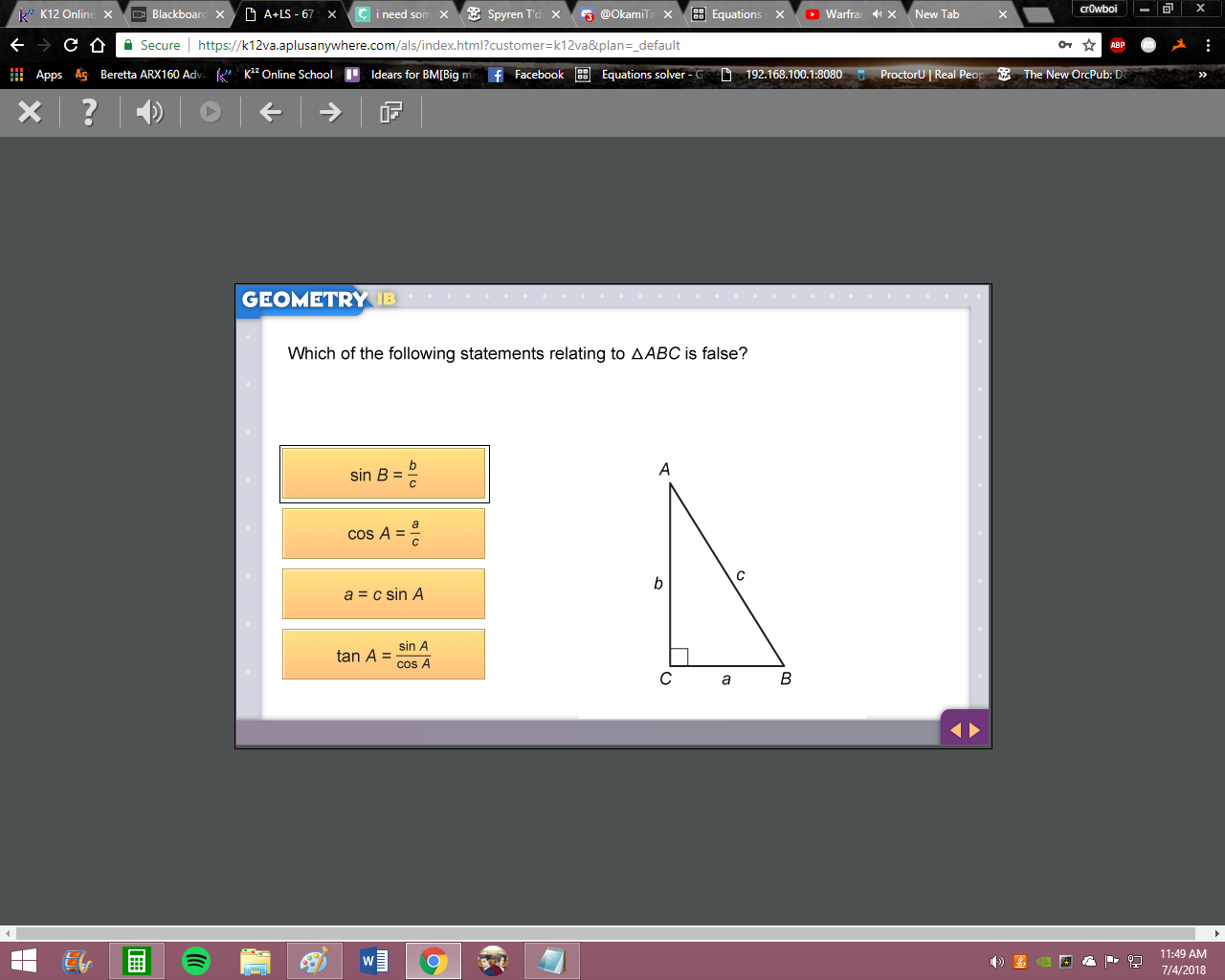
hm, check again, remember it wants the one that's false sin = opposite/hypotenuse so A is true try checking B and C
Mercury:
remember cos = adjacent/hypotenuse from the perspective of angle A is cosA = a/c?
princeevee:
yeah?
Mercury:
notice how side a is the opposite from angle A not the adjacent
Mercury:
cosA would be b/c not a/c since side b is the adjacent side
princeevee:
so B is crossed out?
Mercury:
it's looking for the statement that is false since we stated that sinA = b/c not a/c statement B is false making it the only possible answer choice
 Mercury:
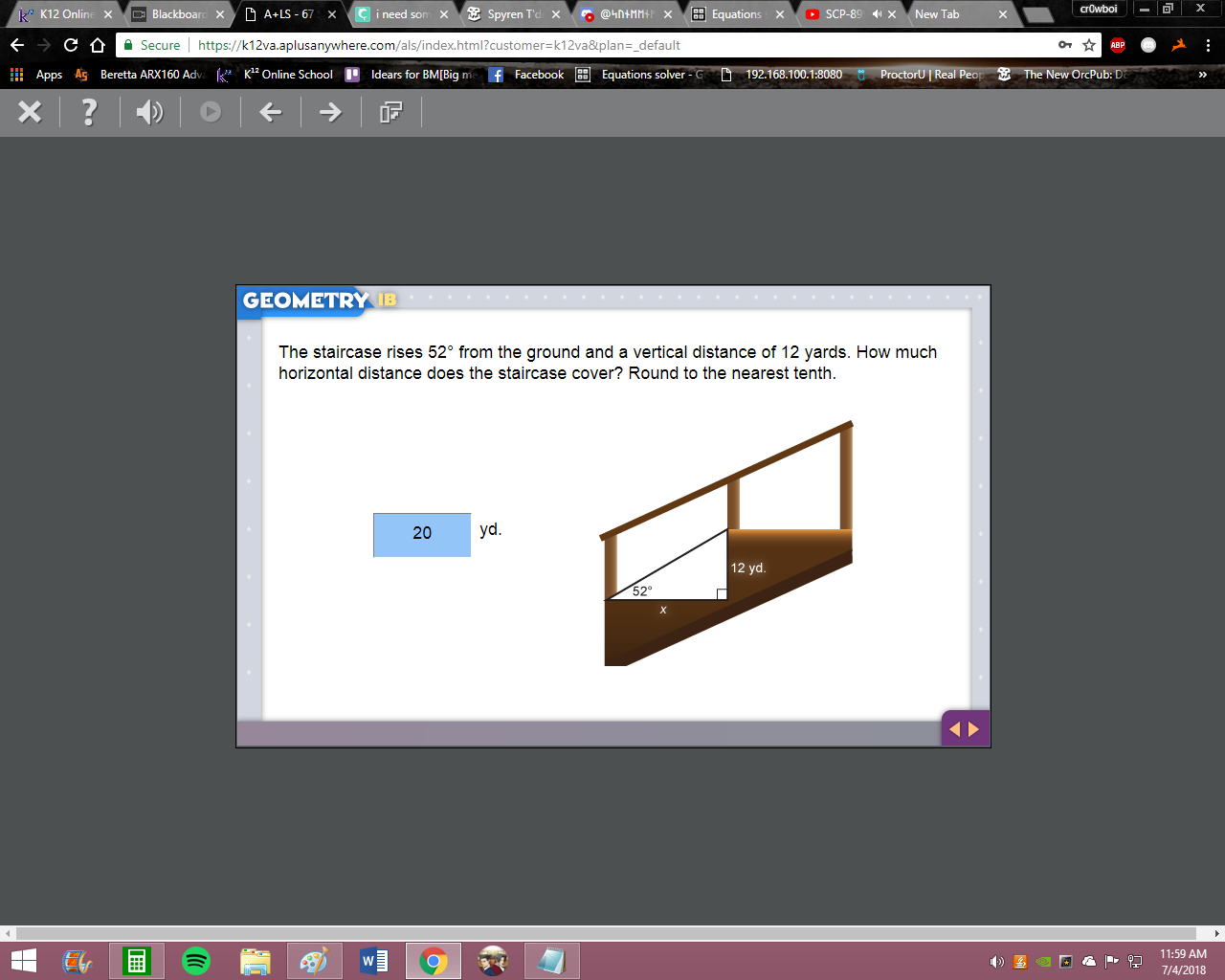
check your calculations again tan(52) = 12/x
princeevee:
-6.05
Mercury:
make sure your calculator is in degrees mode
princeevee:
1.27
Mercury:
if you have something like A/B = C you can switch B and C to get A/C = B and it's still valid therefore tan(52) = 12/x becomes x = 12/tan(52)
Mercury:
x = 12/tan(52) = ?
Mercury:
you just need to plug this into your calculator, it ends up being 9.4
princeevee:
so that's the solution?
Mercury:
yes.
 Mercury:
good
 Mercury:
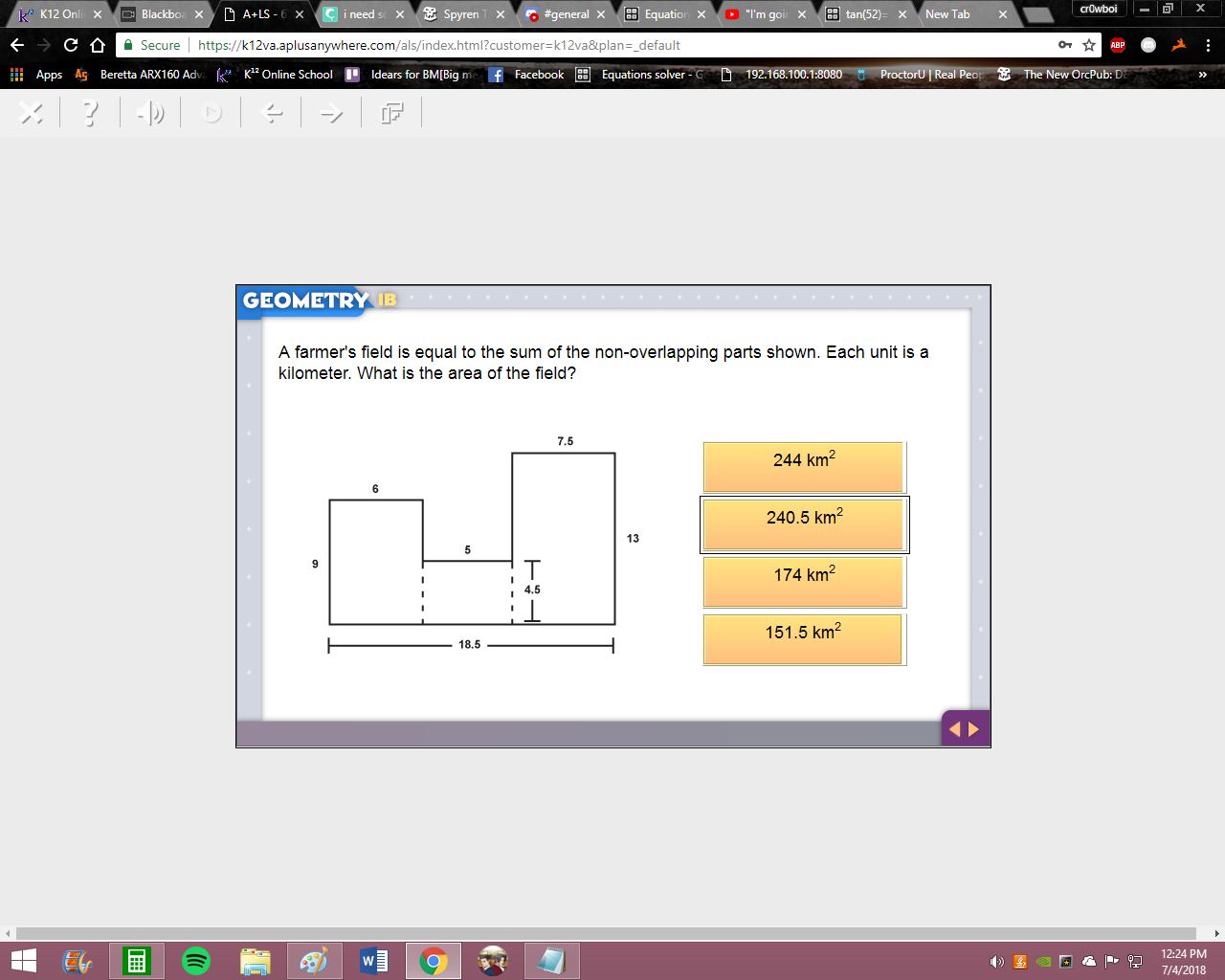
not quite check your calculations again you just need to break down the shape into the three rectangles given and calculate the area of each rectangle
Mercury:
left rectangle: dimensions: 9 and 6 middle rectangle: dimensions: 5 and 4.5 right rectangle: dimensions: 7.5 and 13 remember that are of a rectangle is L*W
princeevee:
alright,,
princeevee:
so i just multiply all those up?
Mercury:
calculate the area of each rectangle individually, then add the three areas up.
princeevee:
9x 6=54 5 x 4.5 =22.5 7.5 x 13 = 97.5
Mercury:
now add them up
princeevee:
174
Mercury:
good so 174 = your sol'n
 Mercury:
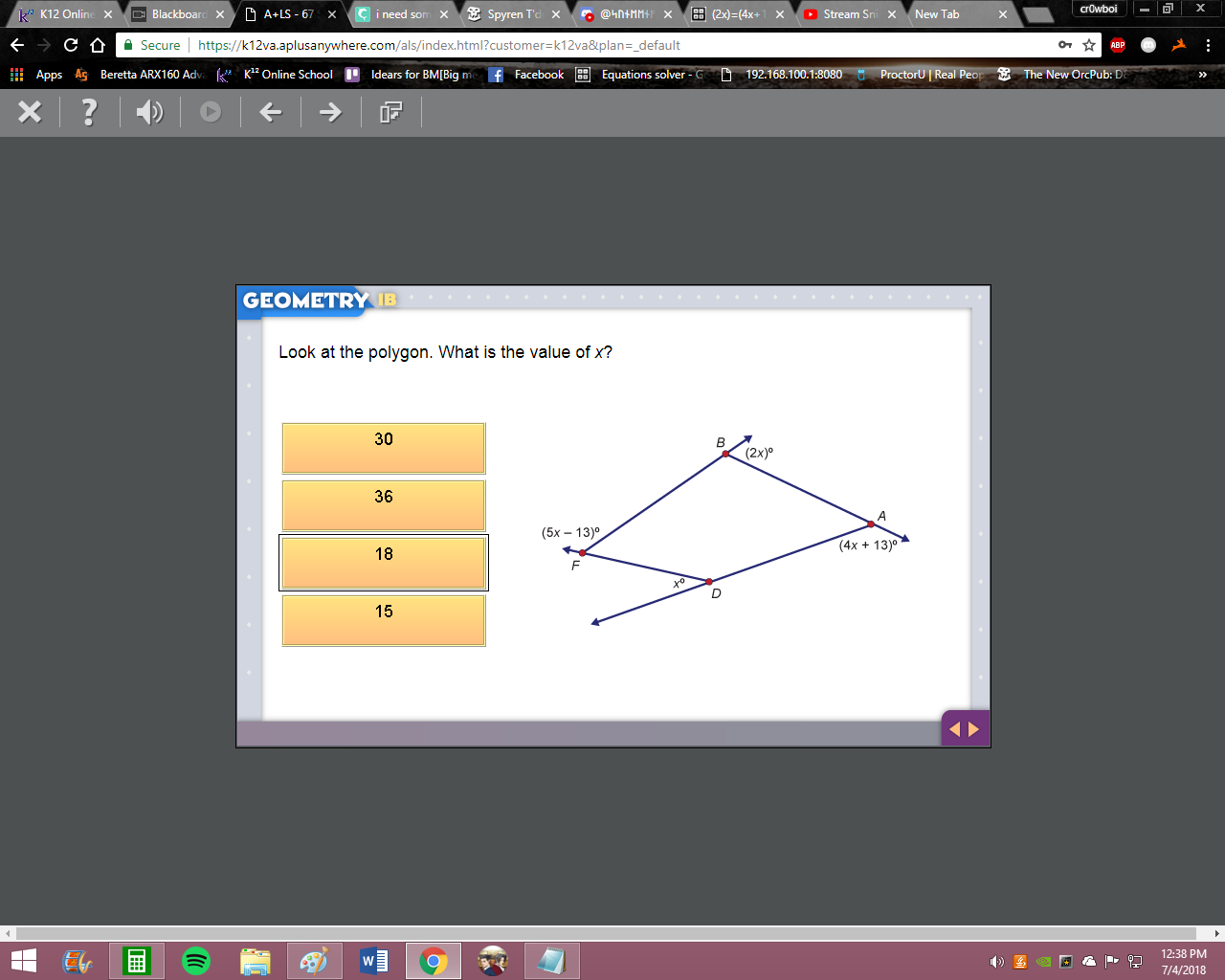
hm not quite, check your calculations again sum of exterior angles is 360 so 2x + 4x + 13 + x + (5x-13) = 360 solve for x
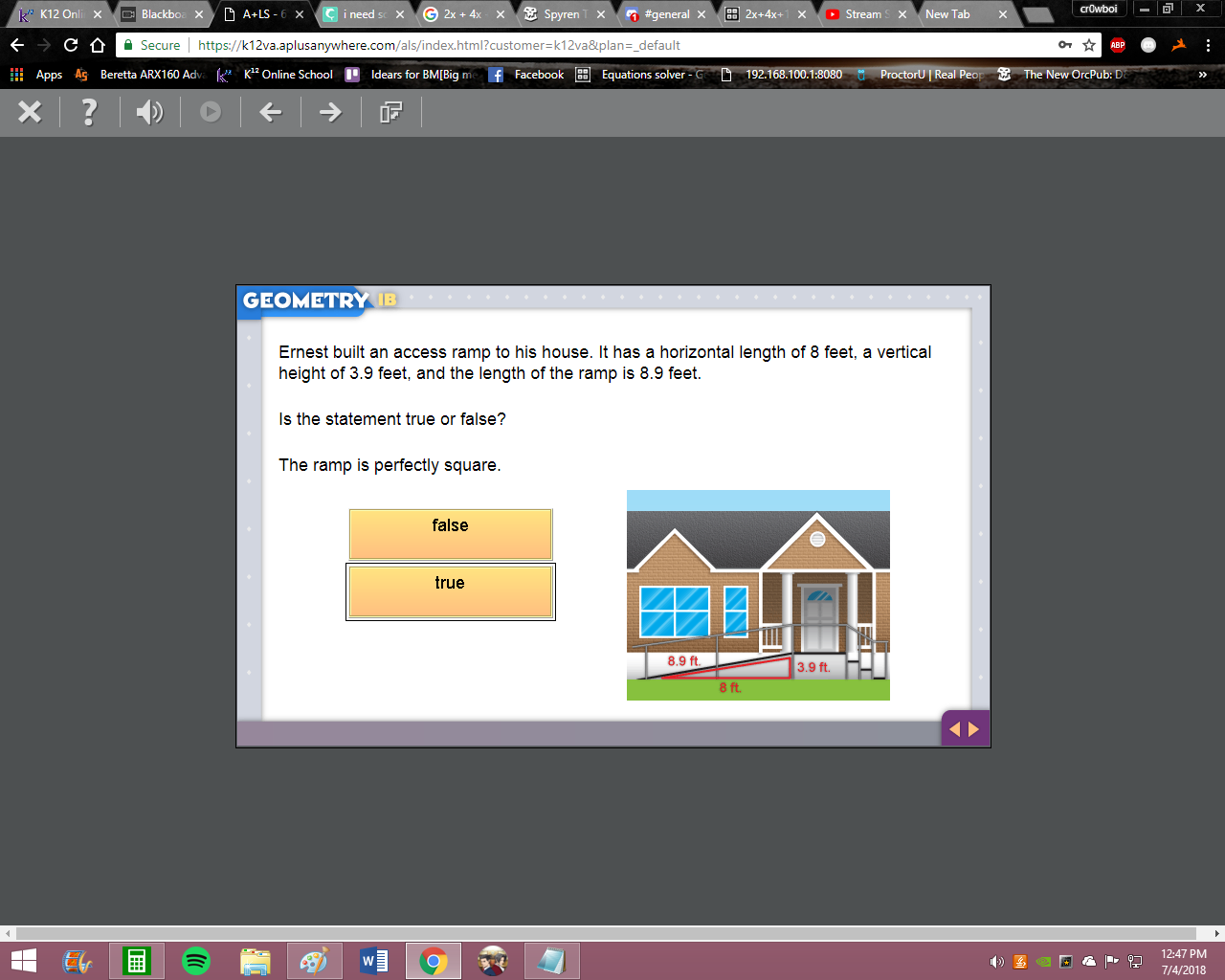 Mercury:
good
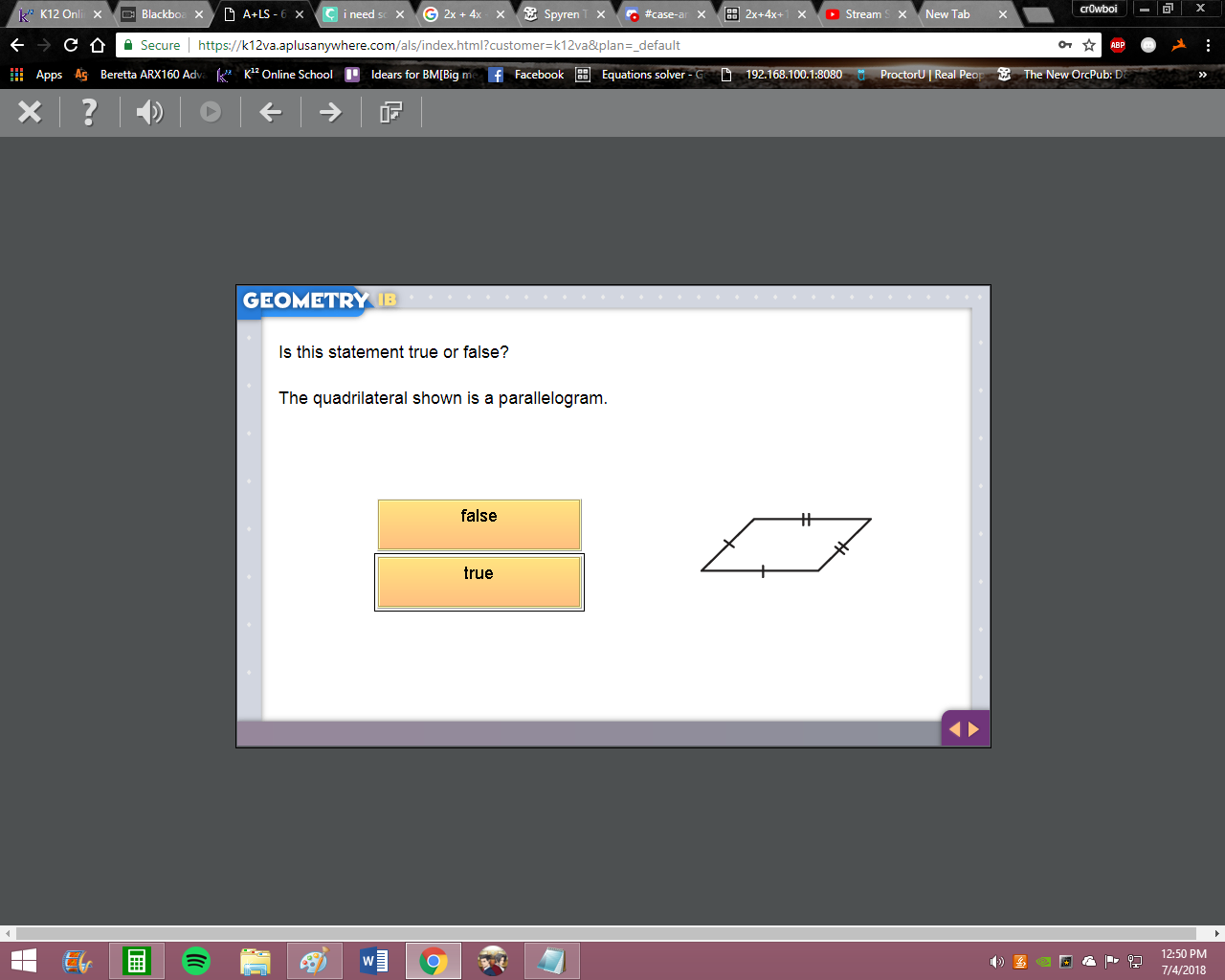 Mercury:
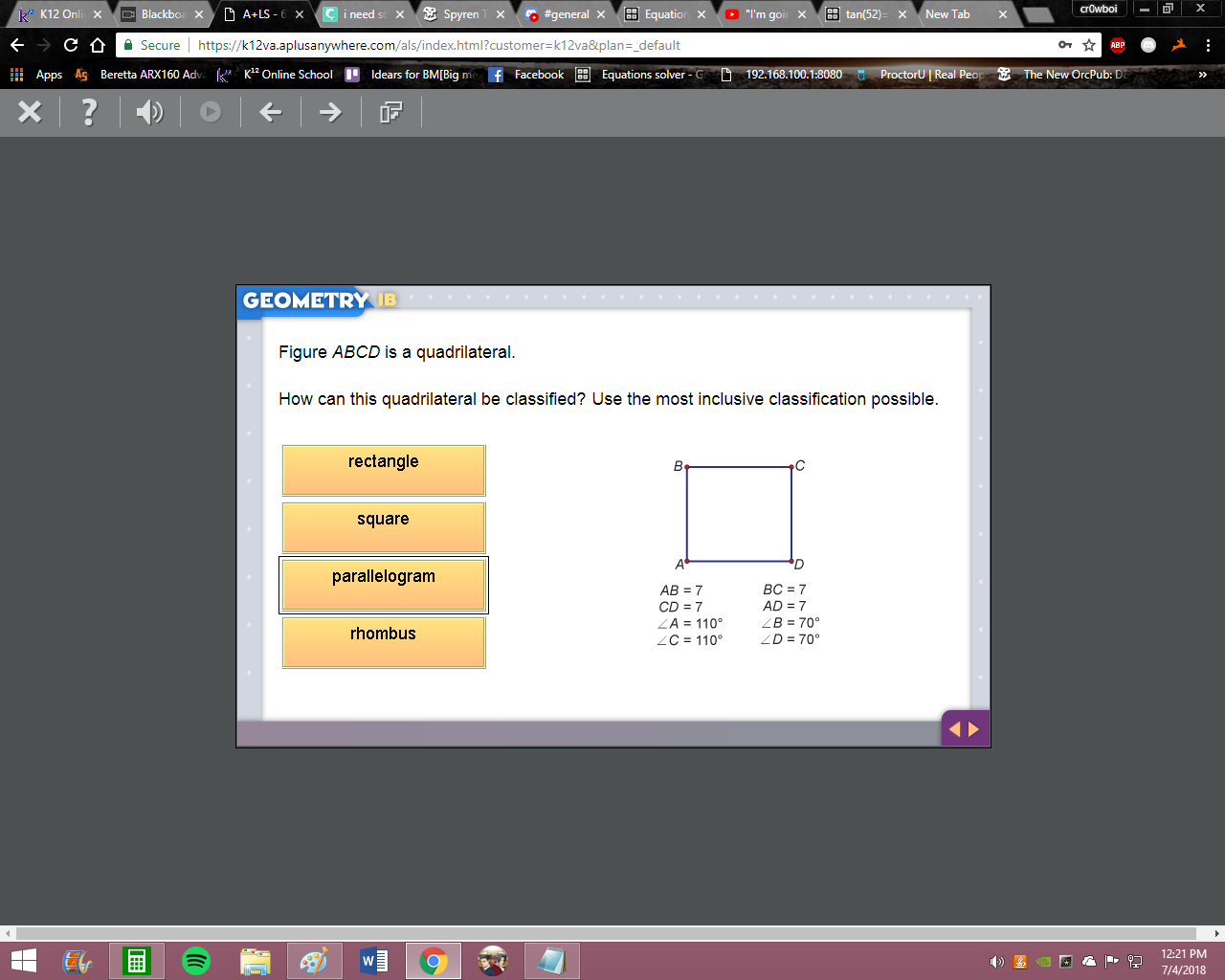
for a shape to be a parallelogram ~opposite~ sides need to be congruent not adjacent ones so the shape shown is a kite not a parallelogram making the original statement false
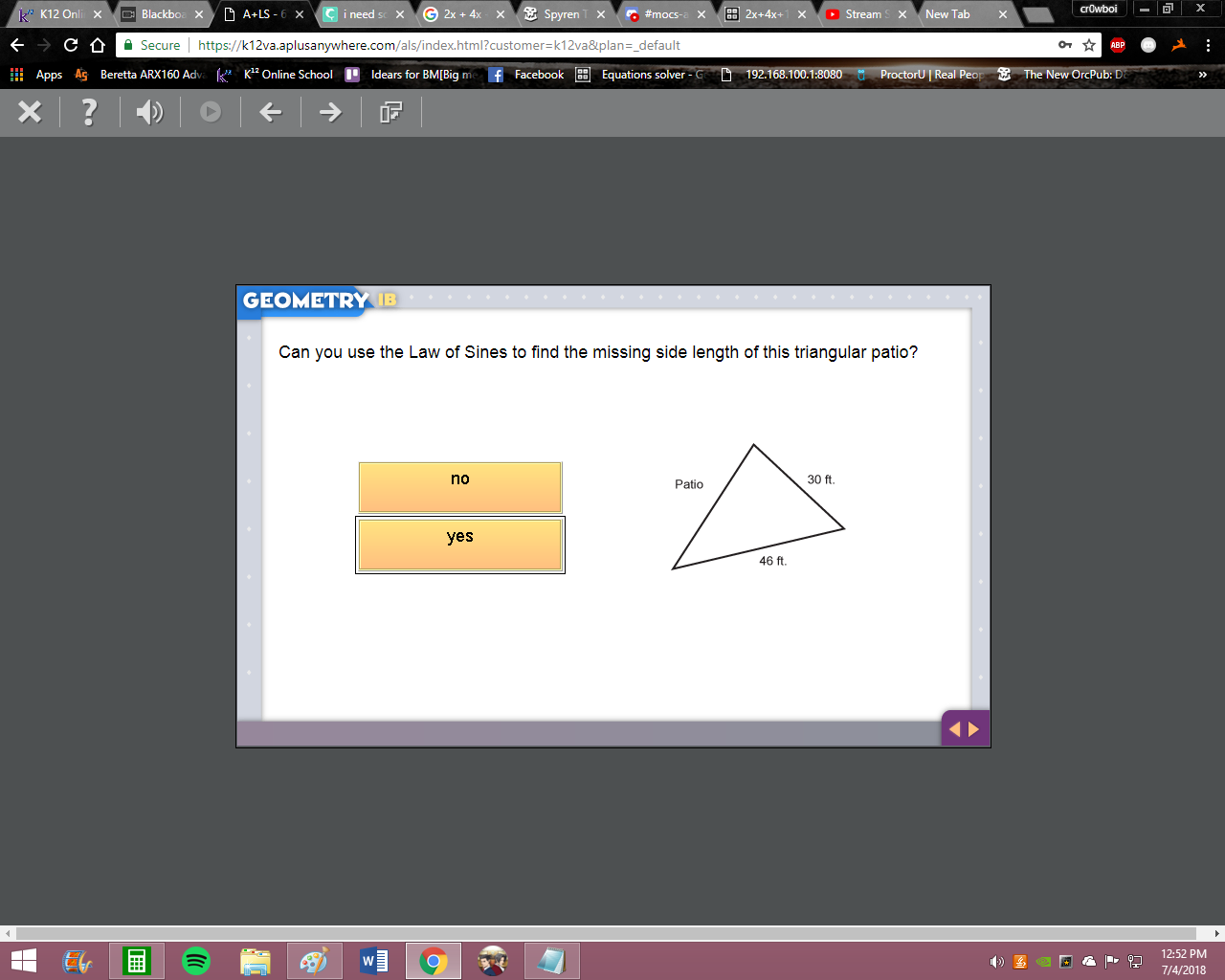 Mercury:
you don't know any angles so law of sines does not apply here
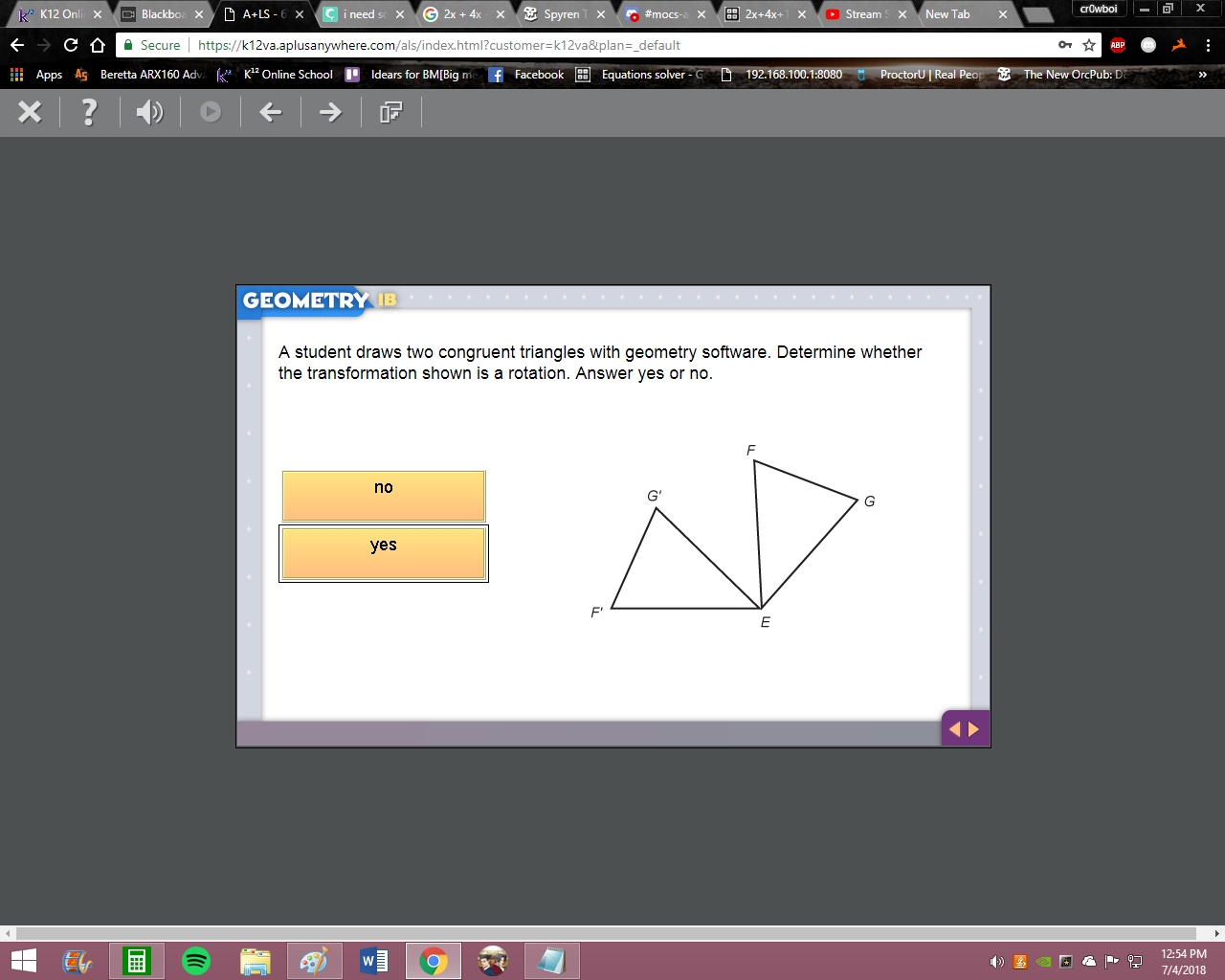 Mercury:
good
 Mercury:
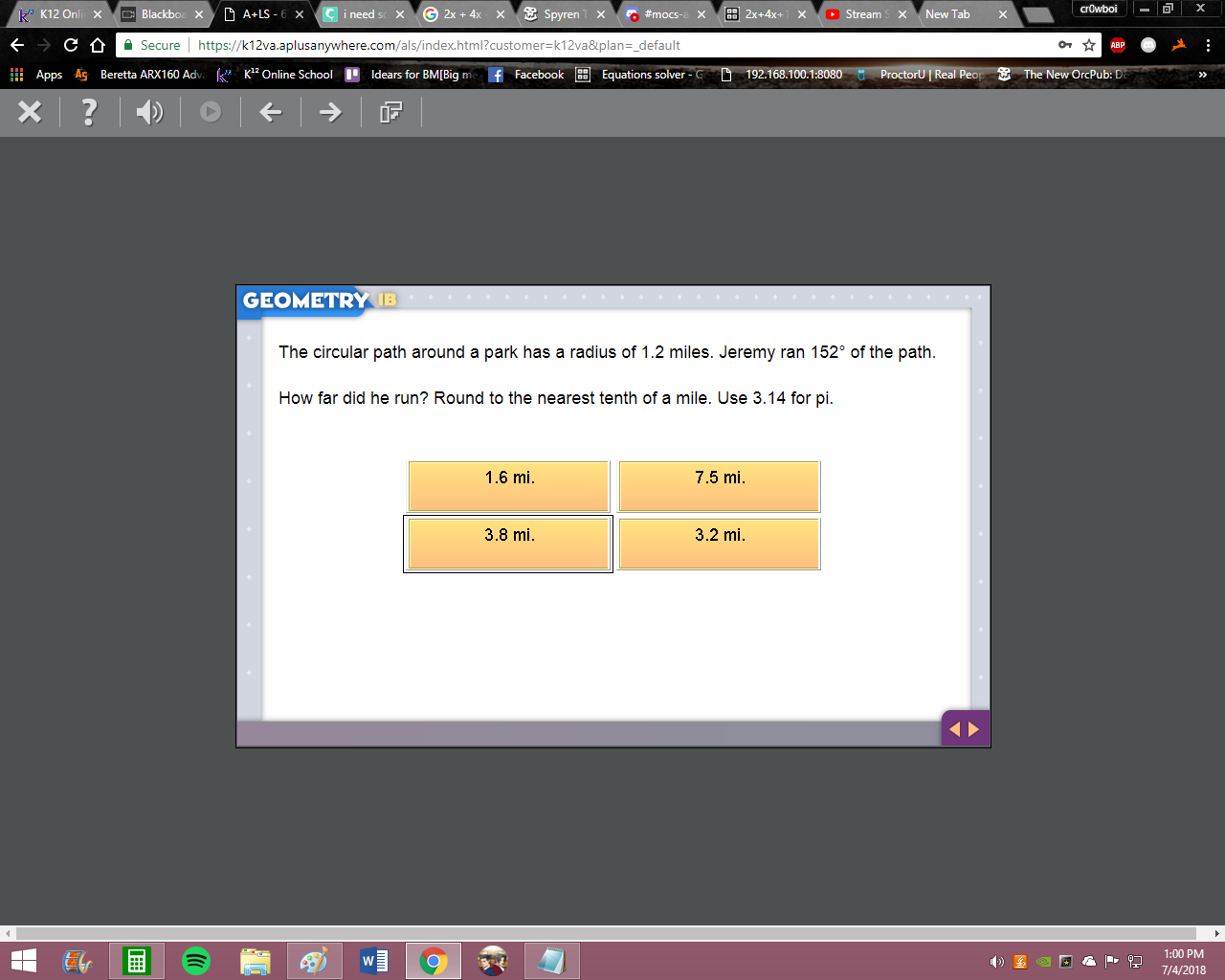
hm not quite a full circle is 360 degrees if he only ran 152 degrees of the full arc he ran (152/360) of the way there multiply (152)*360 by the circumference to get the solution
princeevee:
5470
Mercury:
*should be (152/360) not 152*360
Mercury:
so (152/360)*circumference
princeevee:
0.42
Mercury:
circumference = 2 * 3.14 * r (152/360) * 2 * (3.14) * r = ?
princeevee:
3.2
Mercury:
good so 3.2 = your sol'n
 Mercury:
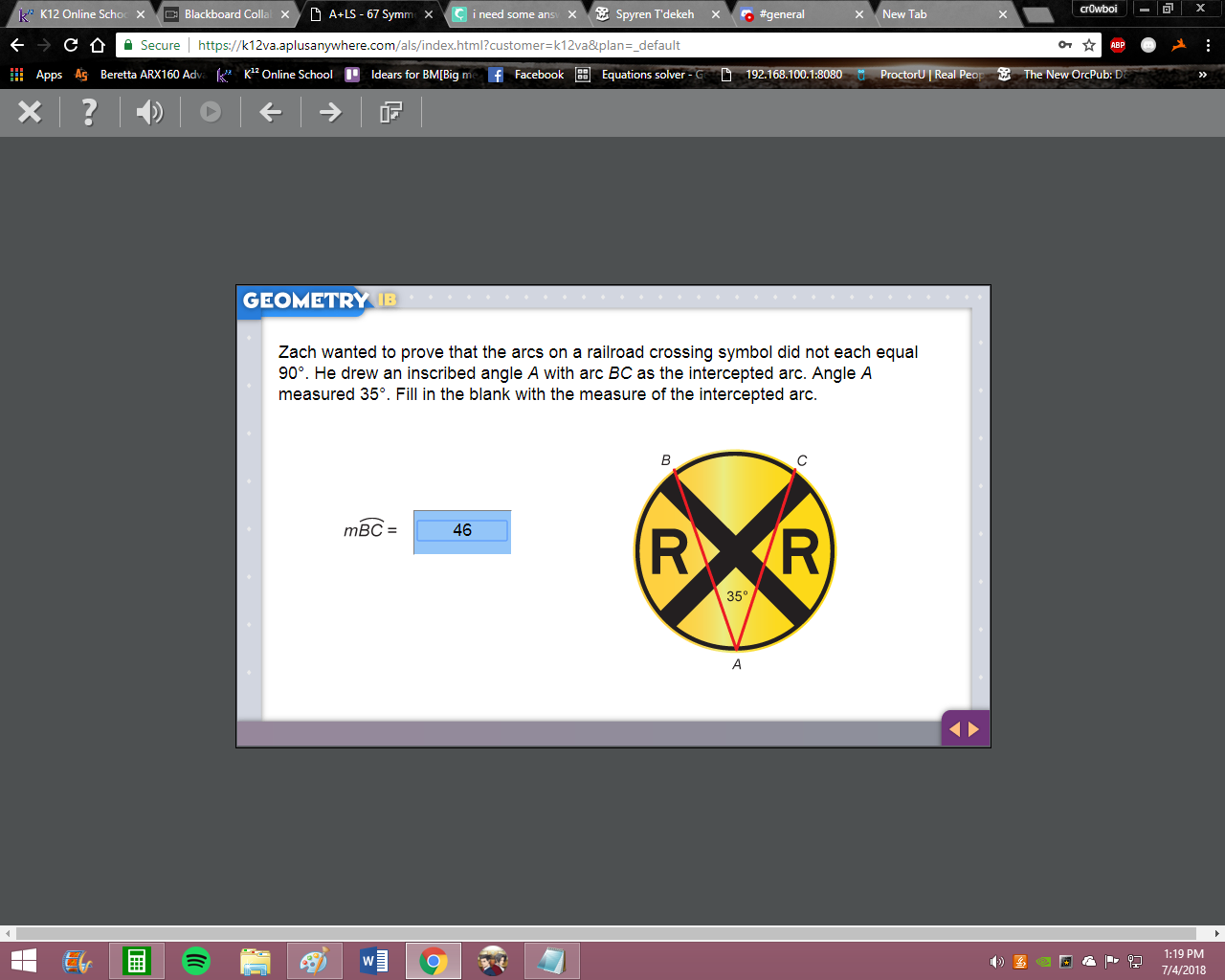
|dw:1530735819134:dw| not quite, check your calculations again
Mercury:
try to use the diagram to see what the arc would be given your angle A
Mercury:
notice how the arc is twice the length of the angle
princeevee:
so it's double 35?
Mercury:
yes
princeevee:
70
Mercury:
good
 Mercury:
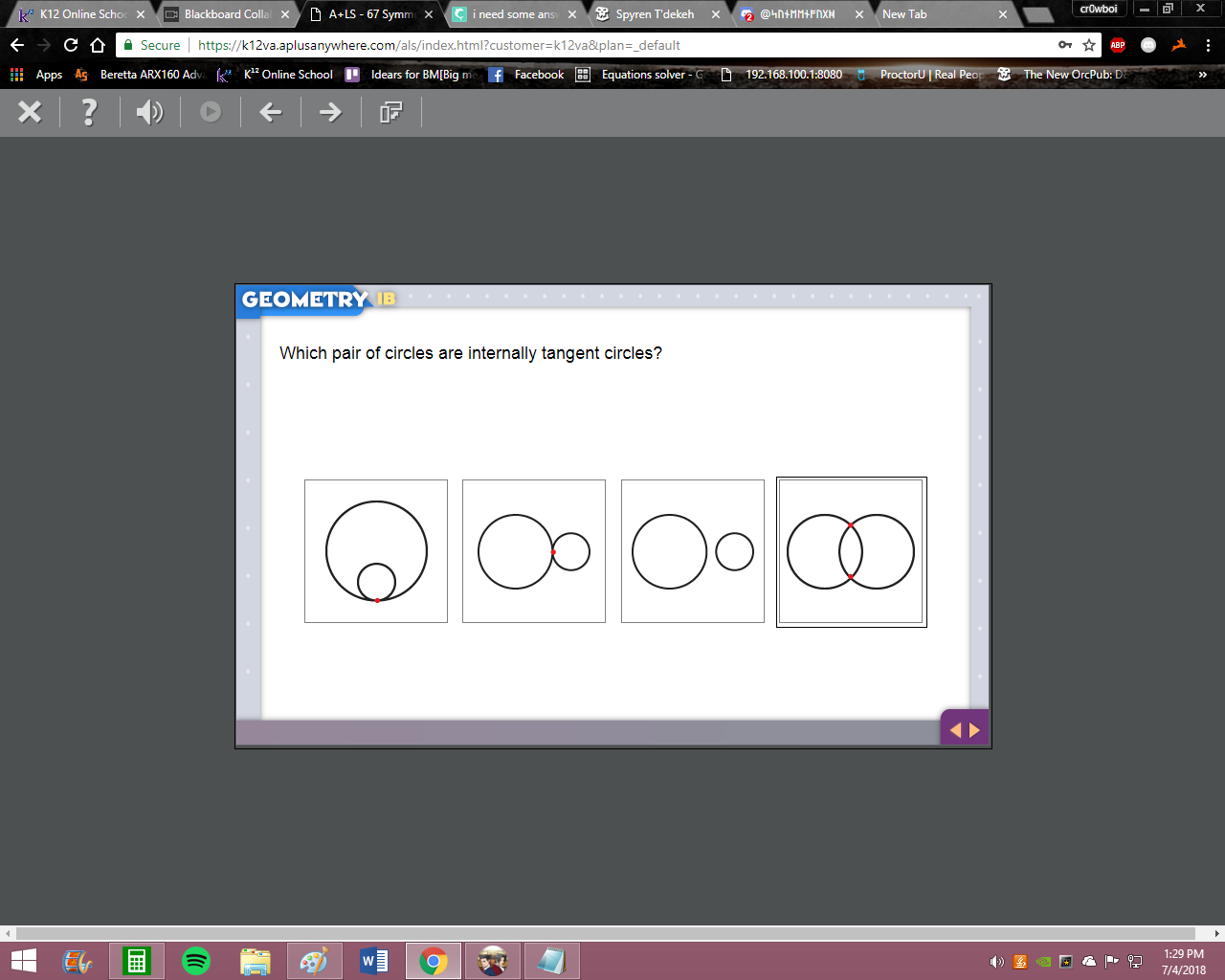
those circles are not tangent |dw:1530736272235:dw| to be internally tangent both circles need to share the same tangent line and one circle is inside the other
 Mercury:
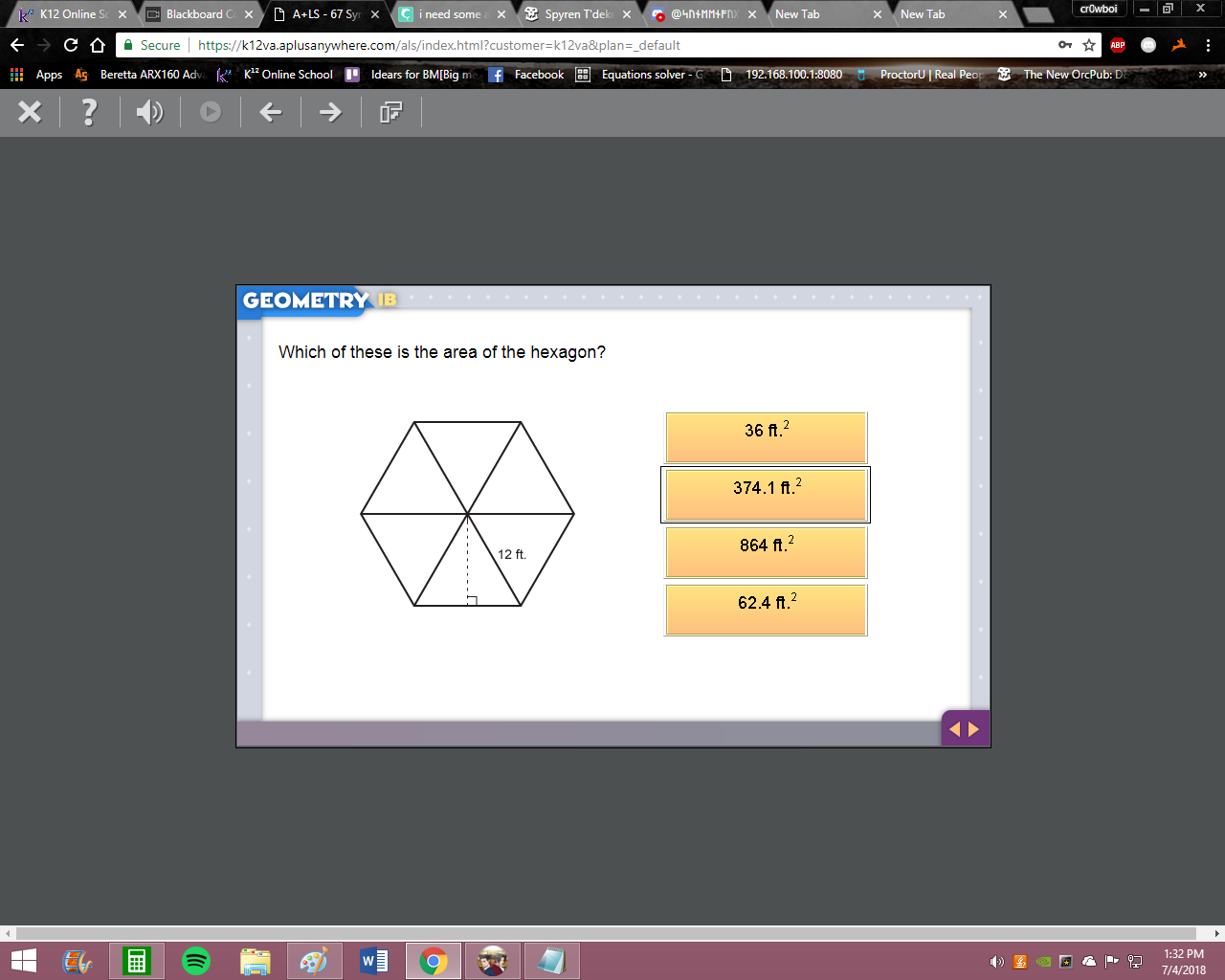
good
 Mercury:
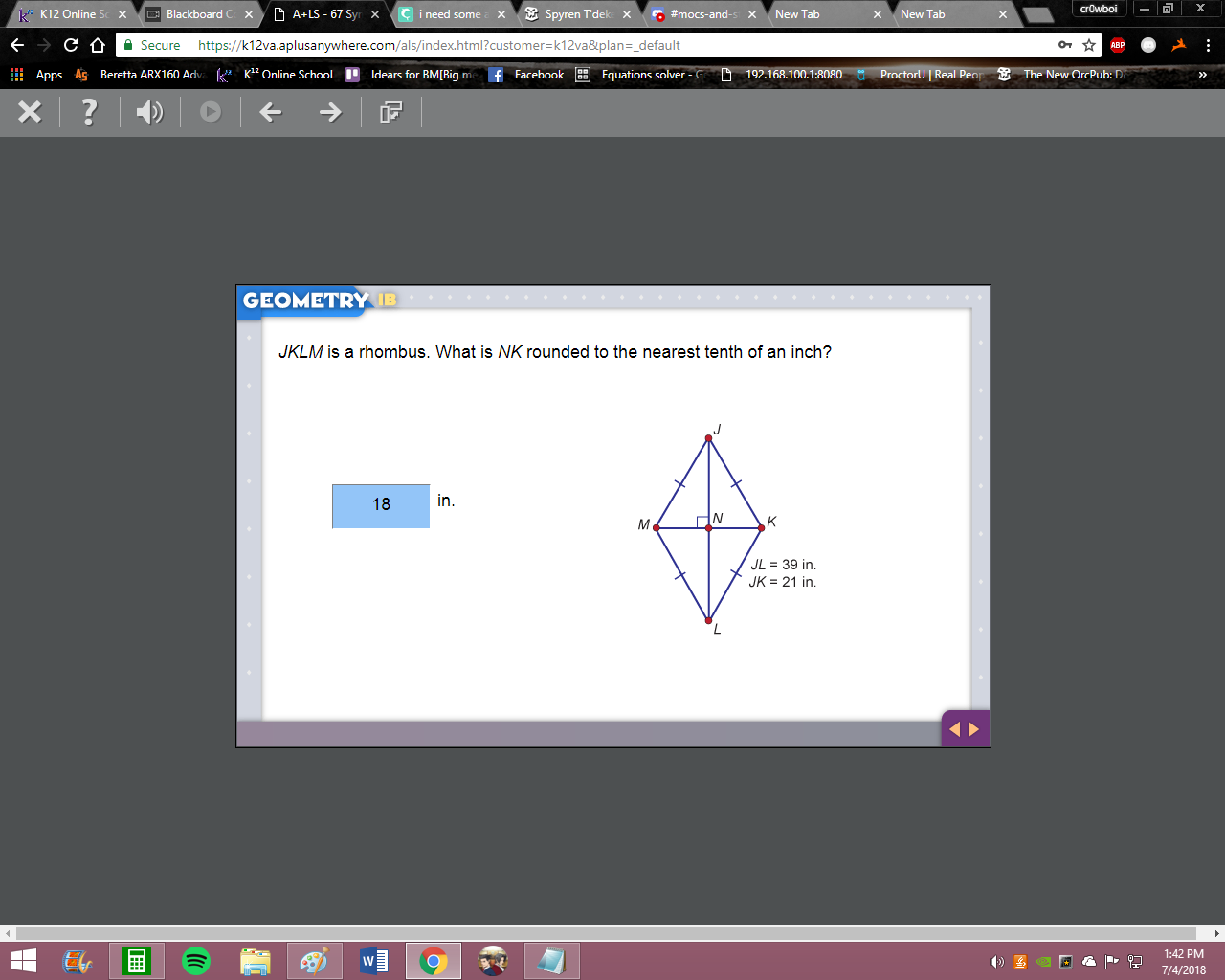
not quite in a rhombus the diagonals bisect each other so NL is just one half of JL now, you have a right triangle on the lower right corner with legs NK and NL, and hypotenuse KL solve for NK
princeevee:
19.5?
Mercury:
that's the value of NL, keep going
princeevee:
so...19.5 divide the hypot?
Mercury:
you have a right triangle with legs NK and NL and hypotenuse KL plug these into the pythagorean theorem and solve for NK
Mercury:
notice, that according to the diagram, KL = JK
Mercury:
as we stated before, KL = JK which equals 21 NL = 19.5 therefore NK^2 + NL^2 = KL^2 NK + 19.5^2 = 21^2 solve for NK.
princeevee:
60.75
Mercury:
almost, that's NK^2 so just take the square root of that and round to the nearest 10th
princeevee:
8.0
Mercury:
sqrt(60.75) is about 7.79 which rounds to 7.8 not 8
 Mercury:
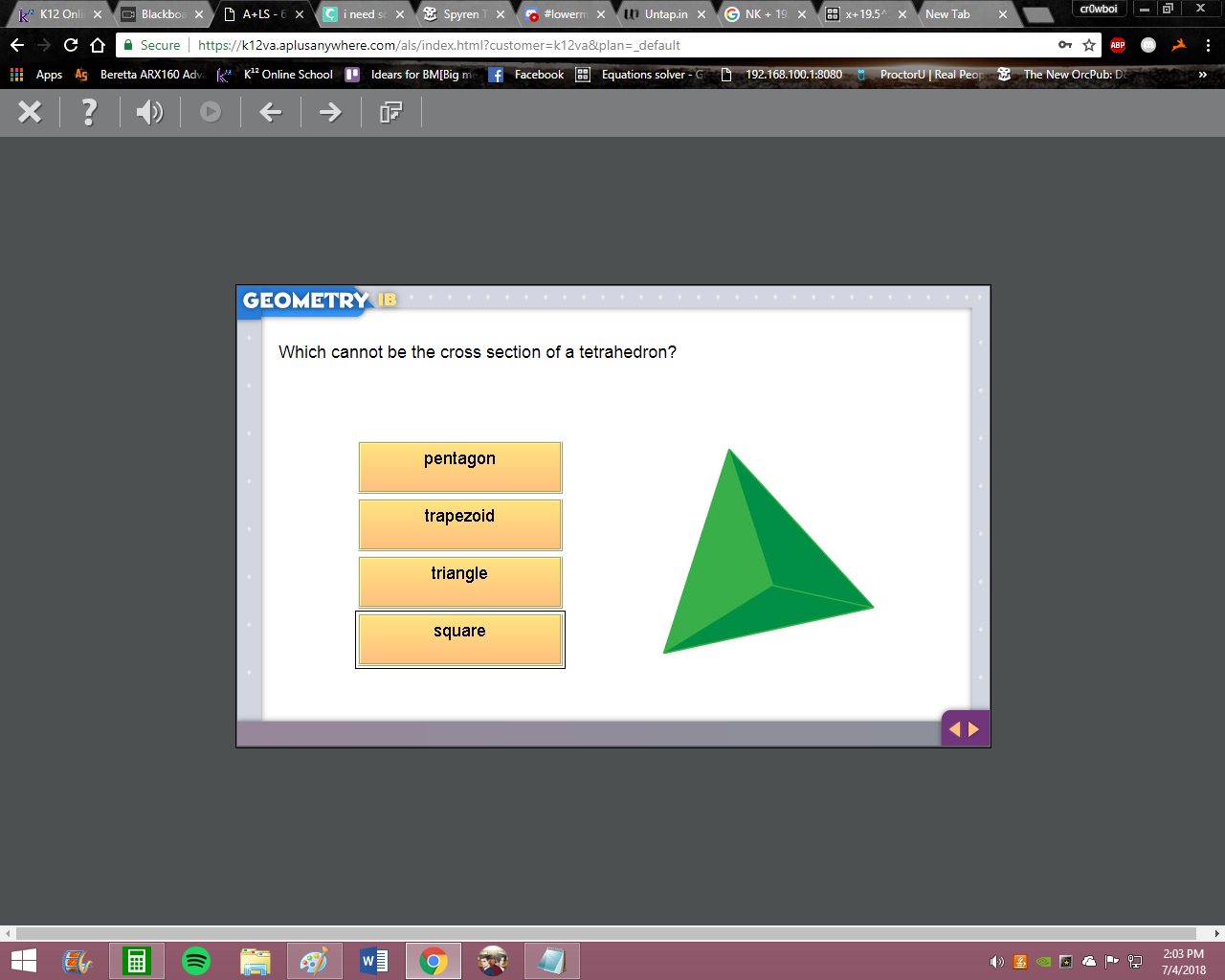
hm not quite you can still make a square if you cut like this |dw:1530738309245:dw|
Mercury:
|dw:1530738443348:dw| this is hard to visualize but you can also get a trapezoid as the cross section if you tilt the angle a bit so pentagon is the only one you can't make
Mercury:
it's asking for which one you can't make so pentagon = your sol'n
 Mercury:
good
 Mercury:
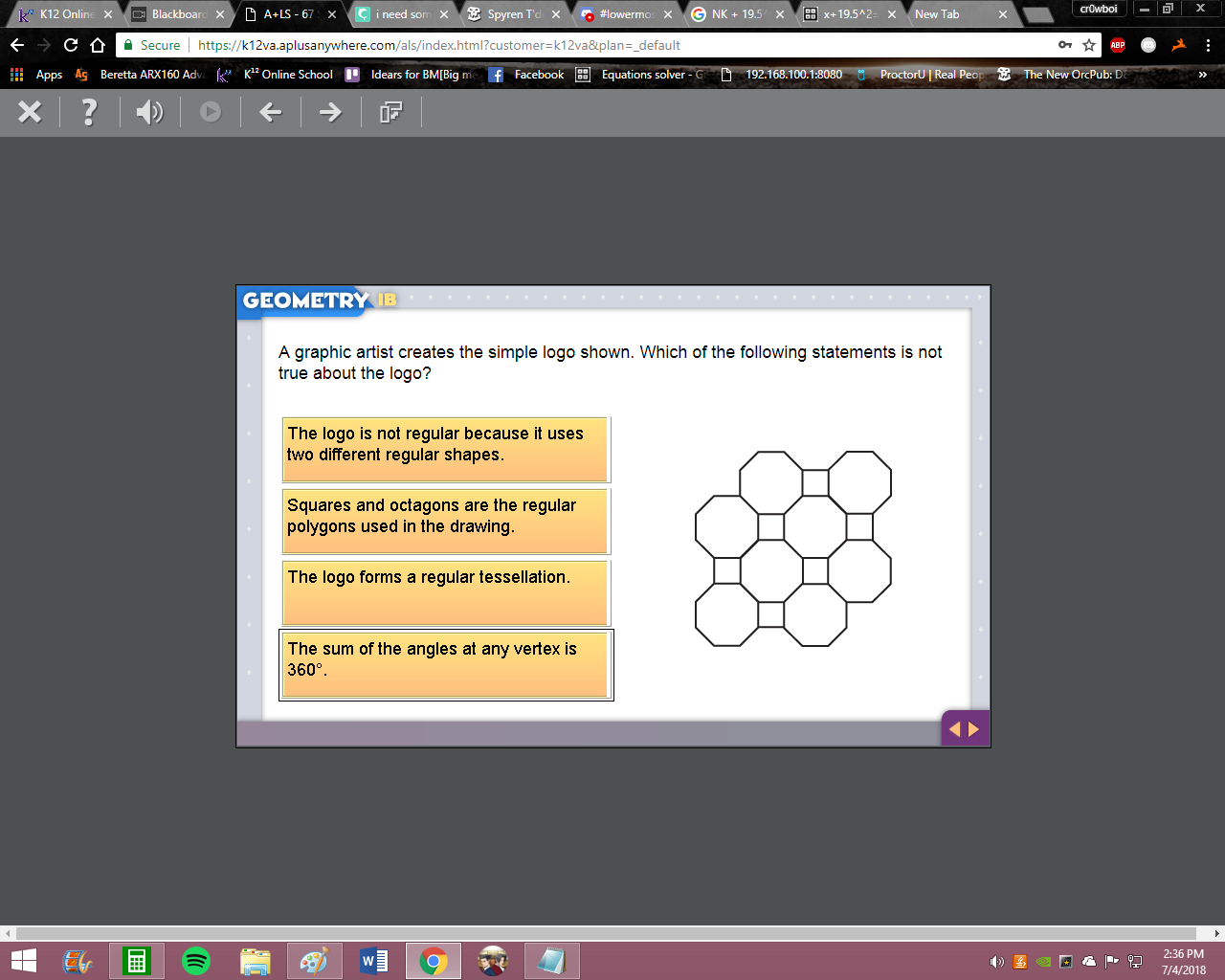
in general angles around a vertex are always equal to 360 |dw:1530740571061:dw|
Mercury:
since the logo uses two diff. shapes by definition it's not regular and thus the third statement is false
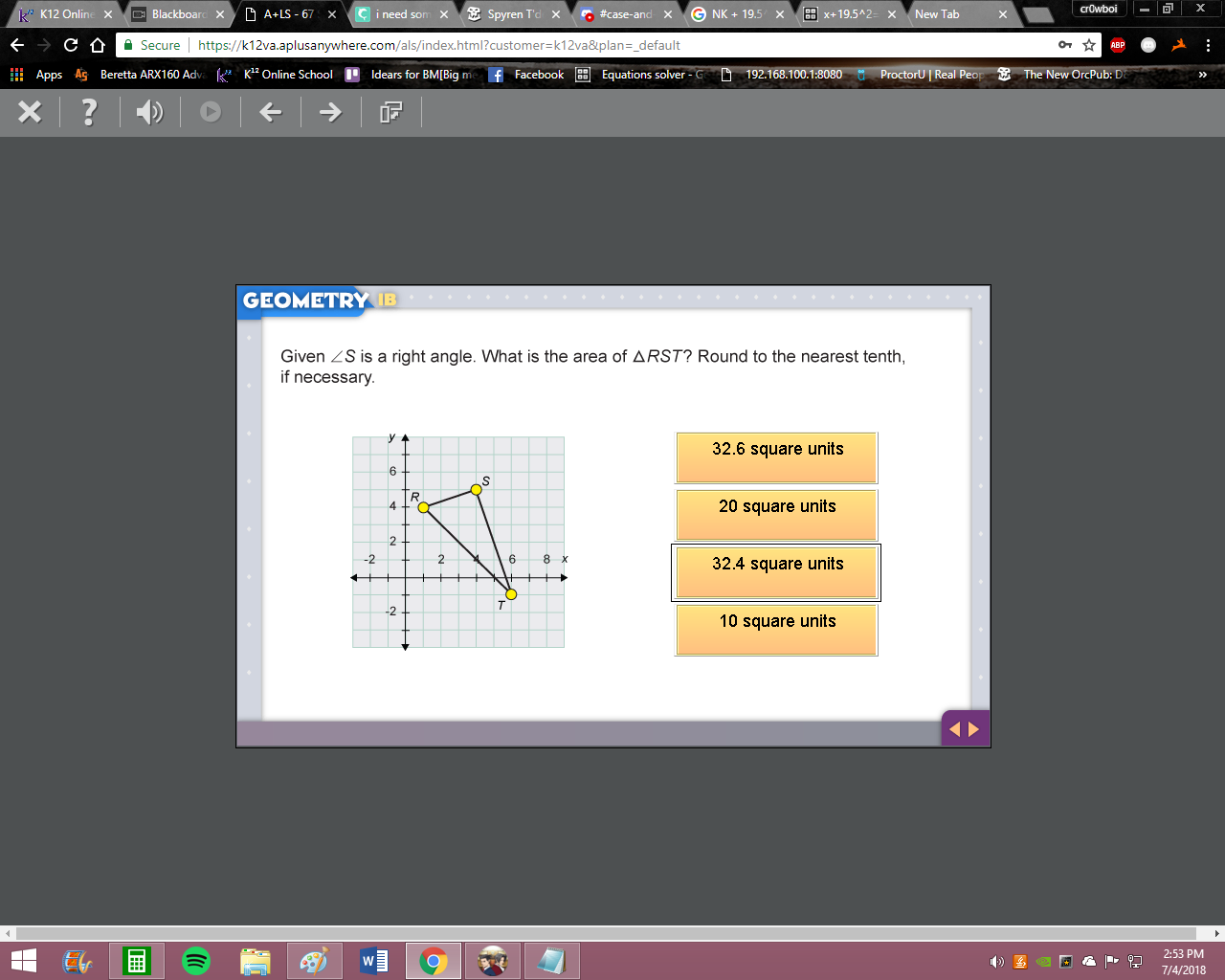 Mercury:
hm not quite if you notice the line RS can be the hypotenuse of a right triangle with legs 1 and 3, what's the hypotenuse?
Mercury:
|dw:1530741341573:dw|
princeevee:
6?
Mercury:
|dw:1530741399855:dw|
Mercury:
if a and b are the legs and c is the hypotenuse what is the hypotenuse if the legs are 3 and 1?
Mercury:
"the legs are 3 and 1" "a and b are the legs" therefore a and b are 3 and 1 solve for c
Mercury:
the formula states that c^2 = a^2 + b^2 plug in a and b into the formula and solve for c.
Mercury:
we have stated that a and b are equal to 3 and 1 therefore c^2 = 1^2 + 3^2 solve for c.
princeevee:
10?
Mercury:
notice how the formula gives c^2 not c so you have to take the square root at the end (radical form is ok, let's leave it as sqrt(10))
Mercury:
now repeat this process with ST
Mercury:
|dw:1530742856084:dw|
Mercury:
|dw:1530742863701:dw|
Mercury:
calculate the hypotenuse ST of this right triangle in red
Mercury:
if you are having trouble please use our previous calculations of RS as a reference guide
princeevee:
5,5?
Mercury:
we have a right triangle with legs 2 and 6 use the pythagorean theorem to calculate the hypotenuse
Mercury:
as we stated before a^2 + b^2 = c^2 a and b are the legs plug in the legs and find the hypotenuse (c)
princeevee:
40
princeevee:
so 20
Mercury:
c^2 = 40 therefore c is the sqrt(40) now we have the two legs of the big triangle area of triangle = (1/2)BH = (1/2)sqrt(40) * sqrt(10) = ?
princeevee:
A?
Mercury:
plug (1/2)sqrt(40) * sqrt(10) into a calculator be careful with parentheses
Mercury:
(1/2) * sqrt(40) * sqrt(10) = (1/2) * sqrt(400) = ?
Mercury:
you just need to calculate the square root of 400 and divide it by 2.
princeevee:
10
Mercury:
good so 10 = your sol'n
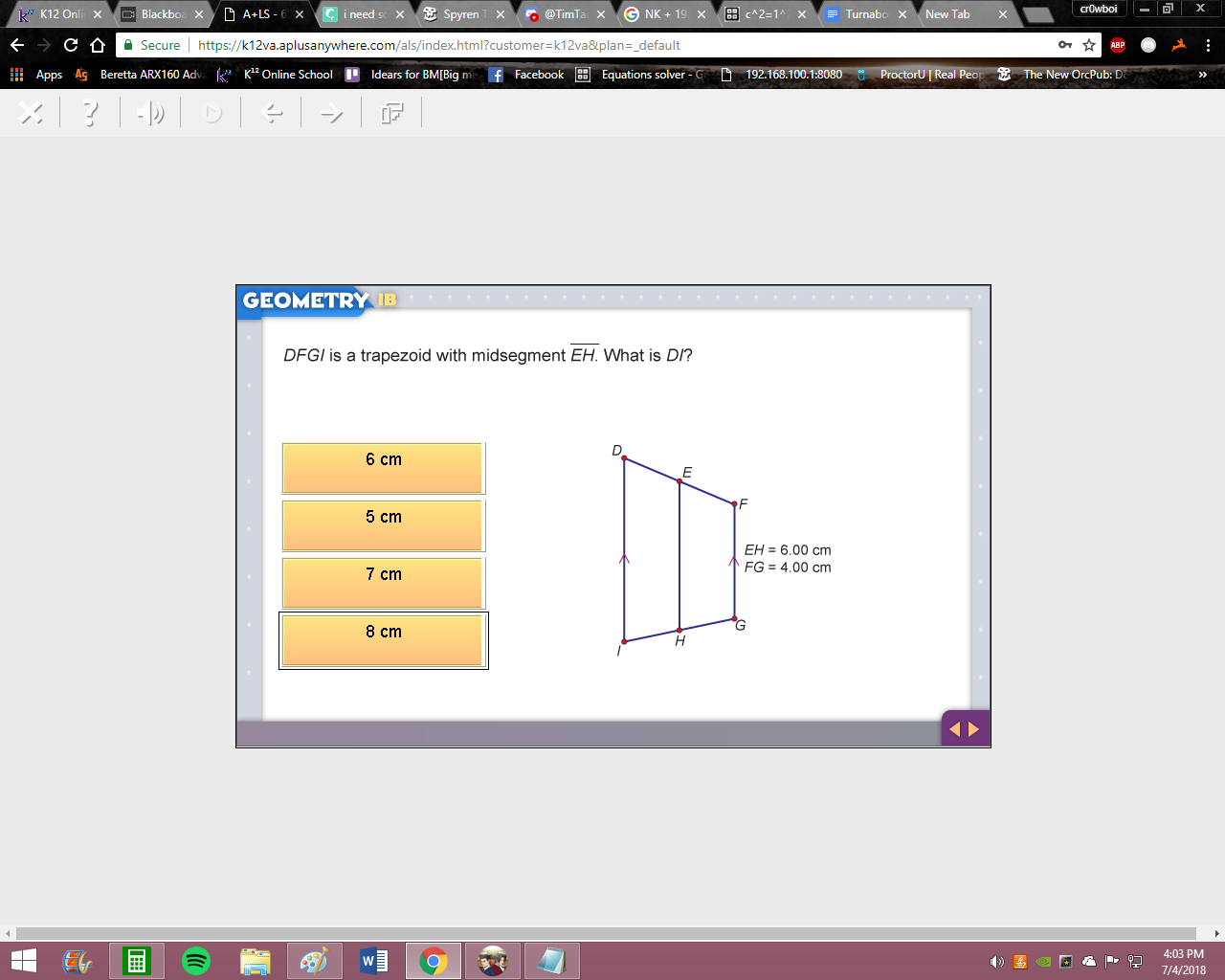 Mercury:
nvm it's 8
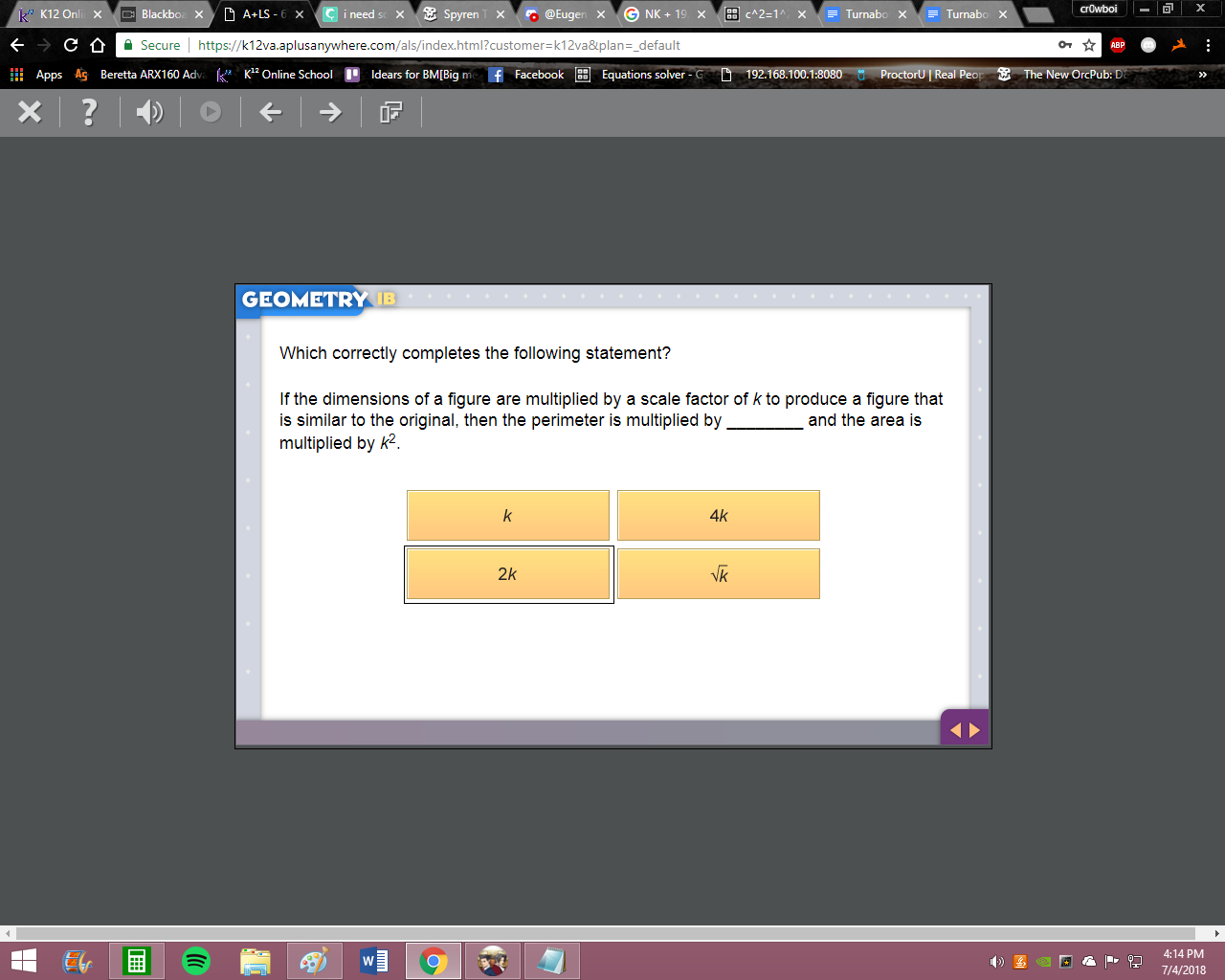 Mercury:
let's use a square with side length s the perimeter is 4s if we double each side (k = 2) to get the new side length 2s perimeter = 4(2s) = 8s so the perimeter increases by a factor of k not 2k
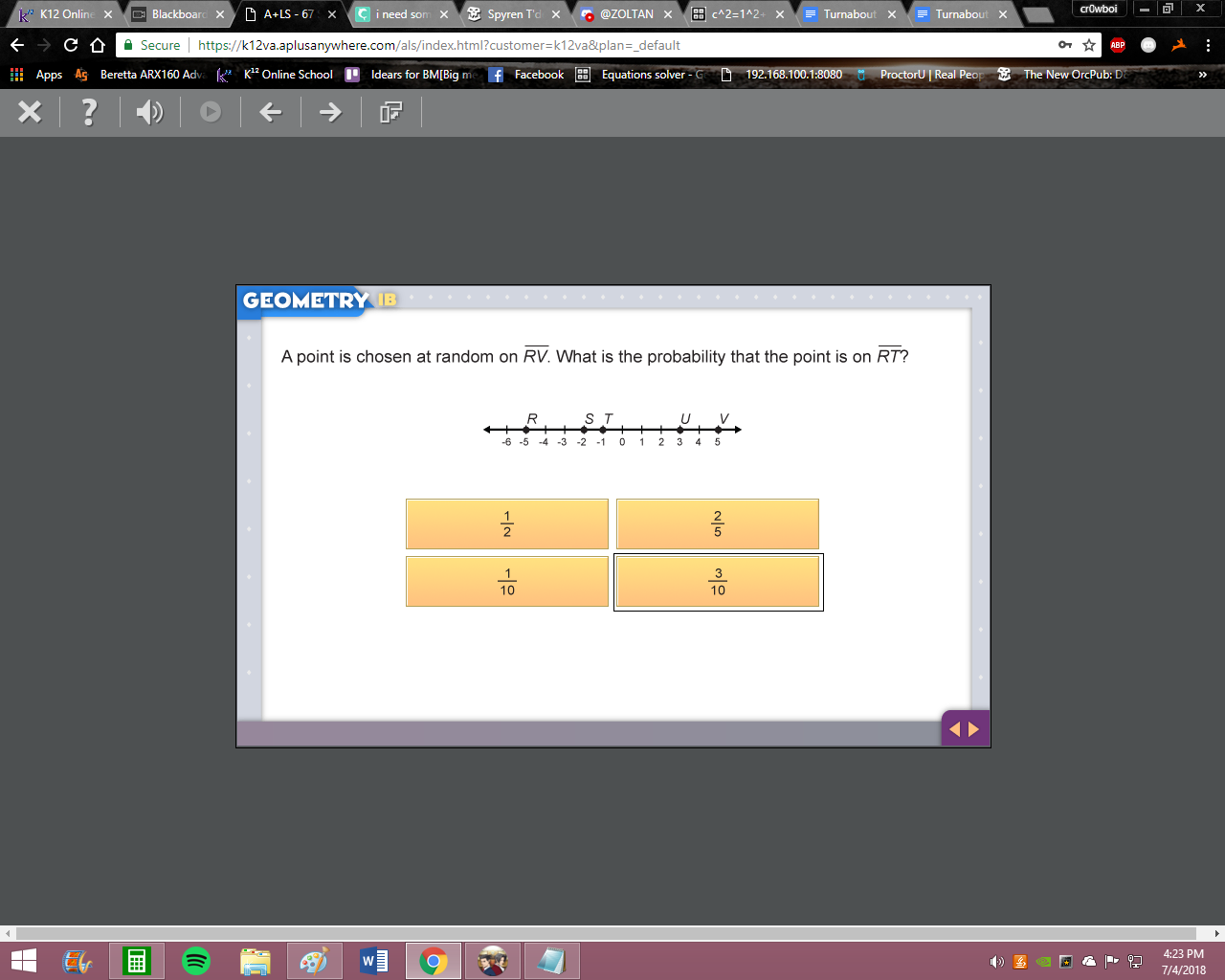 Mercury:
check again the entire line is 10 units how long is the segment RT?
princeevee:
4
Mercury:
good so the probability is 4/10 not 3/10 or in other words, 2/5
 Mercury:
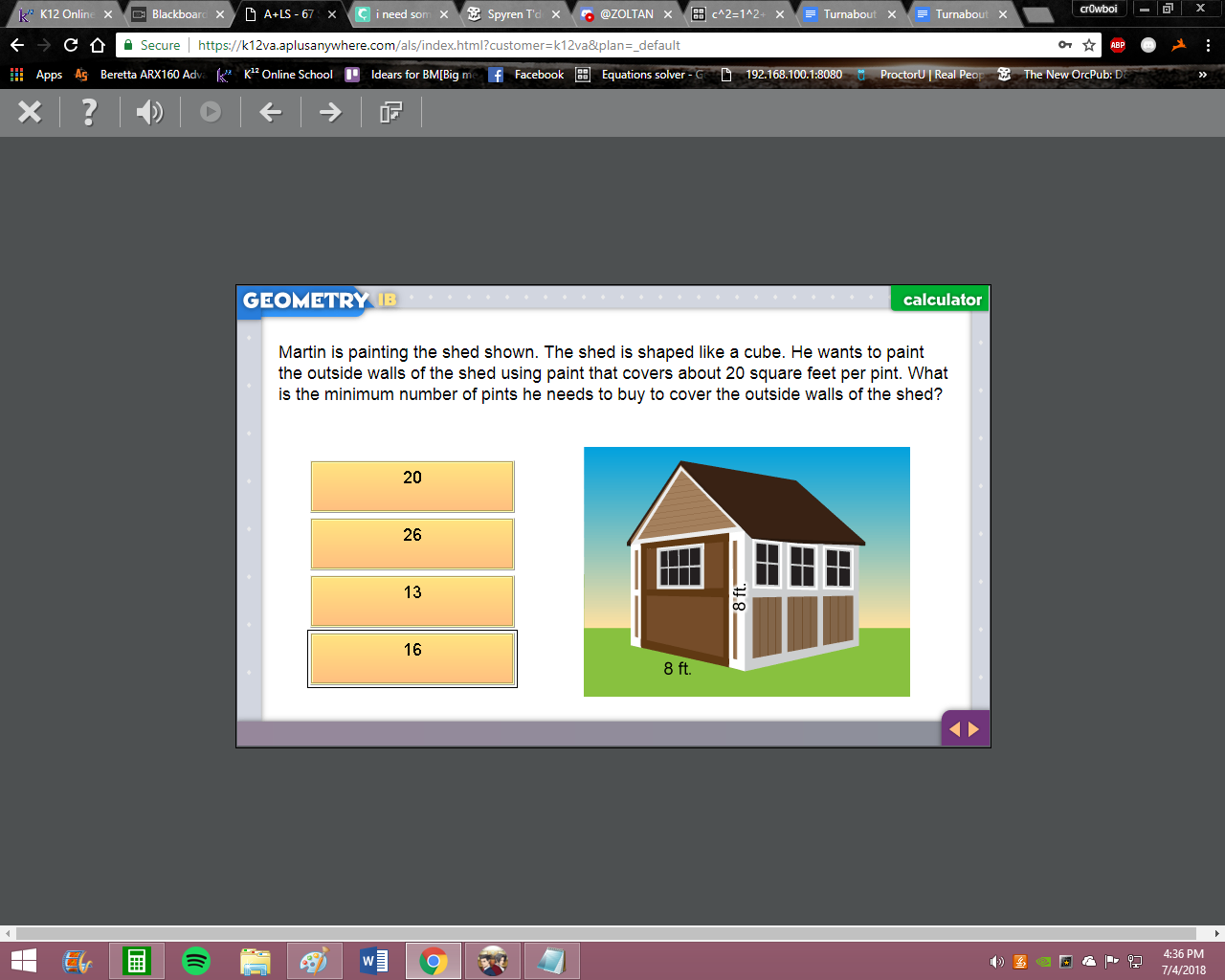
hm not quite each side is 8 by 8 so each side = 64 ft^2 assuming he only paints the outer four walls, 64 * 4 then divide by 20 since each paint bucket is 20 ft^2 of paint
princeevee:
12.8
Mercury:
good but since we can only buy whole paint buckets round up to 13= your sol'n
 Mercury:
good
 Mercury:
good
 Mercury:
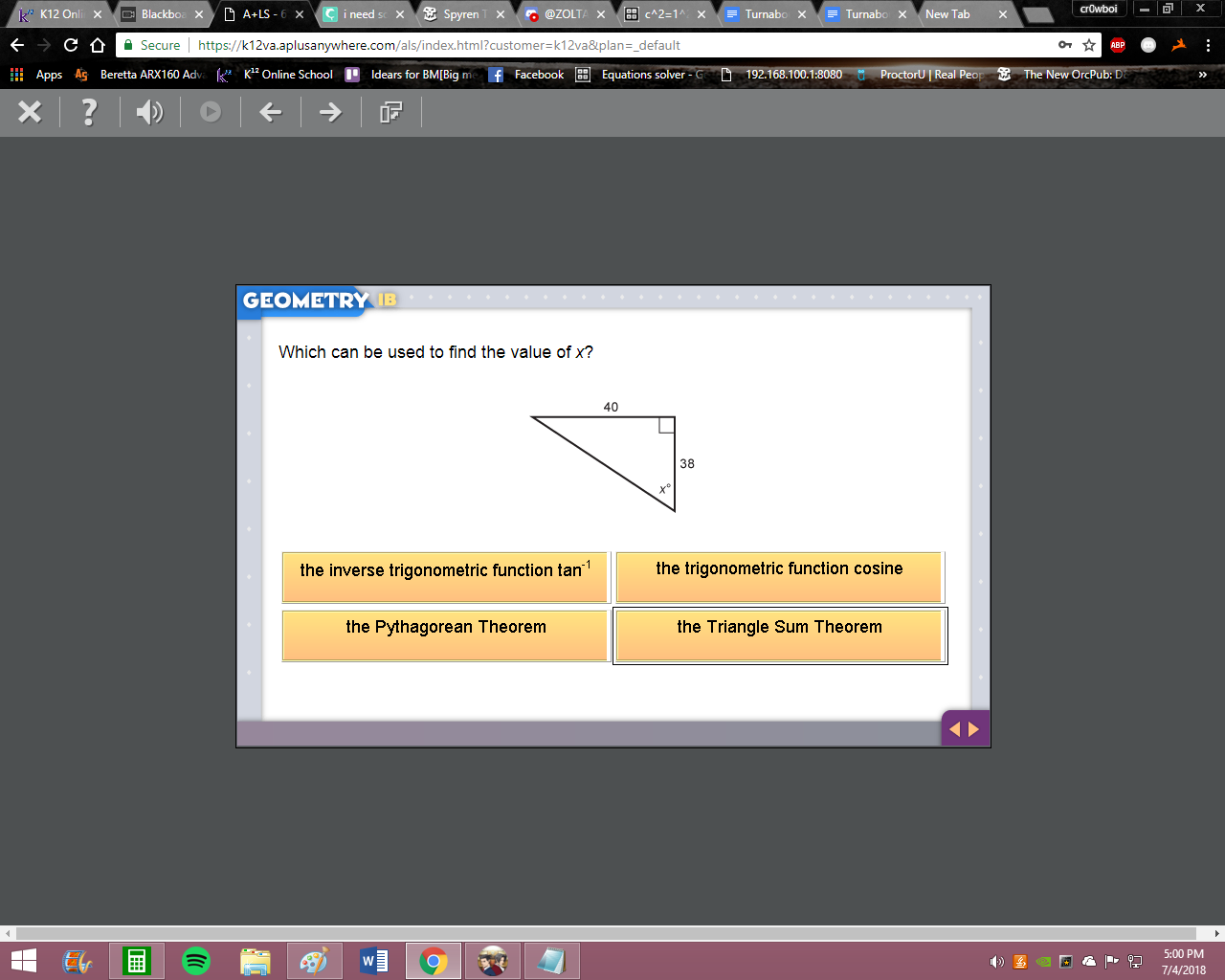
you cannot use triangle sum because you only have one angle known you have the opposite and adjacent sides, which trig ratio is this?
princeevee:
cos?
Mercury:
|dw:1530749107474:dw|
Mercury:
notice how tan has opposite and adjacent so only the first choice is applicable
Mercury:
going to be having dinner see you in a bit
 Mercury:
good
Mercury:
it would be a good idea to close this and start on a new question
Join our real-time social learning platform and learn together with your friends!
 KBaby:
Verse 1 We left our names in the dust of the driveway Watched the old town shrink
KBaby:
Lyrics Generator Use AI to write the lyrics for a song. Suggested Genres: Pop Hip
KBaby:
Verse 1 We left our names in the dust of the driveway Watched the old town shrink
KBaby:
Lyrics Generator Use AI to write the lyrics for a song. Suggested Genres: Pop Hip

 aitexturegenerator:
How are you all handling AI-generated textures for 3D models and game assets without losing the hand-made feel? I've been doing a small stylized environment
aitexturegenerator:
How are you all handling AI-generated textures for 3D models and game assets without losing the hand-made feel? I've been doing a small stylized environment

 Demon25:
Woke up feeling like that girl and that dude well he still aint crap pluse the du
Demon25:
Woke up feeling like that girl and that dude well he still aint crap pluse the du
 playtsec:
how do I get rid of stress from teachers... I just feel like running out the classroom and leaving on my own.
playtsec:
how do I get rid of stress from teachers... I just feel like running out the classroom and leaving on my own.
 JohnnyLFowler0812:
What type of gamer would play something and then get off for a while. Why not sta
JohnnyLFowler0812:
Which is better? Metallica Rap Country R&B hiphop Medal Gospel Chill Which 3 opti
JohnnyLFowler0812:
What type of gamer would play something and then get off for a while. Why not sta
JohnnyLFowler0812:
Which is better? Metallica Rap Country R&B hiphop Medal Gospel Chill Which 3 opti