
 Flowerpower5290:
I need help..
 itzmeee:
unblock me por favor
 MiniCooper:
what type of math iz that?
 PureSoulless:
She's on that Einstein level.
 TheAnimeGirl:
Hi
TheAnimeGirl:
Is anyone a girl here?? I need some help
Narad:
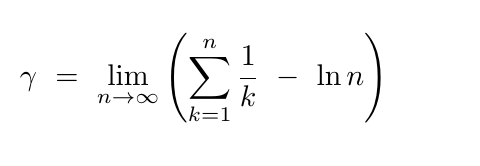
Apply the limit divergence test
 slutcam:
As gets closer to 400, the given statement represents a limit. Let's dissect it step-by-step: 1. The limit is denoted by the symbol "lim". 2. The variable is getting close to 400. 3. M k=1 1 — k is the expression inside the limit. In n Understanding the terms involved is necessary to evaluate this expression: - The series' total number of terms is denoted by the letter M. - The notation k=1 in the sigma notation denotes that we begin with k = 1 and proceed up to M. - The term of the series is represented by the phrase 1/k. - The logarithm with base e is known as the natural logarithm of n, abbreviated as In n. Let's now make the phrase simpler: Using the sigma notation, combine the terms as follows: 1/1 + 1/2 + 1/3 + ... + 1/M 2. Calculate each term's natural logarithm as follows: In 1 + In 2 + In 3 +... + In M It is unclear at this time what value of n we should employ.
 dontmesswitnova:
i have no idea how to do that
dontmesswitnova:
i wish i did
issy18:
 BLKZAY:
To solve the student's question, we can follow a similar approach as before. Let's break it down step by step: Step 1: Rewrite the expression using the limit notation: γ = lim n → ∞ ( ∑ k = 1 n 1 k − ln n ) γ= n→∞ lim ( k=1 ∑ n k 1 −lnn) Step 2: Rewrite the summation as an infinite series: γ = lim n → ∞ ( ∑ k = 1 ∞ 1 k − ln n ) γ= n→∞ lim ( k=1 ∑ ∞ k 1 −lnn) Step 3: Simplify the expression inside the limit: γ = ∑ k = 1 ∞ 1 k − lim n → ∞ ln n γ= k=1 ∑ ∞ k 1 − n→∞ lim lnn Step 4: Evaluate the limit of ln n lnn as n n approaches infinity: lim n → ∞ ln n = + ∞ n→∞ lim lnn=+∞ Step 5: Rewrite the expression with the limit of ln n lnn: γ = ∑ k = 1 ∞ 1 k − ( + ∞ ) γ= k=1 ∑ ∞ k 1 −(+∞) Step 6: Since the sum of the series ∑ k = 1 ∞ 1 k k=1 ∑ ∞ k 1 is known to be divergent (it goes to infinity), we can say that ∑ k = 1 ∞ 1 k − ( + ∞ ) k=1 ∑ ∞ k 1 −(+∞) is also divergent.
Join our real-time social learning platform and learn together with your friends!
VERNEISH:
Two objects are moving along separate linear paths where each path is described by position, d, and time, t.

 Maci:
what are the best stock apps for people who want to start investing?
Maci:
what are the best stock apps for people who want to start investing?
 Twaylor:
genuienly how do i get better self control i keep watcing youtube and theres this
Twaylor:
genuienly how do i get better self control i keep watcing youtube and theres this
 IzzyCookie:
|dw:1792074056138:dw| Uhm, I don't know where to ask this, but I'm in college welding at my community college, and I need help learning vertical welding for
IzzyCookie:
|dw:1792074056138:dw| Uhm, I don't know where to ask this, but I'm in college welding at my community college, and I need help learning vertical welding for

 thehearken:
not sure if this is considered spam, im sorry if it is, but does anyone have tips
thehearken:
not sure if this is considered spam, im sorry if it is, but does anyone have tips