
 Phantomdex:
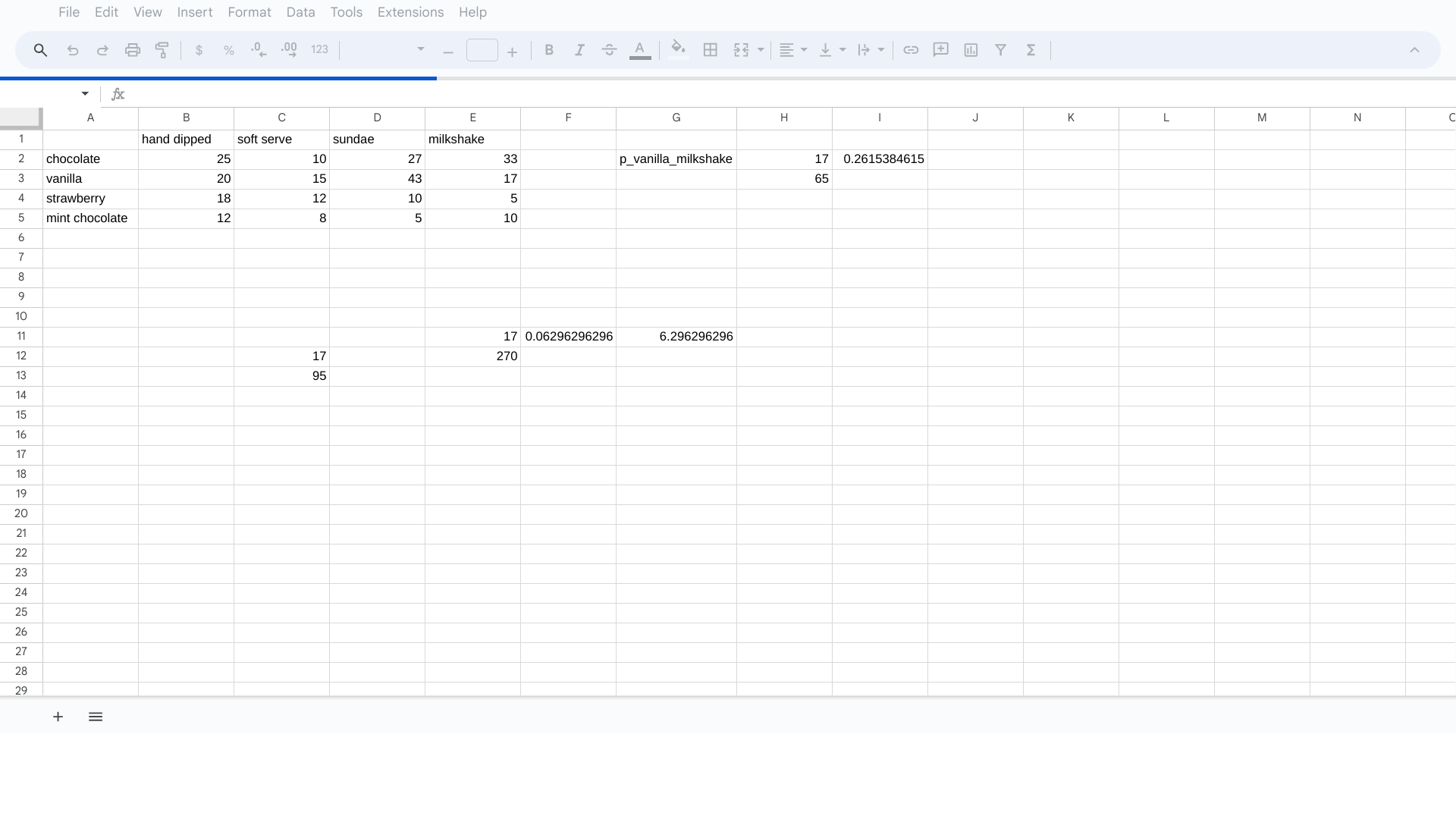
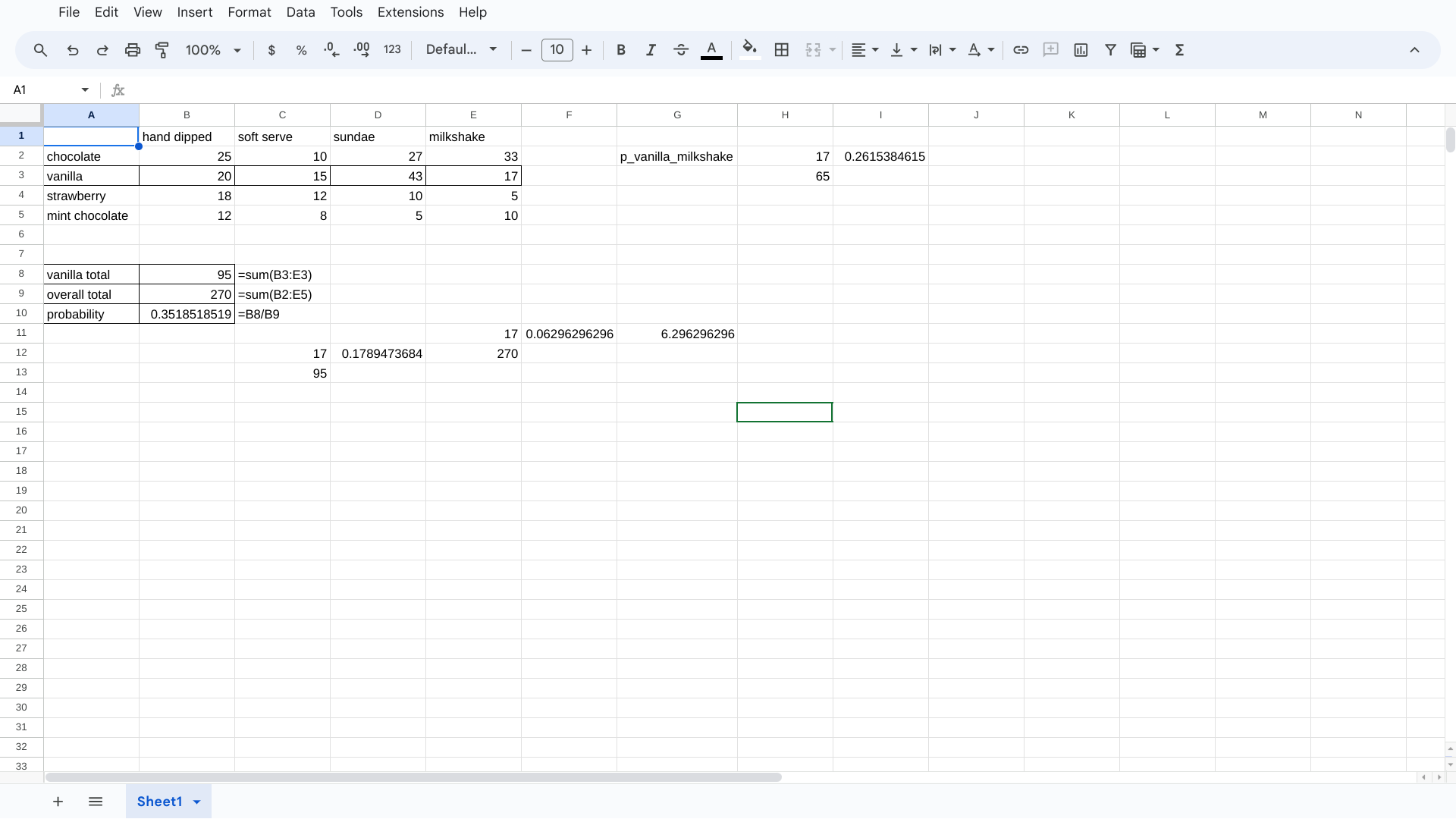
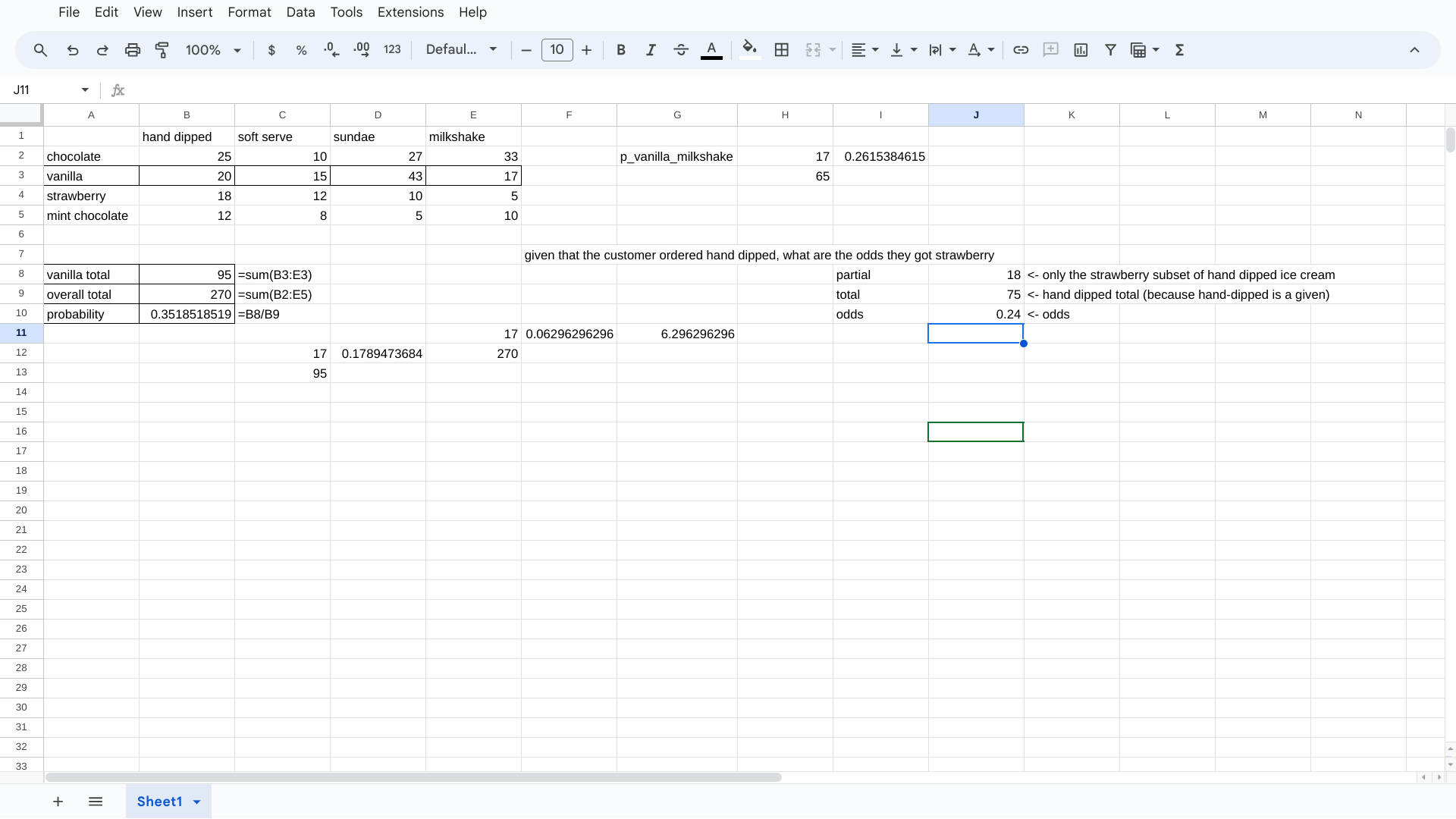
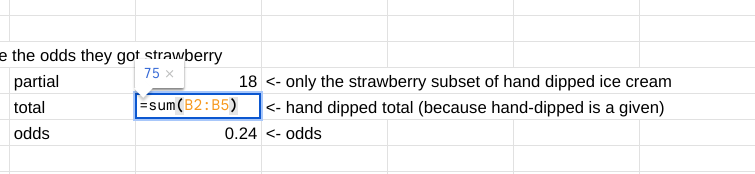
An ice cream shop tracks the orders for different flavors and styles of ice cream to stock the best inventory. The two-way frequency table summarizes the orders for the last week. Hand–dipped Soft Serve Sundae Milkshake Chocolate 25 10 27 33 Vanilla 20 15 43 17 Strawberry 18 12 10 5 Mint Chocolate 12 8 5 10 In the context of the data, interpret the empirical conditional probability of 17 over 65. The probability that a customer ordered vanilla ice cream, given that they ordered a milkshake The probability that a customer ordered a milkshake made of vanilla ice cream The probability that a customer ordered a milkshake, given that they ordered vanilla ice cream The probability that a customer ordered vanilla ice cream
Phantomdex:
@midnight97
Phantomdex:
I didn't know who else to ping TwT
 Midnight97:
Phantomdex:
Midnight97:
I'm working it out
Midnight97:
Yea I have no clue baby
Phantomdex:
Sobs, that's alright TwT
Phantomdex:
I don't know anyone who would honestly
 Midnight97:
This is what I worked out though
Midnight97:
I am still gonna try to help you
Phantomdex:
That hurts my brain-
Midnight97:
Midnight97:
Mine hurts
 Midnight97:
The others Idk
Phantomdex:
Where's oliver when we need him lol
Midnight97:

 Midnight97:
That's all of what I have did
Phantomdex:
@oliver69 Help me please TwT
Phantomdex:
@curriful
 curriful:
Got it. Its B: The probability that a customer ordered a milkshake made of vanilla ice cream. Since the milkshake column adds up to 65 orders, it's obvious thats what is being asked for. Since milkshakes ARE made out of ice cream, the best choice is to say that they ordered a milkshake made of that ice cream.
Phantomdex:
Curri you amazing genius thank you! I have more questions if you'd be willing to help?
curriful:
sure, ill help
Phantomdex:
Thank you!
Join our real-time social learning platform and learn together with your friends!
 DoltonCarlee:
what are y'all's options on S A T essays because honestly their not that bad
DoltonCarlee:
what are y'all's options on S A T essays because honestly their not that bad

 thereneelg:
Can someone give me a summary of article 231, The war guilt clause?? I need to explain what it is, but I can't find any shortened version of what it is and
thereneelg:
Can someone give me a summary of article 231, The war guilt clause?? I need to explain what it is, but I can't find any shortened version of what it is and
 luisaam2:
What should you do when the person you want to talk to the most is the one making
luisaam2:
What should you do when the person you want to talk to the most is the one making
 Breathless:
https://medal.tv/games/roblox/clips/nAYivIl6oXB6q9QAI?invite=cr-MSxCSk4sMTY4OTA4N
Breathless:
https://medal.tv/games/roblox/clips/nAYivIl6oXB6q9QAI?invite=cr-MSxCSk4sMTY4OTA4N
 Twaylor:
I'm not that good at law can someone fact check this without bias? June 29, 2026, the Supreme Court decided Chatrie v.
Twaylor:
I'm not that good at law can someone fact check this without bias? June 29, 2026, the Supreme Court decided Chatrie v.
 Demon25:
For a hoco proposal with a cheerleader and football player, what else should be a
Demon25:
For a hoco proposal with a cheerleader and football player, what else should be a
