
 rootbeer003:
A small auditorium has 10 rows of seats. There are 12 seats in the first row and 16 seats in the second row. The number of seats in a row continues to increase by 4 with each additional row. What is the total number of seats in the auditorium? 352 156 300 252
rootbeer003:
@Hero
 Hero:
Hero:
@Ultrilliam can probably answer this question
 Ultrilliam:
I'm busy ATM dealing with ASO and their poor decisions
Hero:
@rootbeer003, how many questions do you have in total?
rootbeer003:
3
Hero:
You have three more questions left?
rootbeer003:
including this one yes
Hero:
Okay so this is what you do. We know there are ten rows of seats so we "count" 1st row --- 12 seats 2nd row --- 16 seats 3rd row --- 20 seats ... nth row --- a_n seats So we have to figure out a relationship between n and a_n. We do this by starting with the first row and counting in the following manner: 1st row --- 12 + 0(4) seats 2nd row --- 12 + 1(4) seats 3rd row --- 12 + 2(4) seats ... nth row --- 12 + (n -1)(4) seats
Hero:
We use this pattern to figure out the number of seats in the 10th row.
Hero:
10th row ---> 12 + (10 - 1)(4) seats So @rootbeer003 how many seats are there in the 10th row?
rootbeer003:
48
Hero:
Very good. Now we have to figure out the total number of seats in the auditorium. Do you have the sum formula with you?
rootbeer003:
no
Hero:
\(\sum_{\text{n = 1}}^{10} 12 + (n-1)(4)\)
Hero:
Ugh, latex is terrible with sums
rootbeer003:
idk how to use that formula..
Hero:
@Ultrilliam you should fix this. LaTeX doesn't work well with Sum formulas at all
rootbeer003:
is it 300?
Hero:
Are you guessing or did you actually use a formula to come up with that?
Hero:
The other way to figure it out is to use the following formula: \(\text{Sum} = n\left(\dfrac{a_1 + a_n}{2}\right)\)
rootbeer003:
What do i put in as a and n
Hero:
In this case, \(n = 10, a_1 = 12, a_n = 48\), \(\text{Sum} = n\left(\dfrac{a_1 + a_n}{2}\right)\)
Hero:
In other words n represents total number of rows \(a_1\) represents the first term in the sequence \(a_n\) represents the last term in the sequence
Hero:
The answer is 300, but you did not explain how you came up with it.
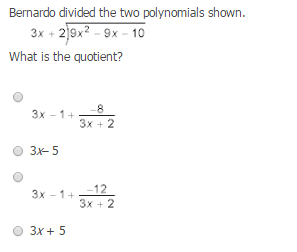 Hero:
Hero:
Post as a separate question please.
Join our real-time social learning platform and learn together with your friends!
 VERNEISH:
Two objects are moving along separate linear paths where each path is described by position, d, and time, t.
VERNEISH:
Two objects are moving along separate linear paths where each path is described by position, d, and time, t.

 Maci:
what are the best stock apps for people who want to start investing?
Maci:
what are the best stock apps for people who want to start investing?
 Twaylor:
genuienly how do i get better self control i keep watcing youtube and theres this
Twaylor:
genuienly how do i get better self control i keep watcing youtube and theres this
 IzzyCookie:
|dw:1792074056138:dw| Uhm, I don't know where to ask this, but I'm in college welding at my community college, and I need help learning vertical welding for
IzzyCookie:
|dw:1792074056138:dw| Uhm, I don't know where to ask this, but I'm in college welding at my community college, and I need help learning vertical welding for

 thehearken:
not sure if this is considered spam, im sorry if it is, but does anyone have tips
thehearken:
not sure if this is considered spam, im sorry if it is, but does anyone have tips