
 zarkam21:
Help please
zarkam21:
Help please
zarkam21:
3. A local store owner pays her employees time-and-a-half for overtime. That means for every hour an employee works more than 40 hours per week, the store will pay 1.5 times the regular hourly wage of 14.50. Part I: Write a function, P(x), that defines the weekly pay for employees who work up to but not more than 40 hours in a week. Part II: Suppose an employee works overtime (more than 40 hours per week). What is the hourly wage for the overtime hours? Part III: Follow these steps to write a function, P(x), that defines the total weekly pay for employees who work more than 40 hours in a week. a. How much does an employee make working the first 40 hours at $14.50 an hour? b. If an employee works x > 40 hours per week, write an expression for the overtime pay. Hint: The employee works (x-40) overtime hours. overtime pay = (overtime hourly wage) • (number of overtime hours) c. Use your answer from parts (a) and (b) to write the function P(x), that defines the total weekly pay for employees who work more than 40 hours in a week. Part IV: Use the functions from Part I and Part III to write the piecewise function for how much an employee will be paid if he or she were to work less than or equal to 40 hours, or more than 40 hours. Part V: Use the function from Part III to determine how much an employee will be paid if he or she were to work 50 hours in a week.
 Vocaloid:
part I) since they're working less than overtime, you only need to consider the normal wage so write a function that describes total wage, given hourly wage and number of hours (x)
Vocaloid:
it's just total wage = P(x) = (hourly wage)(number of hours) then plug in the hourly wage and number of hours (in this case, we will use x for number of hours, since we just want the general function)
zarkam21:
total wage = P(x) = (hourly wage)(number of hours) (14.50)(40)
zarkam21:
580
Vocaloid:
*** (in this case, we will use x for number of hours, since we just want the general function) ***
zarkam21:
(14.50)(x)
Vocaloid:
good, P(x) = 14.50x
Vocaloid:
part II) overtime wage is just 1.5 * regular hourly wage = ?
zarkam21:
overtime wage is just 1.5 * 14.50 =$21.75
Vocaloid:
good part III) a) a. How much does an employee make working the first 40 hours at $14.50 an hour? it's just number of hours * hourly wage = ?
zarkam21:
$580
Vocaloid:
awesome then for part III) b) b. If an employee works x > 40 hours per week, write an expression for the overtime pay. Hint: The employee works (x-40) overtime hours. overtime pay = (overtime hourly wage) • (number of overtime hours) you are given the overtime hourly wage from part III)a, and the "number of overtime hours" is also given as (x-40), just perform the appropriate substitution, don't distribute or simplify yet
zarkam21:
overtime pay = (overtime hourly wage) • (number of overtime hours) overtime pay= 1.5*40 = 60
Vocaloid:
number of overtime hours is given as (x-40) not 40
Vocaloid:
also the overtime hourly wage is not 1.5, it's $21.75 as we determined in IIIa
zarkam21:
overtime pay = (overtime hourly wage) • (number of overtime hours) overtime pay= 1.5*x-40 = 1.5x-40 =
Vocaloid:
\(\color{#0cbb34}{\text{Originally Posted by}}\) @Vocaloid also the overtime hourly wage is not 1.5, it's $21.75 as we determined in IIIa \(\color{#0cbb34}{\text{End of Quote}}\)
zarkam21:
overtime pay = (overtime hourly wage) • (number of overtime hours) overtime pay= 21.75*x-40 = 21.75x-40 =
Vocaloid:
good just be careful about your parentheses overtime pay = 21.75(x-40)
Vocaloid:
IIIc c. Use your answer from parts (a) and (b) to write the function P(x), that defines the total weekly pay for employees who work more than 40 hours in a week. just add the parts a and part b together P(x) = 580 + 21.75(x-40) = your ans
Vocaloid:
Part IV: Use the functions from Part I and Part III to write the piecewise function for how much an employee will be paid if he or she were to work less than or equal to 40 hours, or more than 40 hours. your piecewise function will have 3 parts (one for less than 40 hours, one for equal to 40 hours, one for more than 40 hours) for less than 40 hours --> (14.50)(x) as we determined in part I equal to 40 hours --> 580 from part IIIa more than 40 hours --> 580 + 21.75(x-40) from part IIIc then write this in piecewise function notation
zarkam21:
wait so it is just graphed right
Vocaloid:
it is not asking for a graph, it is asking for a piece wise function
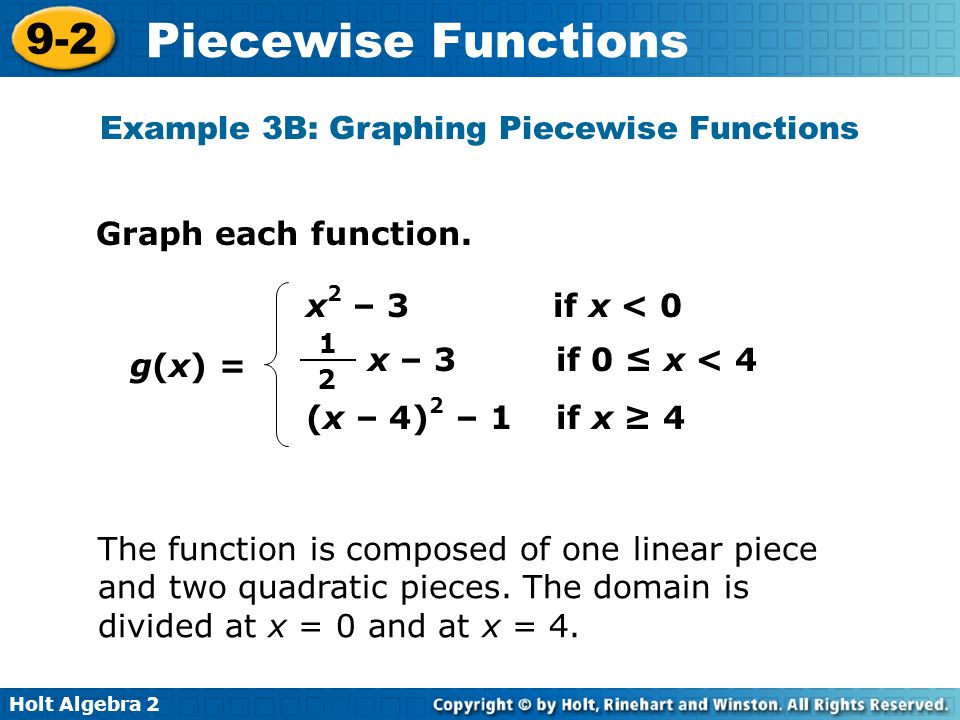 zarkam21:
Like this
Vocaloid:
yes
zarkam21:
\[g(x)=\left\{ 580 + 21.75(x-40) \right\} if x=0\]
Vocaloid:
the function should have three rows also the function in our problem is P(x) not g(x)
Vocaloid:
let's start with the first row P(x) = (14.50)(x) for "less than 40 hours worked" so x < 40 P(x) = 14.50x, x < 40 is the first row then keep going for the other two rows
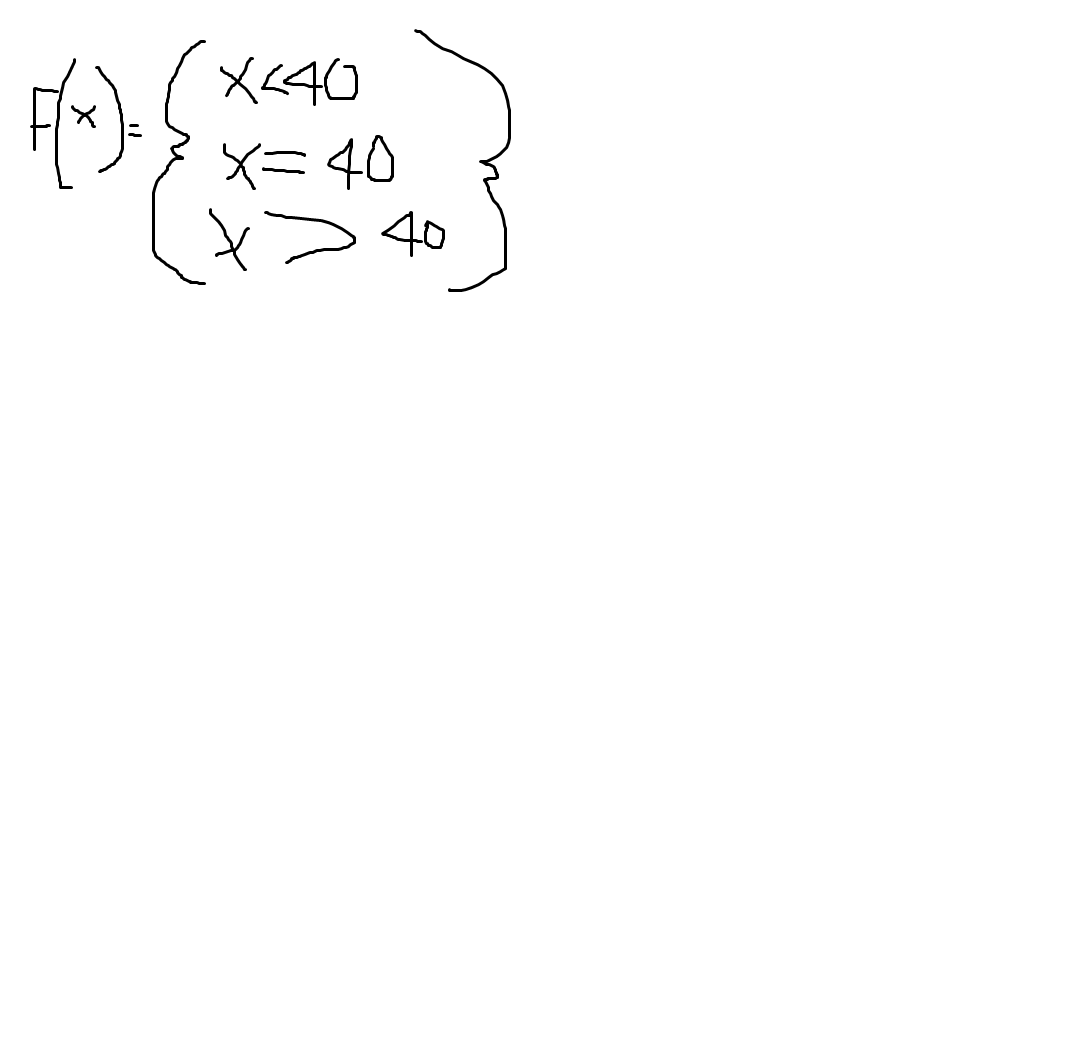 Vocaloid:
the function is P(x) not F(x) also you need to include the actual functions not just the domains
Vocaloid:
\(\color{#0cbb34}{\text{Originally Posted by}}\) @Vocaloid Part IV: Use the functions from Part I and Part III to write the piecewise function for how much an employee will be paid if he or she were to work less than or equal to 40 hours, or more than 40 hours. your piecewise function will have 3 parts (one for less than 40 hours, one for equal to 40 hours, one for more than 40 hours) for less than 40 hours --> (14.50)(x) as we determined in part I equal to 40 hours --> 580 from part IIIa more than 40 hours --> 580 + 21.75(x-40) from part IIIc then write this in piecewise function notation \(\color{#0cbb34}{\text{End of Quote}}\) ^ these are the functions + their domains, each row should have the function + its domain
Vocaloid:
row 1: 14.50x, x < 40 row 2: 580, x = 40 row 3: 580 + 21.75(x-40), x > 40
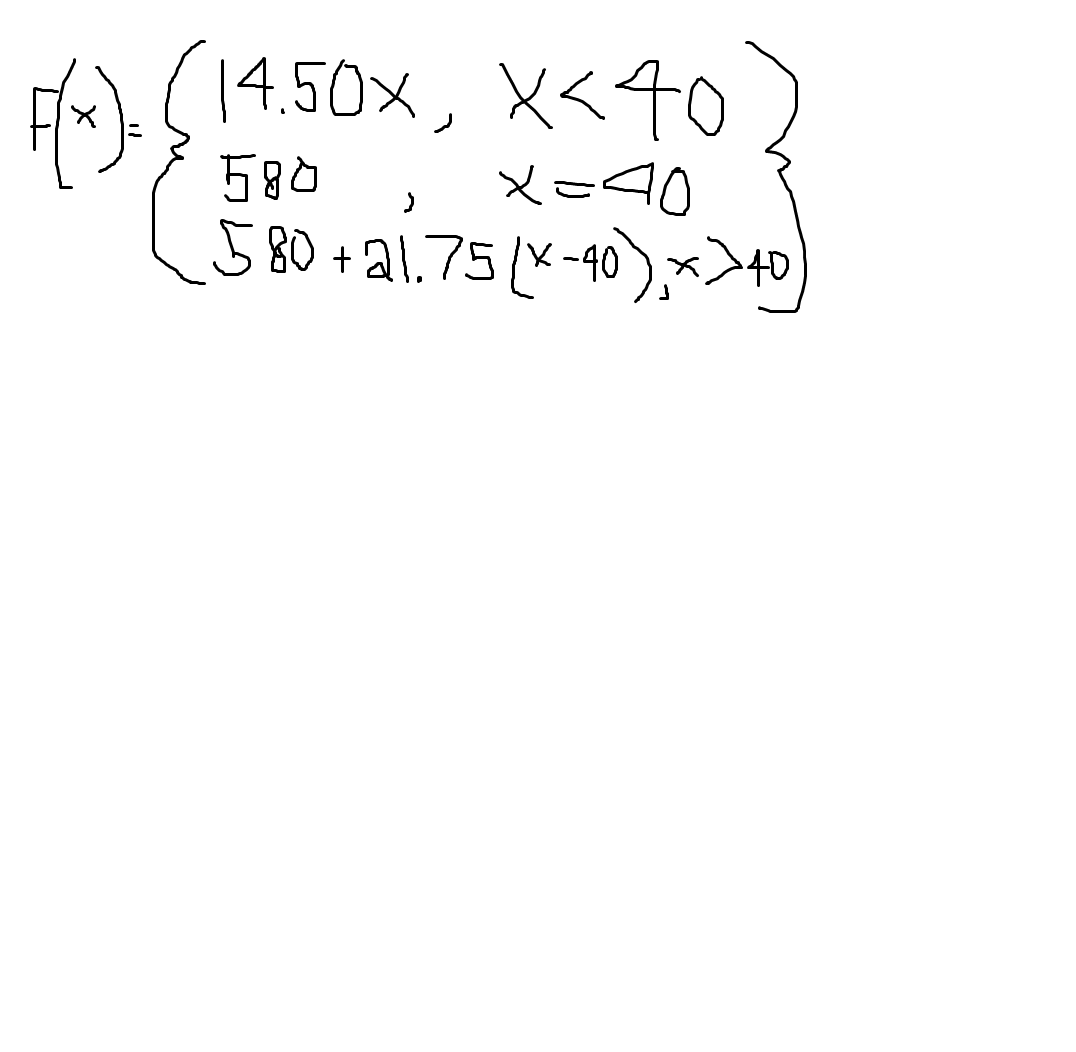 Vocaloid:
good (just change that F(x) to a P(x) then for part V) x = 50, use the appropriate row of the function to calculate the total wage for 50 hours
zarkam21:
Wait so this is different than the previous function
Vocaloid:
? so you just wrote a piecewise function that will determine the value of the function for any x value each row of the function corresponds to a particular type of x value since x = 50, which is greater than 40, simply use the third row of your piecewise function to determine the value of the function for x = 50
Vocaloid:
|dw:1519267627826:dw|
Vocaloid:
|dw:1519267646356:dw|
zarkam21:
so just x-50?
Vocaloid:
x = 50 plug this into the function
zarkam21:
580+21.75 ((x-50-40)), 50>40
Vocaloid:
580 + 21.75(x-40) replace "x" with "50" 580 + 21.75(50-40) = ?
zarkam21:
797.5
Vocaloid:
good, that's it for part V
Join our real-time social learning platform and learn together with your friends!
 KBaby:
Verse 1 We left our names in the dust of the driveway Watched the old town shrink
KBaby:
Lyrics Generator Use AI to write the lyrics for a song. Suggested Genres: Pop Hip
KBaby:
Verse 1 We left our names in the dust of the driveway Watched the old town shrink
KBaby:
Lyrics Generator Use AI to write the lyrics for a song. Suggested Genres: Pop Hip

 aitexturegenerator:
How are you all handling AI-generated textures for 3D models and game assets without losing the hand-made feel? I've been doing a small stylized environment
aitexturegenerator:
How are you all handling AI-generated textures for 3D models and game assets without losing the hand-made feel? I've been doing a small stylized environment

 Demon25:
Woke up feeling like that girl and that dude well he still aint crap pluse the du
Demon25:
Woke up feeling like that girl and that dude well he still aint crap pluse the du
 playtsec:
how do I get rid of stress from teachers... I just feel like running out the classroom and leaving on my own.
playtsec:
how do I get rid of stress from teachers... I just feel like running out the classroom and leaving on my own.
 JohnnyLFowler0812:
What type of gamer would play something and then get off for a while. Why not sta
JohnnyLFowler0812:
Which is better? Metallica Rap Country R&B hiphop Medal Gospel Chill Which 3 opti
JohnnyLFowler0812:
What type of gamer would play something and then get off for a while. Why not sta
JohnnyLFowler0812:
Which is better? Metallica Rap Country R&B hiphop Medal Gospel Chill Which 3 opti