
 joaquin21:
Help im stuck with these problems
joaquin21:
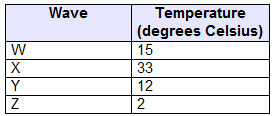
Yulia observed a sound wave moving through a solid medium at four different temperatures, and she recorded observations about each one in the chart. Which correctly ranks, from fastest to slowest, the time it will take one wavelength to pass a certain point? Wave X → Wave Y → Wave W → Wave Z Wave Z → Wave W → Wave Y → Wave X Wave X → Wave W → Wave Y → Wave Z Wave Z → Wave Y → Wave W → Wave X
 joaquin21:
Waves move fastest in low-temperature gases. low-temperature solids. high-temperature gases. high-temperature solids.
joaquin21:
A wave will go faster through a liquid at -- temperatures.
joaquin21:
Allison wants to calculate the speed of a sound wave. Which formula should she use? distance traveled / amplitude number of wavelengths / amplitude number of wavelengths / time distance traveled / time
joaquin21:
@JustSaiyan
 JustSaiyan:
The first should be "Wave X → Wave W → Wave Y → Wave Z" Warmer temperatures allow waves to move faster.
joaquin21:
Thats what i put but its wrong for some reason
JustSaiyan:
Hmm. That is strange.
JustSaiyan:
@Shadow Might be able to provide some insight on this.
joaquin21:
ill try again
joaquin21:
well its working now.
joaquin21:
Waves move fastest in low-temperature gases. low-temperature solids. high-temperature gases. high-temperature solids.
joaquin21:
A wave will go faster through a liquid at -- temperatures.
joaquin21:
Allison wants to calculate the speed of a sound wave. Which formula should she use? distance traveled / amplitude number of wavelengths / amplitude number of wavelengths / time distance traveled / time
JustSaiyan:
C High temperature gases The next one is Warm Temperatures, And the last I think is number of wavelengths / amplitude
joaquin21:
\(\color{#0cbb34}{\text{Originally Posted by}}\) @joaquin21 A wave will go faster through a liquid at -- temperatures. \(\color{#0cbb34}{\text{End of Quote}}\)
JustSaiyan:
\(\color{#0cbb34}{\text{Originally Posted by}}\) @JustSaiyan C High temperature gases ➡`The next one is Warm Temperatures`⬅, And the last I think is number of wavelengths / amplitude \(\color{#0cbb34}{\text{End of Quote}}\)
joaquin21:
which types of electromagnetic waves have longer wavelengths than the waves that make up visible light? Check all that apply. radio waves gamma rays microwaves infrared light ultraviolet light X-rays
JustSaiyan:
infrared light ultraviolet light X-rays gamma rays
joaquin21:
Which part of the electromagnetic spectrum is nearest to radio waves? X-rays microwaves gamma rays ultraviolet light
JustSaiyan:
Hmm. I think D.
joaquin21:
How can electromagnetic waves be used to fight a forest fire? Gamma ray images can show hot spots as radioactive areas. Ultraviolet images can show hot spots as fluorescent areas. X-ray images can show hot spots as white areas. Infrared images can show hot spots as red areas.
JustSaiyan:
D
JustSaiyan:
The whole point of infrared is to show heat signatures.
joaquin21:
A pet lizard and its shelter must be kept warm. What type of electromagnetic waves would most likely be used? gamma rays infrared light ultraviolet light microwaves I think its C but im just making sure
joaquin21:
or D
JustSaiyan:
Infrared waves would be correct.
joaquin21:
Which types of electromagnetic waves have higher frequencies than the waves that make up ultraviolet light? Check all that apply. radio waves infrared light microwaves gamma rays visible light X-rays
JustSaiyan:
X rays and Gamma rays. The higher frequency would mean shorter wavelengths, and the only wavelengths shorter than Ultraviolet are X rays and Gamma rays.
joaquin21:
The part of the electromagnetic spectrum that has the longest wavelengths is
JustSaiyan:
Radio Waves
joaquin21:
radio waves gamma waves infrared waves ultraviolet waves Visible light
JustSaiyan:
Lol. Radio Waves
joaquin21:
yea i had to type it out because there was no copy and paste
joaquin21:
Which object absorbs the most visible light? a clear bowl a white rock a black t-shirt a red apple
joaquin21:
black tshirt
JustSaiyan:
Yep.
JustSaiyan:
Which is why someone wearing black in the summer would be hotter than someone wearing white in the summer.
joaquin21:
Prisms separate_______ light, such as that from the Sun, by wavelength.
JustSaiyan:
white light.
joaquin21:
According to Dutch scientist Christiaan Huygens, what was light made of? atoms particles waves electrons im 90% sure its waves
joaquin21:
Juan created a chart to help him study for a test. Which headings best complete the chart? X: Transparent Objects Y: Opaque Objects X: Opaque Objects Y: Transparent Objects X: High Frequency Waves Y: Low Frequency Waves X: Low Frequency Waves Y: High Frequency Waves
 joaquin21:
@JustSaiyan lol dont leave
JustSaiyan:
Sorry, someone else needed me for a second.
joaquin21:
its alright lol i forgot i was only on sciences subject i thought there was other subjects i didnt see anyone who needed help
JustSaiyan:
The first is waves, second, I would say is X opaque objects.
joaquin21:
Isaac Newton believed that light was made of _____ i think maybe particles .
JustSaiyan:
Tiny Particles, yes.
 SkyVoltage43:
anymore questions?
joaquin21:
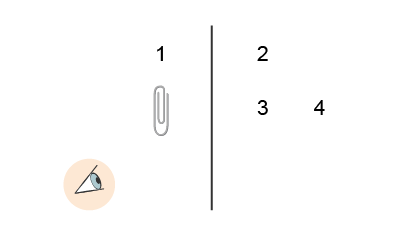
The diagram below shows a paper clip in front of a mirror. Where will the image of the paper clip appear to the observer? 1 2 3 4
 joaquin21:
i dont understand what its asking lol
SkyVoltage43:
So basically if something is in a mirror you just flip it to the other side so the answer would be 3
JustSaiyan:
From where the eye is positioned looking at the paper clip, where will it's reflection lie?
joaquin21:
ok thanks :)
JustSaiyan:
Pro tip, it isn't 3
JustSaiyan:
That's what I thought at first.
joaquin21:
How does a concave mirror form an image? It bends the light toward a focal point. It bends the light away from a focal point. It bounces the light toward a focal point. It bounces the light away from a focal point.
SkyVoltage43:
really nick its not 3? okay then
JustSaiyan:
C. The last one would be number 2
SkyVoltage43:
yea he is right its C
 joaquin21:
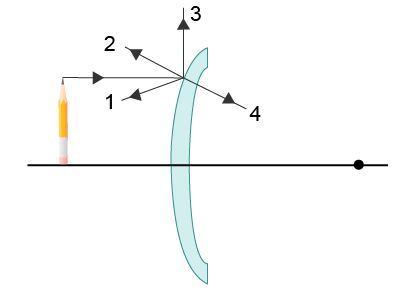
The diagram below shows a light ray from a pencil hitting a mirror. Which ray shows the correct direction of the reflected ray? 1 2 3 4
JustSaiyan:
Hmm. Tricky.
SkyVoltage43:
is it number 2?
JustSaiyan:
That is what I was thinking.
SkyVoltage43:
its either 2 or 3
joaquin21:
Online classes are poop
SkyVoltage43:
but i say its 2
joaquin21:
I did not take Earth space science freshman year so i have to take it now
joaquin21:
online and its poooooooooooooop
SkyVoltage43:
i have that class
joaquin21:
You can use the curved part of a spoon as a mirror because it ______ light.
joaquin21:
reflects?
SkyVoltage43:
yes
JustSaiyan:
👍
joaquin21:
How does a convex mirror form an image? It bends the light toward a focal point. It bends the light away from a focal point. It bounces the light toward a focal point. It bounces the light away from a focal point.
SkyVoltage43:
I would say B
JustSaiyan:
Hmm. Well it takes light and it spreads it out in different directions, so I would say that would be B
joaquin21:
Yea i think that too
joaquin21:
Which describe the image formed by a convex mirror? Check all that apply. virtual real upside down right-side up larger than the object smaller than the object same size as the object
joaquin21:
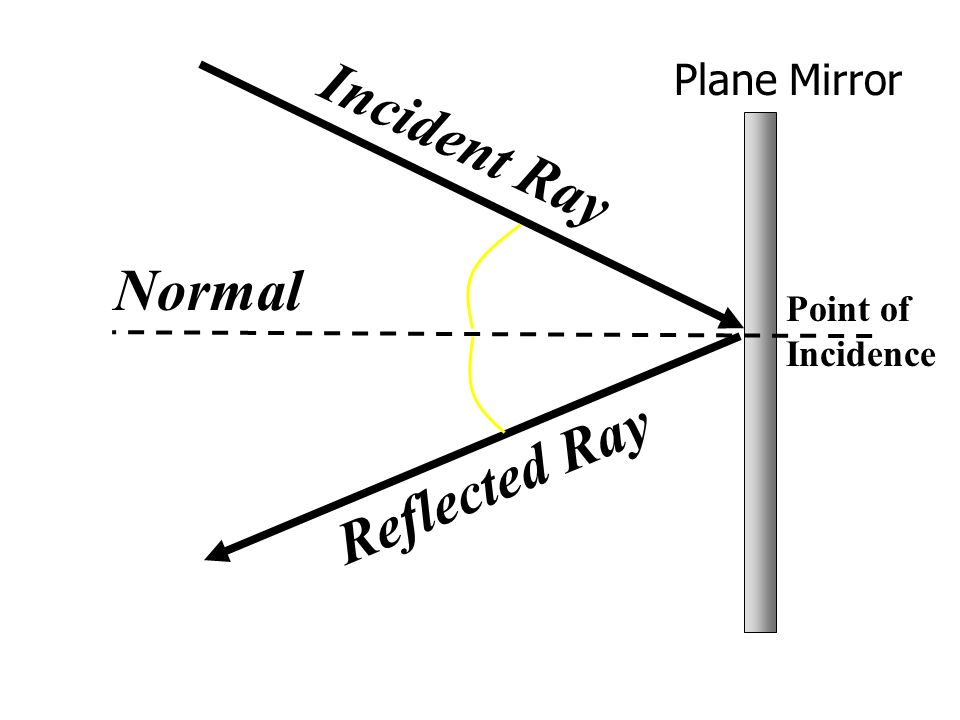
Which describes an image that a plane mirror can make? The image is always real. The image can be either virtual or real. The image is never right-side up. The image can only be the same size as the object.
JustSaiyan:
virtual, right-side up, smaller than the object for the first.
joaquin21:
I think #2 is D or A
joaquin21:
but i might be wrong
SkyVoltage43:
I thinks it A
JustSaiyan:
I say D.
SkyVoltage43:
hmmmm
joaquin21:
pop split decision
 joaquin21:
Saiyans right its D
joaquin21:
I got this question wrong How does a convex mirror form an image? It bends the light toward a focal point. It bends the light away from a focal point. It bounces the light toward a focal point. It bounces the light away from a focal point.
SkyVoltage43:
he normally is right
JustSaiyan:
D. We said B last time.
joaquin21:
That is the final question then i gotta take the exam
SkyVoltage43:
okay
joaquin21:
But im taking it tomorrow cause i gotta go to my next period
joaquin21:
thursday**
SkyVoltage43:
okay have a good day
joaquin21:
u 2 thanks for the help
JustSaiyan:
Yep.
SkyVoltage43:
anytime
Join our real-time social learning platform and learn together with your friends!
 Demon25:
For a hoco proposal with a cheerleader and football player, what else should be a
Demon25:
For a hoco proposal with a cheerleader and football player, what else should be a

 Breathless:
TOC: "MGF any confirmation on the commander? we require confirmation as soon as[radio static].
Breathless:
TOC: "MGF any confirmation on the commander? we require confirmation as soon as[radio static].
 EdwinJsHispanic:
I wrote something that I don't know if I want it as a poem or song, Please let me know on yours thoughts about it, I'm still doing this! "Broken promises an
EdwinJsHispanic:
I wrote something that I don't know if I want it as a poem or song, Please let me know on yours thoughts about it, I'm still doing this! "Broken promises an
 thehearken:
hi um I don't know if this is the right section for this, but can someone go over my poem and tell me if its good enough to give my English professor for a
thehearken:
hi um I don't know if this is the right section for this, but can someone go over my poem and tell me if its good enough to give my English professor for a
 heartlessprophet:
Aye what's 19z%u00f74p=9u03c0 my teacher thinking of impossible questions for us
heartlessprophet:
Aye what's 19z%u00f74p=9u03c0 my teacher thinking of impossible questions for us
 kippppp:
does anyone have any good tips for writing stories? i'm trying to write a dnd campaign but i'm not that great of a writer yet.
kippppp:
does anyone have any good tips for writing stories? i'm trying to write a dnd campaign but i'm not that great of a writer yet.
 GRIZZLEY19:
Y'all let me know what y'all think about this beat I made I took me like a hour maybe rate it 0/10 https://drive.
GRIZZLEY19:
Y'all let me know what y'all think about this beat I made I took me like a hour maybe rate it 0/10 https://drive.
 Ultrilliam:
Welcome to the 10th Anniversary Update! (Part 2) Sorry this one passed the date a
Ultrilliam:
Welcome to the 10th Anniversary Update! (Part 2) Sorry this one passed the date a
 Twaylor:
was walking downtown and my adhd brain wanted to make some (rock?) lyrics: There'
Twaylor:
was walking downtown and my adhd brain wanted to make some (rock?) lyrics: There'