
 zarkam21:
HElp with 4 part question
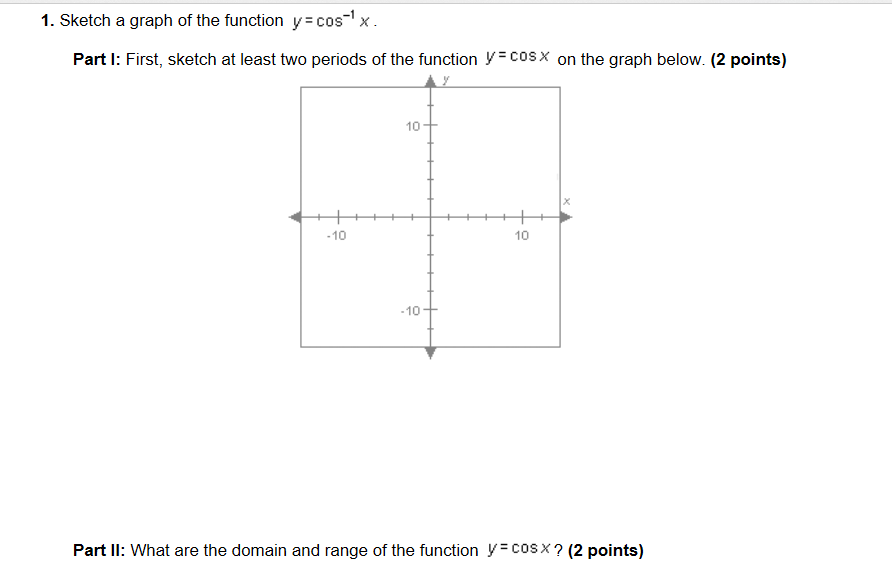
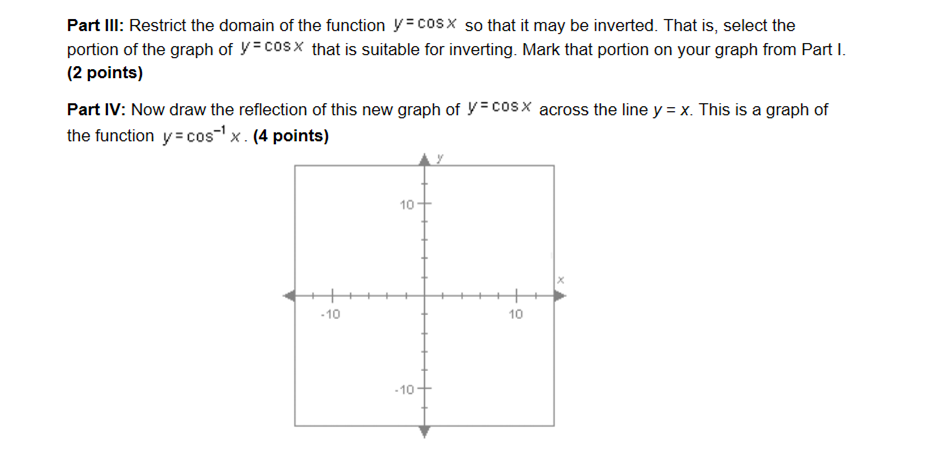
 Vocaloid:
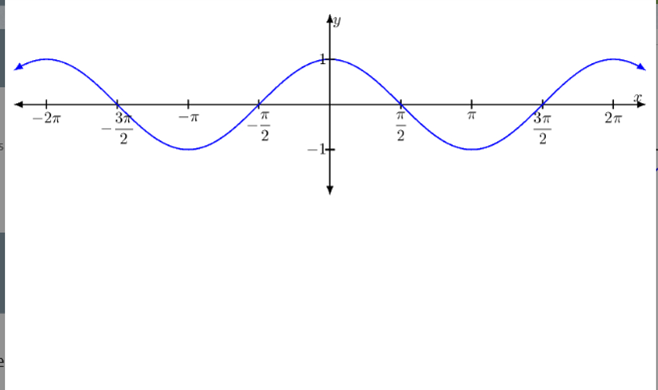
any ideas how you would start graphing cos(x)? since they want two periods start from -2pi and go to 2pi
Vocaloid:
|dw:1523636412670:dw|
Vocaloid:
it's really important to know how to do this, I would recommend reviewing sin and cos graphs on your own time
Vocaloid:
part II: what's the domain and range of cos?
Vocaloid:
still there? if you don't know the domain and range of cos from memory you must look them up
Vocaloid:
|dw:1523636856681:dw|
zarkam21:
So all real numbers
zarkam21:
sorry i was afk
Vocaloid:
good so the domain is all real #'s and the range is [-1,1]
zarkam21:
okay so the graph you showed me for part I that is the one I used, so for part III can we do the markings on that?
Vocaloid:
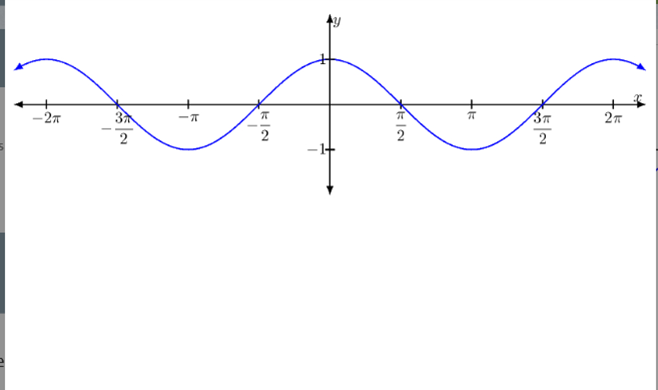
for part III we will be restricting the domain of cos from [0,pi], mark this region on your graph
 Vocaloid:
place an appropriate pair of tick marks at 0 and pi to mark the region from 0 to pi
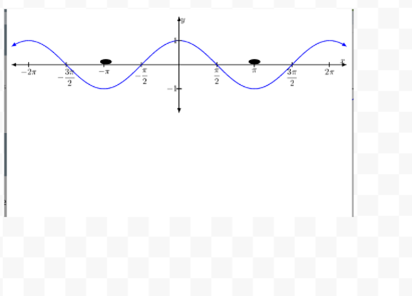 Vocaloid:
not -pi and pi 0 and pi
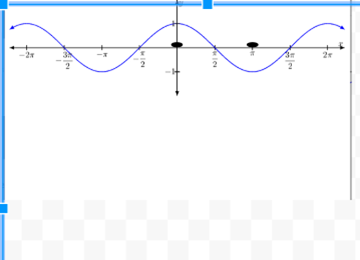 Vocaloid:
well done, so you will be inverting this region |dw:1523637471043:dw|
Vocaloid:
|dw:1523637484377:dw|
Vocaloid:
now, we will draw the line y = x
Vocaloid:
|dw:1523637497717:dw|
Vocaloid:
now we will take the region of the graph we have selected and imagine that the line y = x is a mirror and flip the graph over
Vocaloid:
|dw:1523637576207:dw|
Vocaloid:
(you will need to extend your y-axis up to pi so the whole graph shows up) the blue region is your new arccos(x) function
Vocaloid:
and that's it, let me know if you need help with the graph because they give you a graph that's been marked on increments of 1 instead of pi which can be hard to graph
zarkam21:
um yeah
zarkam21:
i need help graphing it on this type of graph
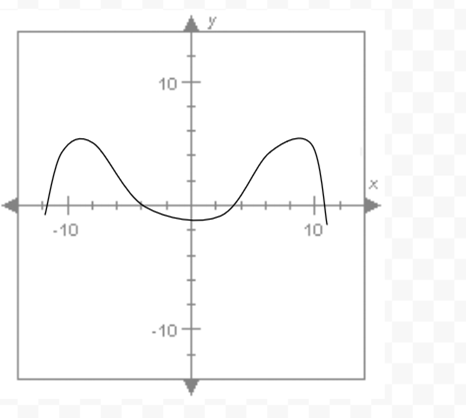 zarkam21:
I think I basically butchered it :/
Vocaloid:
the key is to identify key points on the graph first
zarkam21:
well zero is one
Vocaloid:
for example, cos(0) = 1 so start with (0,1)
zarkam21:
okay got that
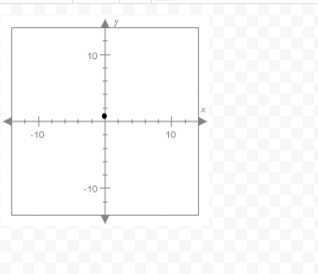 Vocaloid:
awesome, then the next critical point is (pi/2,0), try to find where that would be on the graph, pi/2 is like 1.7 ish
Vocaloid:
1.57 actually
zarkam21:
wait (0,1.57) or (1.57,0)
Vocaloid:
(pi/2,0)
Vocaloid:
pi/2 is the x-coordinate
Vocaloid:
(pi/2,0) means pi/2 is the x-coordinate, so you would estimate where pi/2 would be on the x-axis, then where 0 would be on the y-axis, then draw the appropriate point
Vocaloid:
anyway the next point after that is (pi,-1)
Vocaloid:
then connect the points with a curve appropriate for a cos graph and then draw the inverse
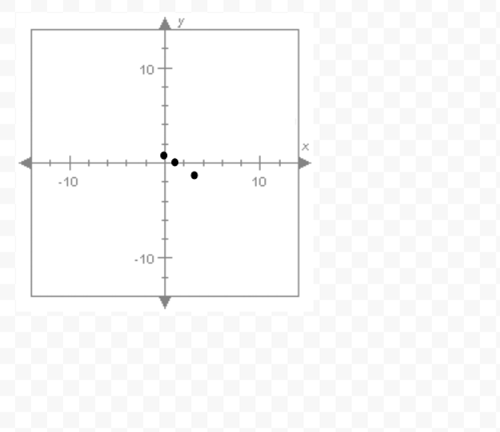 Vocaloid:
yeah that's fine actually (I forgot the tick marks go by 2 not 1)
Vocaloid:
then you would try and connect them with a curved line
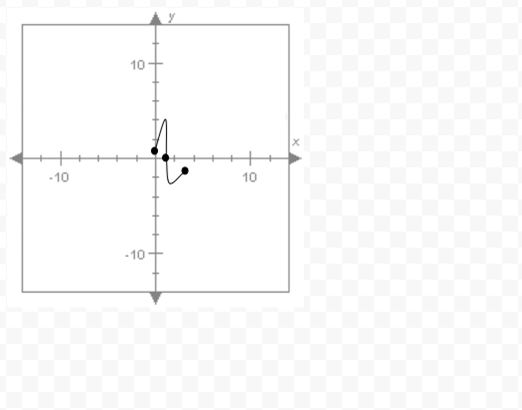 Vocaloid:
remember that cos only goes up to 1 and down to -1
Vocaloid:
(0,1), (pi/2,0) and (pi, -1)
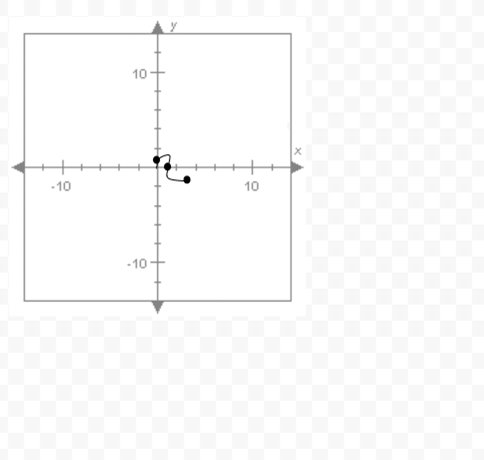 Vocaloid:
yeah that's better i know the draw tool is a little hard to use but it would be good to try and smooth out the curve a bit more
Vocaloid:
|dw:1523639617558:dw|
Vocaloid:
|dw:1523639622088:dw|
Vocaloid:
|dw:1523639644006:dw|
Vocaloid:
|dw:1523639649678:dw|
Vocaloid:
anyway when you're done with that just try reflecting it across y = x
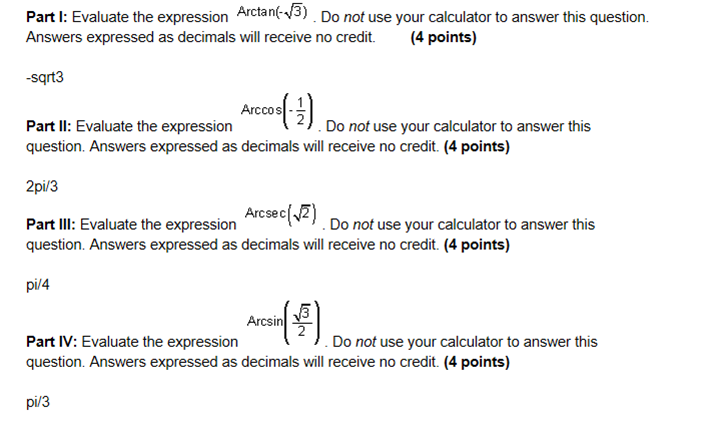 Vocaloid:
check the first answer choice again where on the unit circle would sin(theta)/cos(theta) = -sqrt(3)?
zarkam21:
-pi/3
Vocaloid:
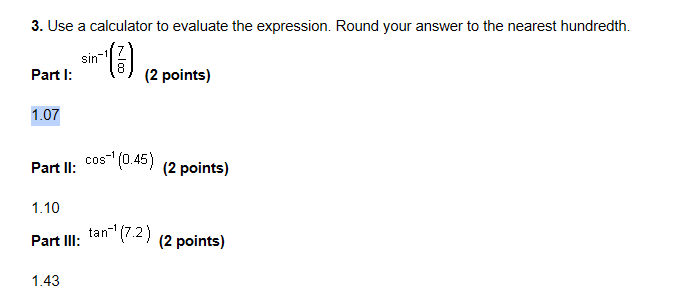
good all the other ones are right
 Vocaloid:
first one needs to be negative but otherwise good
Vocaloid:
-1.07
 Vocaloid:
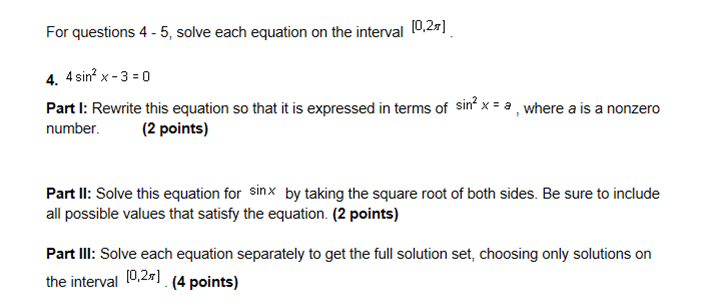
alright for Part I you just need to solve 4sin^2(x) - 3 = 0 for sin^2(x), lmk what you get
zarkam21:
pi/3
Vocaloid:
part I is just asking you to solve for sin^2(x), not x
Vocaloid:
like, when you take 4sin^2(x) - 3 = 0 and isolate sin^2 (x) you get sin^2 (x) = 3/4, that's all they want for part A
Vocaloid:
anyway for part II how would you solve sin^2 (x) = 3/4 for sin(x)? remember we are not solving for x yet, just sin(x)
Vocaloid:
just as a side note we have a lot of new users today and they're kind of being butts in the chat so if I seem tense it's not you, it's just them getting on my nerves
zarkam21:
okay so 3/4
zarkam21:
and no worries
Vocaloid:
sin^2(x) = 3/4 so to solve for sin(x) we would square root each side so sin(x) = sqrt(3)/2 = the sol'n for part II
Vocaloid:
actually it's +/- sqrt(3)/2
Vocaloid:
anyway, for part III we just need to find the angles on the UC where sin(theta) = sqrt(3)/2 or -sqrt(3)/2
zarkam21:
okay so 7pi/6
Vocaloid:
be careful, 7pi/6 is where cos(theta) = -sqrt(3)/2 not sin
zarkam21:
5pi/6
Vocaloid:
remember that sin is the y-coordinate
zarkam21:
pi/3
Vocaloid:
|dw:1523641593423:dw|
Vocaloid:
good, pi/3 is one
zarkam21:
5pi/3
Vocaloid:
|dw:1523641602793:dw|
zarkam21:
oh okay so theres going to be 4 values
Vocaloid:
yes
zarkam21:
pi/3 , 4pi/3 , 5pi/3 , 2pi/3
Vocaloid:
good
Vocaloid:
anyway that's it for parts I-III
Join our real-time social learning platform and learn together with your friends!
 KBaby:
Verse 1 We left our names in the dust of the driveway Watched the old town shrink
KBaby:
Lyrics Generator Use AI to write the lyrics for a song. Suggested Genres: Pop Hip
KBaby:
Verse 1 We left our names in the dust of the driveway Watched the old town shrink
KBaby:
Lyrics Generator Use AI to write the lyrics for a song. Suggested Genres: Pop Hip

 aitexturegenerator:
How are you all handling AI-generated textures for 3D models and game assets without losing the hand-made feel? I've been doing a small stylized environment
aitexturegenerator:
How are you all handling AI-generated textures for 3D models and game assets without losing the hand-made feel? I've been doing a small stylized environment

 Demon25:
Woke up feeling like that girl and that dude well he still aint crap pluse the du
Demon25:
Woke up feeling like that girl and that dude well he still aint crap pluse the du
 playtsec:
how do I get rid of stress from teachers... I just feel like running out the classroom and leaving on my own.
playtsec:
how do I get rid of stress from teachers... I just feel like running out the classroom and leaving on my own.
 JohnnyLFowler0812:
What type of gamer would play something and then get off for a while. Why not sta
JohnnyLFowler0812:
Which is better? Metallica Rap Country R&B hiphop Medal Gospel Chill Which 3 opti
JohnnyLFowler0812:
What type of gamer would play something and then get off for a while. Why not sta
JohnnyLFowler0812:
Which is better? Metallica Rap Country R&B hiphop Medal Gospel Chill Which 3 opti