
 EndersWorld:
Solve for x in the equation.
 Hero:
Hero:
Okay ...
EndersWorld:
\[\frac{ 3(x-6) }{ 5 }=x\]
EndersWorld:
x=-9
Hero:
Show. Your. Work.
EndersWorld:
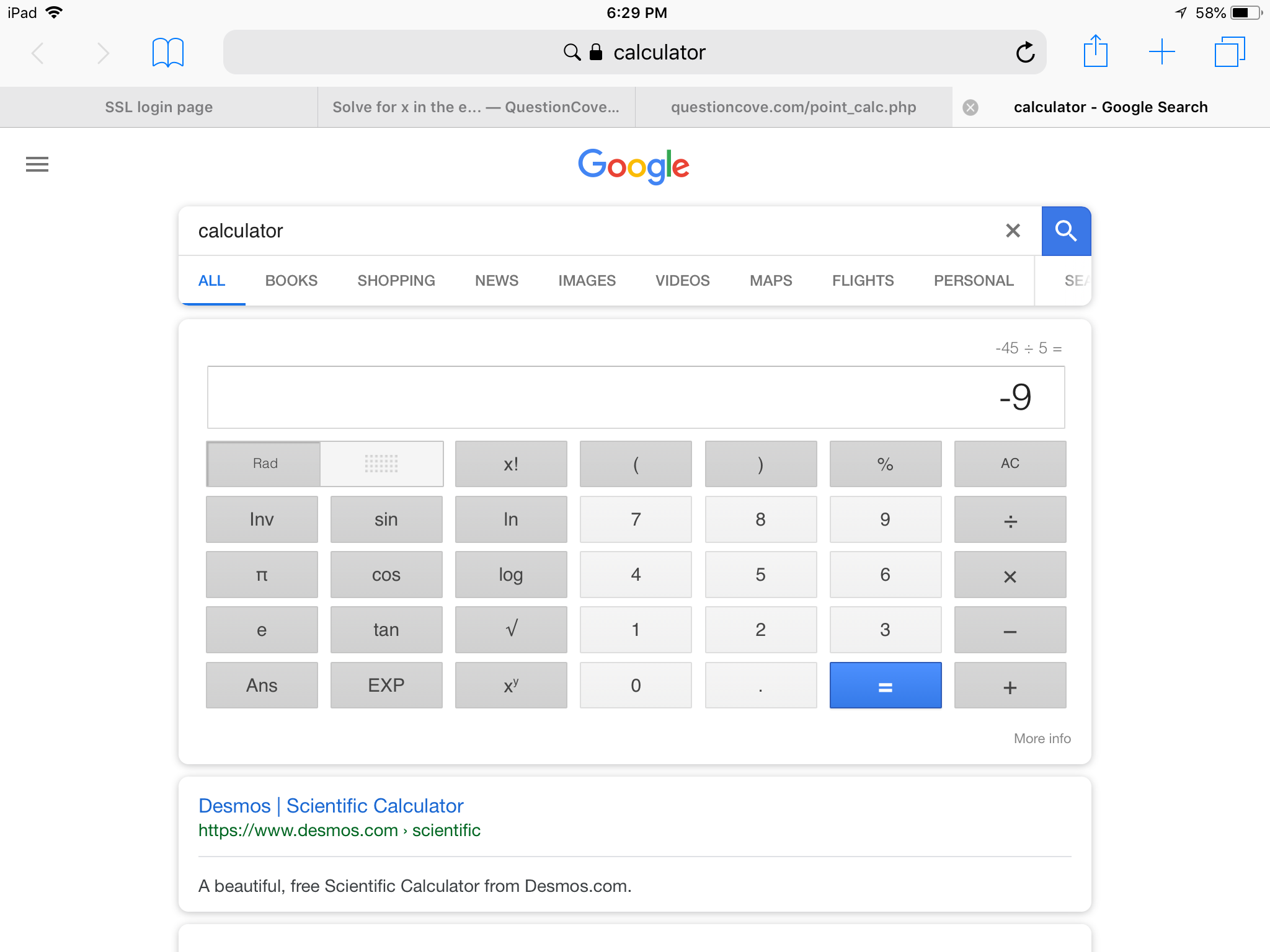
Calculator. Did. My. Work.
EndersWorld:
One moment,
Hero:
Calculator. Is. Not. Your. Work.
 Hero:
Hero:
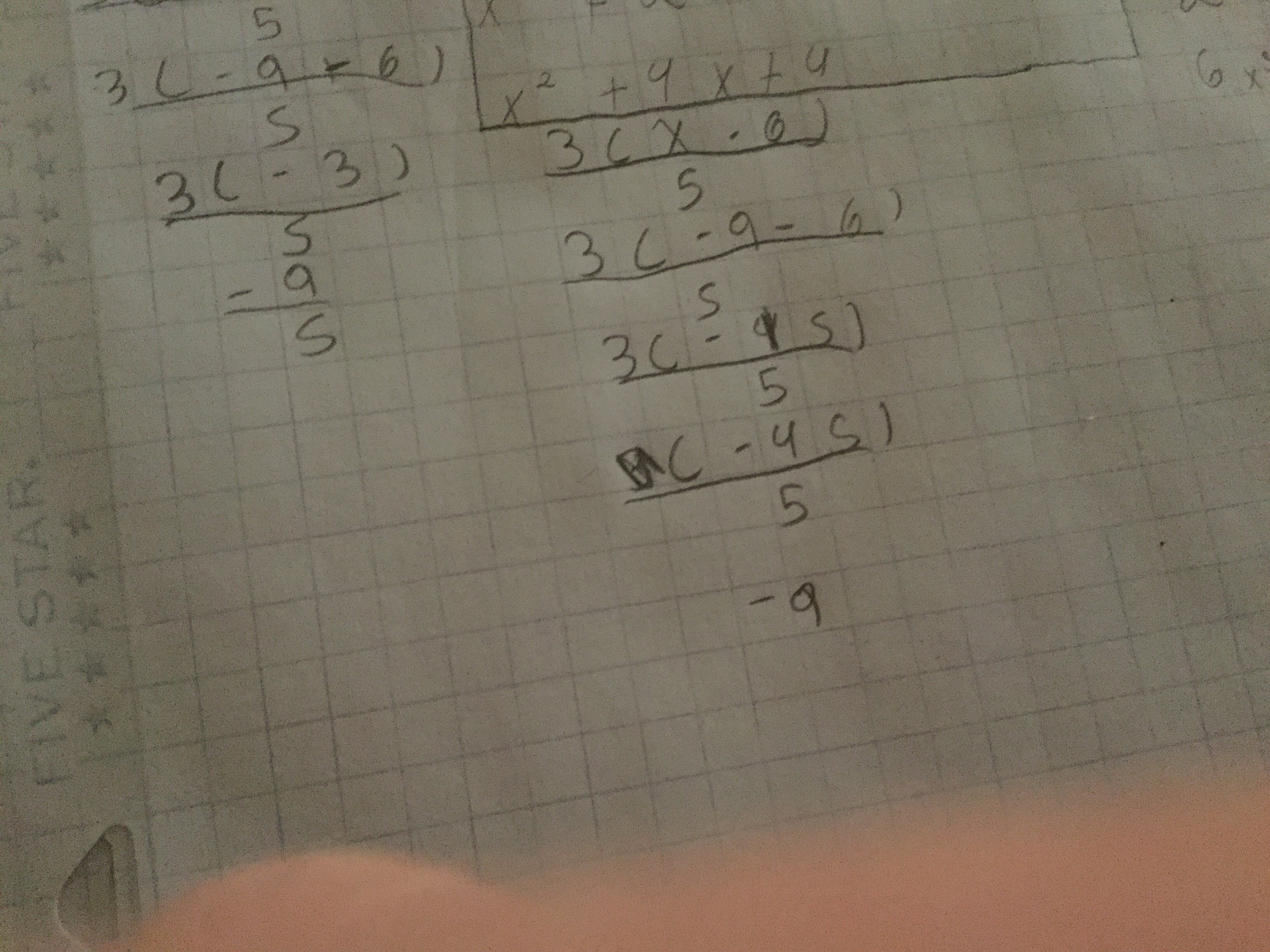
Nope, the calculator is not the appropriate substitution for your work. If you're going to use a calculator, you don't even need to post here.
Hero:
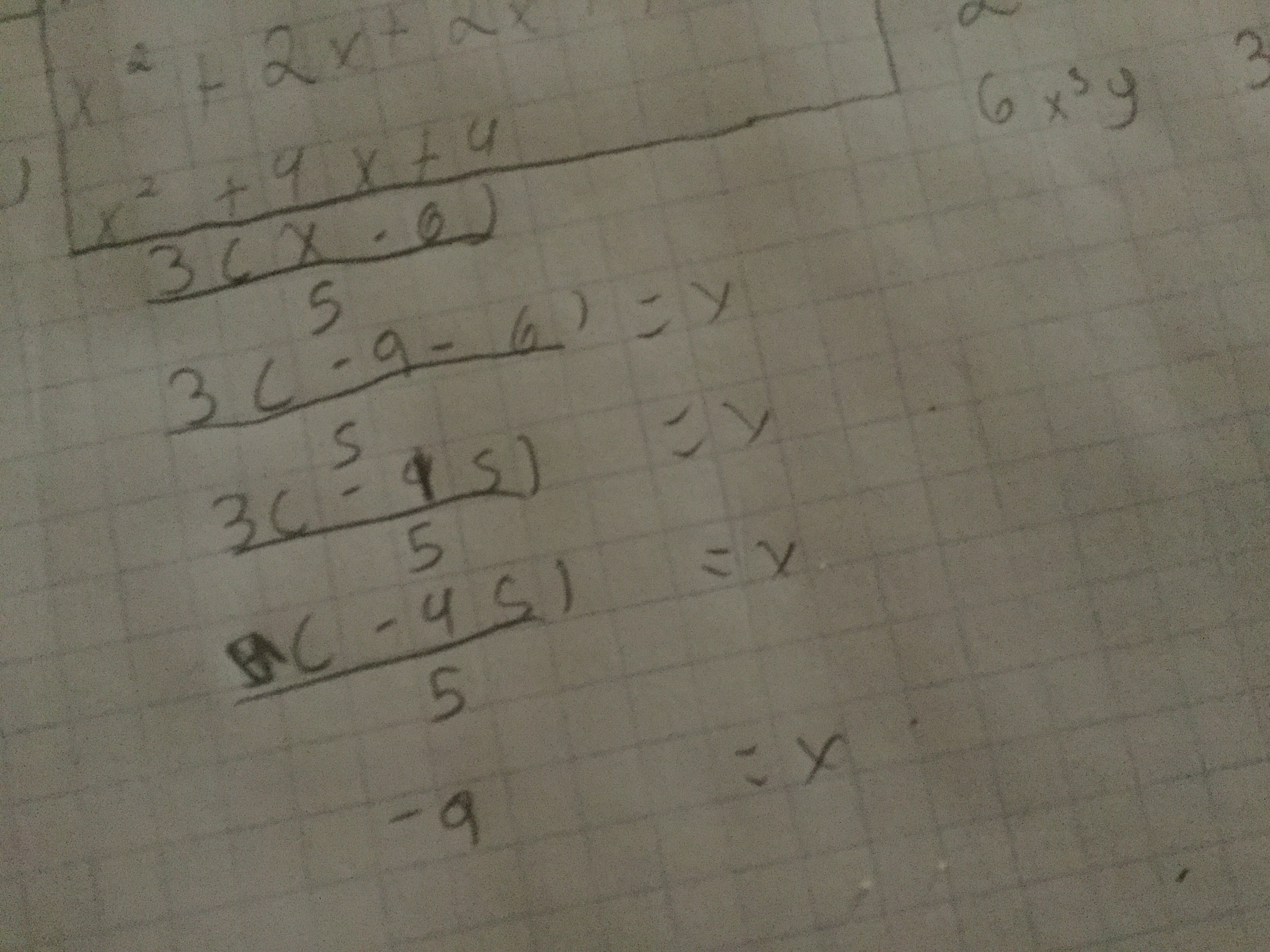
Your steps are not correct because you removed variable \(x\) from the expressions which is not consistent. \(x\) needs to be there in order for the expressions you create during the solving process to be equivalent expressions. Using equivalent expressions is part of the process of solving algebraic expressions.
 Hero:
Hero:
\(x\) is missing on the left side of the equation. Notice in the original equation \(x\) occurs on both sides of the equation.
EndersWorld:
Then I don’t know..
Hero:
Let's do it this way:
Hero:
\(\dfrac{3(x - 6)}{5} = x\) Multiply both sides by \(5\). Post your result here using \(\LaTeX\)
EndersWorld:
\[3(x-6)=5x\]
Hero:
On the left side of the equation, use the distributive property to expand the expression.
EndersWorld:
\[3x-18=5x\]
Hero:
Next, subtract \(3x\) from both sides.
EndersWorld:
\[-18=2x\]
Hero:
Divide both sides by \(2\)
EndersWorld:
X=-9
Hero:
Now, take the value for \(x\) and substitute it in place of \(x\) in the original equation. Do not do any other step besides what I have already stated and post what you've done here using \(\LaTeX\)
EndersWorld:
\[\frac{ 3(-9-6) }{ 5 }=-9\]
Hero:
There you go. That is the correct way to substitute.
Hero:
And then you would continue to simplify the left side until you get \(-9 = -9\). Of course I prefer to get \(0 = 0\).
EndersWorld:
So you don’t have negatives?
Hero:
No, it's just that \(0 = 0\) is the most consistent way of demonstrating both sides equal when substituting the \(x\) you found back to the original equation and simplifying to determine whether both sides agree. For any substitution, you can always end with \(0 = 0\).
Join our real-time social learning platform and learn together with your friends!
 KBaby:
Verse 1 We left our names in the dust of the driveway Watched the old town shrink
KBaby:
Lyrics Generator Use AI to write the lyrics for a song. Suggested Genres: Pop Hip
KBaby:
Verse 1 We left our names in the dust of the driveway Watched the old town shrink
KBaby:
Lyrics Generator Use AI to write the lyrics for a song. Suggested Genres: Pop Hip

 aitexturegenerator:
How are you all handling AI-generated textures for 3D models and game assets without losing the hand-made feel? I've been doing a small stylized environment
aitexturegenerator:
How are you all handling AI-generated textures for 3D models and game assets without losing the hand-made feel? I've been doing a small stylized environment

 Demon25:
Woke up feeling like that girl and that dude well he still aint crap pluse the du
Demon25:
Woke up feeling like that girl and that dude well he still aint crap pluse the du
 playtsec:
how do I get rid of stress from teachers... I just feel like running out the classroom and leaving on my own.
playtsec:
how do I get rid of stress from teachers... I just feel like running out the classroom and leaving on my own.
 JohnnyLFowler0812:
What type of gamer would play something and then get off for a while. Why not sta
JohnnyLFowler0812:
Which is better? Metallica Rap Country R&B hiphop Medal Gospel Chill Which 3 opti
JohnnyLFowler0812:
What type of gamer would play something and then get off for a while. Why not sta
JohnnyLFowler0812:
Which is better? Metallica Rap Country R&B hiphop Medal Gospel Chill Which 3 opti