
 princeevee:
i need some answers checked
 princeevee:
@Hero
 563blackghost:
Correct.
 princeevee:
@563blackghost
563blackghost:
correct
 princeevee:
@563blackghost
563blackghost:
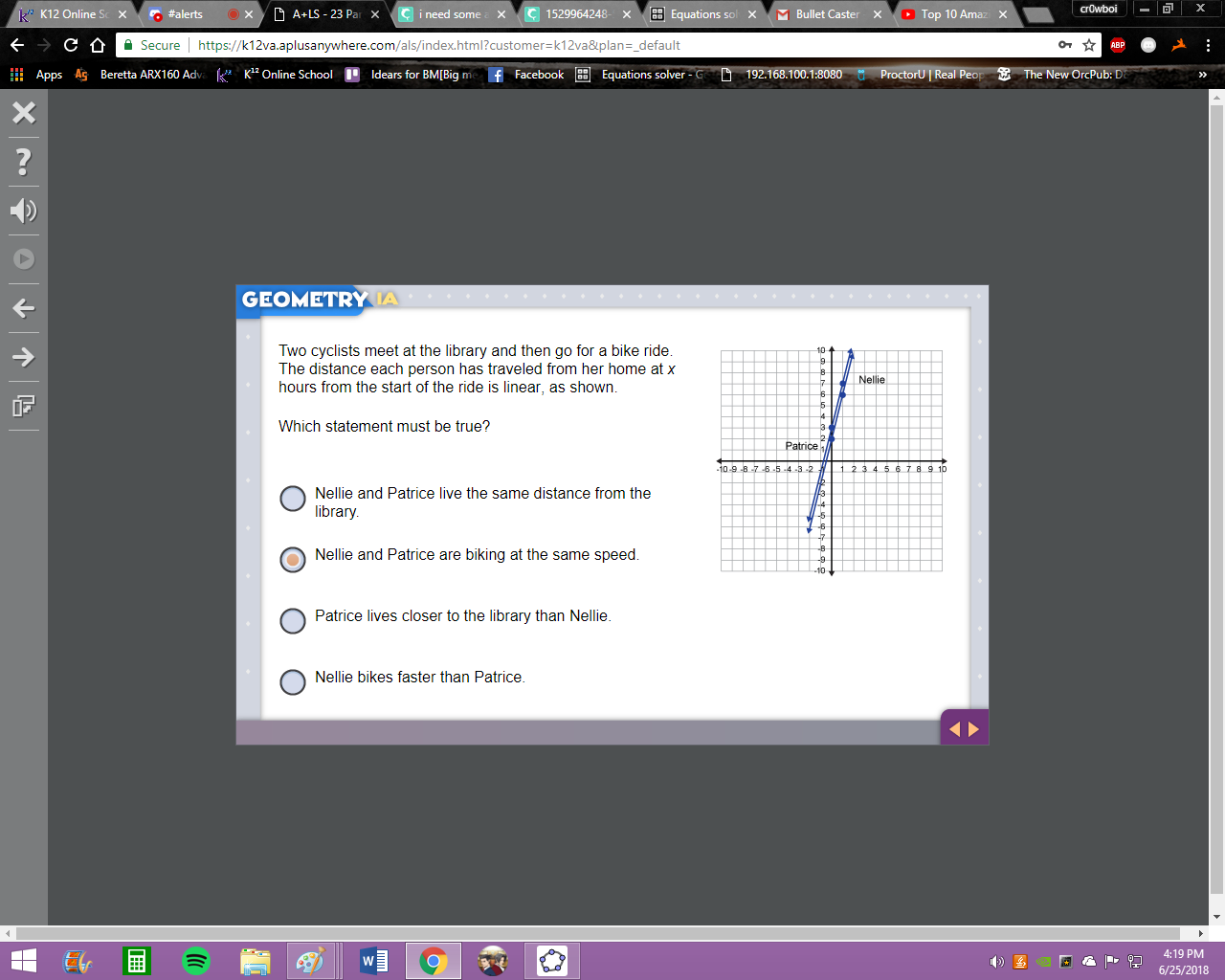
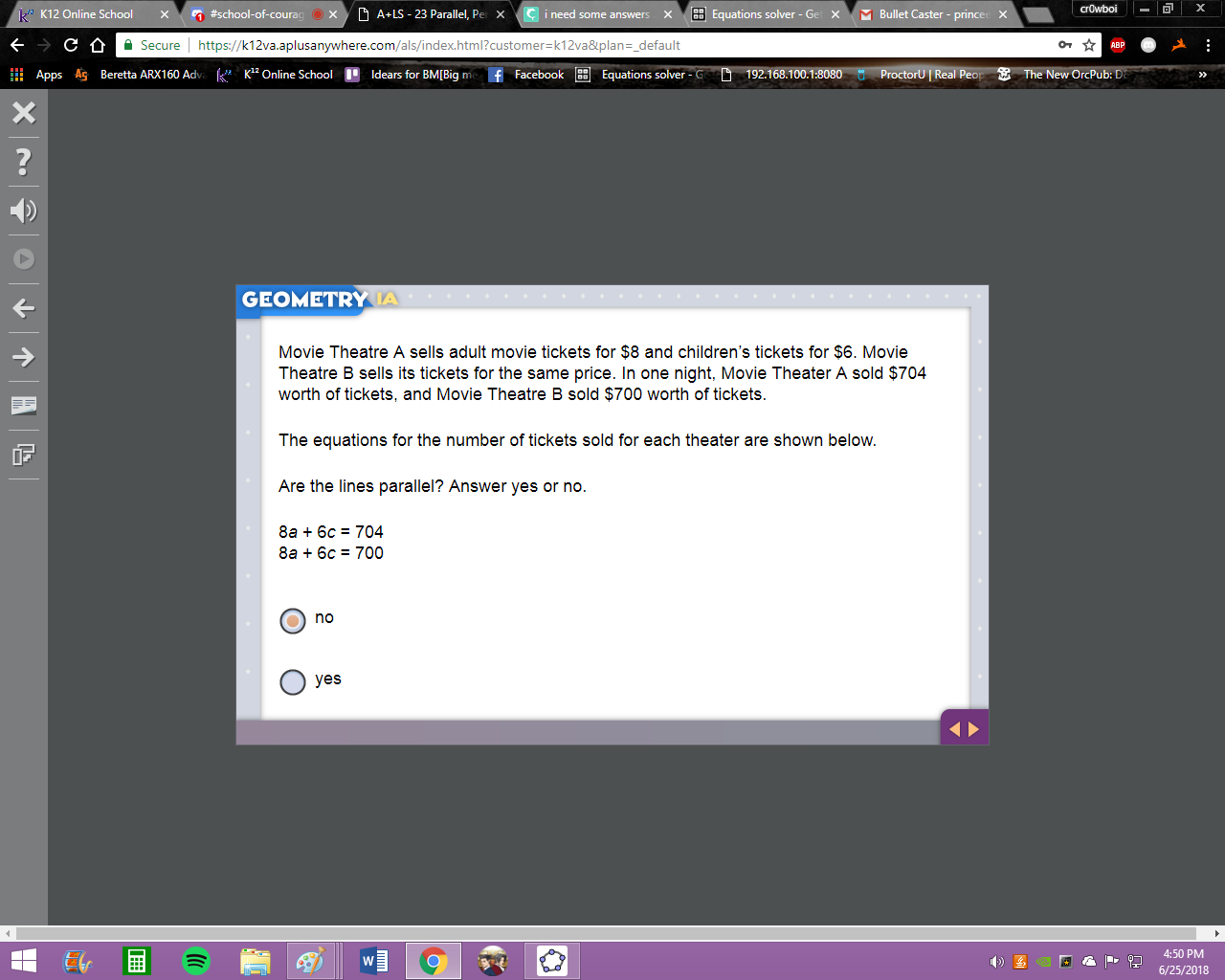
Incorrect. The lines are actually parallel to each other. Remember that like terms stay with each other, if you were to follow by converting it to slope intercept form when you move `8a` to the other side the total would be left alone, this means the total becomes the y-intercept.
 princeevee:
@563blackghost
563blackghost:
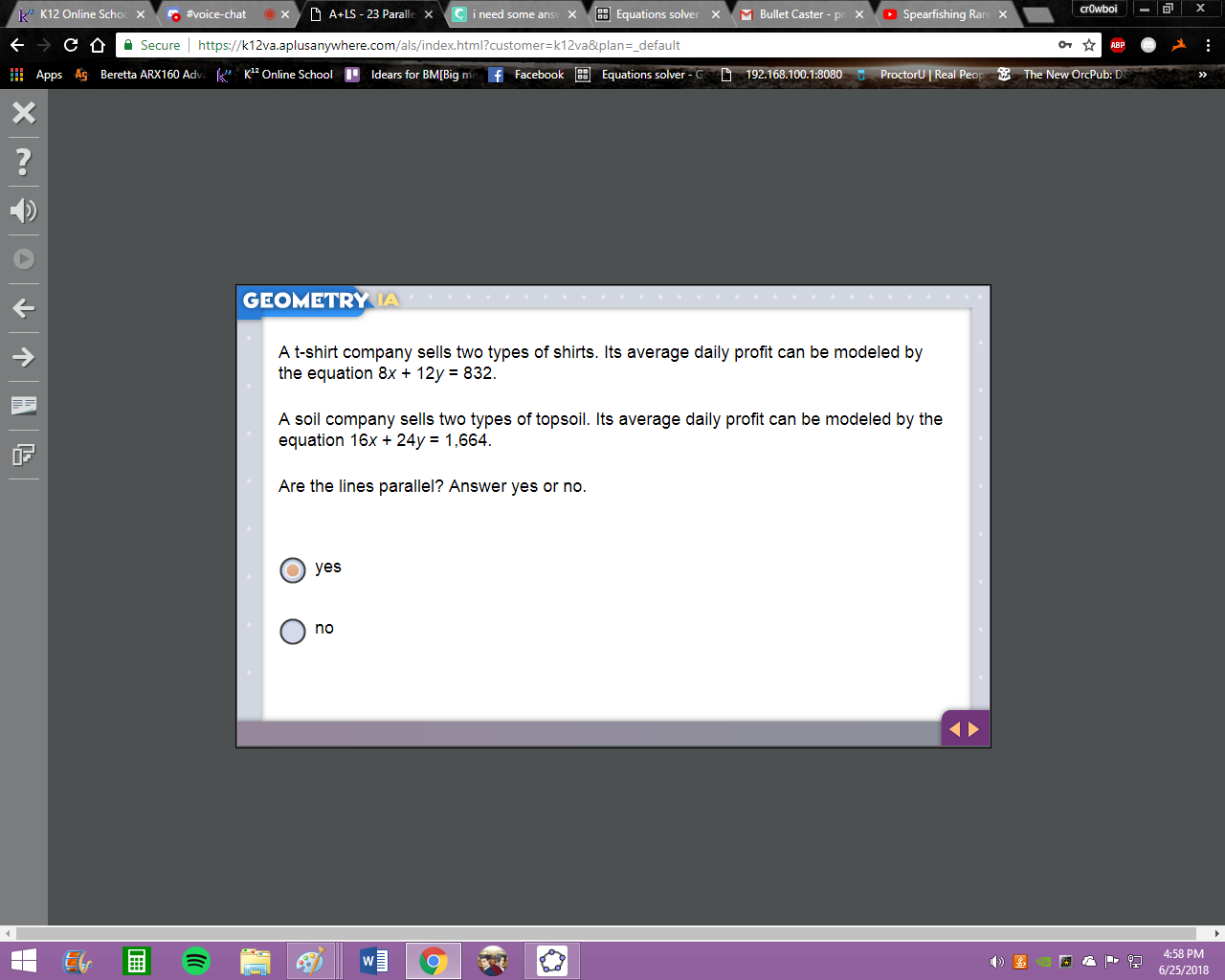
Incorrect. If you plug the two lines you will find that they both contain the same type of slope and y-intercept. For parallel lines there is never a solution because they never meet, in this case they meet at every point, so they are not parallel.
 princeevee:
@563blackghost
 Mercury:
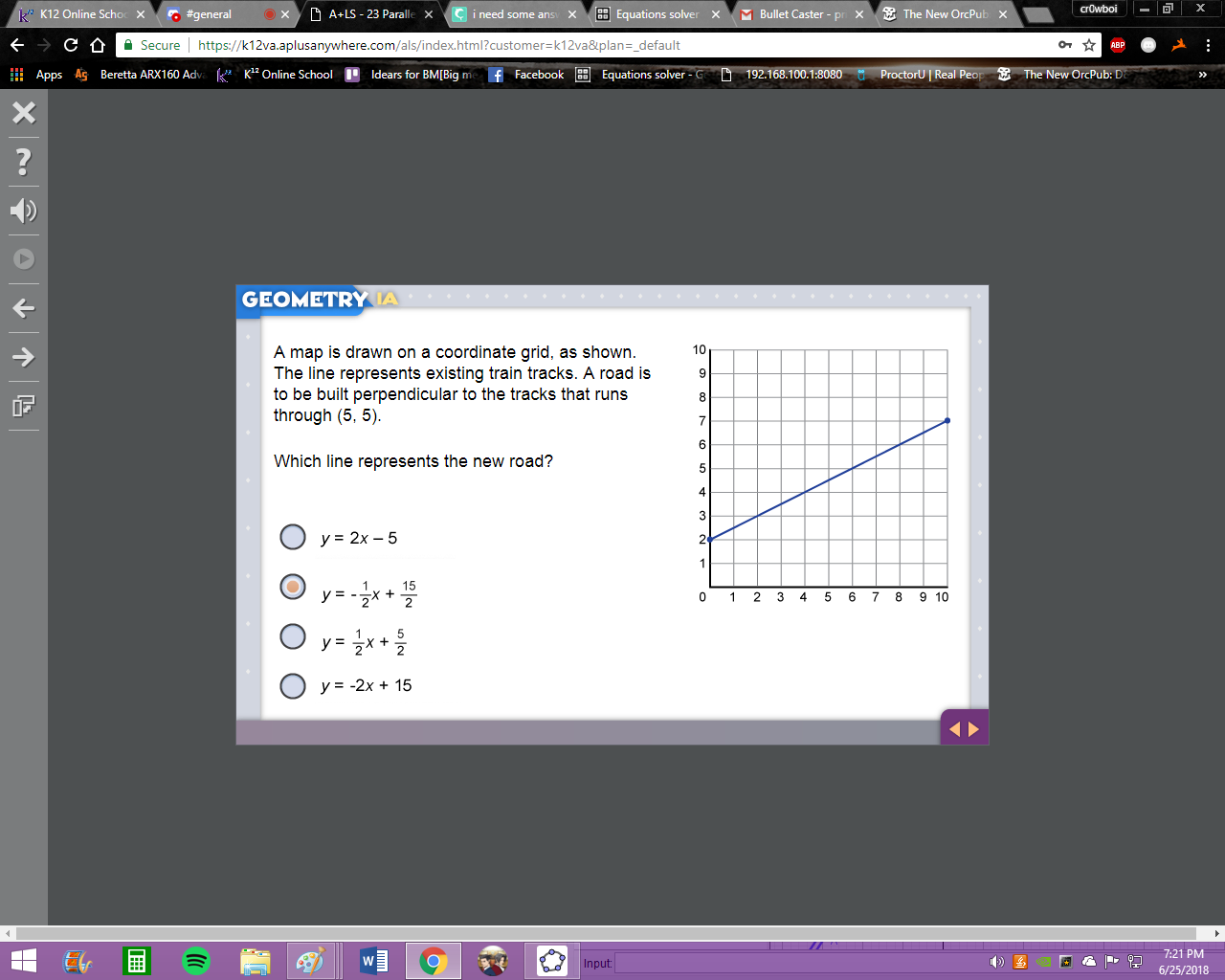
hm, not quite the slope of the original line is 1/2 right? to find the slope of a perpendicular line, swap the numerator and the denominator, then multiply the slope by -1 to get the new slope
 princeevee:
@Mercury welcome back
Mercury:
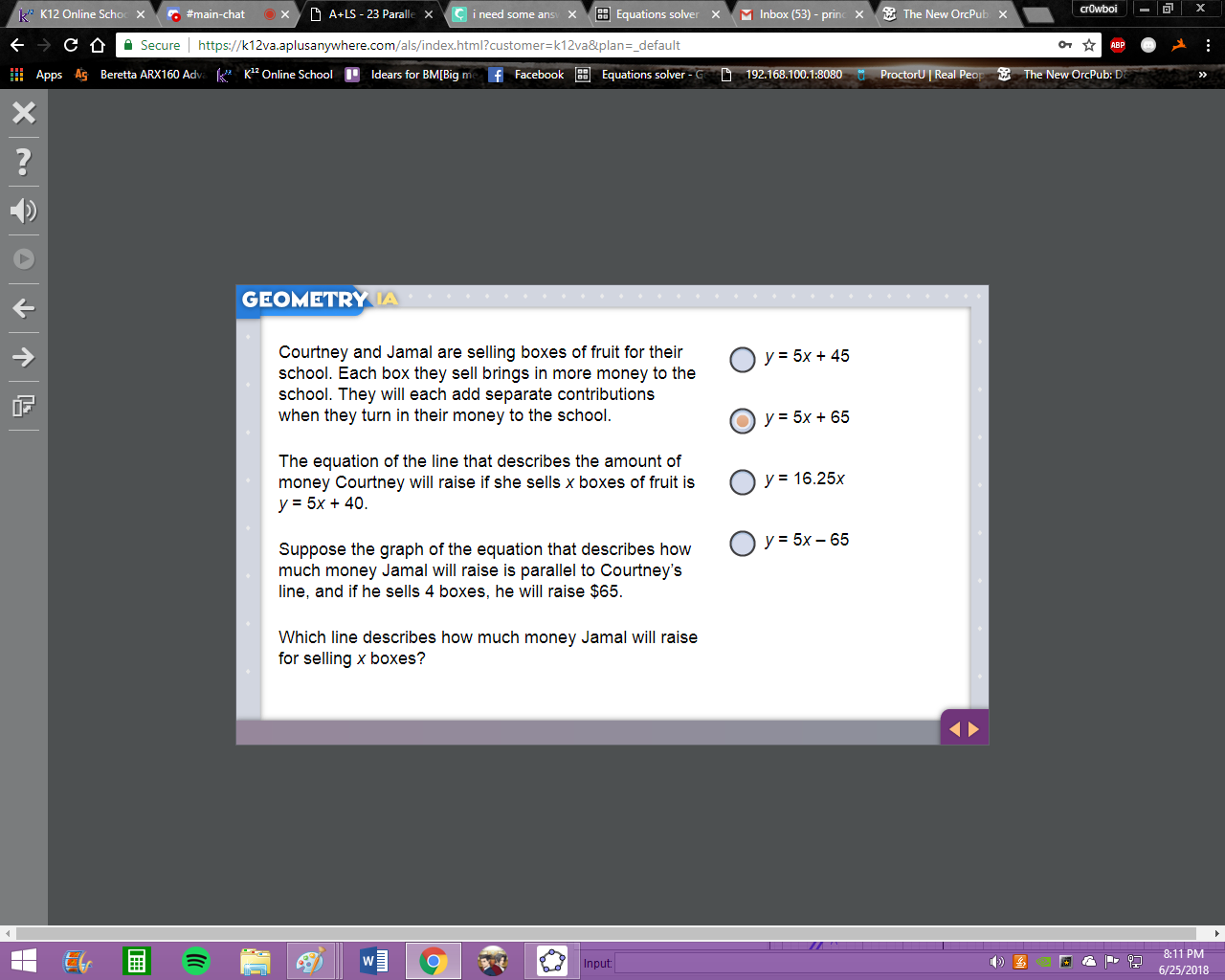
close but not quite it says if Jamal sells 4 boxes he makes $65 dollars which means you need to find the function that has the slope of 5 and gives you 65 when you plug in x = 4
princeevee:
A
Mercury:
good, A = your sol'n
 Mercury:
hm, not quite you flipped the fraction correctly but "opposite" also implies you need to multiply by -1
Mercury:
3/4 flip the fraction 4/3 multiply by -1 -4/3 = your sol'n
 Mercury:
good
 Mercury:
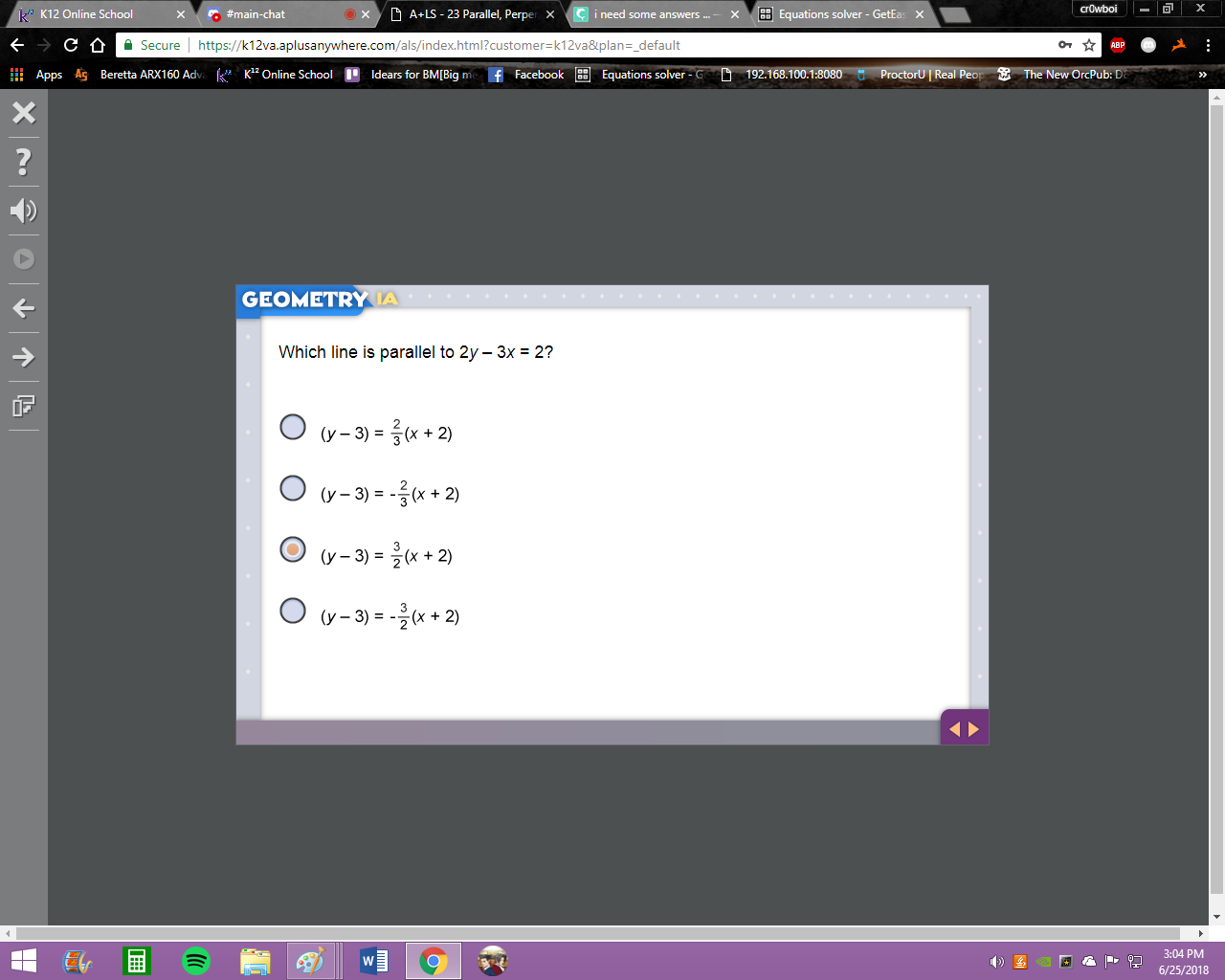
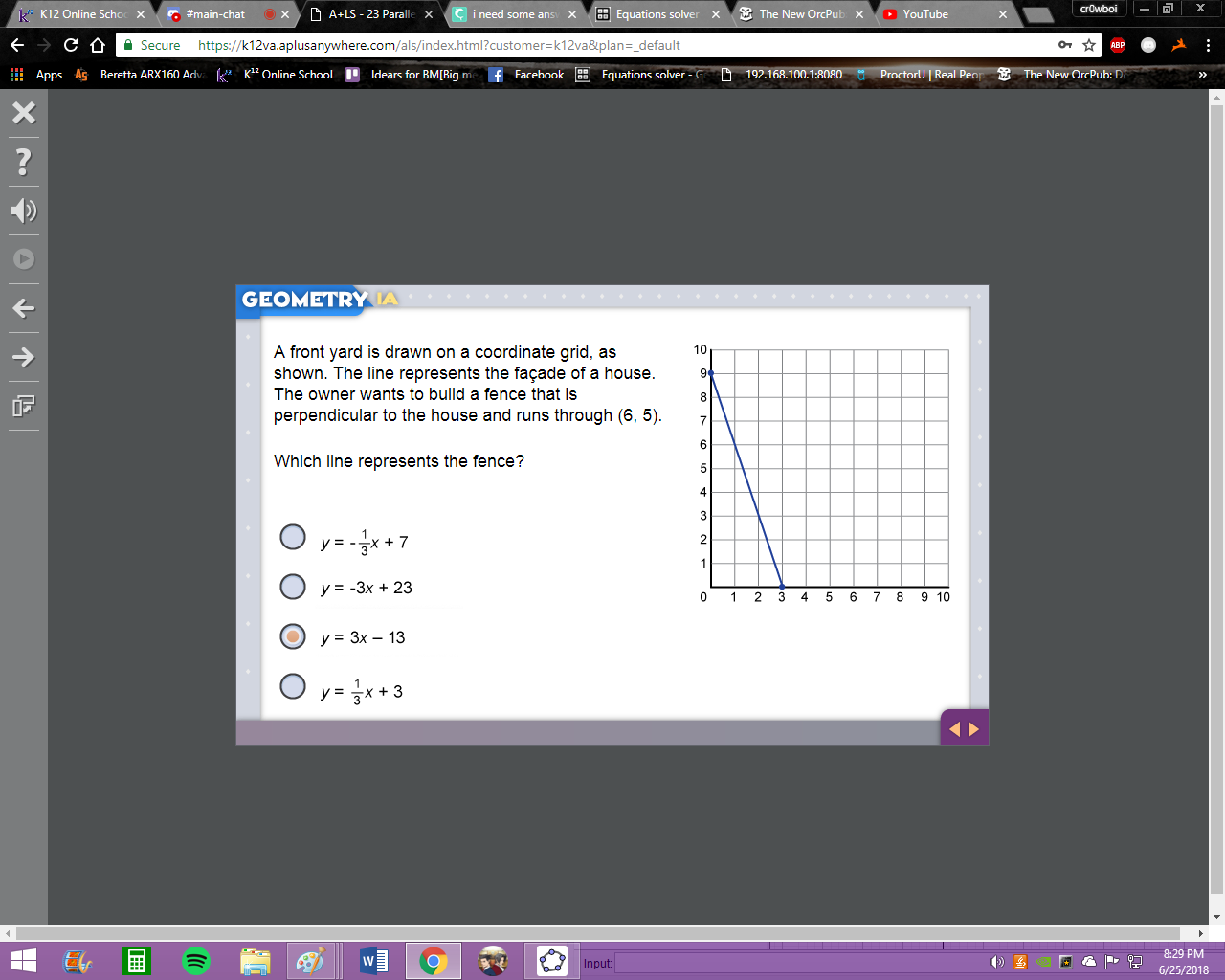
hm not quite the original slope is -3 what's the opposite reciprocal of -3? recall the operations done in the other problem
princeevee:
+3?
Mercury:
remember that you can re-write a whole # as a fraction -3 = -3/1 flip the numerator and denominator then multiply by -1
princeevee:
0.3
Mercury:
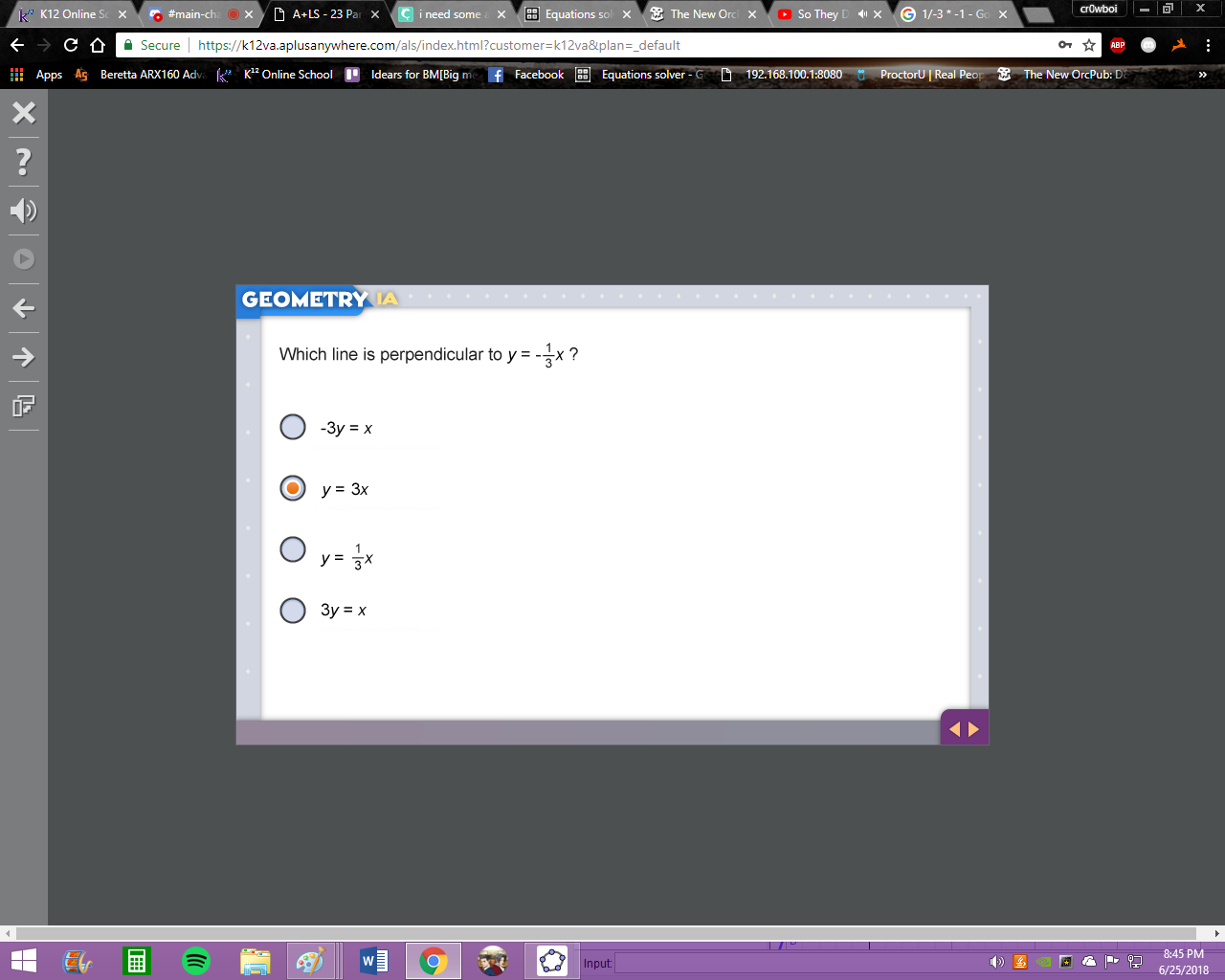
let's leave it in fractional form because all the answer choices are fractions so you get a slope of 1/3 which can only be the last option
 Mercury:
good
 Mercury:
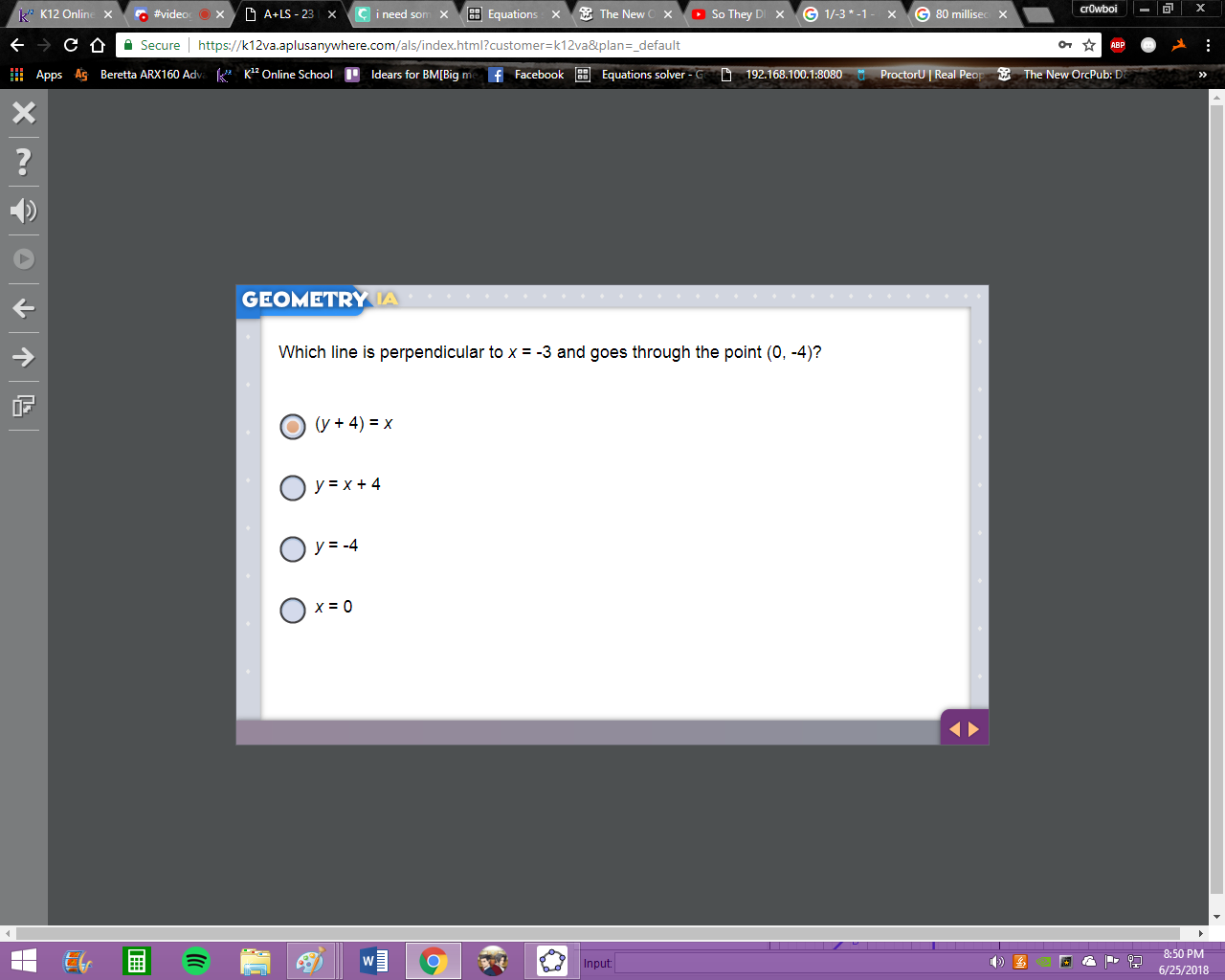
hm, not quite the line x = -3 is a vertical line, right? so the perpendicular line must be horizontal what would be the equation of a horizontal line that goes through (0,-4)? remember that a horizontal line has slope 0
princeevee:
C?
Mercury:
good, C is correct
 Mercury:
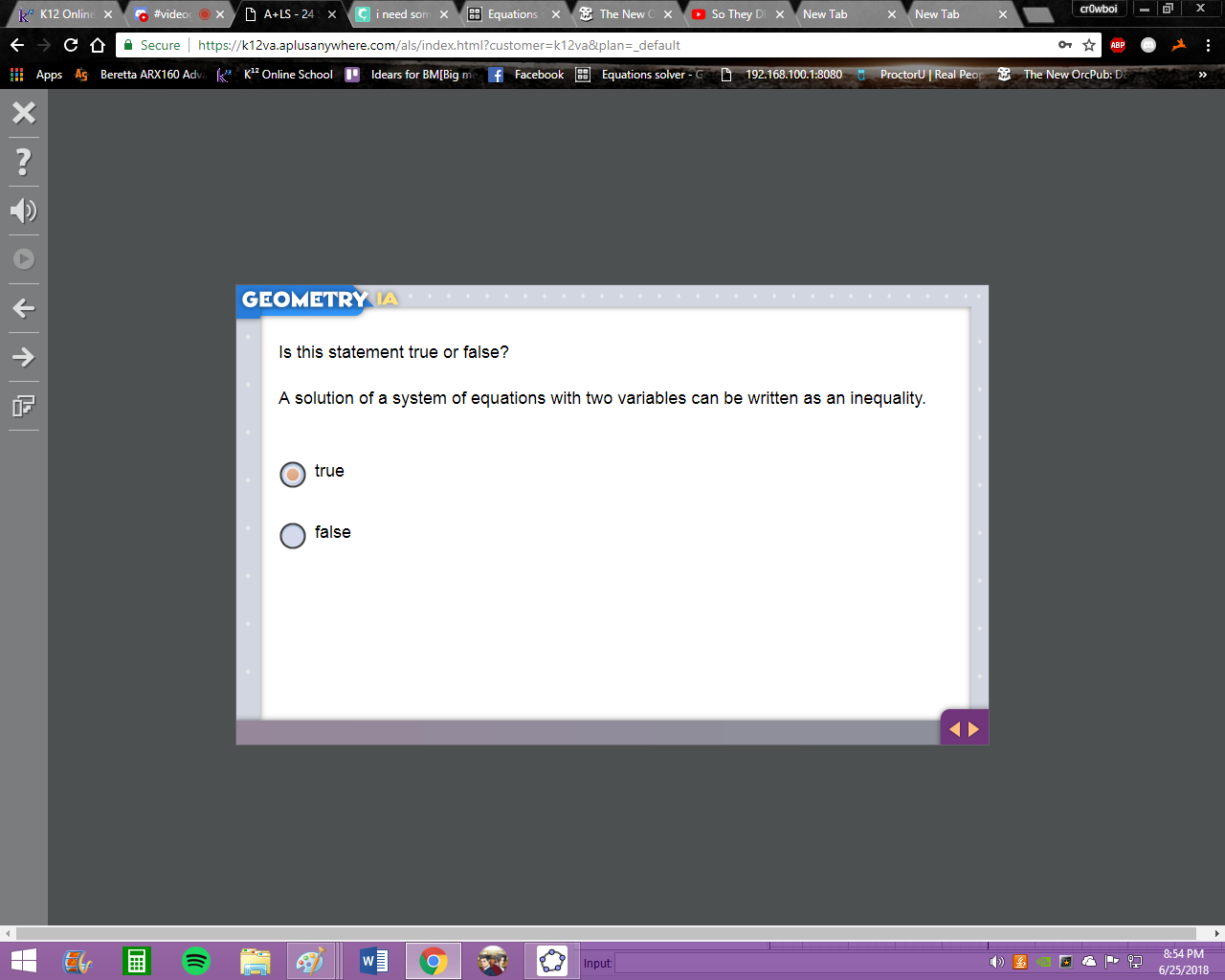
hm, I don't think that's true a solution to a system of equations is a finite point inequality would imply there is a whole range of x/y values that could satisfy the equations
 Mercury:
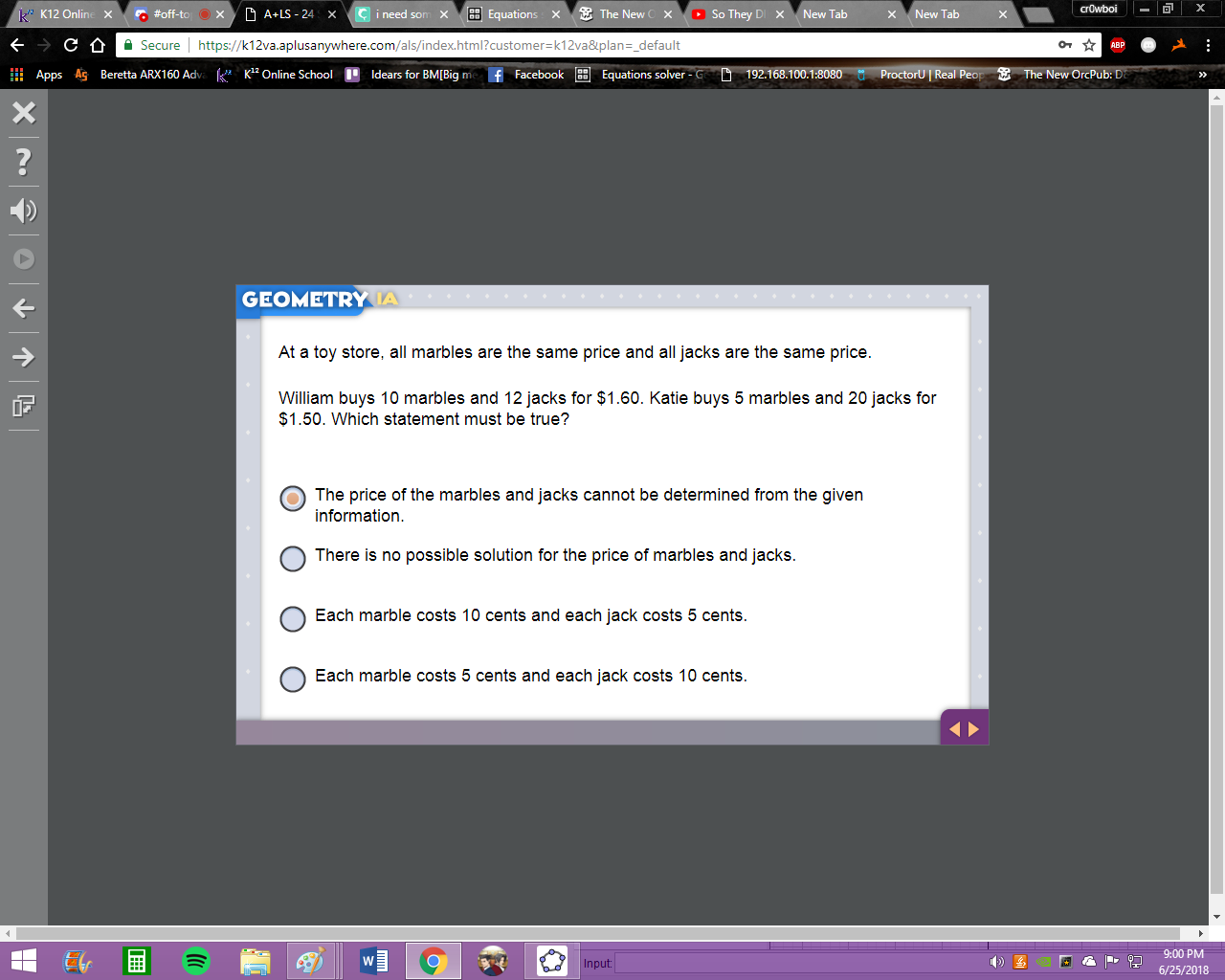
you can determine what the # of marbles and jacks are if you set up a system of equations let's break it down step by step
Mercury:
let m = price of marbles let j = price of jacks "William buys 10 marbles and 12 jacks for $1.60" if we set up an equation that tells us how much he bought, we would set up something like number of marbles*(price of marbles) + number of jacks*(price of jacks) = total amount he paid can you try plugging in the information from the problem into this statement to get a mathematical equation?
princeevee:
uh, i might need a bit of help
Mercury:
number of marbles*(price of marbles) + number of jacks*(price of jacks) = total amount he paid we know he bought 10 marbles and 12 jacks, right? can you try plugging in 10 and 12 where they belong in the equation?
Mercury:
"10 marbles" so number of marbles = 10 "12 jacks" so number of jacks = 12 copy this equation number of marbles*(price of marbles) + number of jacks*(price of jacks) = total amount he paid but plug in 10 and 12 where the belong
Mercury:
*where they belong
princeevee:
so just 10 + 12 =1.60?
Mercury:
notice how the equation includes the prices, we can't just erase those so our equation is now 10*(price of marbles) + 12*(price of jacks) = 1.60 now, let's review what we said at the beginning: price of marbles = m price of jacks = j substitute these into the equation where they belong
princeevee:
C.
princeevee:
each marble is 10 cents, 10x10=100, or 1.00
princeevee:
and each jack is 5 cents, 5x12 is 60
Mercury:
I mean that's one way to find the solution I guess
 Mercury:
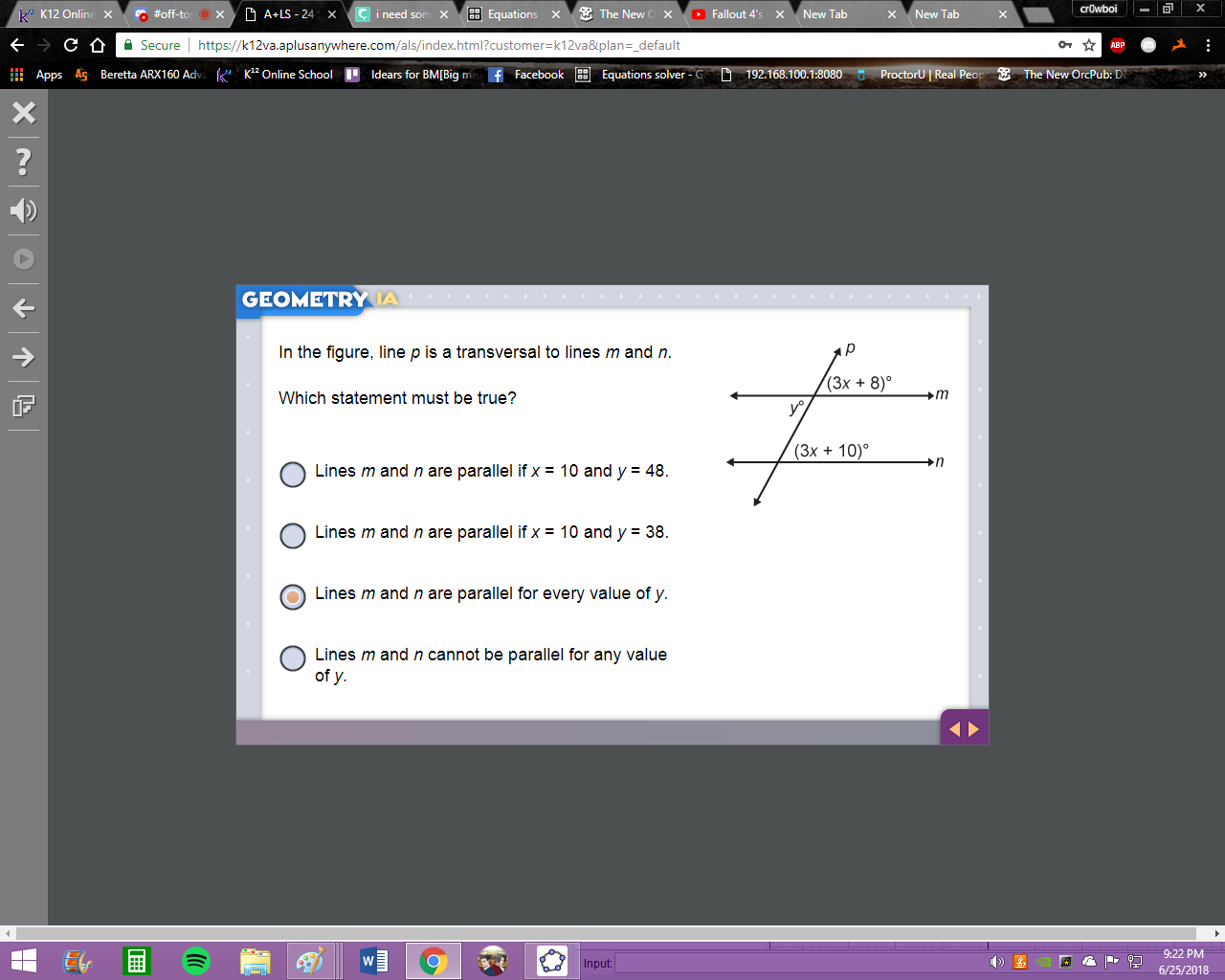
careful if we set the two angles equal to each other 3x + 8 = 3x + 10 this is impossible to be true (subtracting 3x from both sides gives us 8 = 10 which is false) so lines m and n are not parallel for any y (D)
 Mercury:
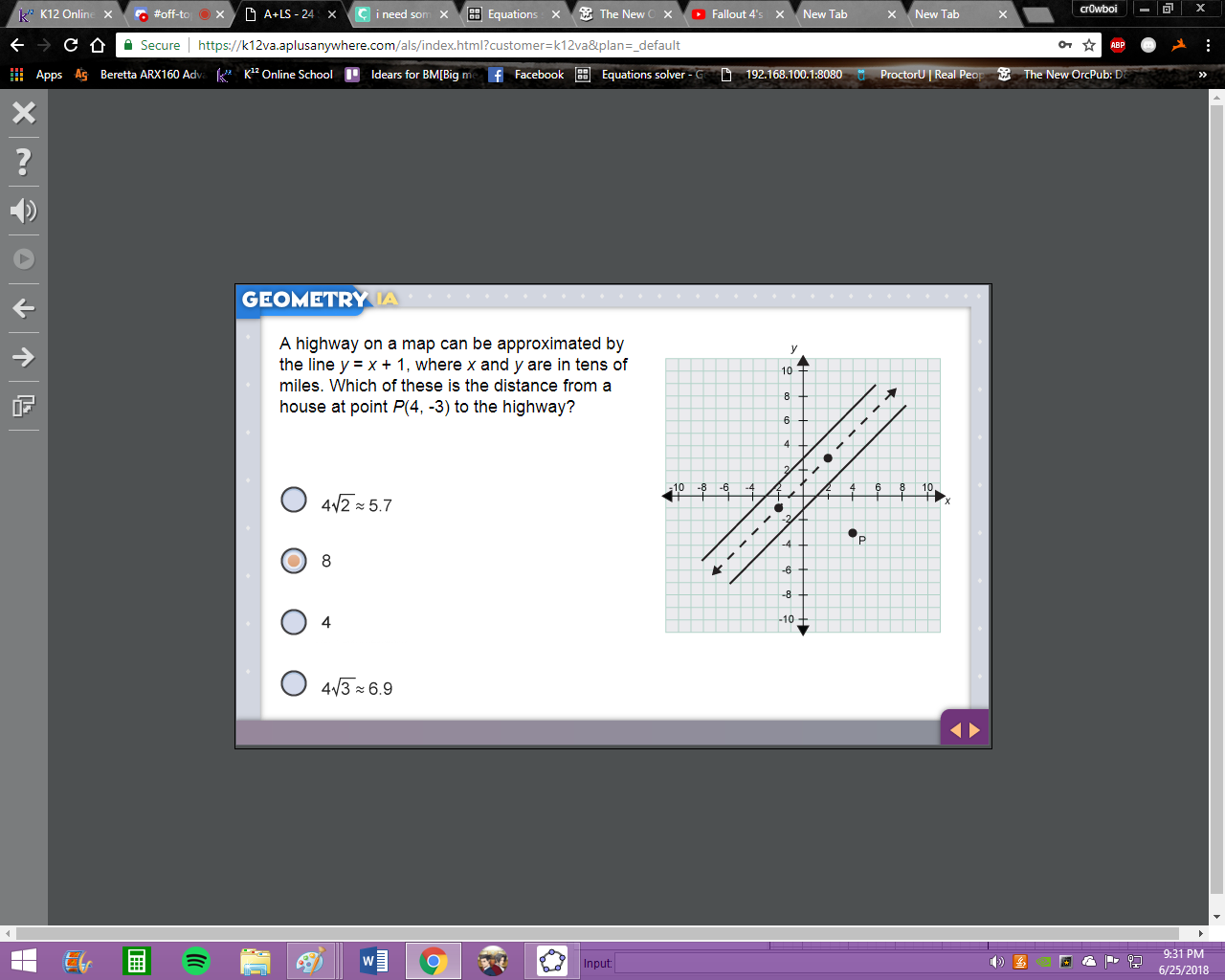
hm not quite try drawing a perpendicular line from point P to the dashed line (the highway) and calculating the distance of that new line
princeevee:
my only other option i think is A, but i might be doing this wrong
Mercury:
|dw:1529987807510:dw|
Mercury:
|dw:1529987820126:dw|
Mercury:
notice how you have a right triangle here with legs 4 each so hypotenuse = sqrt(4^2 + 4^2) = sqrt(32) = 4sqrt(2) so option A is indeed correct
 Mercury:
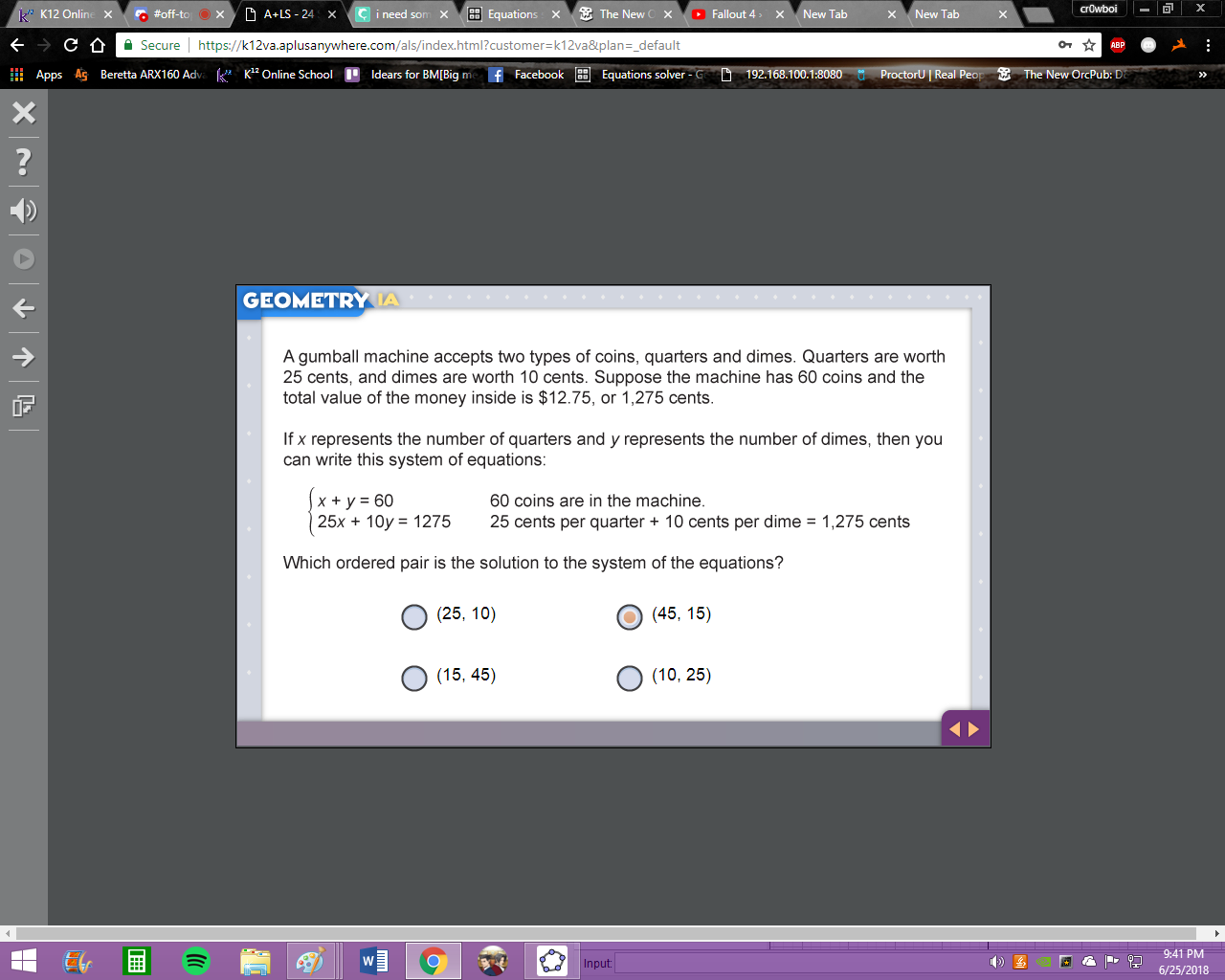
good
 Mercury:
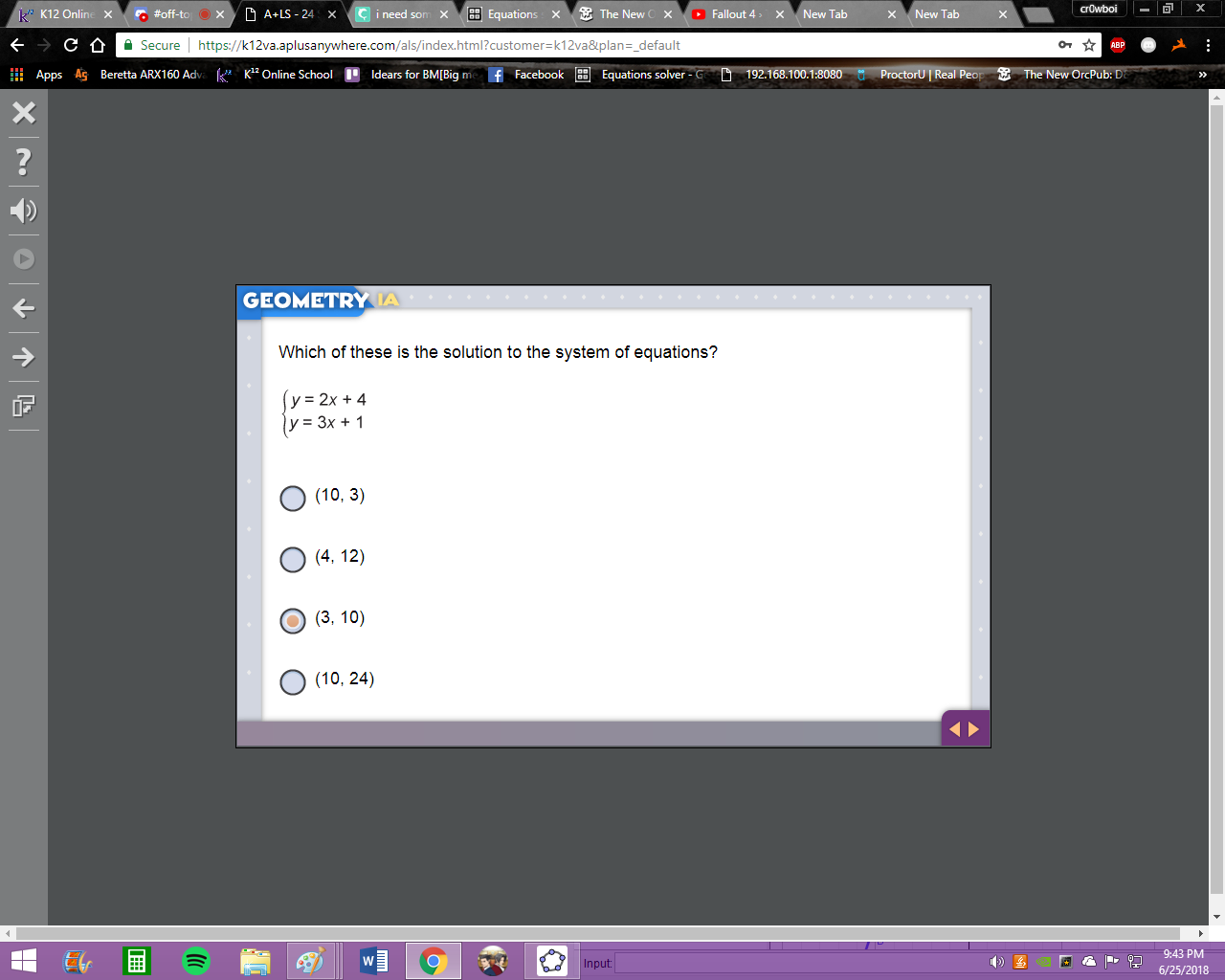
good
 Mercury:
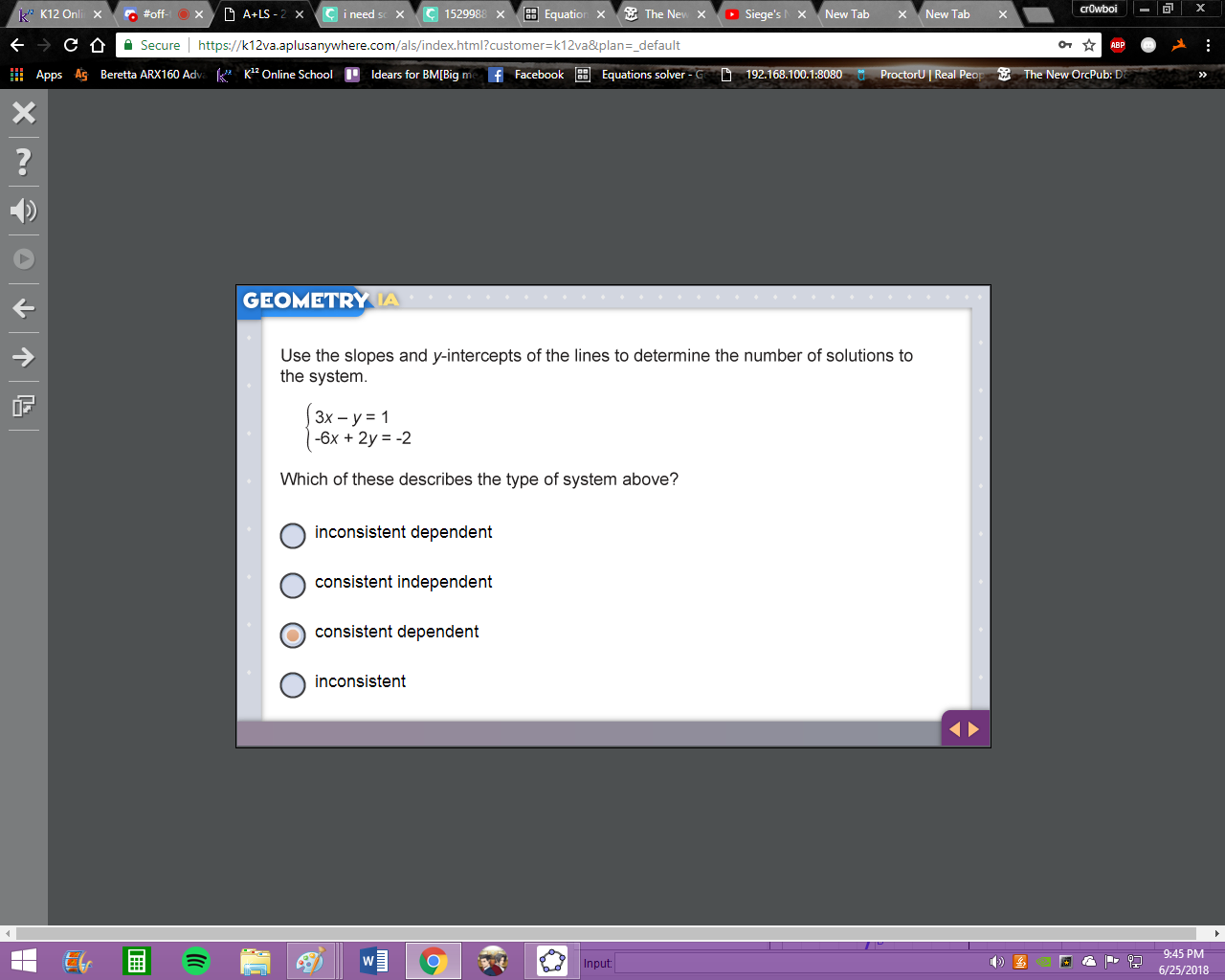
good
 Mercury:
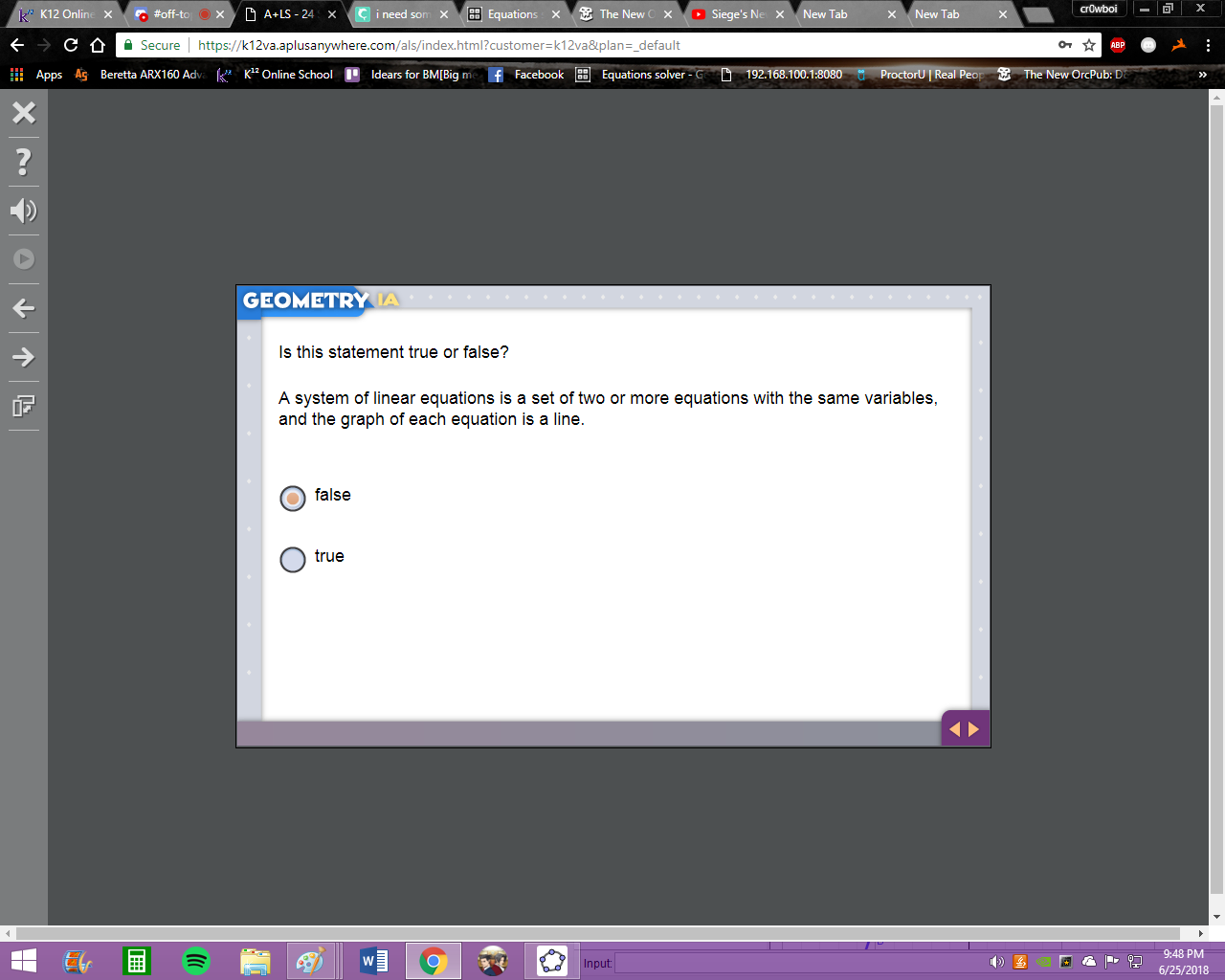
"linear equations" a system of equations where they're all linear (lines) using the same variables the original statement is true
 Mercury:
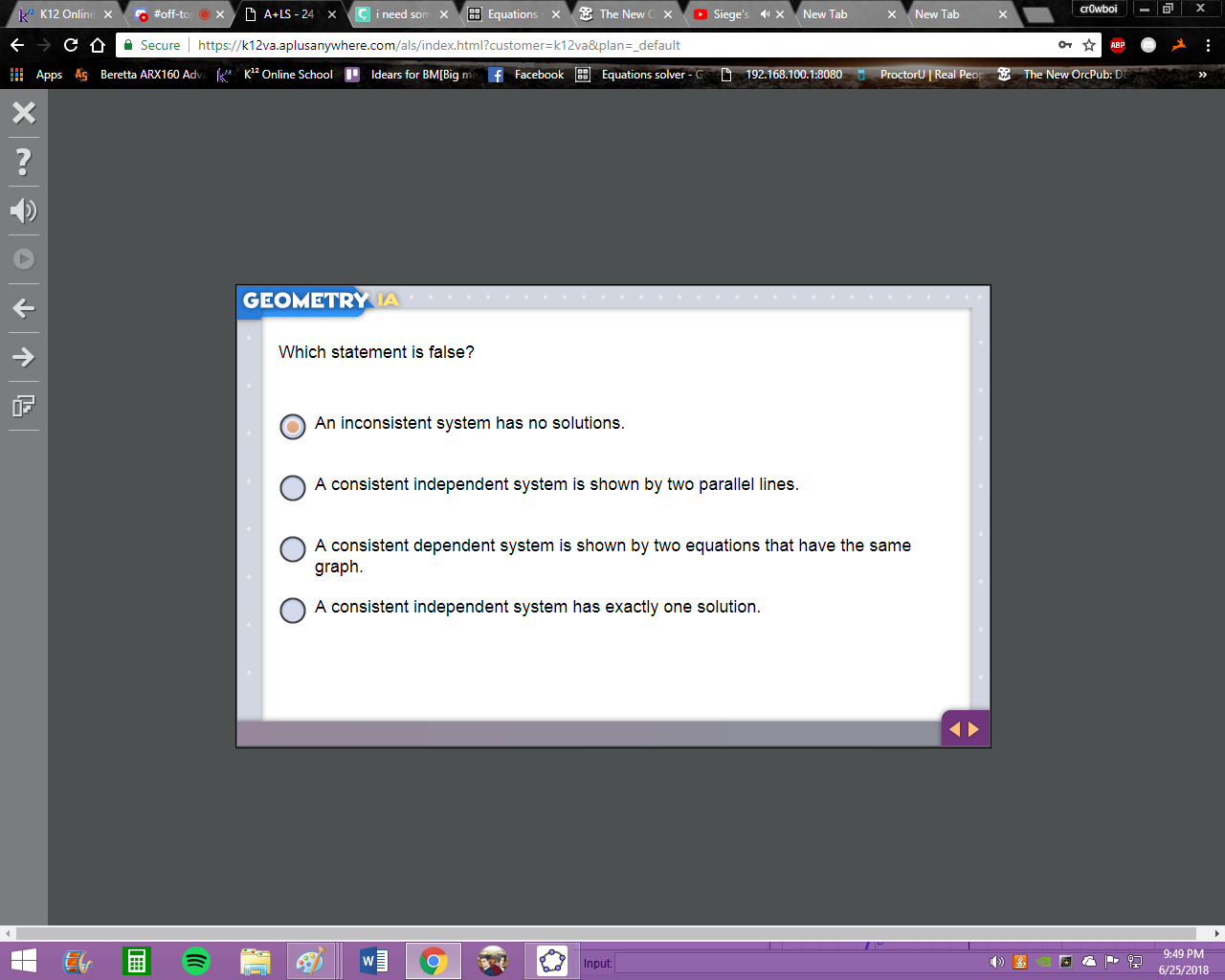
not quite, remember it's looking for the sentence that is false sentence 1 is true (definition of inconsistent)
Mercury:
any other ideas?
princeevee:
C?
Mercury:
|dw:1529988756094:dw| C is true let's look at statement B again "consistent independent is shown by two parallel lines" this is false, consistent independent = two non-parallel lines so statement B is the correct solution
 Mercury:
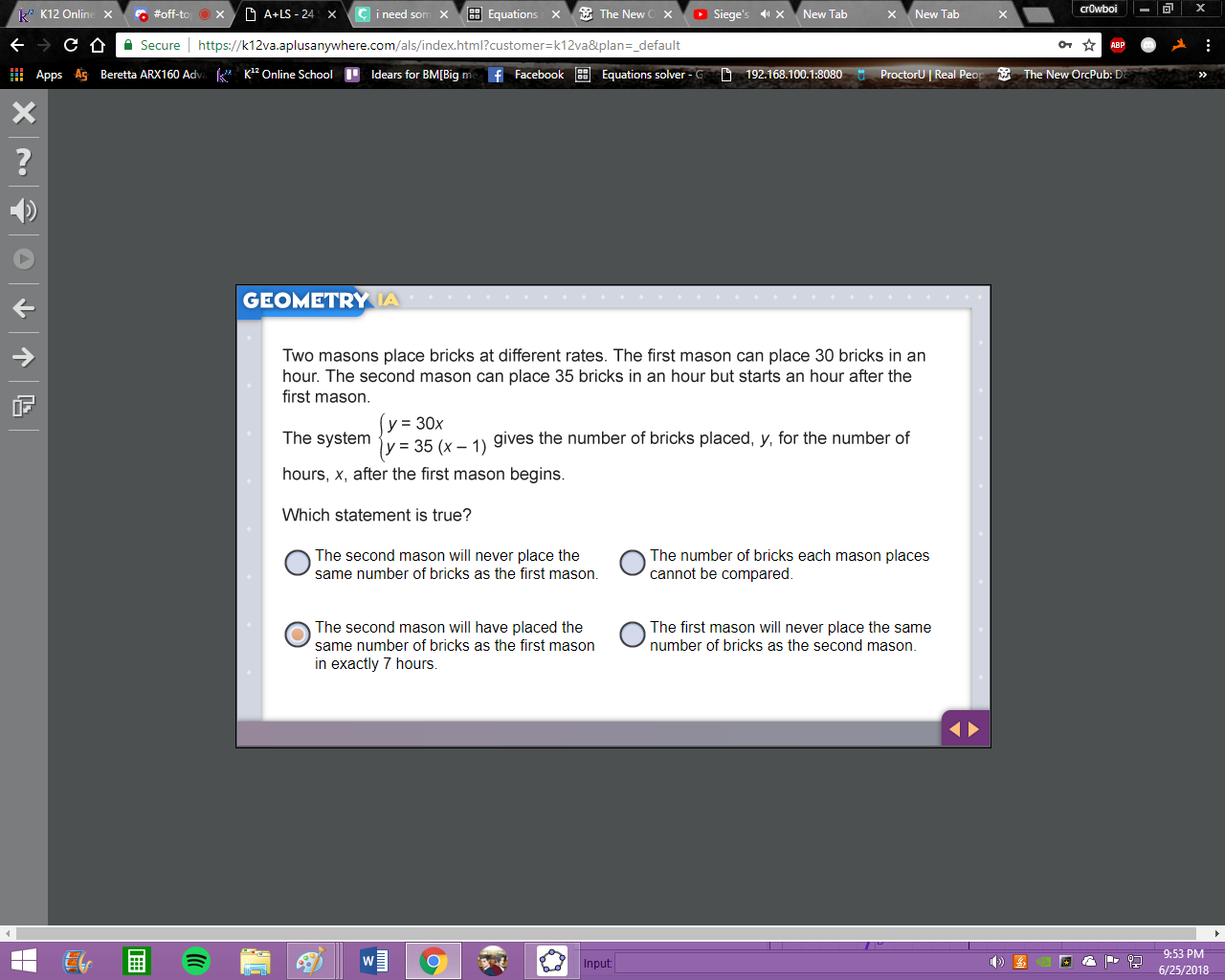
good
 Mercury:
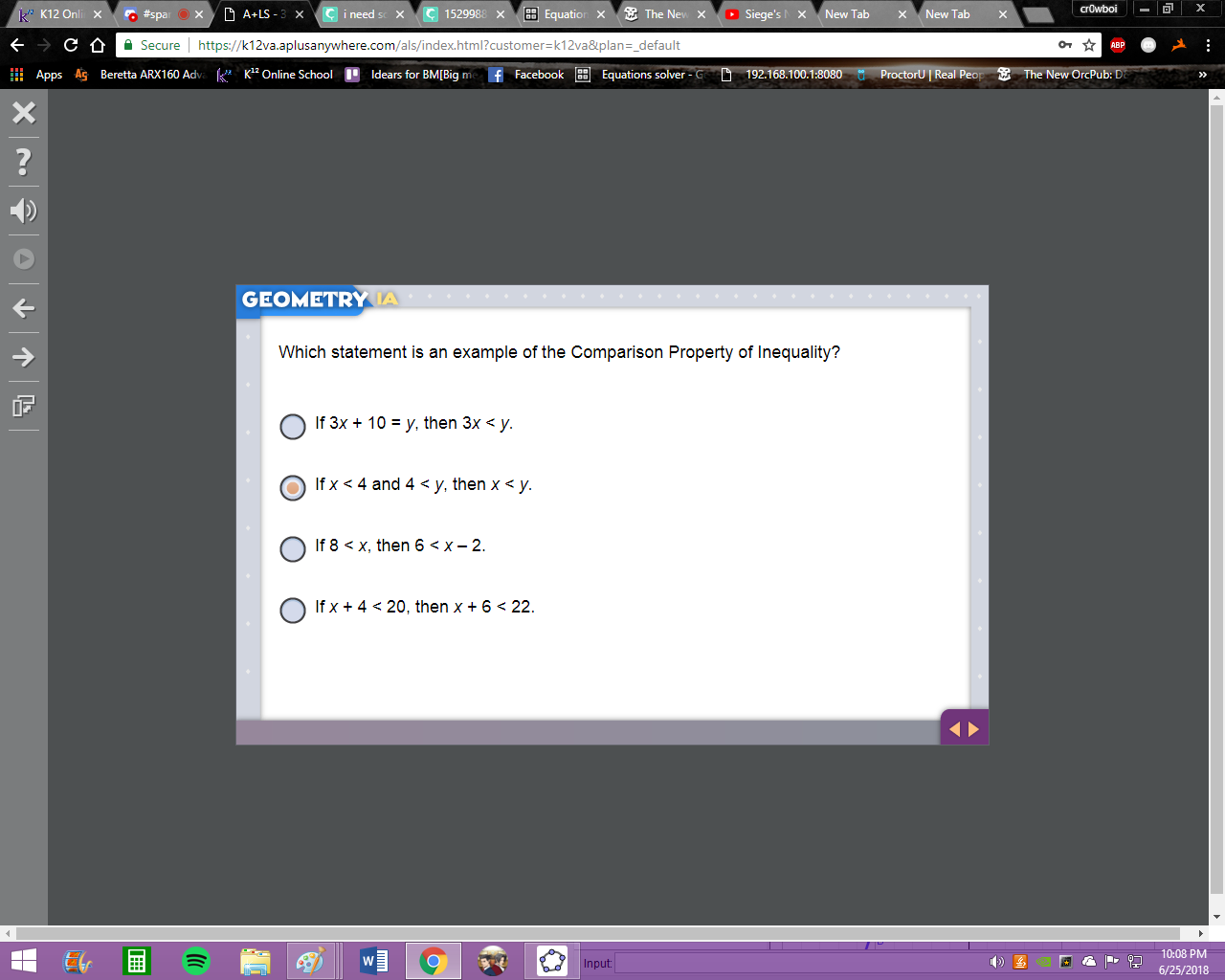
hm, not quite (that would be transitive) can you see which statement is best described by this rule? |dw:1529989814793:dw|
princeevee:
either a or d i think
Mercury:
notice how only A makes a statement with an equals sign rather than an inequality a = b + c y = 3x + 10 so A is the better choice
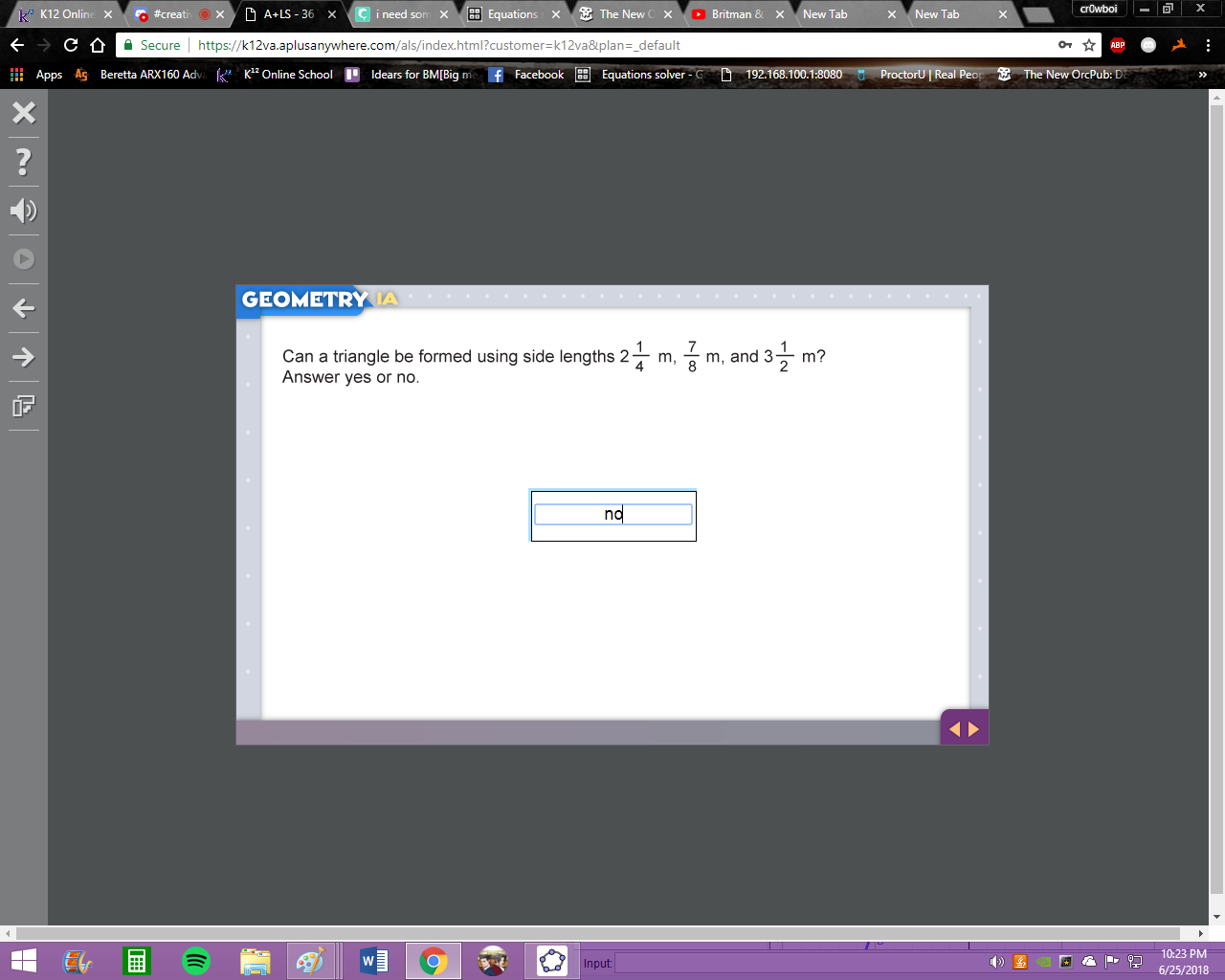 Mercury:
good
 Mercury:
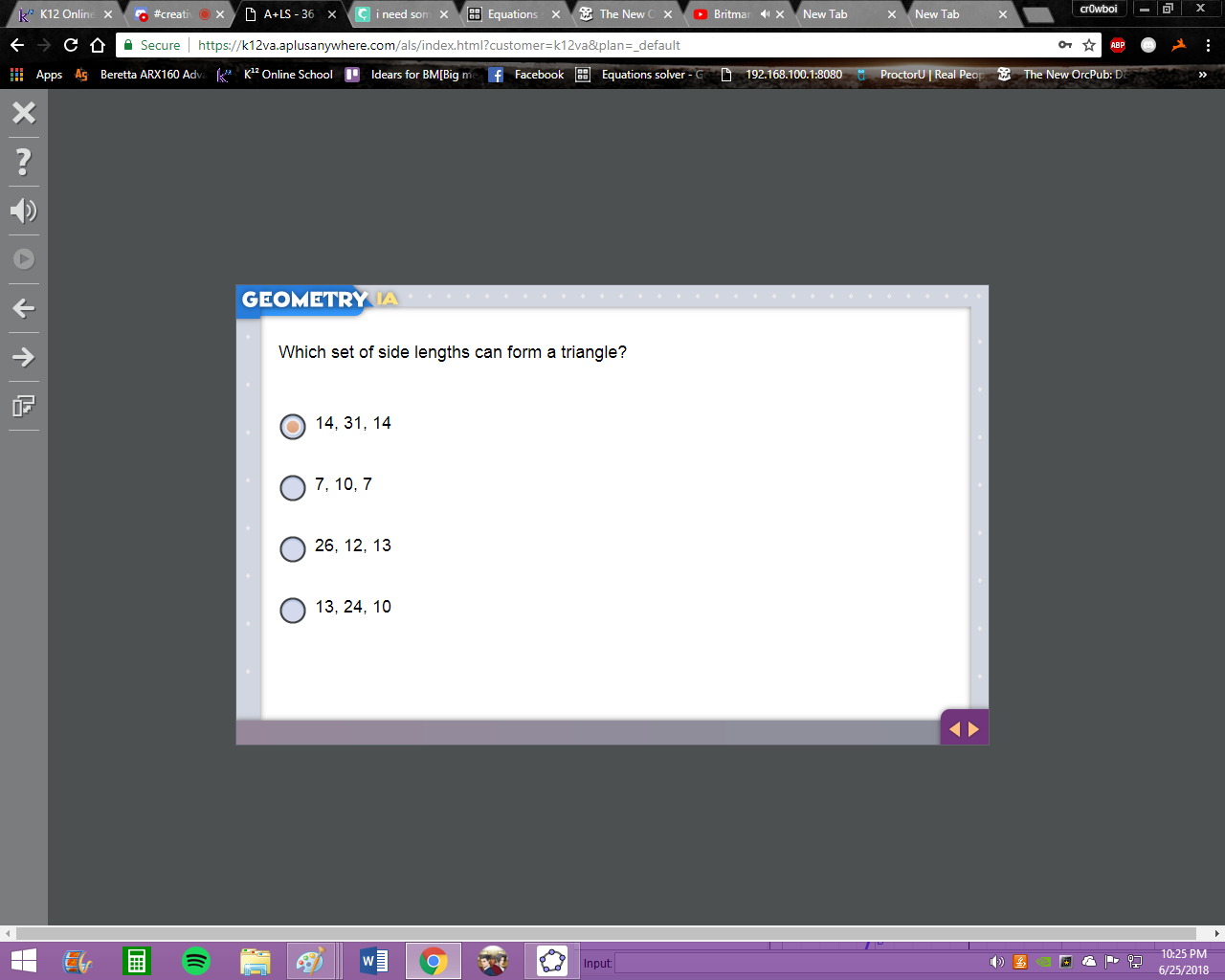
A doesn't work (14 + 14 is less than 31)
Mercury:
have you tried the other choices yet? how about B?
princeevee:
B was my second choice, actually
Mercury:
good, B is correct
 Mercury:
good
 Mercury:
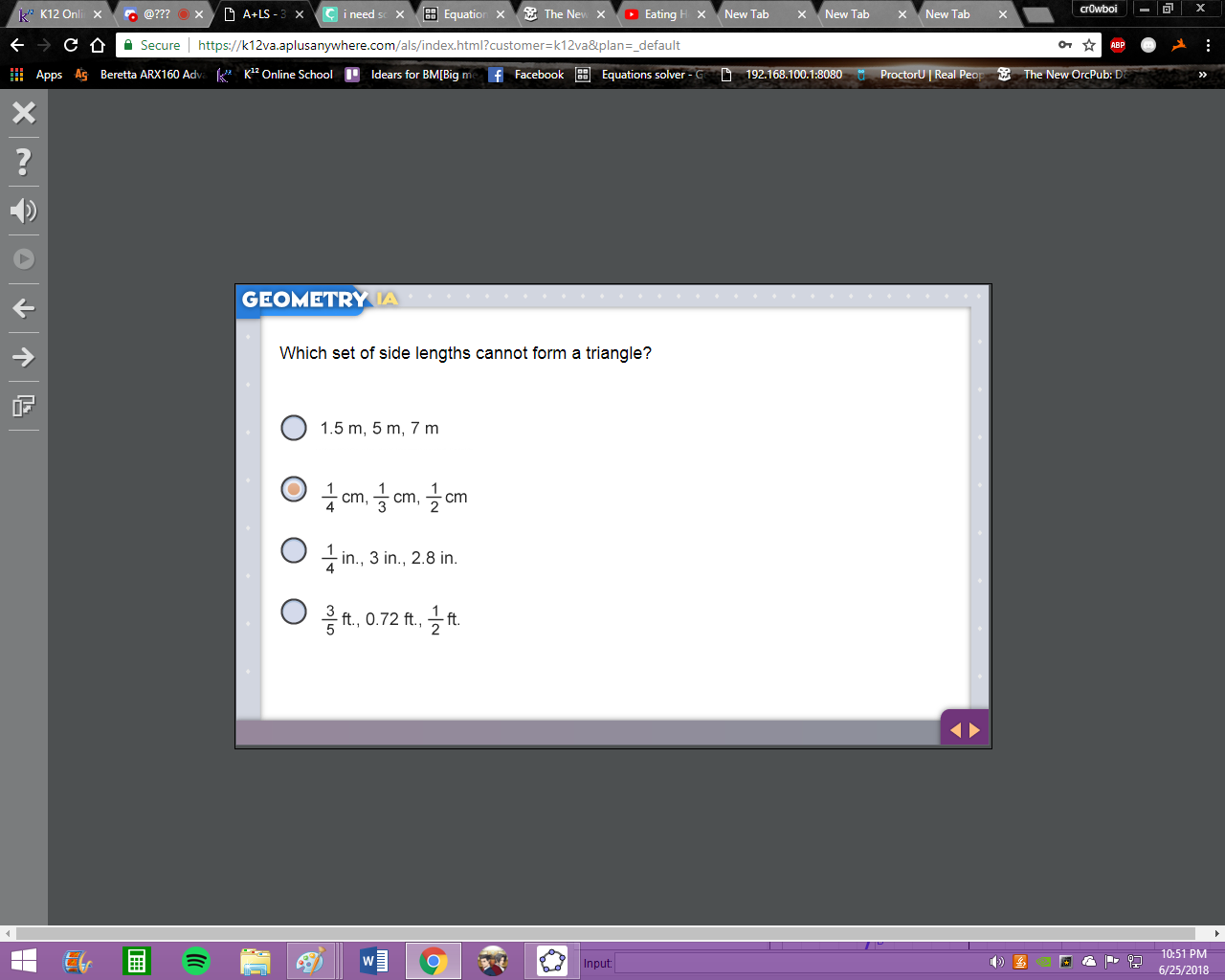
B is a valid triangle (1/4 + 1/3 > 1/2, etc.) try checking the other choices
princeevee:
c?
Mercury:
look at choice A again notice how 5 + 1.5 is less than 7 that means A is not a valid triangle and thus the correct solution.
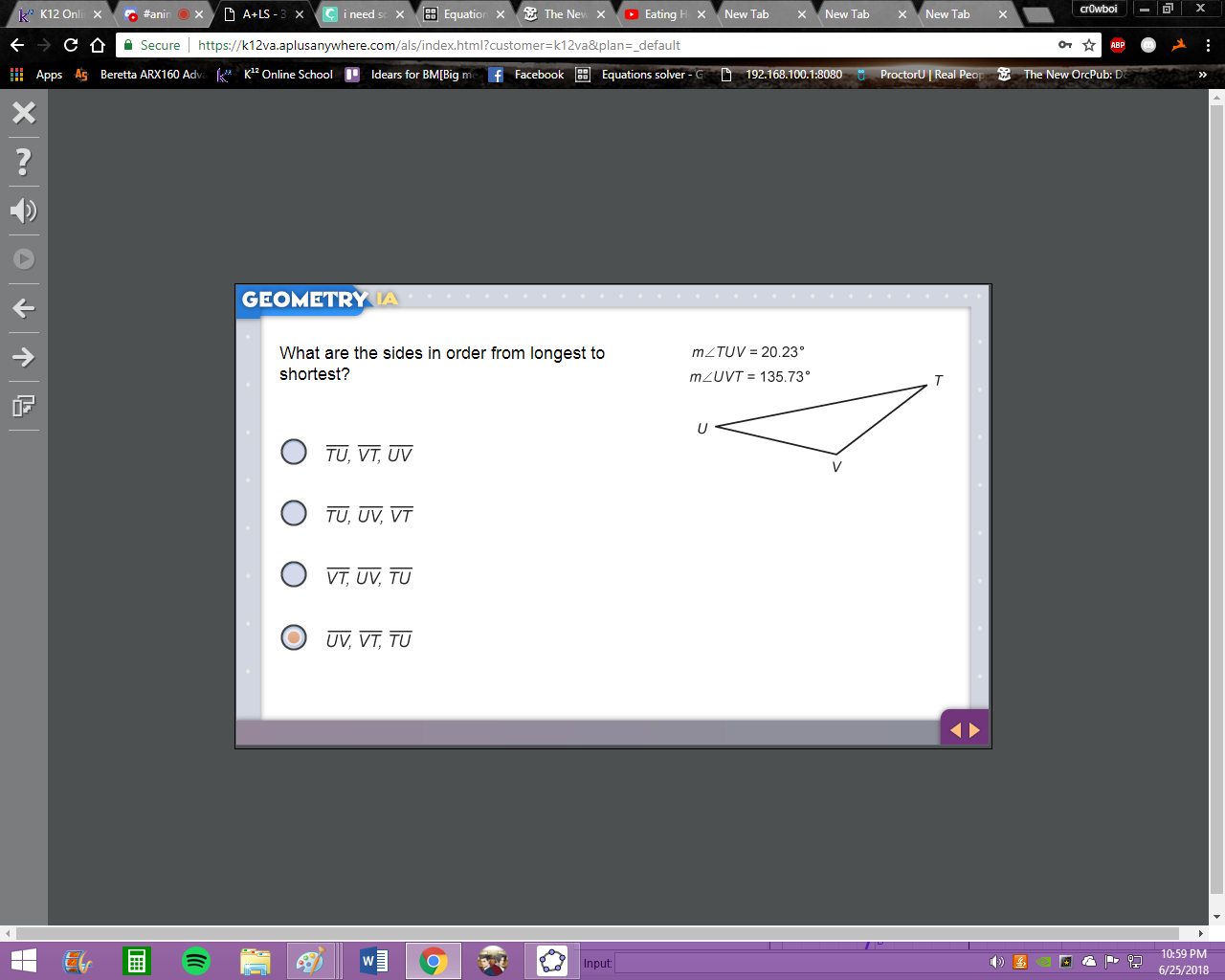 Mercury:
remember this rule: the smallest angle is across the shortest side the largest angle is across from the largest side
Mercury:
try to apply this logic to find the longest side and the shortest side
princeevee:
oh, i've read it wrong, A
Mercury:
VT is the shortest side since it is across the smallest angle therefore it's B not A.
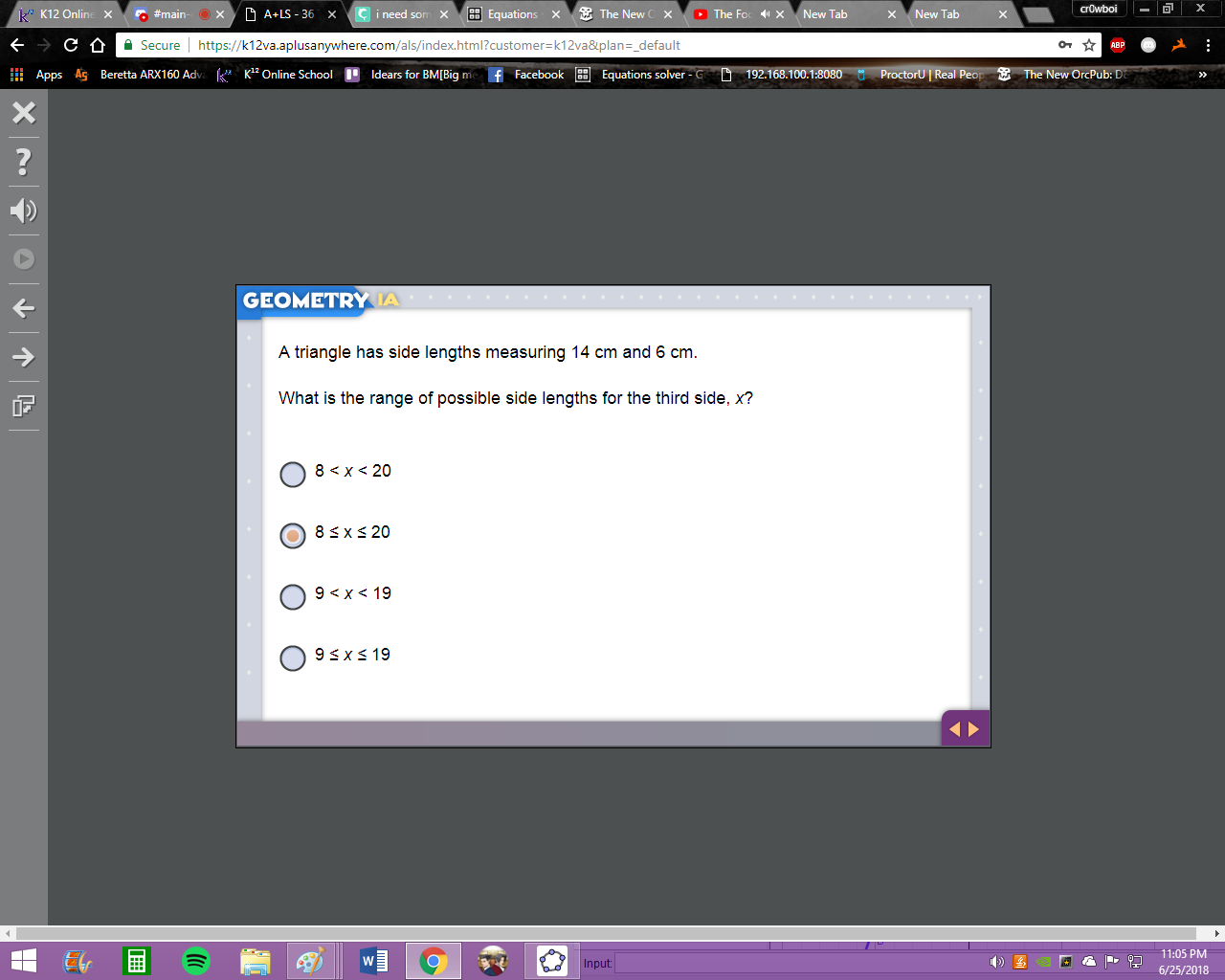 Mercury:
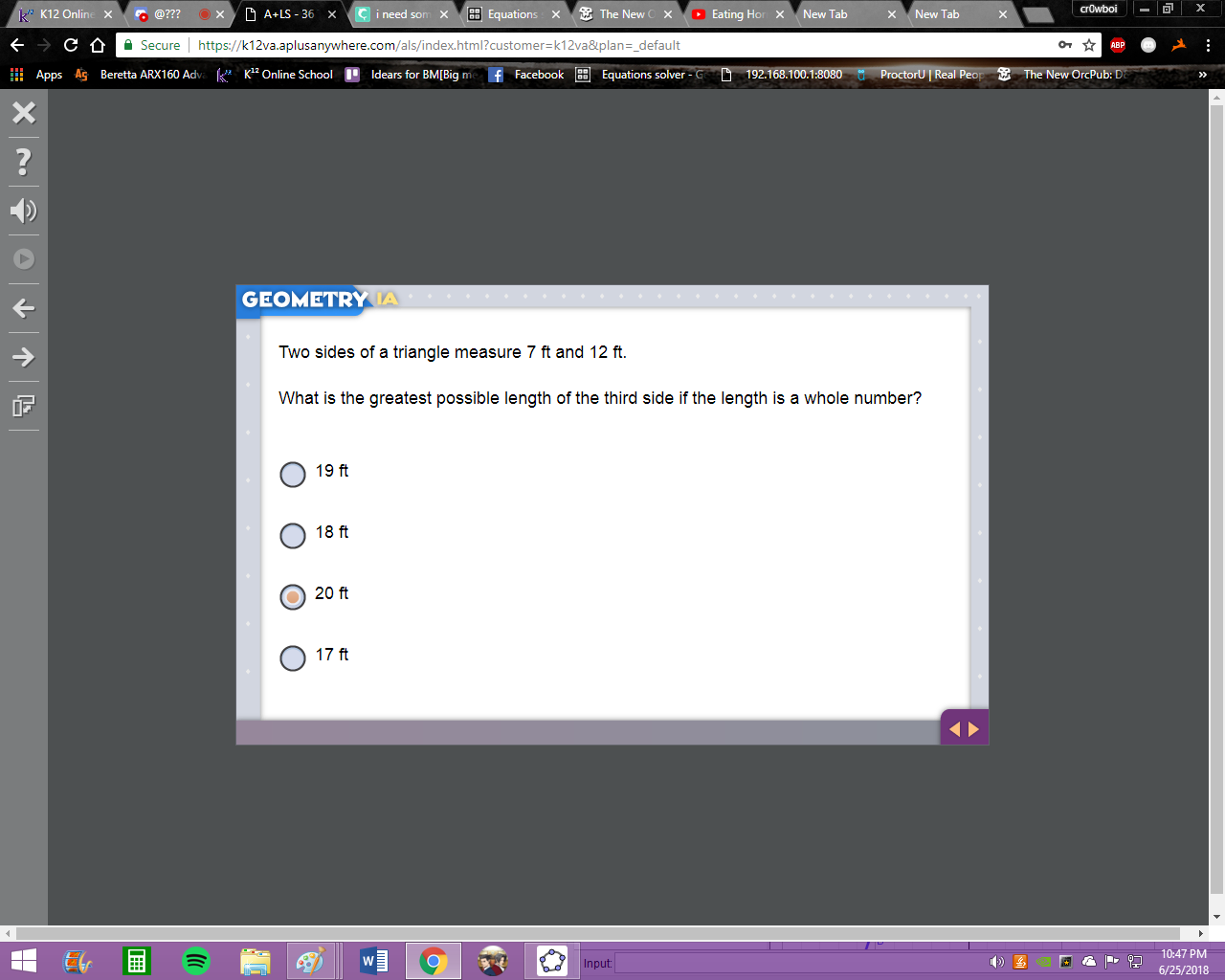
sum of two sides has to be ~greater~ than the remaining side therefore the values 8 and 20 are not included so A is the better choice
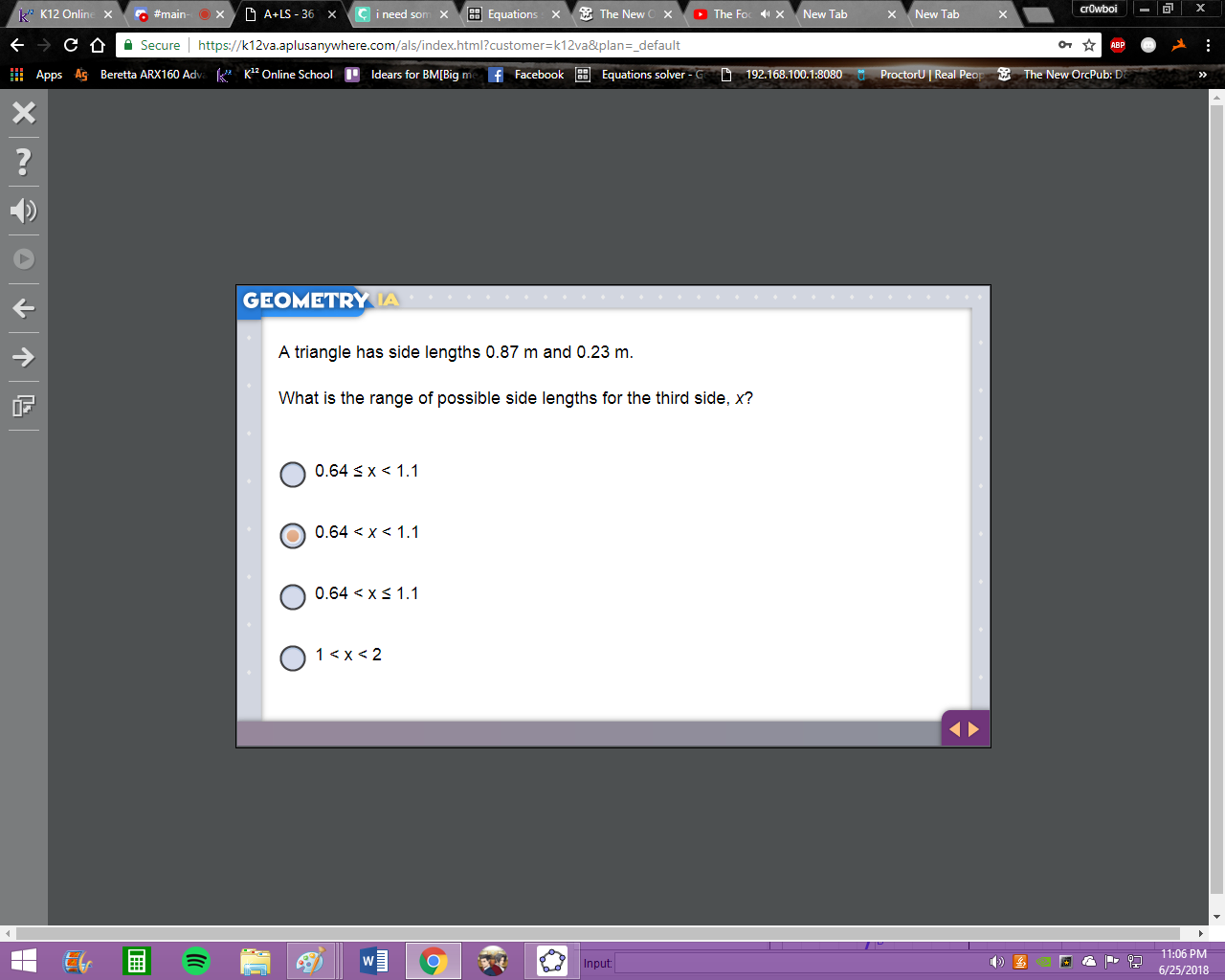 Mercury:
good
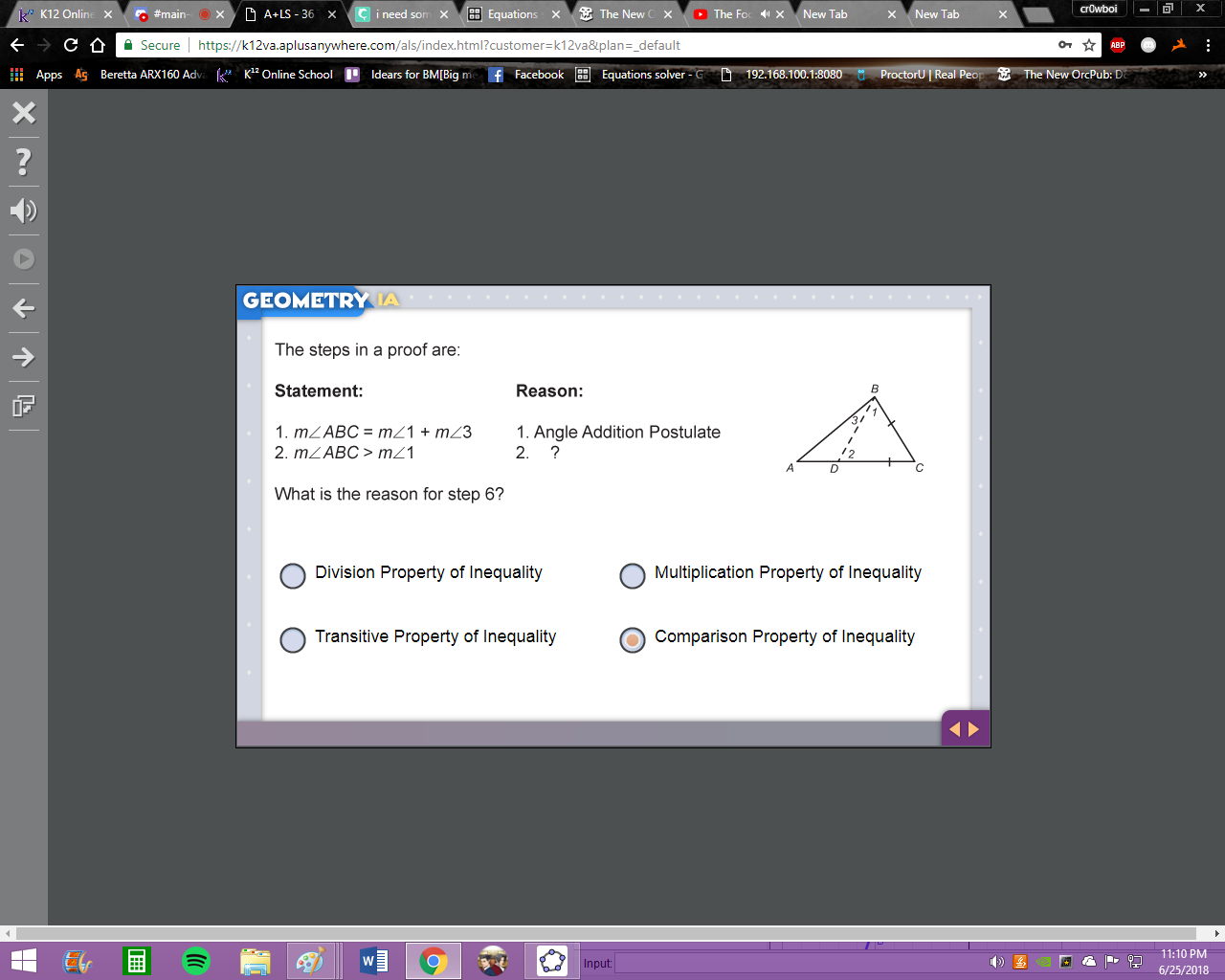 Mercury:
is there anything else to go with this question?
princeevee:
not really..
Mercury:
alright, then comparison is the best choice
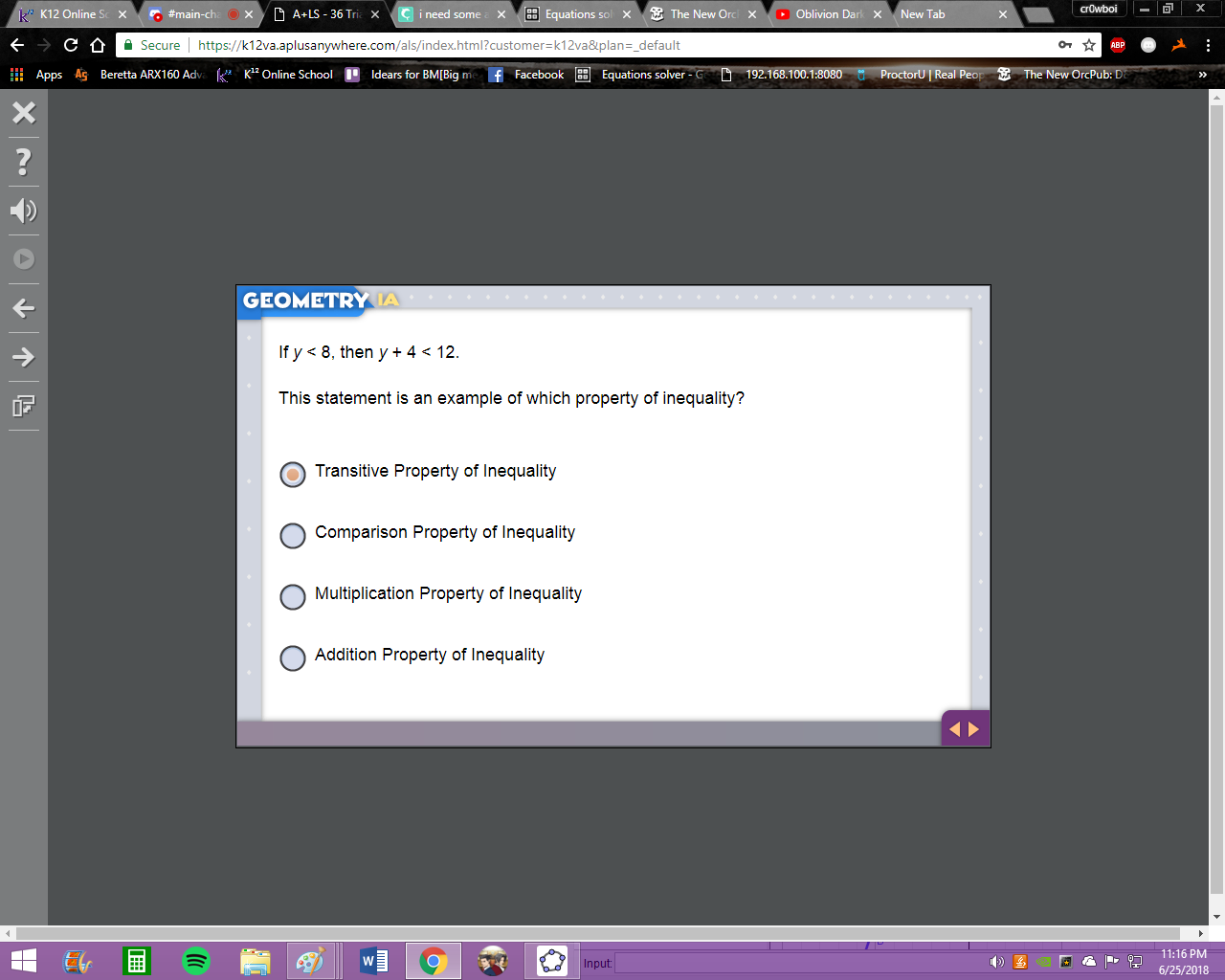 Mercury:
hm not quite what mathematical operation did they do to get from y to y + 4?
princeevee:
addition?
Mercury:
good so its addition property of inequality
Mercury:
alright i'm going to bed it's like 2:30 in the morning
princeevee:
oh, alrighty then.
Join our real-time social learning platform and learn together with your friends!
 Demon25:
For a hoco proposal with a cheerleader and football player, what else should be a
Demon25:
For a hoco proposal with a cheerleader and football player, what else should be a

 Breathless:
TOC: "MGF any confirmation on the commander? we require confirmation as soon as[radio static].
Breathless:
TOC: "MGF any confirmation on the commander? we require confirmation as soon as[radio static].
 EdwinJsHispanic:
I wrote something that I don't know if I want it as a poem or song, Please let me know on yours thoughts about it, I'm still doing this! "Broken promises an
EdwinJsHispanic:
I wrote something that I don't know if I want it as a poem or song, Please let me know on yours thoughts about it, I'm still doing this! "Broken promises an
 thehearken:
hi um I don't know if this is the right section for this, but can someone go over my poem and tell me if its good enough to give my English professor for a
thehearken:
hi um I don't know if this is the right section for this, but can someone go over my poem and tell me if its good enough to give my English professor for a
 heartlessprophet:
Aye what's 19z%u00f74p=9u03c0 my teacher thinking of impossible questions for us
heartlessprophet:
Aye what's 19z%u00f74p=9u03c0 my teacher thinking of impossible questions for us
 kippppp:
does anyone have any good tips for writing stories? i'm trying to write a dnd campaign but i'm not that great of a writer yet.
kippppp:
does anyone have any good tips for writing stories? i'm trying to write a dnd campaign but i'm not that great of a writer yet.
 GRIZZLEY19:
Y'all let me know what y'all think about this beat I made I took me like a hour maybe rate it 0/10 https://drive.
GRIZZLEY19:
Y'all let me know what y'all think about this beat I made I took me like a hour maybe rate it 0/10 https://drive.
 Ultrilliam:
Welcome to the 10th Anniversary Update! (Part 2) Sorry this one passed the date a
Ultrilliam:
Welcome to the 10th Anniversary Update! (Part 2) Sorry this one passed the date a
 Twaylor:
was walking downtown and my adhd brain wanted to make some (rock?) lyrics: There'
Twaylor:
was walking downtown and my adhd brain wanted to make some (rock?) lyrics: There'