
 princeevee:
i need some answers checked
 princeevee:
@Vocaloid
princeevee:
@Vocaloid hello?
 Mercury:
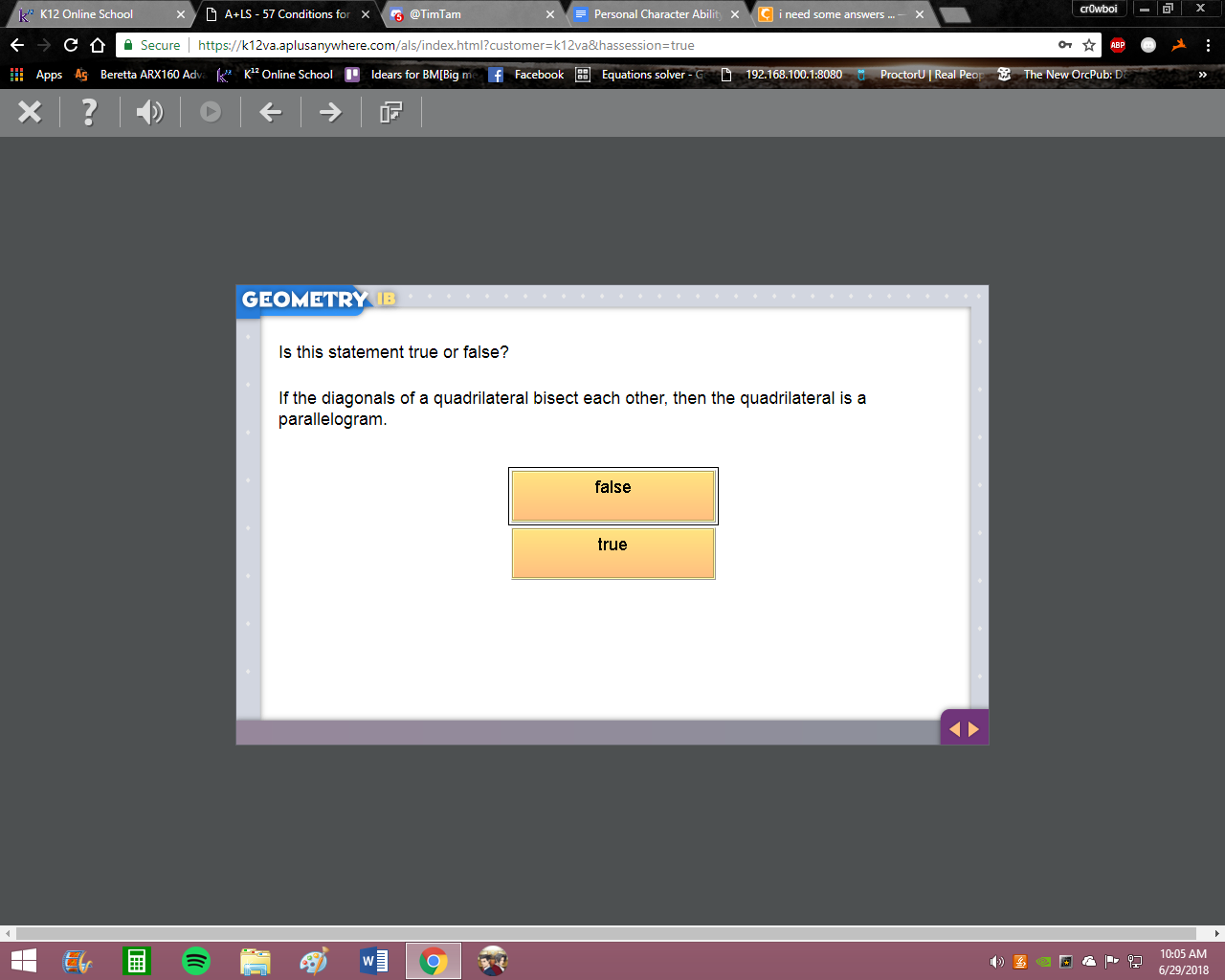
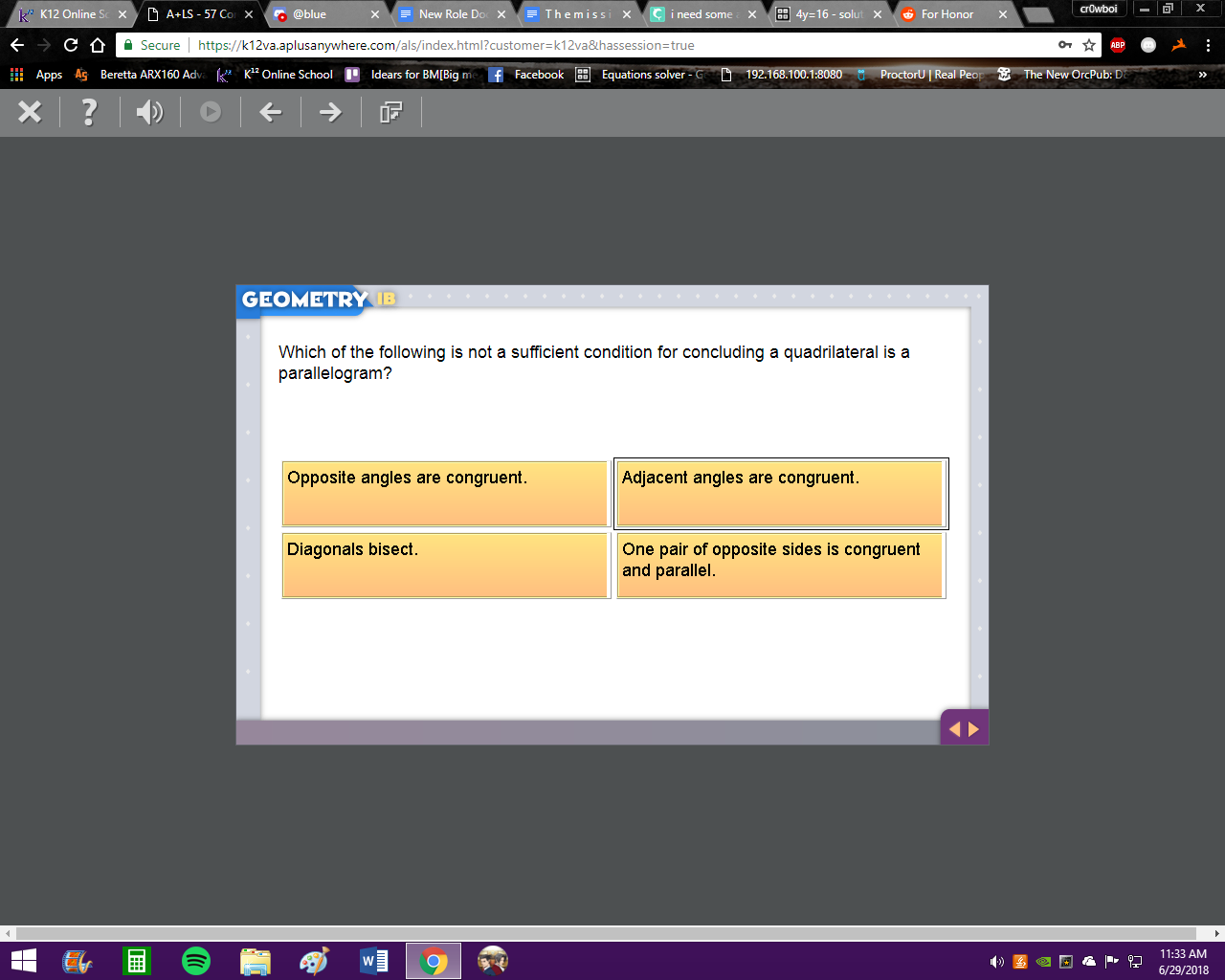
this one is actually true (if the diagonals bisect in a quadrilateral then it must be a parallelogram)
 Mercury:
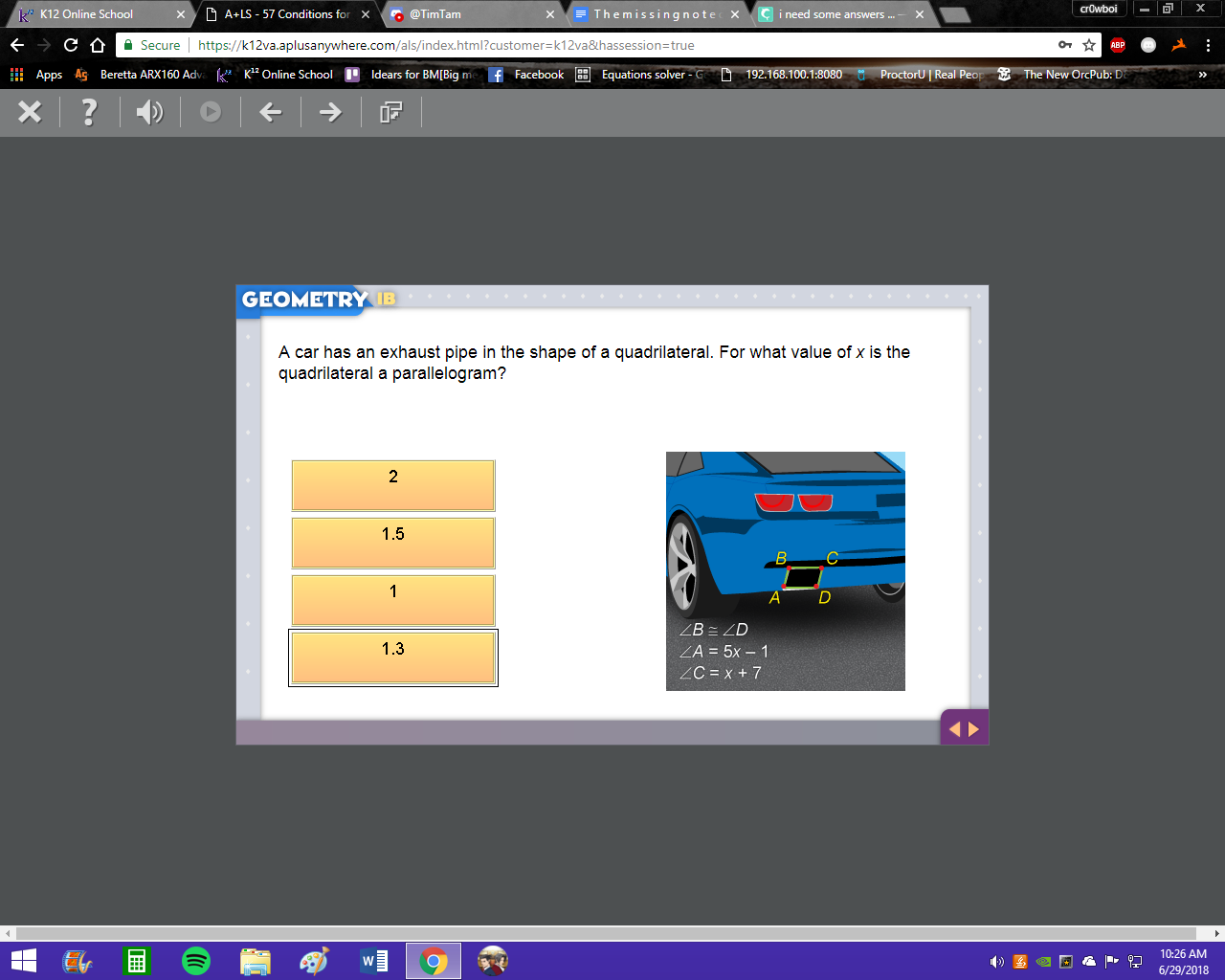
not quite since <A and <C are opposites they are congruent 5x - 1= x + 7 solve for x
princeevee:
2
 Mercury:
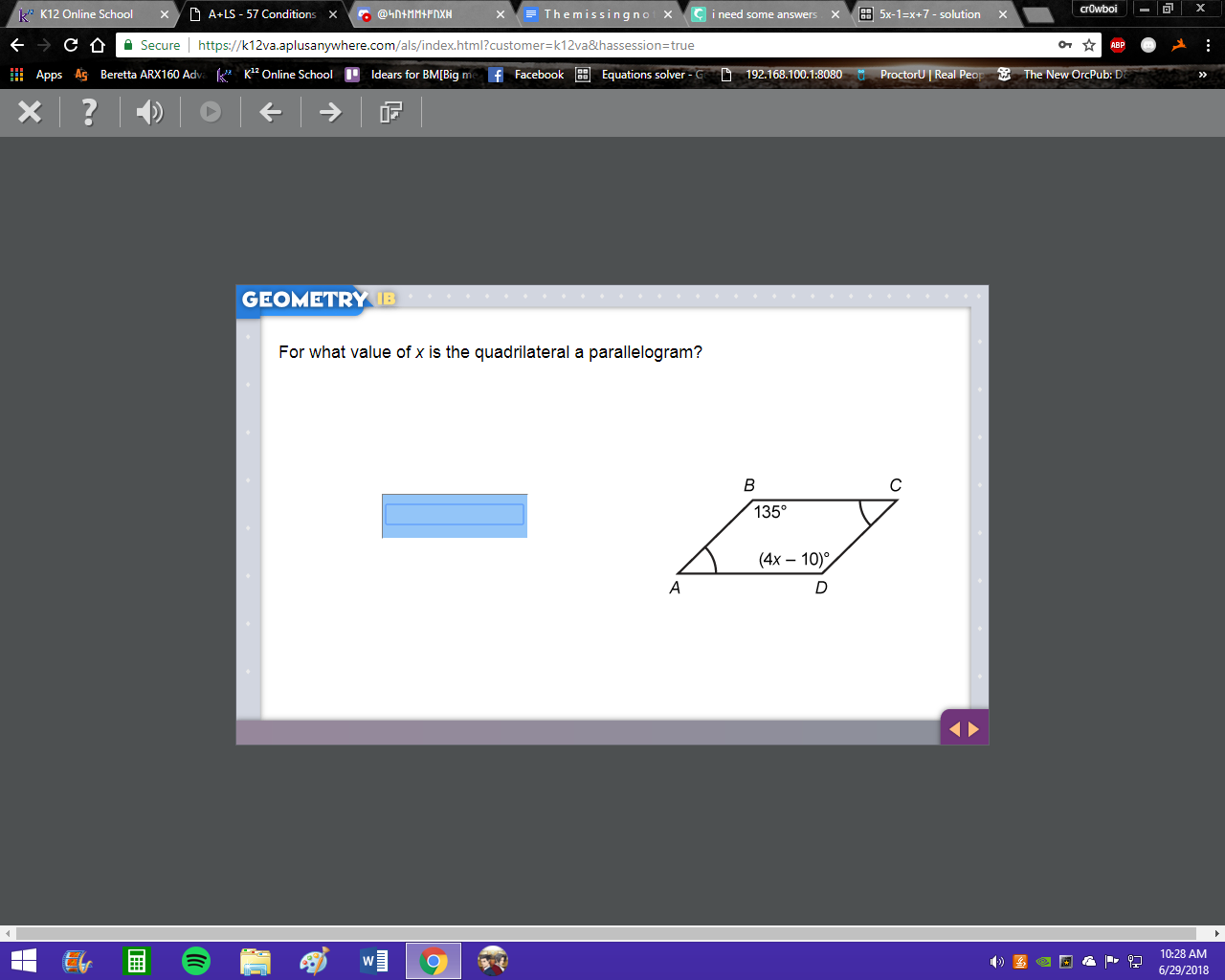
notice how they are, again, opposite angles. 135 = 4x - 10
princeevee:
36.25?
Mercury:
good
 Mercury:
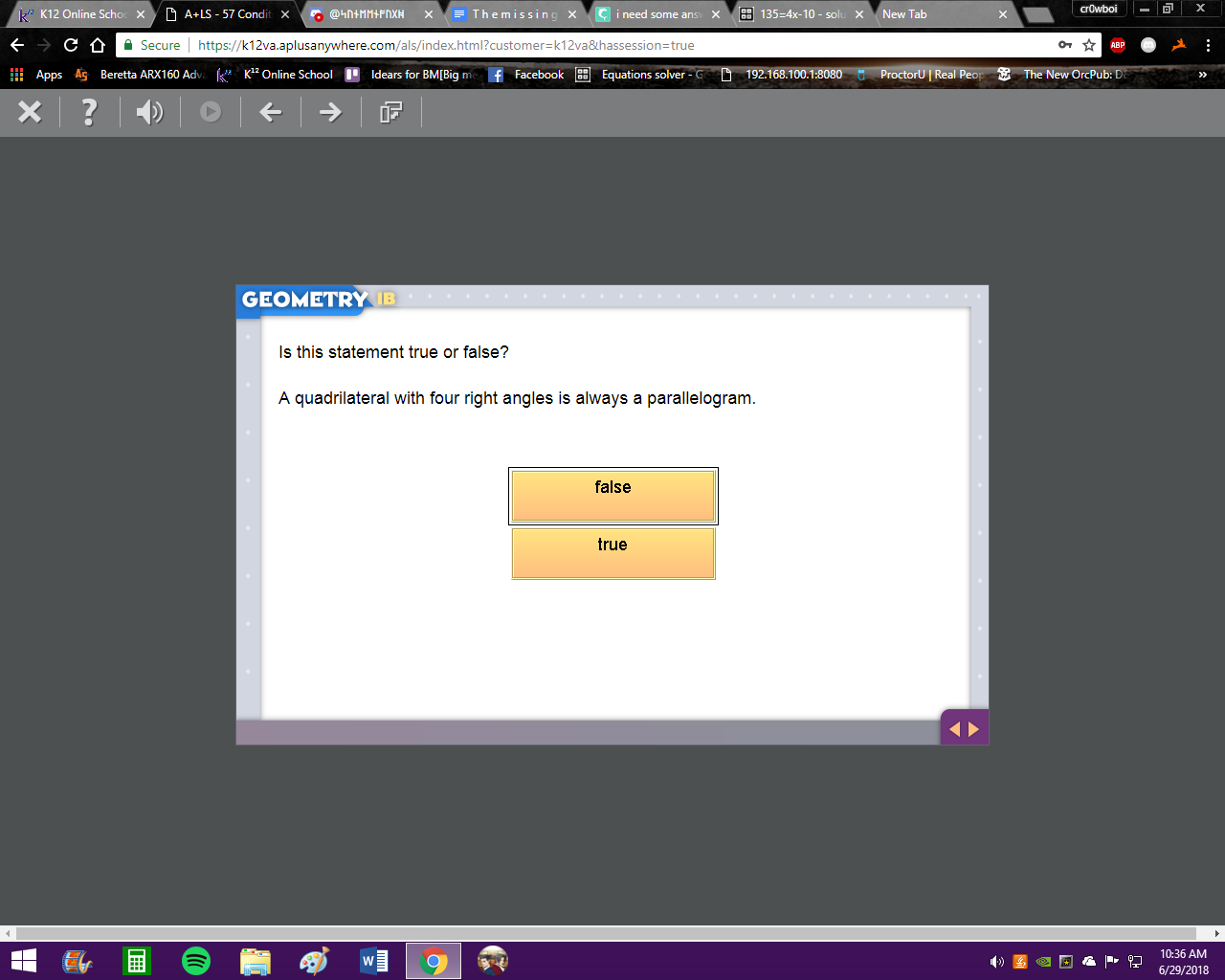
a quadrilateral with 4 right angles, by definition, is a rectangle which is a parallelogram so true
 Mercury:
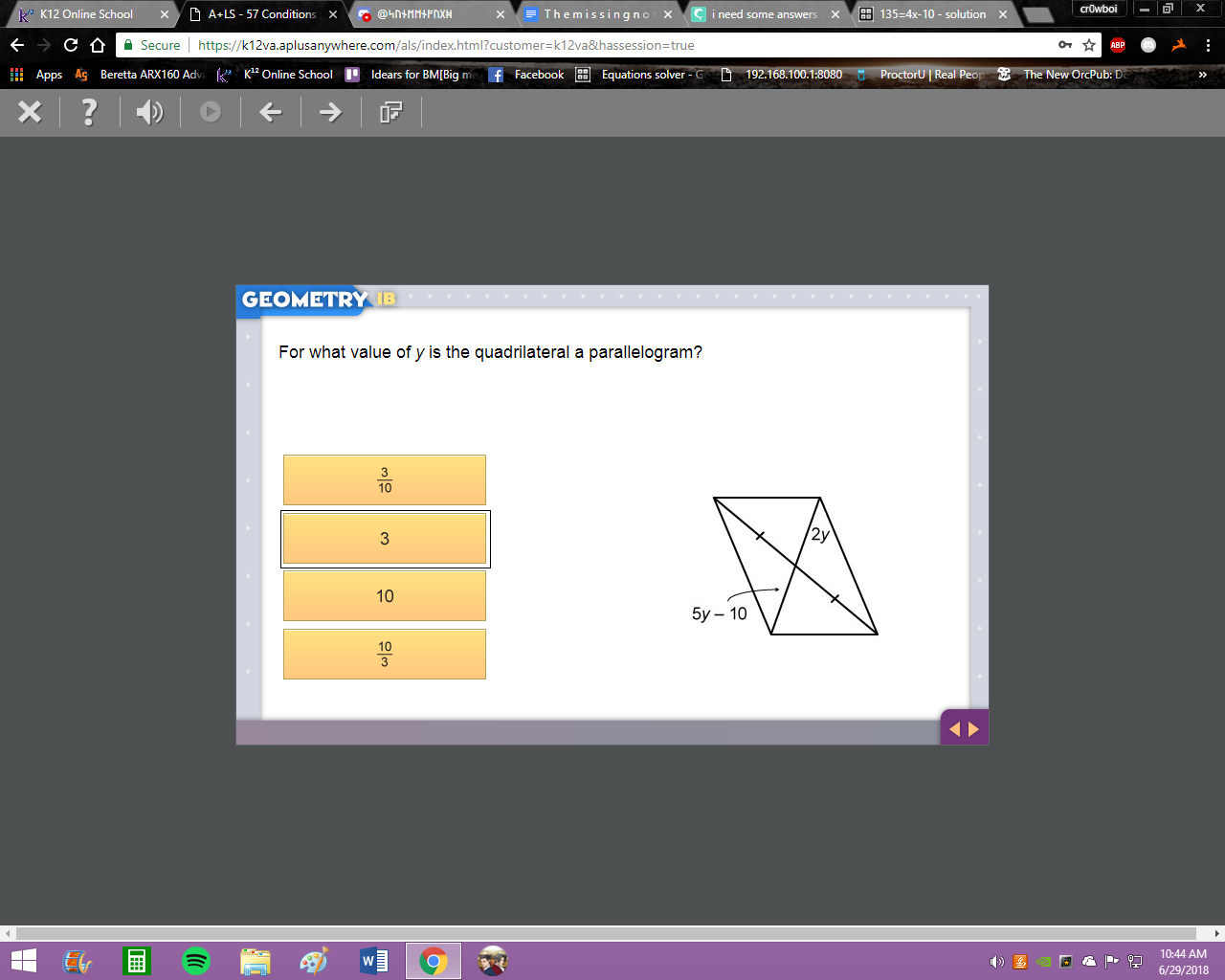
the diagram is somewhat unclear to me however it seems like 5y - 10 = 2y
princeevee:
3.3^-
Mercury:
good but the answers are in fractions so 10/3
 Mercury:
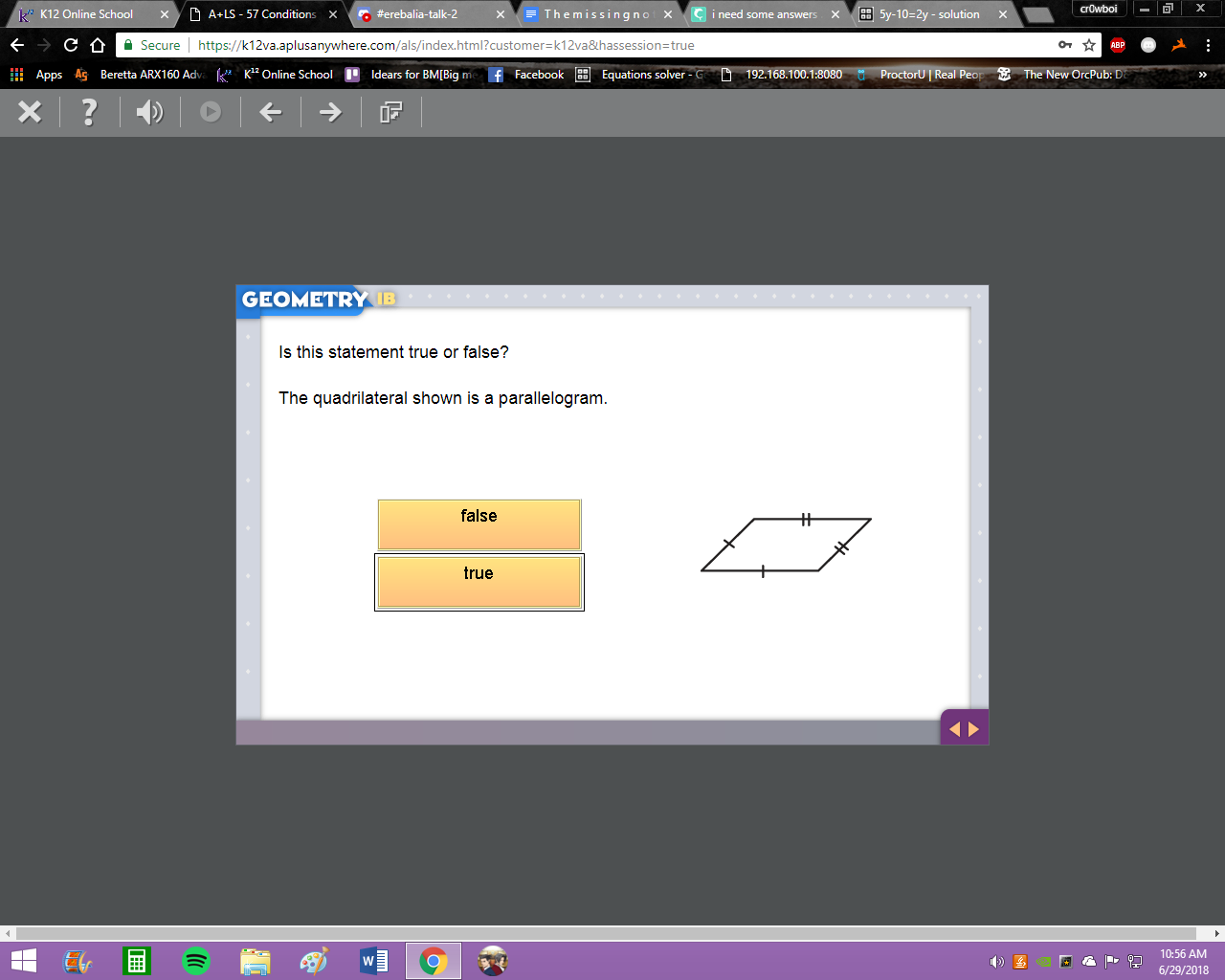
not quite opposite sides have to be congruent notice how adjacent sides are congruent in this picture
Mercury:
since opposite sides are not congruent then by definition this is not a parallelogram.
 Mercury:
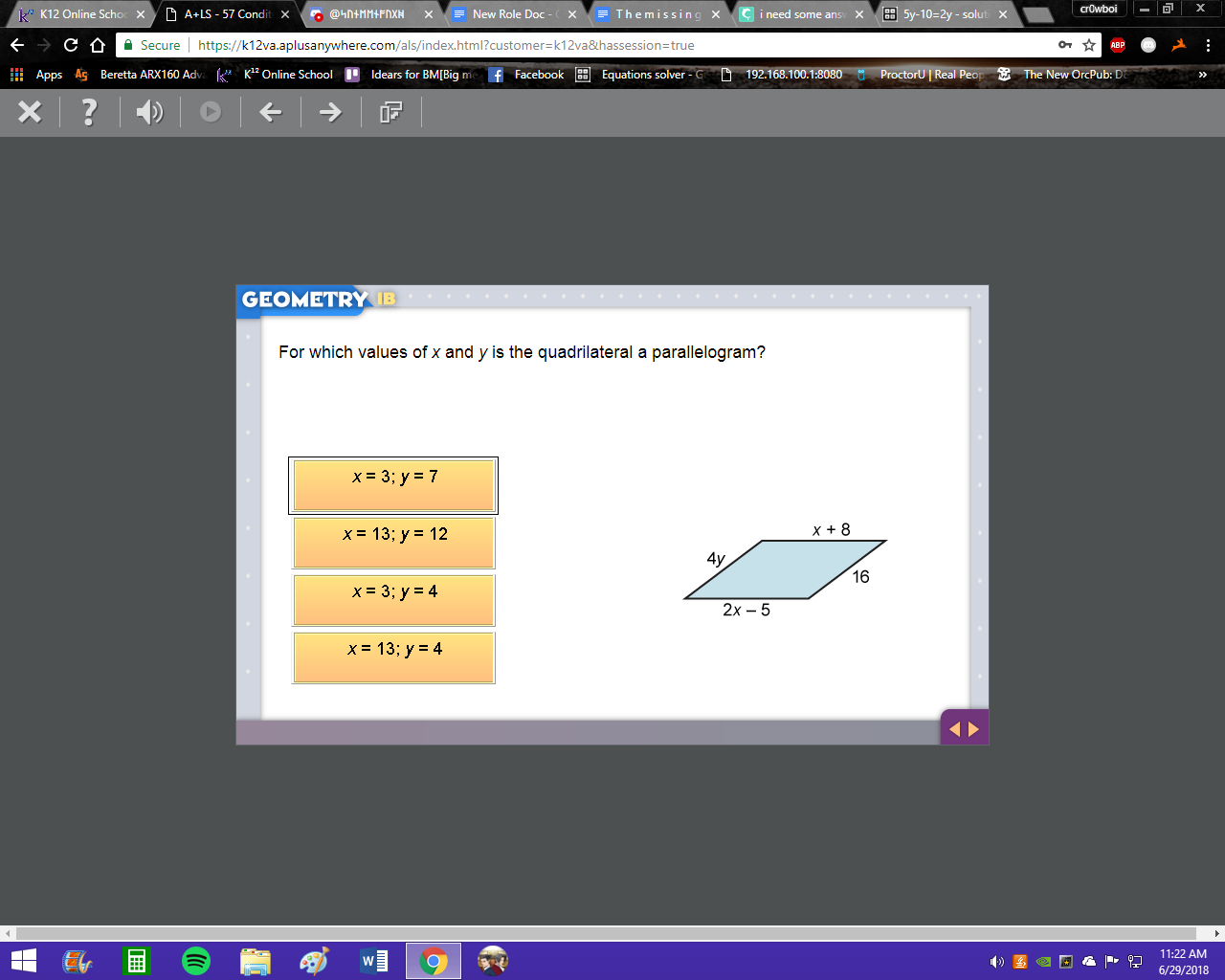
remember that opposite sides of a parallelogram are equal. therefore 2x - 5 = x + 8 4y = 16 solve for x & y
 Mercury:
good
 Mercury:
good
 Mercury:
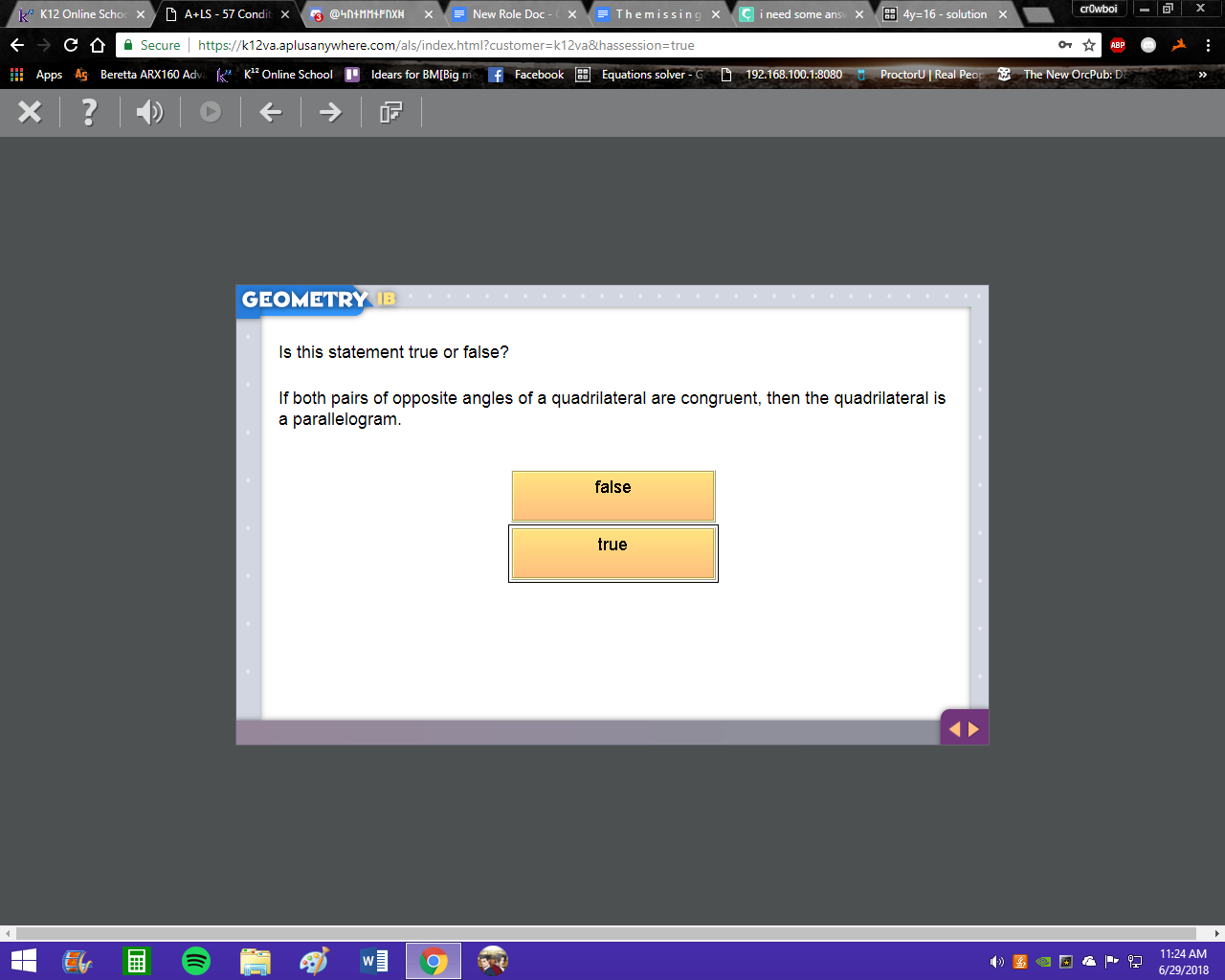
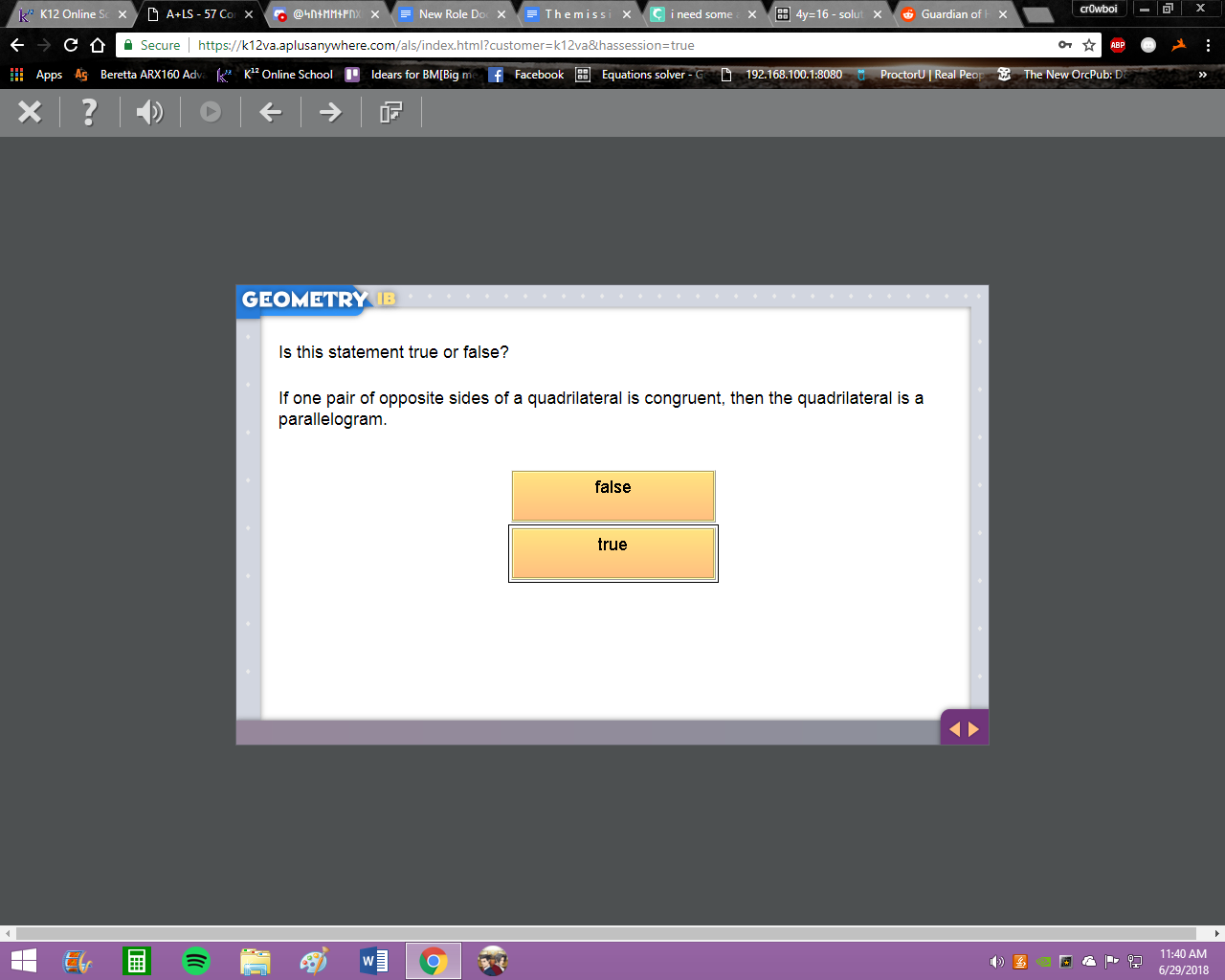
not quite for that to be true the sides have to be ~congruent~ AND ~parallel~ the question only states congruency so this is false
 jhonyy9:
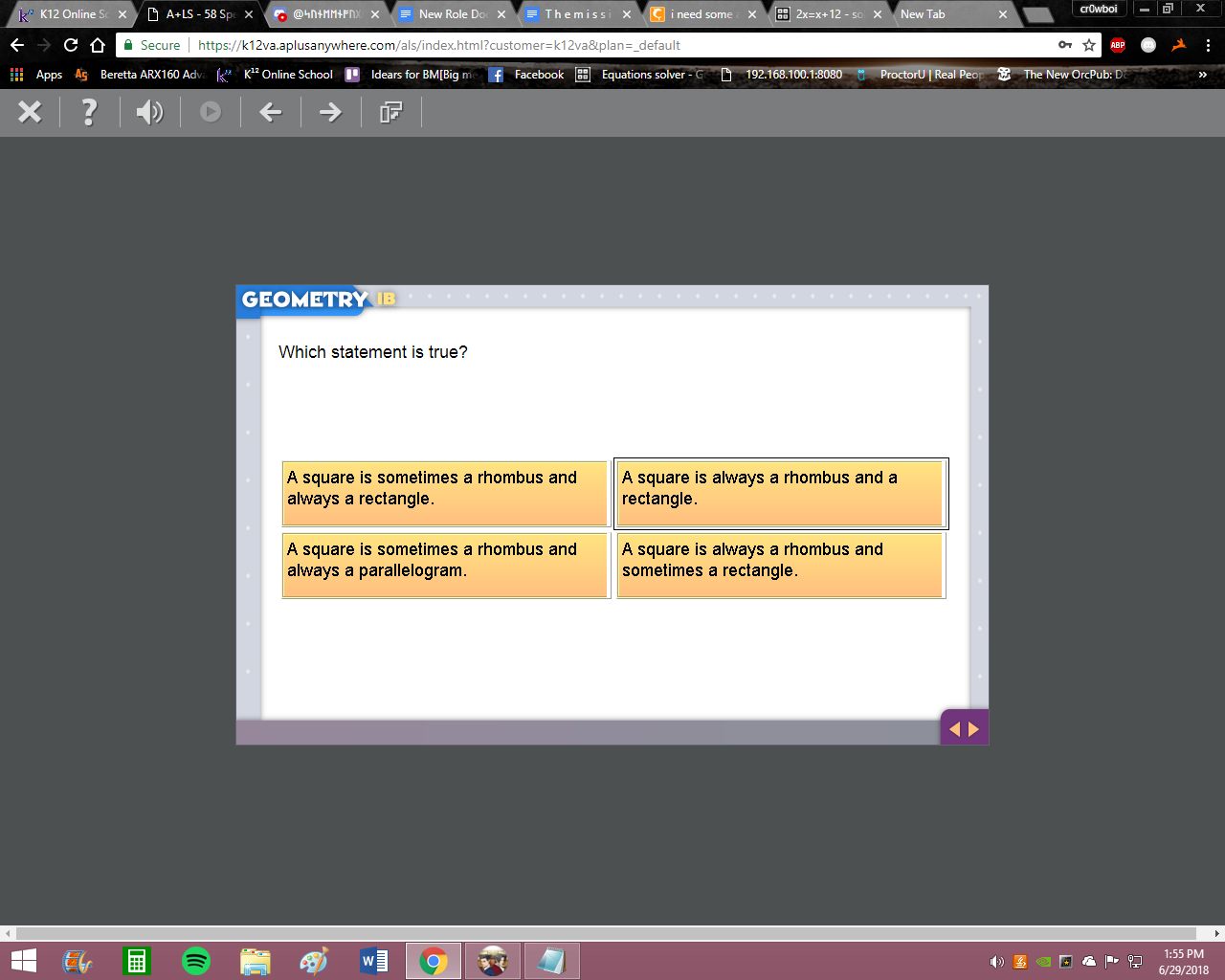
hi - what is your opinion about above posted - what choice my be true ?
jhonyy9:
than i see it clearly you marked it in left column the top- yes ? so than this is the right answer sure
jhonyy9:
ok. ?
jhonyy9:
sorry the right column on the top
jhonyy9:
a square is allways rhombus and rectangle
jhonyy9:
ok. ?
 kittybasil:
I believe that last one is correct. But let me pull up some stuff on how to classify quadrilaterals, just to make sure.
Join our real-time social learning platform and learn together with your friends!
 KBaby:
Verse 1 We left our names in the dust of the driveway Watched the old town shrink
KBaby:
Lyrics Generator Use AI to write the lyrics for a song. Suggested Genres: Pop Hip
KBaby:
Verse 1 We left our names in the dust of the driveway Watched the old town shrink
KBaby:
Lyrics Generator Use AI to write the lyrics for a song. Suggested Genres: Pop Hip

 aitexturegenerator:
How are you all handling AI-generated textures for 3D models and game assets without losing the hand-made feel? I've been doing a small stylized environment
aitexturegenerator:
How are you all handling AI-generated textures for 3D models and game assets without losing the hand-made feel? I've been doing a small stylized environment

 Demon25:
Woke up feeling like that girl and that dude well he still aint crap pluse the du
Demon25:
Woke up feeling like that girl and that dude well he still aint crap pluse the du
 playtsec:
how do I get rid of stress from teachers... I just feel like running out the classroom and leaving on my own.
playtsec:
how do I get rid of stress from teachers... I just feel like running out the classroom and leaving on my own.
 JohnnyLFowler0812:
What type of gamer would play something and then get off for a while. Why not sta
JohnnyLFowler0812:
Which is better? Metallica Rap Country R&B hiphop Medal Gospel Chill Which 3 opti
JohnnyLFowler0812:
What type of gamer would play something and then get off for a while. Why not sta
JohnnyLFowler0812:
Which is better? Metallica Rap Country R&B hiphop Medal Gospel Chill Which 3 opti