
 princeevee:
i need more answers checked
 princeevee:
@Vocaloid
 Mercury:
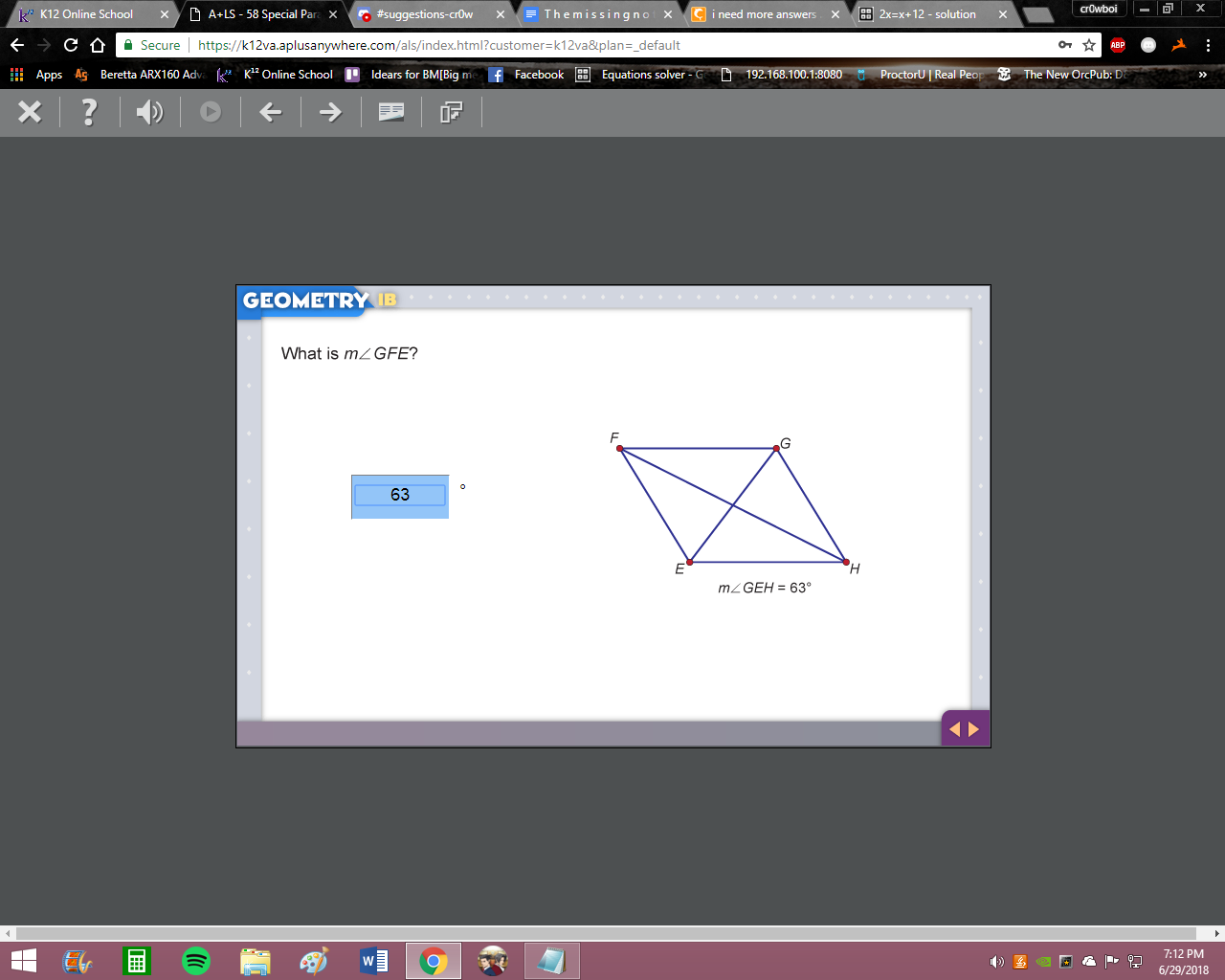
hm. not quite. GEH is one half of <FEH right? and <FEH and <GFE are supplementary, right? using this information try solving for <GFE
princeevee:
31.5
Mercury:
if GEH is one half of FEH, that means FEH is 2 * GEH = 2 * 63 = 126 as stated before: FEH and GFE are supplementary therefore GFE + 126 = 180
Mercury:
solve for GFE
princeevee:
54
princeevee:
right?
Mercury:
hm lemme just double check something first
Mercury:
apparently this method only works if the sides are congruent which is not explicitly stated still figuring out how to solve it w/o this assumption
princeevee:
oh..
Mercury:
@hero @Nnesha having a bit of a brain fart, how do I solve this w/ the information given?
Mercury:
@MARC may I have a second opinion on this? my first thought was to assume the diagonals bisect the angles but then I realized the side lengths aren't given so that wouldn't automatically be valid
princeevee:
...
 MARC:
MARC:
I think that shape should be rhombus If it is a parallelogram,I don't think we can solve it,unless there are extra info X'D Mercury,ur working looks good so far
Mercury:
alright just making sure cuz this problem was messing with me in that case, the solution is 54 as stated before
Mercury:
I didn't really want to assume the shape was a rhombus 'cause that's a common math trap to make misleading diagrams ;_;
 Mercury:
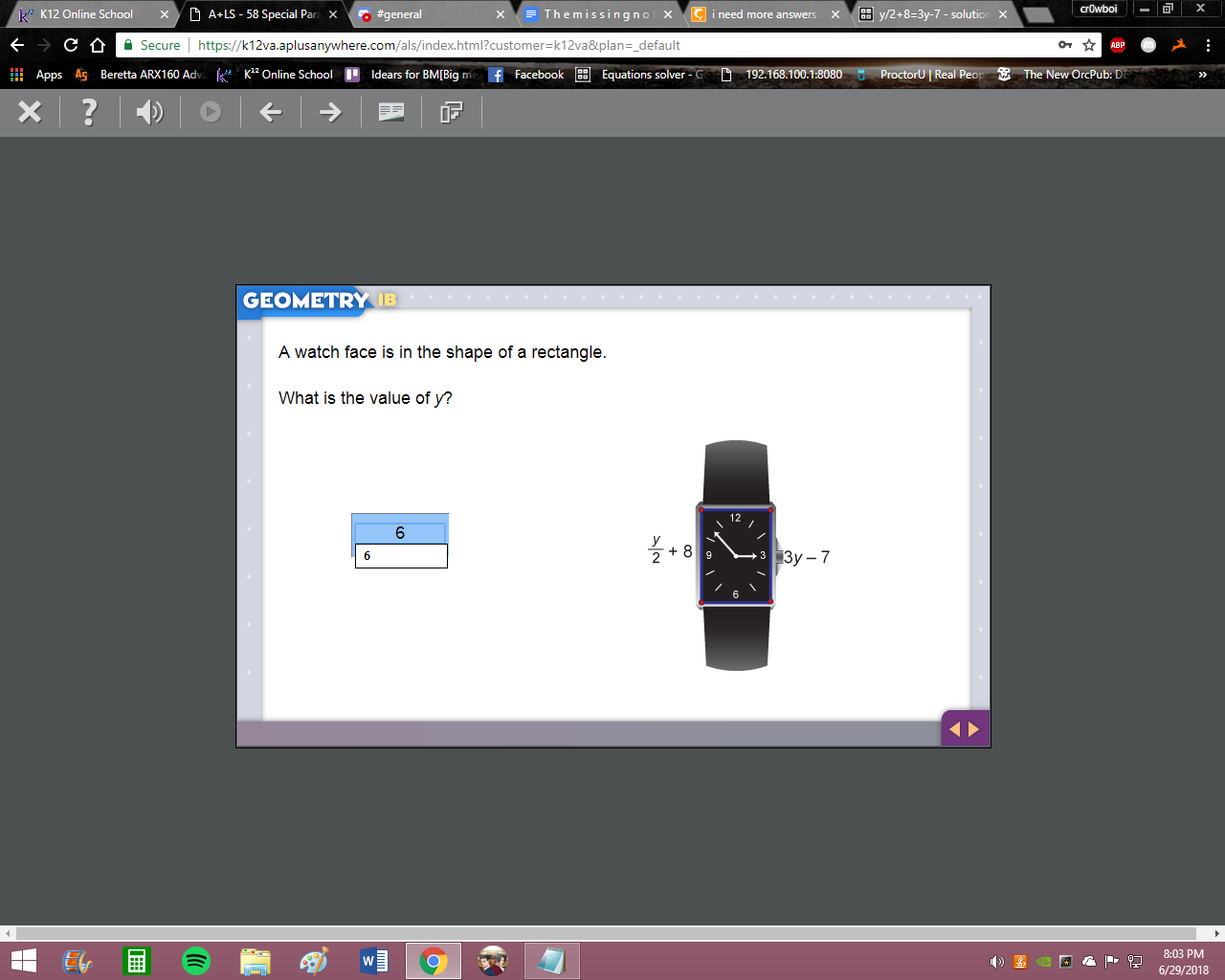
hm. not quite. it's a rectangle so opposite sides are equal therefore x^2 + 12 = 10x - 13 solve for x. as a hint, move all the terms to one side by performing the appropriate operations, then factor
princeevee:
5,5?
Mercury:
good x = 5 (don't write 5,5, since x has a single value)
 MARC:
MARC:
Theorem 8: A quadrilateral is a rhombus if and only if the diagonals are perpendicular bisectors of each other. Theorem 9: A quadrilateral is a rhombus if and only if the diagonals bisect all the vertex angles. For the previous question ;p
Mercury:
good, y = 6
 Mercury:
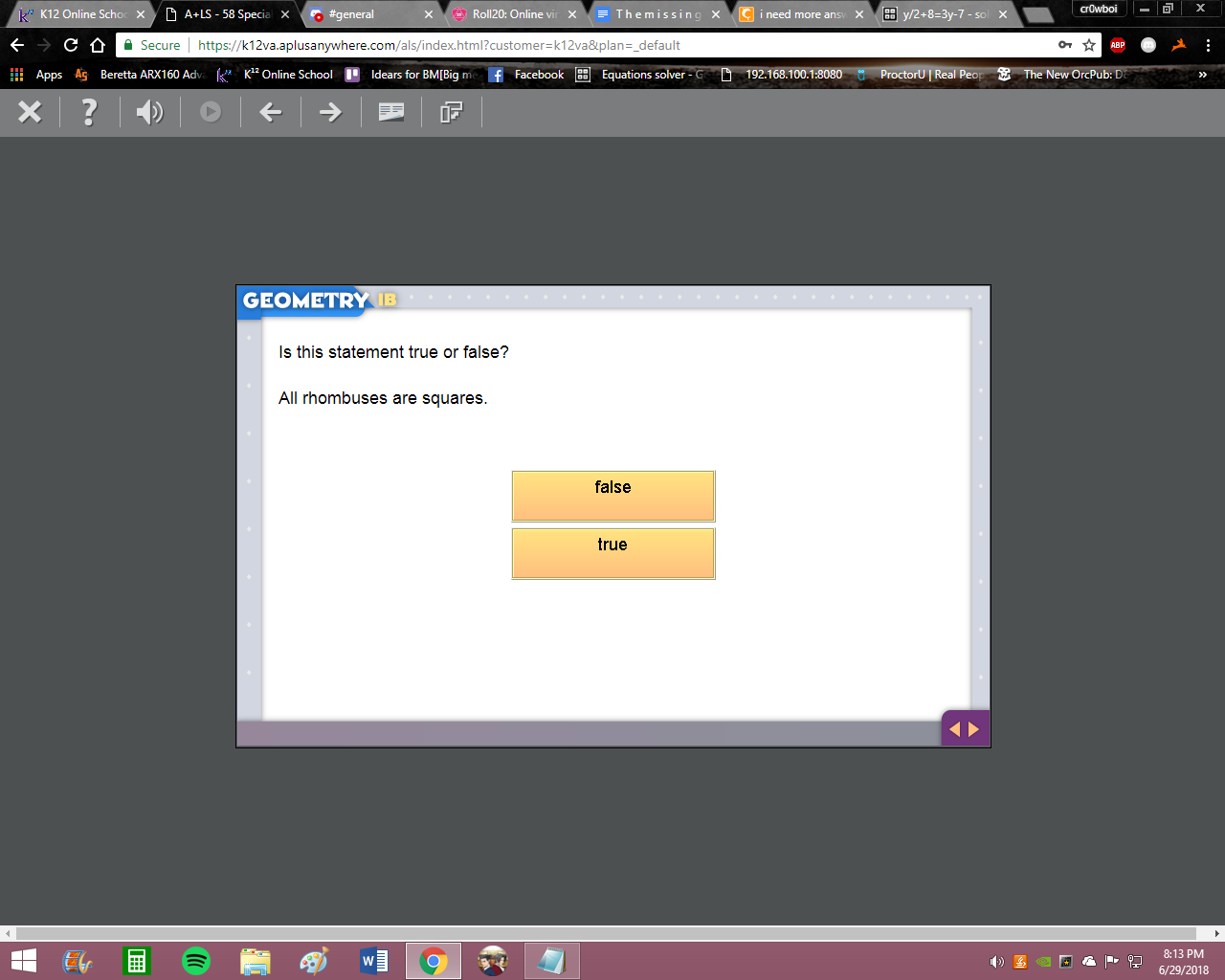
any ideas? as a hint: squares ~have~ to have four 90 degree angles
 Mercury:
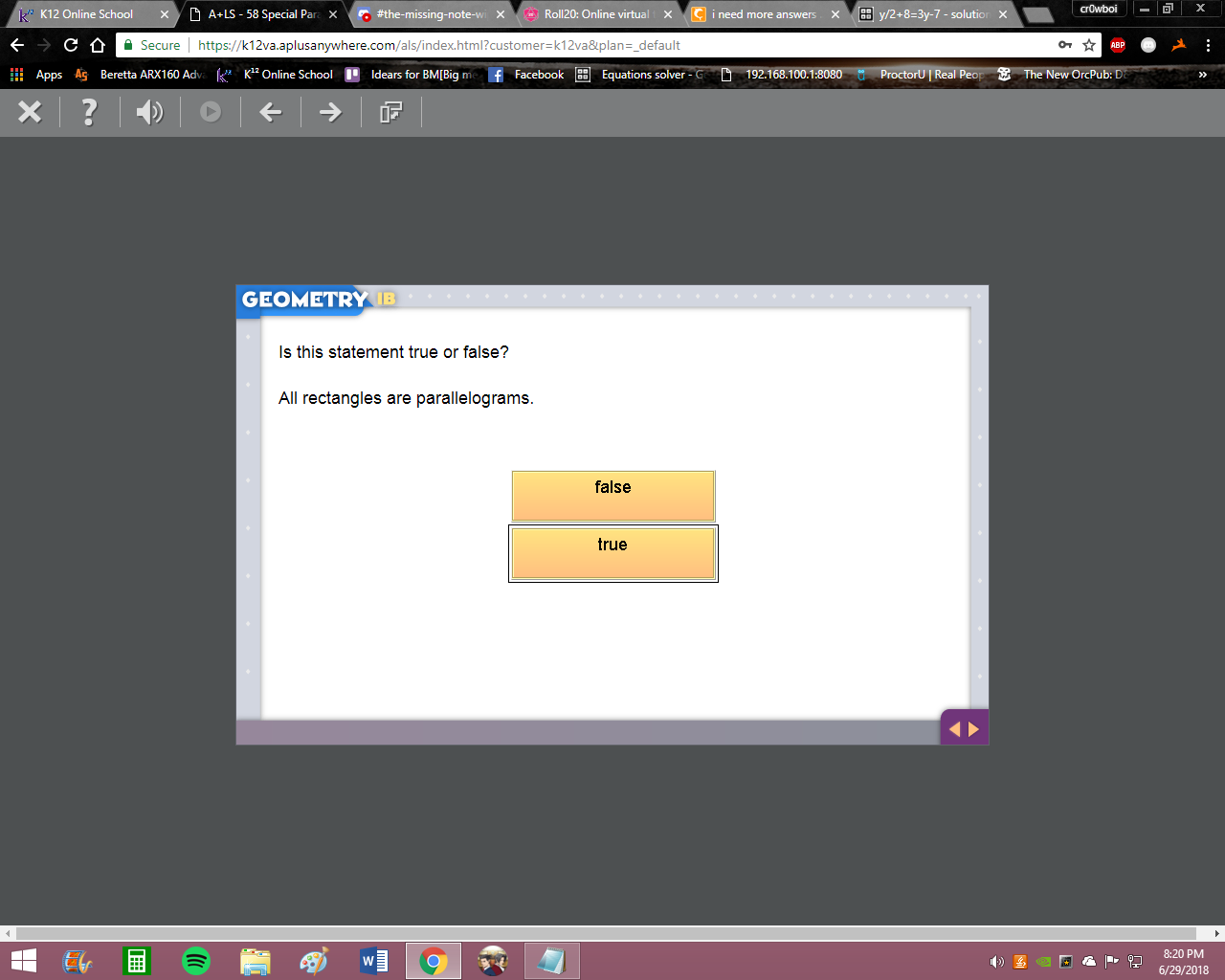
good
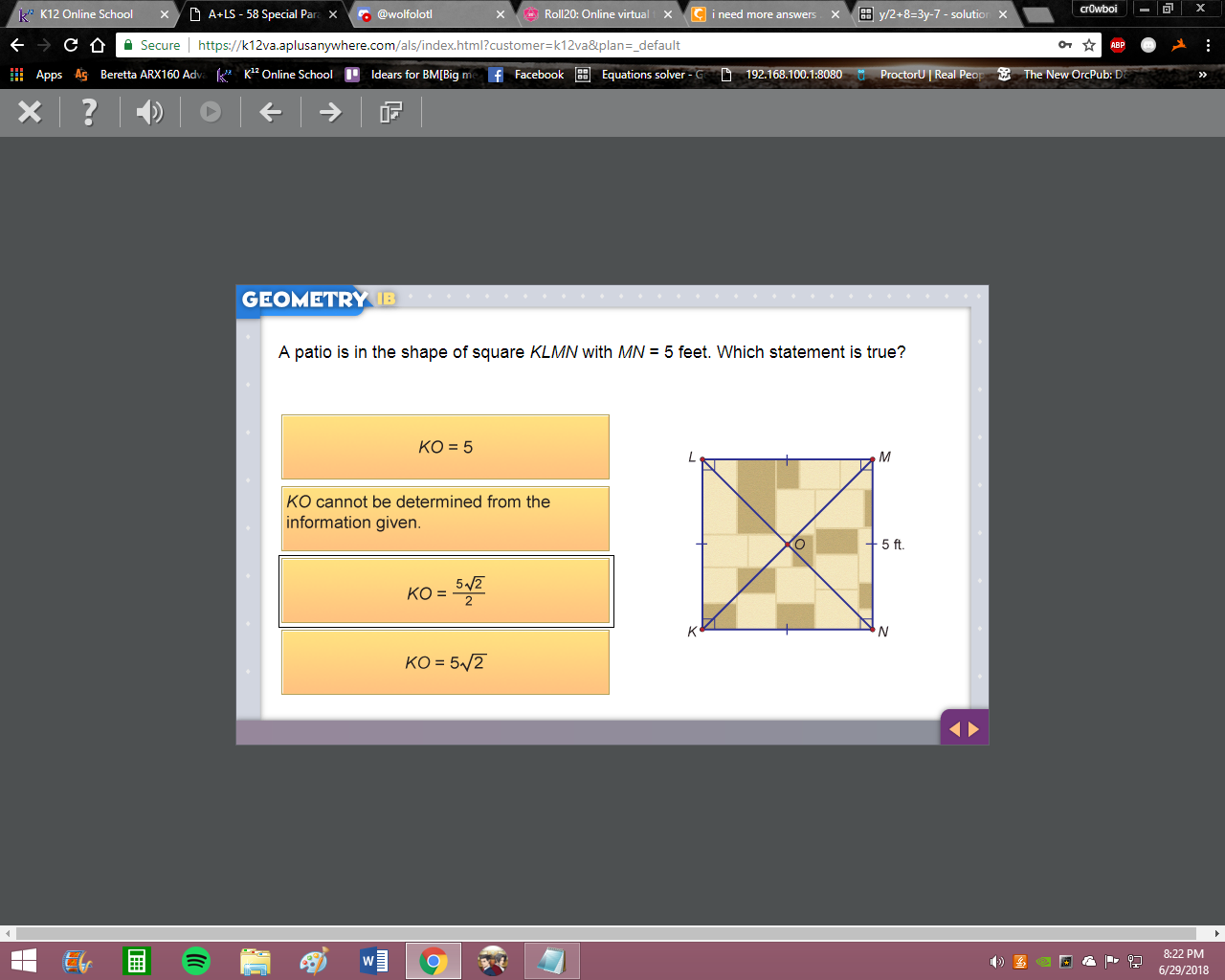 Mercury:
good (sorry had to brush my teeth)
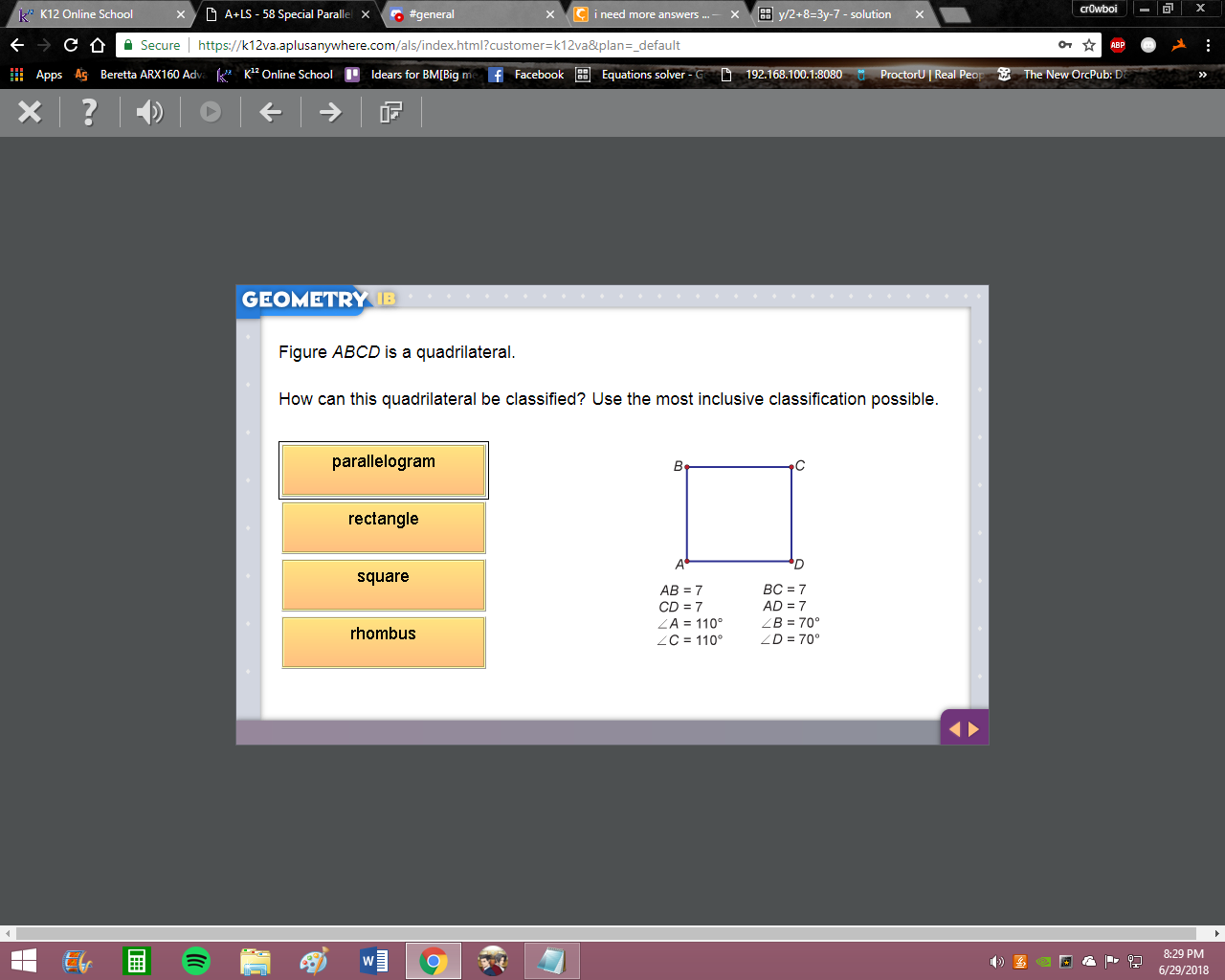 Mercury:
good
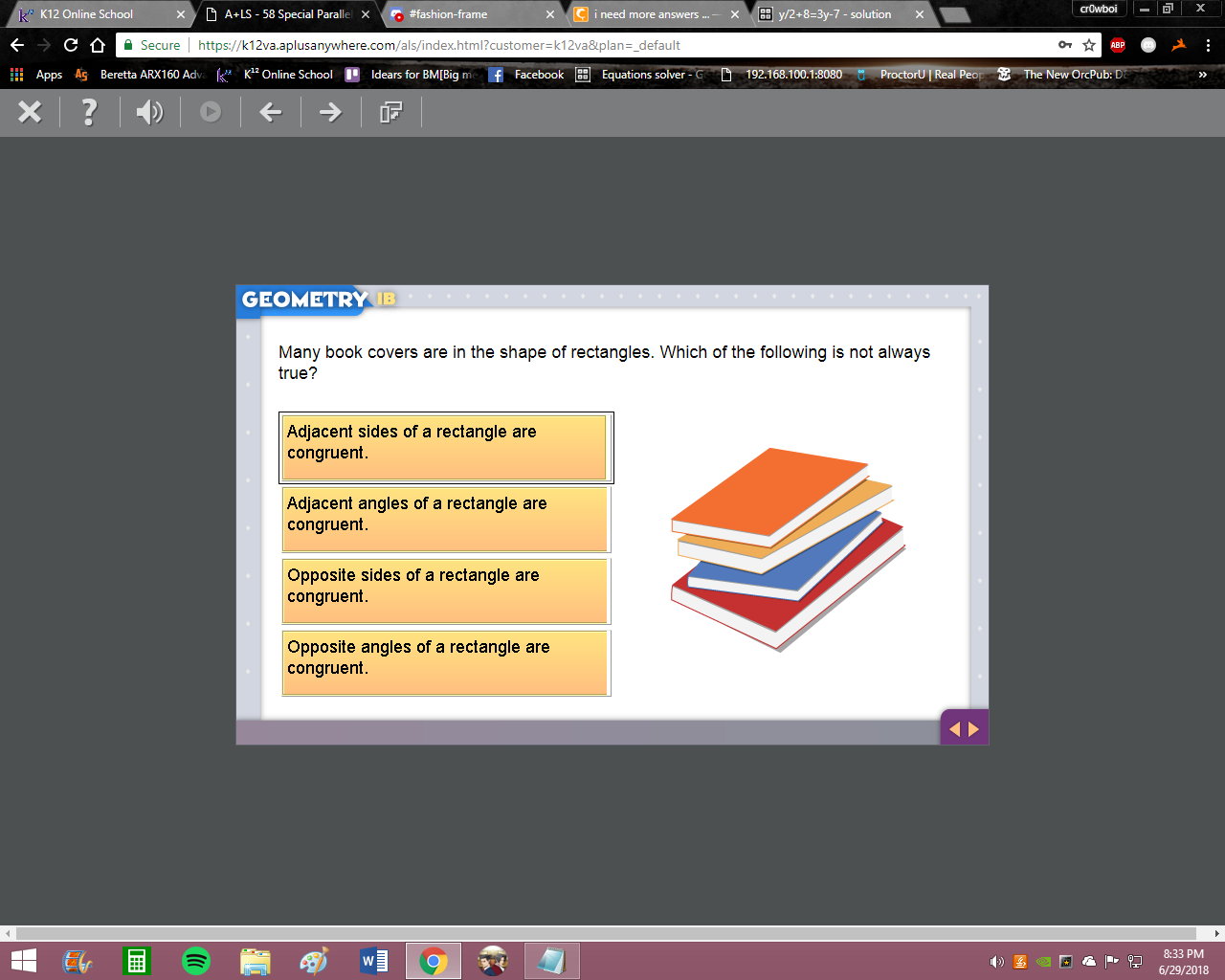 Mercury:
good
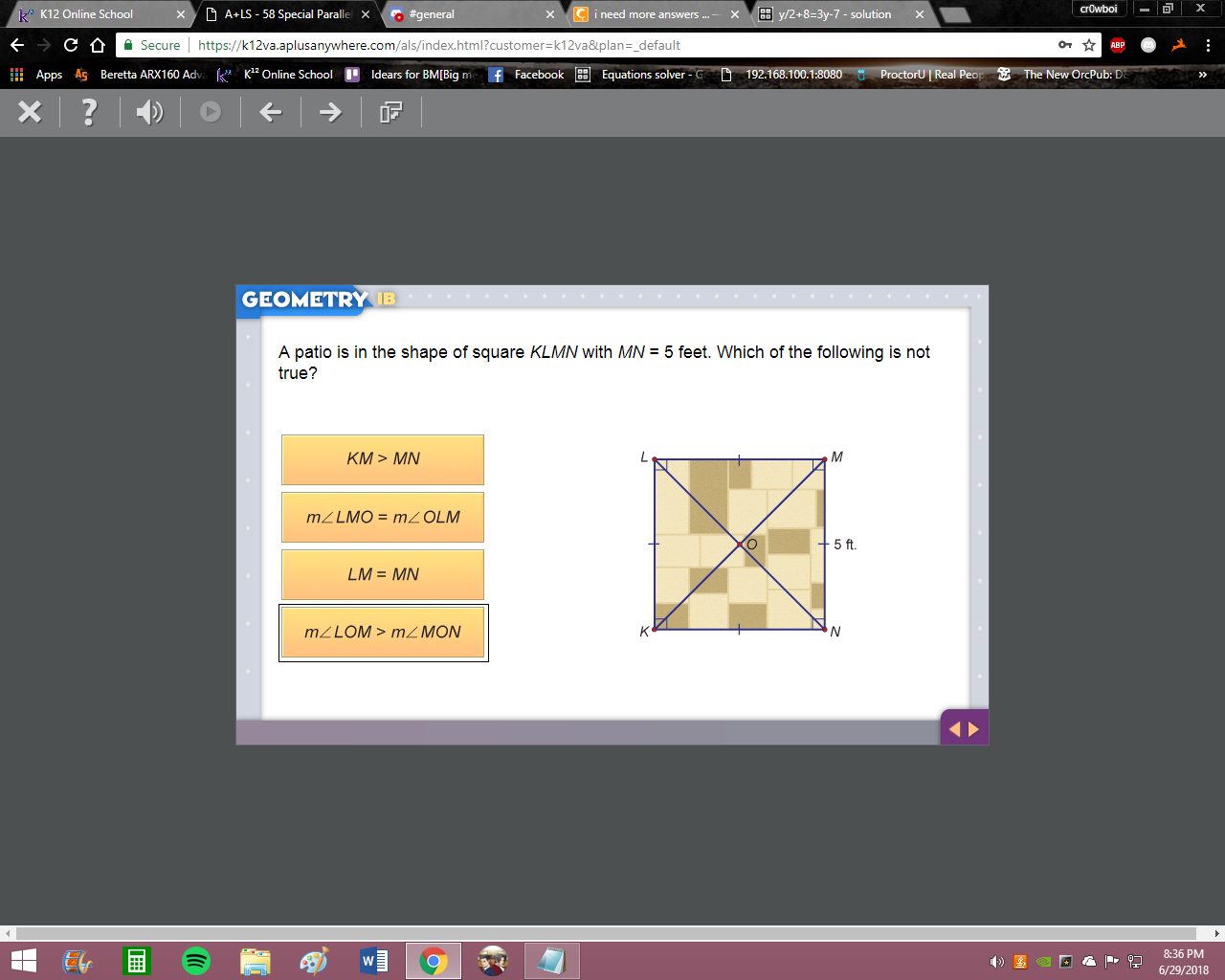 Mercury:
good
 Mercury:
good
 Mercury:
good
 Mercury:
good
 Mercury:
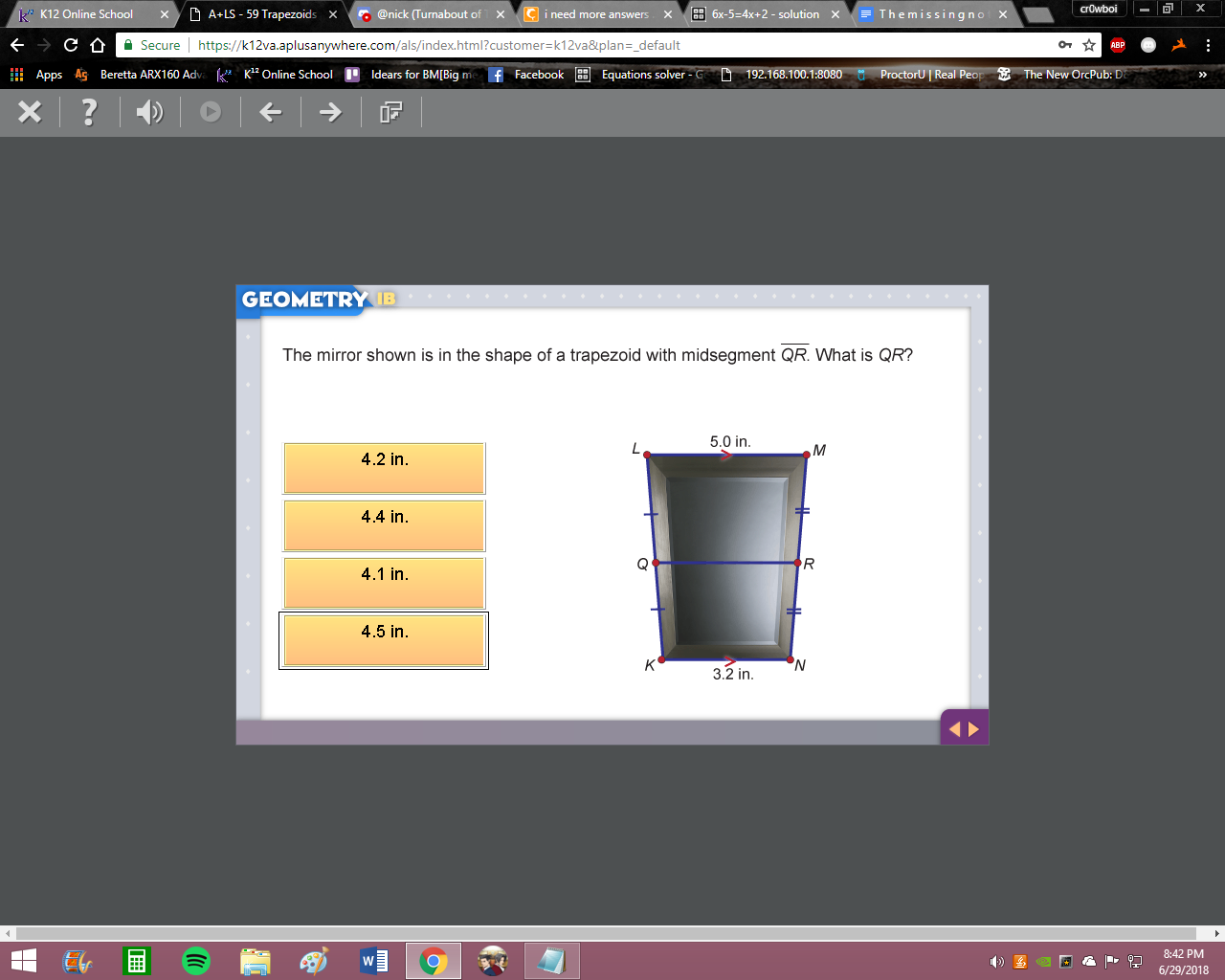
hm. not quite. remember that the midsegment is the average of the bases so add up the bases 5 and 3.2, then divide by 2
princeevee:
4.1
Mercury:
good so 4.1 = your sol'n
 Mercury:
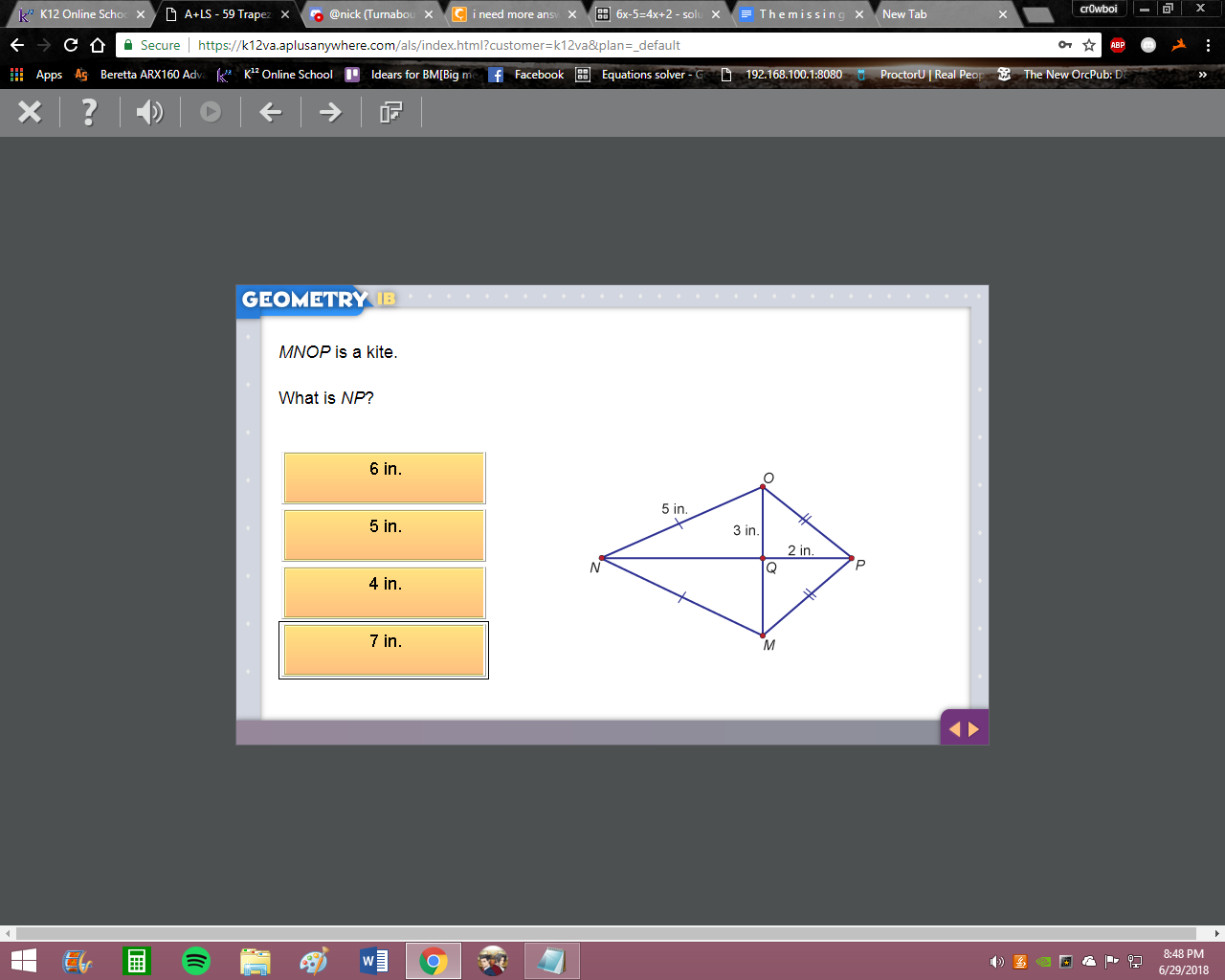
hm, not quite notice how the upper left part of the kite is a right triangle with hypotenuse = 5 and leg = 3 using the pythagorean theorem what's the length of the missing leg?
princeevee:
34?
princeevee:
5? @Mercury
Mercury:
leg^2 + leg^2 = hypotenuse^2 one leg = 3 hypotenuse = 5 solve for the missing leg
princeevee:
34
Mercury:
3^2 + leg^2 = 5^2 solve for leg
Mercury:
remember your order of operations. simplify the exponents first.
 Mercury:
good
 Mercury:
good
 Mercury:
good
 Mercury:
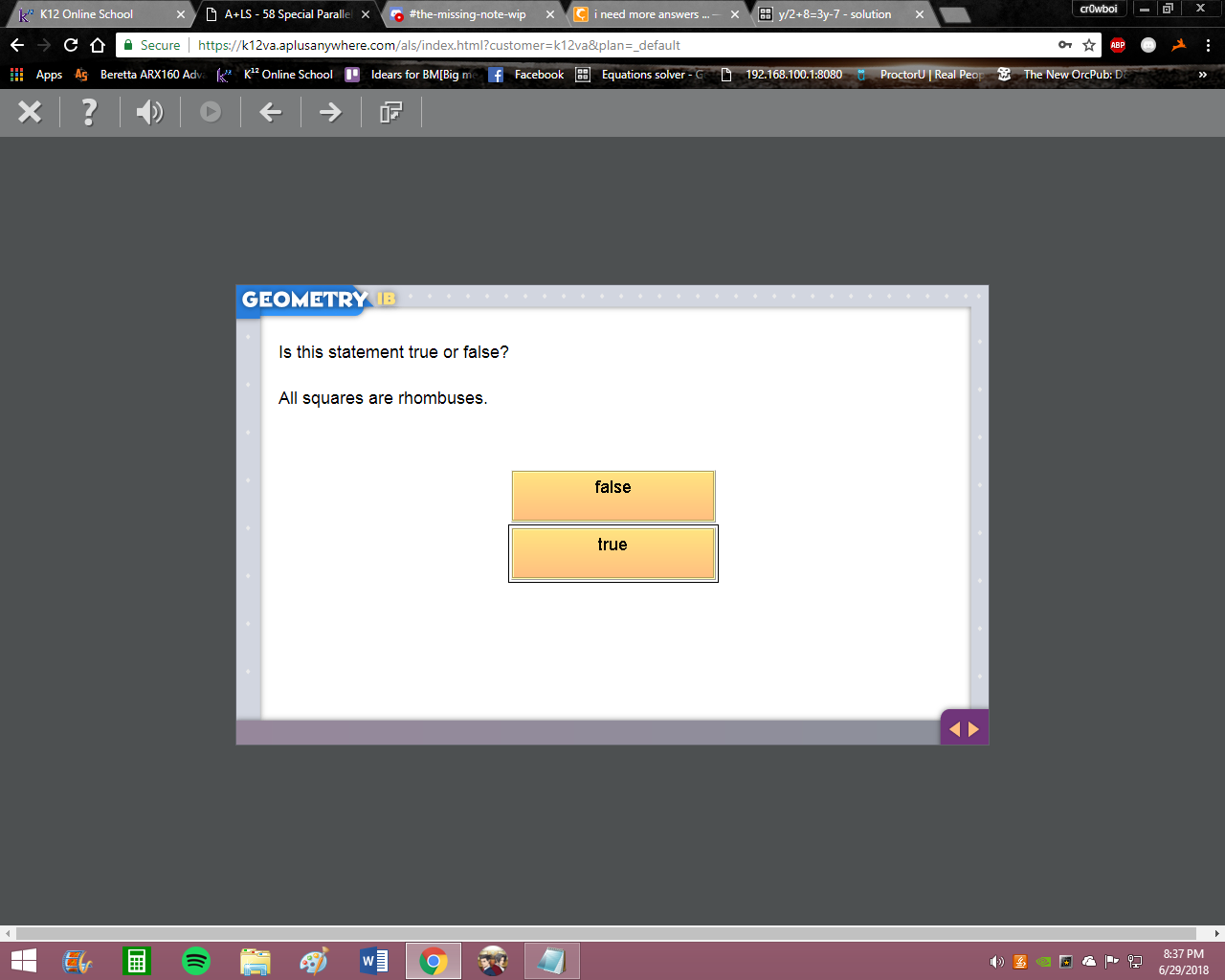
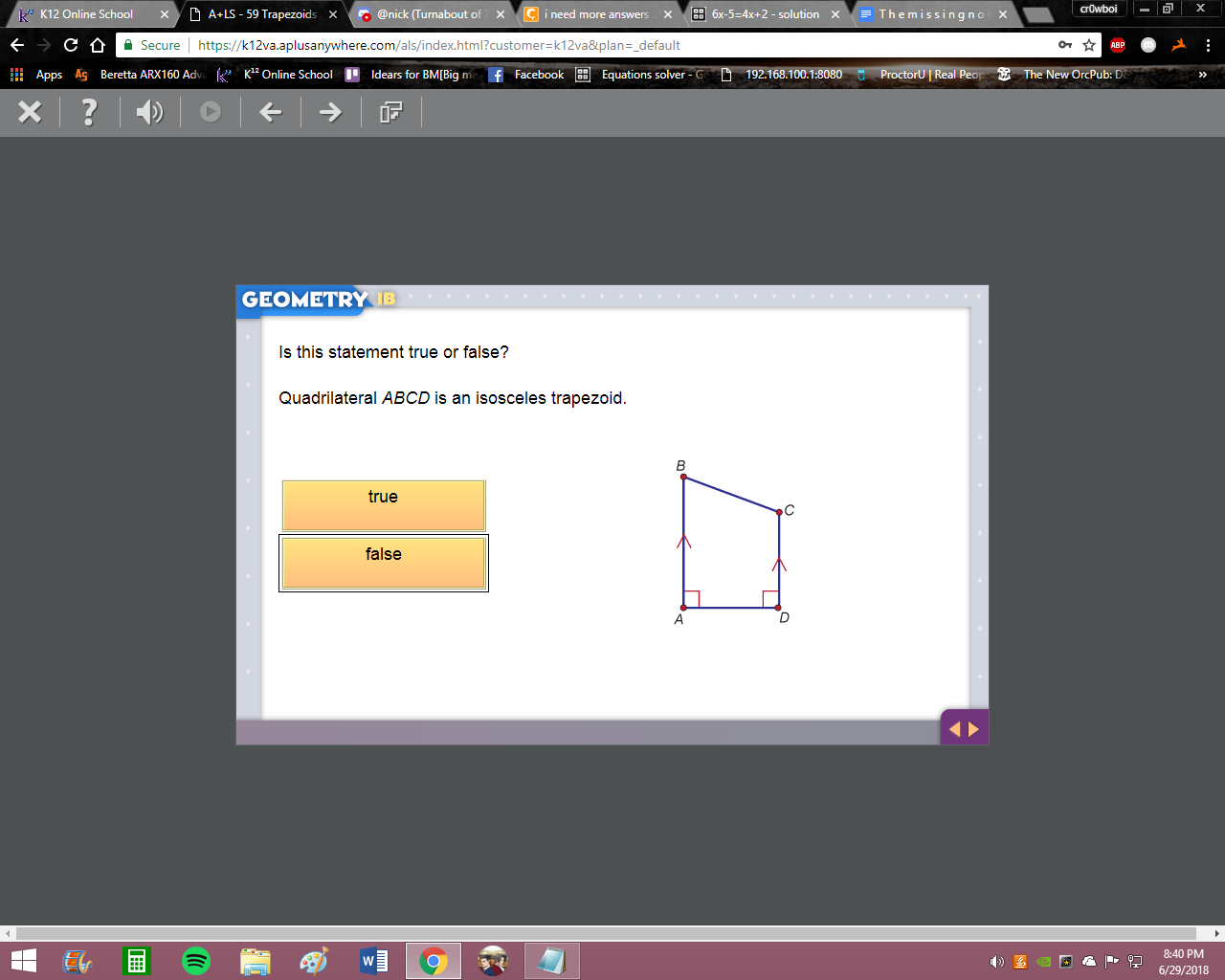
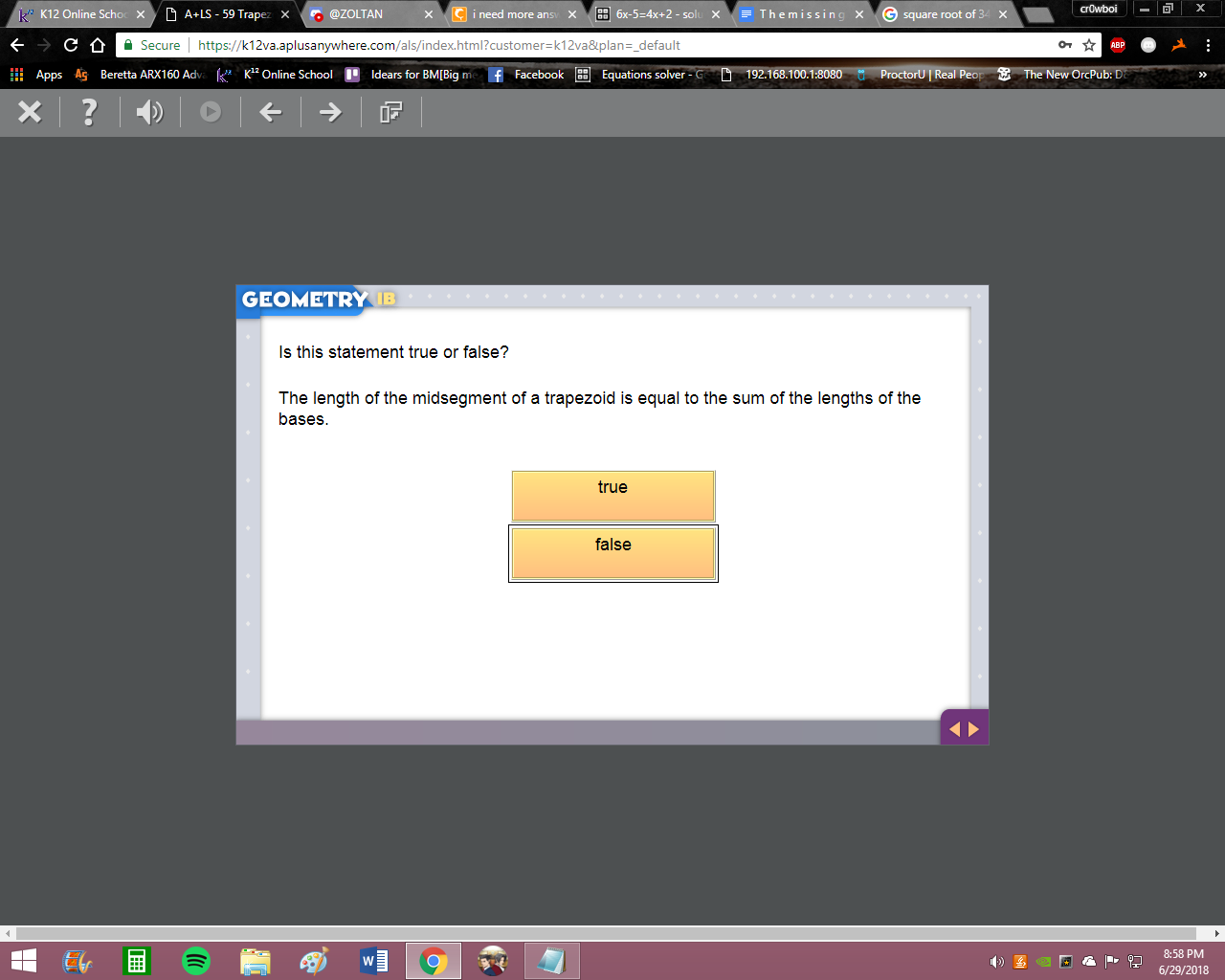
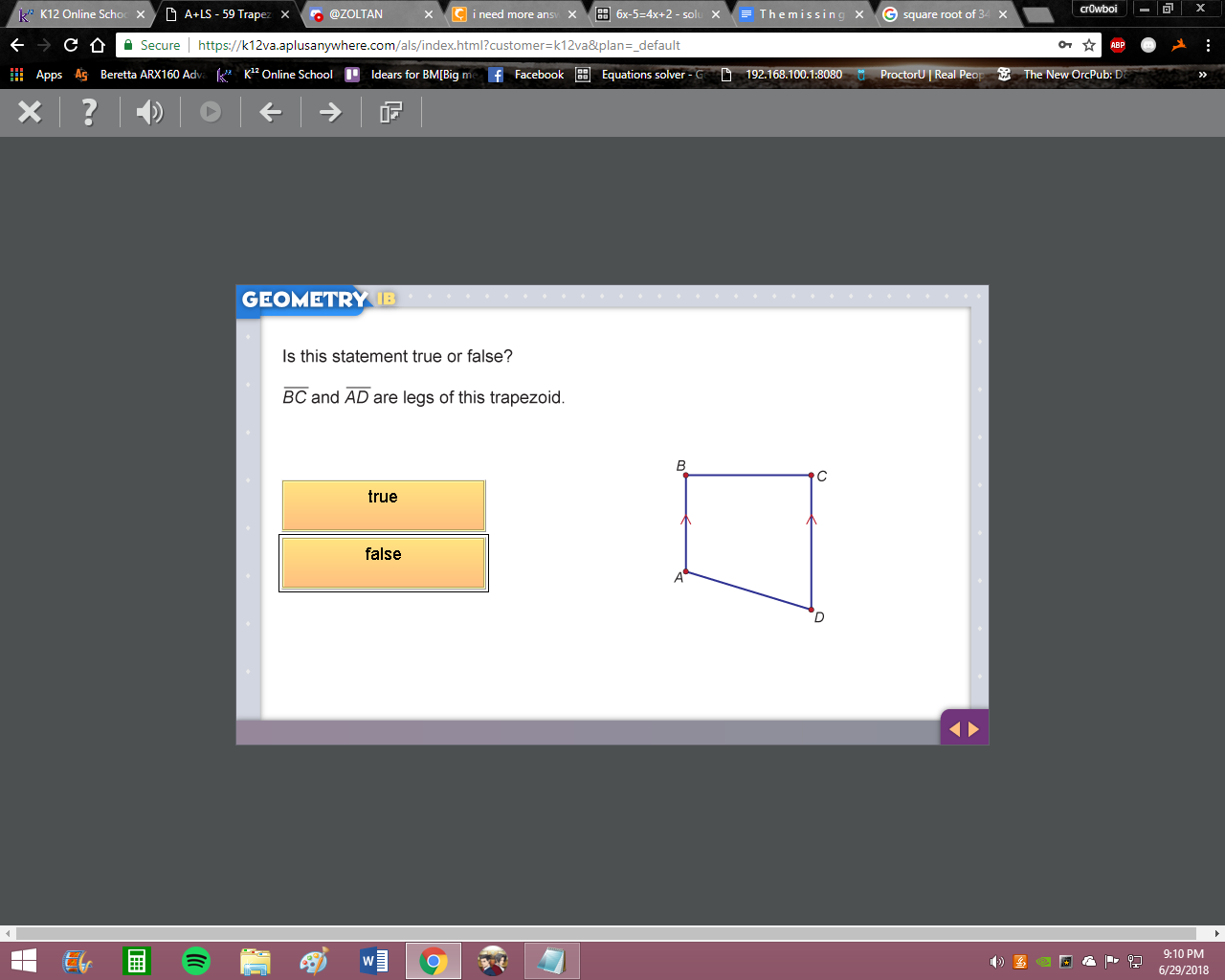
|dw:1530331954904:dw| imagine rotating your problem 90 degrees so it looks more like this the parallel sides are AB and CD making BC and AD the legs so the original statement is true
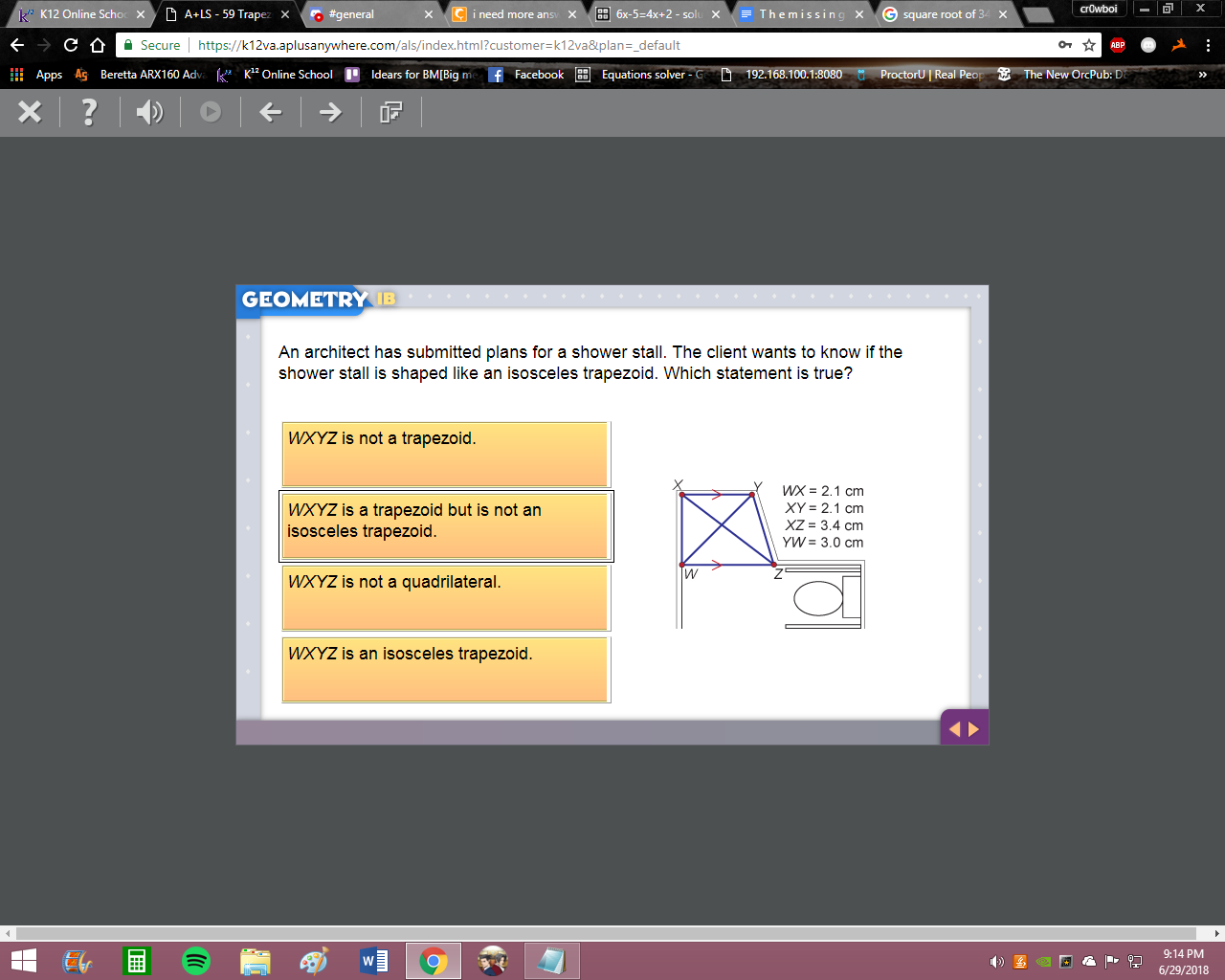 Mercury:
good
 Mercury:
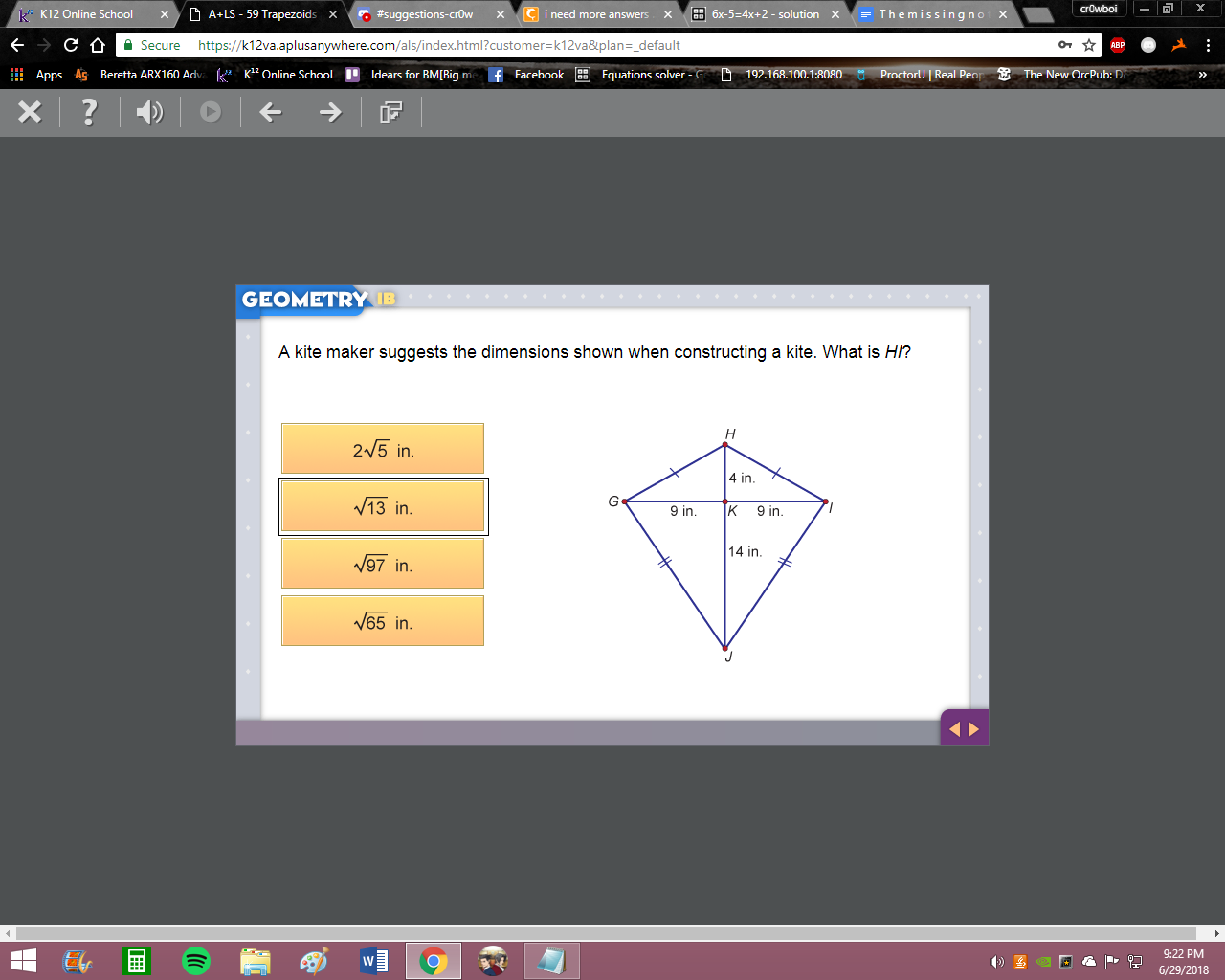
remember you need to square the legs too hypotenuse = sqrt(4^2 + 9^2) = ? leave in radical form w/o simplifying to a decimal
princeevee:
D?
Mercury:
what is 4^2 + 9^2?
princeevee:
97
Mercury:
good so taking the sqrt of that gives us sqrt(97) = your sol'n
 Mercury:
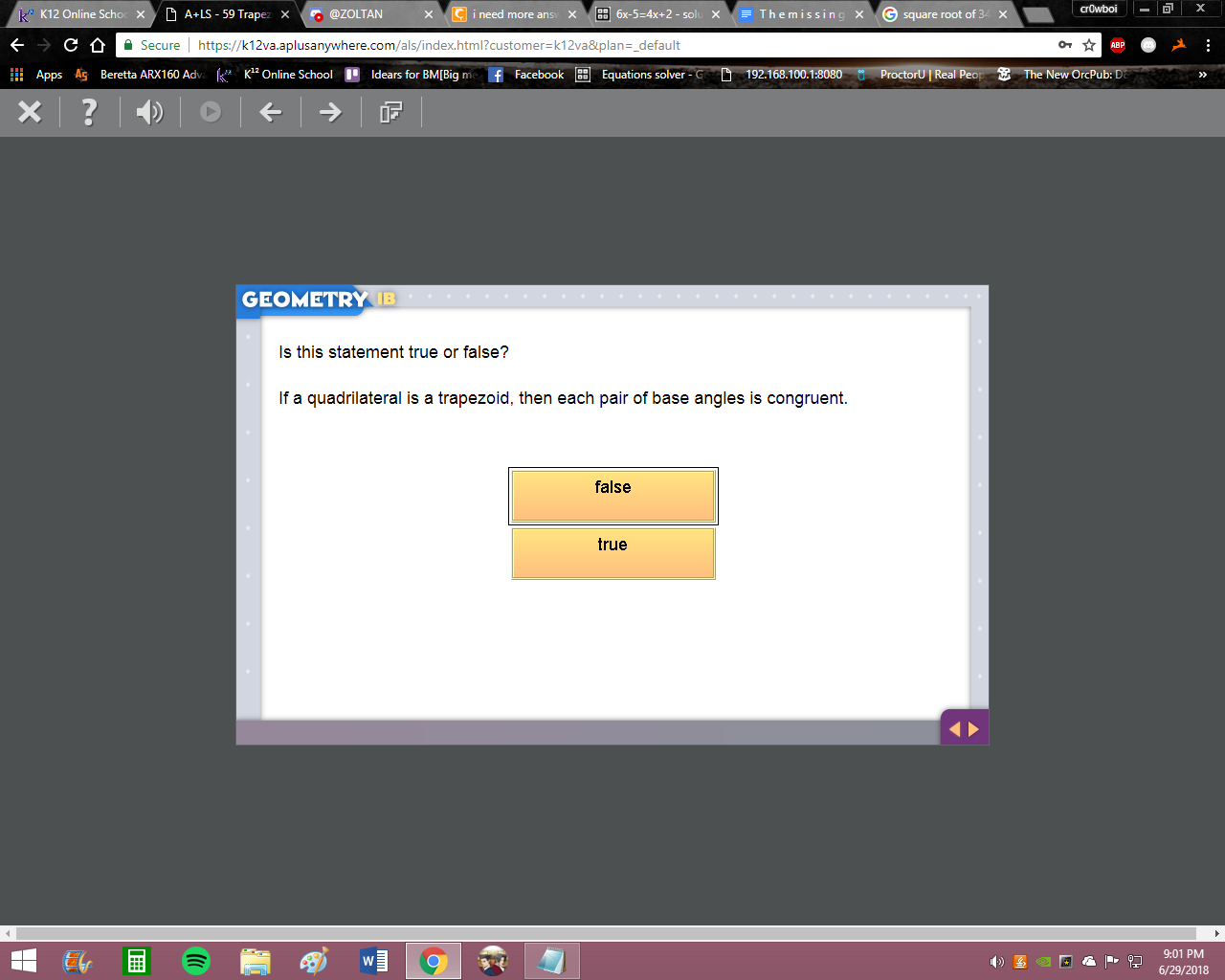
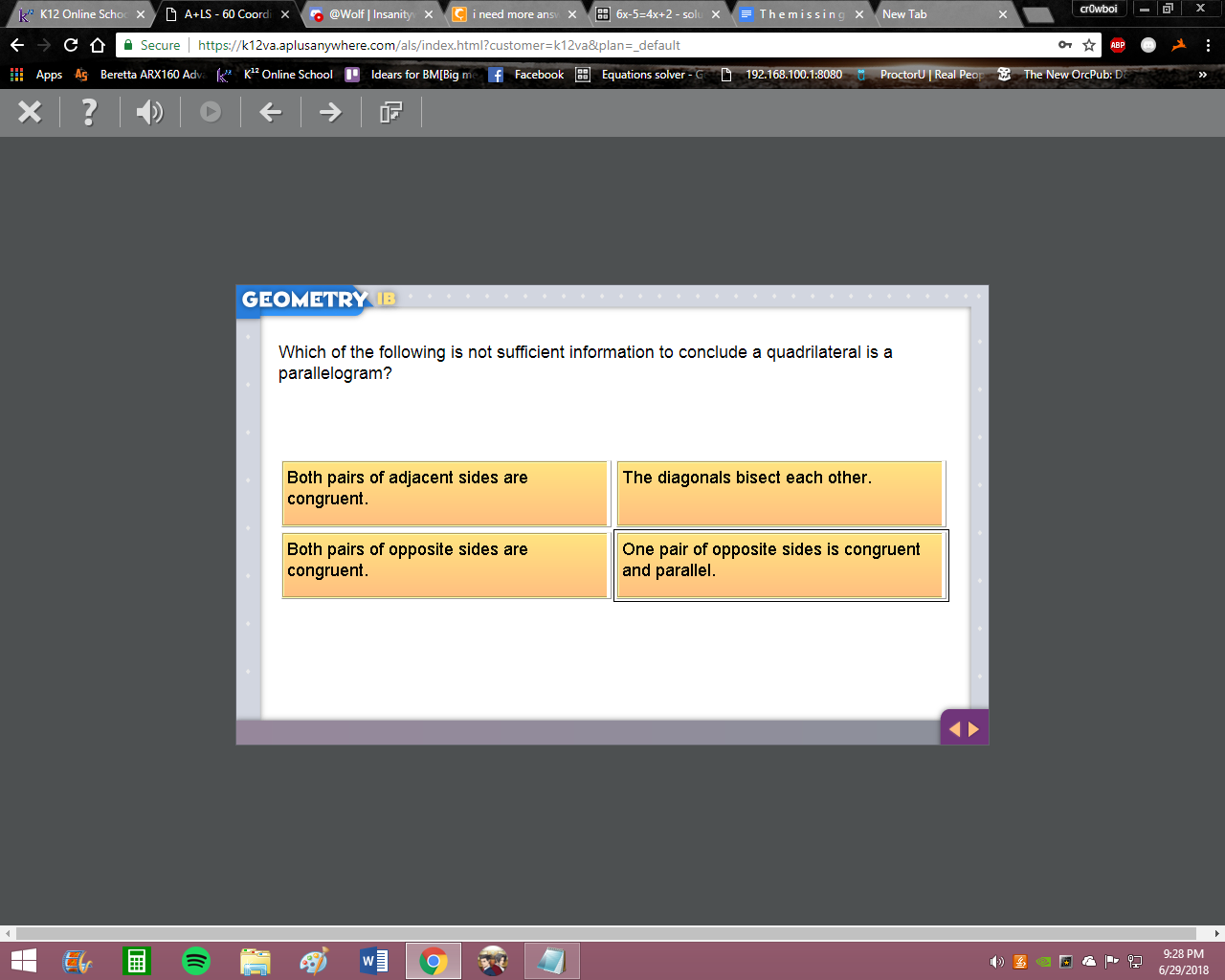
D is actually a true statement (one pair congruent + parallel = parallelogram) let's look at A again |dw:1530332968514:dw| if adjacent sides are congruent we have a kite not a parallelogram so A is the best choice here
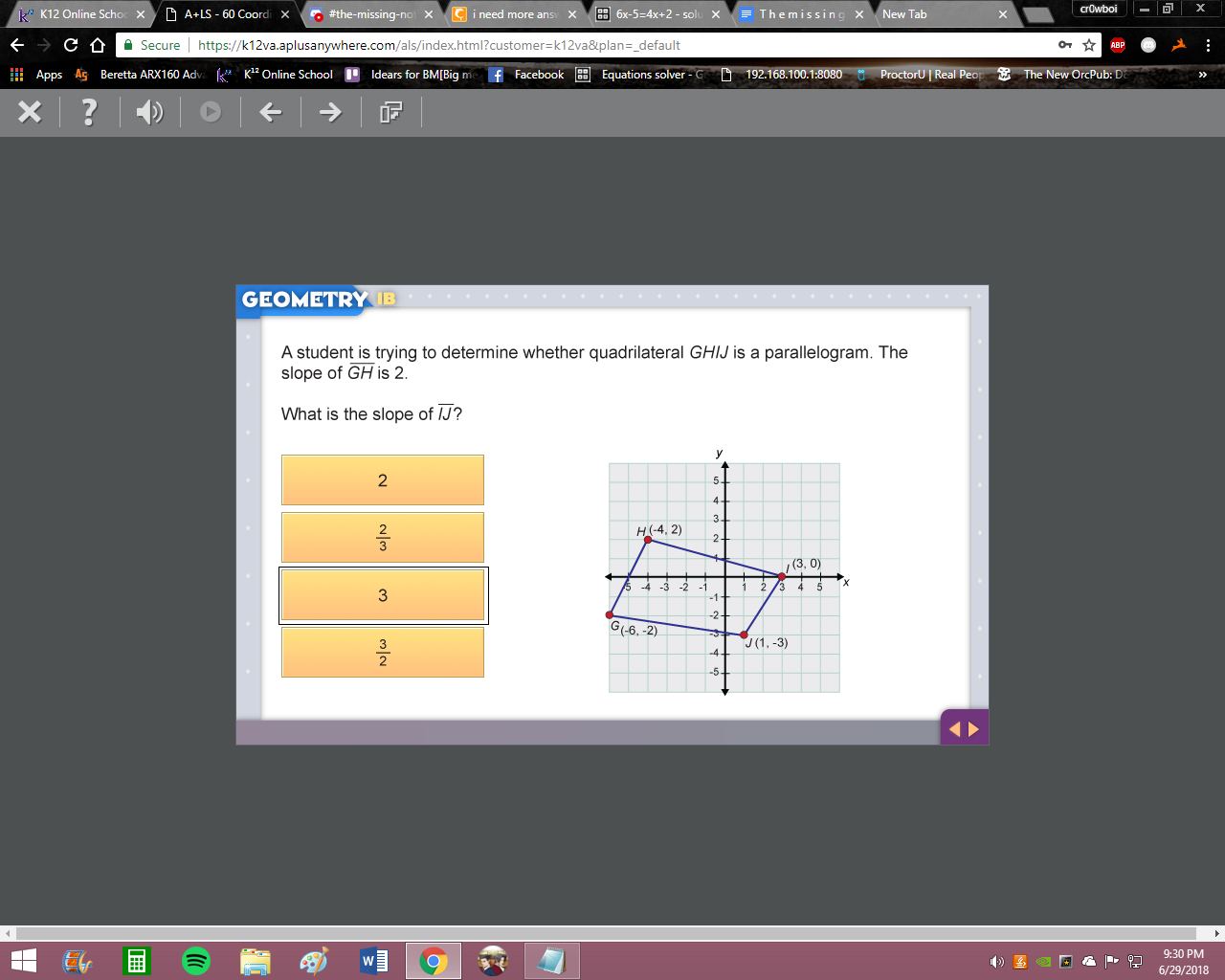 Mercury:
hm. not quite. slope = rise/run notice how it's rising 3 units and running 2 units
princeevee:
so 3/2?
Mercury:
good
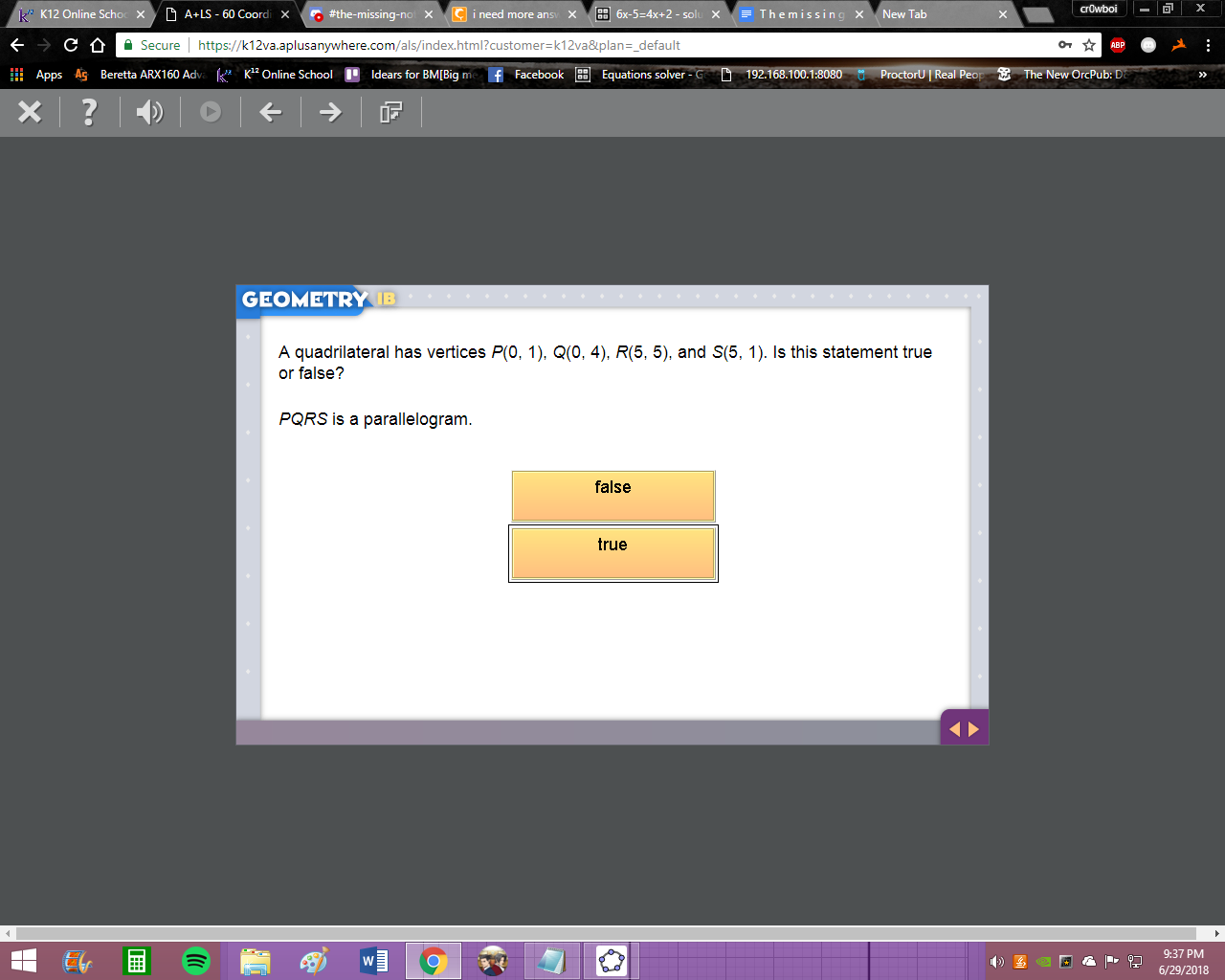
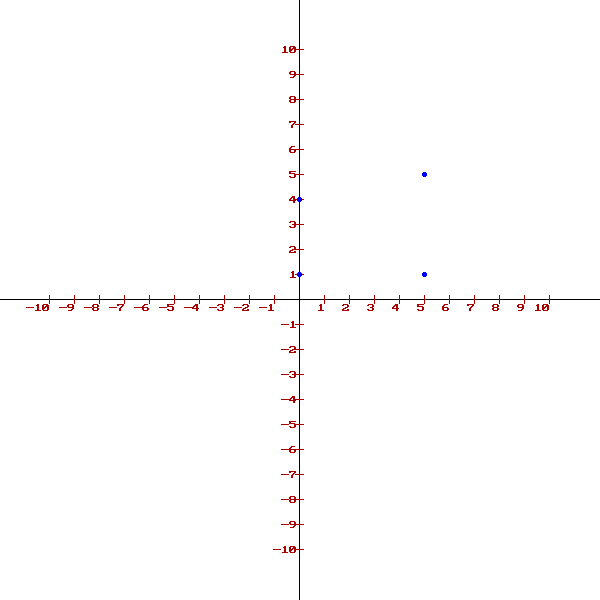
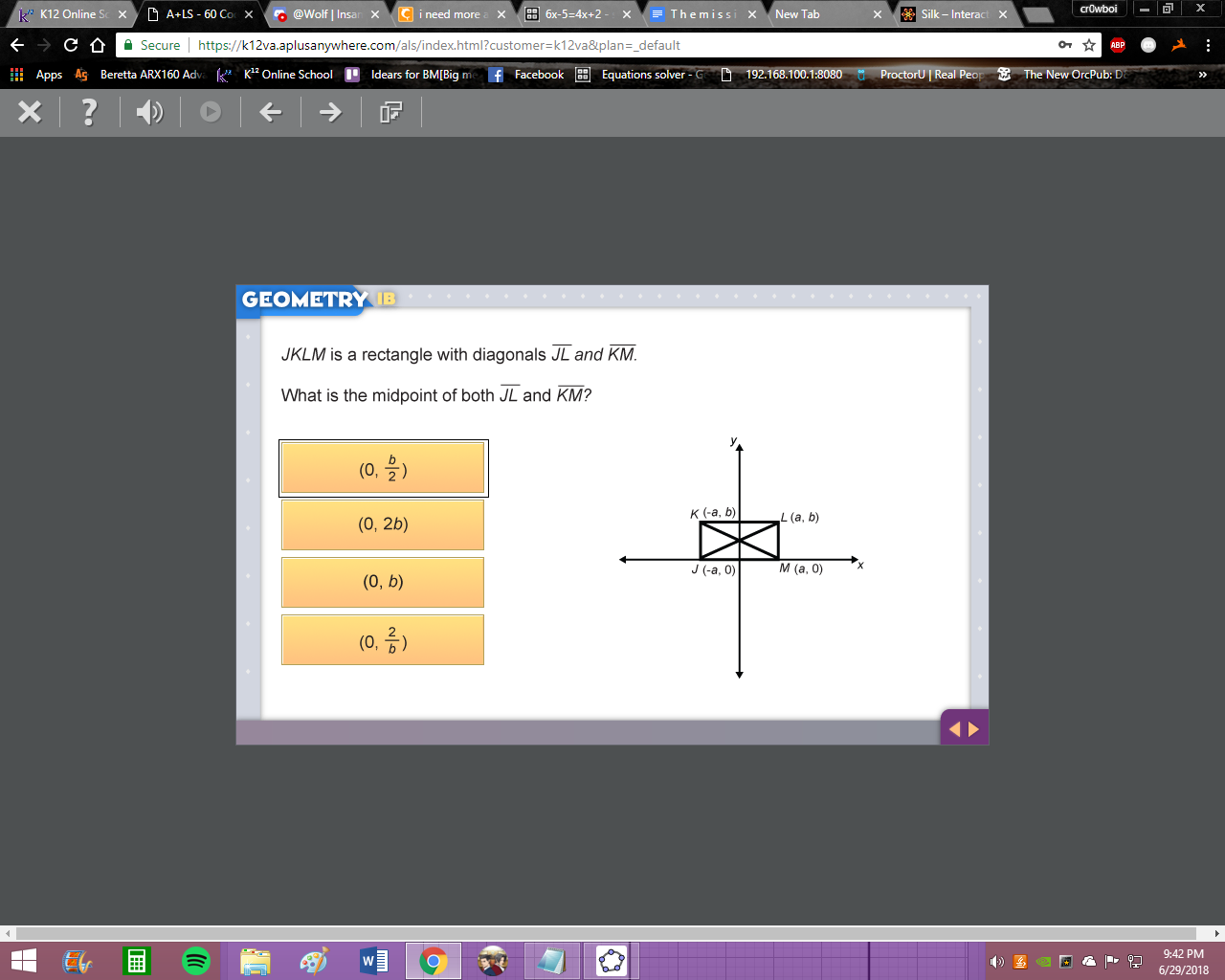 Mercury:
good
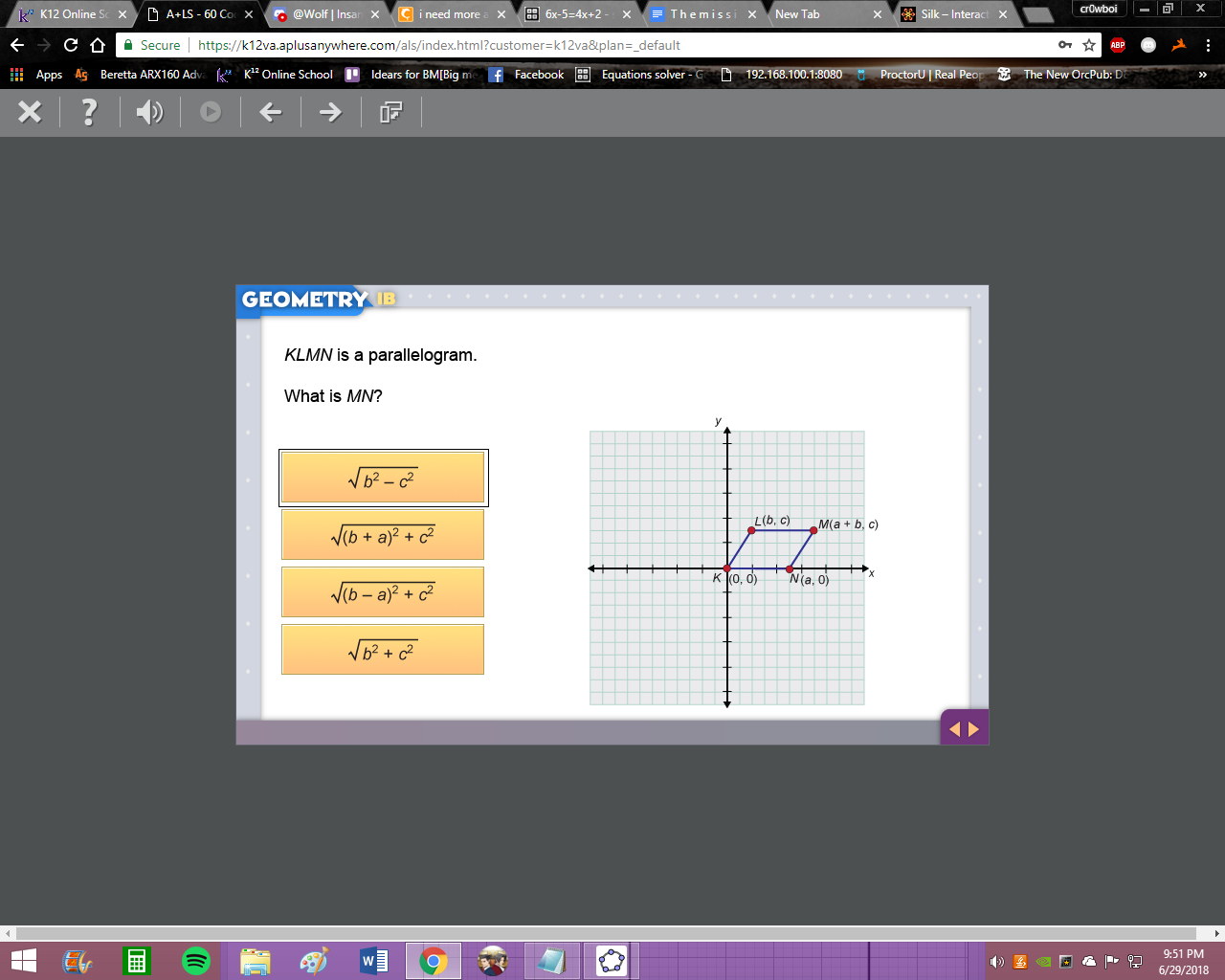 Mercury:
close but not quite the pythagorean theorem is leg^2 + leg^2 not leg^2 - leg^2 so the last choice should be it
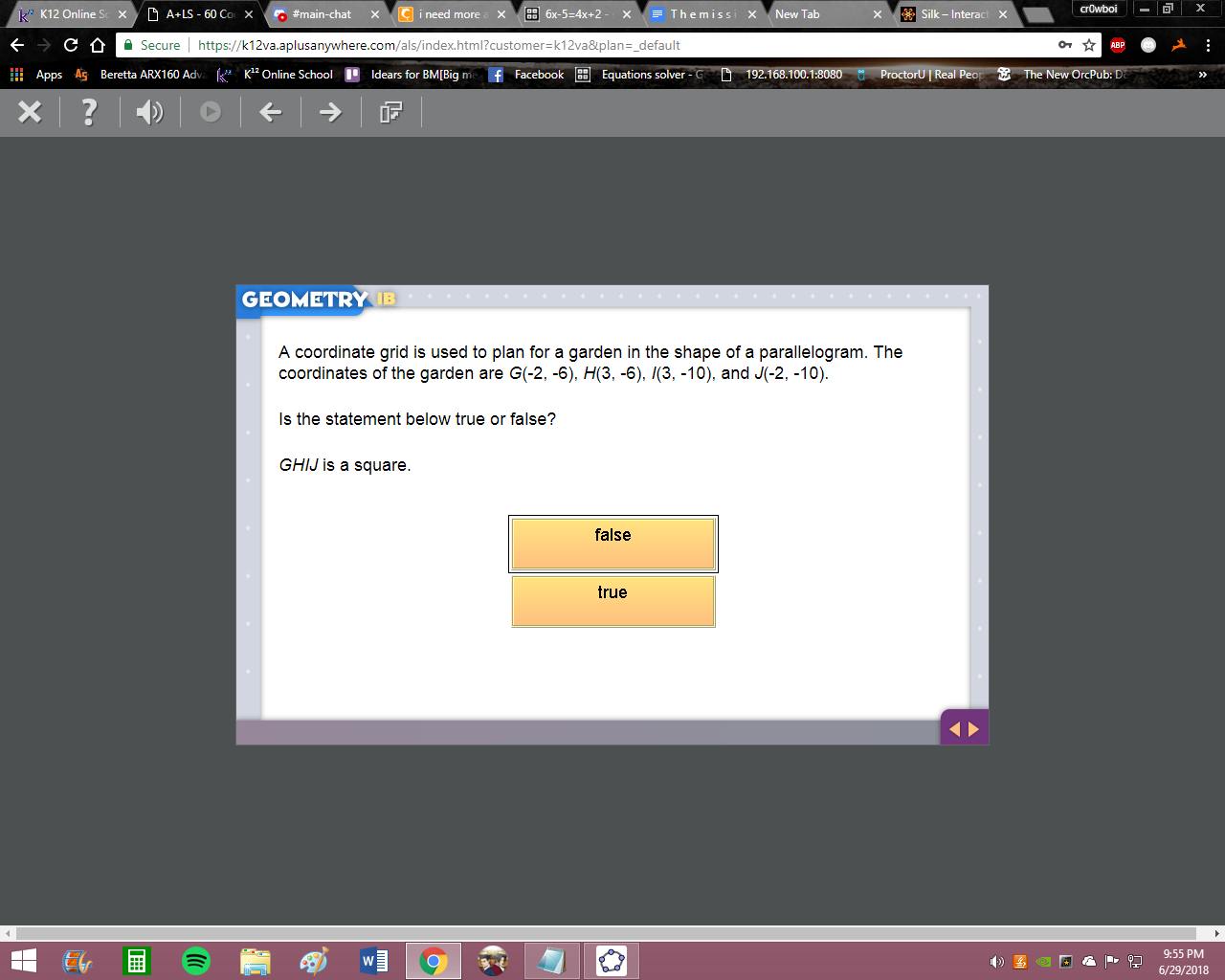 Mercury:
good (sorry that took a while, was trying to figure out some software thing)
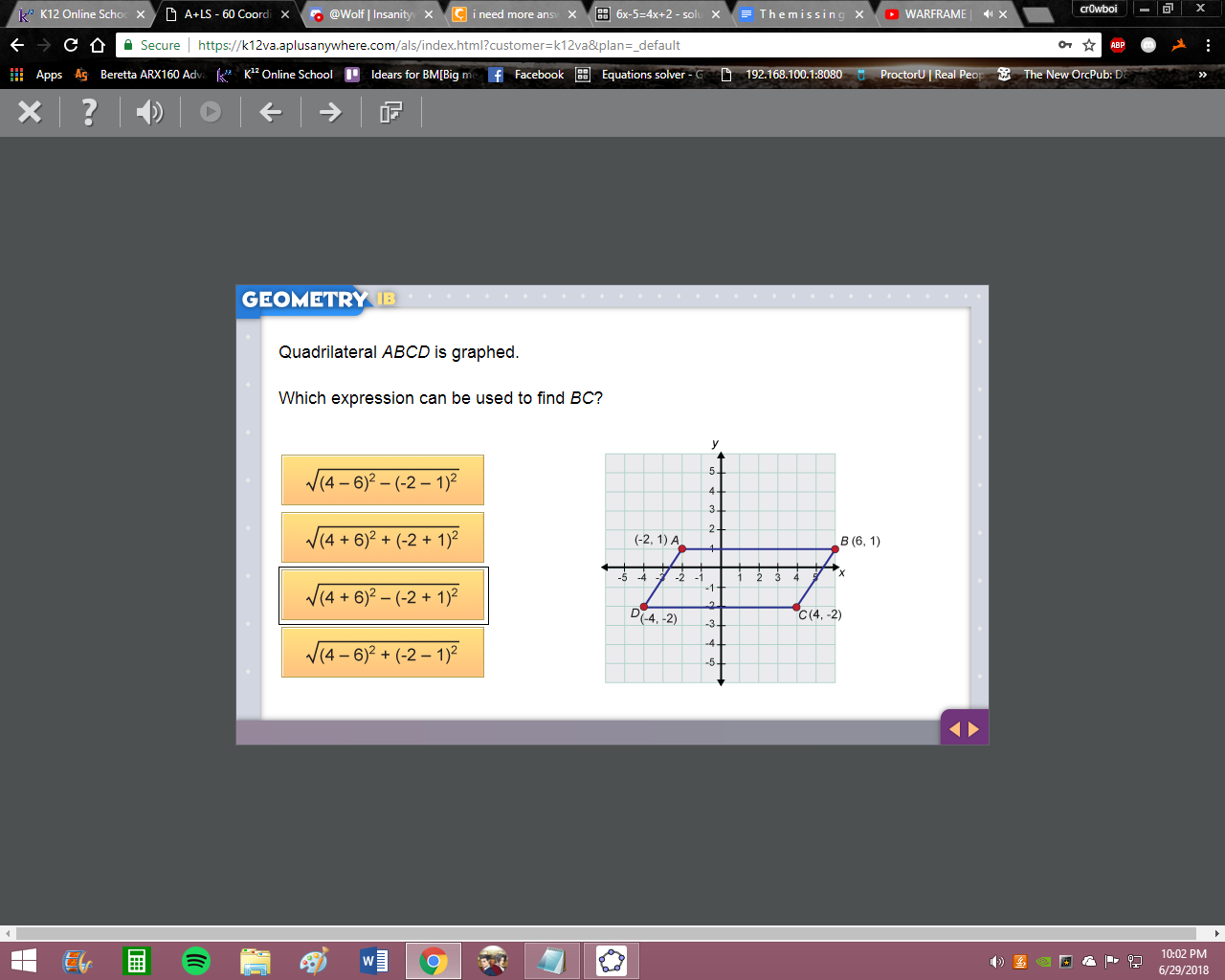 Mercury:
|dw:1530335049710:dw| check again the formula states that there should be subtraction inside the parentheses, and addition between them
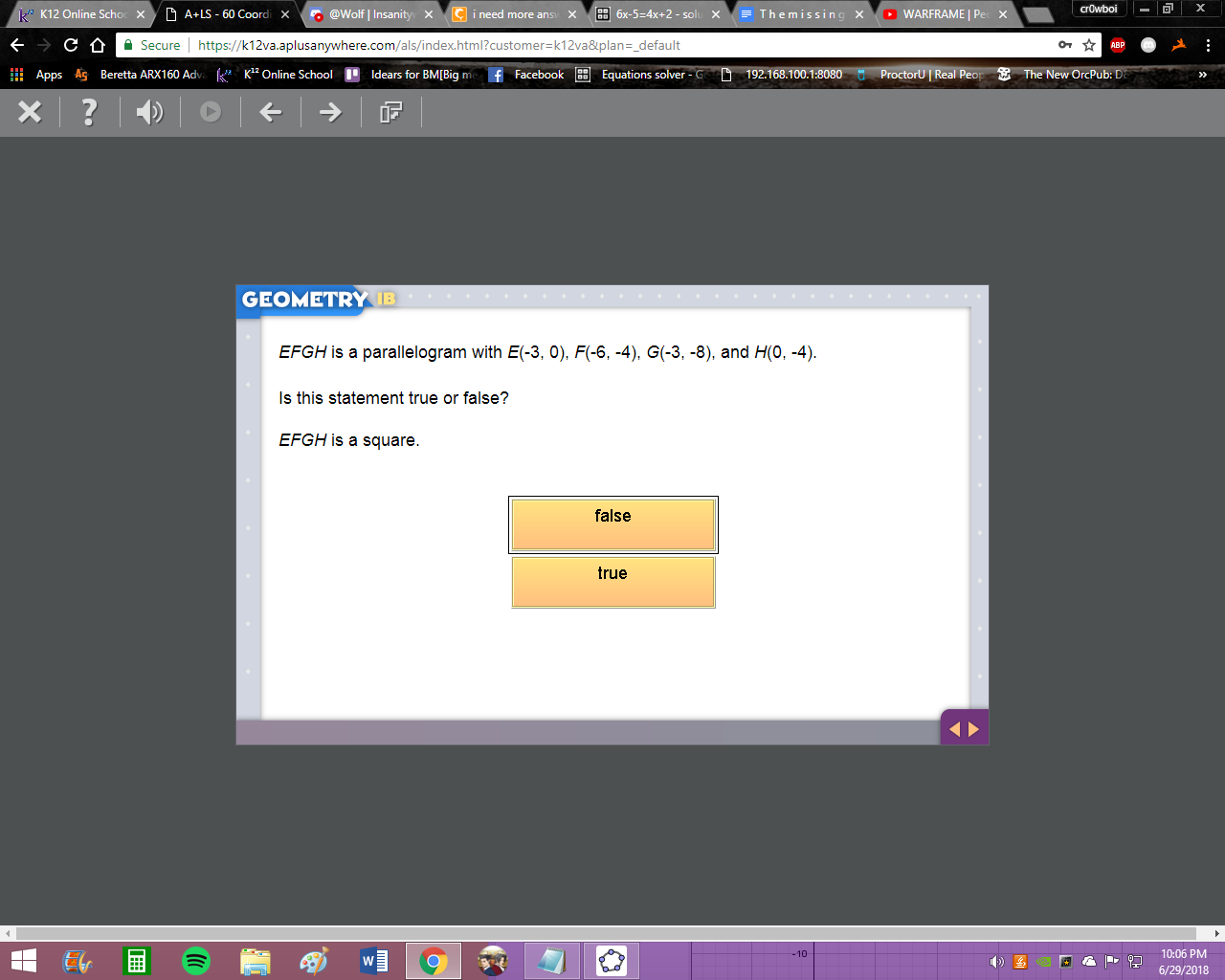 Mercury:
good
Join our real-time social learning platform and learn together with your friends!
 Demon25:
For a hoco proposal with a cheerleader and football player, what else should be a
Demon25:
For a hoco proposal with a cheerleader and football player, what else should be a

 Breathless:
TOC: "MGF any confirmation on the commander? we require confirmation as soon as[radio static].
Breathless:
TOC: "MGF any confirmation on the commander? we require confirmation as soon as[radio static].
 EdwinJsHispanic:
I wrote something that I don't know if I want it as a poem or song, Please let me know on yours thoughts about it, I'm still doing this! "Broken promises an
EdwinJsHispanic:
I wrote something that I don't know if I want it as a poem or song, Please let me know on yours thoughts about it, I'm still doing this! "Broken promises an
 thehearken:
hi um I don't know if this is the right section for this, but can someone go over my poem and tell me if its good enough to give my English professor for a
thehearken:
hi um I don't know if this is the right section for this, but can someone go over my poem and tell me if its good enough to give my English professor for a
 heartlessprophet:
Aye what's 19z%u00f74p=9u03c0 my teacher thinking of impossible questions for us
heartlessprophet:
Aye what's 19z%u00f74p=9u03c0 my teacher thinking of impossible questions for us
 kippppp:
does anyone have any good tips for writing stories? i'm trying to write a dnd campaign but i'm not that great of a writer yet.
kippppp:
does anyone have any good tips for writing stories? i'm trying to write a dnd campaign but i'm not that great of a writer yet.
 GRIZZLEY19:
Y'all let me know what y'all think about this beat I made I took me like a hour maybe rate it 0/10 https://drive.
GRIZZLEY19:
Y'all let me know what y'all think about this beat I made I took me like a hour maybe rate it 0/10 https://drive.
 Ultrilliam:
Welcome to the 10th Anniversary Update! (Part 2) Sorry this one passed the date a
Ultrilliam:
Welcome to the 10th Anniversary Update! (Part 2) Sorry this one passed the date a
 Twaylor:
was walking downtown and my adhd brain wanted to make some (rock?) lyrics: There'
Twaylor:
was walking downtown and my adhd brain wanted to make some (rock?) lyrics: There'