
 princeevee:
i need some answers checked
princeevee:
@Vocaloid last day, my friend, we have to work fast, if that's okay with you
princeevee:
@Mercury
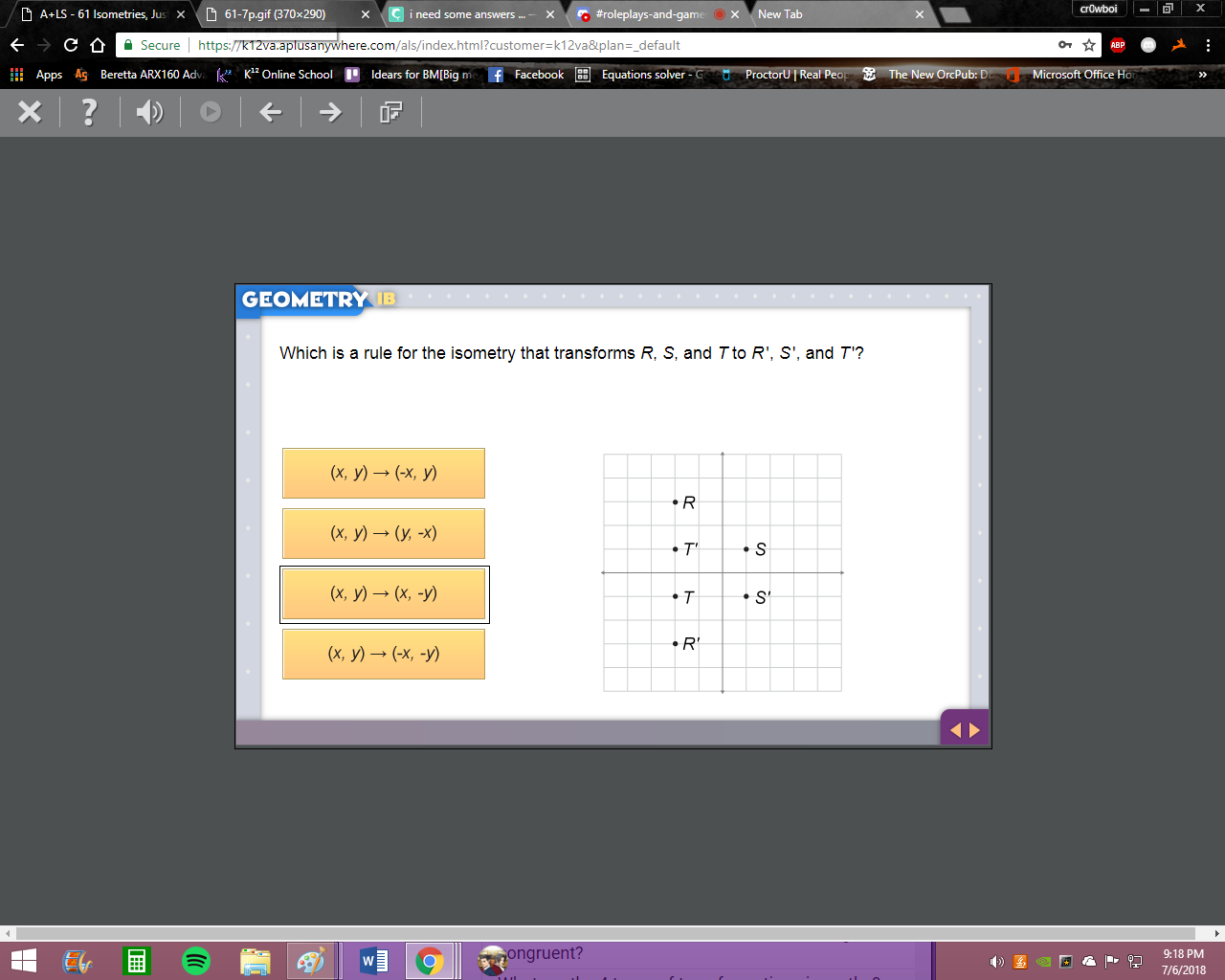
 Vocaloid:
good
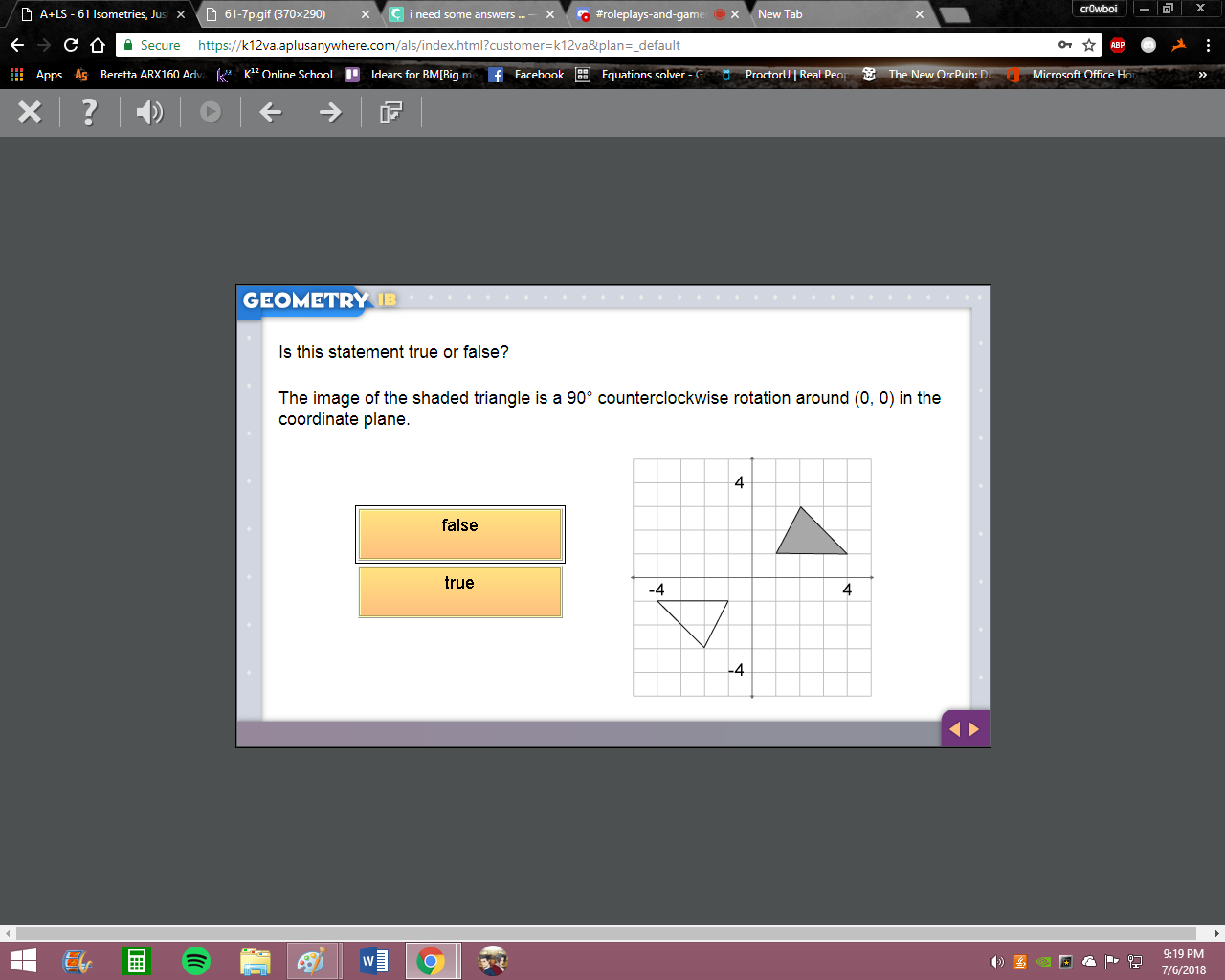 Vocaloid:
good
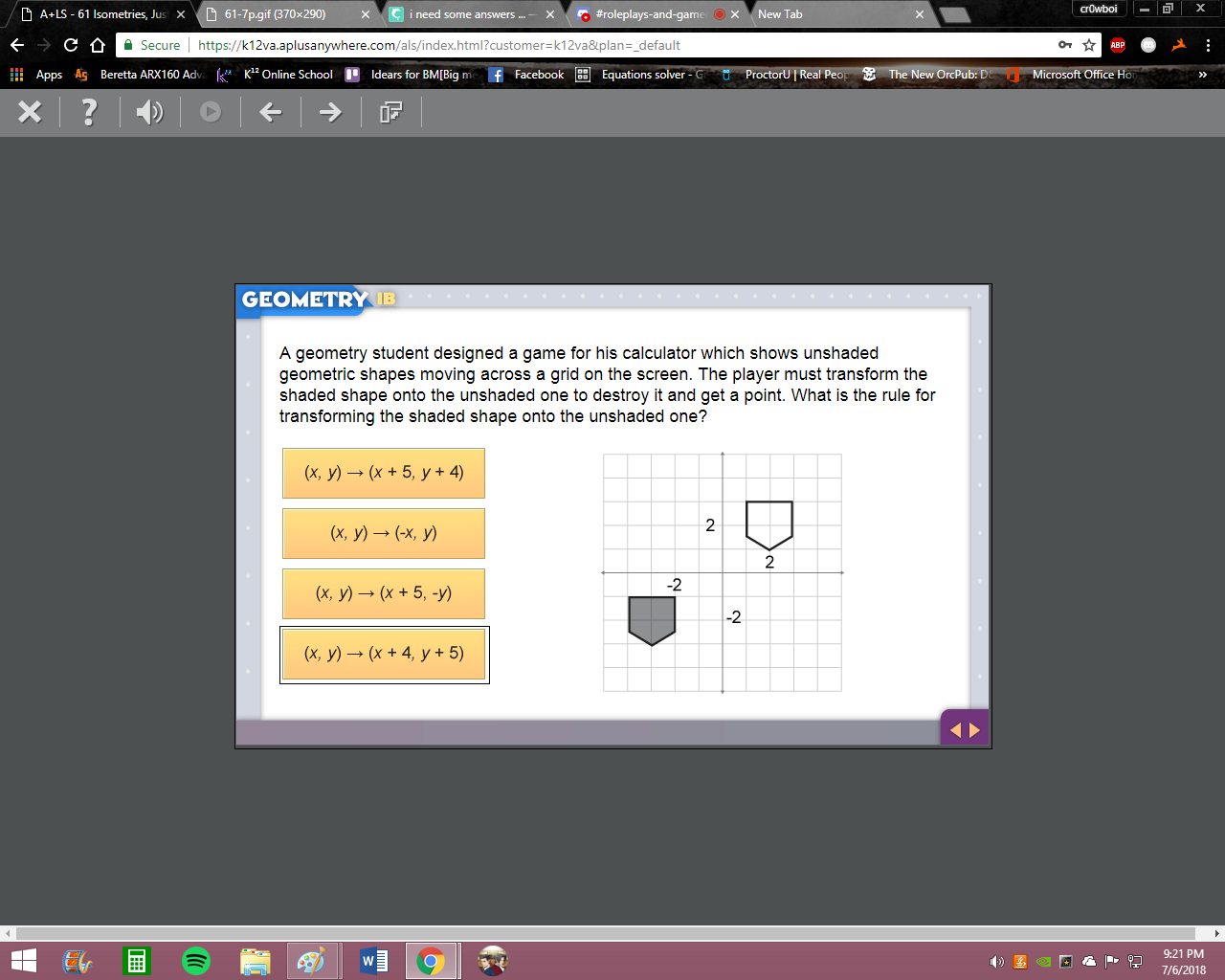 Vocaloid:
other way around (x moves across 5 units, y down 4 units) so x + 5 y + 4 choice the first
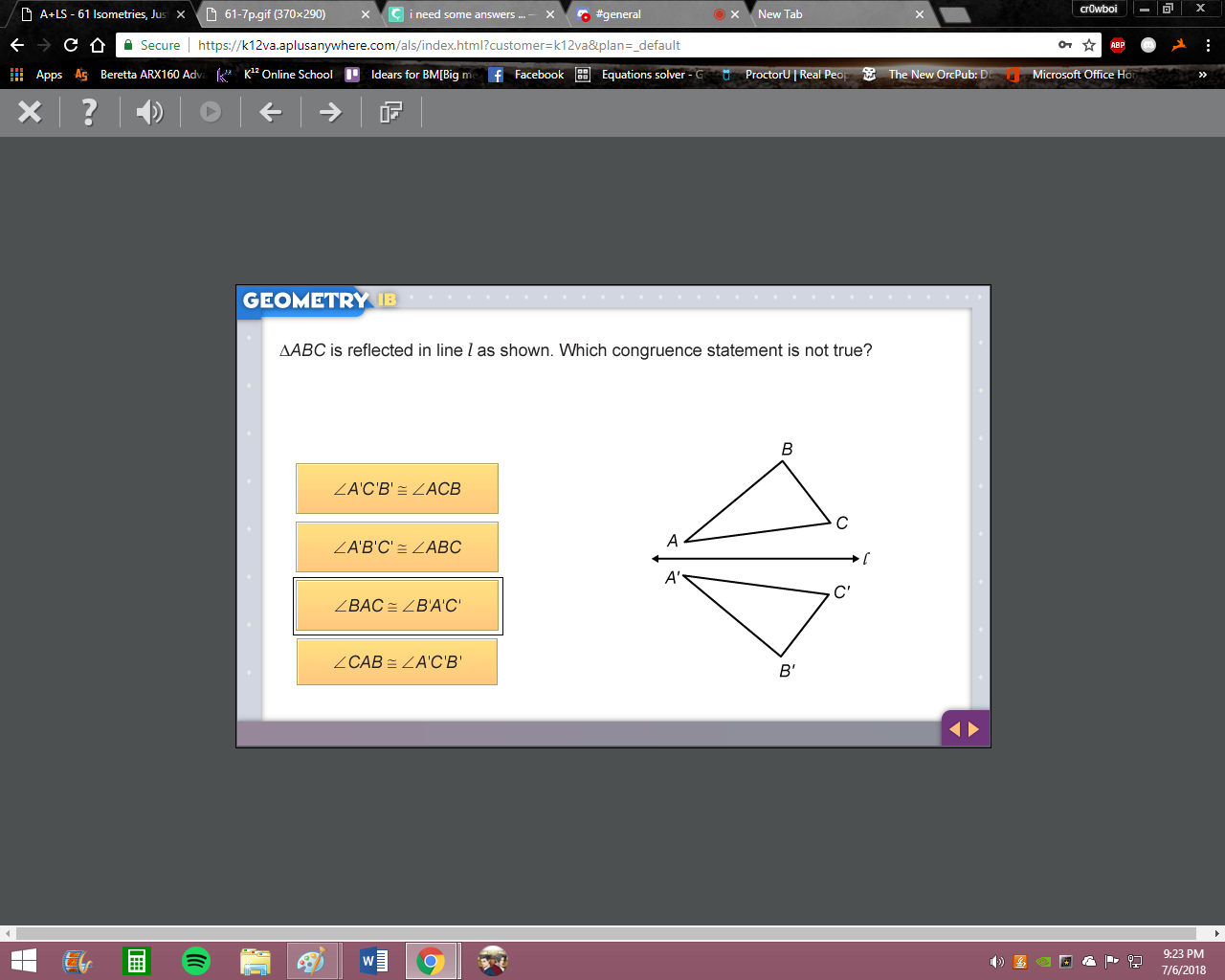 Vocaloid:
it asks which one is ~not~ true so its the one where the letters on both sides aren't in the same order (choice 4)
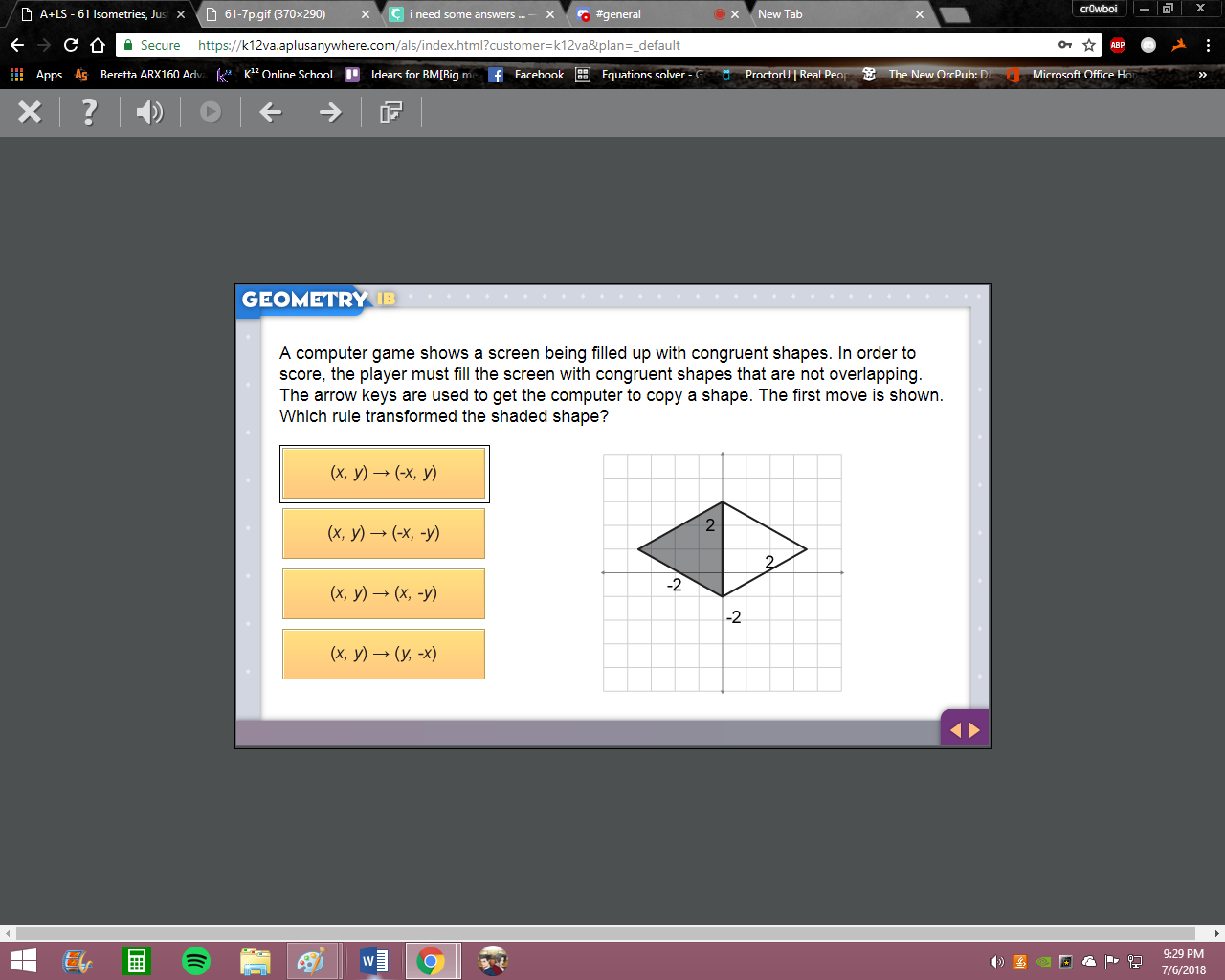 Vocaloid:
good
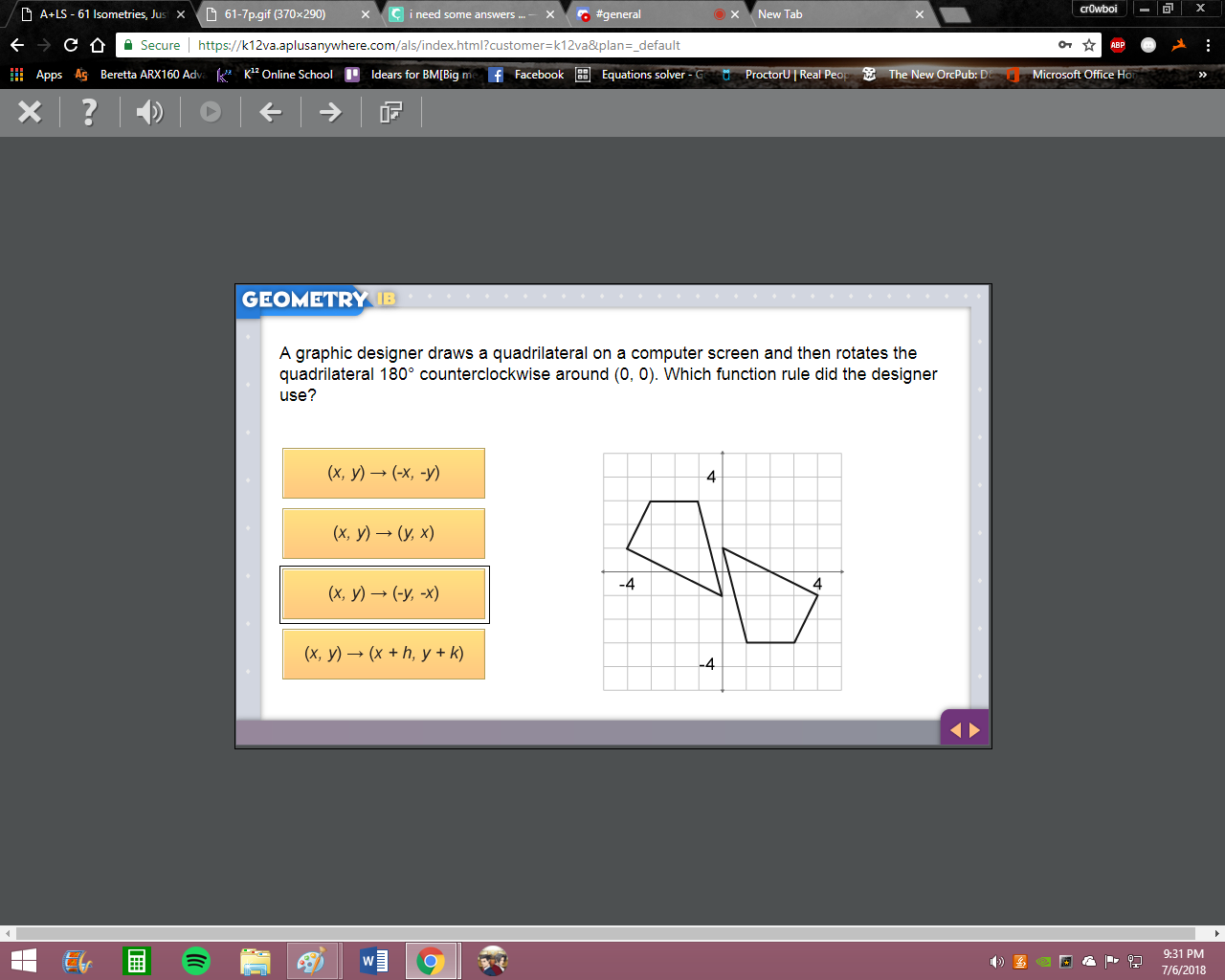 Vocaloid:
good
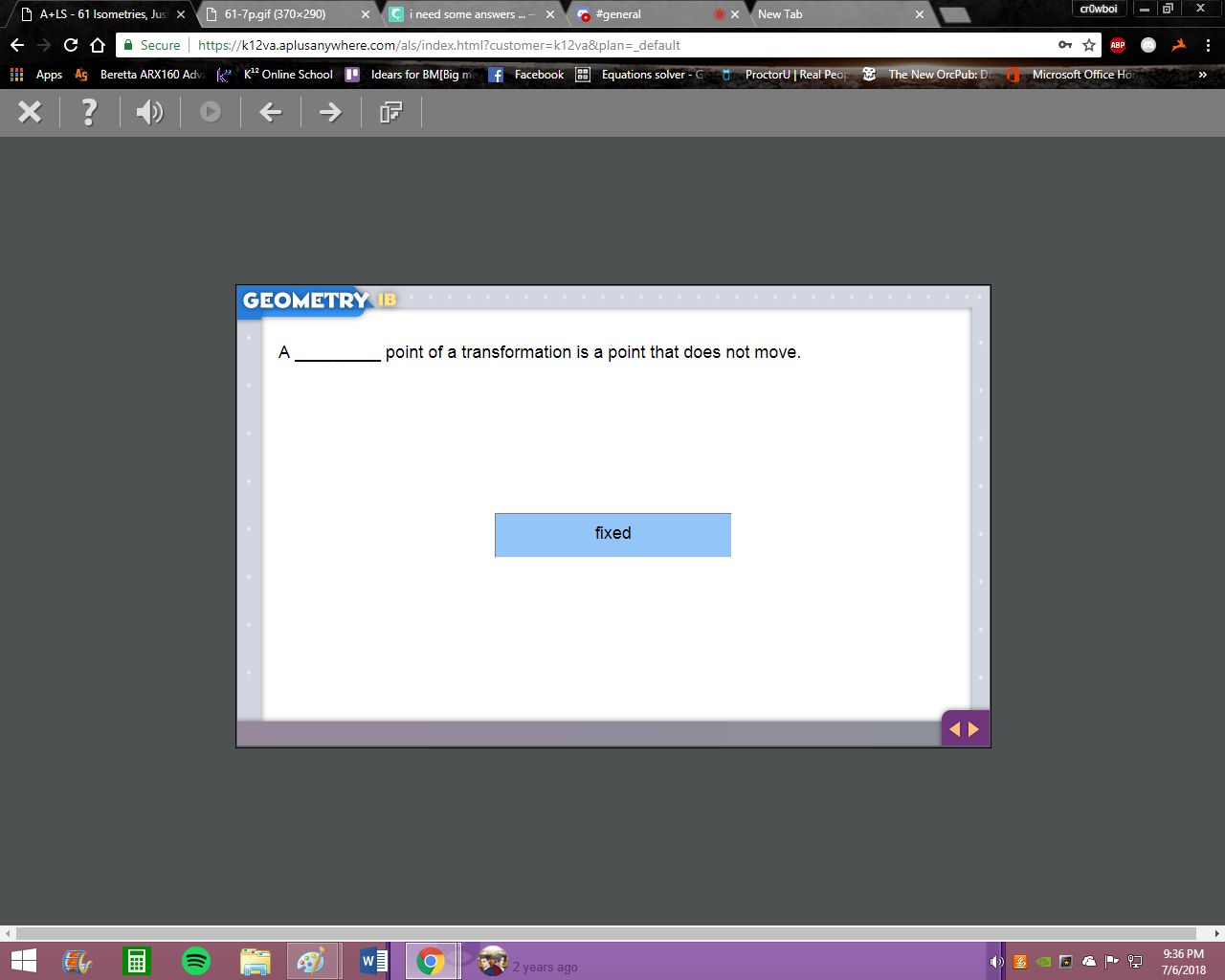 Vocaloid:
good
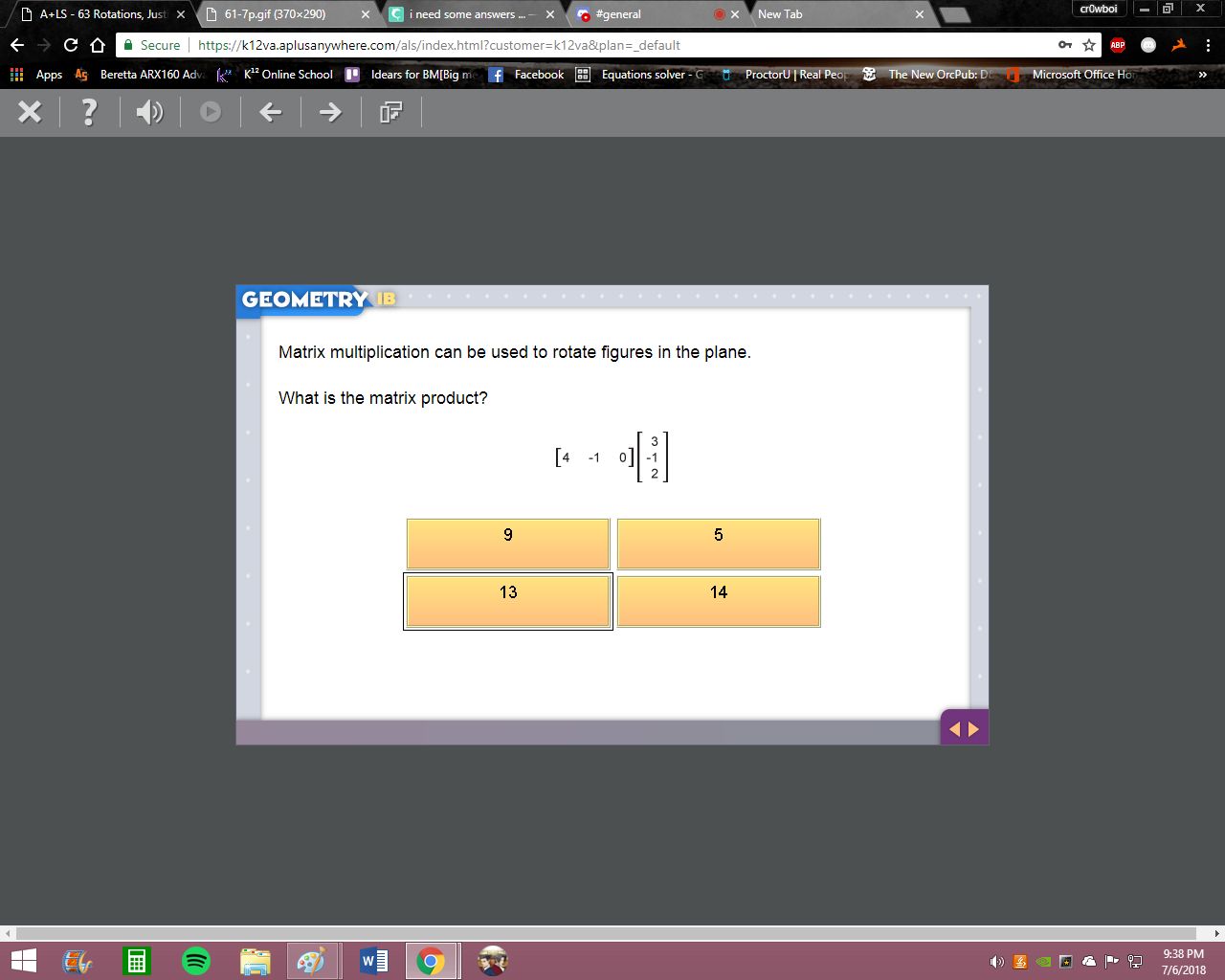 Vocaloid:
good
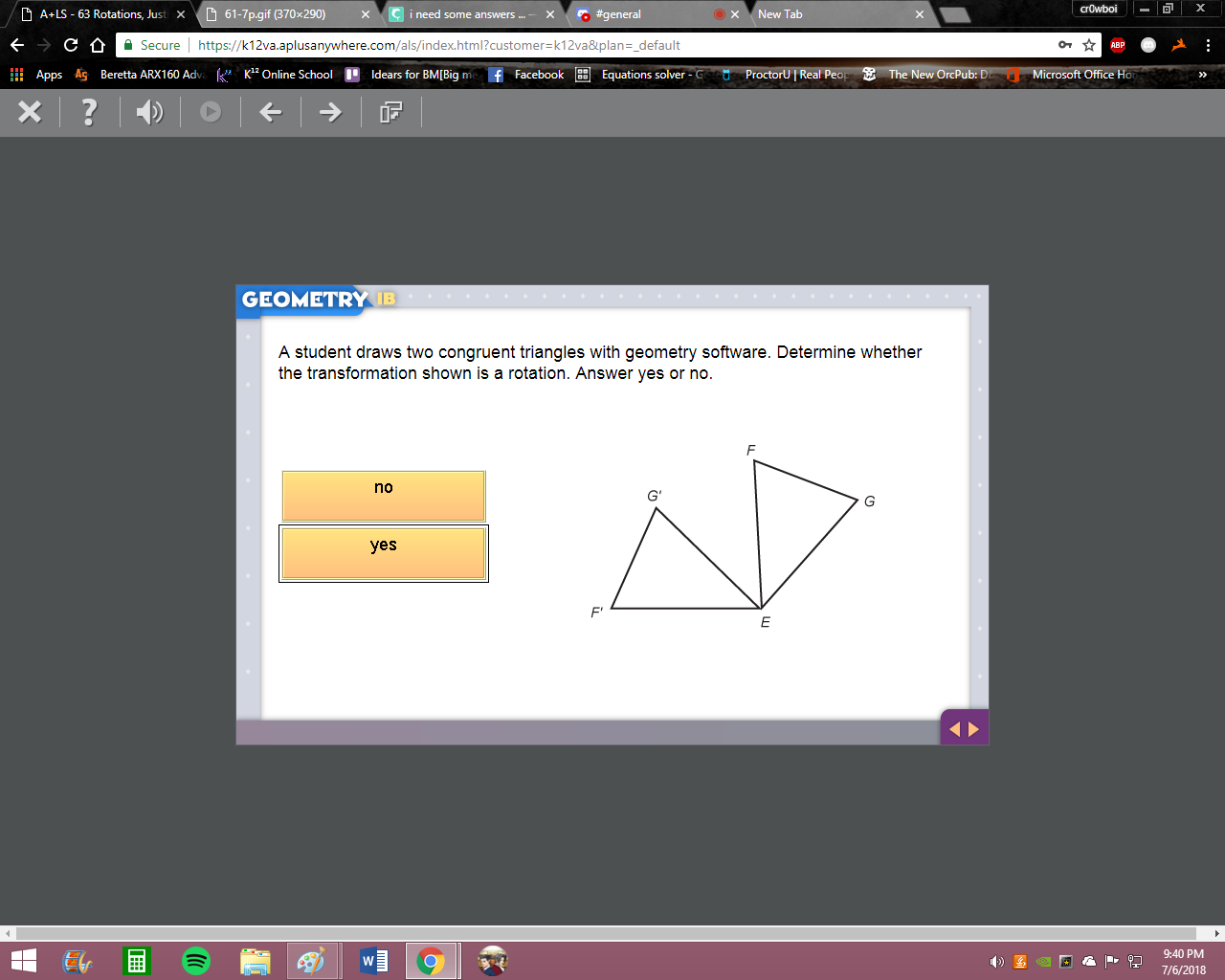 Vocaloid:
good
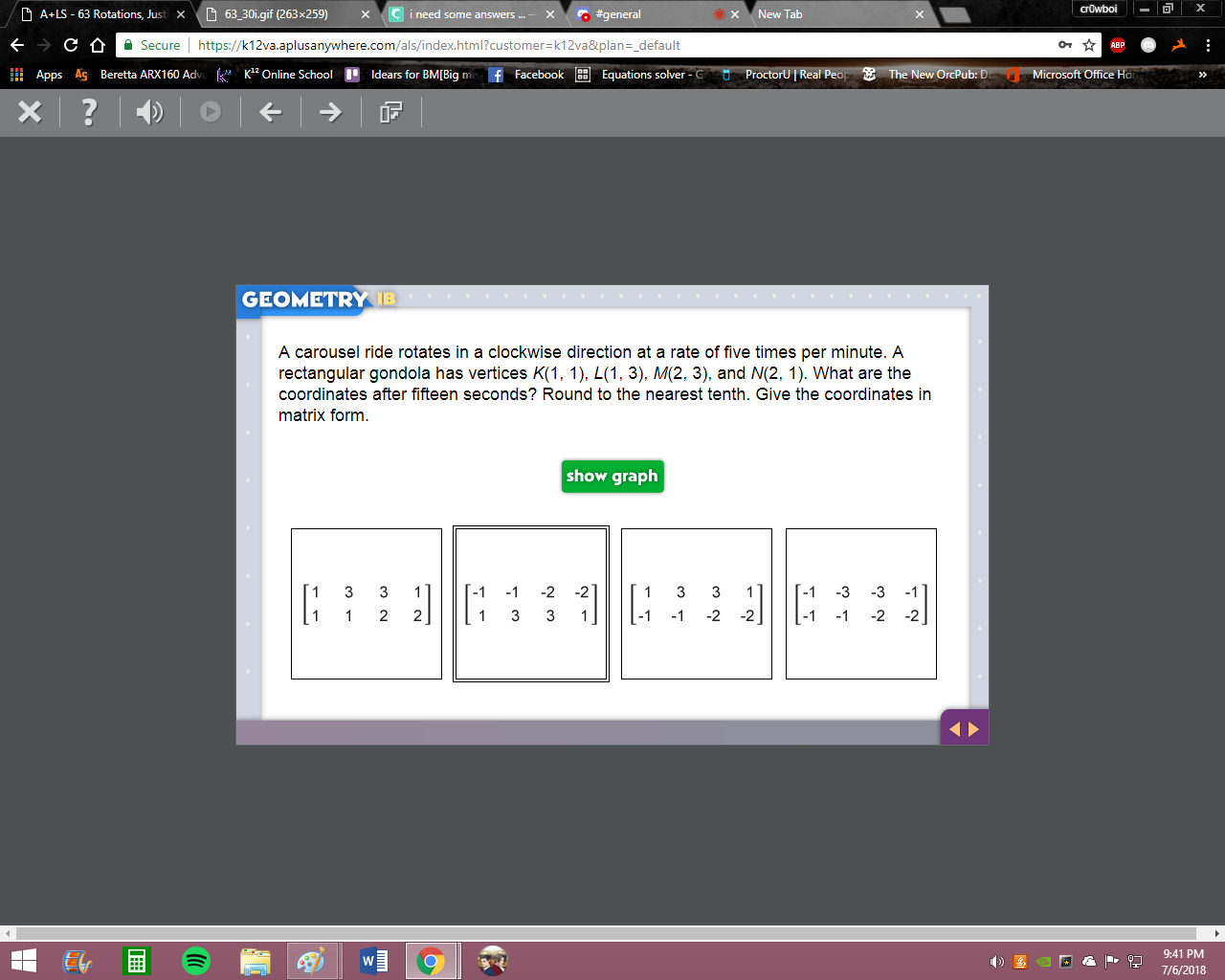
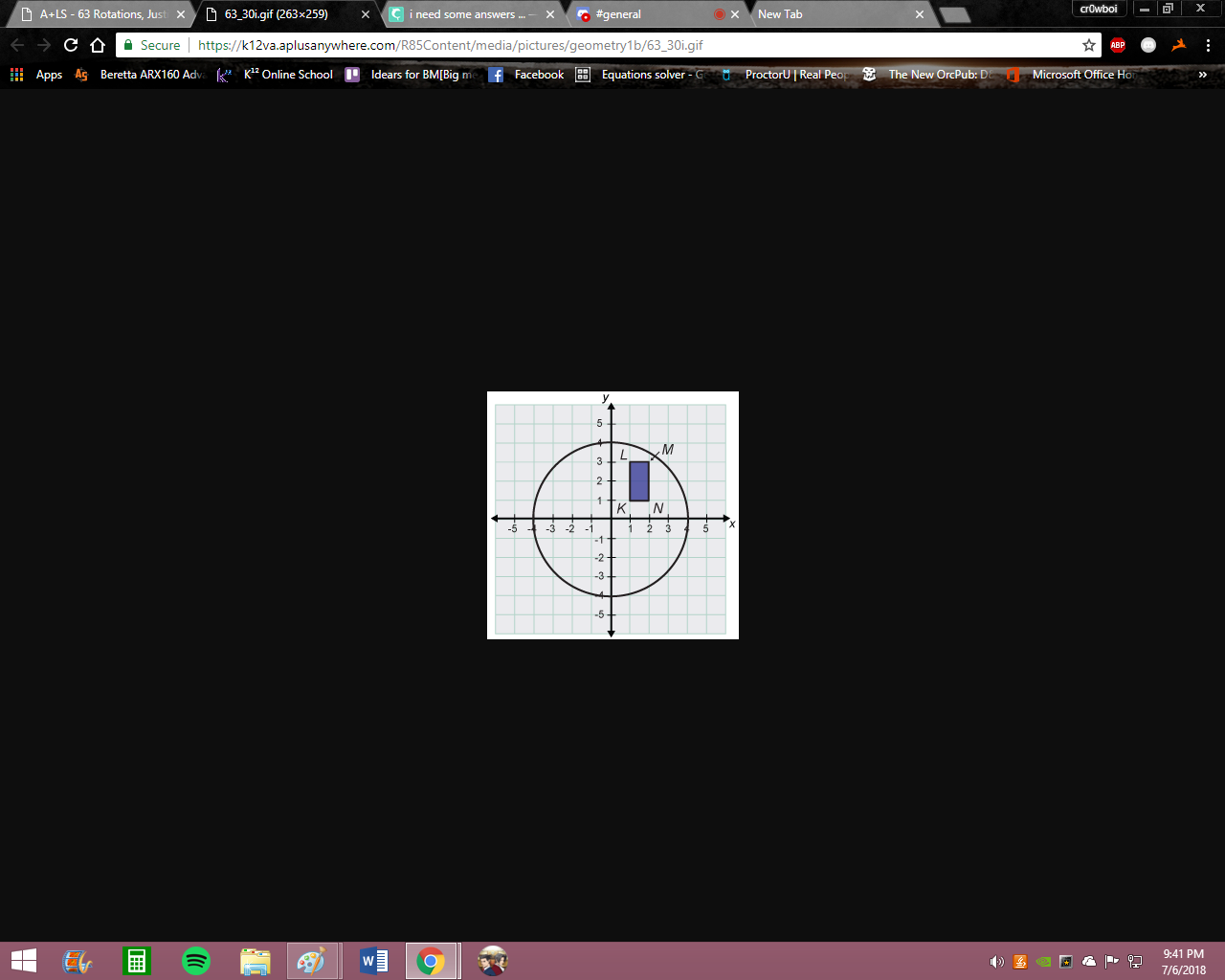 Vocaloid:
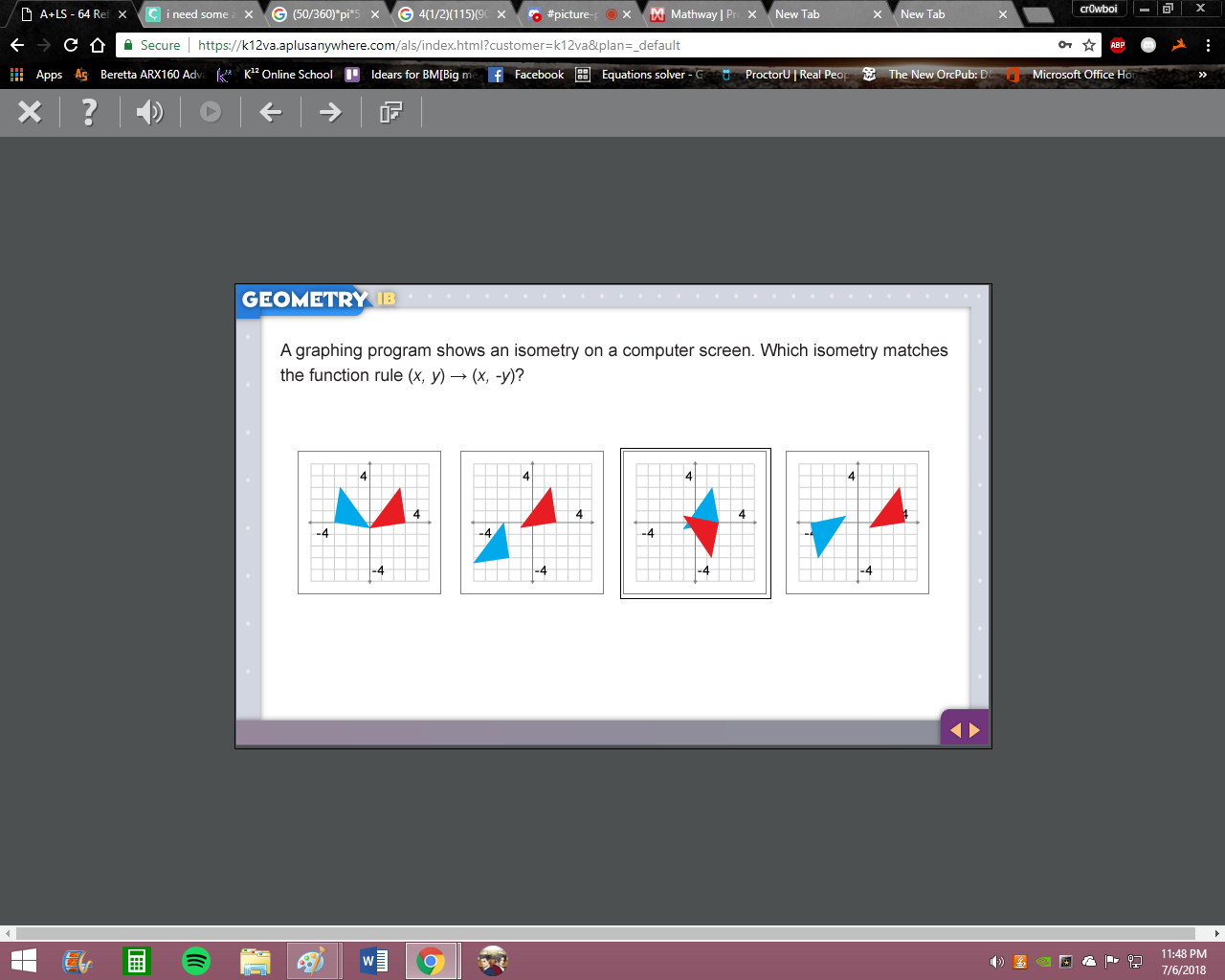
question is not well written but I believe they want a 90 degree clockwise rotation which means you would multiply the y-coordinates by -1 not the x-coordinates (see option 3)
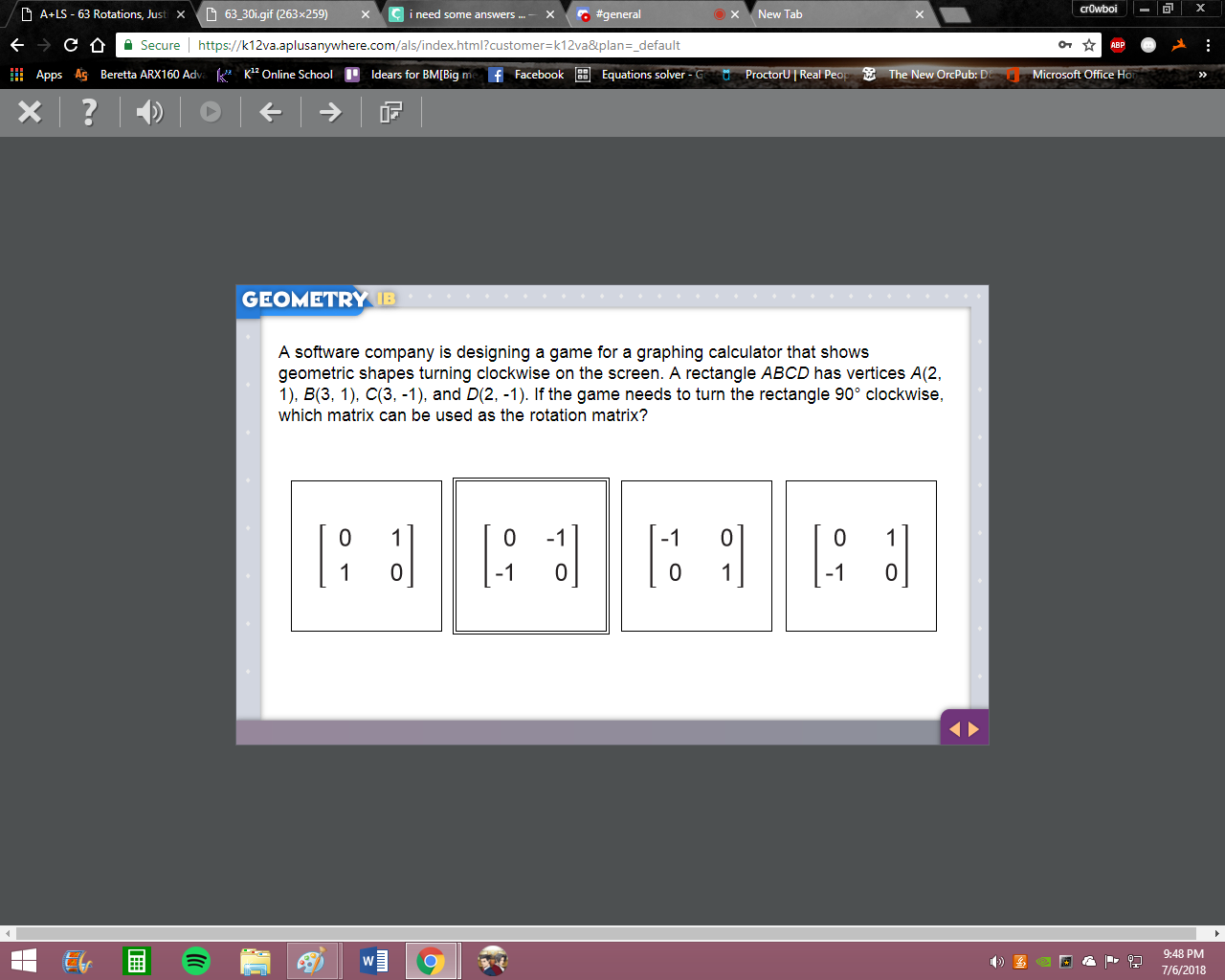 Vocaloid:
|dw:1530939010720:dw| note: your problem asks for a 90 degree clockwise which is the same as 270 clockwise so the third matrix on this picture (fourth choice on your problem)
 Vocaloid:
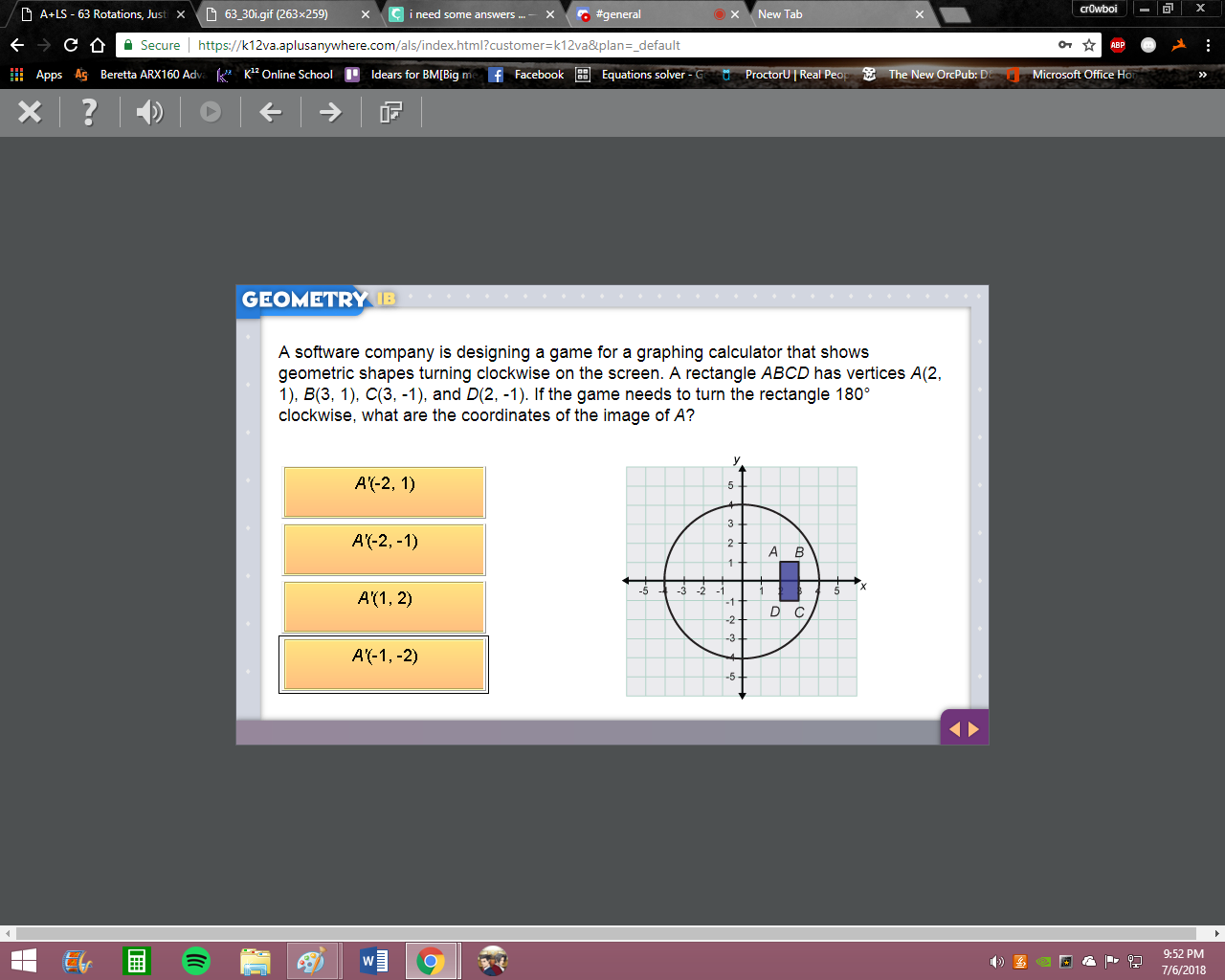
close the original coordinates are (2,1) and the rule for rotating 180 degrees is to multiply both coordinates by -1 so (-2,-1)
 Vocaloid:
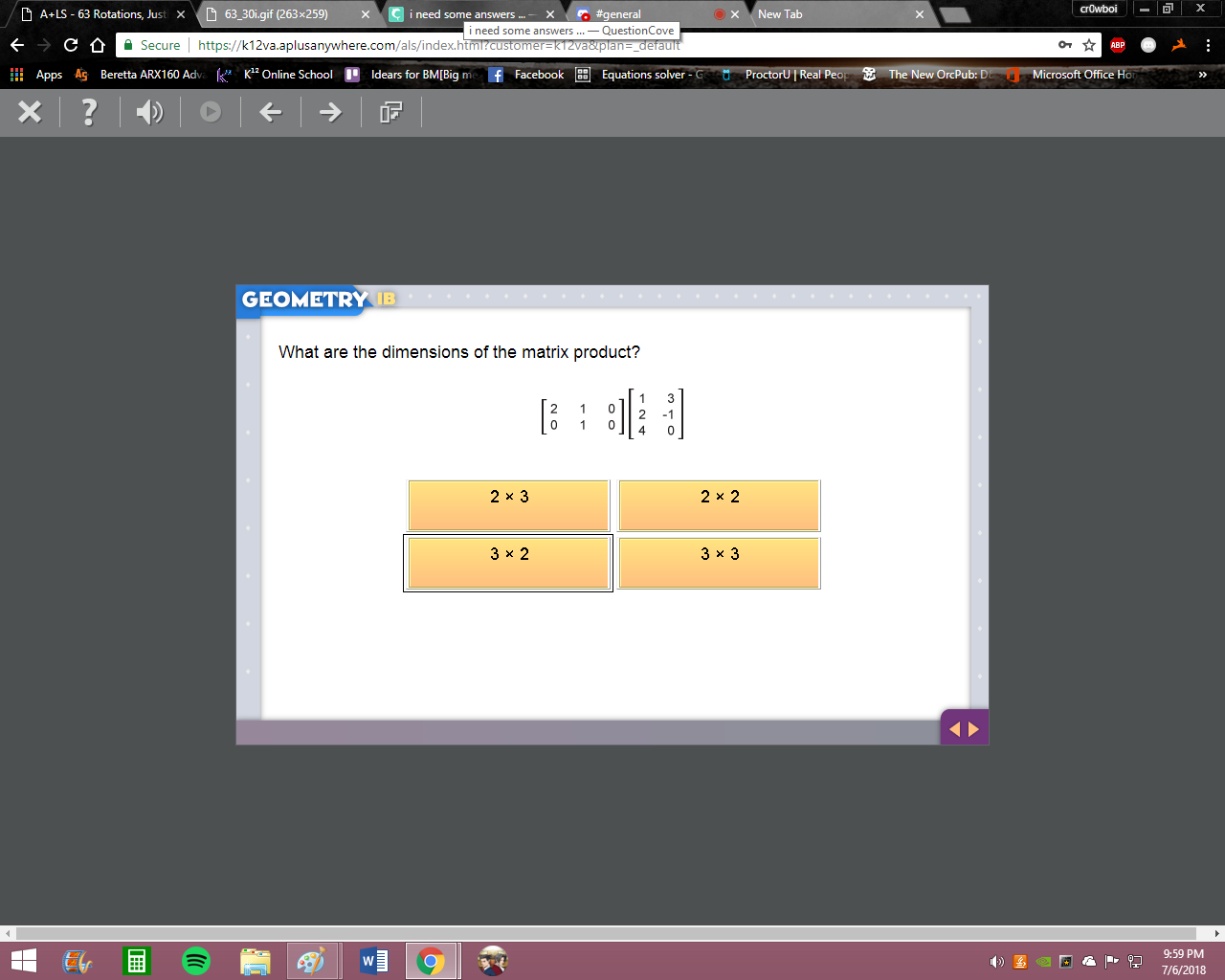
check again you have a 2 x 3 matrix and a 3 x 2 matrix, so we take the outer numbers 2 and 2 to get 2 x 2
 Vocaloid:
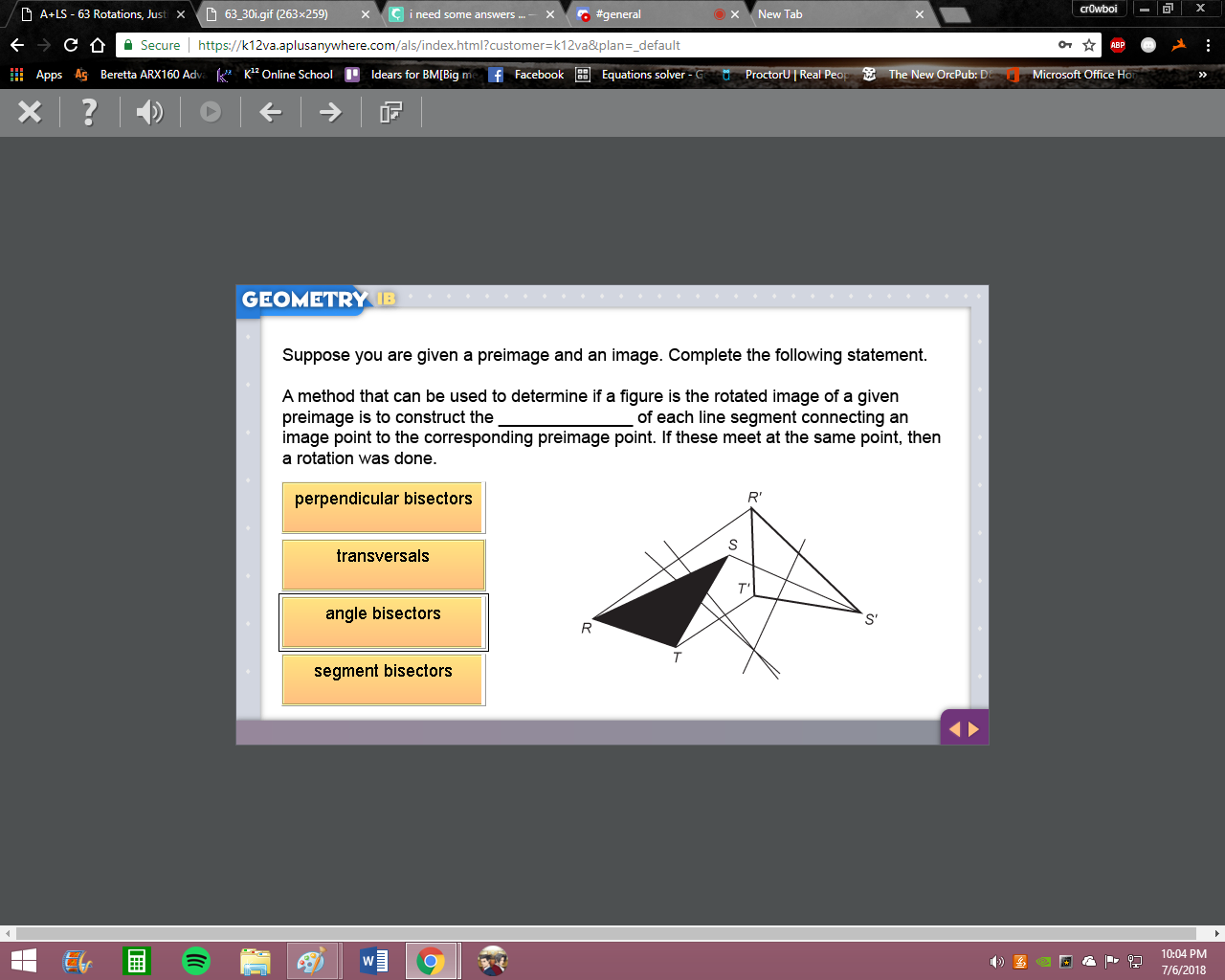
had to look this one up tbh but it's perpendicular bisectors https://www.illustrativemathematics.org/content-standards/tasks/1913
 Vocaloid:
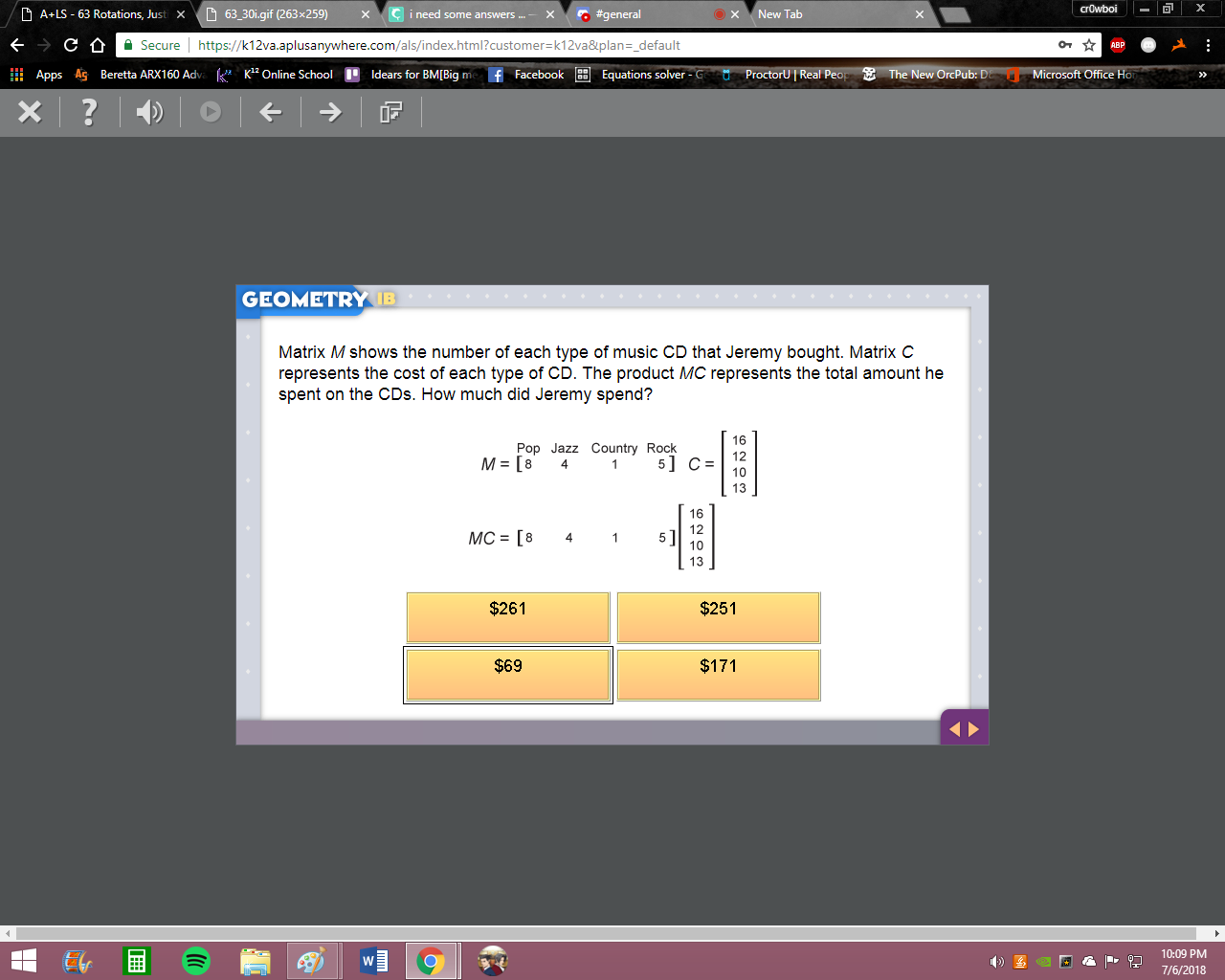
not quite you need to multiply the first entries of each matrix together then the second entries of each matrix together, etc. and add up all 4 products so 8(16) + 4(12) + 1(10) + 5(13) = > plug this into a calculator and you'll get your solution
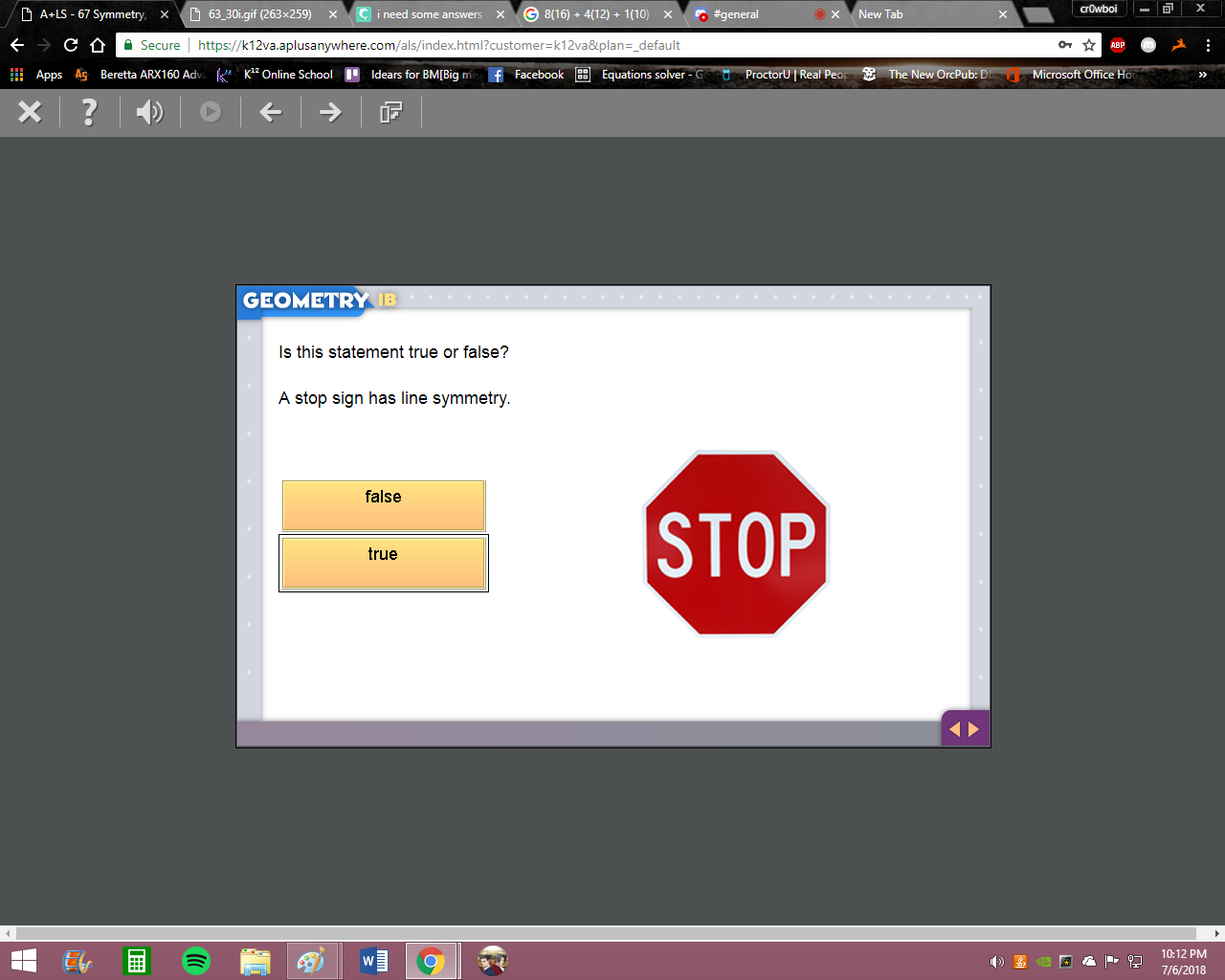 Vocaloid:
good
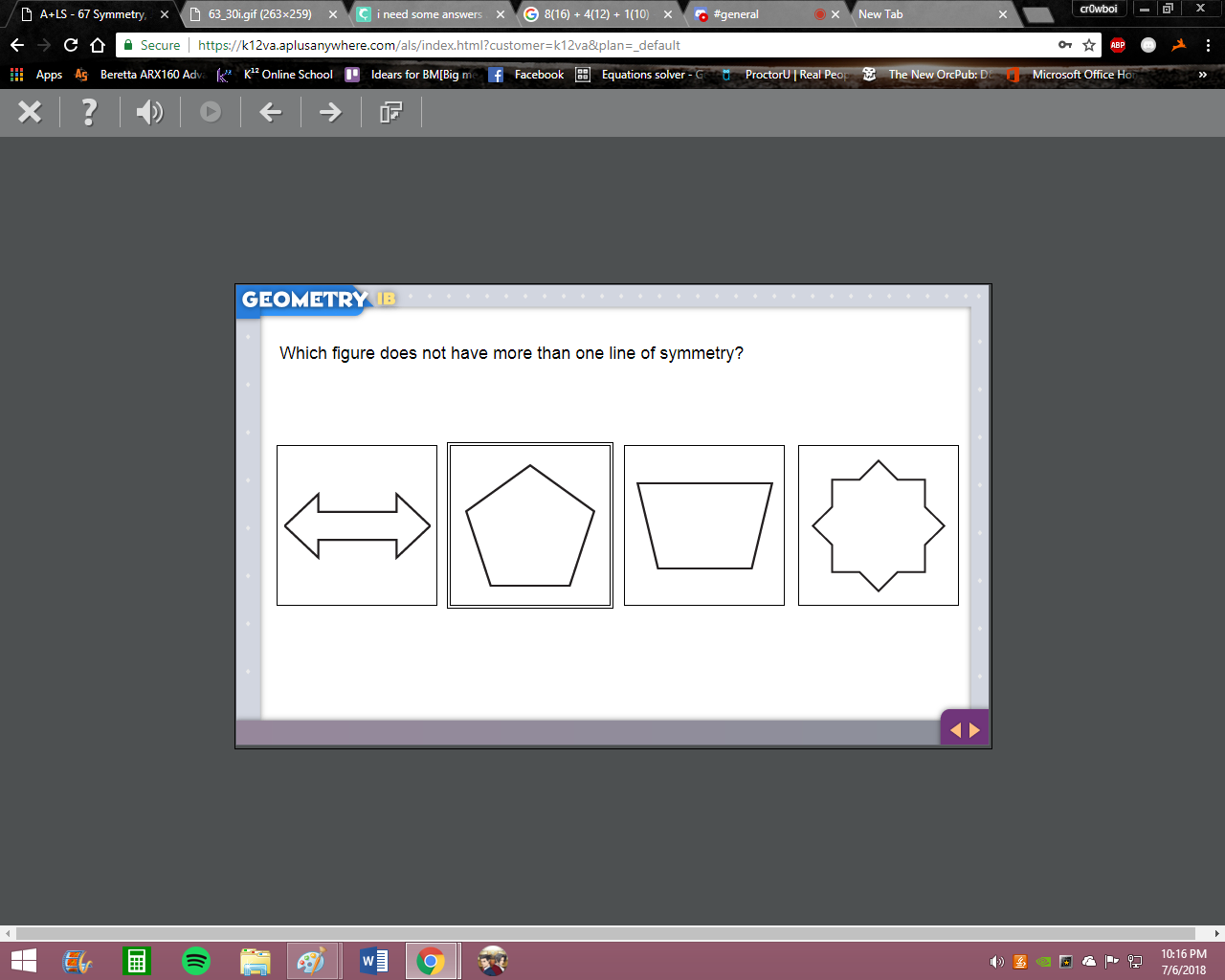 Vocaloid:
hm not quite, the pentagon has at least 5, you can draw one through each point the arrow can be split horizontally and vertically the star can be split along all of its points leaving us w/ the trapezoid as the one w/ only one line of symmetry
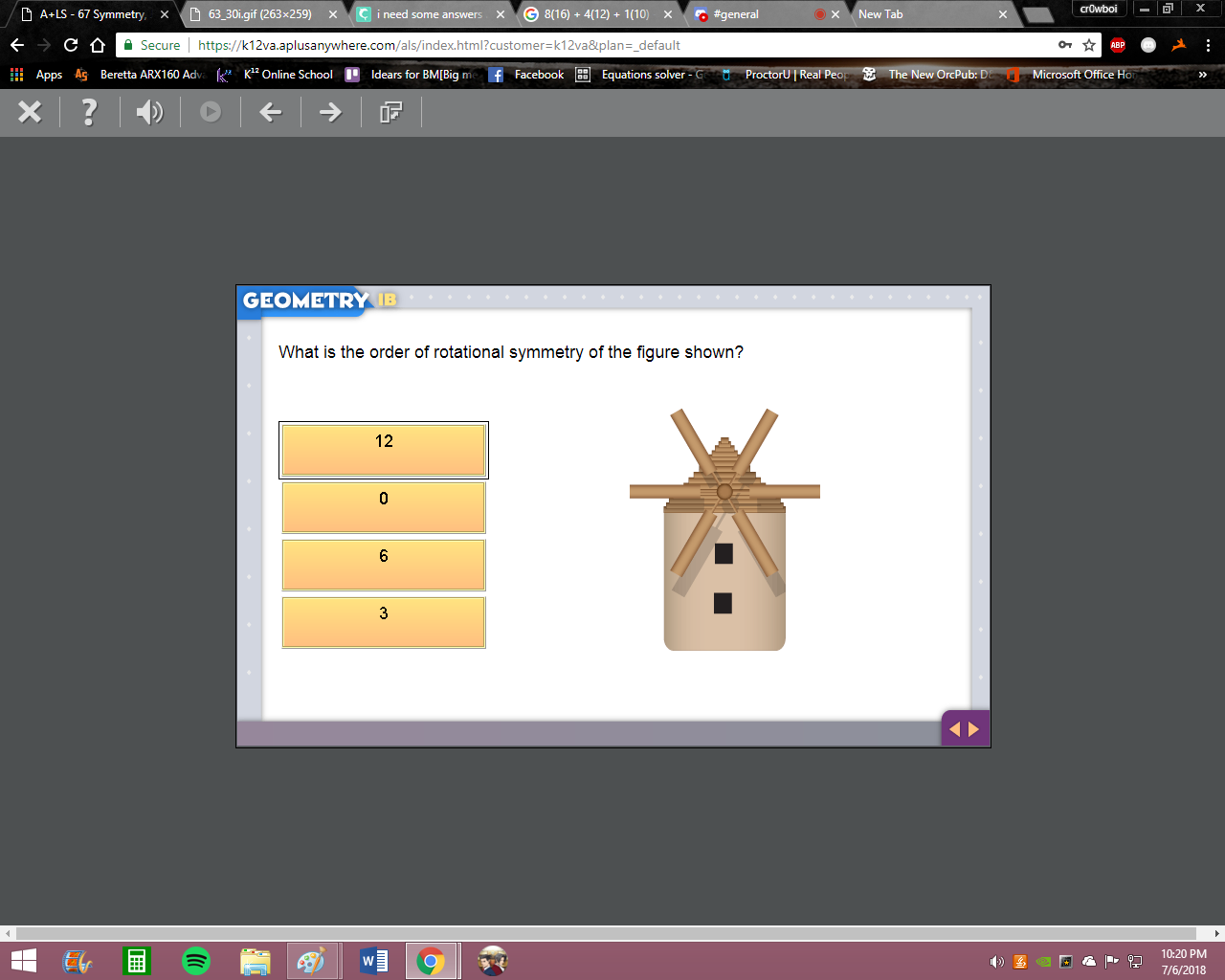 Vocaloid:
hm not quite, 12 would be the lines of symmetry but order of rotation is a bit different it's how many times we can rotate the figure (within a 360 rotation) and still get the same figure for a regular hexagon like the windmill it's 360/6 = 6
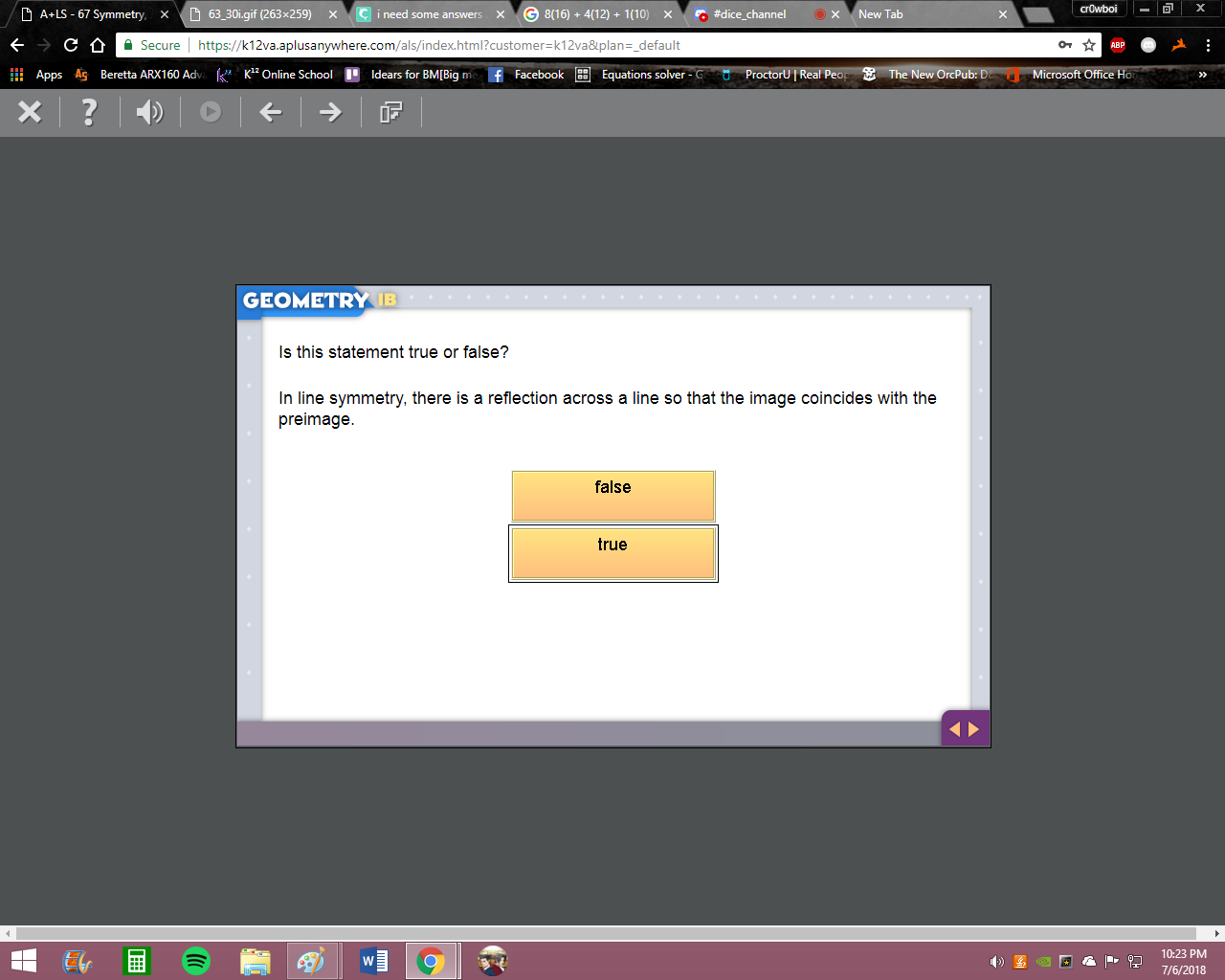 Vocaloid:
good
 Vocaloid:
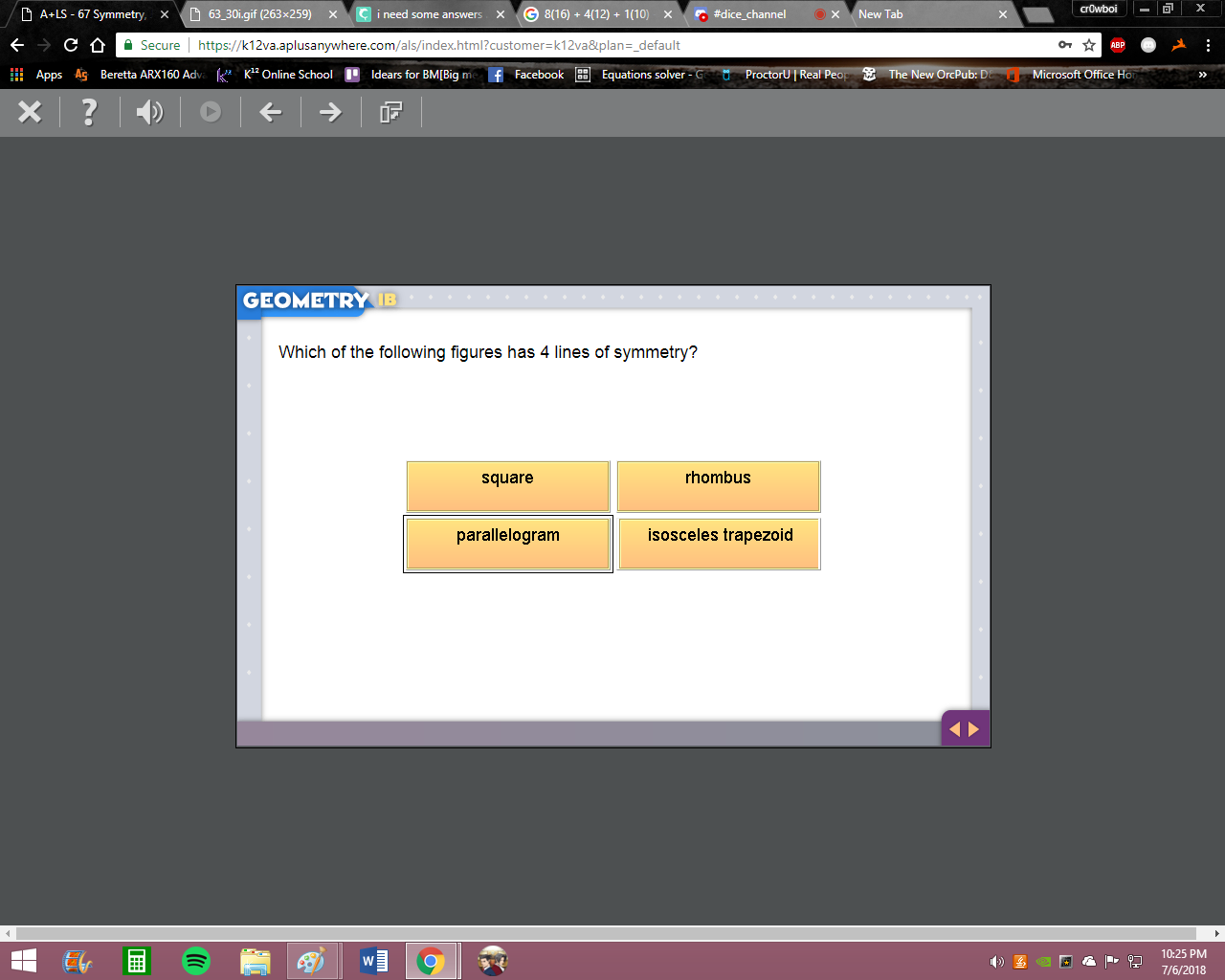
|dw:1530941265199:dw| funnily enough a parallelogram actually has 0 but if we take a square we can fold it lengthwise, widthwise, and across 2 diagonals giving us a total of 4 making square the best solution
 Vocaloid:
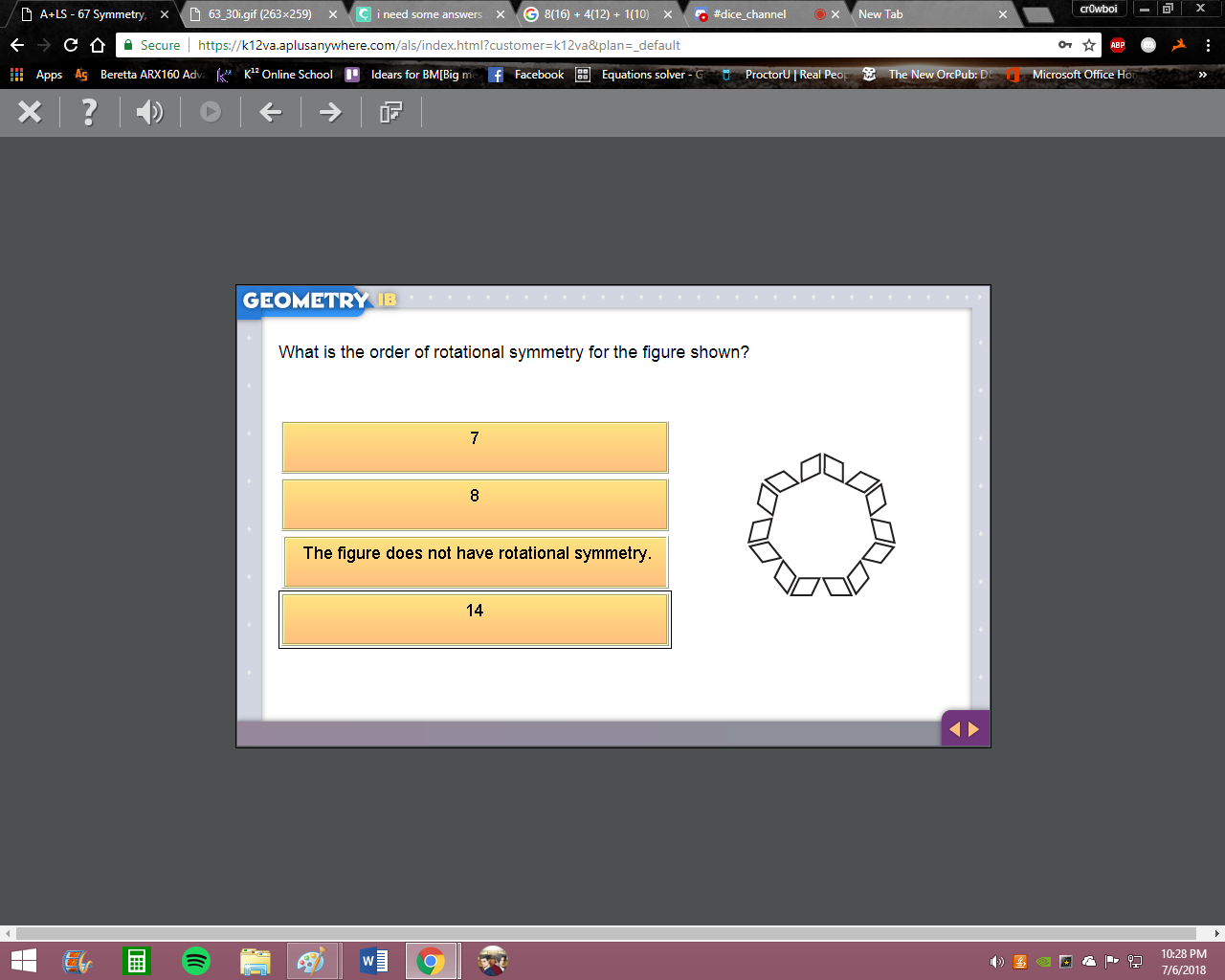
hm not quite, this is like the hexagon problem except it's a heptagon so 7 sides --> order of rotation 7 imagine it like a wheel where every vertex is a spoke, it can rotate from one vertex to the next w/o changing its appearance
 Vocaloid:
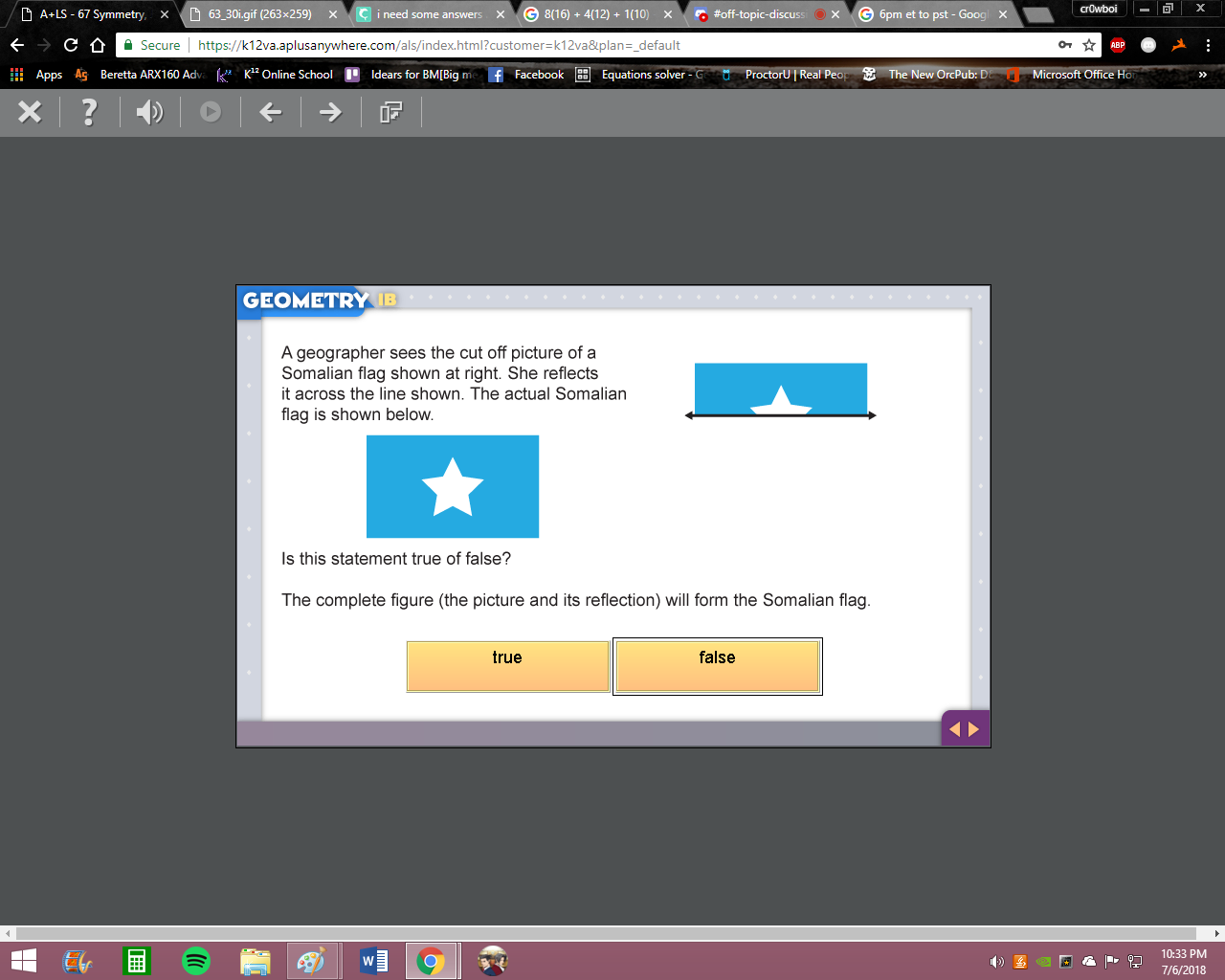
good
 Vocaloid:
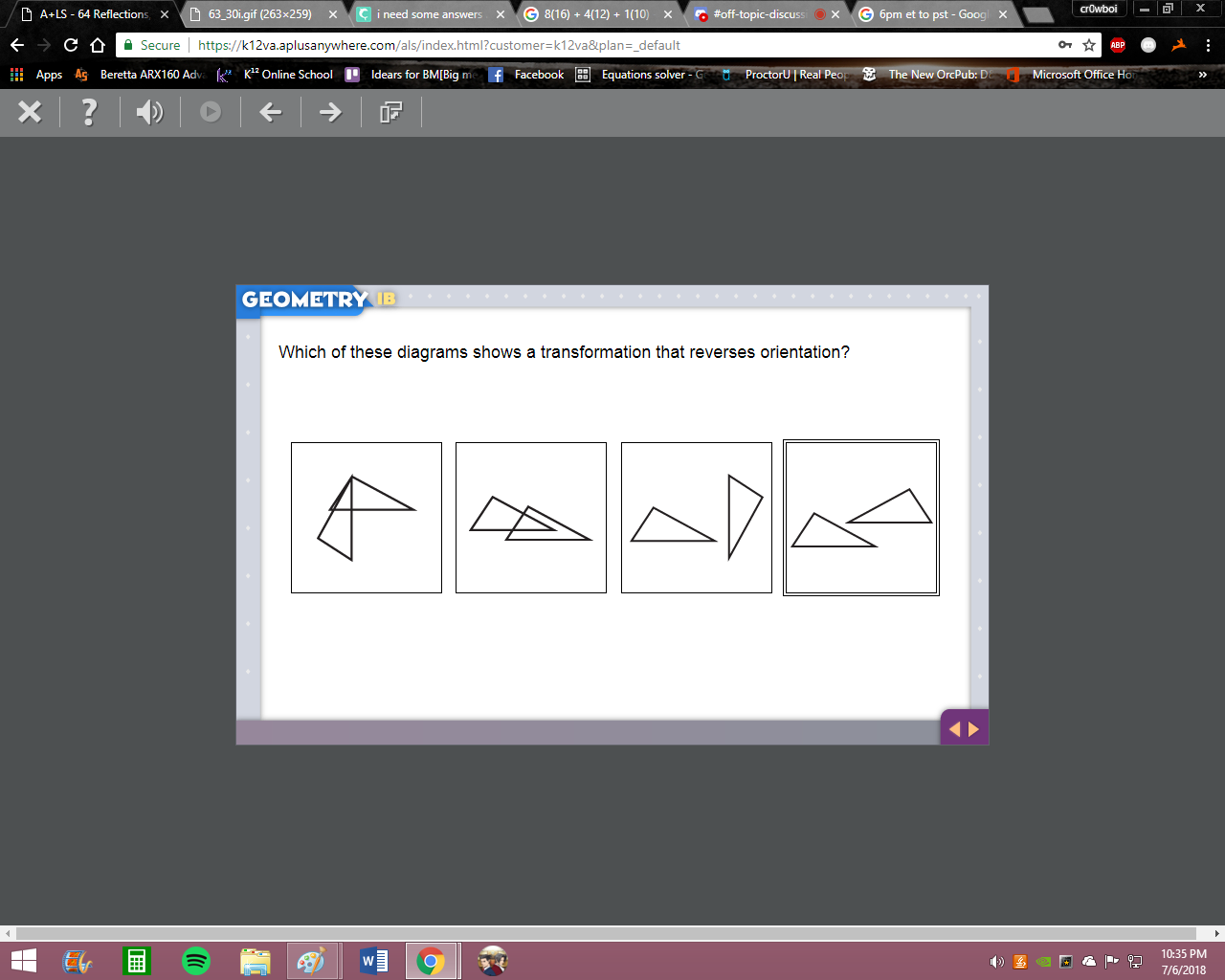
good
 Vocaloid:
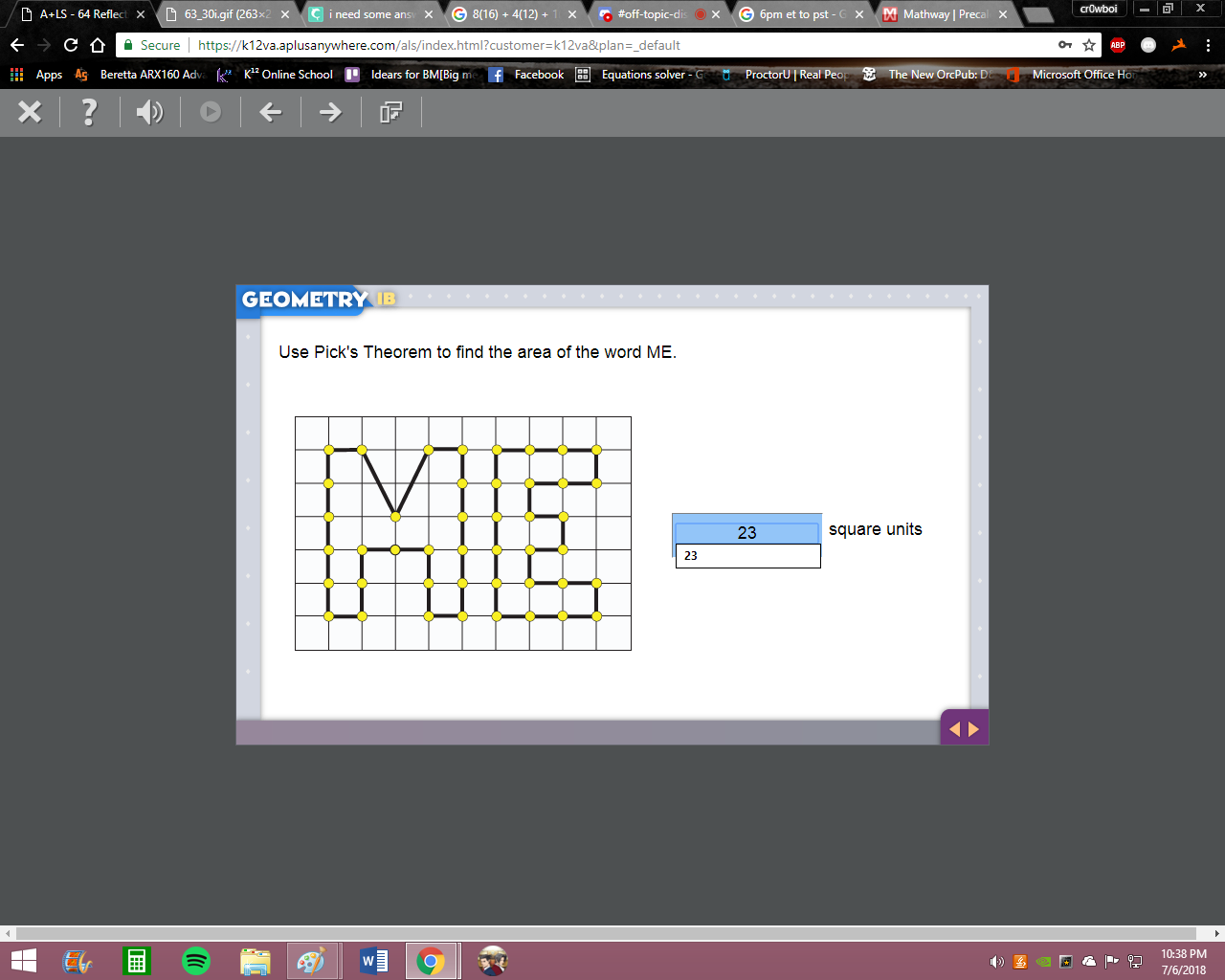
alright i've never heard of this in my life so i'm gonna have to look this up
princeevee:
i think it's either 22 or 23
Vocaloid:
alright so since we only have border points here and no interior points we just count the number of points and divide by 2 but there's honestly an easier method, just count the # of squares and then add 2 to that since those two triangles add up to 2
princeevee:
so 24
Vocaloid:
I get 24, you can double check me just to be sure
Vocaloid:
alright cool
 Vocaloid:
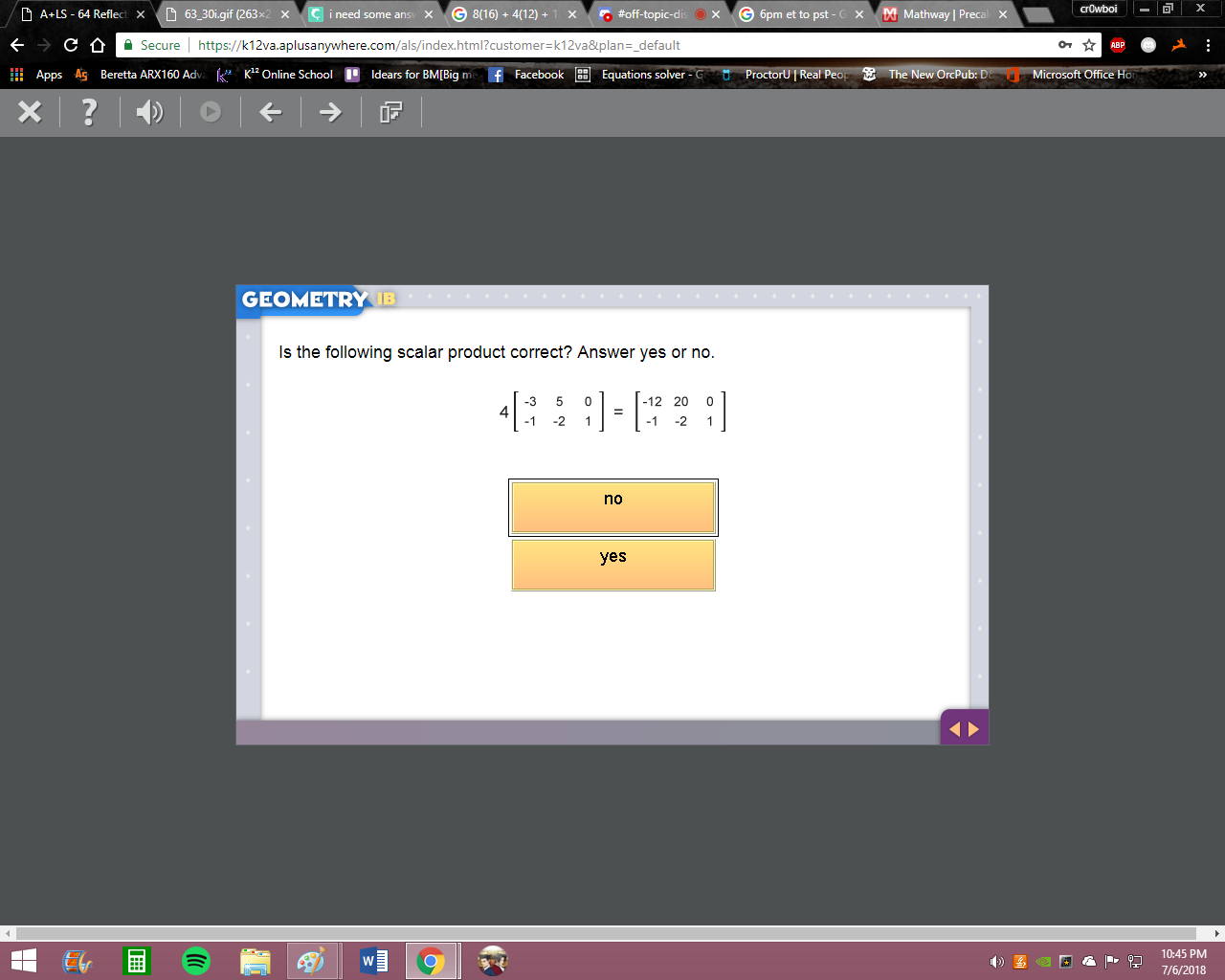
good
 Vocaloid:
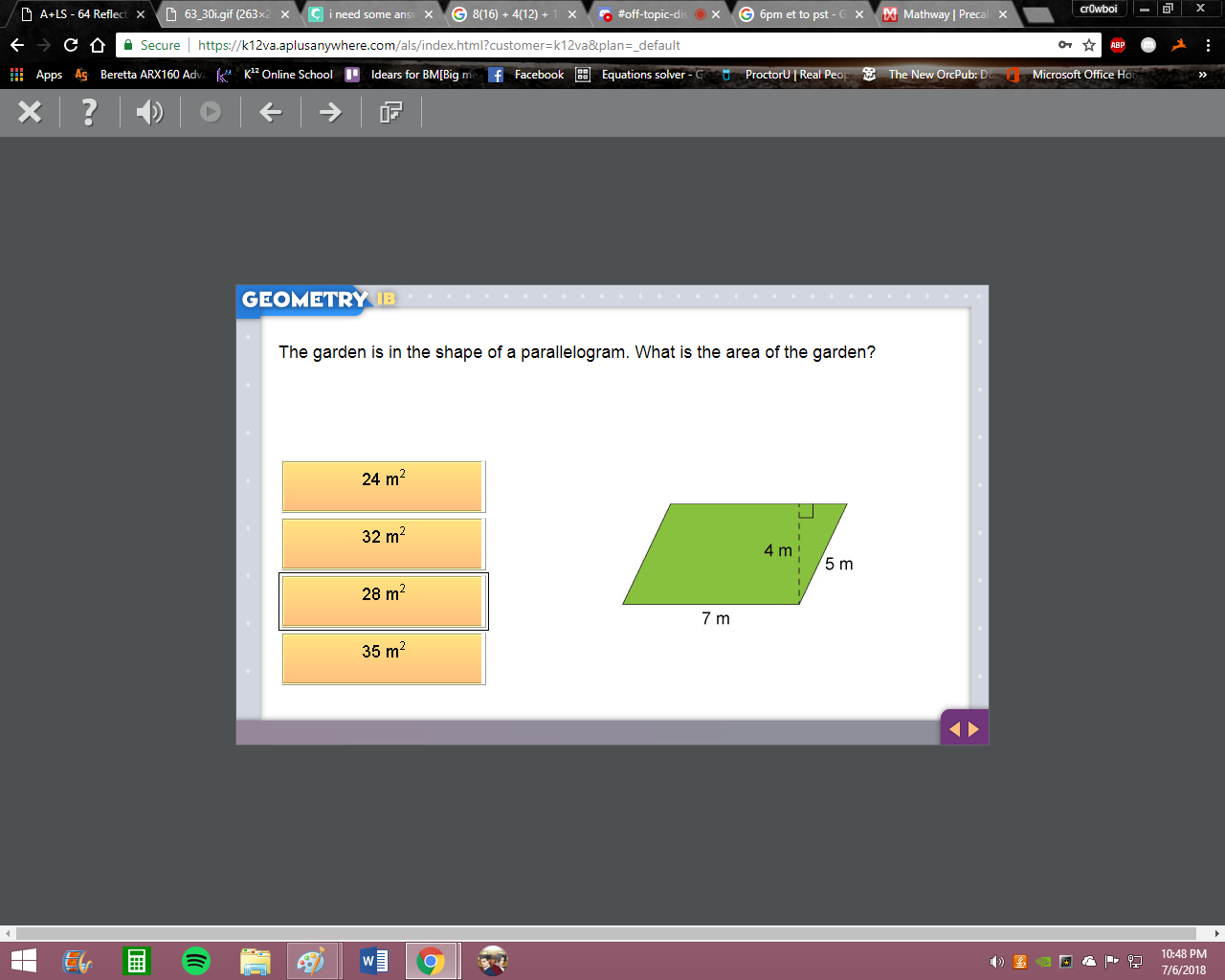
good
 Vocaloid:
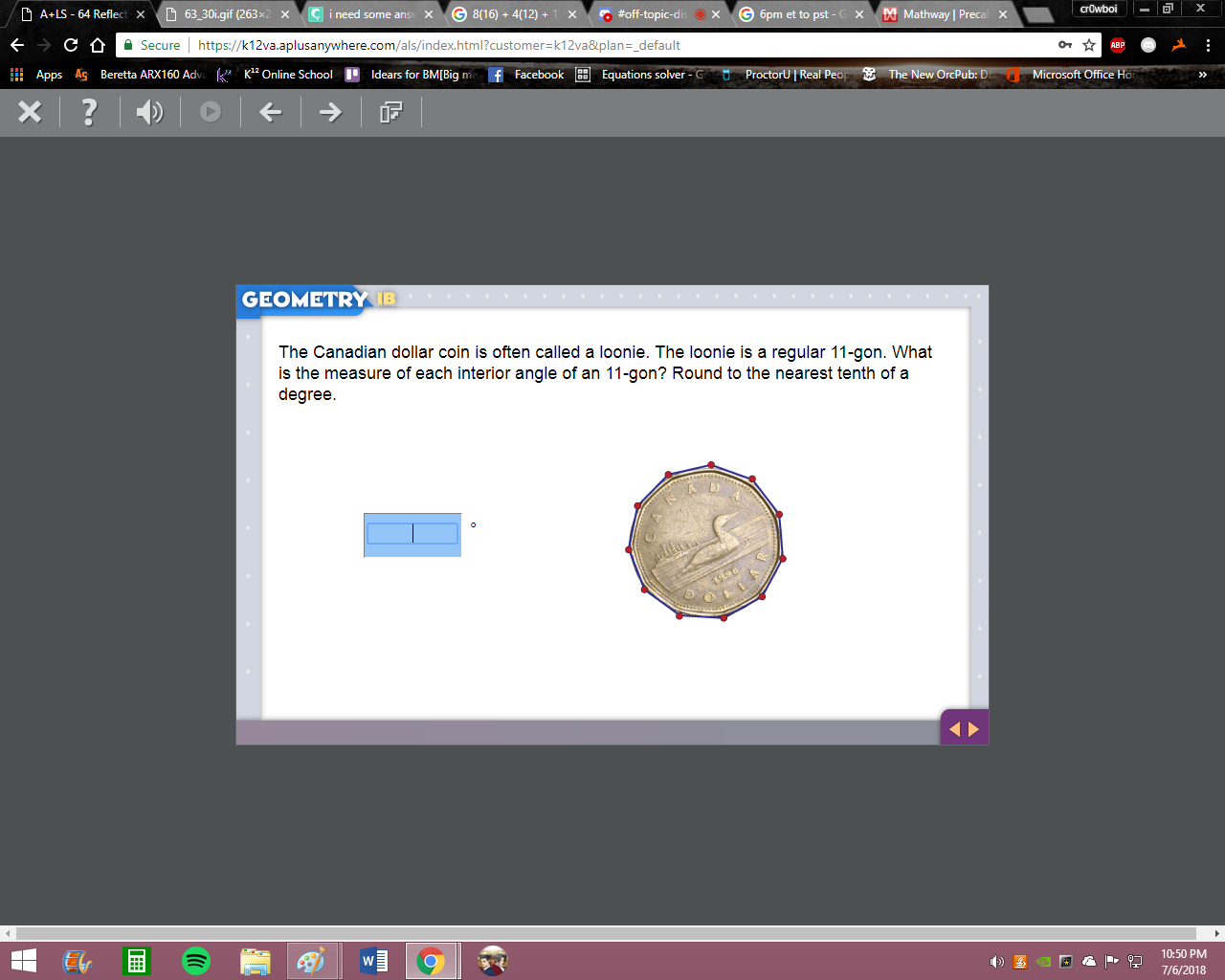
(n – 2)*180 / n plug in n = 11 to get the solution
princeevee:
147.2
 princeevee:
@Vocaloid
Vocaloid:
previous one is 147.3 with correct rounding
Vocaloid:
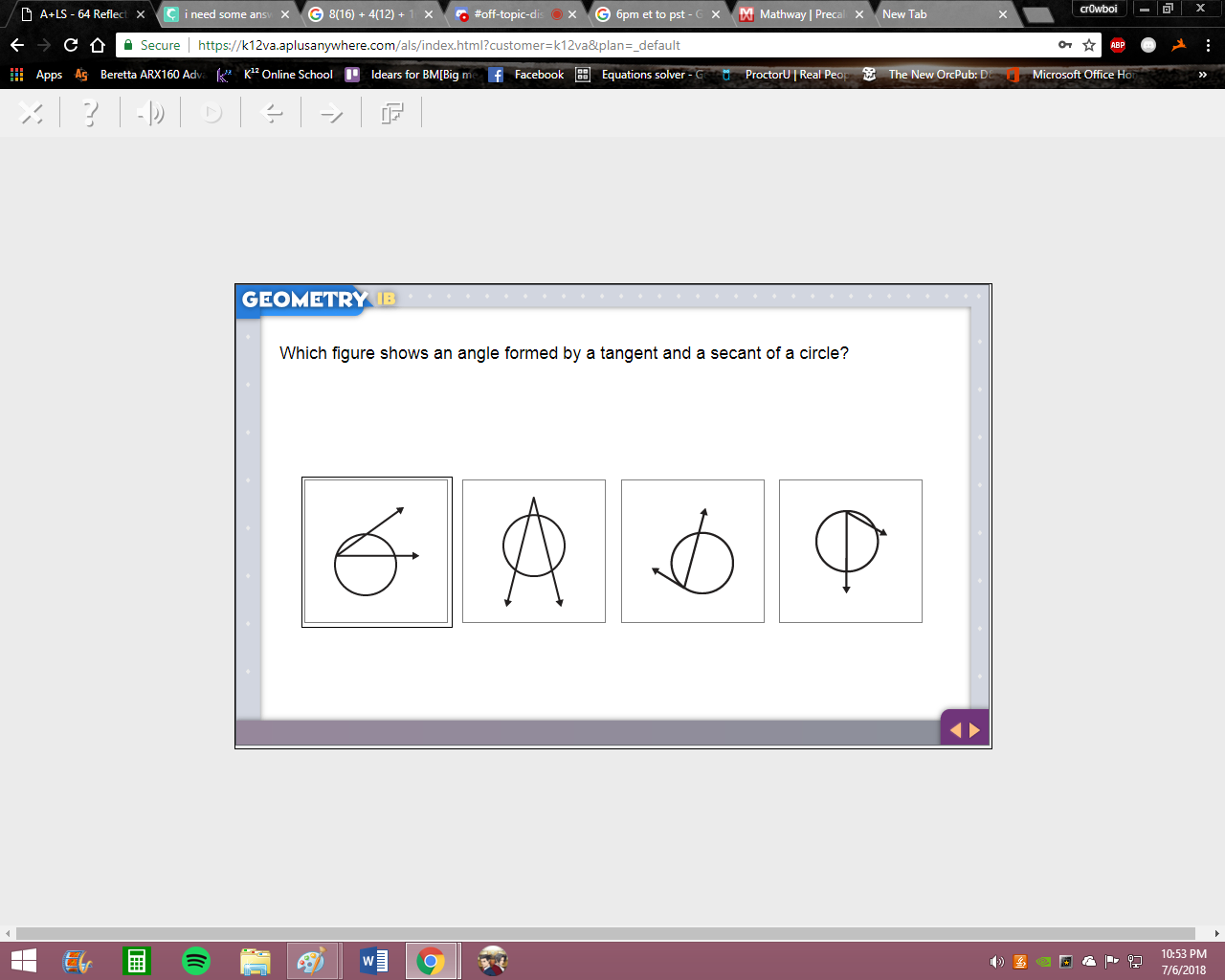
for this one, a tangent is a line that touches the circle on the outer edge only which can only be option 3
 Vocaloid:
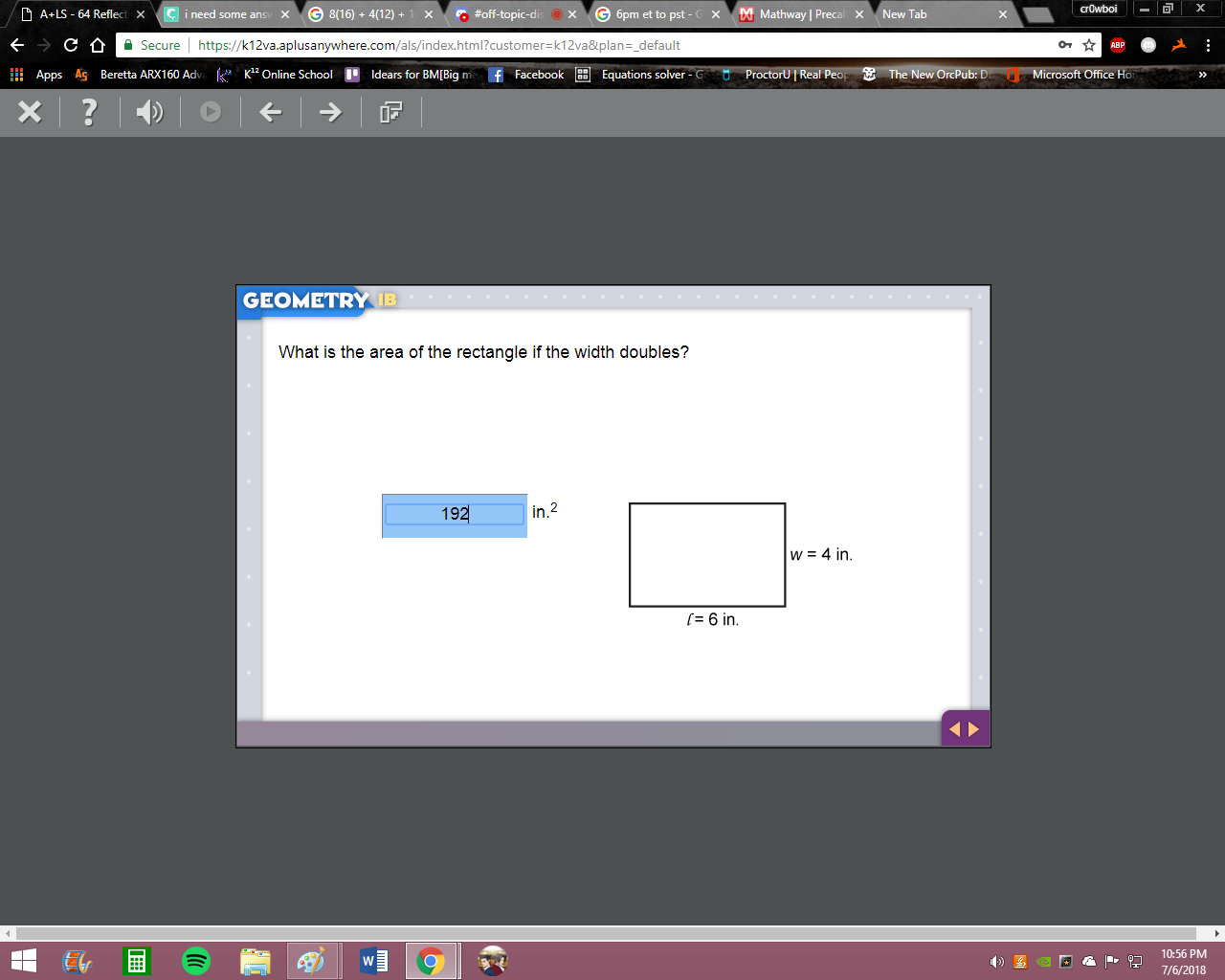
good guess but it only says the width doubles, not the length so new width = 8 new area = 8 * 6 = 48
 Vocaloid:
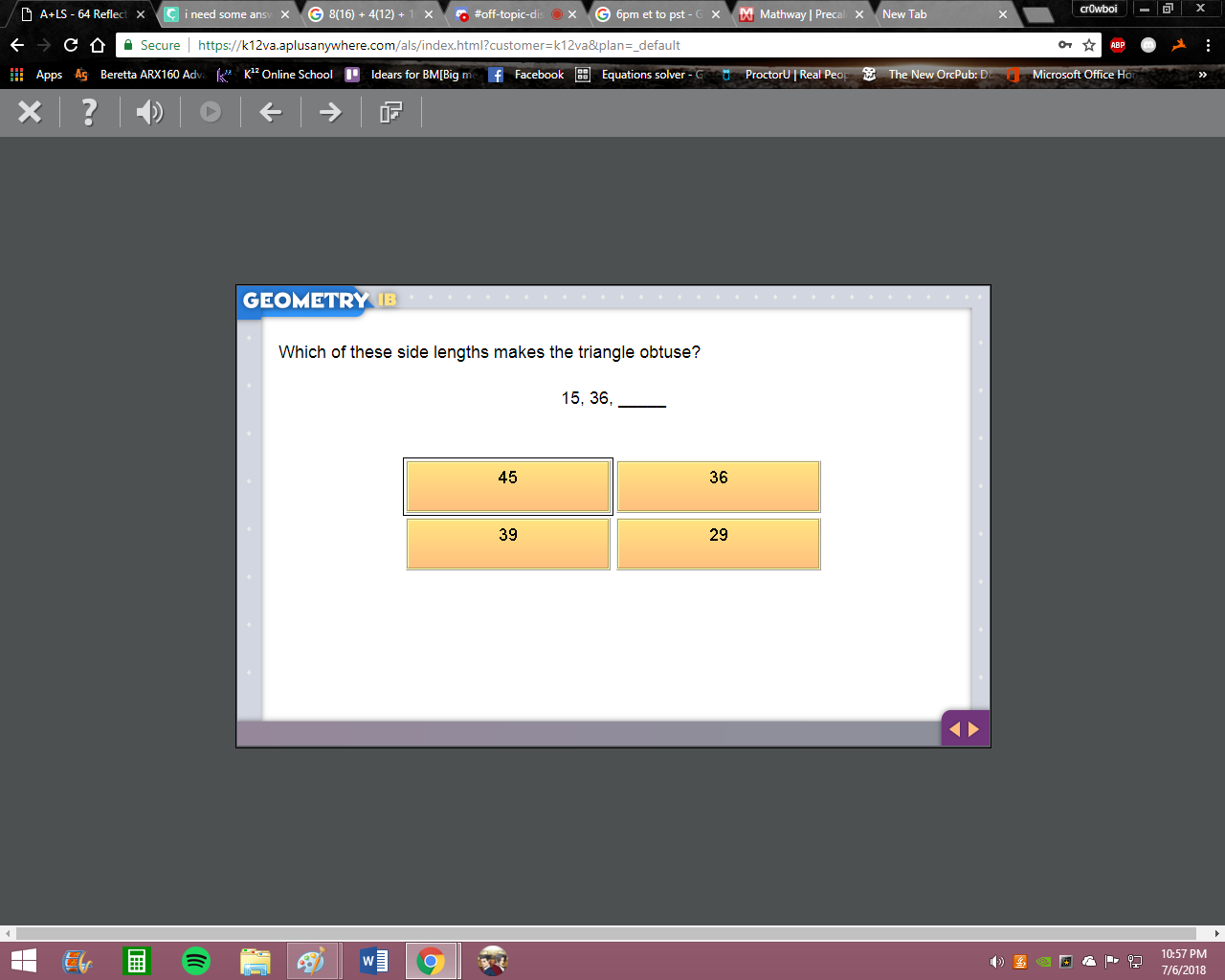
good
 Vocaloid:
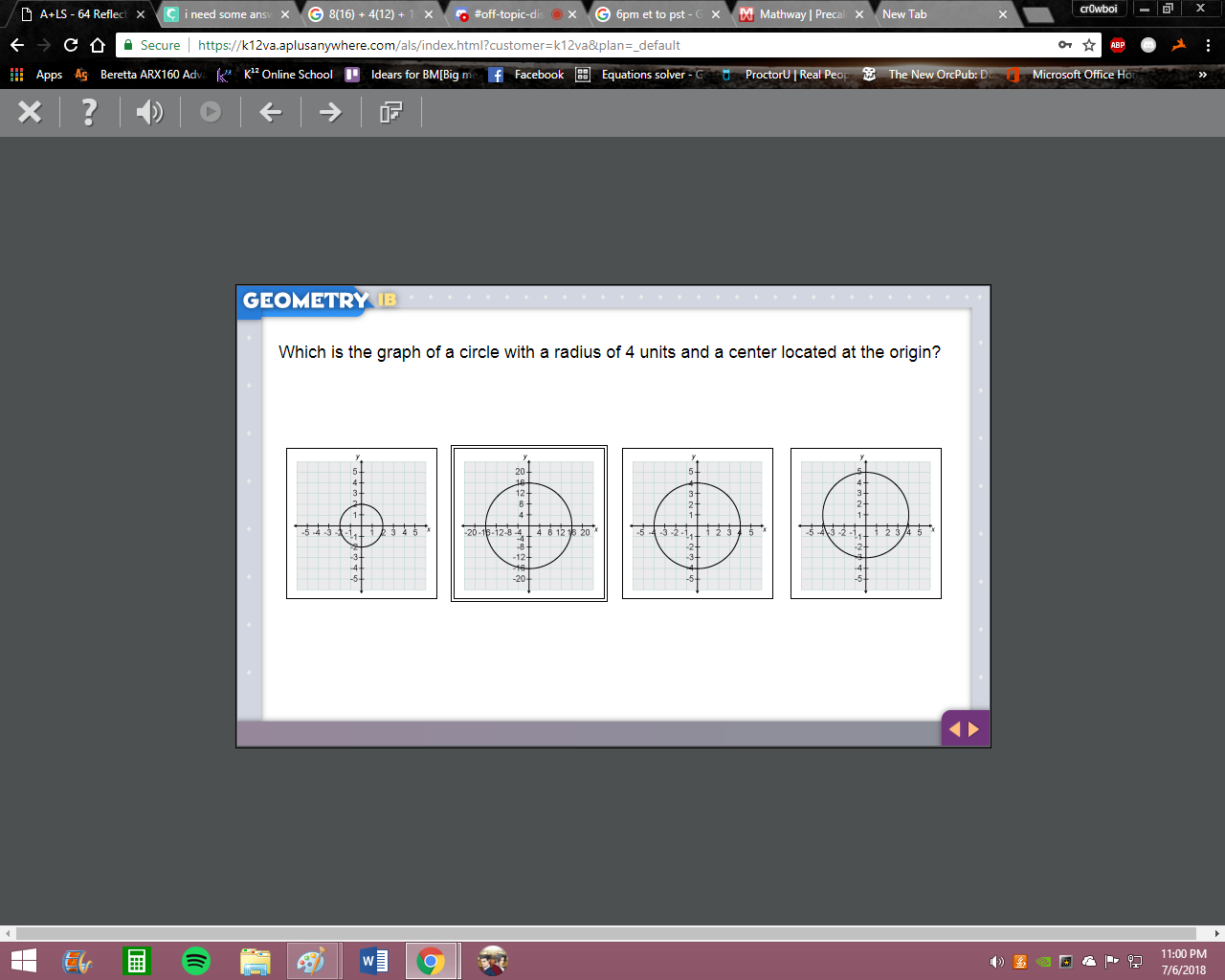
pay attention to the scale, we want the circle that touches (0,4) so it's the third one
 Vocaloid:
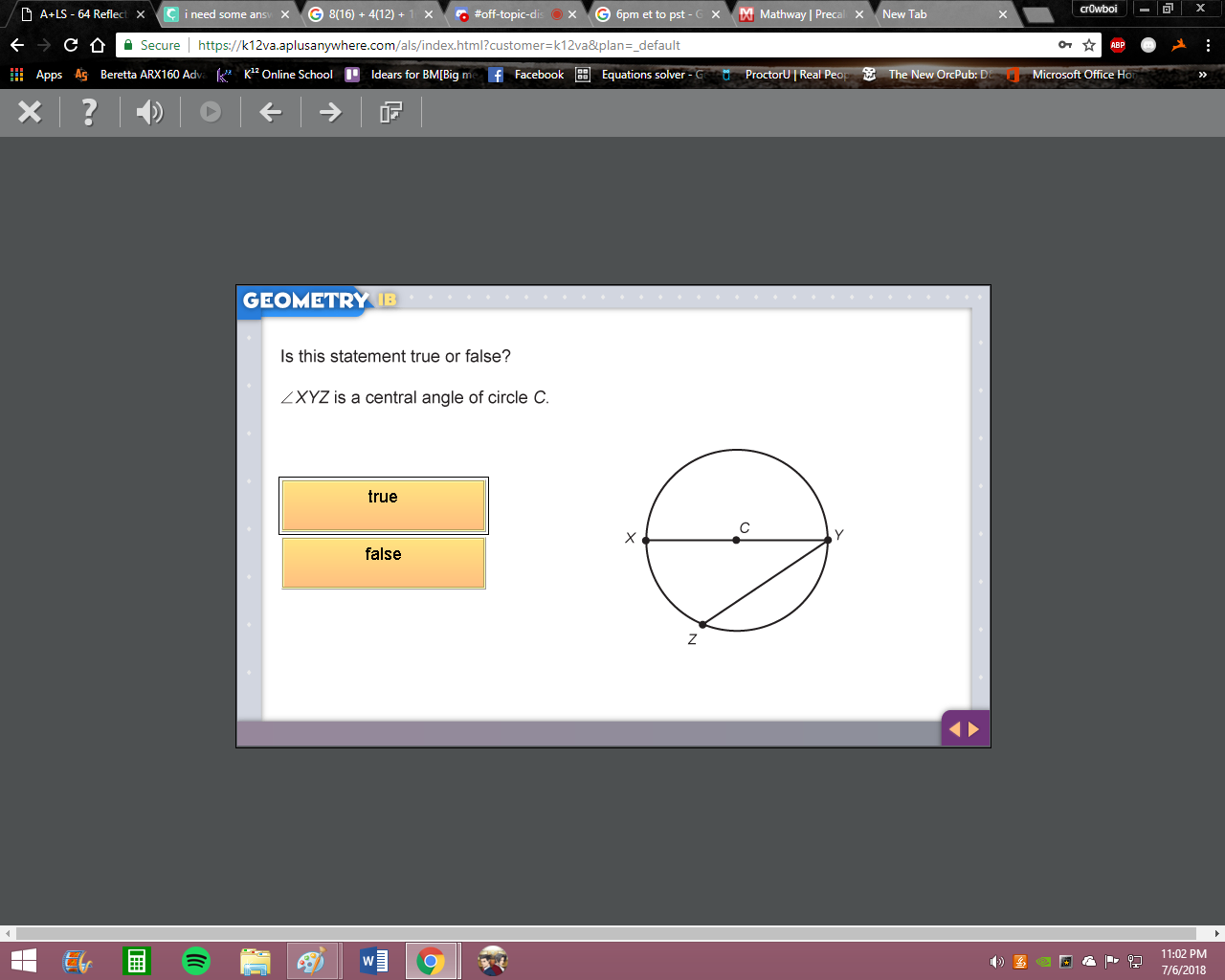
<XYZ is on the edge so false
 Vocaloid:
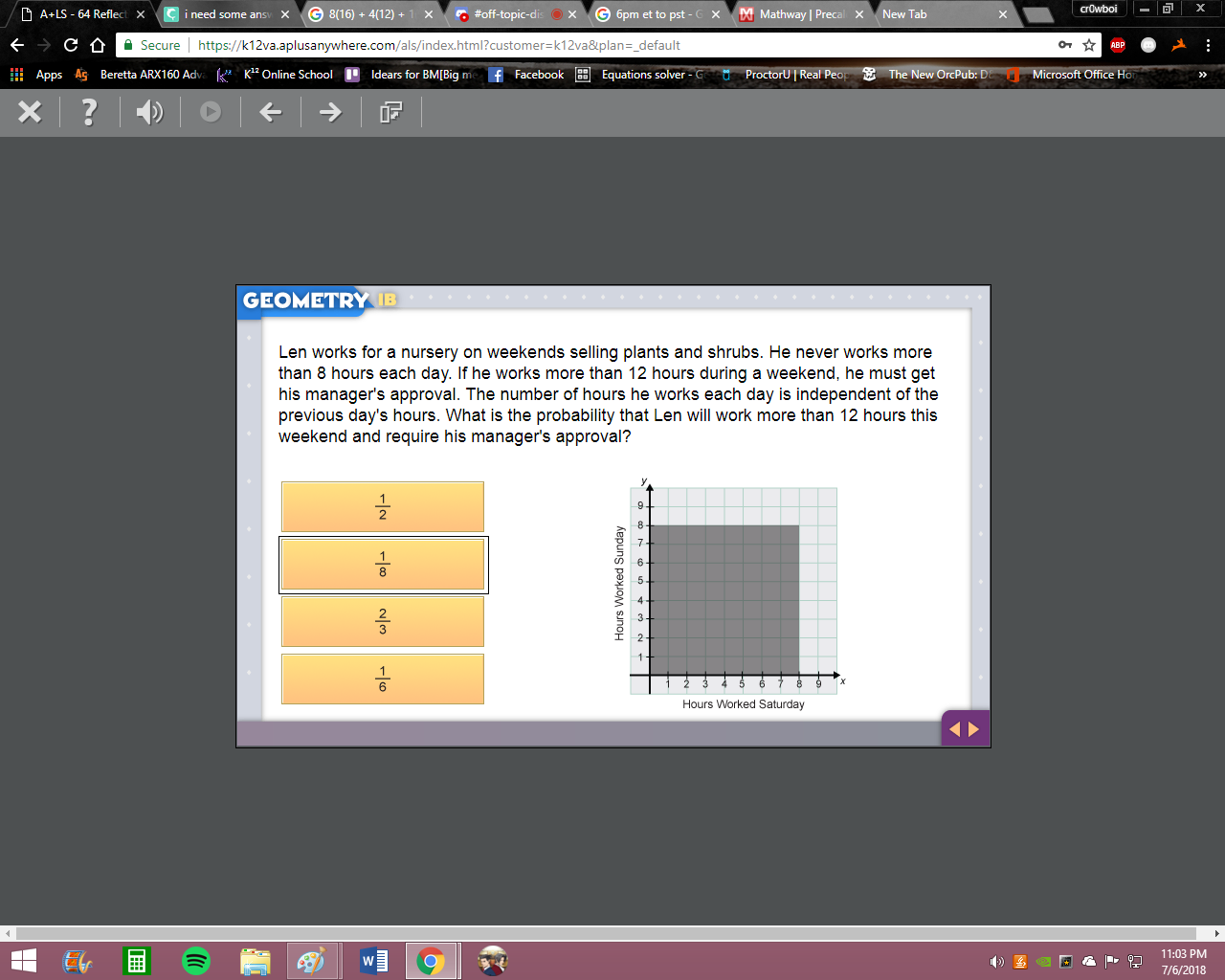
good
 Vocaloid:
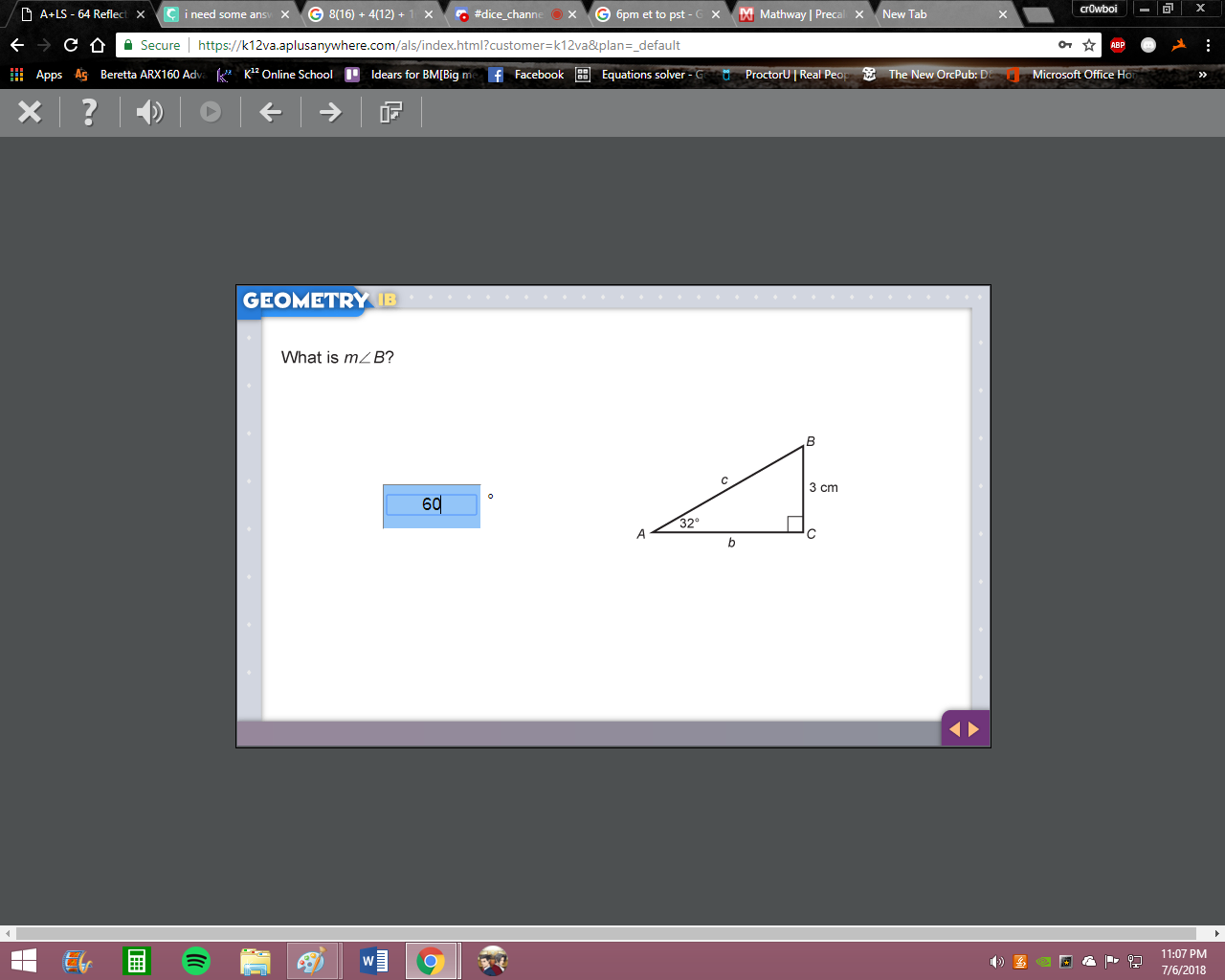
hm not quite, we have two angles given (90 and 32) and we know the sum is 180 so 180 - 90 - 32 = > the missing angle B
 Vocaloid:
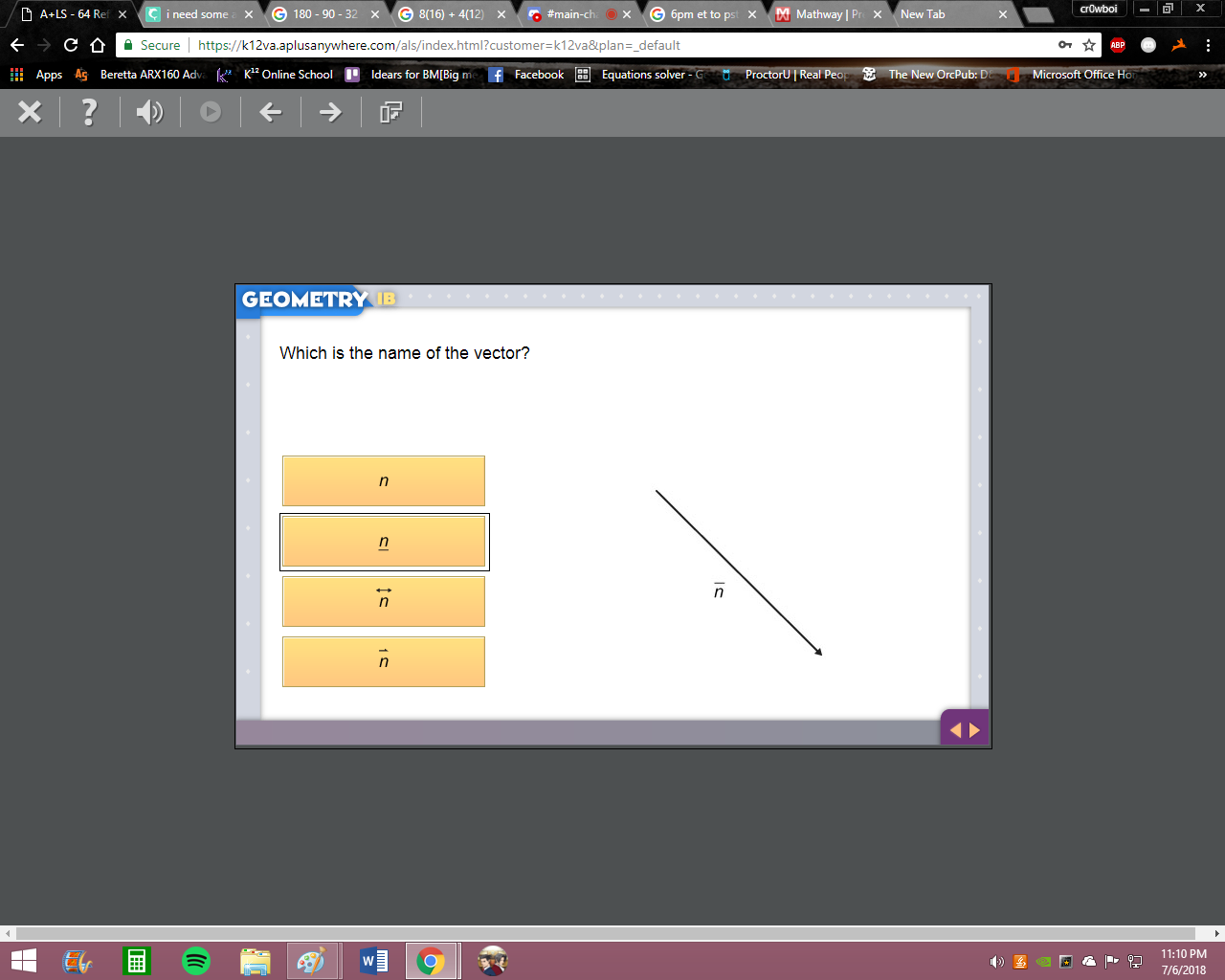
good
 Vocaloid:
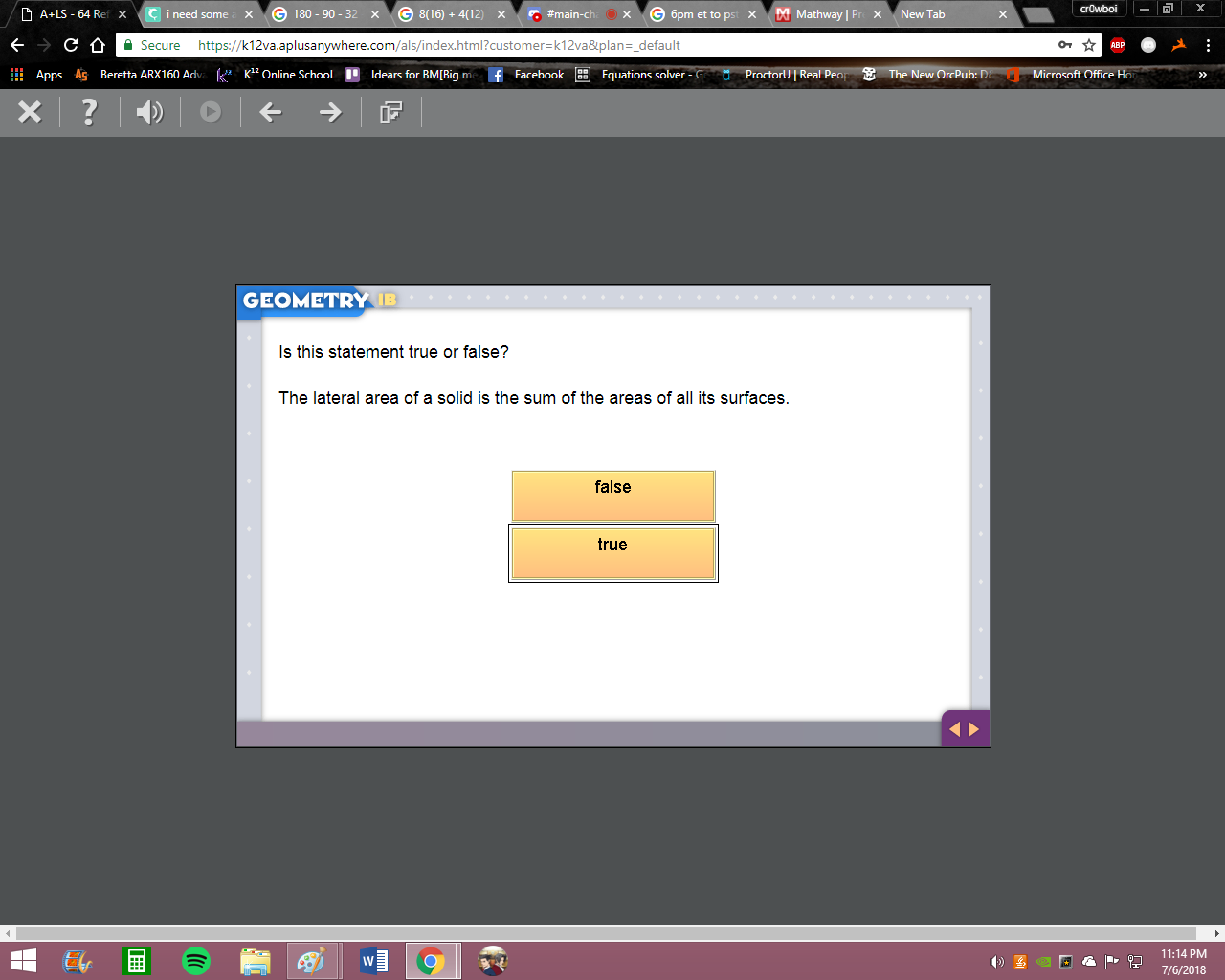
lateral area doesn't include the top and bottom faces so false
 princeevee:
(sorry, i'm trying to work a bit faster, because i only have an hour left,
Vocaloid:
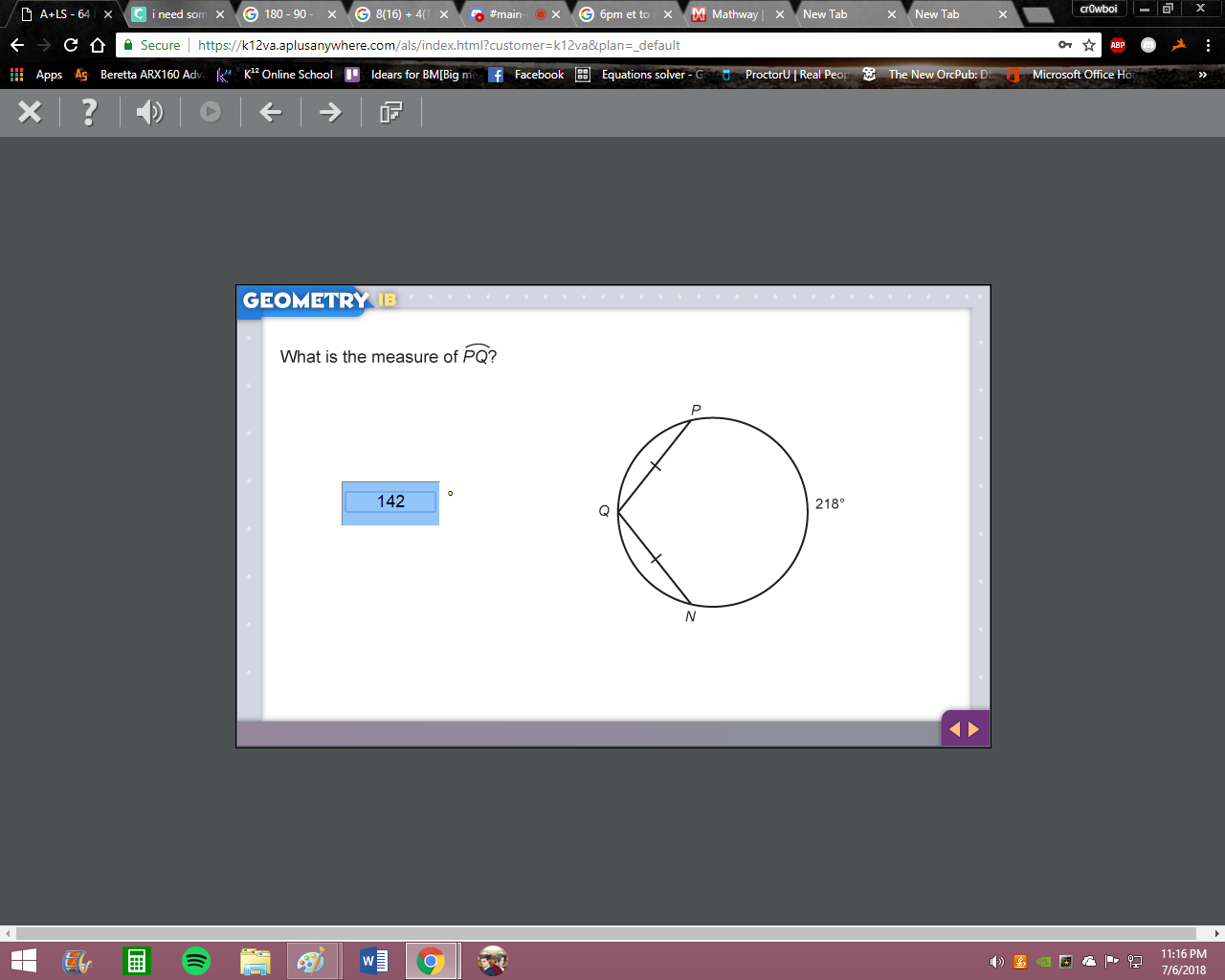
for PQ it's half the given angle (218/2 = 109)
Vocaloid:
not 114
Vocaloid:
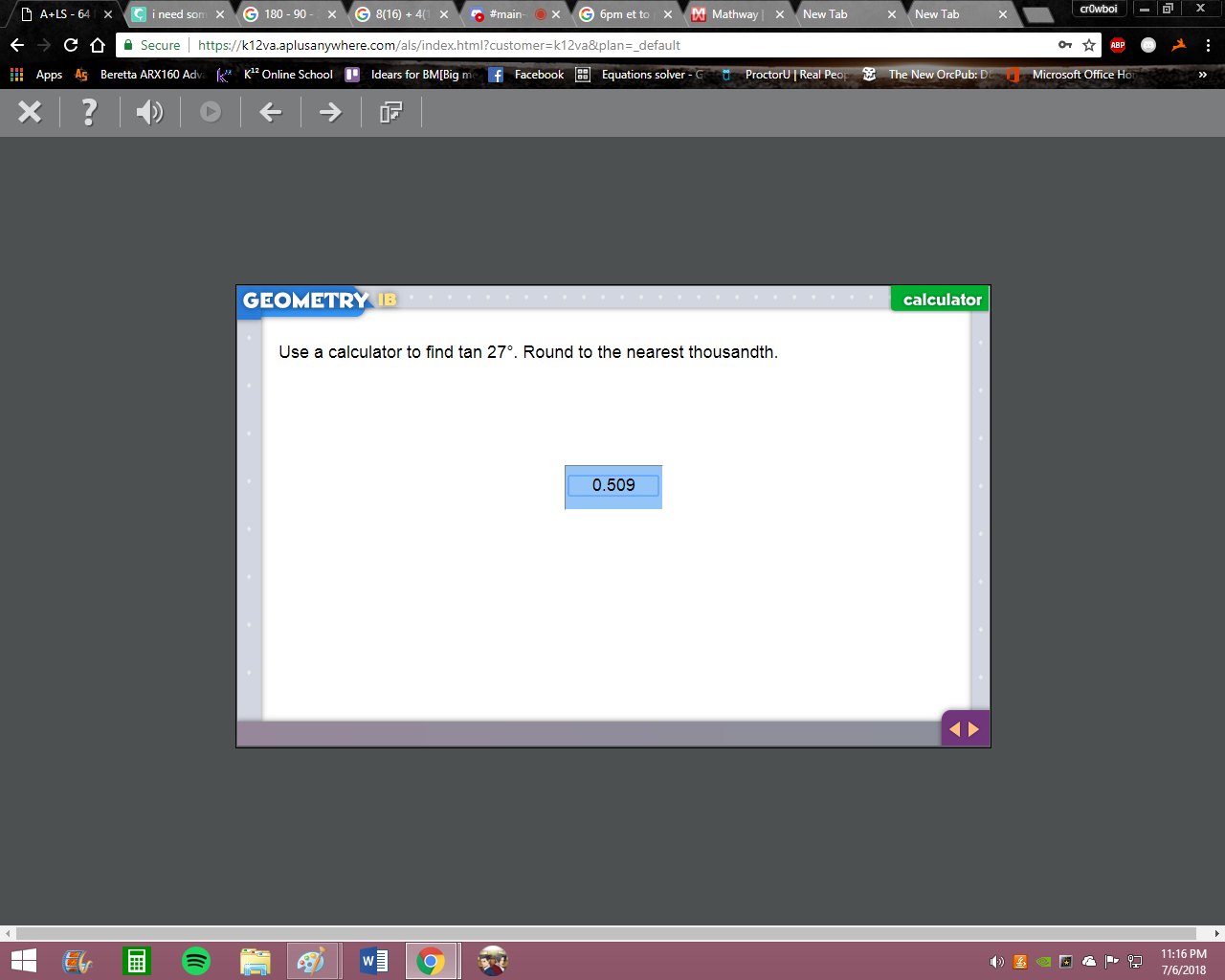
tan(27 degrees) rounds up to 0.510
 Vocaloid:
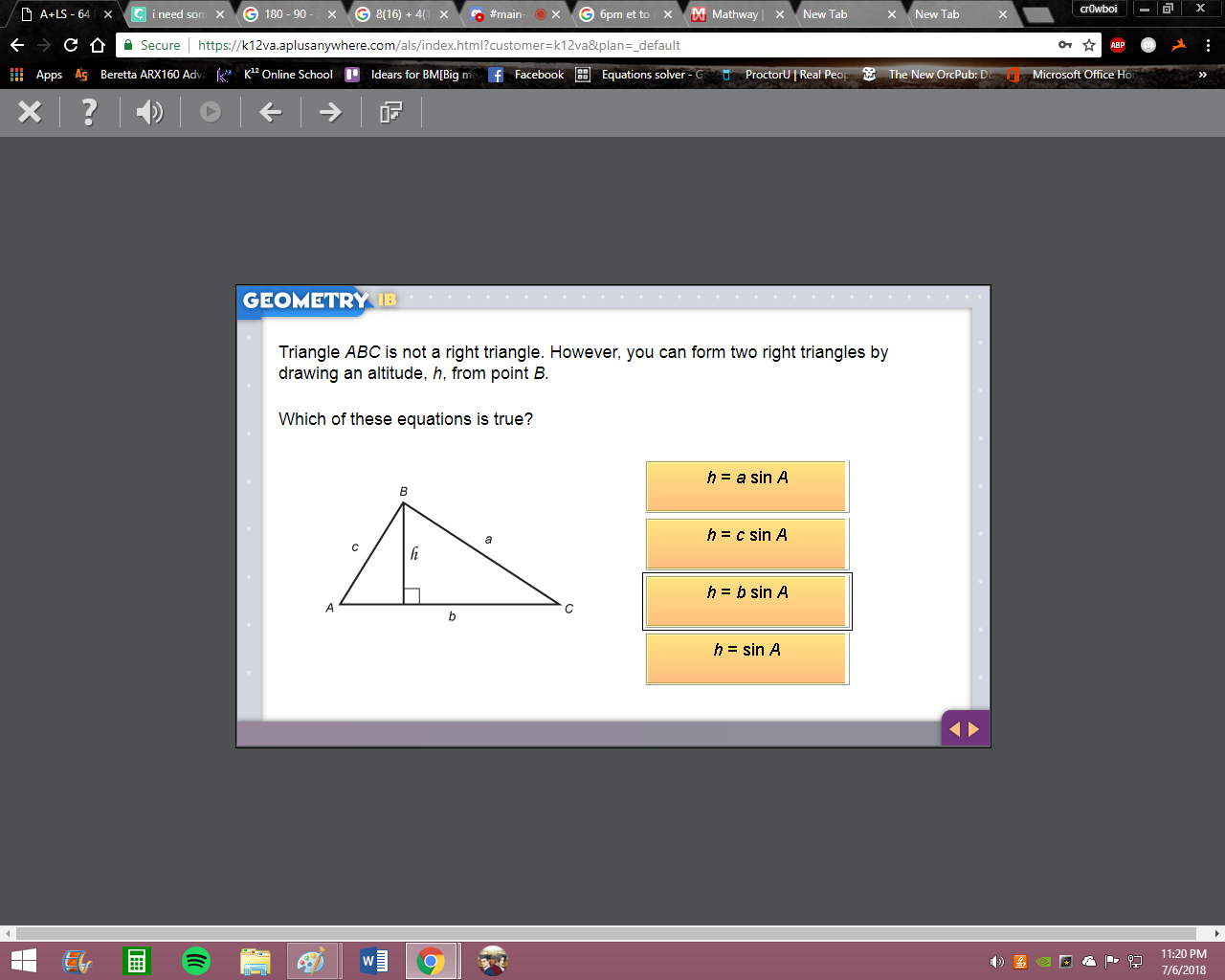
sin is opposite/hypotenuse for angle A that's h/c therefore sin(A) = h/c h = csin(A)
Vocaloid:
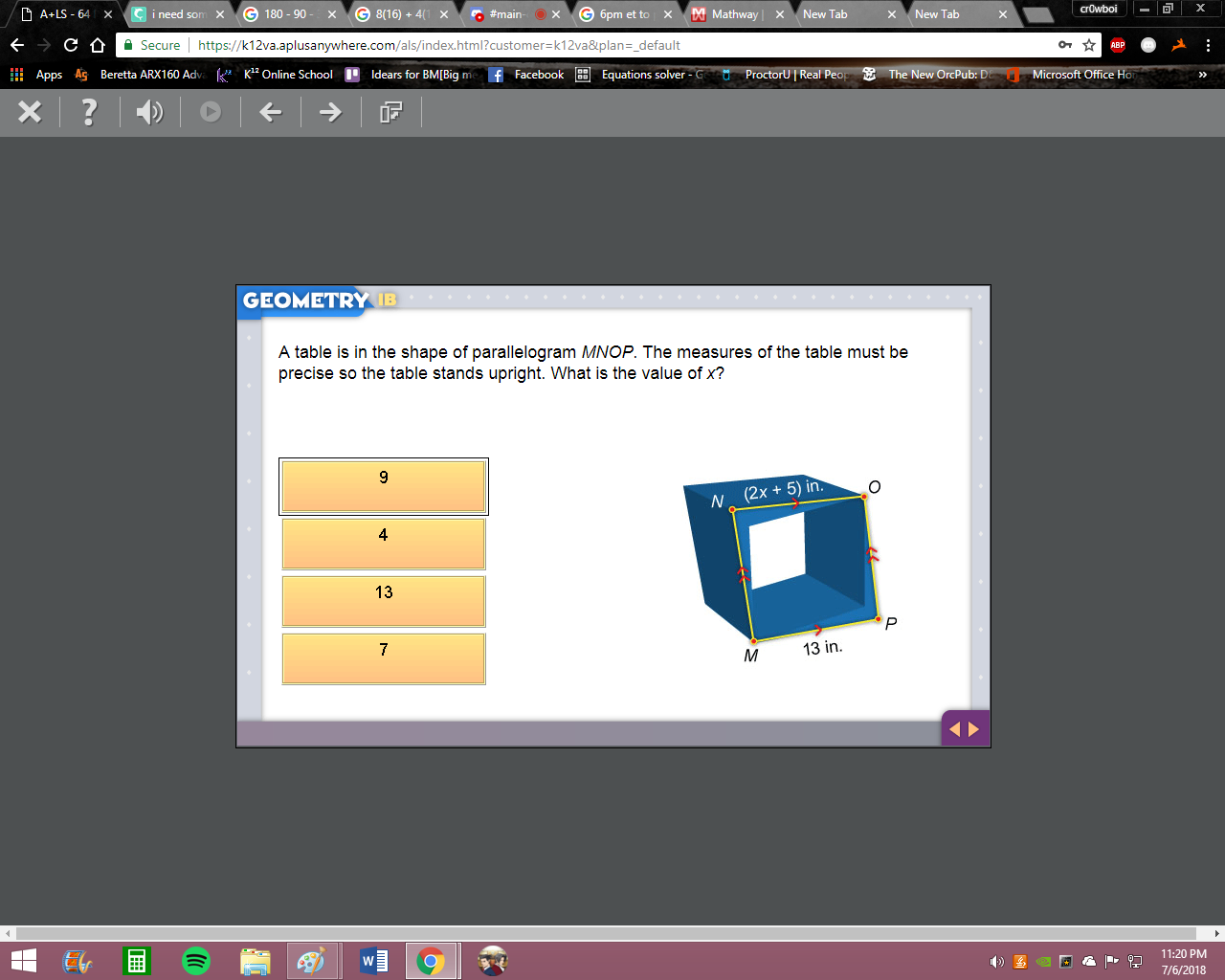
for the parallelogram 2x + 5 = 13 solving for x gives 2x = 8, x= 4
 Vocaloid:
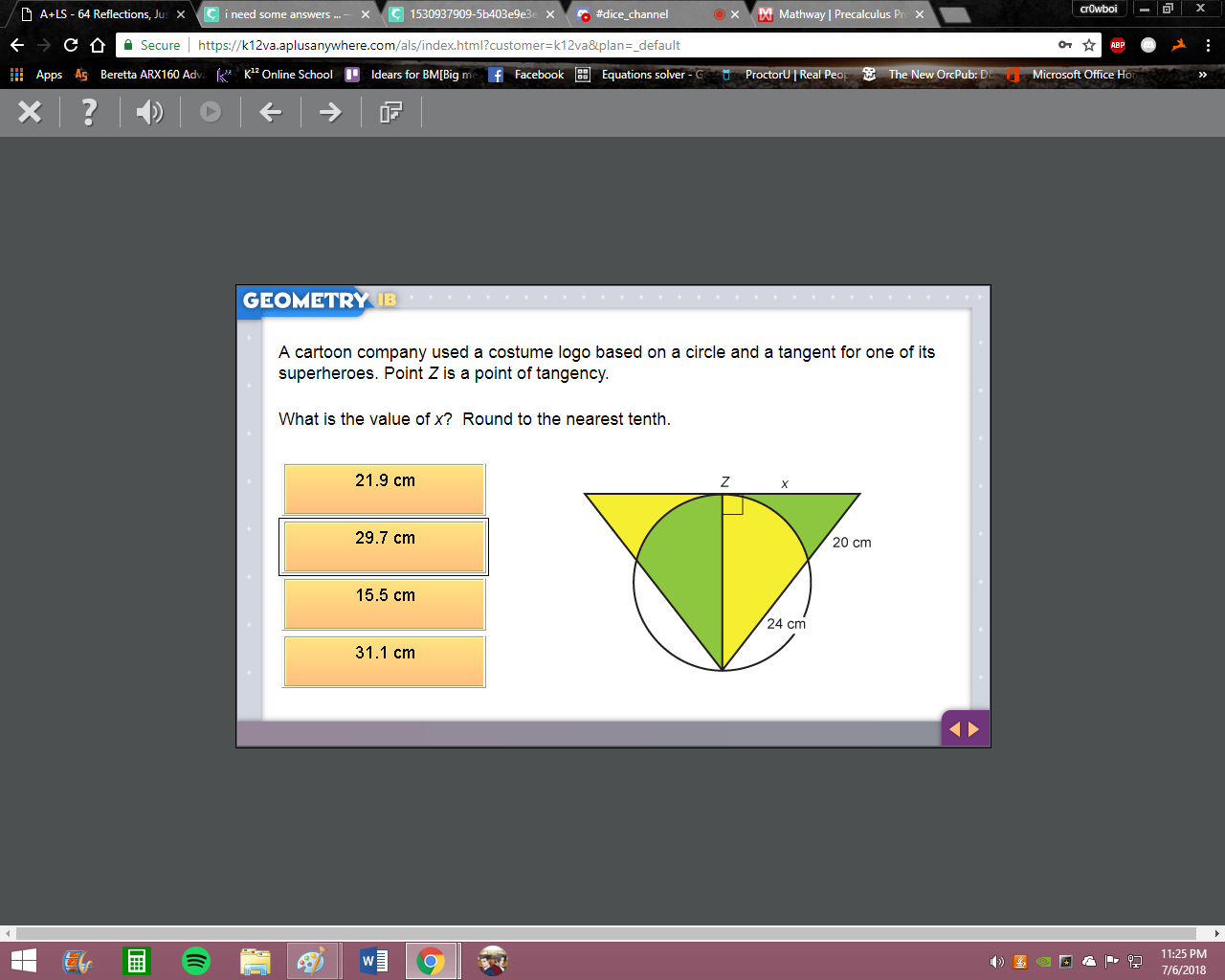
good
 Vocaloid:
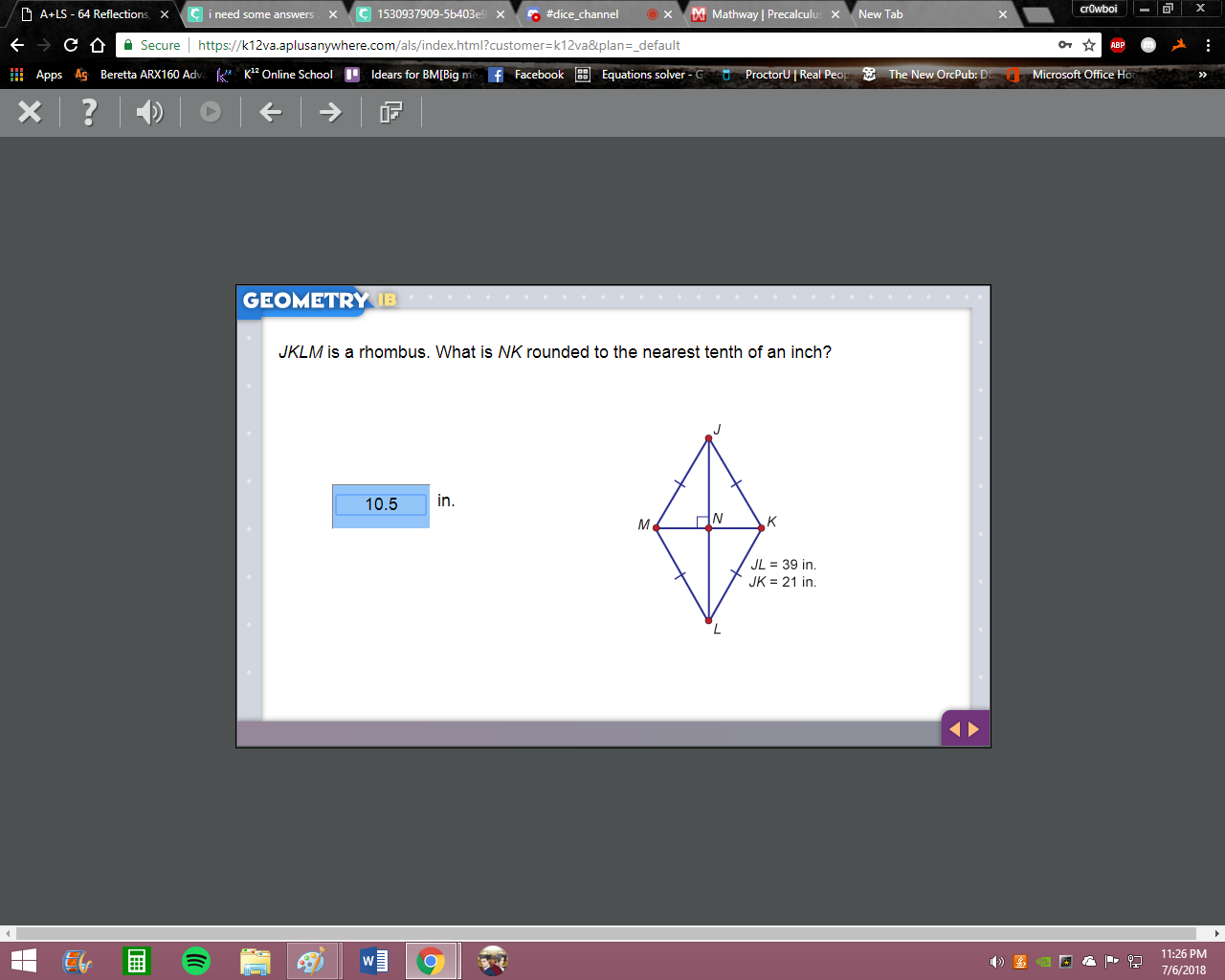
we did this one earlier 21^2 = x^2 + (39/2)^2 gives us NK = 7.8
Vocaloid:
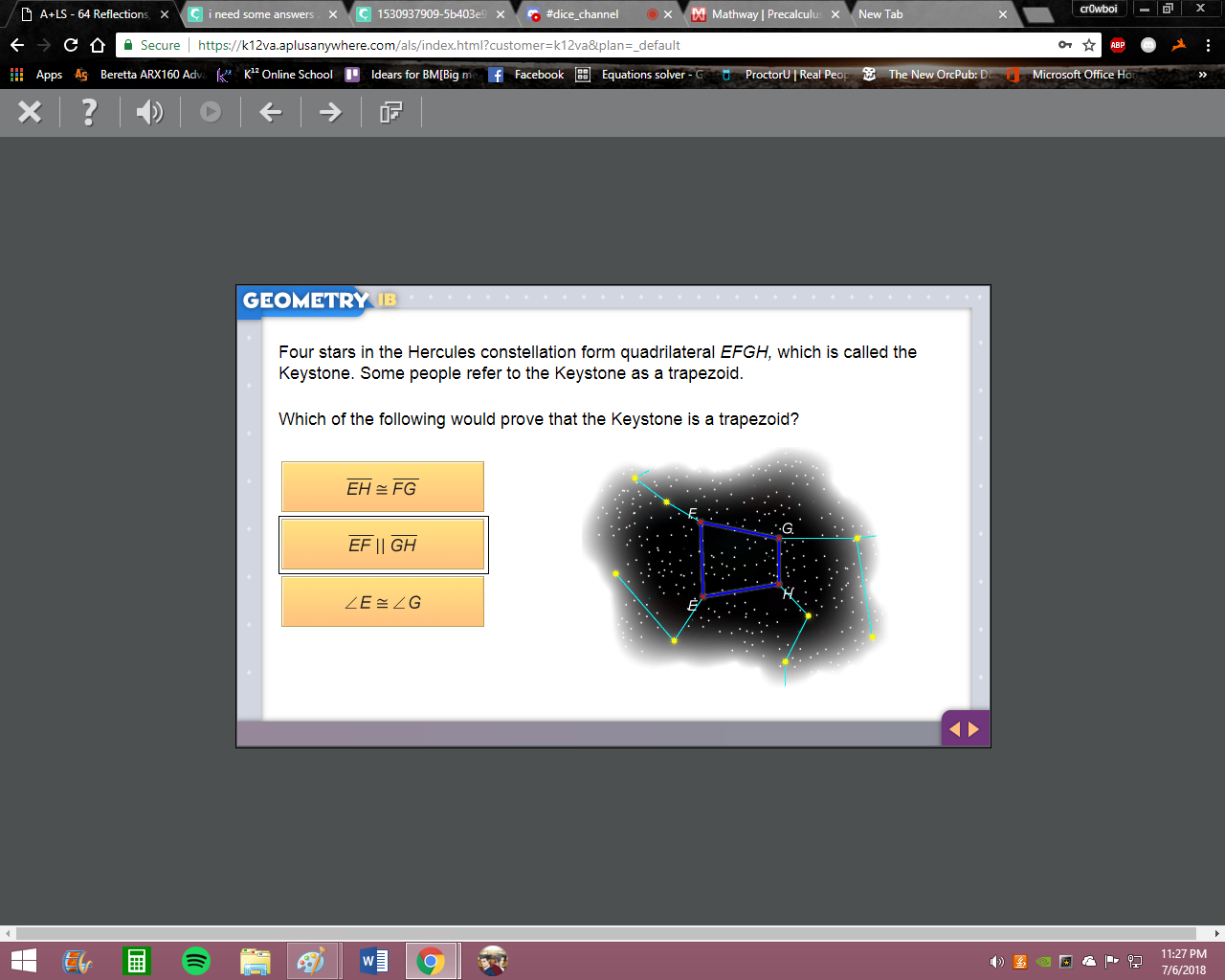
constellation one is good
princeevee:
sorry, i must've forgot, a bit of fog-o-war effect
 princeevee:
some of this stuff i'm actually using a bit of memory to do, but i just want to check nonetheless.
Vocaloid:
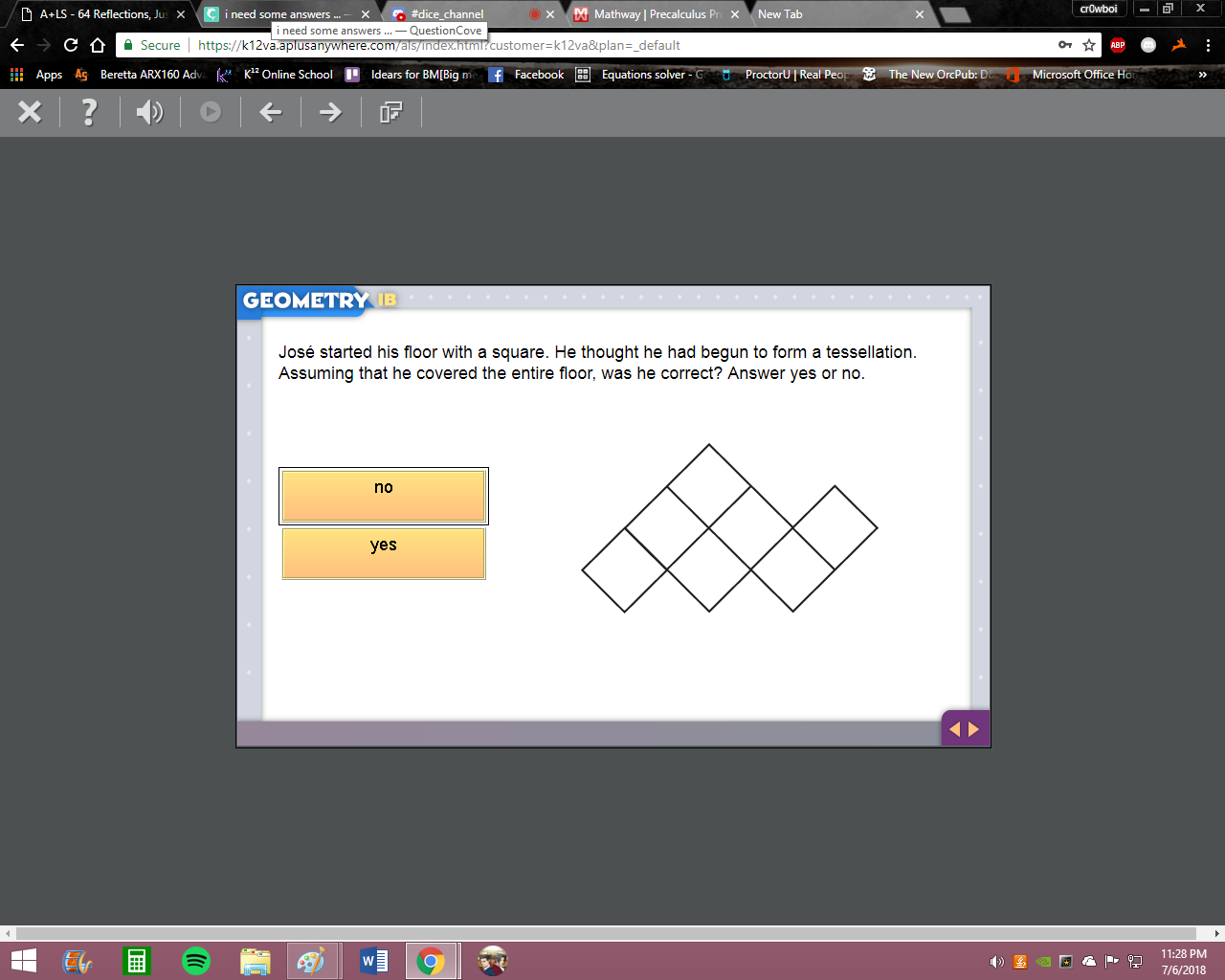
not sure about the tesselation one tbh (let's just go with your answer)
Vocaloid:
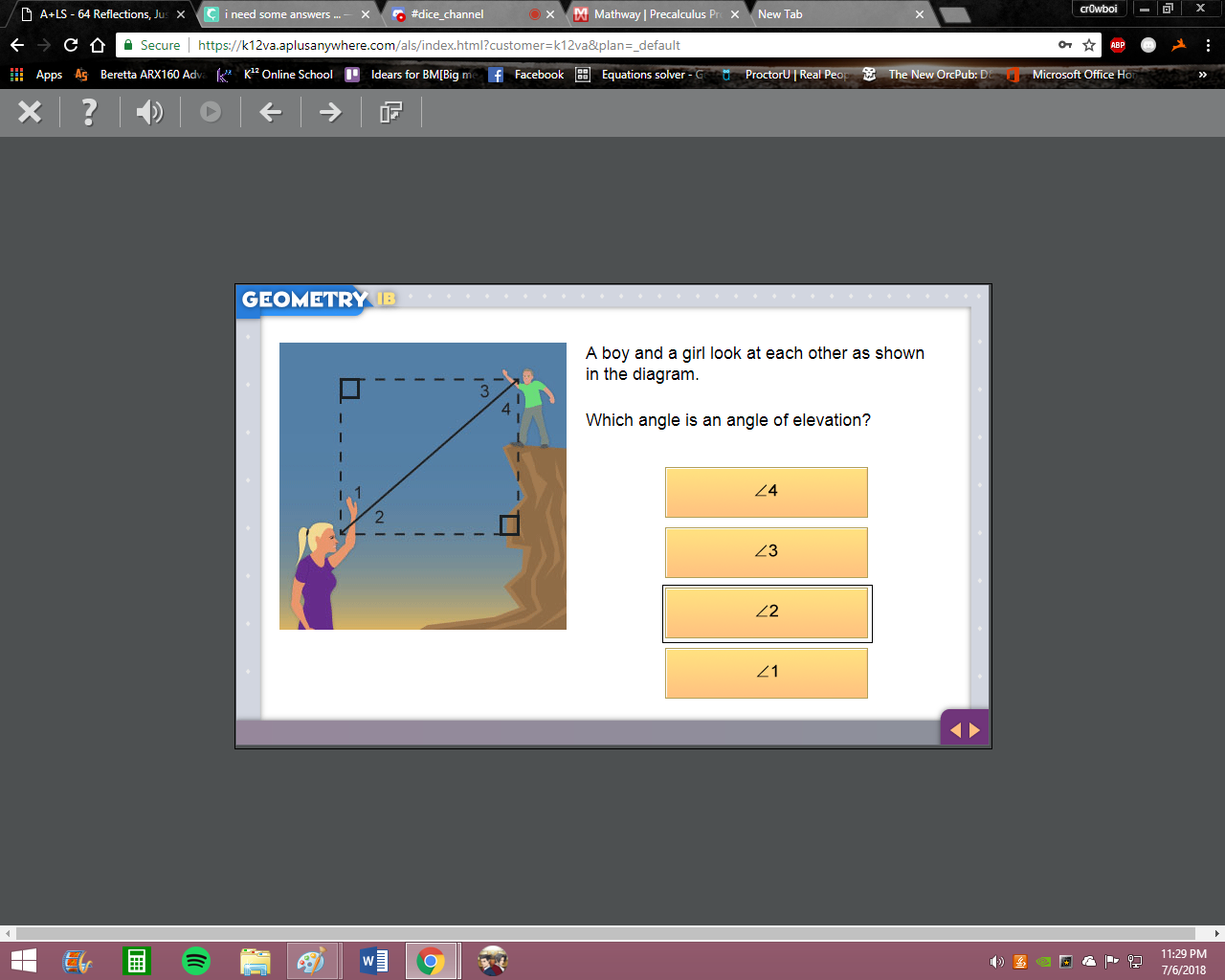
angle of elevation one is good
 Vocaloid:
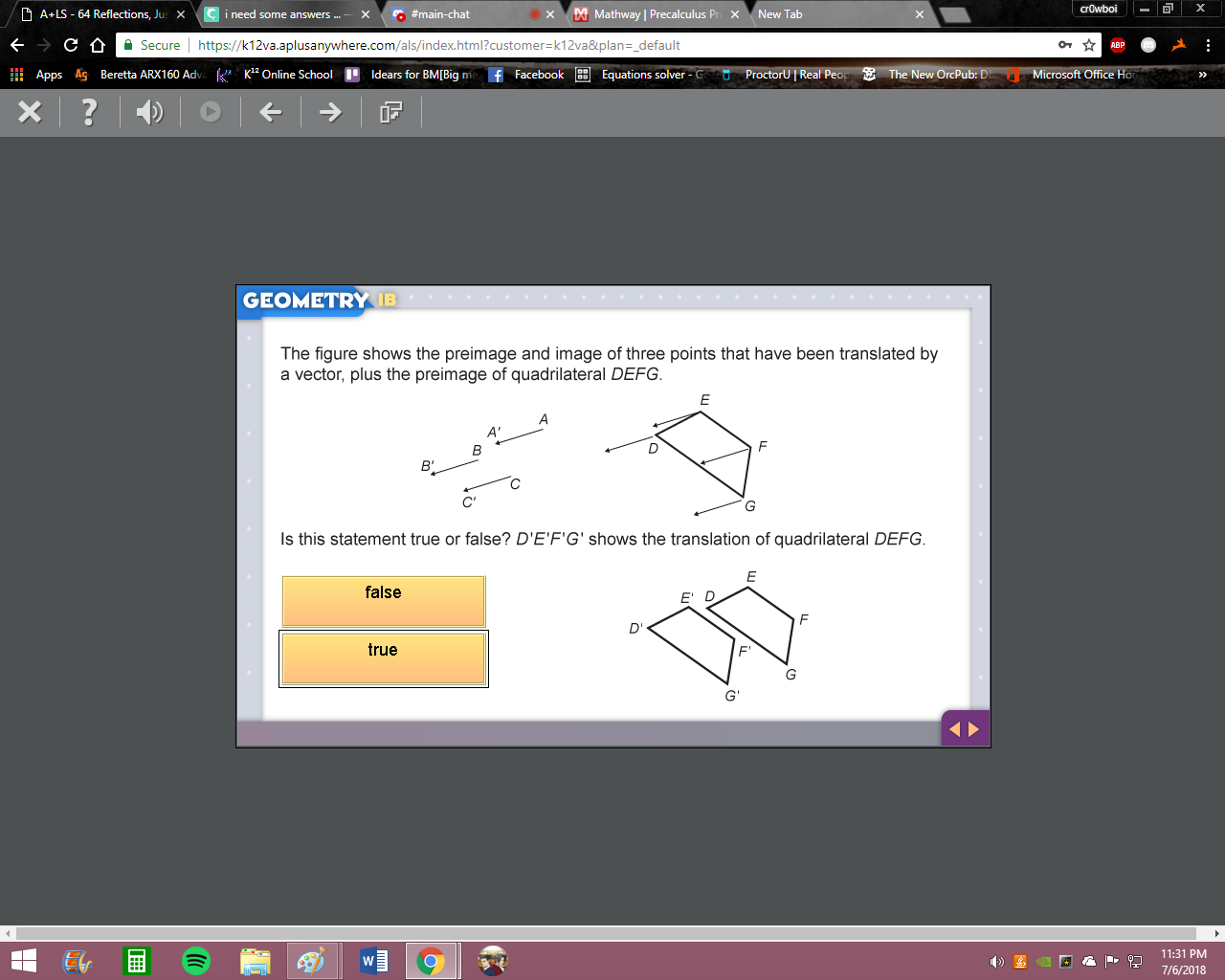
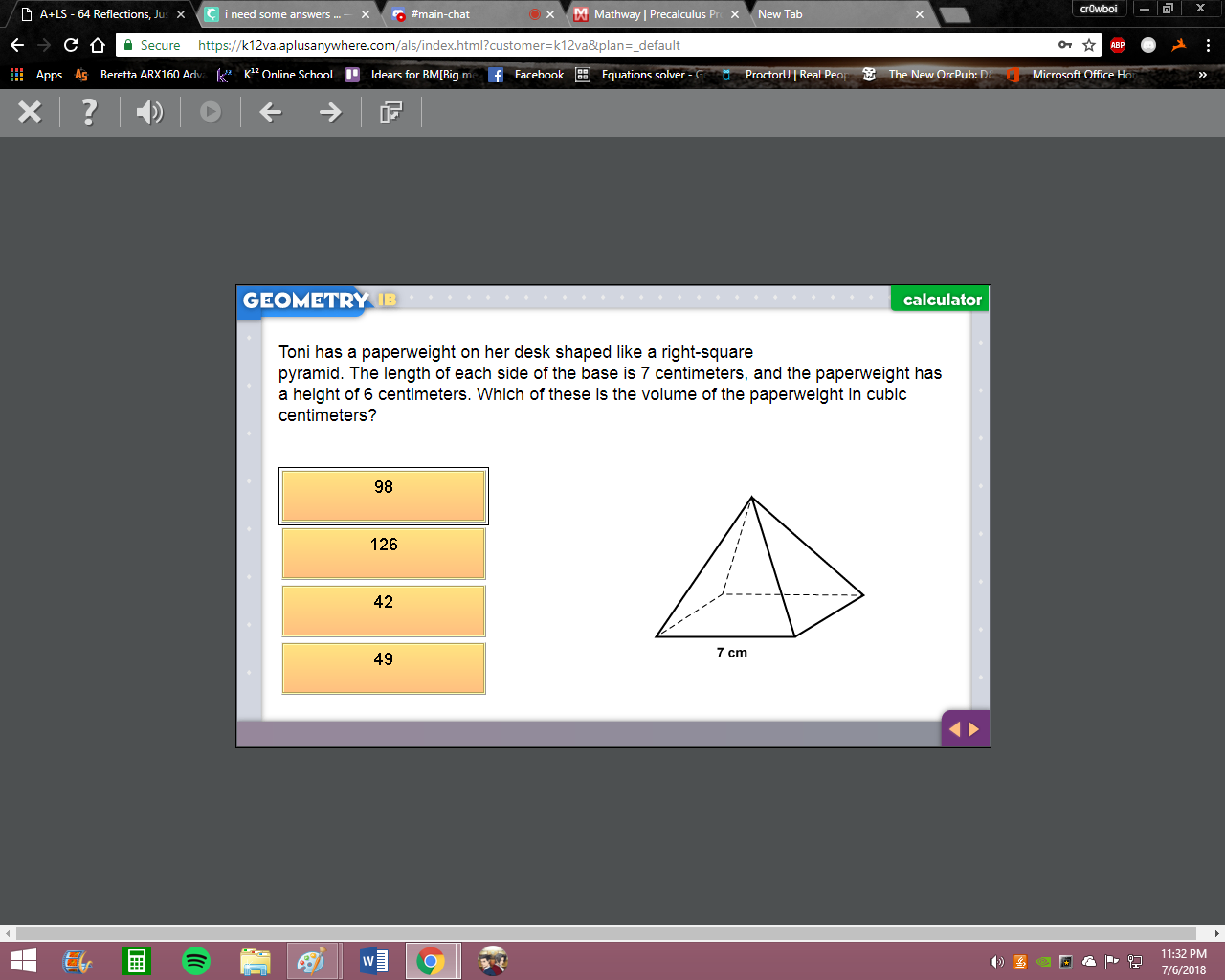
good for both
 Vocaloid:
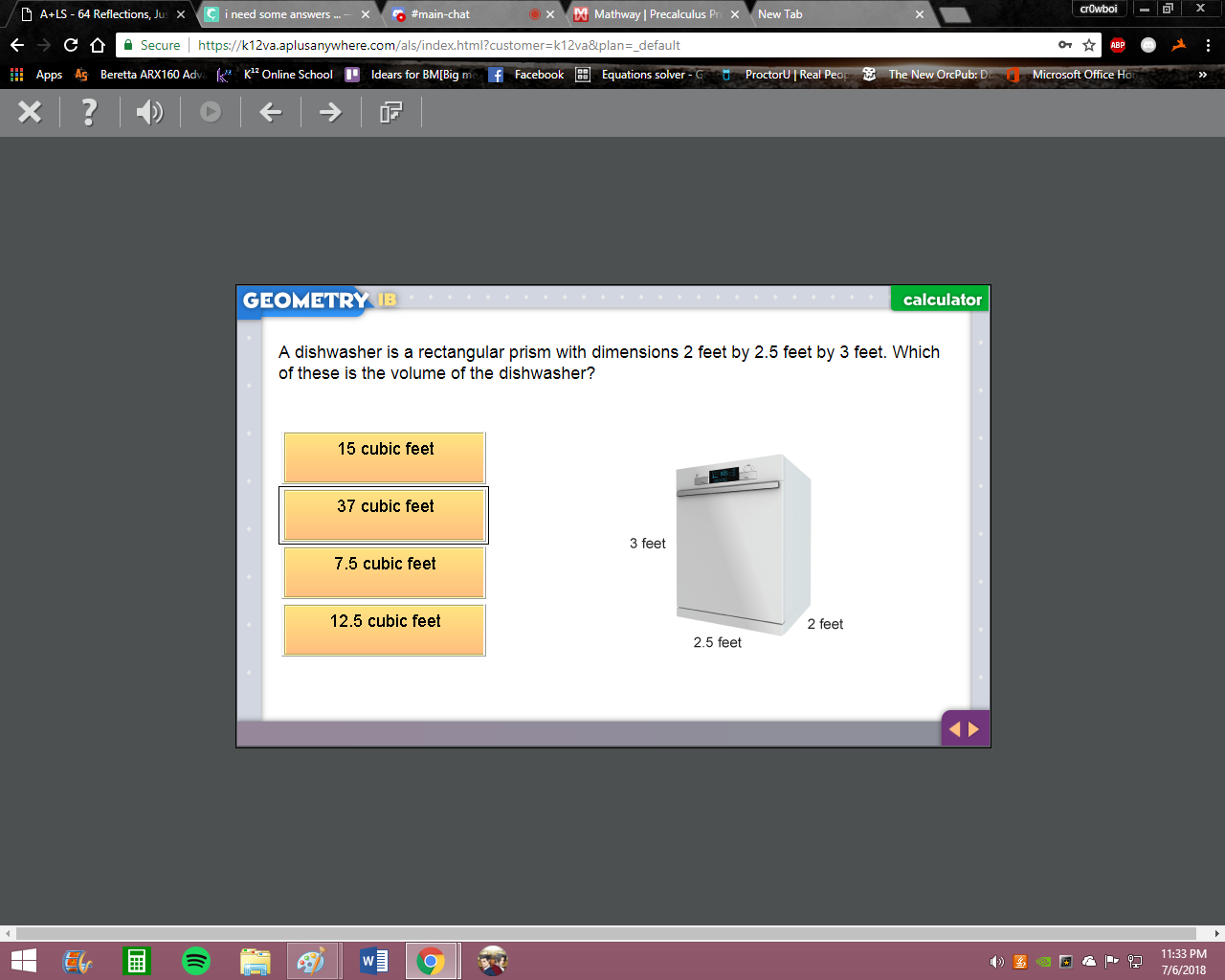
for the dishwasher: prism, multiply the dimensions 2*2.5*3 = 15 not 37
Vocaloid:
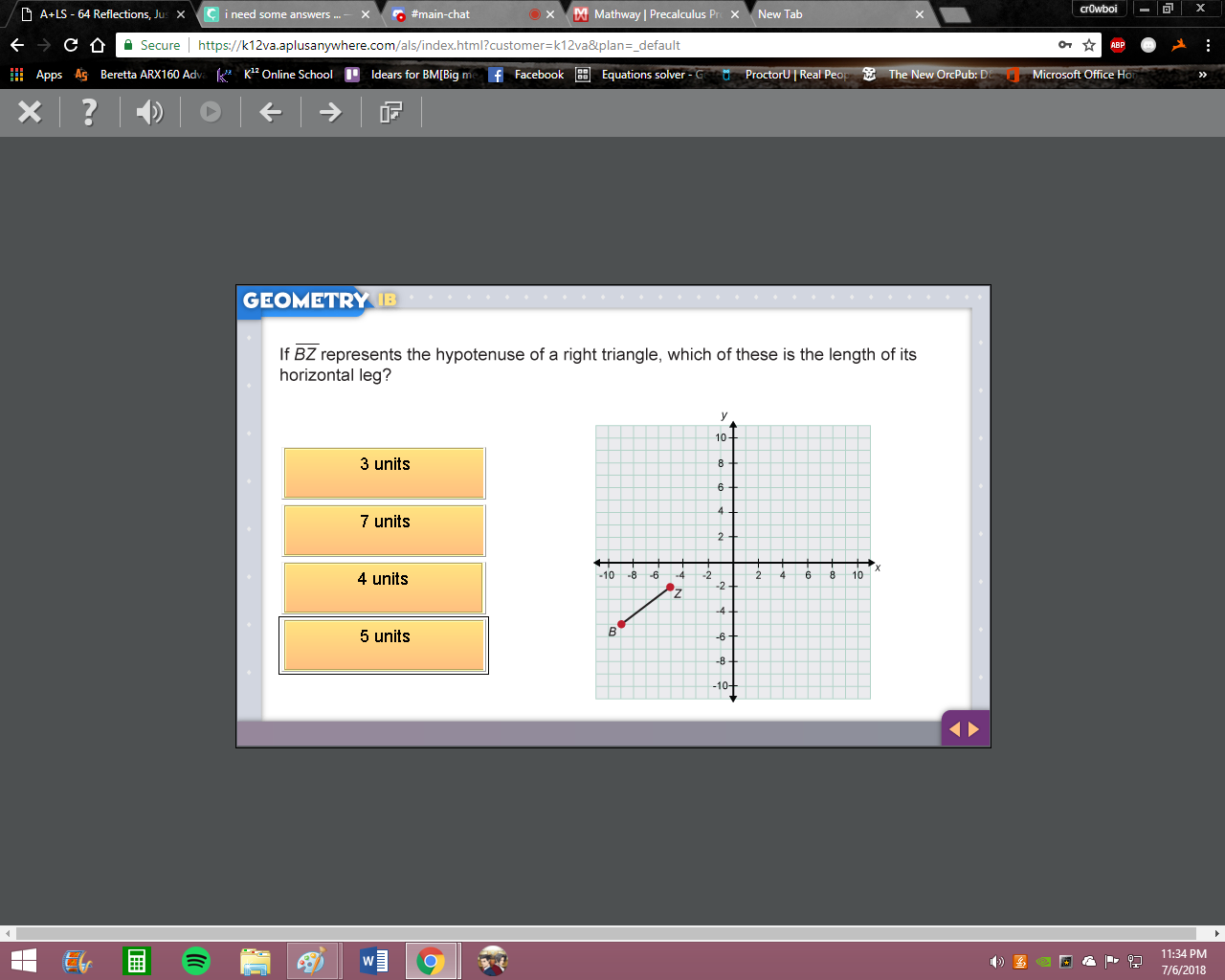
for BZ the horizontal line is the horizontal distance -5 - (-9) is 4 not 5
Vocaloid:
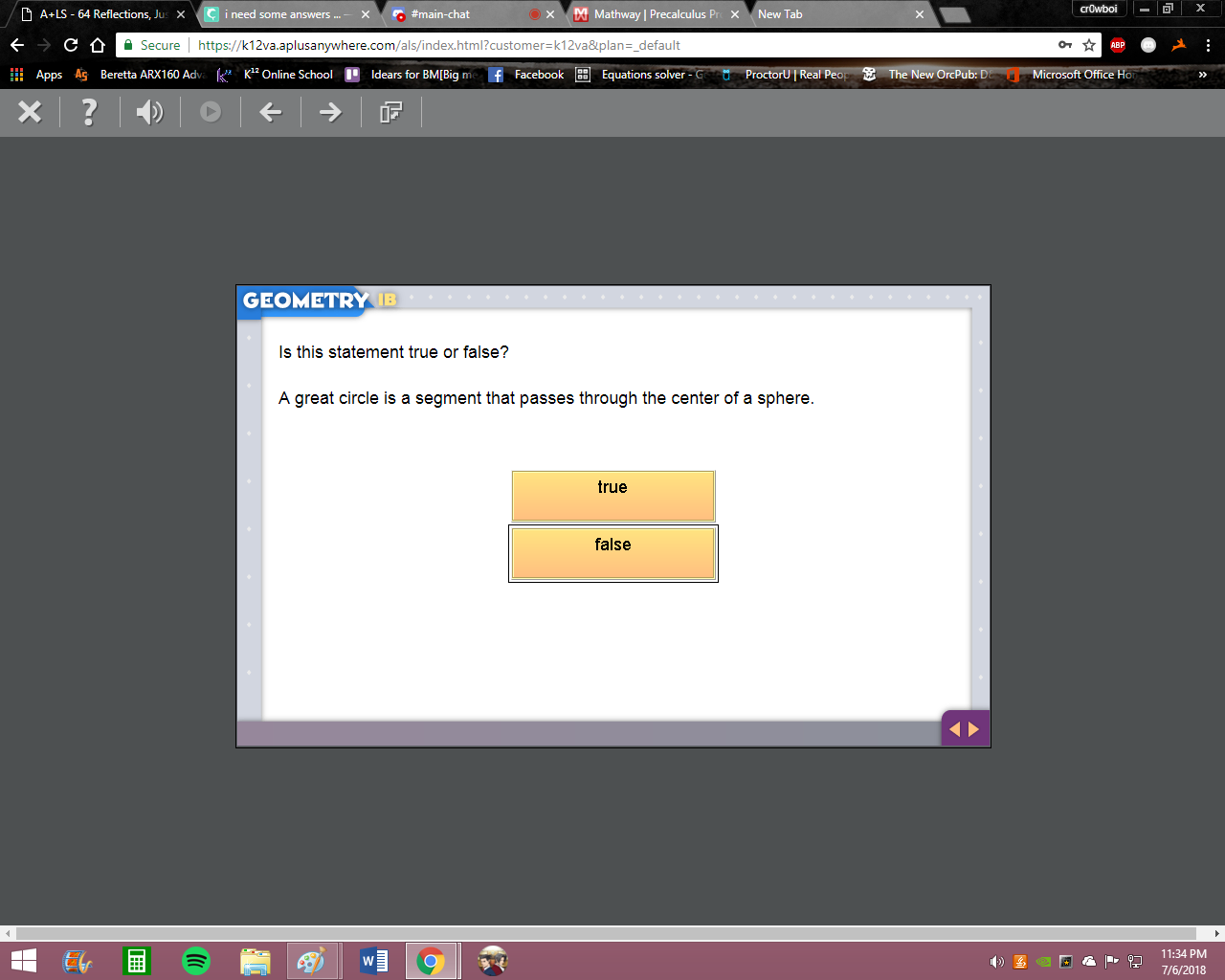
last one is good
 Vocaloid:
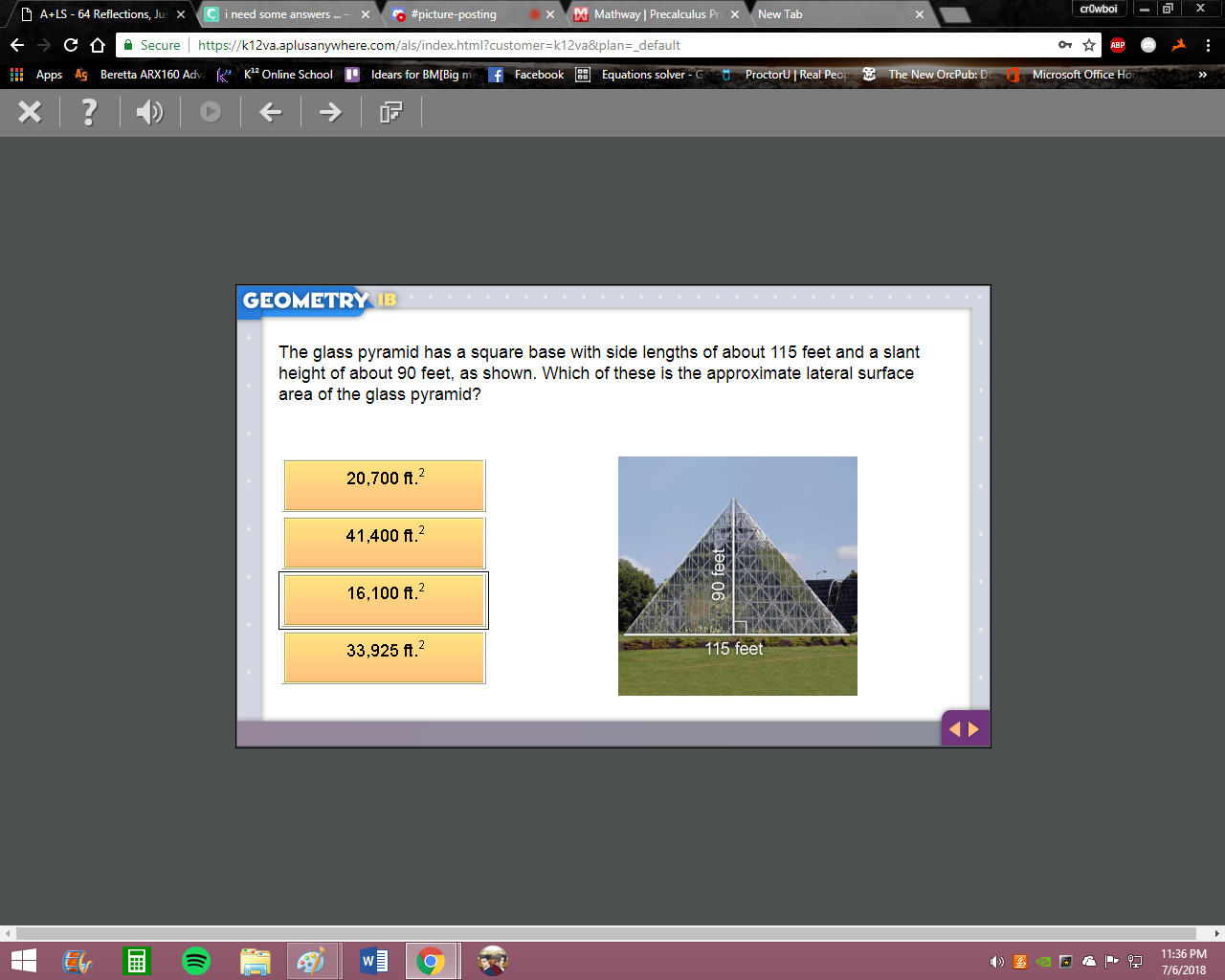
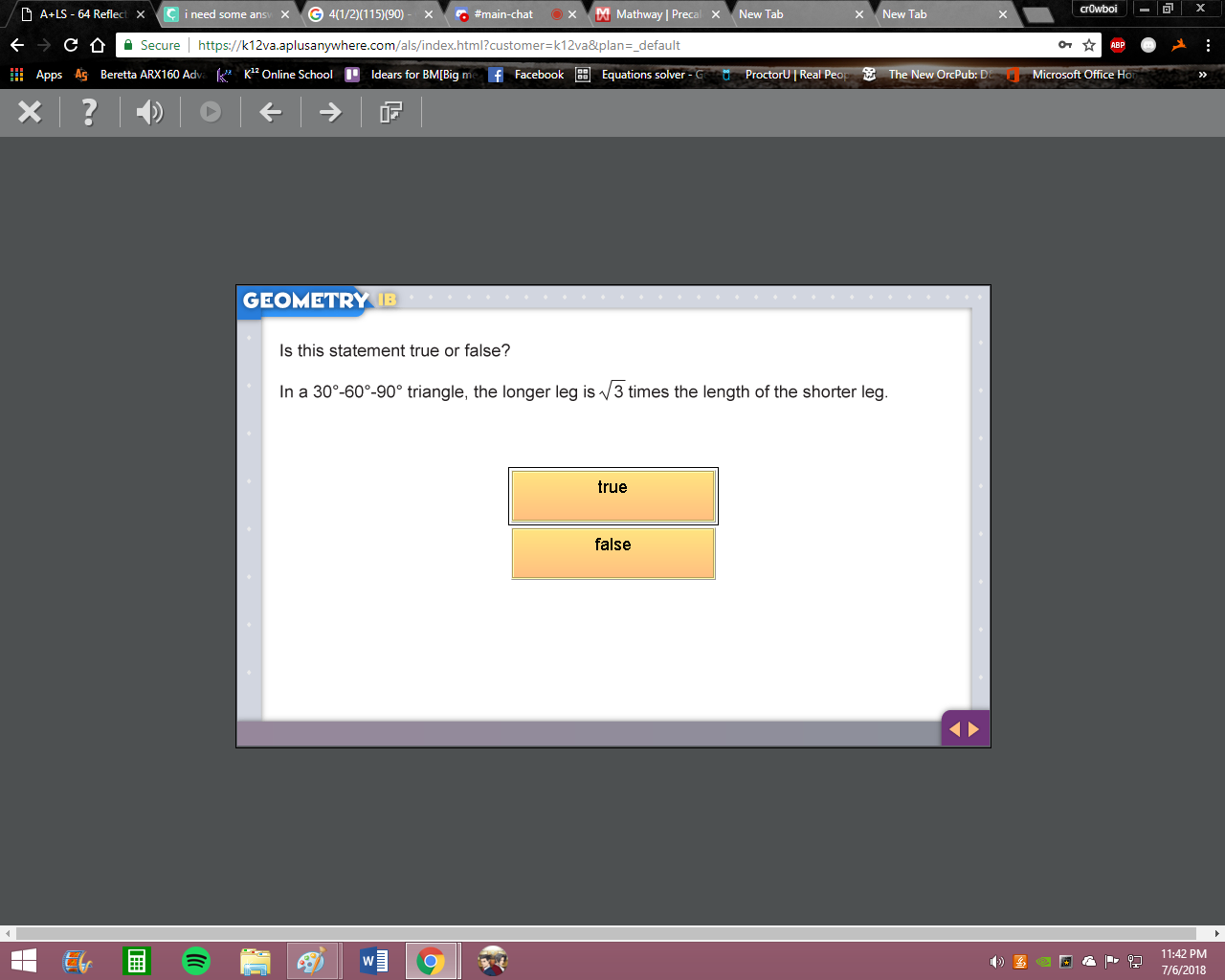
for the pyramid, lateral area is 4 * the area of a triangle or 4*(1/2)bh so 4(1/2)(115)(90)
princeevee:
alright.
Vocaloid:
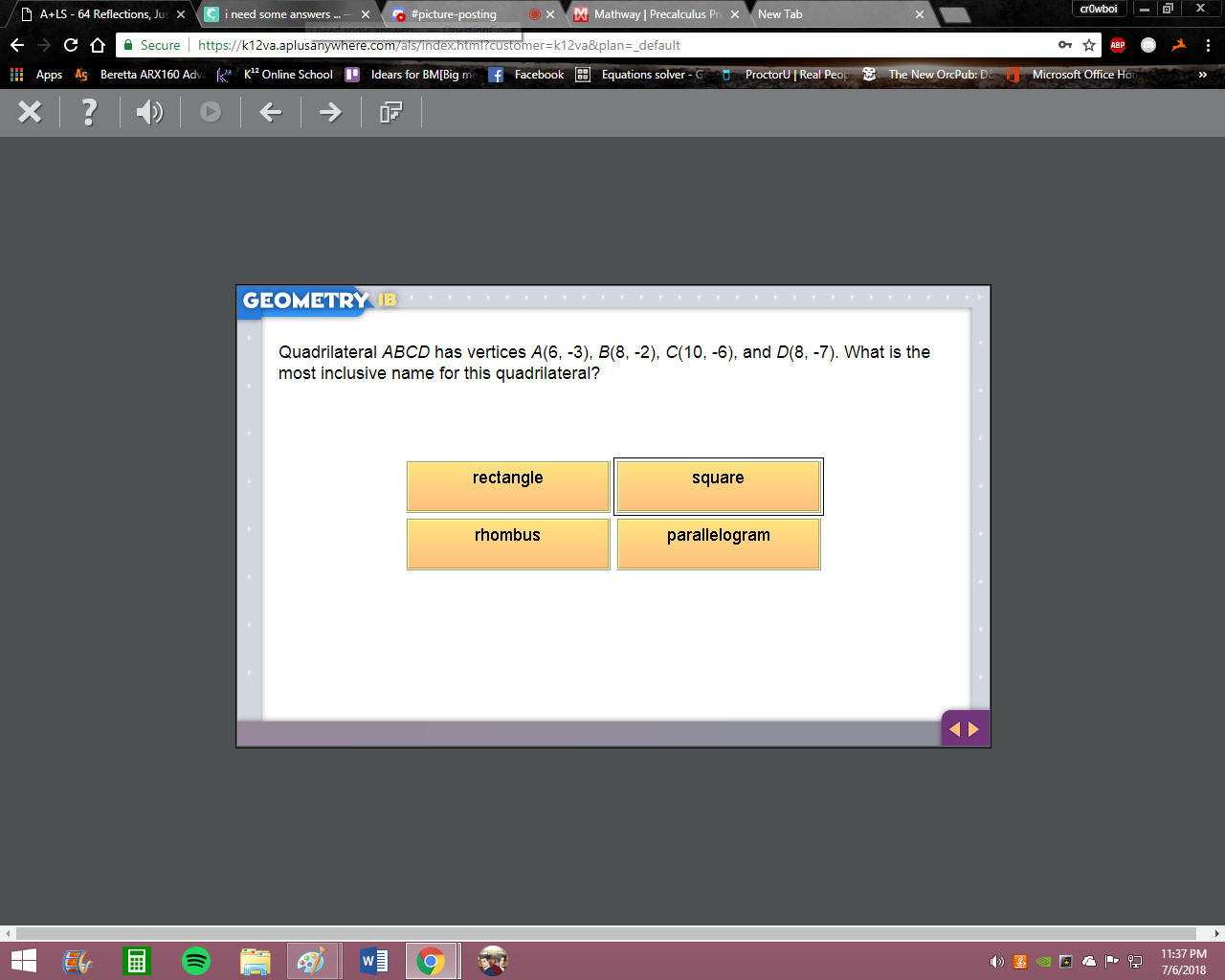
plotting the points on quadrilateral ABCD gives us a rectangle (using desmos) parallelogram is a more inclusive term so parallelogram = your solution
princeevee:
third one is good then, right?
Vocaloid:
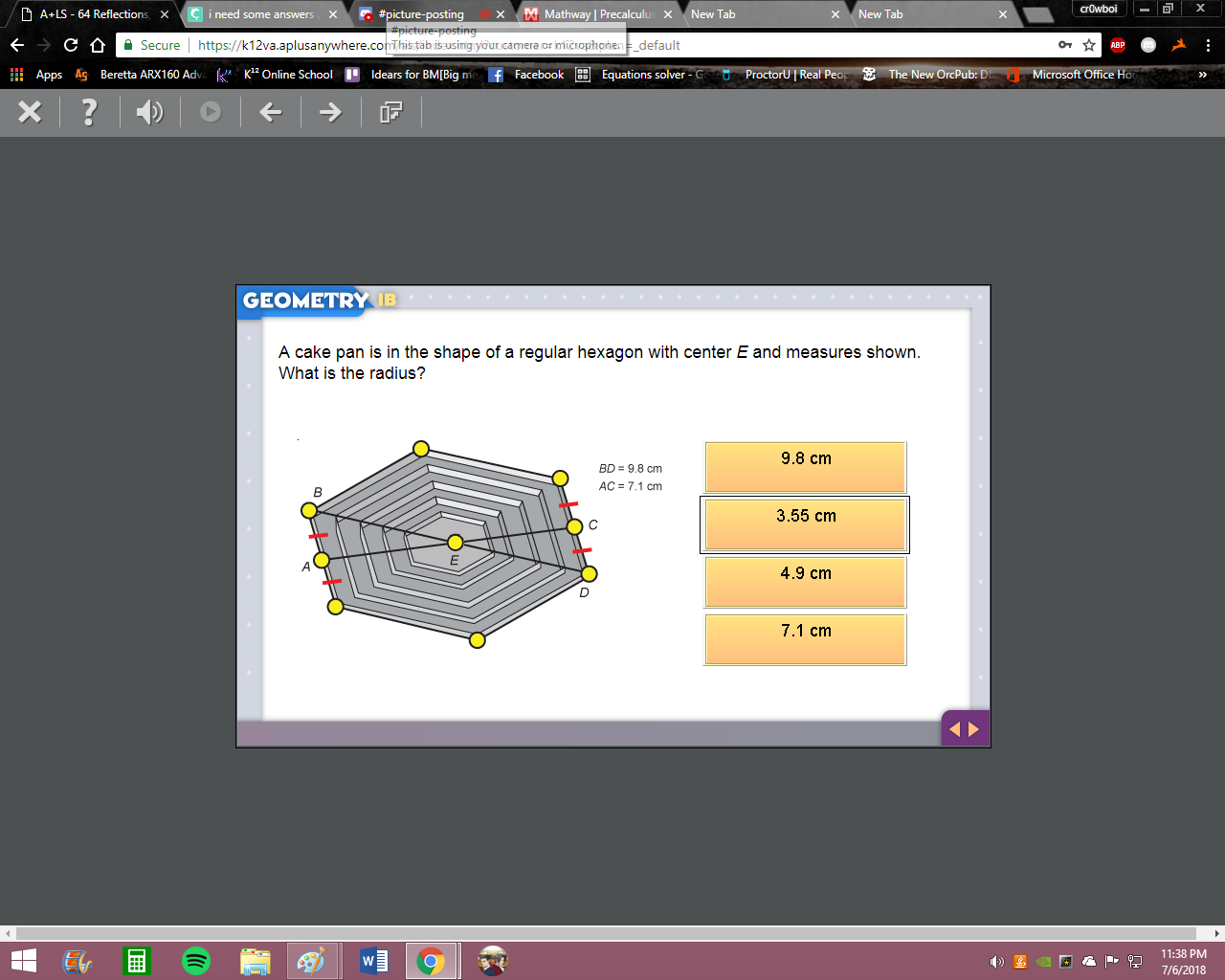
for the hexagon question the radius is one half the longest segment so 9.8/2 = 4.9 not 3.55
 Vocaloid:
good
 princeevee:
the last one here i think is right.
princeevee:
wait no, it's A
Vocaloid:
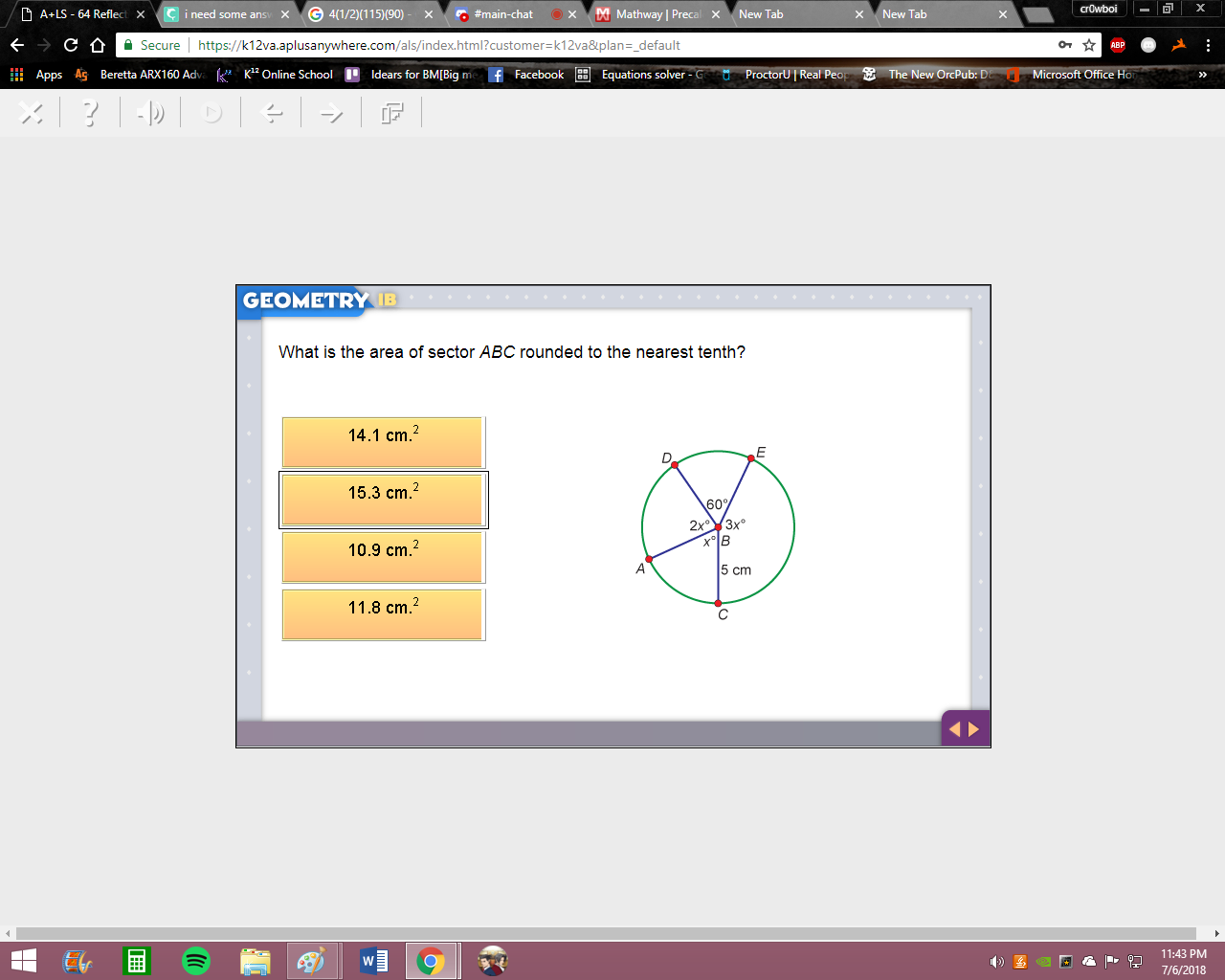
for the sector ABC question we know that a full circle is 360 degrees so x + 2x + 3x + 60 = 360, solving for x gives us x = 50 the radius of the circle is 5 so ABC = (50/360)*pi*5^2
Vocaloid:
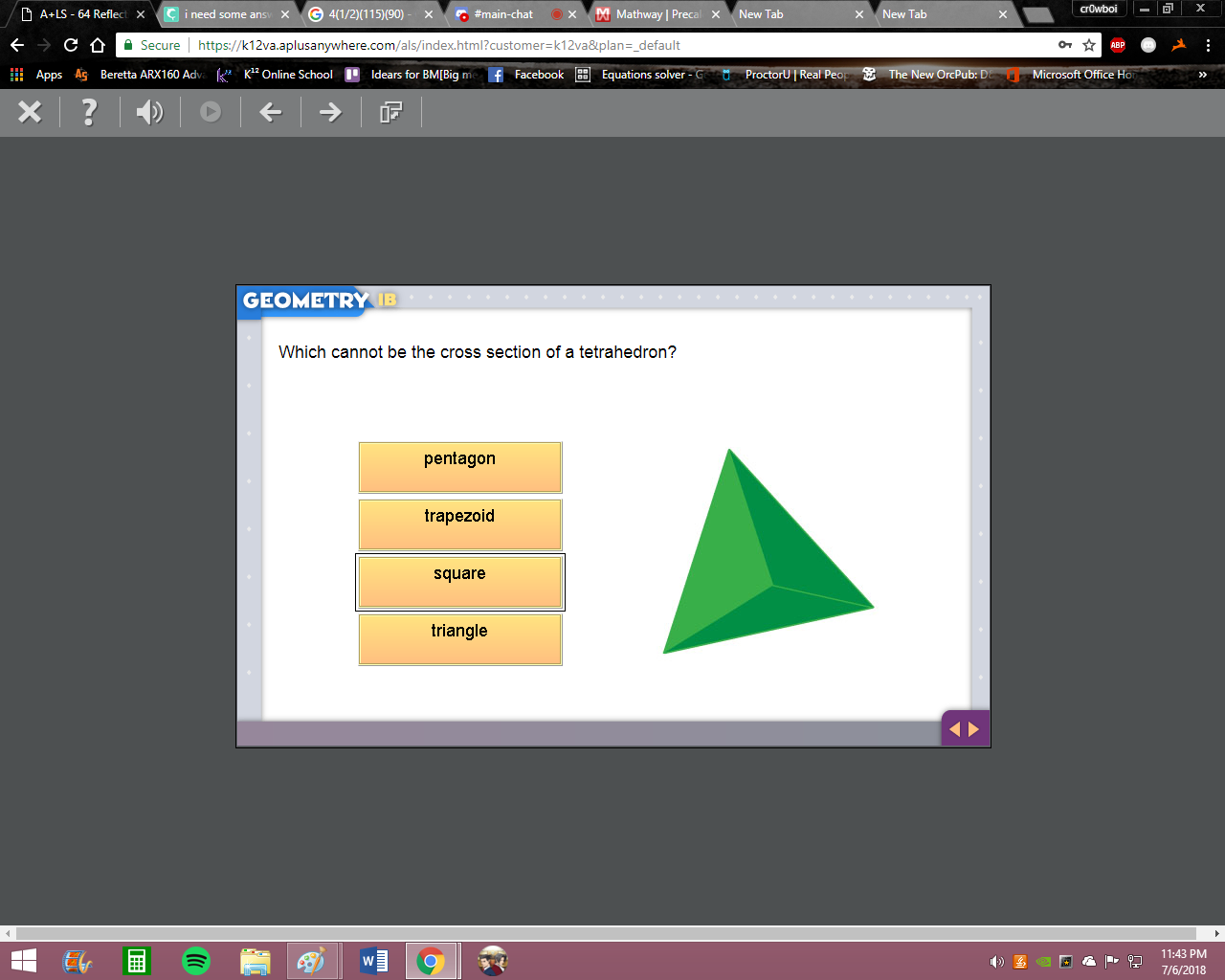
for the cross section one, we got pentagon when we did this earlier as the solution
 princeevee:
right, i remember that now.
 Vocaloid:
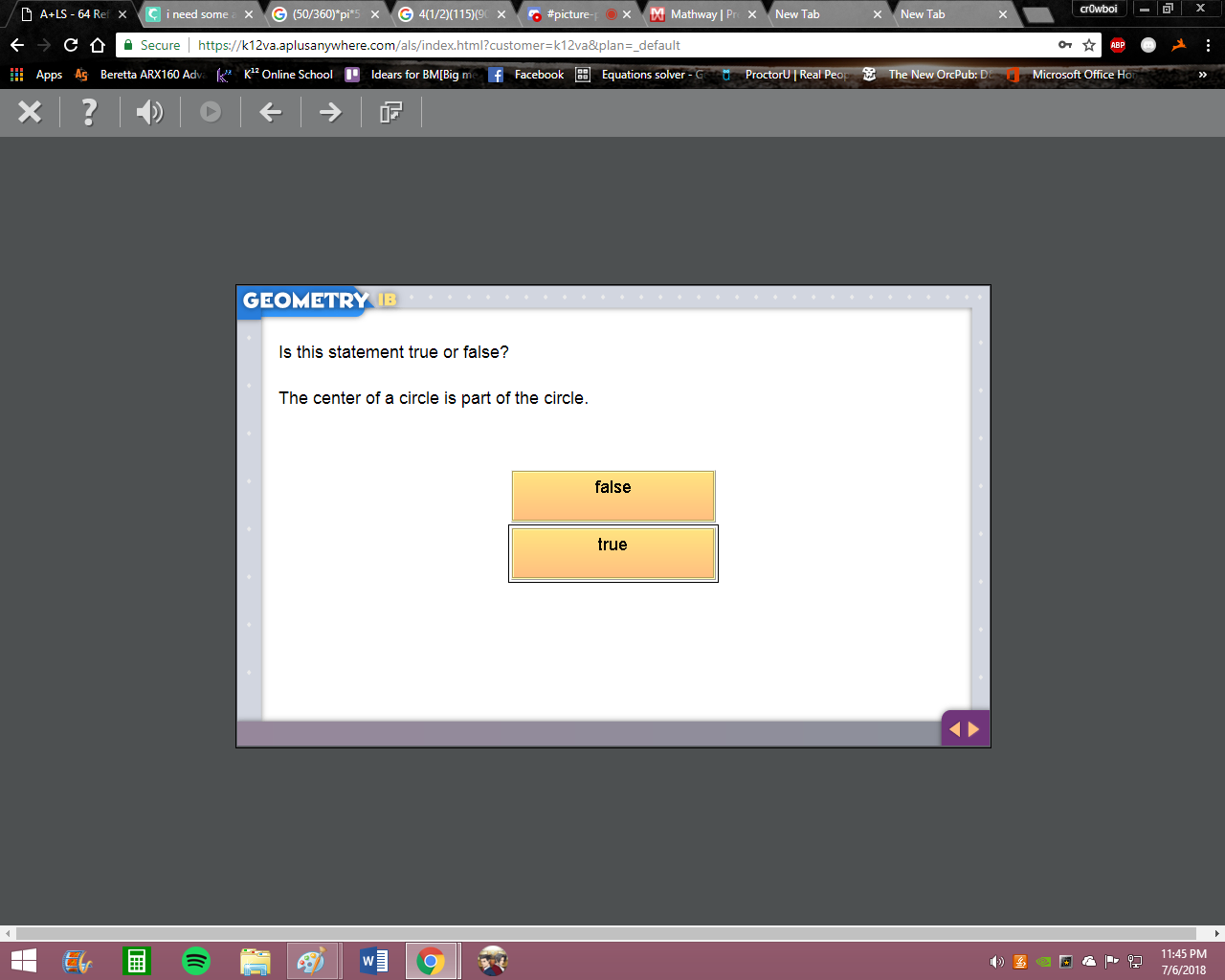
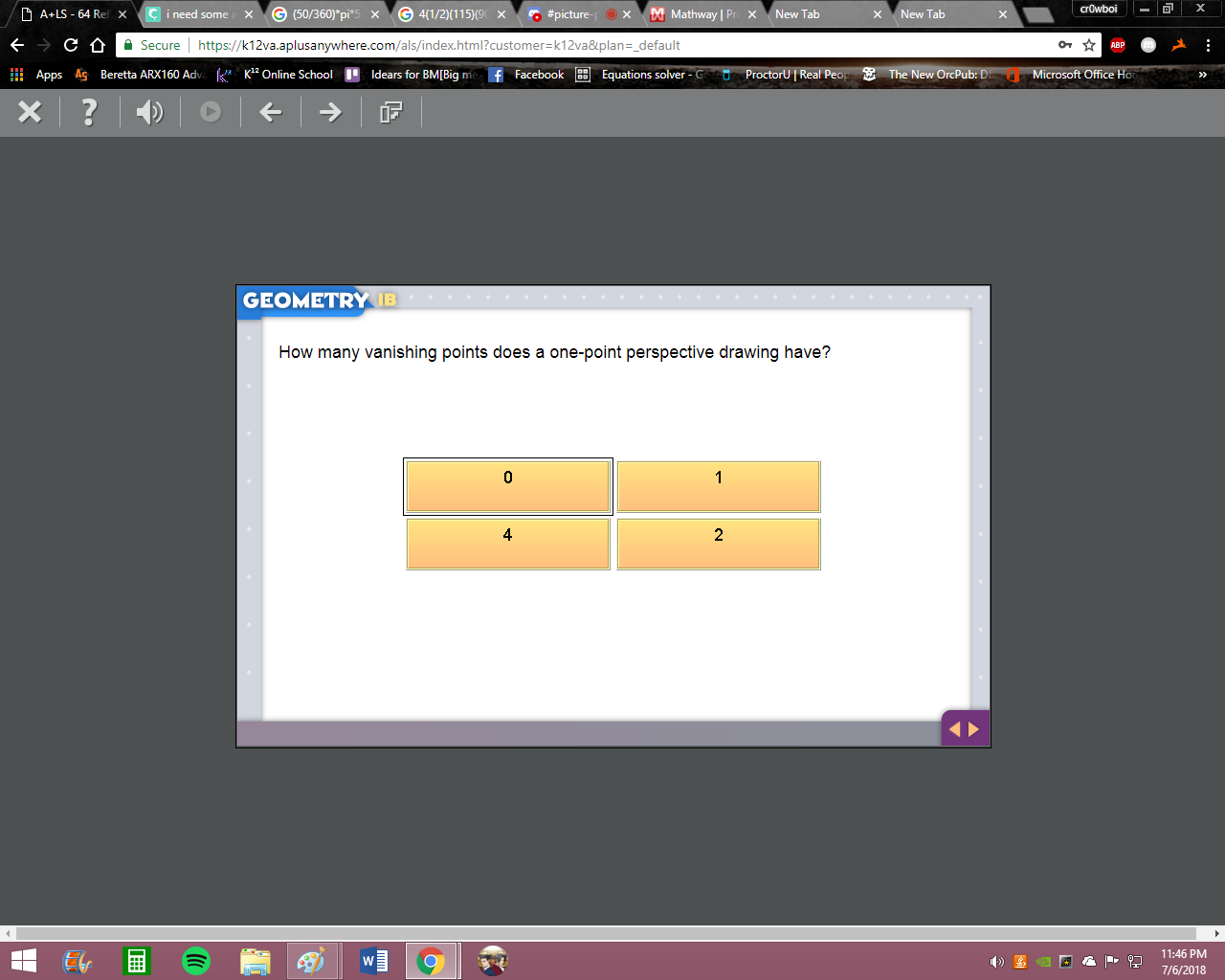
not 100% sure about the center of a circle question (let's go with your answer for now) for the "one point perspective" there's one vanishing point not 0 (hence the name)
 Vocaloid:
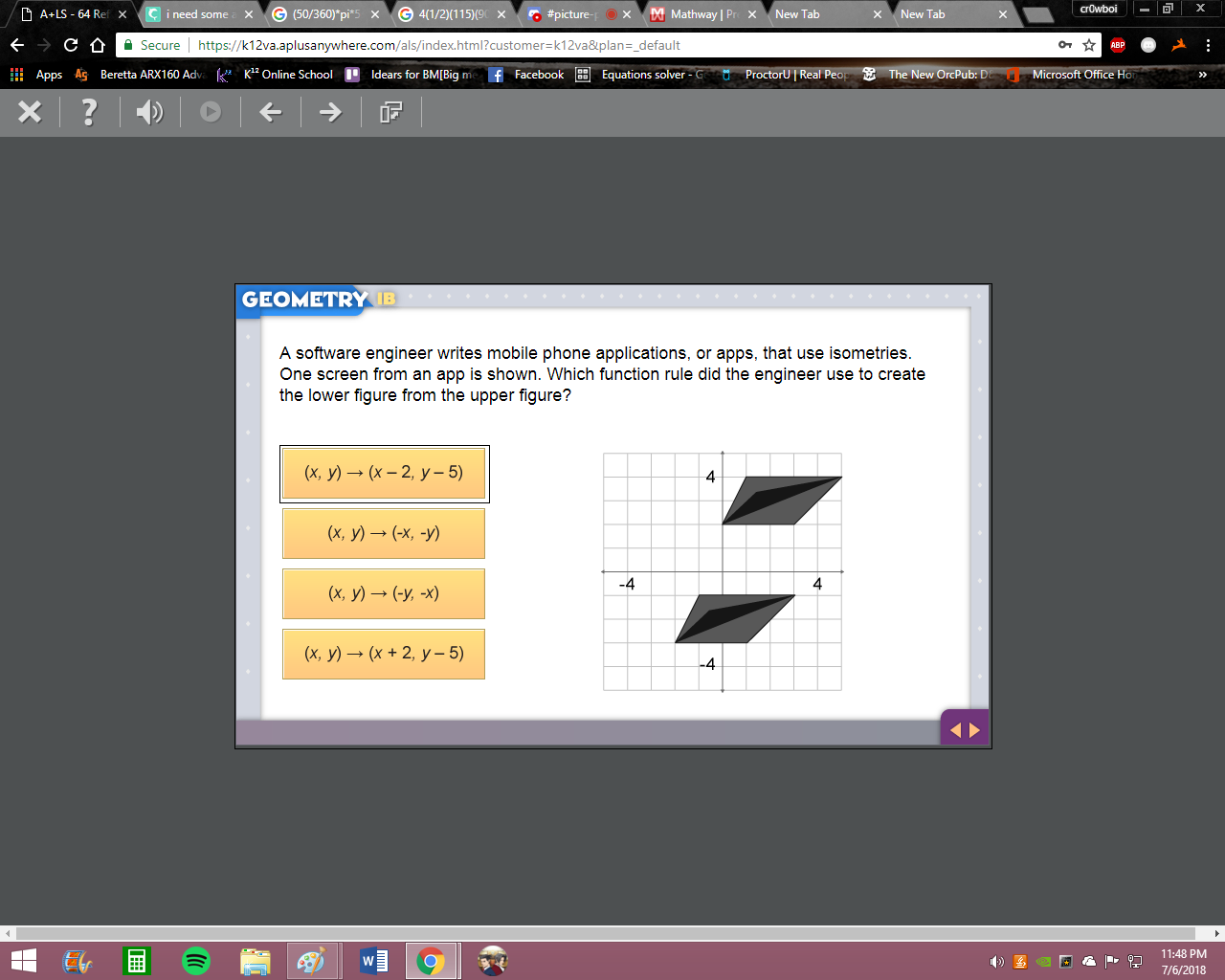
good on both
 Vocaloid:
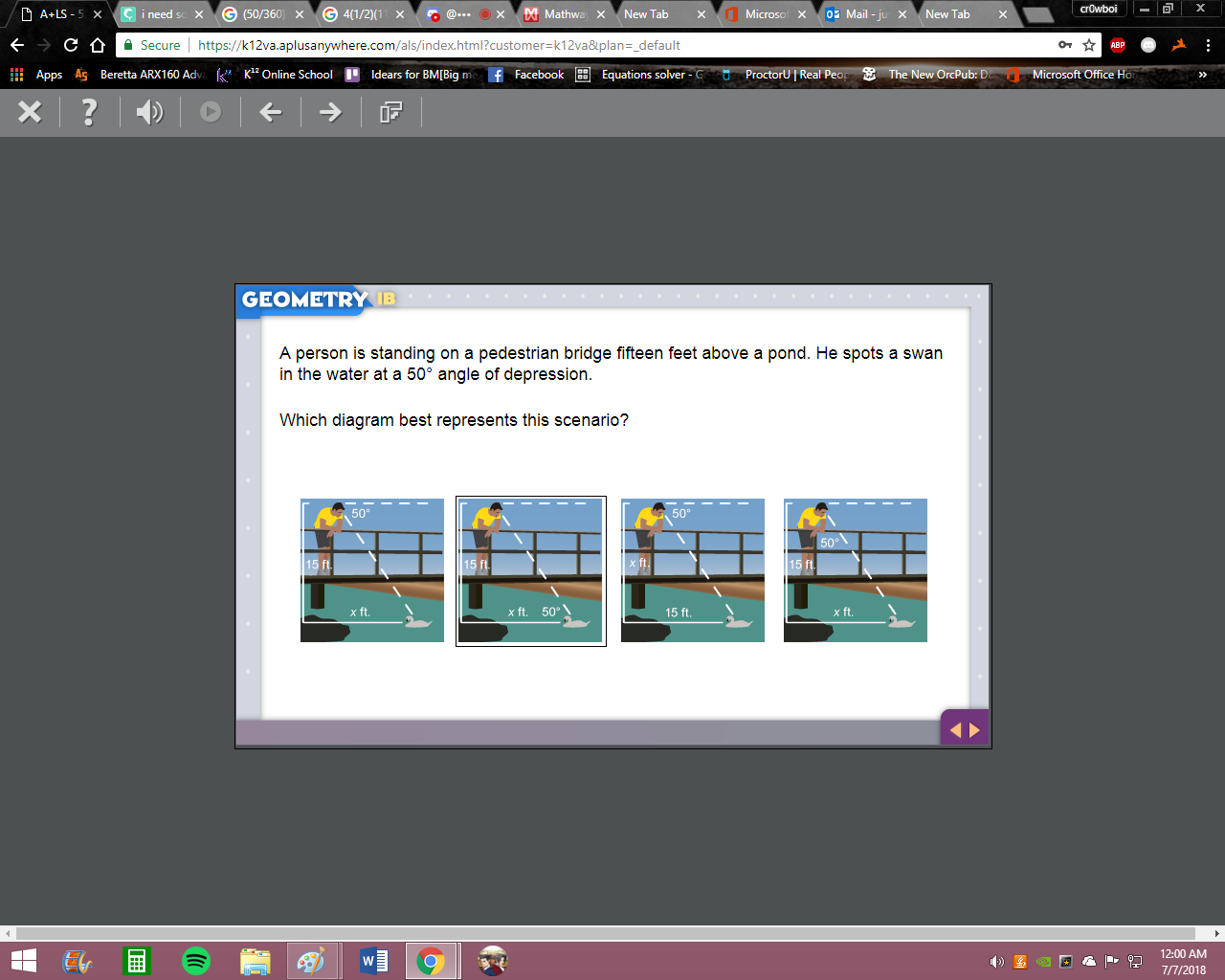
angle of depression not angle of elevation, so it's the angle from the persons eye downwards so the first choice is a better representation of the scenario
Vocaloid:
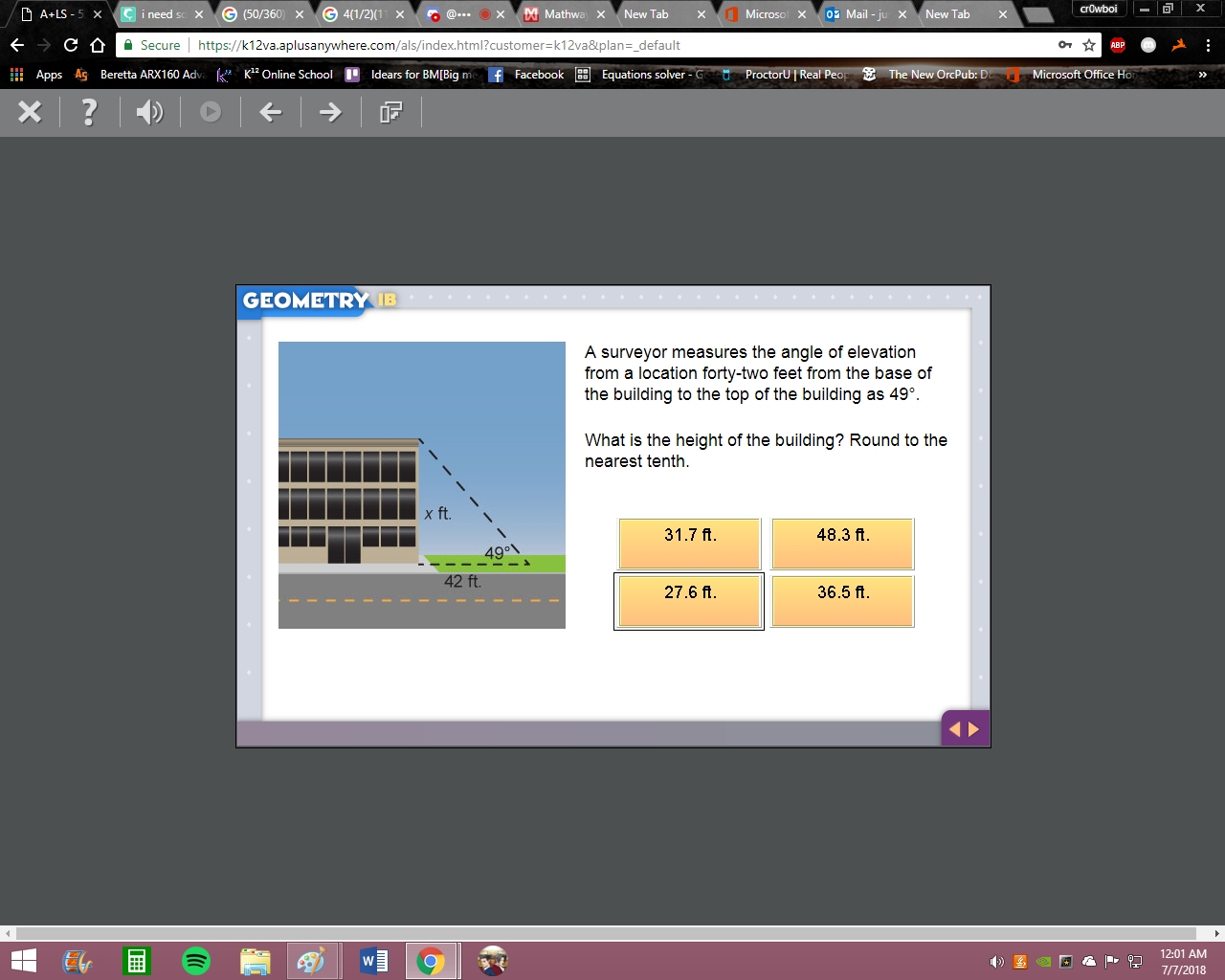
for the height of the building tan(angle) = opposite/adjacent tan(49) = x/42 plugging this into a calc gives x = 48.3
 Vocaloid:
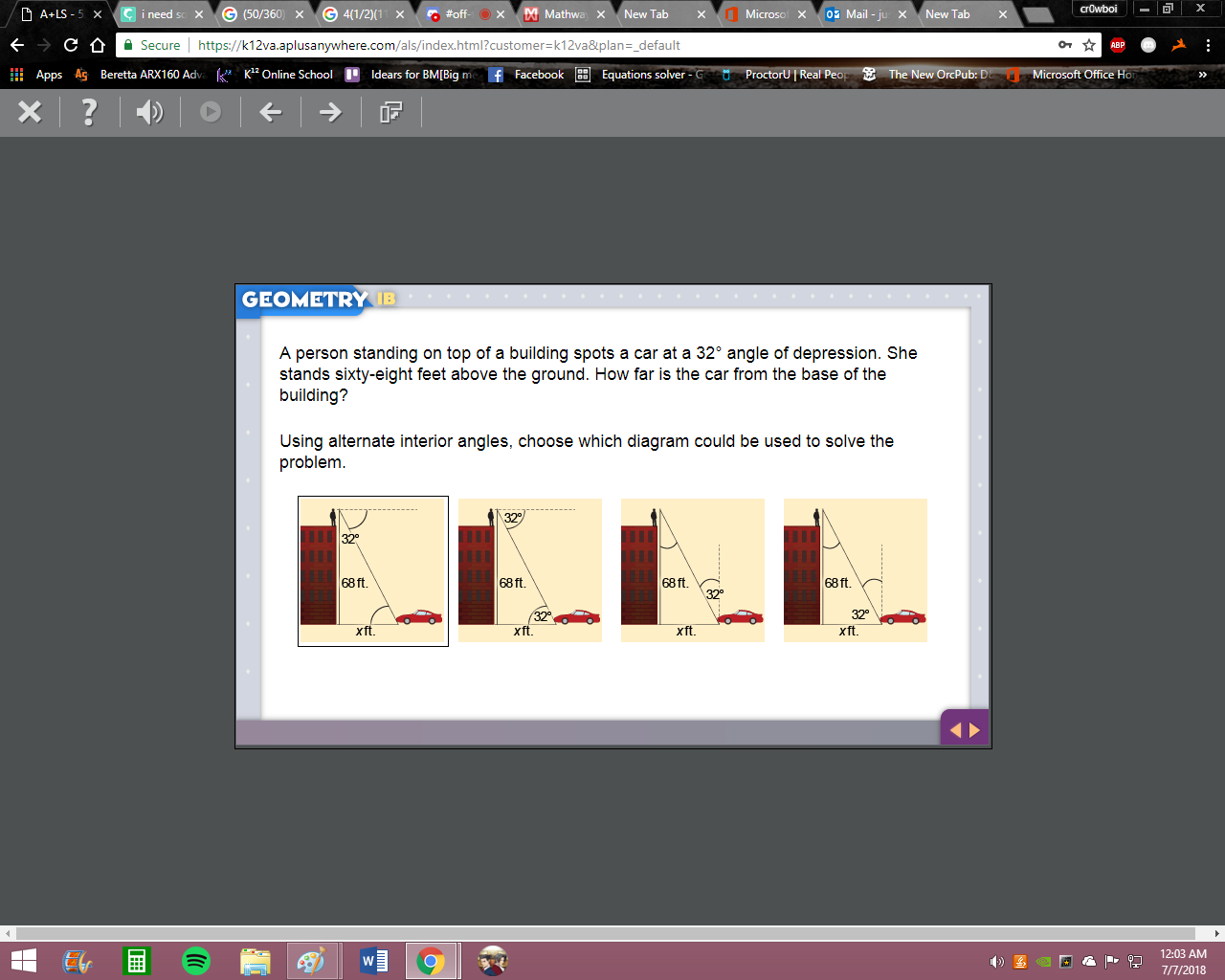
the angle of depression is taken from the horizontal so the second one is a better representation |dw:1530947178553:dw|
Vocaloid:
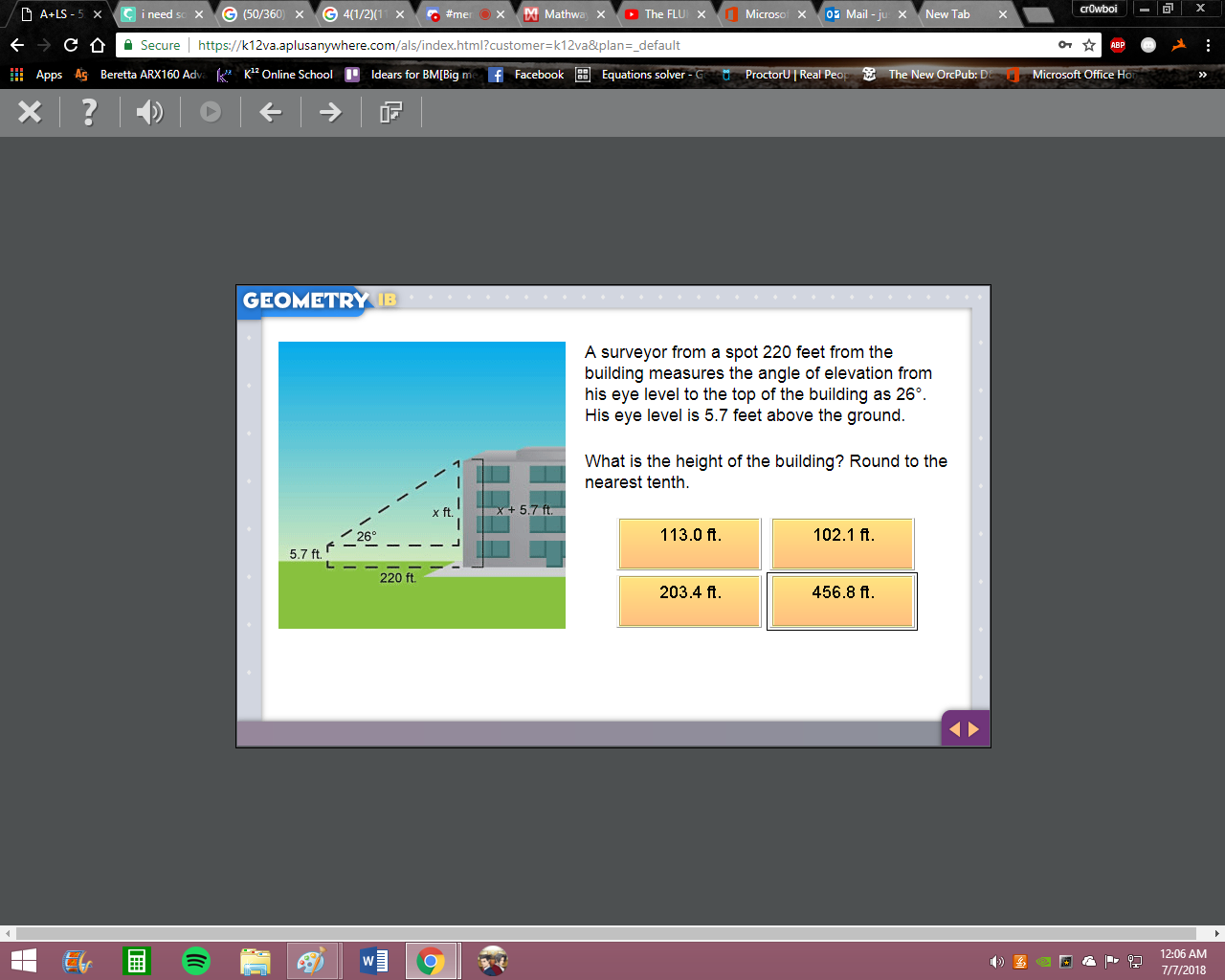
for the second building question tan(angle) = opposite/adjacent using the first triangle we get tan(26) = x/220 plugging this into a calculator gives us x = 107.3 then add on 5.7 onto that to get the sol'n
 Vocaloid:
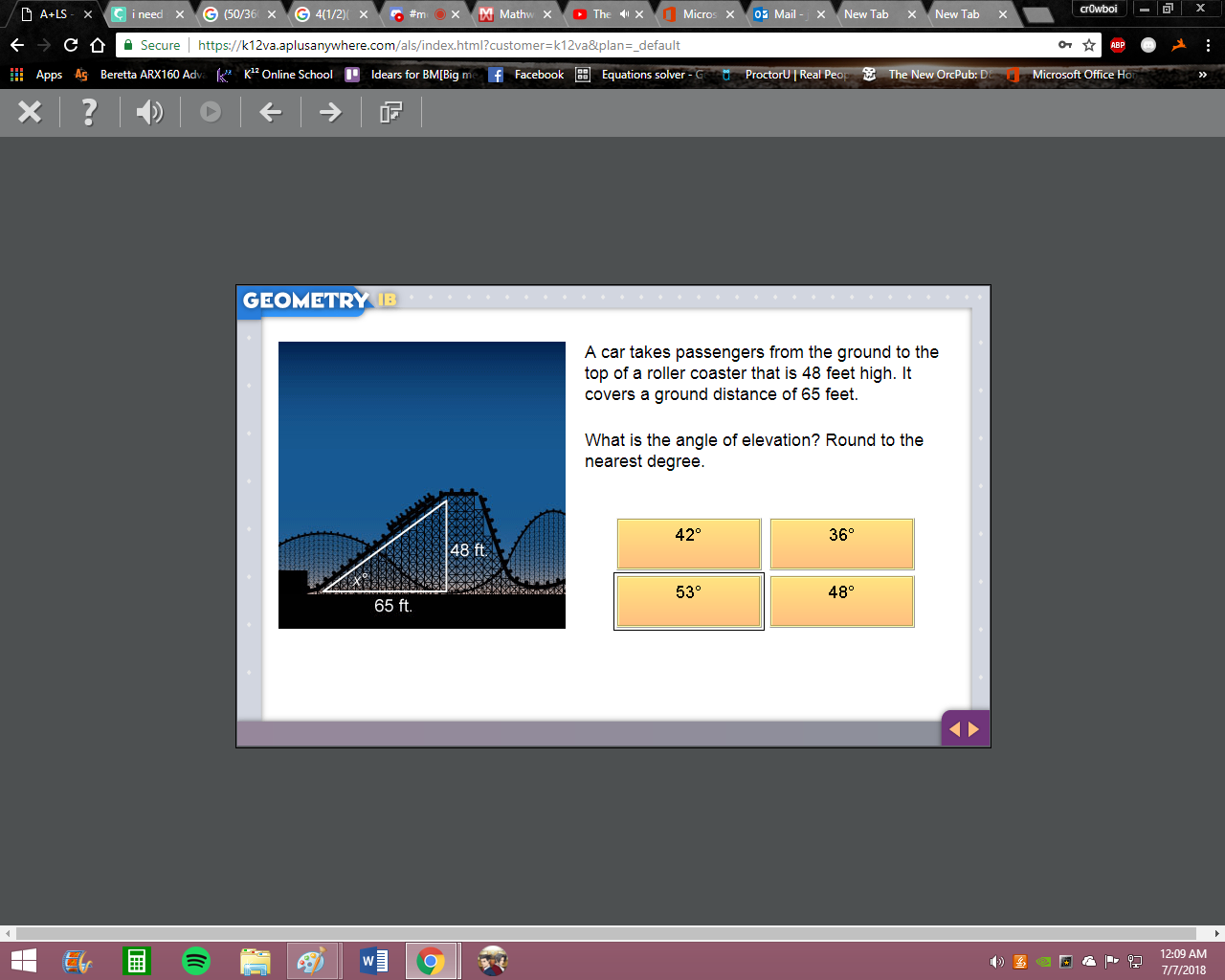
let's start w/ the rollercoaster one tan(x) = opposite/adjacent = 48/65 therefore x = arctan(48/65) which gives you 36.44 when you chuck it into a calculator
Vocaloid:
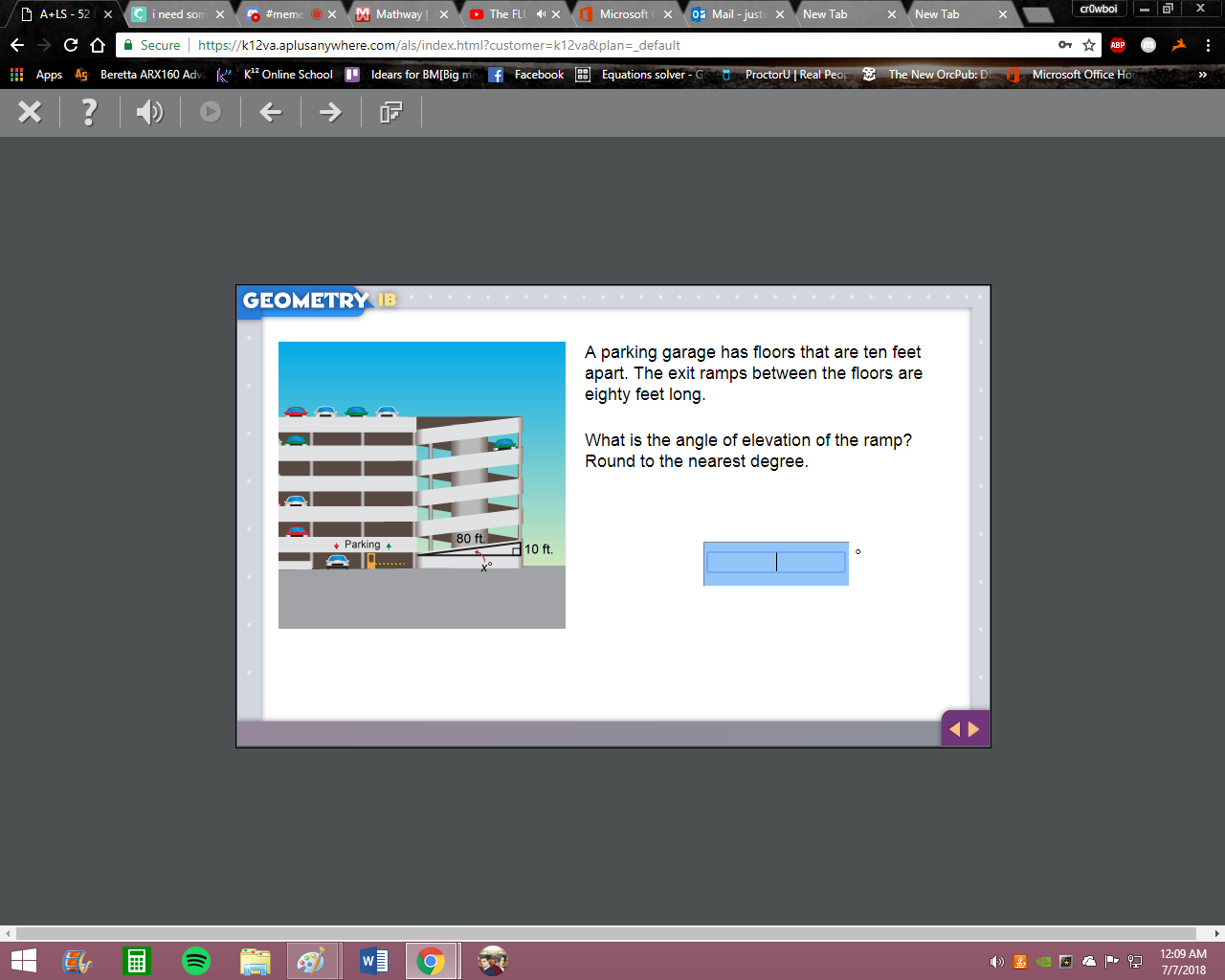
for the parking garage problem we have opposite and hypotenuse so we use sin sin(x) = 10/80 take the arcsin of both sides x = arcsin(10/80) = > chuck this into a calculator and round to the nearest whole #
princeevee:
0.125
 Vocaloid:
the parking lot is 7, your calc was probably in the wrong mode
Vocaloid:
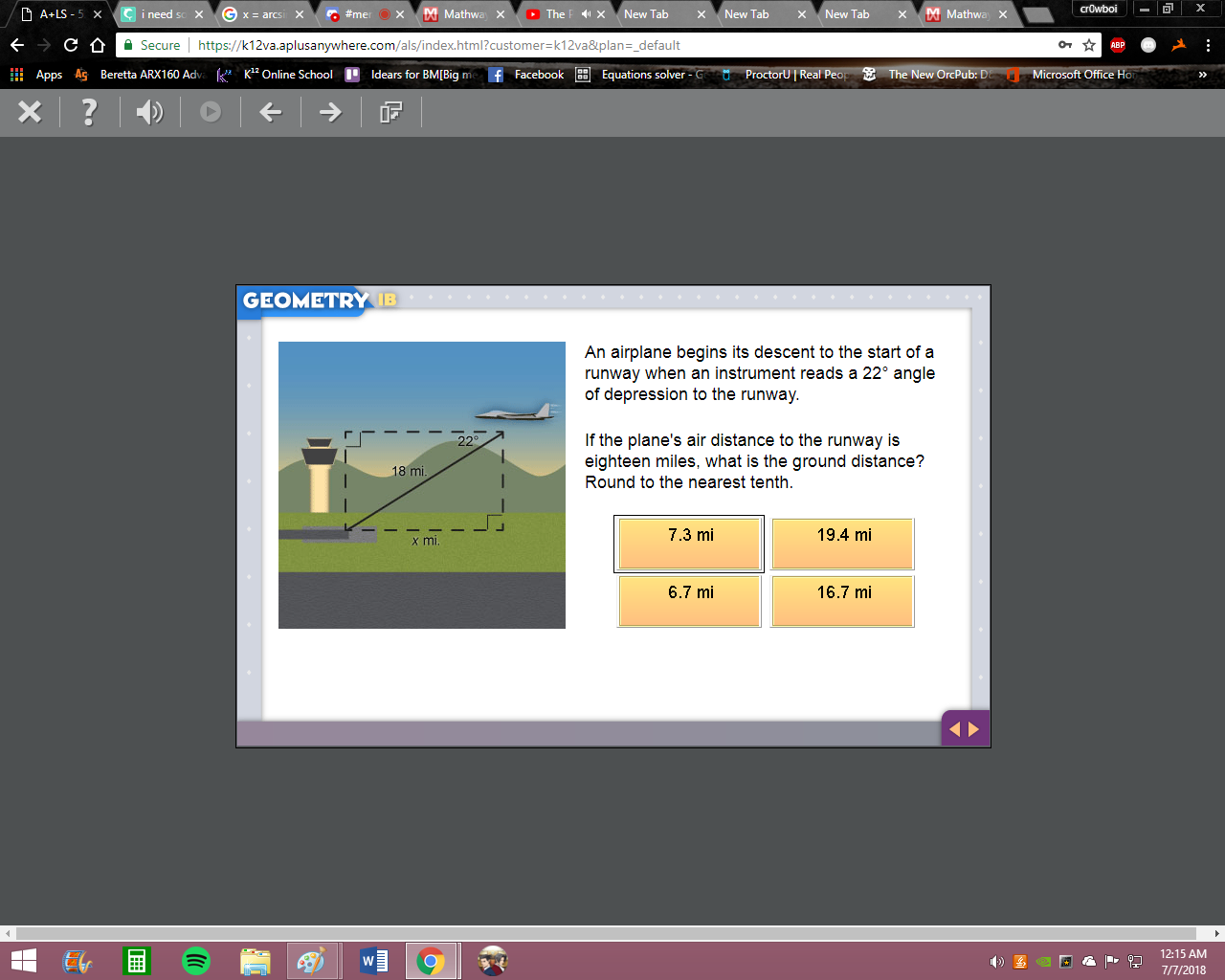
for the airplane one, we use cos since we have adj and hyp. cos(22) = x/18 x = cos(22) * 18 which is about 16.7
Vocaloid:
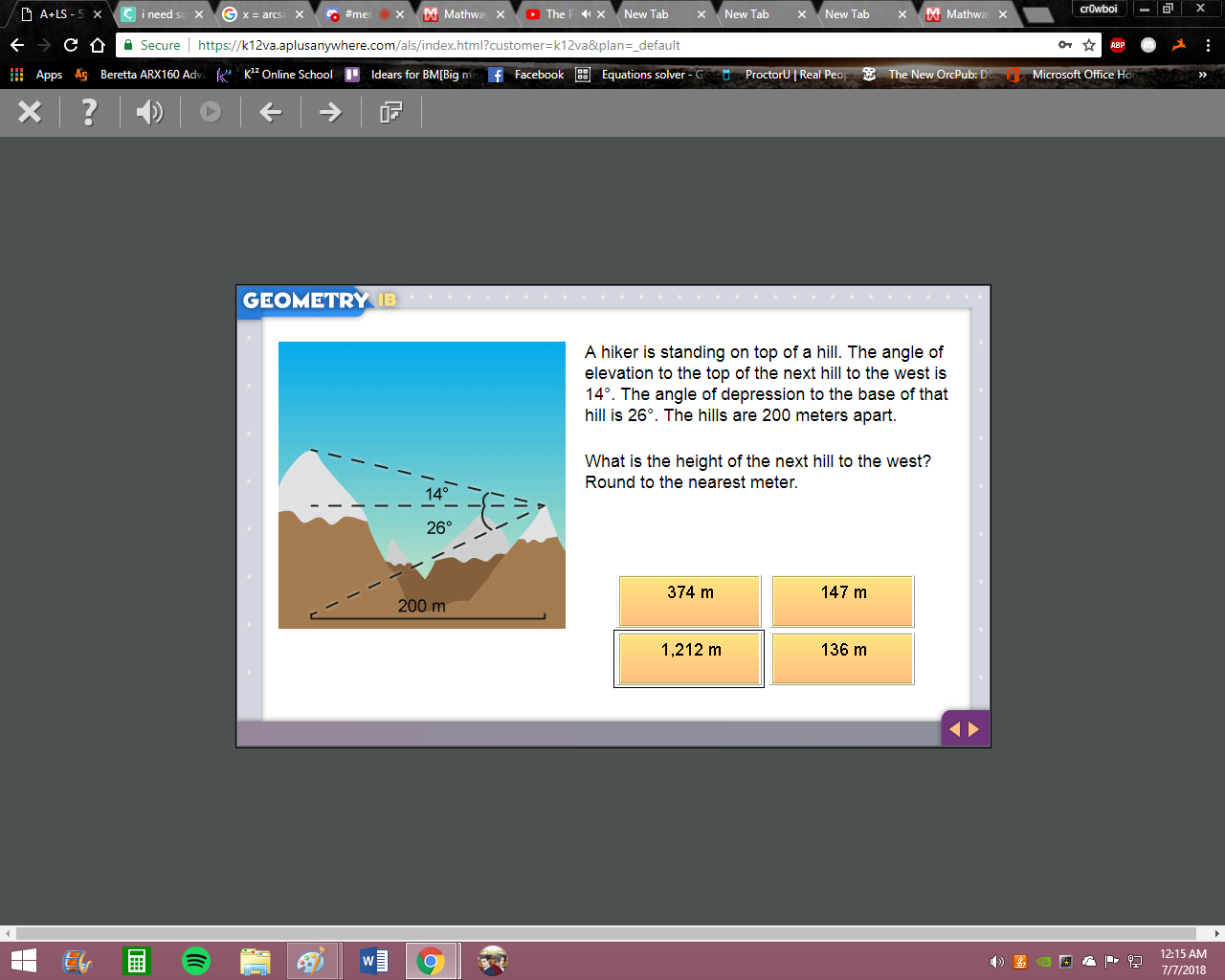
for the mountain one consider each triangle separately you have tan(theta) = opposide/adjacent so the first half is tan(14) = x/200 so x = 200*tan(14) the second half uses the same logic to calculate so y = 200*tan(26) combined: x + y = 200*tan(14) + 200*tan(26) = 147
Join our real-time social learning platform and learn together with your friends!
 KBaby:
Verse 1 We left our names in the dust of the driveway Watched the old town shrink
KBaby:
Lyrics Generator Use AI to write the lyrics for a song. Suggested Genres: Pop Hip
KBaby:
Verse 1 We left our names in the dust of the driveway Watched the old town shrink
KBaby:
Lyrics Generator Use AI to write the lyrics for a song. Suggested Genres: Pop Hip

 aitexturegenerator:
How are you all handling AI-generated textures for 3D models and game assets without losing the hand-made feel? I've been doing a small stylized environment
aitexturegenerator:
How are you all handling AI-generated textures for 3D models and game assets without losing the hand-made feel? I've been doing a small stylized environment

 Demon25:
Woke up feeling like that girl and that dude well he still aint crap pluse the du
Demon25:
Woke up feeling like that girl and that dude well he still aint crap pluse the du
 playtsec:
how do I get rid of stress from teachers... I just feel like running out the classroom and leaving on my own.
playtsec:
how do I get rid of stress from teachers... I just feel like running out the classroom and leaving on my own.
 JohnnyLFowler0812:
What type of gamer would play something and then get off for a while. Why not sta
JohnnyLFowler0812:
Which is better? Metallica Rap Country R&B hiphop Medal Gospel Chill Which 3 opti
JohnnyLFowler0812:
What type of gamer would play something and then get off for a while. Why not sta
JohnnyLFowler0812:
Which is better? Metallica Rap Country R&B hiphop Medal Gospel Chill Which 3 opti