
 zarkam21:
stumped
 zarkam21:
@Vocaloid
 Vocaloid:
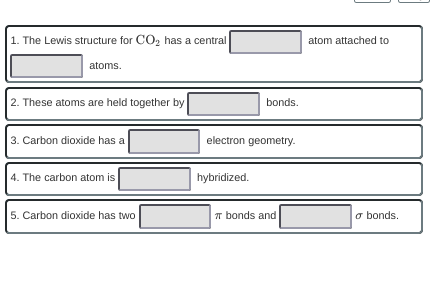
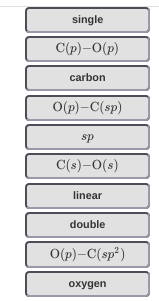
1. there's only two choices (C and O) the less electronegative atom goes in the center and the more EN atoms go on the outer edges so would C be the first blank or O?
zarkam21:
c would be the first
zarkam21:
for the second blank:
Vocaloid:
good, so carbon first blank and oxygen second blank
Vocaloid:
2. ideas about the bond type? it would either have to be covalent or ionic
zarkam21:
covalent
Vocaloid:
*looks at answer choices* oh wait that's not one of the choices whoops I guess they're looking for either single or double. any attempts to draw the lewis structure?
zarkam21:
it would be double bonded
Vocaloid:
good, so double
zarkam21:
c in the middle with 2 o's with double bonds
zarkam21:
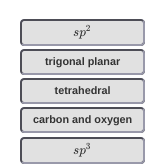
linear for the next geometry
Vocaloid:
3. ideas for the geometry? 2 bonds, 0 lone pairs
Vocaloid:
good
Vocaloid:
4. hybridization, any ideas? if you are stumped try calculating the steric #
zarkam21:
sp3
Vocaloid:
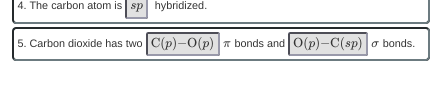
hm, not quite, steric number is 2 (C is bonded to 2 other atoms, plus 0 lone pairs) so sp
zarkam21:
how do you determin the steric NUm again?
Vocaloid:
|dw:1540949586801:dw|
Vocaloid:
i'd have to think a bit about 5 but the pi orbitals should result from the overlap of p orbitals
 zarkam21:
yeah well pi bonds are always p
Vocaloid:
yeah that should be it
zarkam21:
What is the hybridization of the central iodine atom in I3−?
zarkam21:
sp3d
Vocaloid:
good that's what i got too
zarkam21:
it says : Express your answer in the orbital notations s, p, d, and f.
zarkam21:
so that would still be right
Vocaloid:
yes
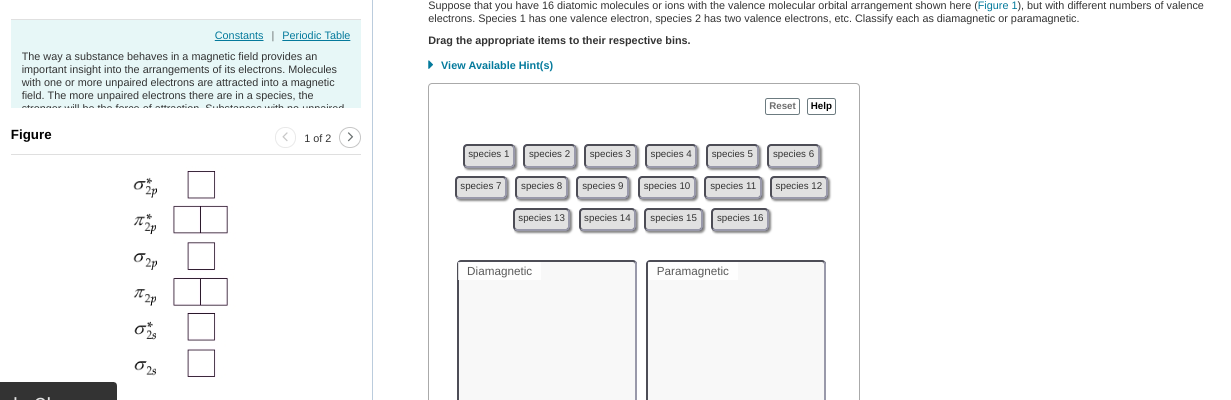 Vocaloid:
this can be tedious but you'd start with compound 1 (1 valence electron), put 1 electron in to the MO diagram. --> that one ends up unpaired so this is paramagnetic then you'd continue this process w/ the other compounds
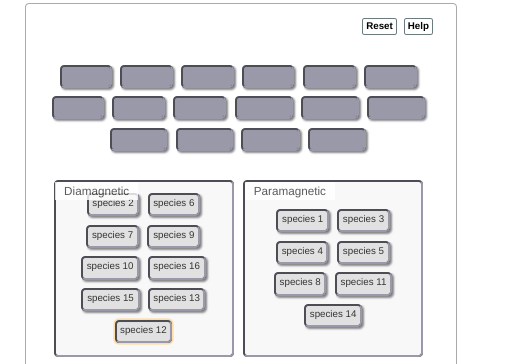 Vocaloid:
need to re-do some of them for example, 6 is paramagnetic. you'd fill up the first 4 electrons but then the last 2 are unpaired b/c they occupy separate orbitals
Vocaloid:
as a hint: any odd number will be paramagnetic (if there are an odd number it's impossible for them all to be paired) for even numbers you have to consider on a case-by-case basis
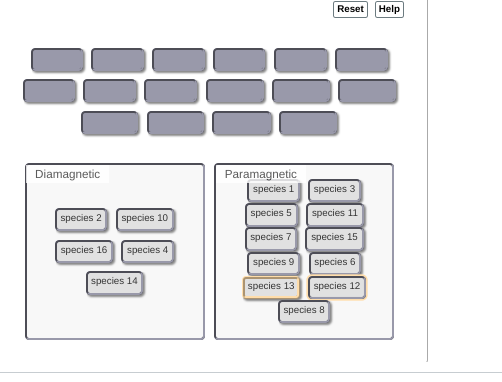 Vocaloid:
8 should be diamagnetic (they all get paired up w/in the first four orbitals) but everything else is good
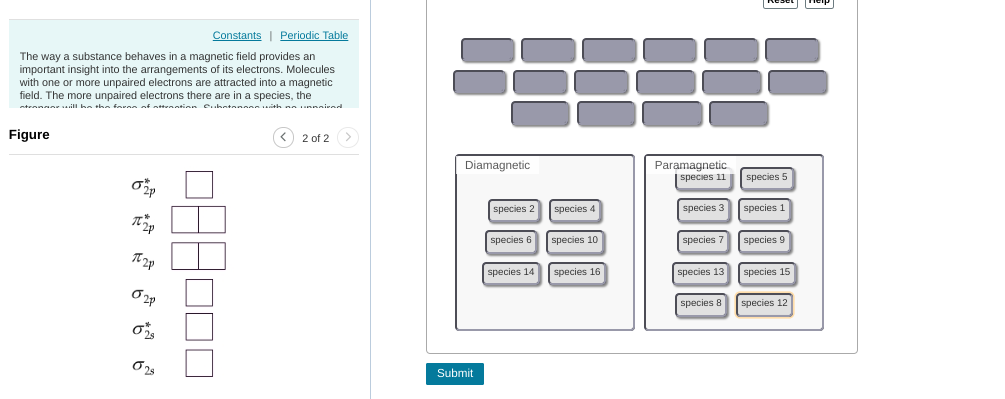 Vocaloid:
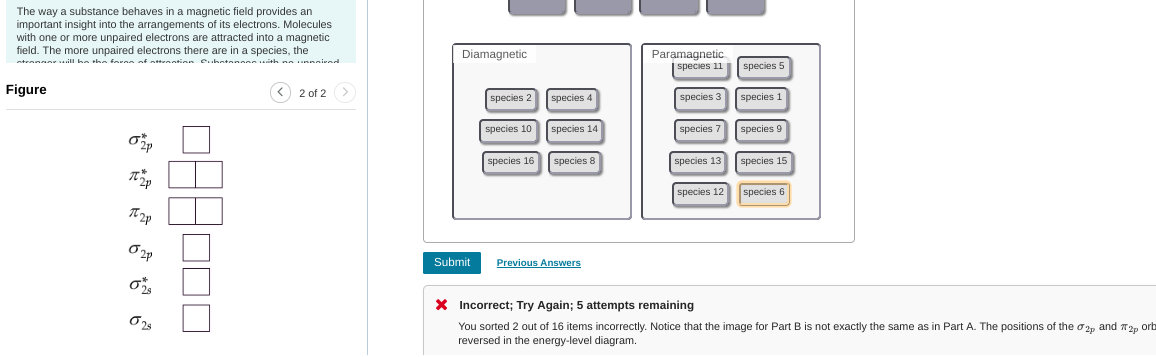
6 should be paramagnetic per our earlier reasoning (unpaired electrons in 2pi bonding) diamagnetic should contain: 2, 4, 8, 10, 14, 16; everything else is para
 Vocaloid:
hm. :/
Vocaloid:
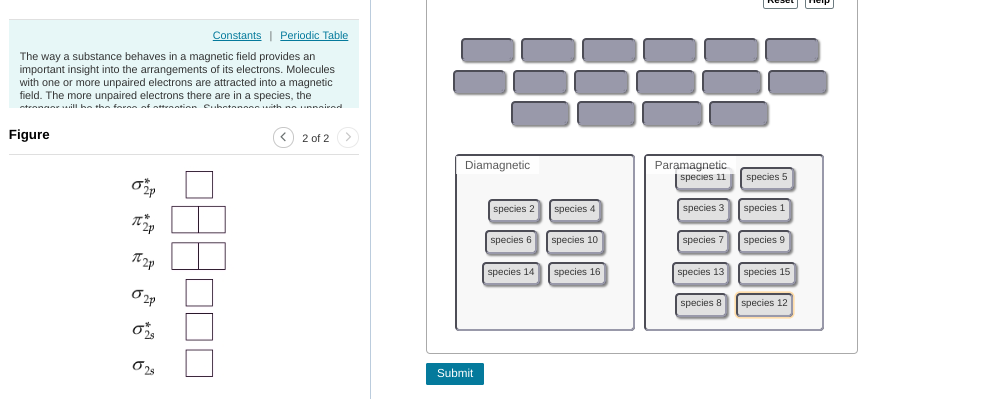
oh I see they wanted a different orbital diagram than the one they used before
zarkam21:
yeah and thats what I based my previous answer off of
 Vocaloid:
then yeah, your orig. should have been right
 Vocaloid:
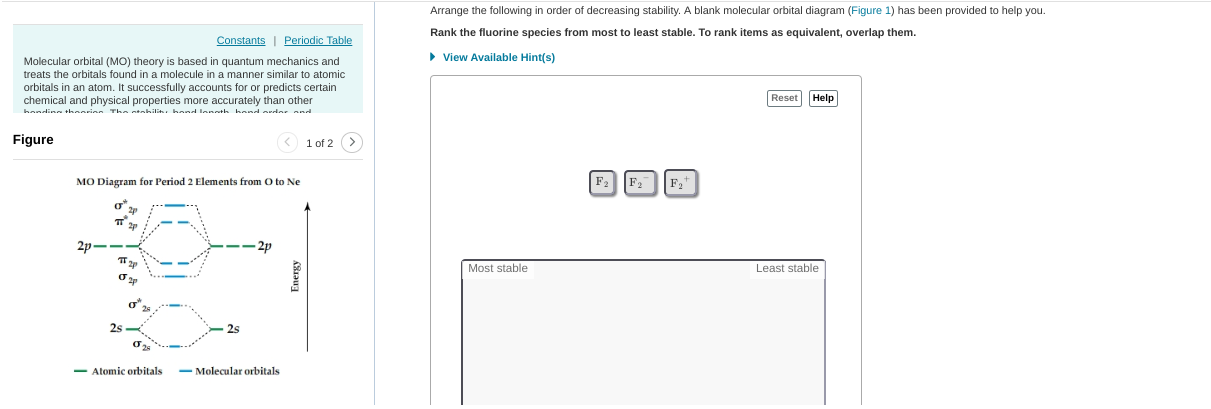
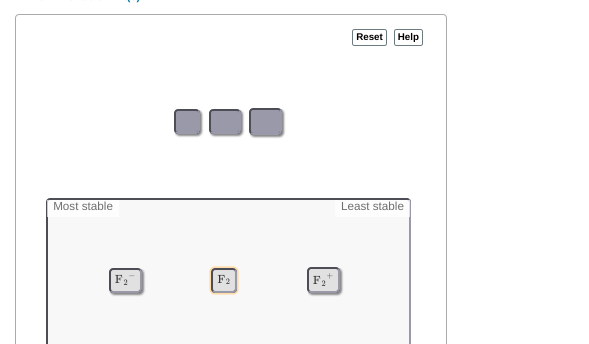
that's a good attempt but F2- fills up all of the anti-bonding orbitals and anti-bonding orbitals are not desired for stability. I'd put F2- at the bottom F2+ keeps the antibonding orbitals empty so it's the most stable F2 goes in between so basically just reverse the order you have already
Vocaloid:
anything with a * symbol (sigma*, pi*) etc. are antibonding orbitals
 Vocaloid:
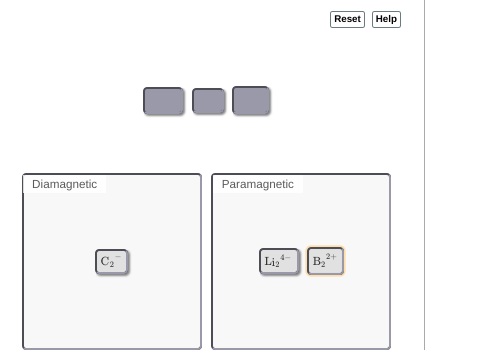
|dw:1540952522320:dw| not 100% sure on this but thinking the lithium might be diamagnetic
Vocaloid:
|dw:1540952536946:dw|
zarkam21:
okay so lithium and carbon would be dia
Vocaloid:
I don't really feel super confident on these tbh
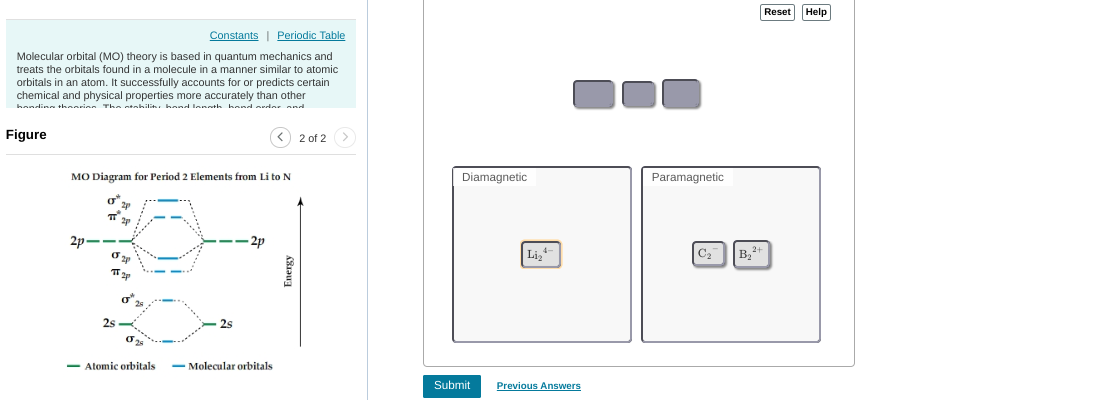 Vocaloid:
if I"m not mistaken B2(2+) has 8 total electrons, occupying the first four orbitals, therefore being dia
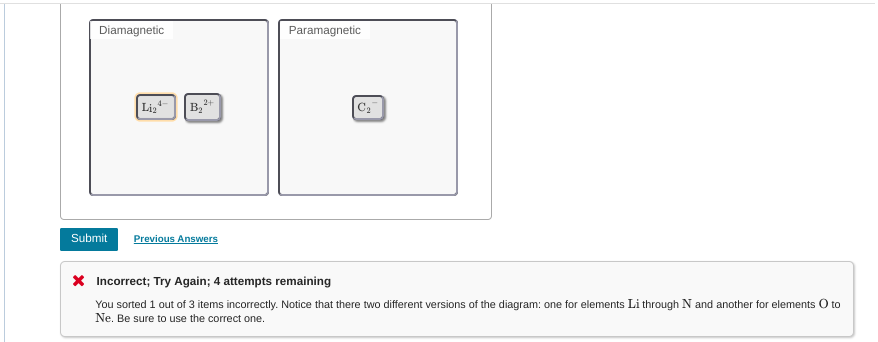 Vocaloid:
oh since each C has 6 electrons -- 12 electrons --> +2 because it's an anion --> 14 total electrons --> fills up the first 7 orbitals to be diamagnetic so if moving C2(2-) doesn't work idk where to go from there
zarkam21:
so all three dia
Vocaloid:
no, B2(2+ is still para
zarkam21:
ugh now its 3 out of 3 incorrect
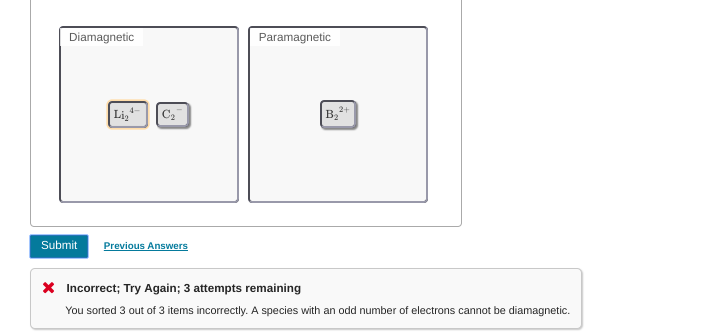 Vocaloid:
oh in that case that makes it super easy, just switch all the para's to dia's and all the dia's to paras
Vocaloid:
ohhh I see where I went wrong, there's a -1 charge on the carbon not a -2 charge >_>
zarkam21:
got it ughh thankssss
Join our real-time social learning platform and learn together with your friends!
 KBaby:
Verse 1 We left our names in the dust of the driveway Watched the old town shrink
KBaby:
Lyrics Generator Use AI to write the lyrics for a song. Suggested Genres: Pop Hip
KBaby:
Verse 1 We left our names in the dust of the driveway Watched the old town shrink
KBaby:
Lyrics Generator Use AI to write the lyrics for a song. Suggested Genres: Pop Hip

 aitexturegenerator:
How are you all handling AI-generated textures for 3D models and game assets without losing the hand-made feel? I've been doing a small stylized environment
aitexturegenerator:
How are you all handling AI-generated textures for 3D models and game assets without losing the hand-made feel? I've been doing a small stylized environment

 Demon25:
Woke up feeling like that girl and that dude well he still aint crap pluse the du
Demon25:
Woke up feeling like that girl and that dude well he still aint crap pluse the du
 playtsec:
how do I get rid of stress from teachers... I just feel like running out the classroom and leaving on my own.
playtsec:
how do I get rid of stress from teachers... I just feel like running out the classroom and leaving on my own.
 JohnnyLFowler0812:
What type of gamer would play something and then get off for a while. Why not sta
JohnnyLFowler0812:
Which is better? Metallica Rap Country R&B hiphop Medal Gospel Chill Which 3 opti
JohnnyLFowler0812:
What type of gamer would play something and then get off for a while. Why not sta
JohnnyLFowler0812:
Which is better? Metallica Rap Country R&B hiphop Medal Gospel Chill Which 3 opti