
 bill533:
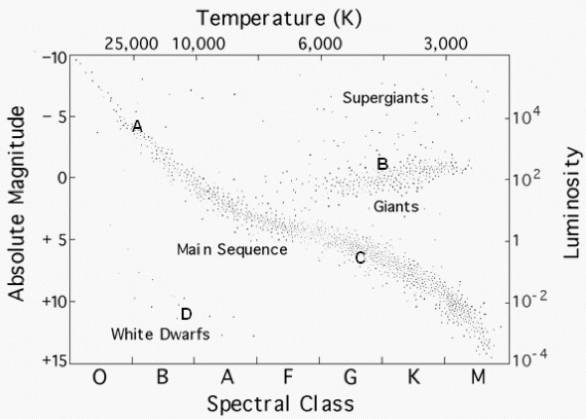
We know that the hotter a star is, the faster it will burn up its fuel and die. Therefore the color the star is indicates its age; hotter stars will burn up faster than cooler stars. There is a relationship between temperature, color, and the age of a star. According to the H-R diagram, what color star would be the youngest? A) blue B) orange C) red D) yellow Our own star, the sun, emits light that is strongest in the yellow portion of the spectrum. What spectral class is our sun? A) A B) F C) G D) O
bill533:
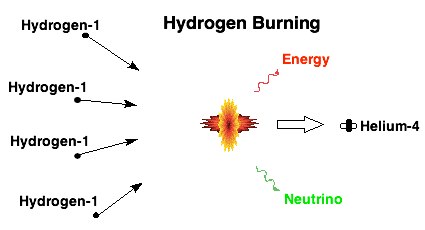
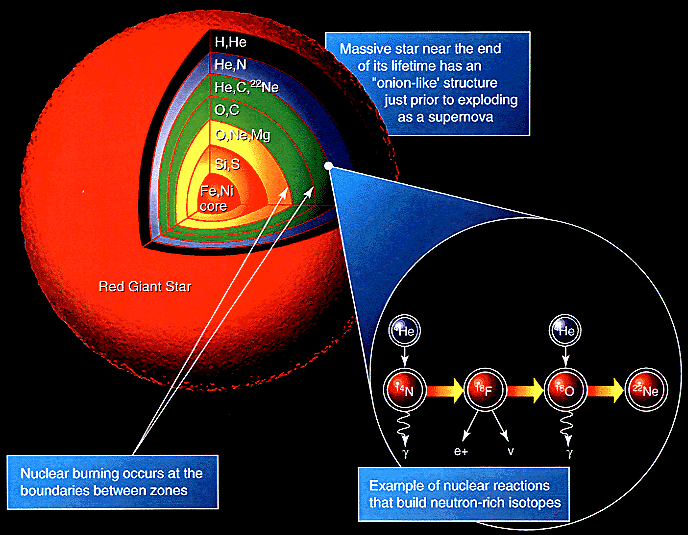
The Evolution of Stars Patty Gordon When we look at stars, we notice that some appear brighter than others. Sirius looks much brighter than Rigel, but is it really brighter? Or is Sirius much closer to Earth, giving it the appearance of being brighter? Actually, Sirius is about one hundred times closer to Earth than Rigel. If the two stars were the same distance from Earth, Rigel would appear much brighter. We use two terms to reference the brightness of a star: absolute magnitude and apparent magnitude. Absolute magnitude is the measure of the light given off by a star, while apparent magnitude refers to the amount of light received on Earth. The color of a star indicates its temperature. Blue-‐white stars are very hot, while orange-‐red stars are relatively cool. In the early 1900s Ejnar Hertzsprung and Henry Russell noticed that the higher the temperature of a star, the greater the star’s absolute magnitude. They developed a graph that depicts this relationship called the H-‐R diagram. Most known stars fit into a diagonal band that runs from the upper left to the lower right of the diagram. This diagonal band is called the main sequence. It contains hot, bright, blue stars in the upper left and cooler, dim, red stars in the lower right. Medium temperature and brightness stars that are yellow, like the Sun, fall in between the two. About 90% of all stars are main sequence stars. Most stars are currently classified using the letters O, B, A, F, G, K, and M, where O stars are the hottest and the letter sequence indicates successively cooler stars down to the coolest M class. Spectral Class O B A F G K M Name blue blue-white white yellow-white yellow orange red Stars in the stable phase of hydrogen burning lie along the main sequence, according to their mass. After a star uses up all the hydrogen in its core, it leaves the main sequence and moves towards the red giant branch. The most massive stars may also become red super giants, in the upper right corner of the diagram. The lower left corner is reserved for the white dwarfs. When the H-‐R diagram was developed, astronomers did not know what caused stars to shine. Stars begin their lives as clouds of gas and dust called nebulae. The gas and dust exert a gravitational force on each other and eventually the nebula contract. As this contraction occurs, the temperature rises, eventually reaching ten million degrees Celsius. AT this point, nuclear fusion begins. Hydrogen burning is an expression that astronomers use for the stellar process that results in the nuclear fusion of four protons to form a nucleus of helium-‐4. Not only is helium produced but energy is released. As this energy radiates into space, a star is born. The heat generated from nuclear fusion causes pressure that balances the inward forces due to gravity. At this point, the star is a main sequence star, until it uses up its hydrogen fuel. Once the hydrogen core is converted, the core contracts and internal temperatures increase, casing the outer layers of the star to expand. The star is now a giant. Most giants continue to evolve, fusing helium nuclei into carbon. As the helium is utilized, the star contracts even more. If the star is massive enough, it continues to undergo fusion, producing even heavier elements.
Join our real-time social learning platform and learn together with your friends!
 Demon25:
For a hoco proposal with a cheerleader and football player, what else should be a
Demon25:
For a hoco proposal with a cheerleader and football player, what else should be a

 Breathless:
TOC: "MGF any confirmation on the commander? we require confirmation as soon as[radio static].
Breathless:
TOC: "MGF any confirmation on the commander? we require confirmation as soon as[radio static].
 EdwinJsHispanic:
I wrote something that I don't know if I want it as a poem or song, Please let me know on yours thoughts about it, I'm still doing this! "Broken promises an
EdwinJsHispanic:
I wrote something that I don't know if I want it as a poem or song, Please let me know on yours thoughts about it, I'm still doing this! "Broken promises an
 thehearken:
hi um I don't know if this is the right section for this, but can someone go over my poem and tell me if its good enough to give my English professor for a
thehearken:
hi um I don't know if this is the right section for this, but can someone go over my poem and tell me if its good enough to give my English professor for a
 heartlessprophet:
Aye what's 19z%u00f74p=9u03c0 my teacher thinking of impossible questions for us
heartlessprophet:
Aye what's 19z%u00f74p=9u03c0 my teacher thinking of impossible questions for us
 kippppp:
does anyone have any good tips for writing stories? i'm trying to write a dnd campaign but i'm not that great of a writer yet.
kippppp:
does anyone have any good tips for writing stories? i'm trying to write a dnd campaign but i'm not that great of a writer yet.
 GRIZZLEY19:
Y'all let me know what y'all think about this beat I made I took me like a hour maybe rate it 0/10 https://drive.
GRIZZLEY19:
Y'all let me know what y'all think about this beat I made I took me like a hour maybe rate it 0/10 https://drive.
 Ultrilliam:
Welcome to the 10th Anniversary Update! (Part 2) Sorry this one passed the date a
Ultrilliam:
Welcome to the 10th Anniversary Update! (Part 2) Sorry this one passed the date a
 Twaylor:
was walking downtown and my adhd brain wanted to make some (rock?) lyrics: There'
Twaylor:
was walking downtown and my adhd brain wanted to make some (rock?) lyrics: There'