
 jennylove:
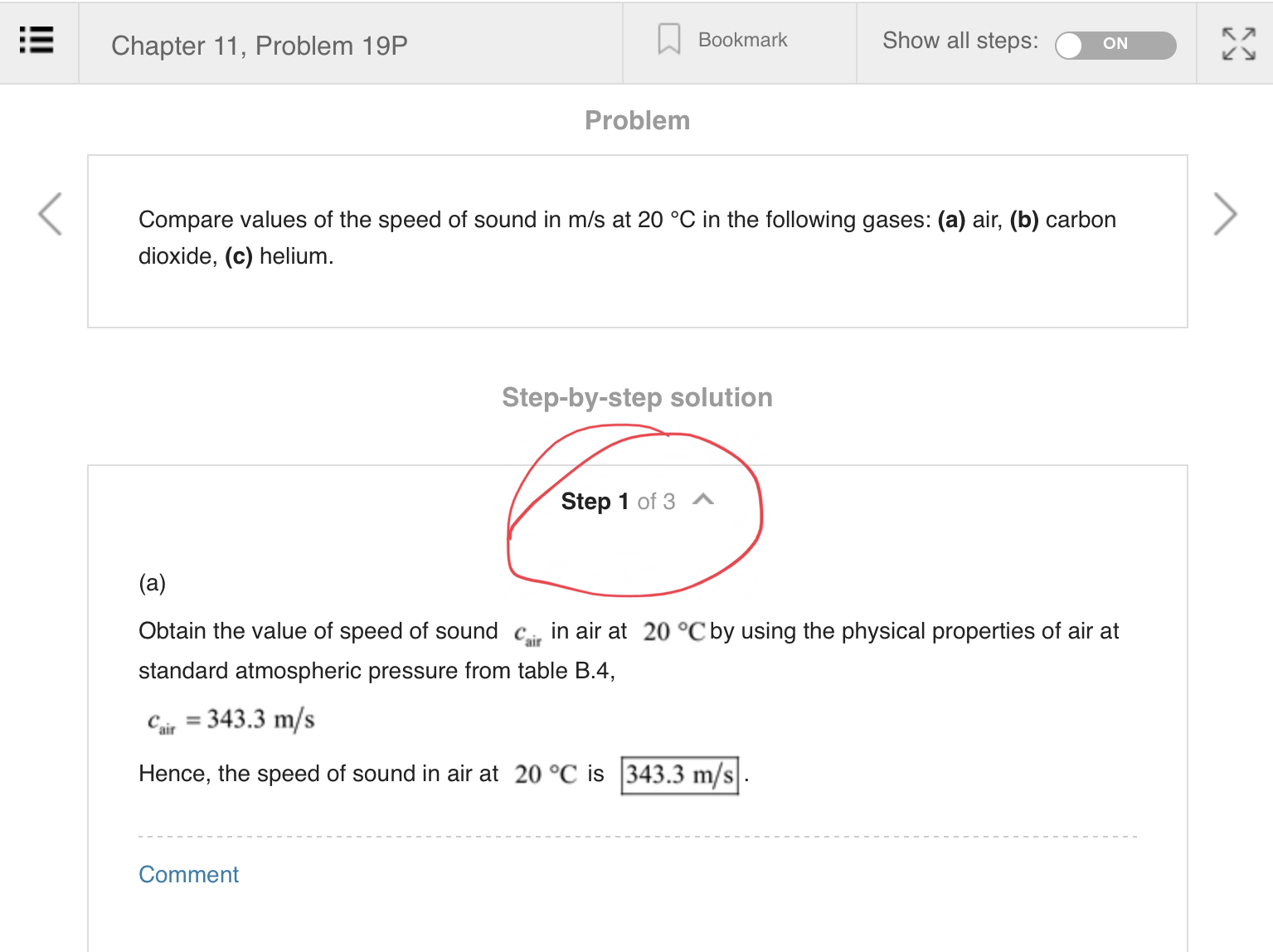
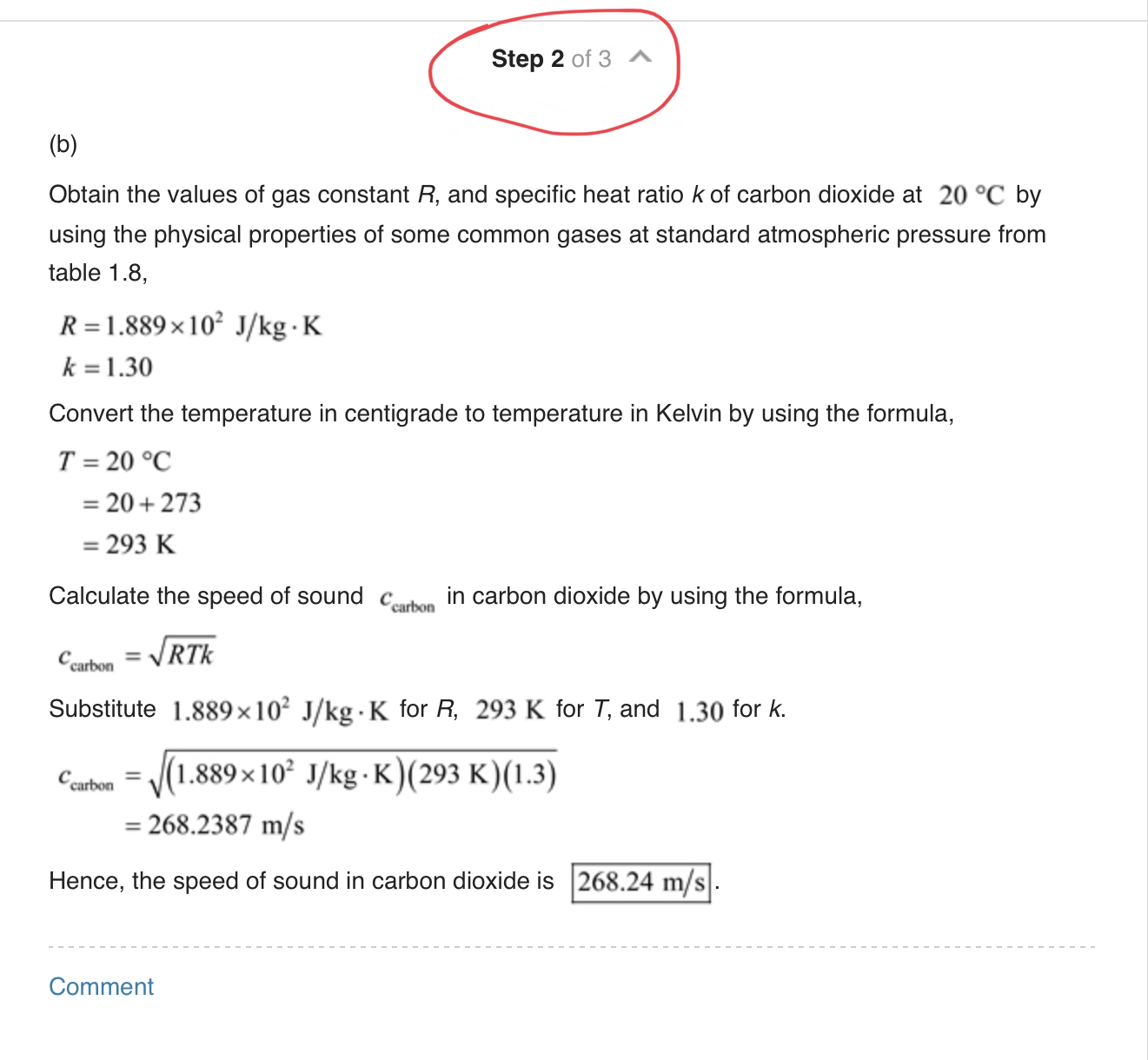
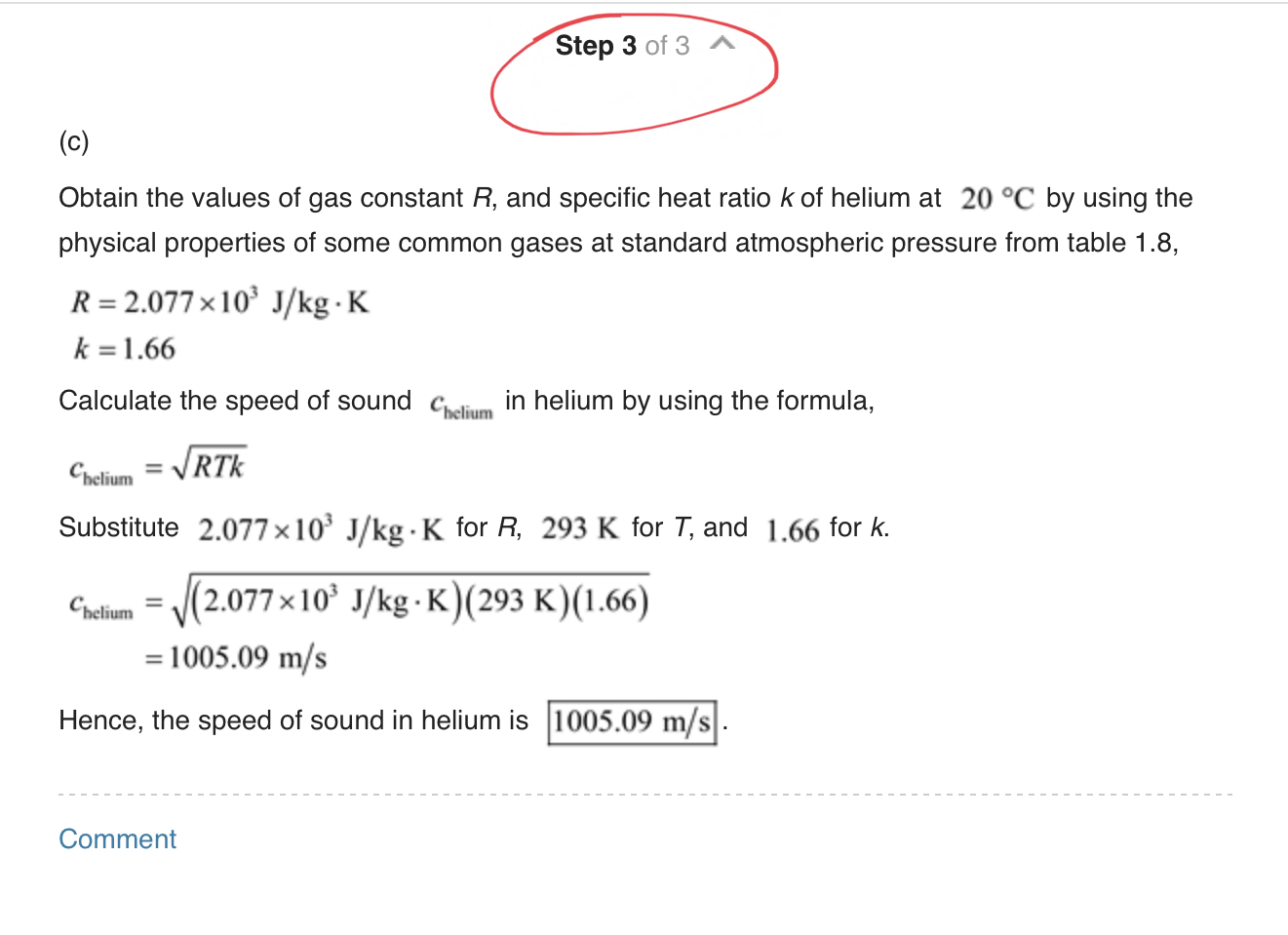
Why do sound waves travel at different speeds in each gas of helium,air,and carbon dioxide.?

 jennylove:
these dont seem to answer the question
jennylove:
thank you for the info though!
 kittybasil:
\(\color{#0cbb34}{\text{Originally Posted by}}\) @jennylove these dont seem to answer the question \(\color{#0cbb34}{\text{End of Quote}}\) Which ones don't seem to answer the question? Mine or his? 🤔
jennylove:
His were just equations that didnt answer the questions. However for yours, it did not go into depth regrading gases. it went over more liquids and solids. It also did go into depth about how elasticity and density or even temperature play a factor. It is a great start but it didnt really help too much! Thank you though for providing this information
jennylove:
it also did not go into *
kittybasil:
On the contrary, I believe his equations were supposed to help lead you to the result. We don't do direct answers on here
kittybasil:
Of course he might have gone the wrong direction. I haven't opened whatever he shared
 justjm:
Recall that sound waves are mechanical, longitudinal waves, where the propagation of sound particles is dependent on the momentum of hitting other molecules. In other words, sound is produced by the vibration of surrounding molecules. Hence, gaseous media with greater room mean square speeds can propagate sound more. Recall the formula for root mean square speed \(υ_{rms}=\sqrt{\frac{3RT}{MM}}\) We can assign any arbitrary unit for T, it doesn't matter. Take notice of the masses. Since M is on the bottom, we can say that M is inversely proportional to velocity, and hence kinetic energy, and finally sound speed. If you look up the molar masses of He, Co2, and air (or use your periodic table), you will find that He<Air<CO2 in molar mass. Since you know that molar mass is inversely proportional to KE, you can figure out the relation now
justjm:
Kitty's reference is also pretty similar too, you could use that way as well
jennylove:
You may take a look yourself, however it did not provide any info regrading density,temperature,or elasticity for his equations. It was simply equations, but I was having difficultly knowing how these equations are used and what they specifically provide.
jennylove:
I havent reviewed chemistry in quite awhile, would the molar mass play a factor in the density? @justjm
kittybasil:
I did say there was the possibility he might not have applied the correct content as I had not seen it. However, his intent was to help you find the answer instead of just pasting it into chat. He does seem like a new user, but give him credit for trying.
kittybasil:
Also, thank you @justjm for the mention
justjm:
\(\color{#0cbb34}{\text{Originally Posted by}}\) @jennylove I havent reviewed chemistry in quite awhile, would the molar mass play a factor in the density? @justjm \(\color{#0cbb34}{\text{End of Quote}}\) I'm just using the root mean-square speed formula to hint that mass is inversely proportional to the speed of a sound wave in a gaseous media I'm using molar mass here because elements are being used. You can relate density to this as well. Remember p=m/v, and I'm letting v be arbitary, so p is proportional to m; density is proportional to mass. Density can be related to speed just as mass.
jennylove:
I appreciate both his and your help as to why i have thanked you. However, I thought we were supposed to rate the best answer not who answers first. I didn't feel like that helped me, but i will give him the star for effort. (:
jennylove:
Is it possible to give multiple stars?
jennylove:
I would like to give you guys all three stars
justjm:
\(\color{#0cbb34}{\text{Originally Posted by}}\) @jennylove Is it possible to give multiple stars? \(\color{#0cbb34}{\text{End of Quote}}\) I'm afraid not, but you can go ahead and give them the stars (: You've given me a few before, give them a few! (:
kittybasil:
If you are referring to the other user, it is true that he did not contribute much though at least he made some effort. However, jm did say my response constituted an alternative method to answering your query.
kittybasil:
Anyway, I have already given jm a medal for the detailed response
jennylove:
Aw, I wish that was possible or else I would give you guys all stars!
jennylove:
I have gave you the star @kittybasil
kittybasil:
Only give medals (not stars!) to people who have answered at least part of your query. Effort is appreciated, but ultimately it's pointless if that effort does not do anything towards actually answering the question
kittybasil:
Thank you
jennylove:
how do you give medals?
justjm:
same thing lol
kittybasil:
Medals is what you meant by "stars" :)
jennylove:
Oh okay, yeah i prefer stars since there is a star next to it!
jennylove:
and of course (:!
kittybasil:
But if you say "star" nobody will understand :p
jennylove:
Didnt you? and @justjm
kittybasil:
Only because we were here to witness it :)
jennylove:
If they dont understand ,I will be glad to explain (:
kittybasil:
It's better to use colloquial terms ^^'
jennylove:
However, there wasnt anything to "witness". I still used the same word lol
kittybasil:
The term carried over from the precursor site, so people are familiar with 'medal' more!
jennylove:
Oh awesome, thanks for the info!
kittybasil:
:)
Join our real-time social learning platform and learn together with your friends!
 KBaby:
Verse 1 We left our names in the dust of the driveway Watched the old town shrink
KBaby:
Lyrics Generator Use AI to write the lyrics for a song. Suggested Genres: Pop Hip
KBaby:
Verse 1 We left our names in the dust of the driveway Watched the old town shrink
KBaby:
Lyrics Generator Use AI to write the lyrics for a song. Suggested Genres: Pop Hip
 aitexturegenerator:
How are you all handling AI-generated textures for 3D models and game assets without losing the hand-made feel? I've been doing a small stylized environment
aitexturegenerator:
How are you all handling AI-generated textures for 3D models and game assets without losing the hand-made feel? I've been doing a small stylized environment

 Demon25:
Woke up feeling like that girl and that dude well he still aint crap pluse the du
Demon25:
Woke up feeling like that girl and that dude well he still aint crap pluse the du
 playtsec:
how do I get rid of stress from teachers... I just feel like running out the classroom and leaving on my own.
playtsec:
how do I get rid of stress from teachers... I just feel like running out the classroom and leaving on my own.
 JohnnyLFowler0812:
What type of gamer would play something and then get off for a while. Why not sta
JohnnyLFowler0812:
Which is better? Metallica Rap Country R&B hiphop Medal Gospel Chill Which 3 opti
JohnnyLFowler0812:
What type of gamer would play something and then get off for a while. Why not sta
JohnnyLFowler0812:
Which is better? Metallica Rap Country R&B hiphop Medal Gospel Chill Which 3 opti