
 crispyrat:
1/(sqrt(36)+sqrt(27))+1/(sqrt(27)+sqrt(18))+1/(sqrt(18)+sqrt(9)) I need help, idk how to begin with this problem
 AZ:
AZ:
\(\dfrac{1}{\sqrt{36}+\sqrt{27}}+ \dfrac{1}{\sqrt{27}+\sqrt{18}}+\dfrac{1}{\sqrt{18}+\sqrt{9}}\) Is this your question? You're supposed to simplify this?
crispyrat:
yes
AZ:
So let's simplify some things first what is \(\sqrt{36}\) what is \(\sqrt{9}\)
crispyrat:
ok so its 6, and 3
AZ:
Good so we have \(\dfrac{1}{6+\sqrt{27}}+ \dfrac{1}{\sqrt{27}+\sqrt{18}}+\dfrac{1}{\sqrt{18}+3}\) How can we re-write \(\sqrt{27}\) and \(\sqrt{18}\) remember that 27 = 9*3 and 18 = 9*2 \(\sqrt{a\times b} = \sqrt{a}\times \sqrt{b}\) and \(\sqrt{x^2} = x\) so how can we simplify \(\sqrt{27}\) and \(\sqrt{18}\)
crispyrat:
as 3sqrt(3) and 3sqrt(2)?
AZ:
Exactly! So now we have \(\dfrac{1}{6+3\sqrt{3}}+ \dfrac{1}{3\sqrt{3}+3\sqrt{2}}+\dfrac{1}{3\sqrt{2}+3}\)
AZ:
Now the only way to add the fractions is to have the denominator And the only way to get the same denominator is by multiply both the numerator and denominator by a term so that way you can add them so for example, 1/x + 1/y you multiply 1/x by y/y you multiply 1/y by x/x and you would get x/(xy) + y/(xy) and now you can add them and get (x+y)/ (xy)
AZ:
So \(\dfrac{1}{6+3\sqrt{3}}+ \dfrac{1}{3\sqrt{3}+3\sqrt{2}}+\dfrac{1}{3\sqrt{2}+3}\) Let's add two fractions first and then simplify and then add the third one later \(\dfrac{1}{6+3\sqrt{3}}+ \dfrac{1}{3\sqrt{3}+3\sqrt{2}}\) \(=\left(\dfrac{1}{6+3\sqrt{3}}\times\dfrac{3\sqrt{3}+3\sqrt{2}}{3\sqrt{3}+3\sqrt{2}}\right) + \left(\dfrac{1}{3\sqrt{3}+3\sqrt{2}}\times\dfrac{6+3\sqrt{3}}{6+3\sqrt{3}}\right)\)
AZ:
Can you simplify it? What do you get after you multiply it and then add them
crispyrat:
so you would have (3sqrt(3)+3sqrt(2)+6+3sqrt(3))/27+18√2+18√3+9√6=(6sqrt(3)+6+3sqrt(2))/(27+18√2+18√3+9√6 )
 Angle:
yes, I think that looks good so far then you want to give that mess a common denominator with the 1/(3√2 + 3) chunk
Angle:
\(\large \frac{6 \sqrt3 + 2 \sqrt2+6}{9 \sqrt6 + 18\sqrt3 + 18 \sqrt2 + 27}\times \frac{3\sqrt2+3}{3\sqrt2 +3}~~~+~~~\frac{1}{3\sqrt2 +3}\times\frac{9 \sqrt6 + 18\sqrt3 + 18 \sqrt2 + 27}{9 \sqrt6 + 18\sqrt3 + 18 \sqrt2 + 27}\)
Angle:
tbh it might make our lives easier if we factored out a 1/3 from everything
crispyrat:
oh how could i do that :p
Angle:
\(\color{#0cbb34}{\text{Originally Posted by}}\) Angle \(\large \frac{6 \sqrt3 + 2 \sqrt2+6}{9 \sqrt6 + 18\sqrt3 + 18 \sqrt2 + 27}\times \frac{3\sqrt2+3}{3\sqrt2 +3}~~~+~~~\frac{1}{3\sqrt2 +3}\times\frac{9 \sqrt6 + 18\sqrt3 + 18 \sqrt2 + 27}{9 \sqrt6 + 18\sqrt3 + 18 \sqrt2 + 27}\) \(\color{#0cbb34}{\text{End of Quote}}\) If we factor out a 1/3 maybe we'll get something like this \(\large \frac{1}{3}(\frac{6 \sqrt3 + 2 \sqrt2+6}{3 \sqrt6 + 6\sqrt3 + 6 \sqrt2 + 9}\times \frac{\sqrt2+1}{\sqrt2 +1}~~~+~~~\frac{1}{\sqrt2 +1}\times\frac{3 \sqrt6 + 6\sqrt3 + 6 \sqrt2 + 9}{3 \sqrt6 + 6\sqrt3 + 6 \sqrt2 + 9})\)
Angle:
there's a good chance I made a typo or something though @AZ
Angle:
yeah, definitely a typo
AZ:
In the numerator you accidentally put 2sqrt(2) instead of 3sqrt(2)
Angle:
\(\color{#0cbb34}{\text{Originally Posted by}}\) Angle \(\large \frac{6 \sqrt3 + 3 \sqrt2+6}{9 \sqrt6 + 18\sqrt3 + 18 \sqrt2 + 27}\times \frac{3\sqrt2+3}{3\sqrt2 +3}~~~+~~~\frac{1}{3\sqrt2 +3}\times\frac{9 \sqrt6 + 18\sqrt3 + 18 \sqrt2 + 27}{9 \sqrt6 + 18\sqrt3 + 18 \sqrt2 + 27}\) \(\color{#0cbb34}{\text{End of Quote}}\) If we factor out a 1/3 maybe we'll get something like this \(\large \frac{1}{3}(\frac{6 \sqrt3 + 3 \sqrt2+6}{3 \sqrt6 + 6\sqrt3 + 6 \sqrt2 + 9}\times \frac{\sqrt2+1}{\sqrt2 +1}~~~+~~~\frac{1}{\sqrt2 +1}\times\frac{3 \sqrt6 + 6\sqrt3 + 6 \sqrt2 + 9}{3 \sqrt6 + 6\sqrt3 + 6 \sqrt2 + 9})\)
Angle:
that makes more sense because then you can factor out a 3 in both the numerator and denominator to simplify it a bit if you wanted it or we can brute for this
Angle:
If we factor out a 1/3 maybe we'll get something like this \(\large \frac{1}{3}(\frac{2 \sqrt3 + \sqrt2+2}{\sqrt6 + 2\sqrt3 + 2 \sqrt2 + 3}\times \frac{\sqrt2+1}{\sqrt2 +1}~~~+~~~\frac{1}{\sqrt2 +1}\times\frac{\sqrt6 + 2\sqrt3 + 2 \sqrt2 + 3}{\sqrt6 + 2\sqrt3 + 2 \sqrt2 + 3})\)
AZ:
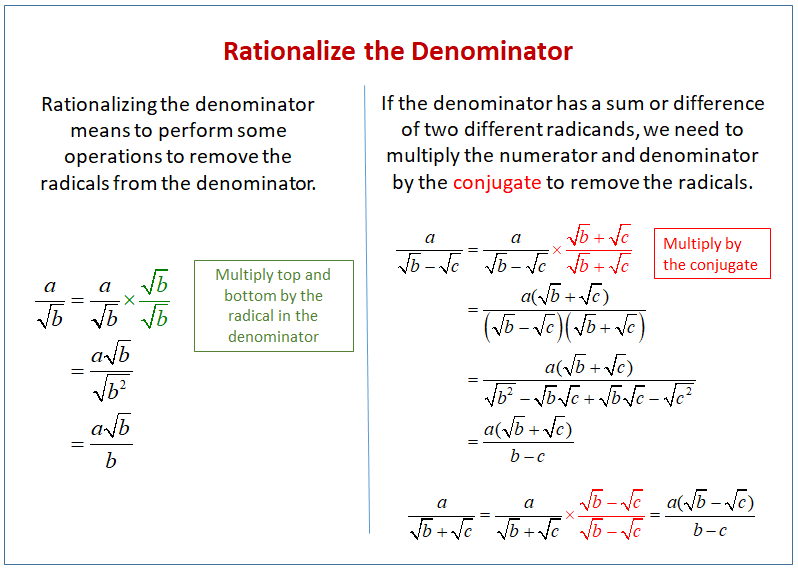
\(\color{#0cbb34}{\text{Originally Posted by}}\) @AZ Exactly! So now we have \(\dfrac{1}{6+3\sqrt{3}}+ \dfrac{1}{3\sqrt{3}+3\sqrt{2}}+\dfrac{1}{3\sqrt{2}+3}\) \(\color{#0cbb34}{\text{End of Quote}}\) Honestly, on second thought, it would probably be so much easier if we just rationalized the fractions \( \dfrac{1}{6+3\sqrt{3}} = \dfrac{1}{6+3\sqrt{3}} \times \dfrac{6-3\sqrt{3}}{6-3\sqrt{3}} \) \( \dfrac{6-3\sqrt{3}}{(6+3\sqrt{3})(6-3\sqrt{3})} = \dfrac{(6-3\sqrt{3})}{36-27} = \dfrac{6-3\sqrt{3}}{9} \) and then similarly for the other two fractions
Angle:
sorry, we're probably confusing you
crispyrat:
wait wouldn't the one that AZ wrote be the same as before cus 6-3sqrt(3)/6sqrt(3) is the same as 1 or am i missing something
AZ:
That is the same as 1 We're multiplying by that because it's 1 and we're trying to use the property (a-b) * (a+b) = a^2 - b^2 so that way we can get rid of the square roots in the denominator and bring it to the numerator and you see that by doing that, we have a nice number in the denominator
 AZ:
AZ:
(I assumed that they meant to write 6-3sqrt(3) but made a typo)
crispyrat:
yea
Angle:
I'm obviously not awake yet
crispyrat:
wait so if i do the samething for 1/3sqrt(2)+3sqrt(3) i would get (3sqrt(2)-3sqrt(3))/-9 I think
Angle:
yes
AZ:
yeah that could be written as (3sqrt(3) - 3sqrt(2)) / 9
AZ:
if you wanted to get rid of that negative sign
crispyrat:
so then for 1/(3sqrt(3)+3) it is (3sqrt(2)-3)/9
Angle:
yes
crispyrat:
and then i add them all together. cool. :)
Angle:
so much easier than the common denominator mess ;-;
crispyrat:
i got 3 and that over 9 is 1/3 thanks so much
AZ:
now put it all together \(\dfrac{6-3\sqrt{3}}{9} + \dfrac{3\sqrt{3} - 3\sqrt{2}}{9} + \dfrac{3\sqrt{2}-3}{9}\)
AZ:
\(\color{#0cbb34}{\text{Originally Posted by}}\) @Angle so much easier than the common denominator mess ;-; \(\color{#0cbb34}{\text{End of Quote}}\) yes ;-; idk what I was thinking at first ;--;
AZ:
\(\color{#0cbb34}{\text{Originally Posted by}}\) @crispyrat i got 3 and that over 9 is 1/3 thanks so much \(\color{#0cbb34}{\text{End of Quote}}\) Good job!
Join our real-time social learning platform and learn together with your friends!
 VERNEISH:
Two objects are moving along separate linear paths where each path is described by position, d, and time, t.
VERNEISH:
Two objects are moving along separate linear paths where each path is described by position, d, and time, t.

 Maci:
what are the best stock apps for people who want to start investing?
Maci:
what are the best stock apps for people who want to start investing?
 Twaylor:
genuienly how do i get better self control i keep watcing youtube and theres this
Twaylor:
genuienly how do i get better self control i keep watcing youtube and theres this
 IzzyCookie:
|dw:1792074056138:dw| Uhm, I don't know where to ask this, but I'm in college welding at my community college, and I need help learning vertical welding for
IzzyCookie:
|dw:1792074056138:dw| Uhm, I don't know where to ask this, but I'm in college welding at my community college, and I need help learning vertical welding for

 thehearken:
not sure if this is considered spam, im sorry if it is, but does anyone have tips
thehearken:
not sure if this is considered spam, im sorry if it is, but does anyone have tips