
 karremat:
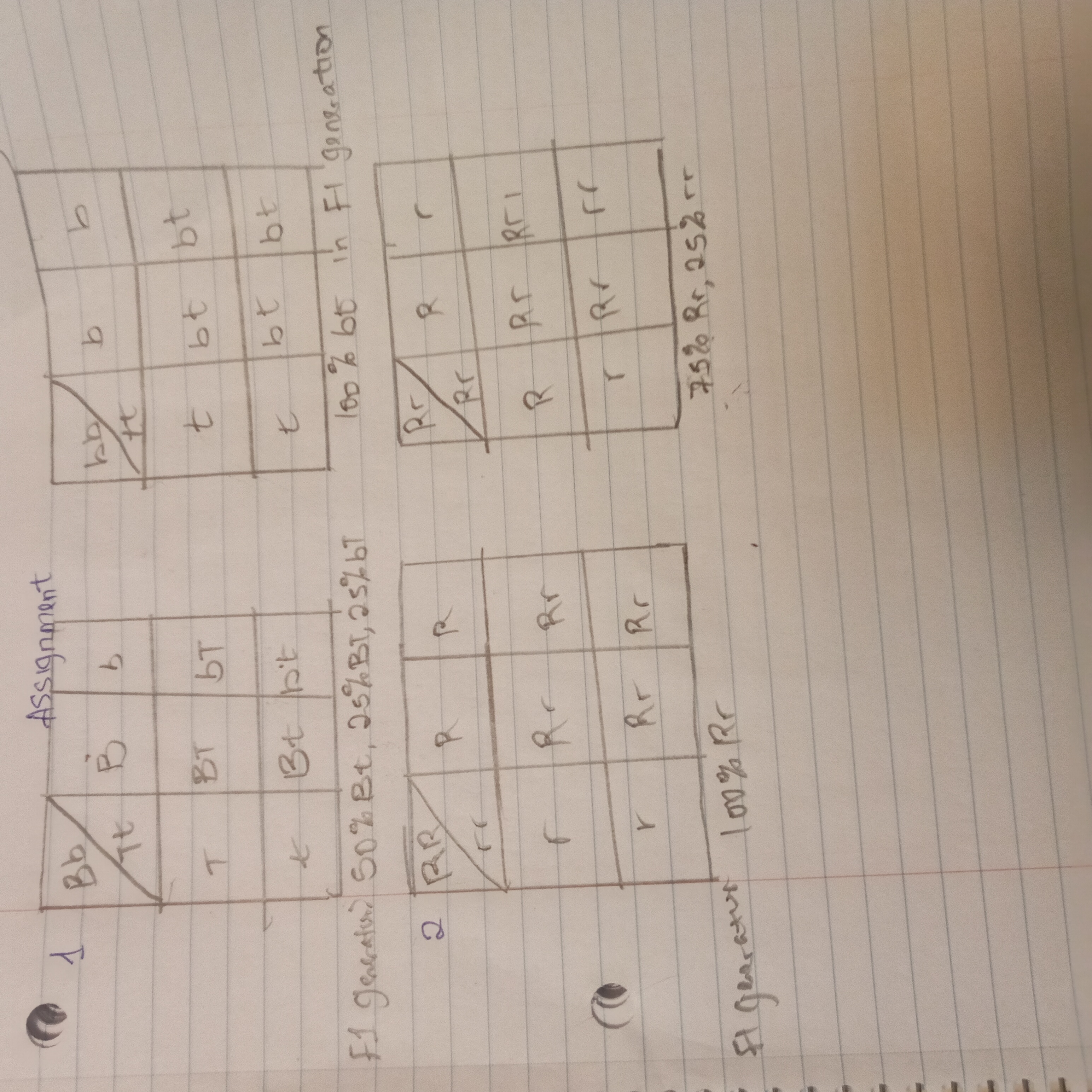
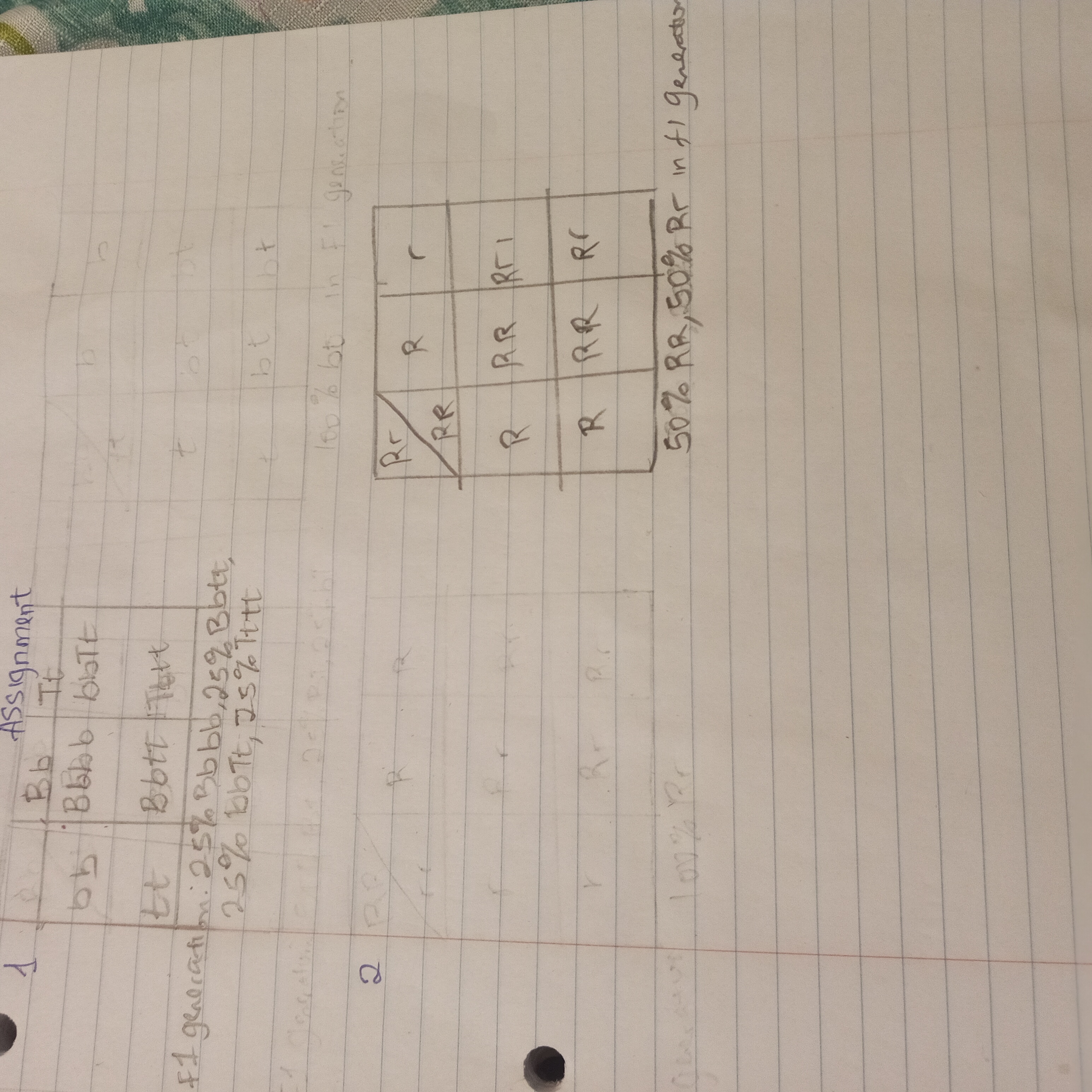
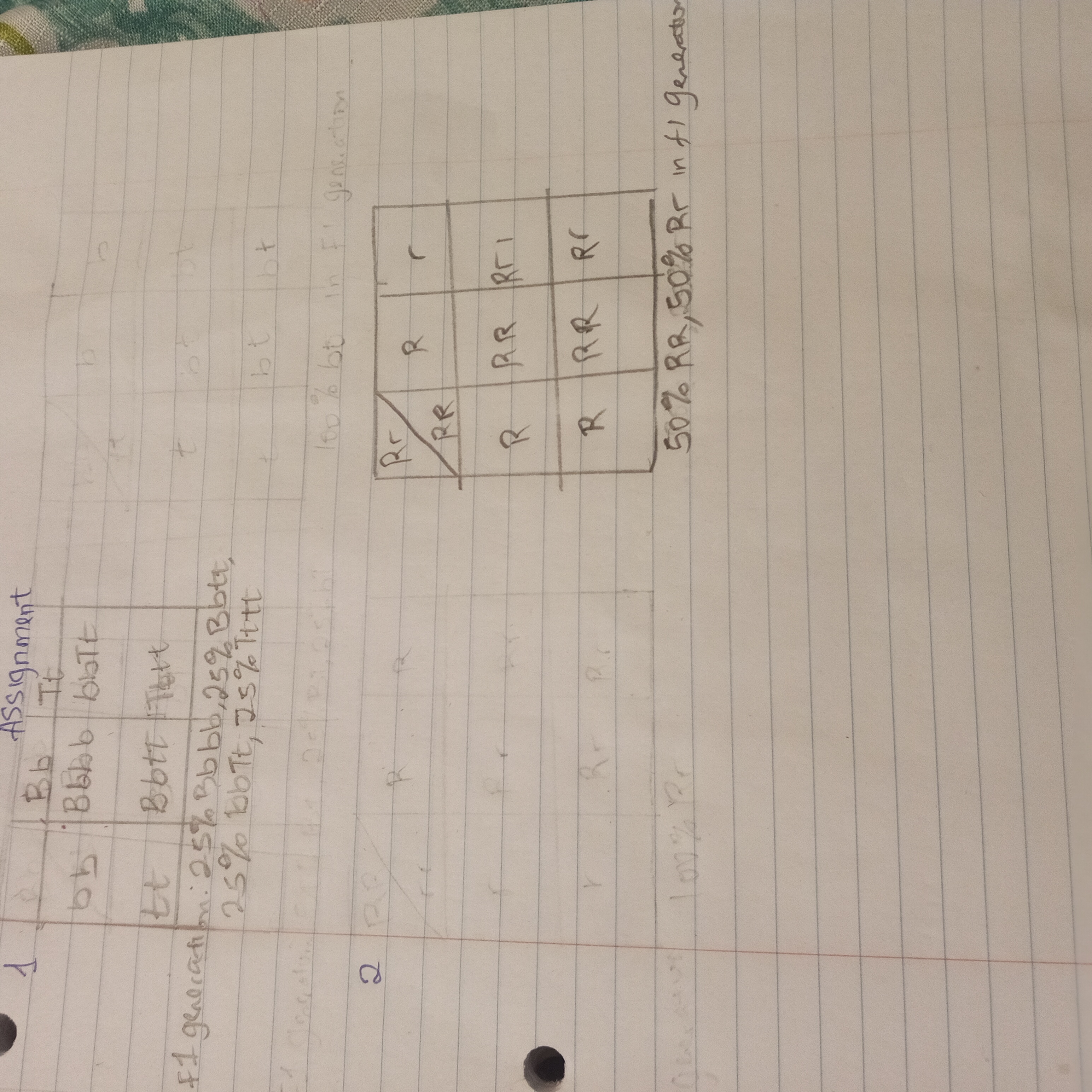
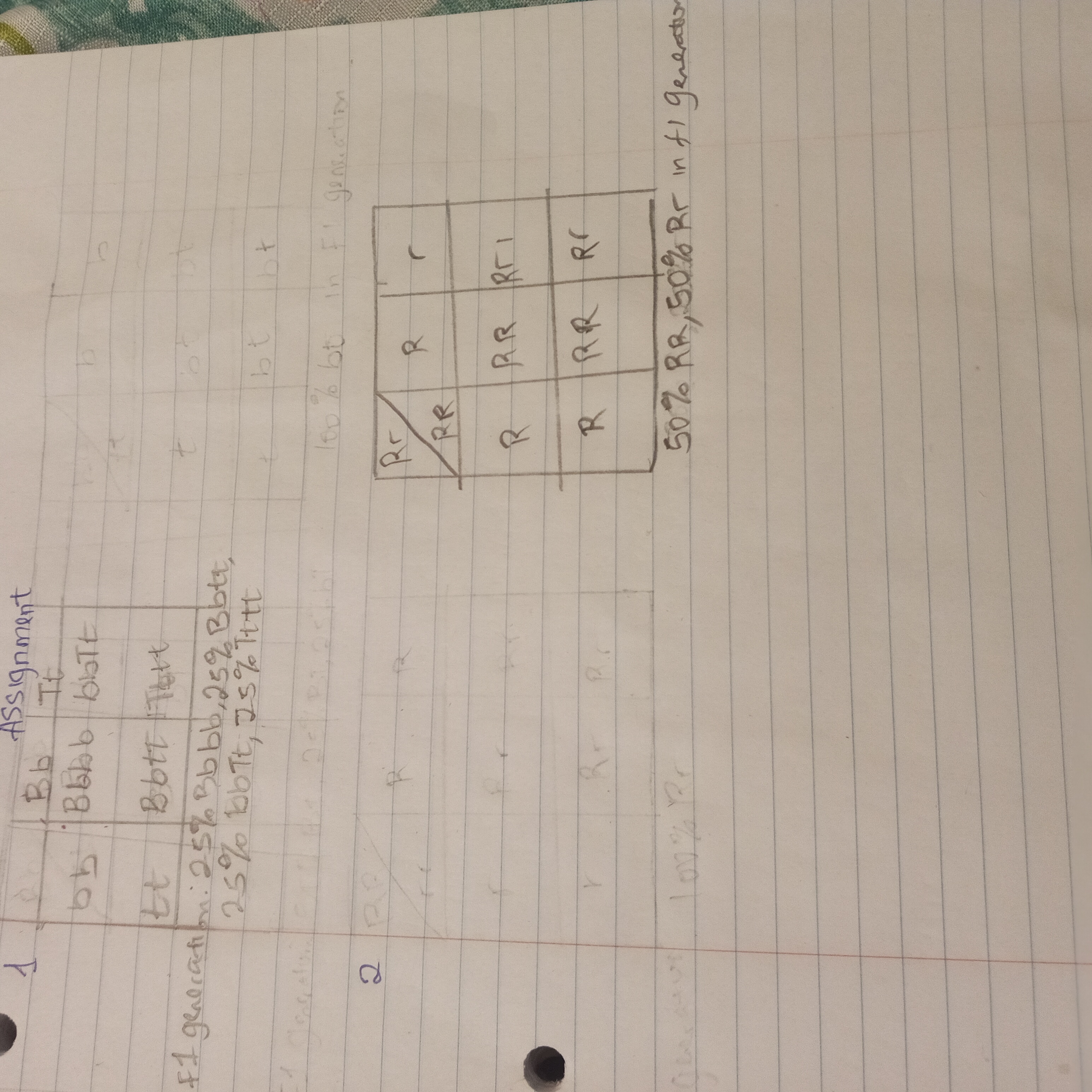
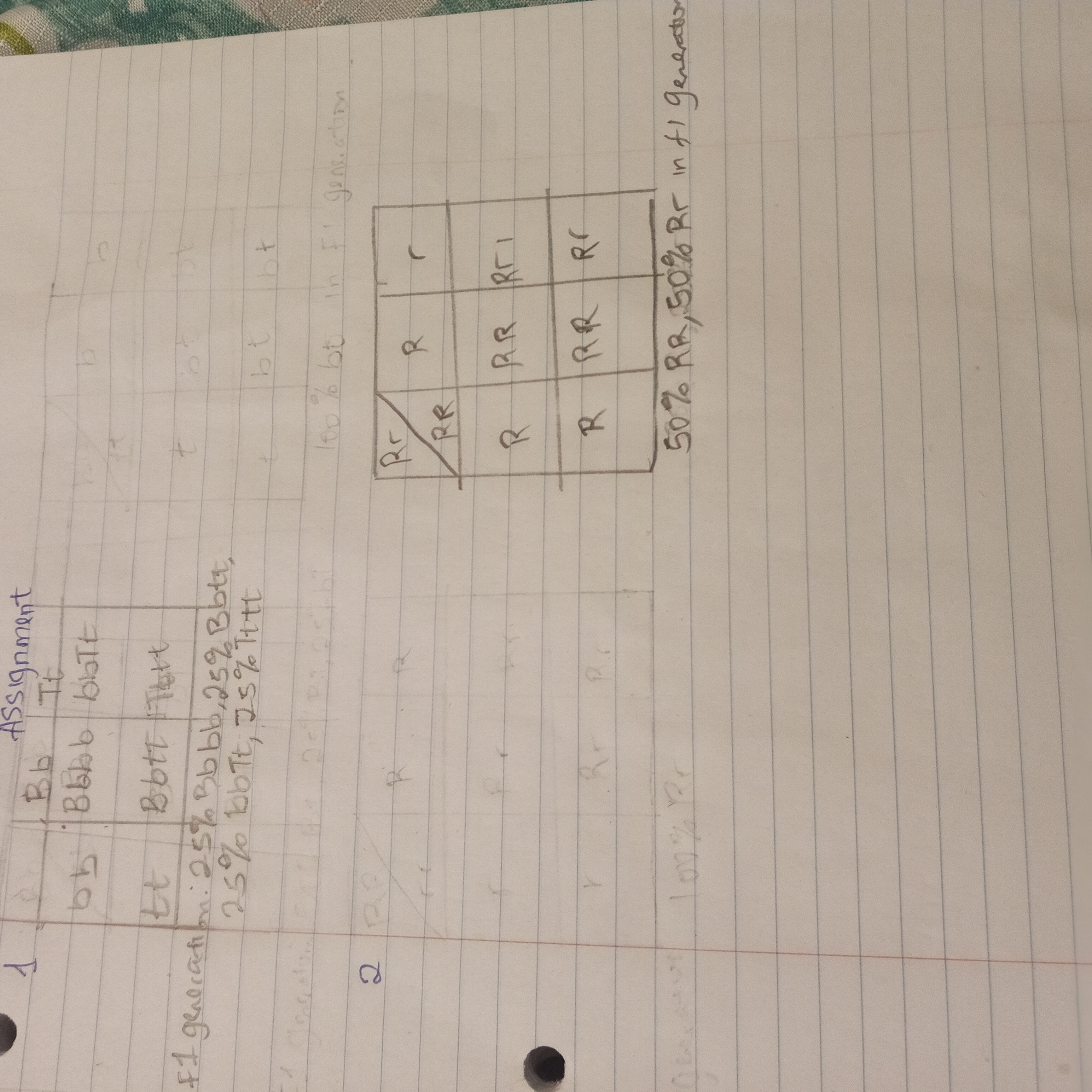
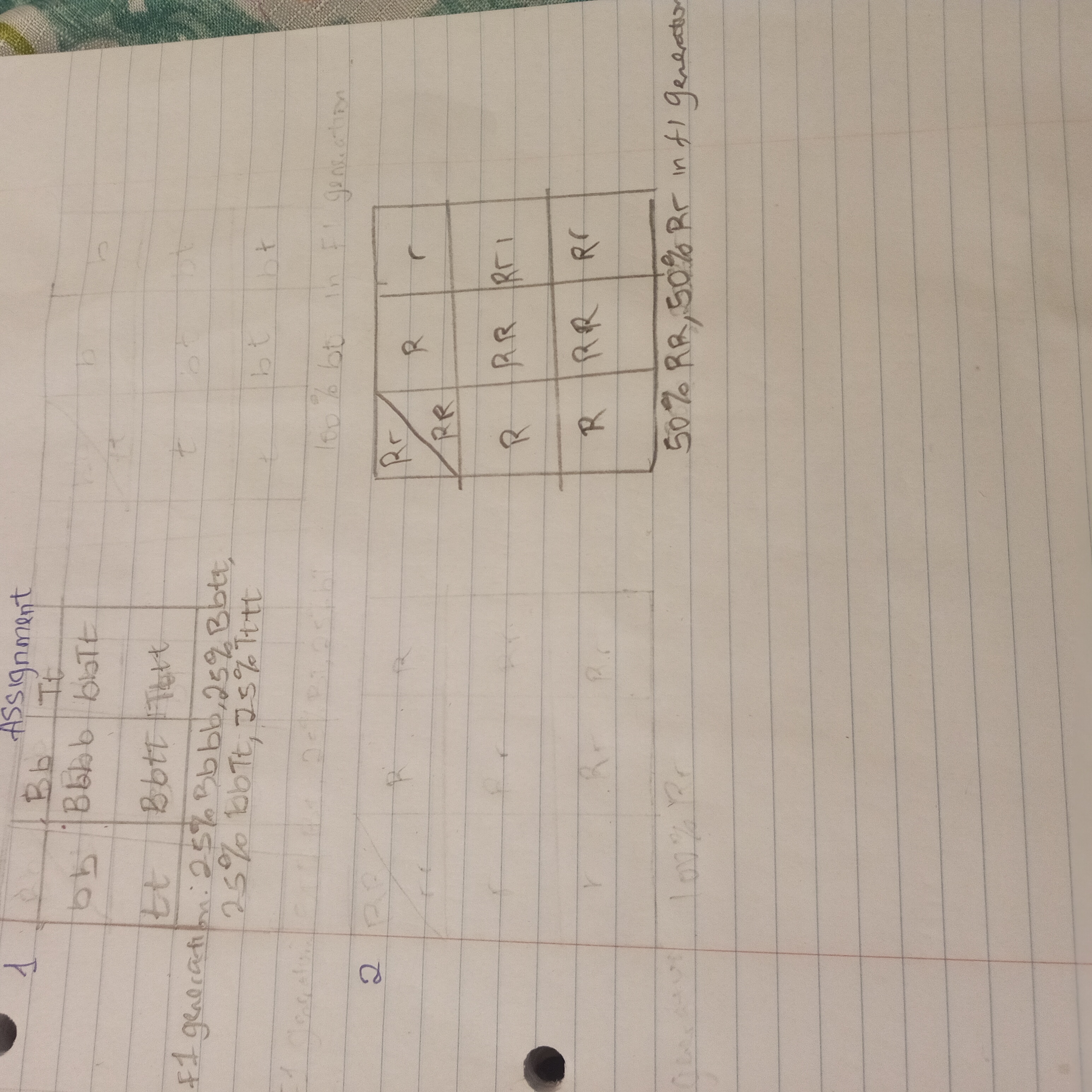
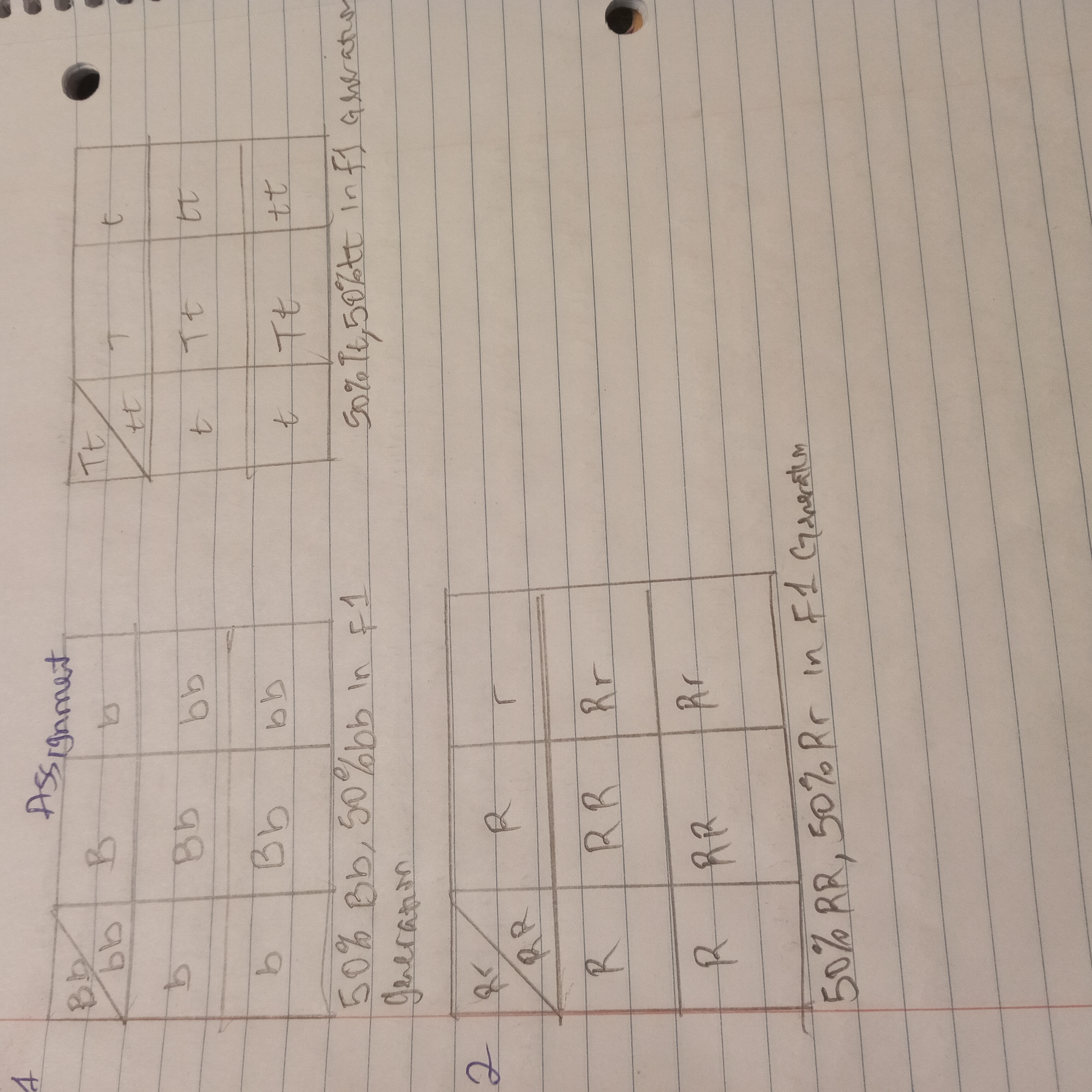
In horses, black colour (B) is due to a dominant allele and chestnut colour (b) is due to its recessive allele. A pacing gate (T) is dominant over a trotting gait (t). A heterozygous black pacer is crossed with a chestnut trotter. What are the possible genotypic and phenotypic ratios of the F1 generation?
karremat:
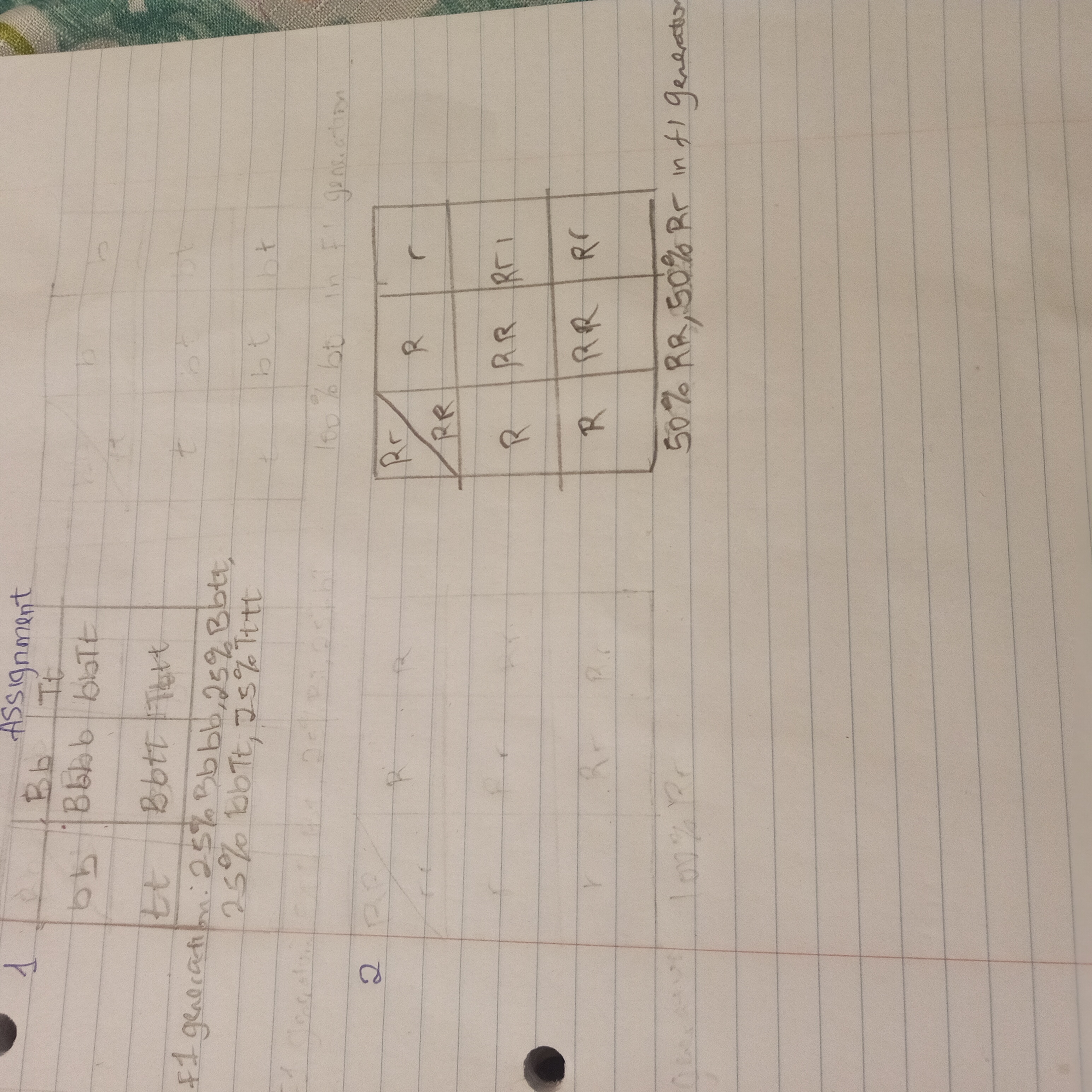
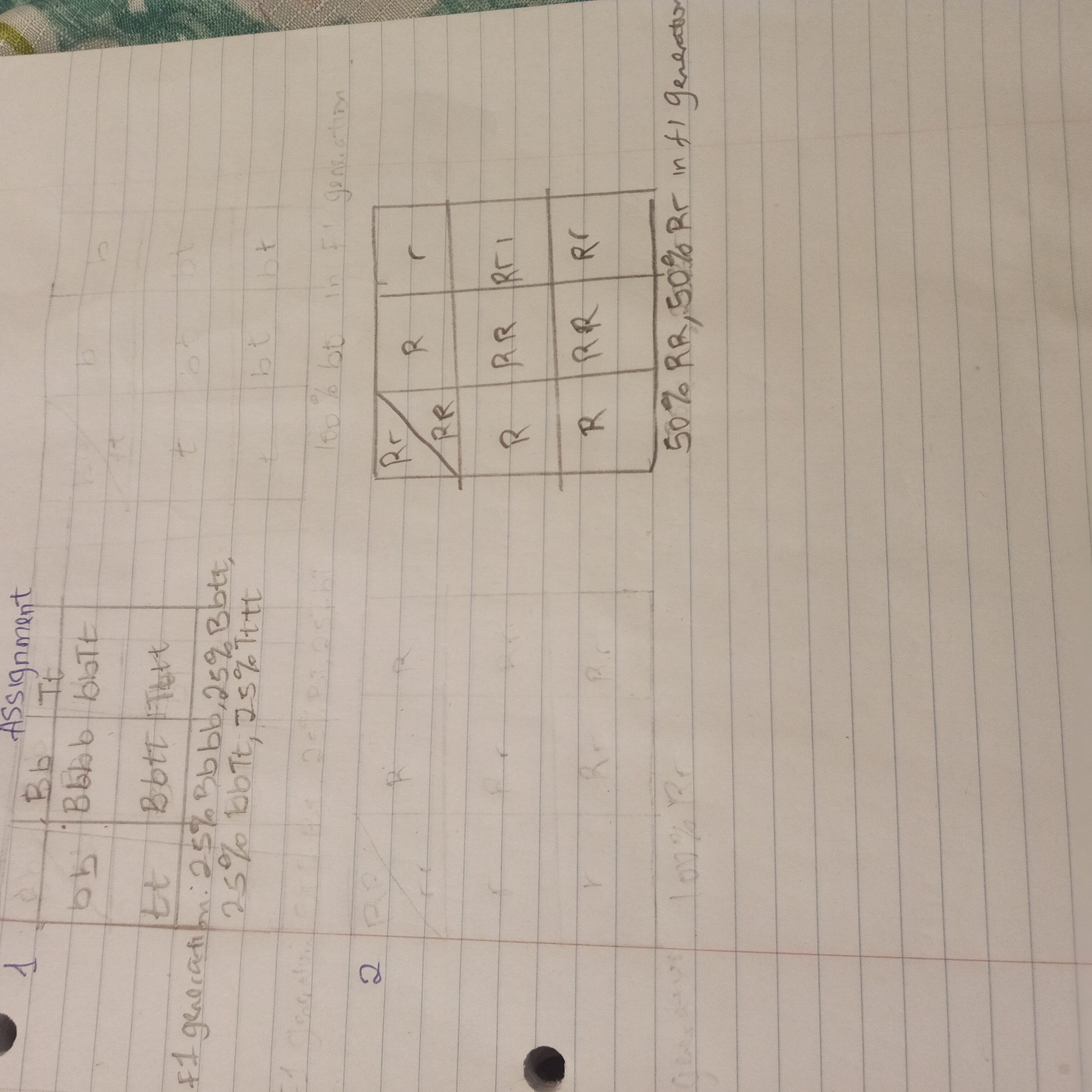
In cattle when a (RR) red bull is crossed with a (rr) white cow, the heterozygous offspring (Rr) are neither red nor white but roan (red and white hair). Determine the phenotypic and genotypic percentages for the offspring from a cross between a roan bull and a red cow.
 SmokeyBrown:
You can also use Punnett Squares to solve these problems, as long as you know the genotypes of the parents in the starting generation.
karremat:
yh i know do i do 2 punett square for each question like BB and bb
SmokeyBrown:
Well, for the first one, it describes a "heterozygous black pacer", which would have a genotype of BbTt crossed with a "chestnut trotter", which has a genotype of bbtt. So, you could make a Punnett square with those two to find the possibilities of the children. The same concept applies for the second question
karremat:
ok thank you i will try it
 SmokeyBrown:
For the first one, the B and b alleles would interact with each other, and the T and t alleles would interact with each other, but you would not pair a B and a t, for instance. If you redo that one to show the color alleles interacting with each other and the gait alleles interacting with each other, I think it will be correct. For the second one, I think you would only need one Punnett square to show the combinations that could occur with a roan bull (Rr) and a red cow (RR), so make sure you get the genotype of the parents right.
karremat:
i dont understand the explanation for the 1st one
SmokeyBrown:
So, for the first one, it looks like you used the right alleles, but for some reason you drew the Punnett squares so that Bb combined with Tt and bb combined with tt. This would not be right because BbTt is the genotype of a single parent, same with bbtt. Instead, you should draw the squares so that alleles which affect the same trait between the two parents are allowed to interact and combine. So, one square would have Bb against bb and the other would have Tt against tt. This would allow you to see the combinations for color (B and b) as well as gait (T and t).
karremat:
so u mean it is all in 1 punett square am gonna try it out
SmokeyBrown:
It may be possible to make a single square with all of that information. Since you're looking at two separate traits, it may be simpler to use two separate squares, like you had. It's been a long time since I've worked with these diagrams, so maybe what you're proposing will work. We can definitely take a look if you'd like to give it a try
 SmokeyBrown:
Hi again, sorry for the absence. That's better, but for the first one I think you would want to separate the alleles from pairs to singles. For instance, just like you did in the second one, draw one square with Bb/bb and another square with Tt/tt The second one is looking good now. Excellent work.
karremat:
ohhhhhhhhhhhhhhhhhhhh ok thanks i got it
 SmokeyBrown:
I think those are all the same pictures from before. Is that a mistake?
 SmokeyBrown:
Now that looks perfect. For the first one you might also add together the genotypes for color and gait traits to get the full genotypes. So, you found that Bb and bb are possible for color while Tt and tt are possible for gait in the children. That means that the combinations possible are: BbTt, Bbtt, bbTt, and bbtt. And it seems like you found that they all occur with equal rarity. Just a bit of extra info, I'm not sure whether you need it. Well done!
Join our real-time social learning platform and learn together with your friends!
 VERNEISH:
Two objects are moving along separate linear paths where each path is described by position, d, and time, t.
VERNEISH:
Two objects are moving along separate linear paths where each path is described by position, d, and time, t.

 Maci:
what are the best stock apps for people who want to start investing?
Maci:
what are the best stock apps for people who want to start investing?
 Twaylor:
genuienly how do i get better self control i keep watcing youtube and theres this
Twaylor:
genuienly how do i get better self control i keep watcing youtube and theres this
 IzzyCookie:
|dw:1792074056138:dw| Uhm, I don't know where to ask this, but I'm in college welding at my community college, and I need help learning vertical welding for
IzzyCookie:
|dw:1792074056138:dw| Uhm, I don't know where to ask this, but I'm in college welding at my community college, and I need help learning vertical welding for

 thehearken:
not sure if this is considered spam, im sorry if it is, but does anyone have tips
thehearken:
not sure if this is considered spam, im sorry if it is, but does anyone have tips