
 maths89898:
Someone please help :(
 oopdontknowher:
what do you need help with?
maths89898:
language arts
oopdontknowher:
maths89898:
the question is
maths89898:
Event that develops point of view:
maths89898:
so let me send you the story rq
maths89898:
She was one of those pretty and charming girls born, as if by an error of fate, into a family of clerks. She had no dowry, no expectations, no means of becoming known, understood, loved or wedded by a man of wealth and distinction; and so she let herself be married to a minor official at the Ministry of Education. She dressed plainly because she had never been able to afford anything better, but she was as unhappy as if she had once been wealthy. Women don't belong to a caste or class; their beauty, grace, and natural charm take the place of birth and family. Natural delicacy, instinctive elegance and a quick wit determine their place in society, and make the daughters of commoners the equals of the very finest ladies. She suffered endlessly, feeling she was entitled to all the delicacies and luxuries of life. She suffered because of the poorness of her house as she looked at the dirty walls, the worn-out chairs and the ugly curtains. All these things that another woman of her class would not even have noticed, tormented her and made her resentful. The sight of the little Brenton girl who did her housework filled her with terrible regrets and hopeless fantasies. She dreamed of silent antechambers hung with Oriental tapestries, lit from above by torches in bronze holders, while two tall footmen in knee-length breeches napped in huge armchairs, sleepy from the stove's oppressive warmth. She dreamed of vast living rooms furnished in rare old silks, elegant furniture loaded with priceless ornaments, and inviting smaller rooms, perfumed, made for afternoon chats with close friends - famous, sought after men, who all women envy and desire. When she sat down to dinner at a round table covered with a three-day-old cloth opposite her husband who, lifting the lid off the soup, shouted excitedly, "Ah! Beef stew! What could be better," she dreamed of fine dinners, of shining silverware, of tapestries which peopled the walls with figures from another time and strange birds in fairy forests; she dreamed of delicious dishes served on wonderful plates, of whispered gallantries listened to with an inscrutable smile as one ate the pink flesh of a trout or the wings of a quail. She had no dresses, no jewels, nothing; and these were the only things she loved. She felt she was made for them alone. She wanted so much to charm, to be envied, to be desired and sought after. She had a rich friend, a former schoolmate at the convent, whom she no longer wanted to visit because she suffered so much when she came home. For whole days afterwards she would weep with sorrow, regret, despair and misery. One evening her husband came home with an air of triumph, holding a large envelope in his hand. "Look," he said, "here's something for you." She tore open the paper and drew out a card, on which was printed the words: "The Minister of Education and Mme. Georges Rampouneau request the pleasure of M. and Mme. Loisel's company at the Ministry, on the evening of Monday January 18th." Instead of being delighted, as her husband had hoped, she threw the invitation on the table resentfully, and muttered: "What do you want me to do with that?" "But, my dear, I thought you would be pleased. You never go out, and it will be such a lovely occasion! I had awful trouble getting it. Everyone wants to go; it is very exclusive, and they're not giving many invitations to clerks. The whole ministry will be there." She stared at him angrily, and said, impatiently: "And what do you expect me to wear if I go?" He hadn't thought of that. He stammered: "Why, the dress you go to the theatre in. It seems very nice to me ..." He stopped, stunned, distressed to see his wife crying. Two large tears ran slowly from the corners of her eyes towards the corners of her mouth. He stuttered: "What's the matter? What's the matter?" With great effort she overcame her grief and replied in a calm voice, as she wiped her wet cheeks: "Nothing. Only I have no dress and so I can't go to this party. Give your invitation to a friend whose wife has better clothes than I do." He was distraught, but tried again: "Let's see, Mathilde. How much would a suitable dress cost, one which you could use again on other occasions, something very simple?" She thought for a moment, computing the cost, and also wondering what amount she could ask for without an immediate refusal and an alarmed exclamation from the thrifty clerk. At last she answered hesitantly: "I don't know exactly, but I think I could do it with four hundred francs." He turned a little pale, because he had been saving that exact amount to buy a gun and treat himself to a hunting trip the following summer, in the country near Nanterre, with a few friends who went lark-shooting there on Sundays. However, he said: "Very well, I can give you four hundred francs. But try and get a really beautiful dress." The day of the party drew near, and Madame Loisel seemed sad, restless, anxious. Her dress was ready, however. One evening her husband said to her: "What's the matter? You've been acting strange these last three days." She replied: "I'm upset that I have no jewels, not a single stone to wear. I will look cheap. I would almost rather not go to the party." "You could wear flowers, " he said, "They are very fashionable at this time of year. For ten francs you could get two or three magnificent roses." She was not convinced. "No; there is nothing more humiliating than looking poor in the middle of a lot of rich women." "How stupid you are!" her husband cried. "Go and see your friend Madame Forestier and ask her to lend you some jewels. You know her well enough for that." She uttered a cry of joy. "Of course. I had not thought of that." The next day she went to her friend's house and told her of her distress. Madame Forestier went to her mirrored wardrobe, took out a large box, brought it back, opened it, and said to Madame Loisel: "Choose, my dear." First she saw some bracelets, then a pearl necklace, then a gold Venetian cross set with precious stones, of exquisite craftsmanship. She tried on the jewelry in the mirror, hesitated, could not bear to part with them, to give them back. She kept asking: "You have nothing else?" "Why, yes. But I don't know what you like." Suddenly she discovered, in a black satin box, a superb diamond necklace, and her heart began to beat with uncontrolled desire. Her hands trembled as she took it. She fastened it around her neck, over her high-necked dress, and stood lost in ecstasy as she looked at herself. Then she asked anxiously, hesitating: "Would you lend me this, just this?" "Why, yes, of course." She threw her arms around her friend's neck, embraced her rapturously, then fled with her treasure. The day of the party arrived. Madame Loisel was a success. She was prettier than all the other women, elegant, gracious, smiling, and full of joy. All the men stared at her, asked her name, tried to be introduced. All the cabinet officials wanted to waltz with her. The minister noticed her. She danced wildly, with passion, drunk on pleasure, forgetting everything in the triumph of her beauty, in the glory of her success, in a sort of cloud of happiness, made up of all this respect, all this admiration, all these awakened desires, of that sense of triumph that is so sweet to a woman's heart. She left at about four o'clock in the morning. Her husband had been dozing since midnight in a little deserted anteroom with three other gentlemen whose wives were having a good time. He threw over her shoulders the clothes he had brought for her to go outside in, the modest clothes of an ordinary life, whose poverty contrasted sharply with the elegance of the ball dress. She felt this and wanted to run away, so she wouldn't be noticed by the other women who were wrapping themselves in expensive furs. Loisel held her back. "Wait a moment, you'll catch a cold outside. I'll go and find a cab." But she would not listen to him, and ran down the stairs. When they were finally in the street, they could not find a cab, and began to look for one, shouting at the cabmen they saw passing in the distance. They walked down toward the Seine in despair, shivering with cold. At last they found on the quay one of those old night cabs that one sees in Paris only after dark, as if they were ashamed to show their shabbiness during the day. They were dropped off at their door in the Rue des Martyrs, and sadly walked up the steps to their apartment. It was all over, for her. And he was remembering that he had to be back at his office at ten o'clock. In front of the mirror, she took off the clothes around her shoulders, taking a final look at herself in all her glory. But suddenly she uttered a cry. She no longer had the necklace round her neck! "What is the matter?" asked her husband, already half undressed. She turned towards him, panic-stricken. "I have ... I have ... I no longer have Madame Forestier's necklace." He stood up, distraught. "What! ... how! ... That's impossible!" They looked in the folds of her dress, in the folds of her cloak, in her pockets, everywhere. But they could not find it. "Are you sure you still had it on when you left the ball?" he asked. "Yes. I touched it in the hall at the Ministry." "But if you had lost it in the street, we would have heard it fall. It must be in the cab." "Yes. That's probably it. Did you take his number?" "No. And you, didn't you notice it?" "No." They stared at each other, stunned. At last Loisel put his clothes on again. "I'm going back," he said, "over the whole route we walked, see if I can find it." He left. She remained in her ball dress all evening, without the strength to go to bed, sitting on a chair, with no fire, her mind blank. Her husband returned at about seven o'clock. He had found nothing. He went to the police, to the newspapers to offer a reward, to the cab companies, everywhere the tiniest glimmer of hope led him. She waited all day, in the same state of blank despair from before this frightful disaster. Loisel returned in the evening, a hollow, pale figure; he had found nothing. "You must write to your friend," he said, "tell her you have broken the clasp of her necklace and that you are having it mended. It will give us time to look some more." She wrote as he dictated. Madame Forestier went to her mirrored wardrobe, took out a large box, brought it back, opened it, and said to Madame Loisel: II At the end of one week, they had lost all hope. And Loisel, who had aged five years, declared: "We must consider how to replace the jewel." The next day they took the box which had held it, and went to the jeweler whose name they found inside. He consulted his books. "It was not I, madame, who sold the necklace; I must simply have supplied the case." And so they went from jeweler to jeweler, looking for a necklace like the other one, consulting their memories, both sick with grief and anguish. In a shop at the Palais Royal, they found a string of diamonds which seemed to be exactly what they were looking for. It was worth forty thousand francs. They could have it for thirty-six thousand. So they begged the jeweler not to sell it for three days. And they made an arrangement that he would take it back for thirty-four thousand francs if the other necklace was found before the end of February. Loisel had eighteen thousand francs which his father had left him. He would borrow the rest. And he did borrow, asking for a thousand francs from one man, five hundred from another, five louis here, three louis there. He gave notes, made ruinous agreements, dealt with usurers, with every type of money-lender. He compromised the rest of his life, risked signing notes without knowing if he could ever honor them, and, terrified by the anguish still to come, by the black misery about to fall on him, by the prospect of every physical privation and every moral torture he was about to suffer, he went to get the new necklace, and laid down on the jeweler's counter thirty-six thousand francs. When Madame Loisel took the necklace back, Madame Forestier said coldly: "You should have returned it sooner, I might have needed it." To the relief of her friend, she did not open the case. If she had detected the substitution, what would she have thought? What would she have said? Would she have taken her friend for a thief? From then on, Madame Loisel knew the horrible life of the very poor. But she played her part heroically. The dreadful debt must be paid. She would pay it. They dismissed their maid; they changed their lodgings; they rented a garret under the roof. She came to know the drudgery of housework, the odious labors of the kitchen. She washed the dishes, staining her rosy nails on greasy pots and the bottoms of pans. She washed the dirty linen, the shirts and the dishcloths, which she hung to dry on a line; she carried the garbage down to the street every morning, and carried up the water, stopping at each landing to catch her breath. And, dressed like a commoner, she went to the fruiterer's, the grocer's, the butcher's, her basket on her arm, bargaining, insulted, fighting over every miserable sou. Each month they had to pay some notes, renew others, get more time. Her husband worked every evening, doing accounts for a tradesman, and often, late into the night, he sat copying a manuscript at five sous a page. And this life lasted ten years. At the end of ten years they had paid off everything, everything, at usurer's rates and with the accumulations of compound interest. Madame Loisel looked old now. She had become strong, hard and rough like all women of impoverished households. With hair half combed, with skirts awry, and reddened hands, she talked loudly as she washed the floor with great swishes of water. But sometimes, when her husband was at the office, she sat down near the window and thought of that evening at the ball so long ago, when she had been so beautiful and so admired. What would have happened if she had not lost that necklace? Who knows, who knows? How strange life is, how fickle! How little is needed for one to be ruined. One Sunday, as she was walking in the Champs Élysées to refresh herself after the week's work, suddenly she saw a woman walking with a child. It was Madame Forestier, still young, still beautiful, still charming. Madame Loisel felt emotional. Should she speak to her? Yes, of course. And now that she had paid, she would tell her all. Why not? She went up to her. "Good morning, Jeanne." The other, astonished to be addressed so familiarly by this common woman, did not recognize her. She stammered: "But - madame - I don't know. You must have made a mistake." "No, I am Mathilde Loisel." Her friend uttered a cry. "Oh! ... my poor Mathilde, how you've changed! ..." "Yes, I have had some hard times since I last saw you, and many miseries ... and all because of you! ..." "Me? How can that be?" "You remember that diamond necklace that you lent me to wear to the Ministry party?" "Yes. Well?" "Well, I lost it." "What do you mean? You brought it back." "I brought you back another exactly like it. And it has taken us ten years to pay for it. It wasn't easy for us, we had very little. But at last it is over, and I am very glad." Madame Forestier was stunned. "You say that you bought a diamond necklace to replace mine?" "Yes; you didn't notice then? They were very similar." And she smiled with proud and innocent pleasure. Madame Forestier, deeply moved, took both her hands. "Oh, my poor Mathilde! Mine was an imitation! It was worth five hundred francs at most! ..."
oopdontknowher:
i would say the third or fourth paragraph showed it to me
maths89898:
Event that develops point of view?
maths89898:
you there....?
 mrwhskers:
it would be easeir to choose a answer if i had a ss of the options
maths89898:
There are no options?
maths89898:
Your supposed to show events that develop the point of view
mrwhskers:
oopdontknowher:
maths89898:
Okay thank you :)
oopdontknowher:
your welcome
maths89898:
dang they went offline
maths89898:
mrwhskers:
maths89898:
alrightie
maths89898:
well i gotta get going please answer this as soon as you can i only have today thank u<3 :))


 Rylee88:
I did this, I think you just have to explain certain questions.
maths89898:
oh?
Rylee88:
Mhm, I'm not sure though. I did this for FLVS but I'm not in that school anymore.
maths89898:
Oh? could you maybe help
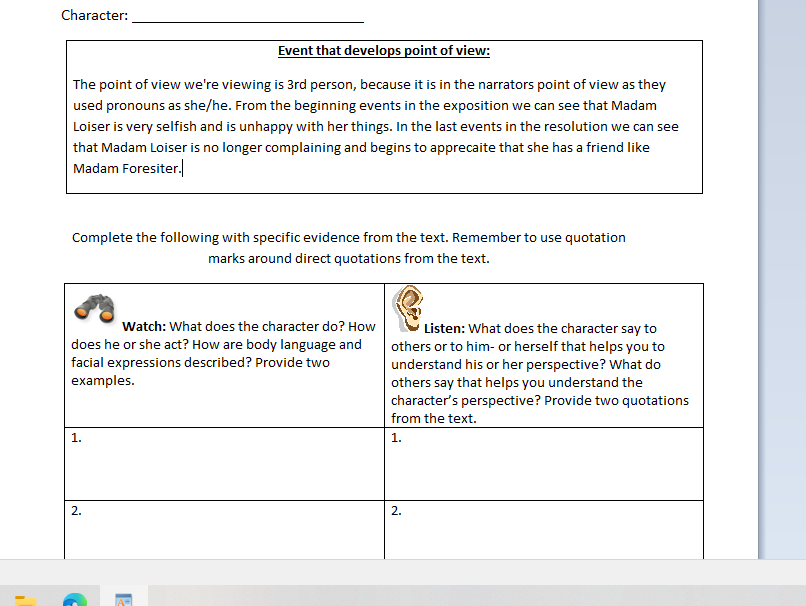 maths89898:
am i supposed to do these questions
maths89898:
and not answer the chart
Rylee88:
Oh are you on the part where you're learning like watching an hearing things like the themes of it etc? Like where you have another tab to listen to the people talk? orr
maths89898:
so the lesson is called a matter of perspective
maths89898:
so i think so?
Rylee88:
Okay, I would help more lol but I'm in public now so I can't really look at my old answered BUT I can see if I have the doc still, did she name it a certain thing?
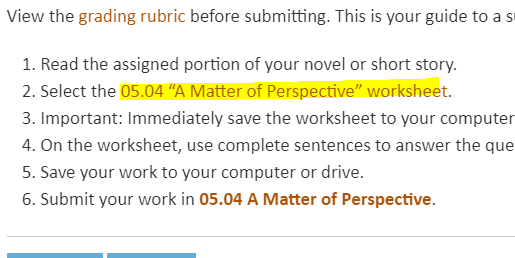 maths89898:
so this is the thingy
maths89898:
the board name
maths89898:
05.04 “A Matter of Perspective” worksheet.
maths89898:
and you like have to save it
maths89898:
so i think you might have it
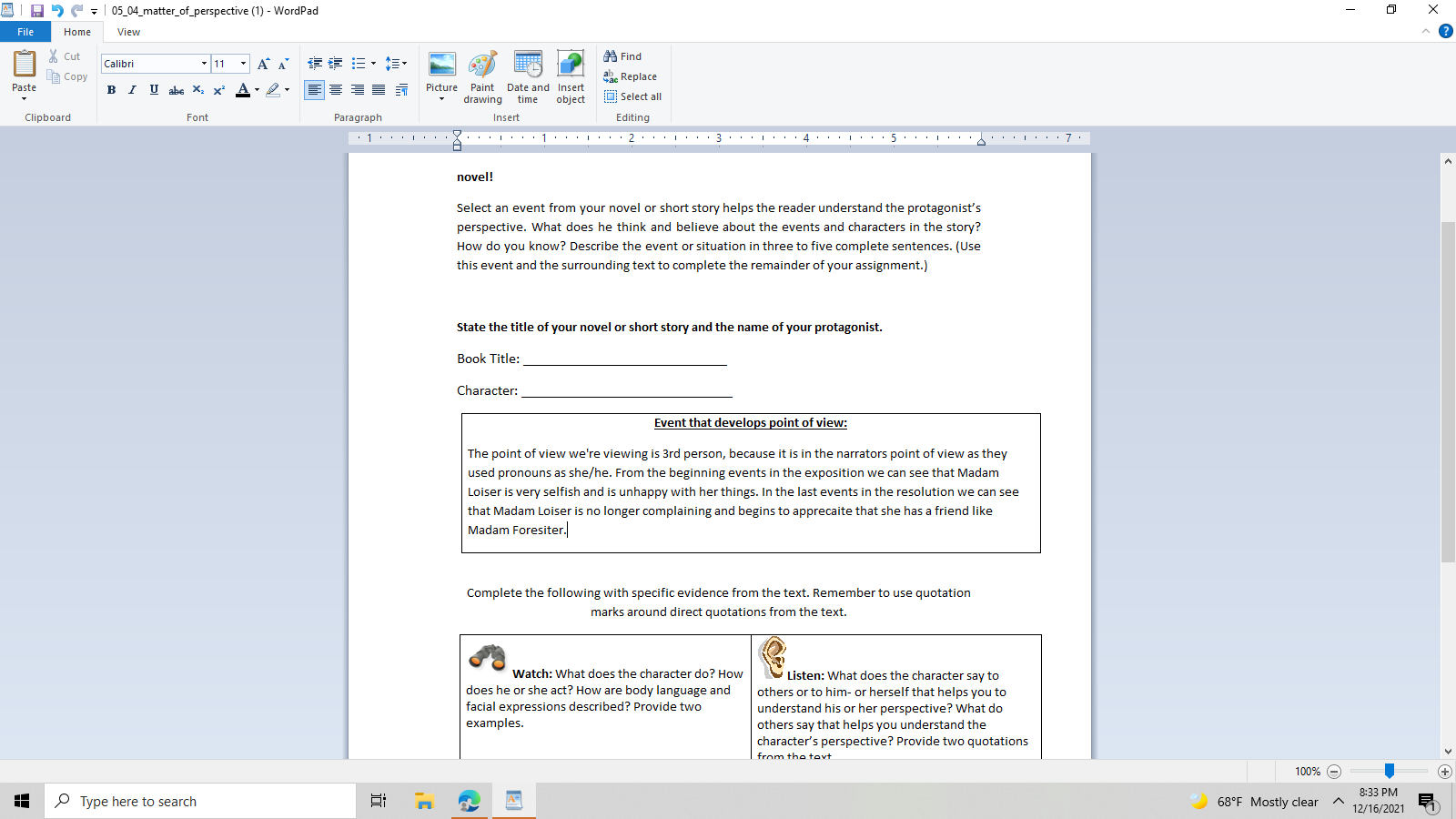 Rylee88:
YES I HAVE IT OKAY ONE SECOND LOL
maths89898:
it should look like that
maths89898:
OMG YAY
Rylee88:
So, I did it wrong BUT xD Heres an example LMAO so, You have the options for the story that necklace one and one other correct?
maths89898:
mhm
maths89898:
mine is the necklace
maths89898:
you have three options im pretty sure
Rylee88:
Okay so you did the one I did xD so, you put all the information like the title and the name of the girl
maths89898:
mhm
Rylee88:
Then "The event that develops the point of view" so, choose a place or like part that most shows the point of view or main Idea.
maths89898:
ahh
Rylee88:
Does it come with a video or audio?
maths89898:
like the story?
Rylee88:
Yea
maths89898:
yeah its actually down in the comment box
maths89898:
above us actually
Rylee88:
?
maths89898:
did you like want the story?
Rylee88:
Like was there a vid or audio of the story
maths89898:
oh no
maths89898:
its written down
maths89898:
its in story form
Rylee88:
Hmmm
maths89898:
So which place do you think is like the part that most shows the point of view or main Idea. bc im not sure of that
Rylee88:
Well I THINK you might have to imagine it.... But like I said I did it wrong xD
maths89898:
i thought we had to name the events that changed our perspective
Rylee88:
I THINK the main idea was the part like where she lost the necklace at a parrrty? I think it was or sum gathering and then she was all freaked out and her husband went back to look and etc but then at the end that necklace was worth nothing and they were working so hard to earn money to buy it back
maths89898:
ahh so should i put that there?
Rylee88:
Well I would elaborate more.
maths89898:
yeah yeah ill do that
maths89898:
lemme put an answer and ill send it to you give me like 2-3 minsss
Rylee88:
Okay
maths89898:
okii heres my answer
maths89898:
"The necklace" is in third point of view, the narrator is the one telling us the story as they used she/he pronouns. So the main part of the story is when Madam Loisel had lost her necklace at the party, she had looked but she couldn't had find it so she replaced it with another necklace that was way much worth, in the end the orignal necklace was worth nothing and they had to work ten years to get out of debt.
Rylee88:
yes
maths89898:
so is that what i should put
Rylee88:
But then the watch and listen part, I'm NOT SURE about that one maybe you imagine it? You can put that
maths89898:
alright yeah ill try that out if i have any questions maybe i could ask u
maths89898:
i was just worried about the first part
maths89898:
tysm for answering my question after 3 hours!
Rylee88:
Oh okay, well I hope that helped you. Is you're teachers name by chance smith?
Rylee88:
Yw lol
maths89898:
oh no mines ms.wilson
Rylee88:
Oh okay.
maths89898:
but im prett y sure ive heard of ms.smith before tho
Rylee88:
Yeah she was my old teacher lol...She was bad at teaching....
maths89898:
oh dw girlie mines bad too
Rylee88:
LOL
maths89898:
shes realll slow at responding
maths89898:
hehe anyways tysm<3333
Rylee88:
IKR THEY TAKE LIKE A WEEK TO TEXT BACK!!! Yes YW <3 lol
maths89898:
bye<3
Rylee88:
Bye
Join our real-time social learning platform and learn together with your friends!
 VERNEISH:
Two objects are moving along separate linear paths where each path is described by position, d, and time, t.
VERNEISH:
Two objects are moving along separate linear paths where each path is described by position, d, and time, t.

 Maci:
what are the best stock apps for people who want to start investing?
Maci:
what are the best stock apps for people who want to start investing?
 Twaylor:
genuienly how do i get better self control i keep watcing youtube and theres this
Twaylor:
genuienly how do i get better self control i keep watcing youtube and theres this
 IzzyCookie:
|dw:1792074056138:dw| Uhm, I don't know where to ask this, but I'm in college welding at my community college, and I need help learning vertical welding for
IzzyCookie:
|dw:1792074056138:dw| Uhm, I don't know where to ask this, but I'm in college welding at my community college, and I need help learning vertical welding for

 thehearken:
not sure if this is considered spam, im sorry if it is, but does anyone have tips
thehearken:
not sure if this is considered spam, im sorry if it is, but does anyone have tips