
 joancrawford:
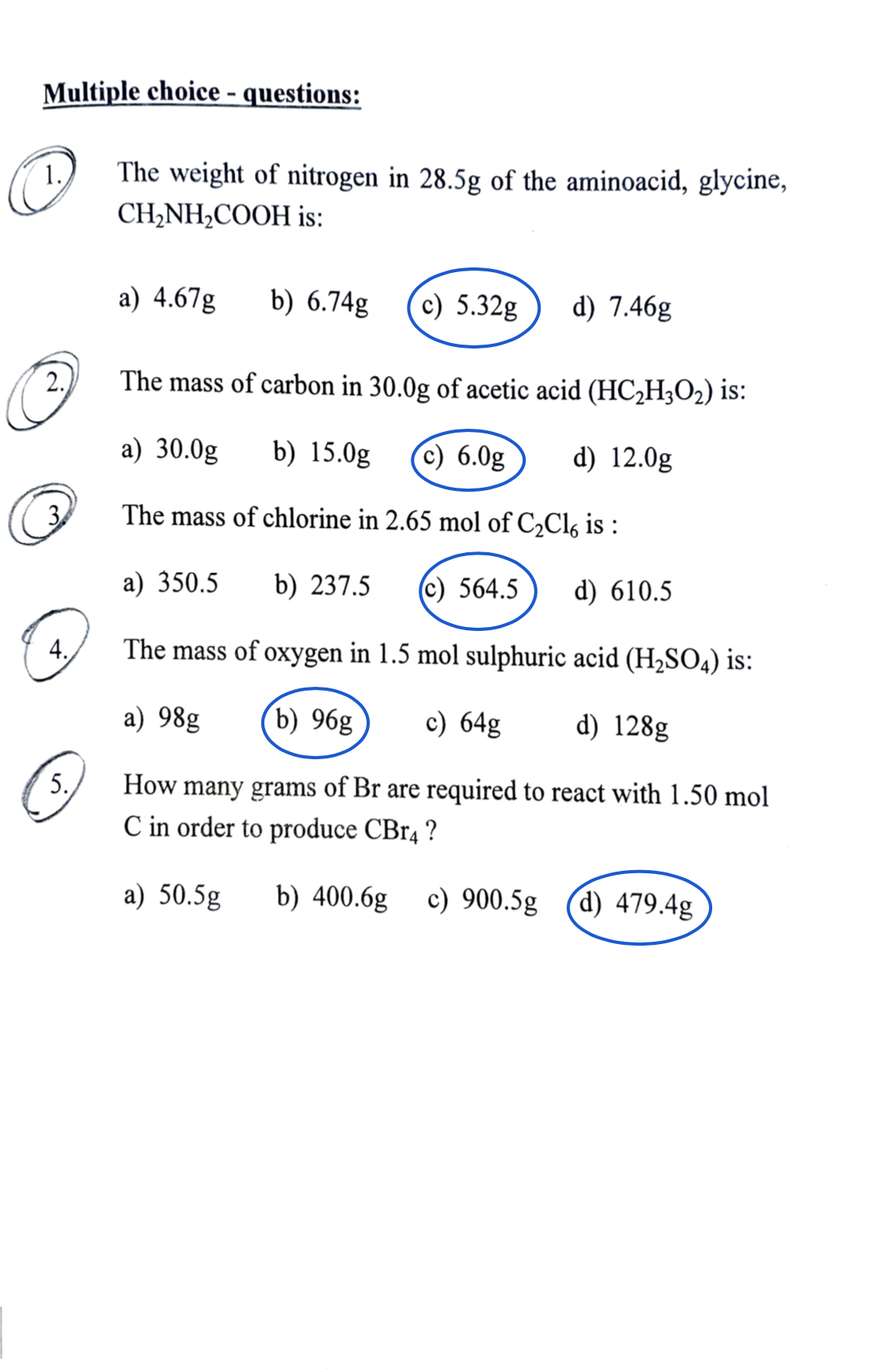
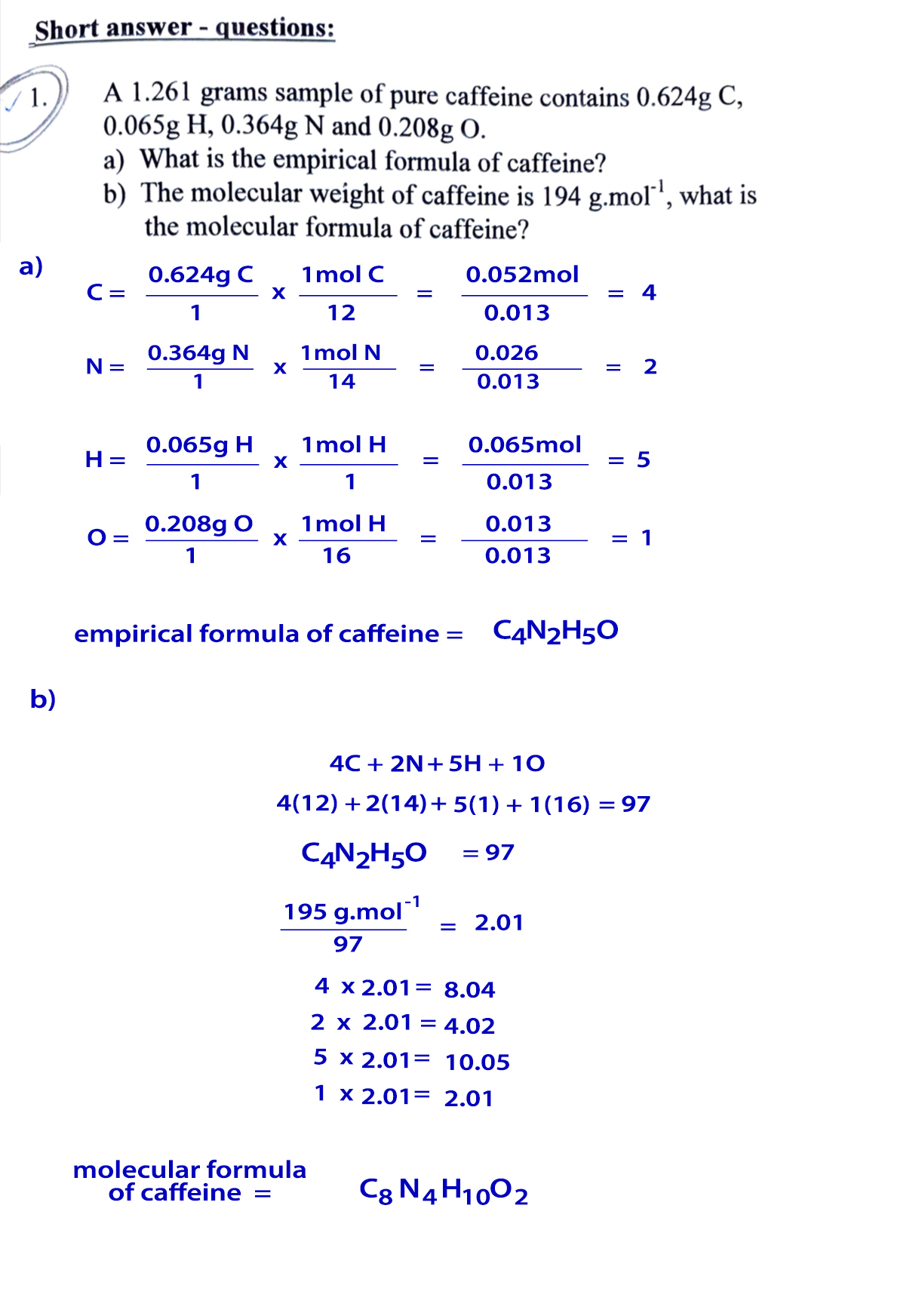
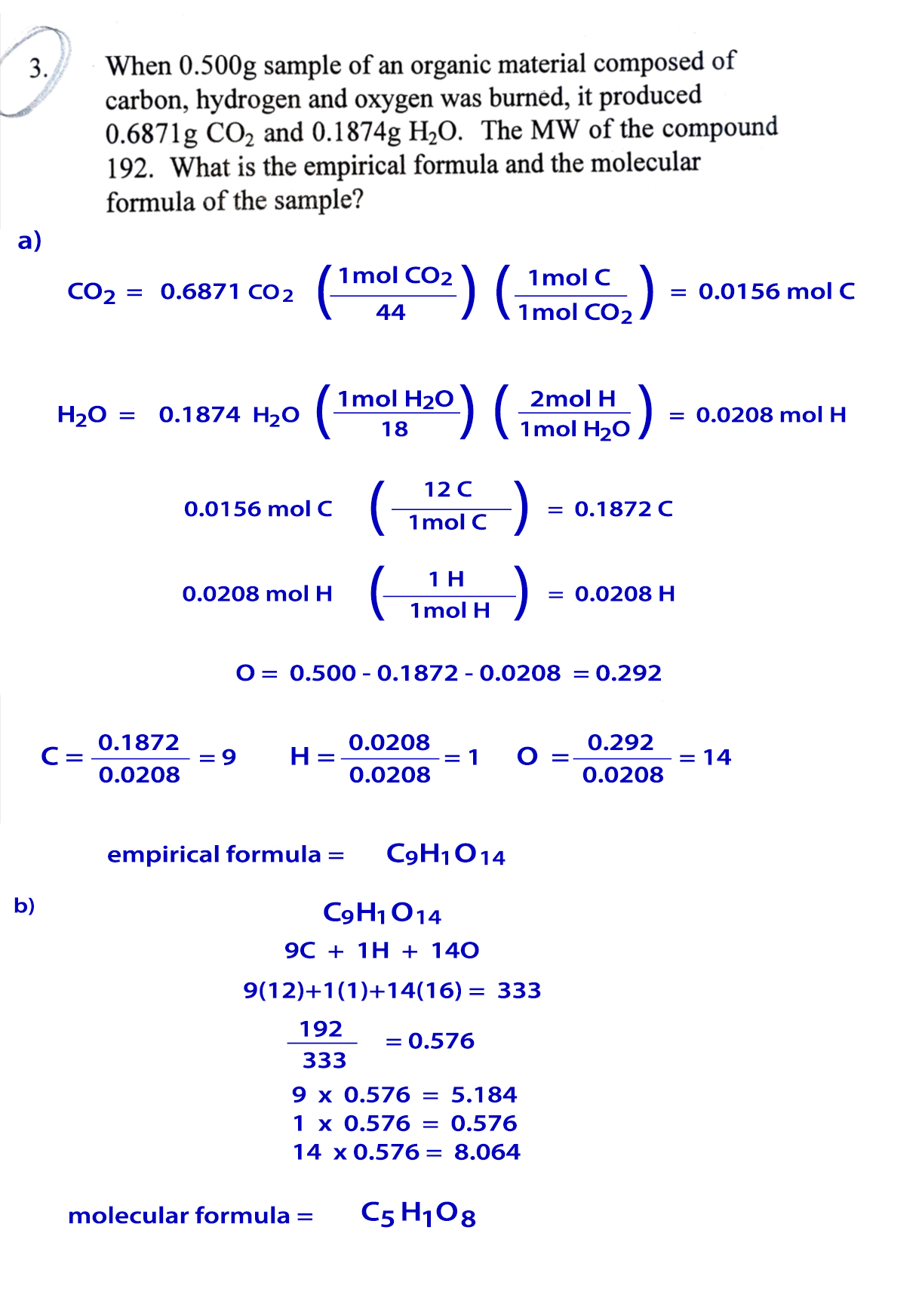
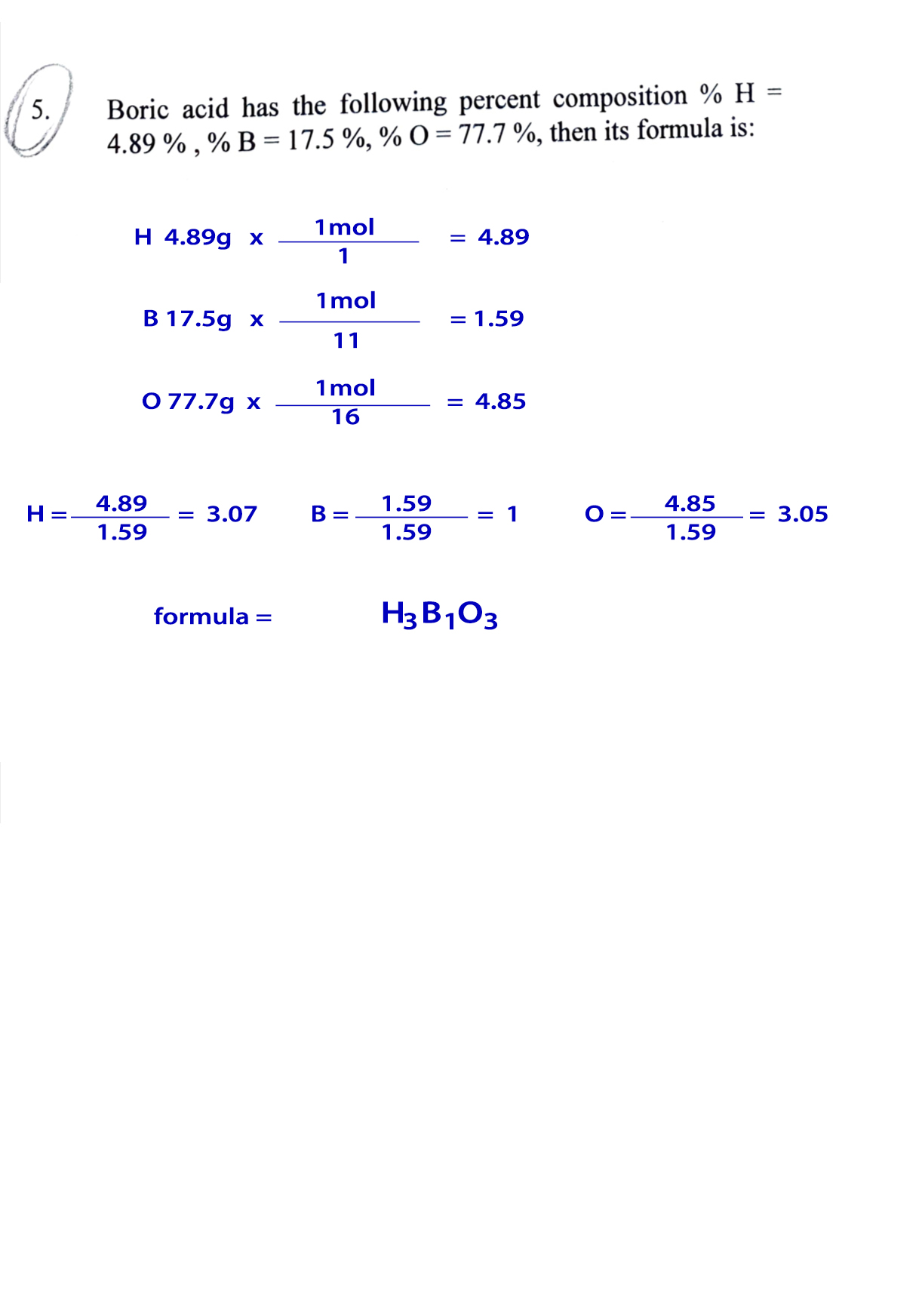
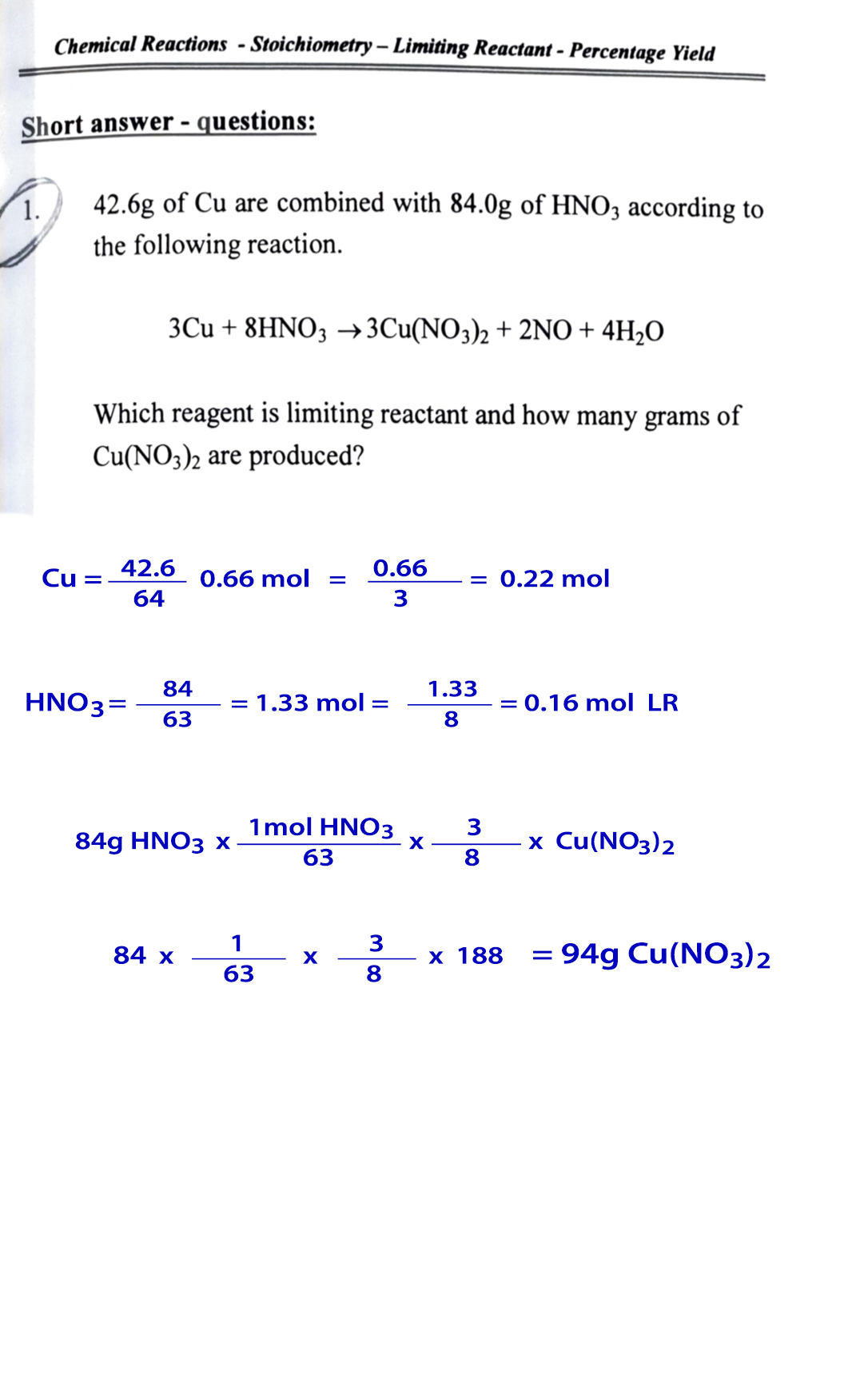
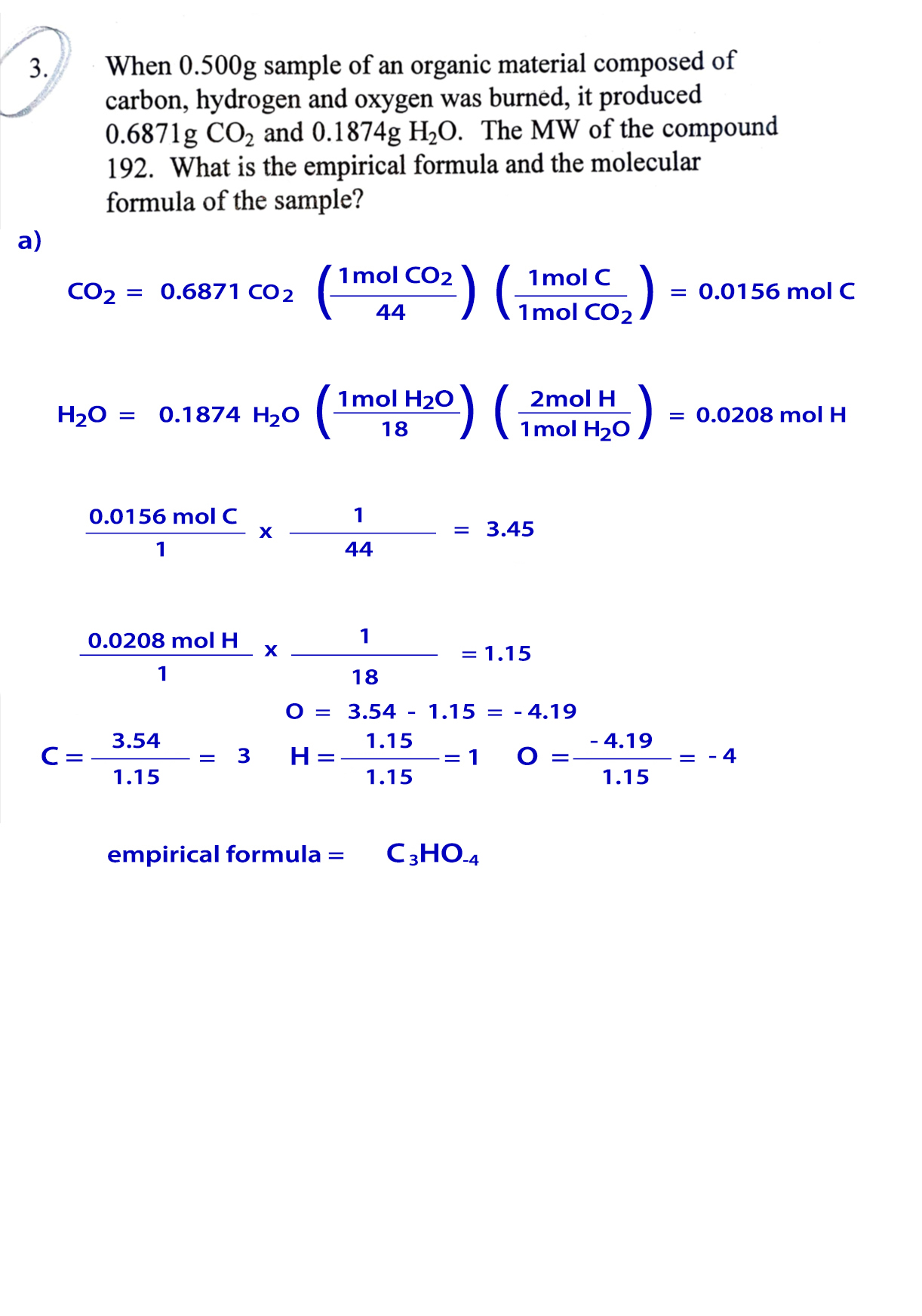
can someone PLEASE double check my stoichiometry answers? files are down below..
 Vocaloid:
multiple choice questions are correct a few nitpicks for the short answer questions. for the caffeine one, the correct order for chemical formulas is Carbon, Hydrogen, and then other elements in alphabetical order, so it would be C then H then N then O (the math/subscripts are all correct just switch the order to C4H5N2O and C8H10N4O2. it's probably not that big of a deal, you'll probably get credit either way. for the boric acid question, if the subscript is 1 we usually don't write the 1. H3BO3 would suffice. for the copper and nitric acid reaction there would be 3 sig figs not 2. needs another decimal place. there's something amiss about your calculations for P2-Q3. you correctly calculated the number of grams for C, H, and O, but in the next step you're trying to divide grams by moles H. you need to convert grams C, H, and O to moles C, H, and O first and then divide by the lowest molar quantity to get the ratios.
 theofficialkatie:
most of them look right to me, good job!
joancrawford:
Join our real-time social learning platform and learn together with your friends!
 DoltonCarlee:
what are y'all's options on S A T essays because honestly their not that bad
DoltonCarlee:
what are y'all's options on S A T essays because honestly their not that bad

 thereneelg:
Can someone give me a summary of article 231, The war guilt clause?? I need to explain what it is, but I can't find any shortened version of what it is and
thereneelg:
Can someone give me a summary of article 231, The war guilt clause?? I need to explain what it is, but I can't find any shortened version of what it is and
 luisaam2:
What should you do when the person you want to talk to the most is the one making
luisaam2:
What should you do when the person you want to talk to the most is the one making
 Breathless:
https://medal.tv/games/roblox/clips/nAYivIl6oXB6q9QAI?invite=cr-MSxCSk4sMTY4OTA4N
Breathless:
https://medal.tv/games/roblox/clips/nAYivIl6oXB6q9QAI?invite=cr-MSxCSk4sMTY4OTA4N
 Twaylor:
I'm not that good at law can someone fact check this without bias? June 29, 2026, the Supreme Court decided Chatrie v.
Twaylor:
I'm not that good at law can someone fact check this without bias? June 29, 2026, the Supreme Court decided Chatrie v.
 Demon25:
For a hoco proposal with a cheerleader and football player, what else should be a
Demon25:
For a hoco proposal with a cheerleader and football player, what else should be a
