
 5172319:
Which of the following is a significant way the physical geography of Sub-Saharan Africa has inhibited its economic growth? A. Countries that are members of OPEC have benefitted significantly from the viable petroleum industry B. Lack of stability and transparency in many African countries’ governments means they are unable to make profitable trade agreements with Europe C. The presence of attractions such as Mt. Kilimanjaro have encouraged African countries to base their economies entirely on tourism D. Features such as escarpments and cataracts found around the continent limit countries’ abilities to access, extract, and transport resources
5172319:
@oliver69
 toga:
toga:
The correct answer is D. The physical geography of Sub-Saharan Africa, including features such as escarpments and cataracts, has limited countries' abilities to access, extract, and transport resources, which has inhibited economic growth. Countries that are members of OPEC have benefitted significantly from the viable petroleum industry, but this is not a significant way in which physical geography has inhibited economic growth. Lack of stability and transparency in many African countries’ governments may make it difficult to make profitable trade agreements with Europe, but it is not a direct result of physical geography. Similarly, while attractions such as Mt. Kilimanjaro may contribute to the tourism industry, they do not form the basis of African countries' entire economies.
5172319:
thank you so much! could u help me out with a few others?
toga:
toga:
just post them
 toga:
toga:
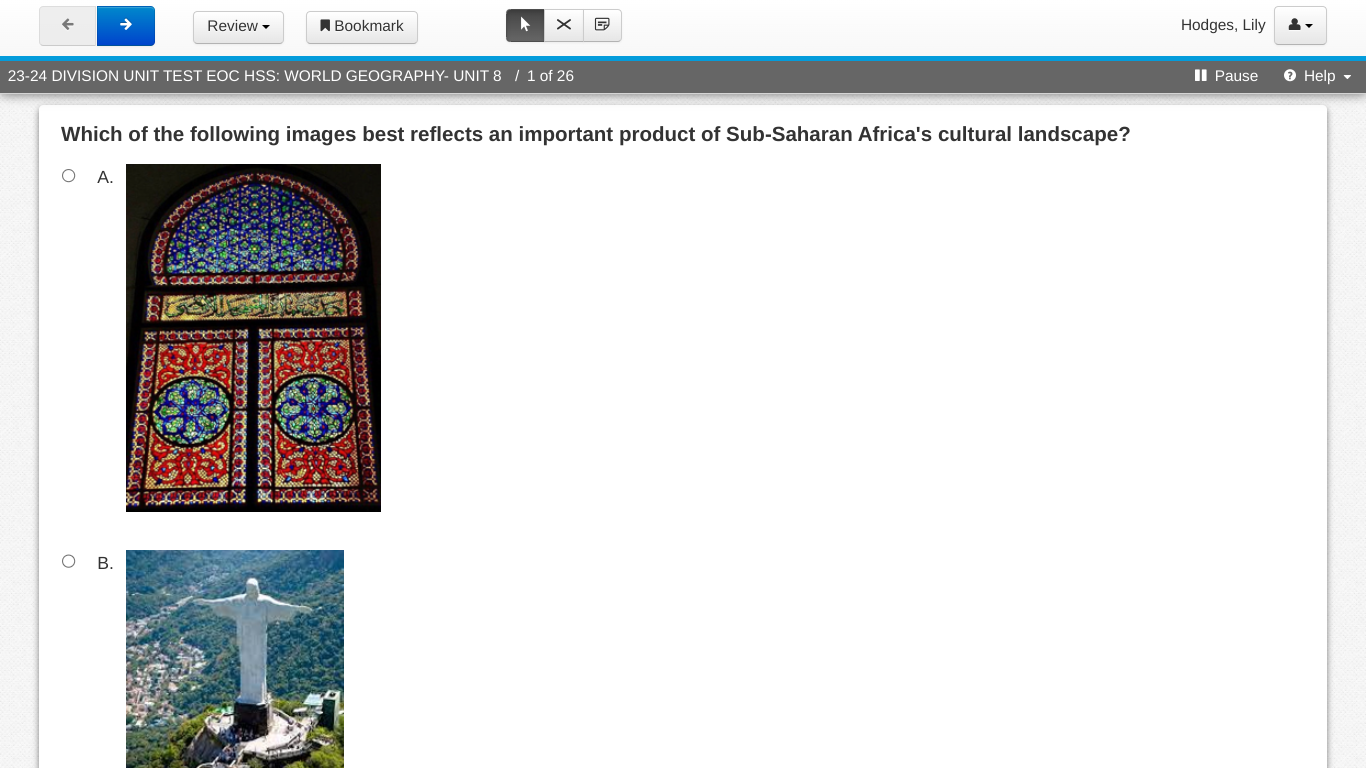
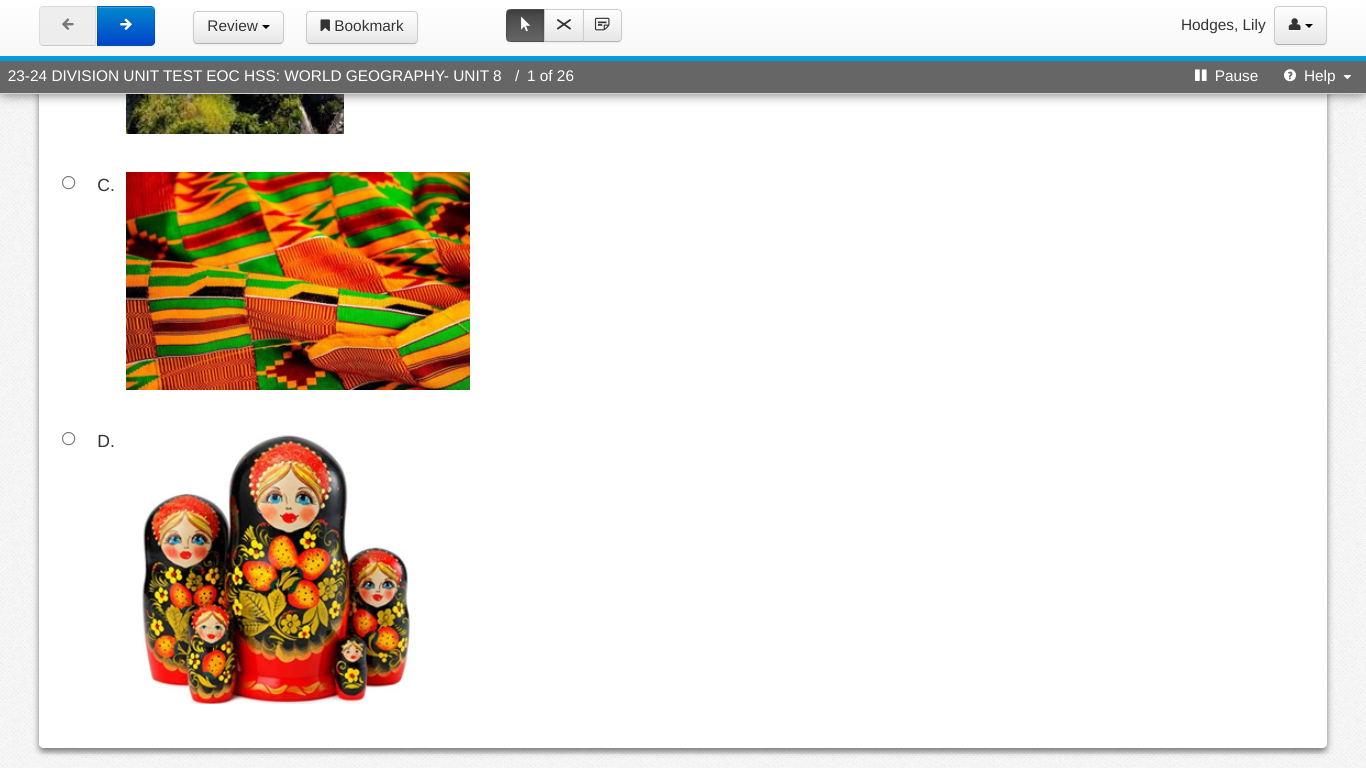
c
 toga:
toga:
 toga:
toga:
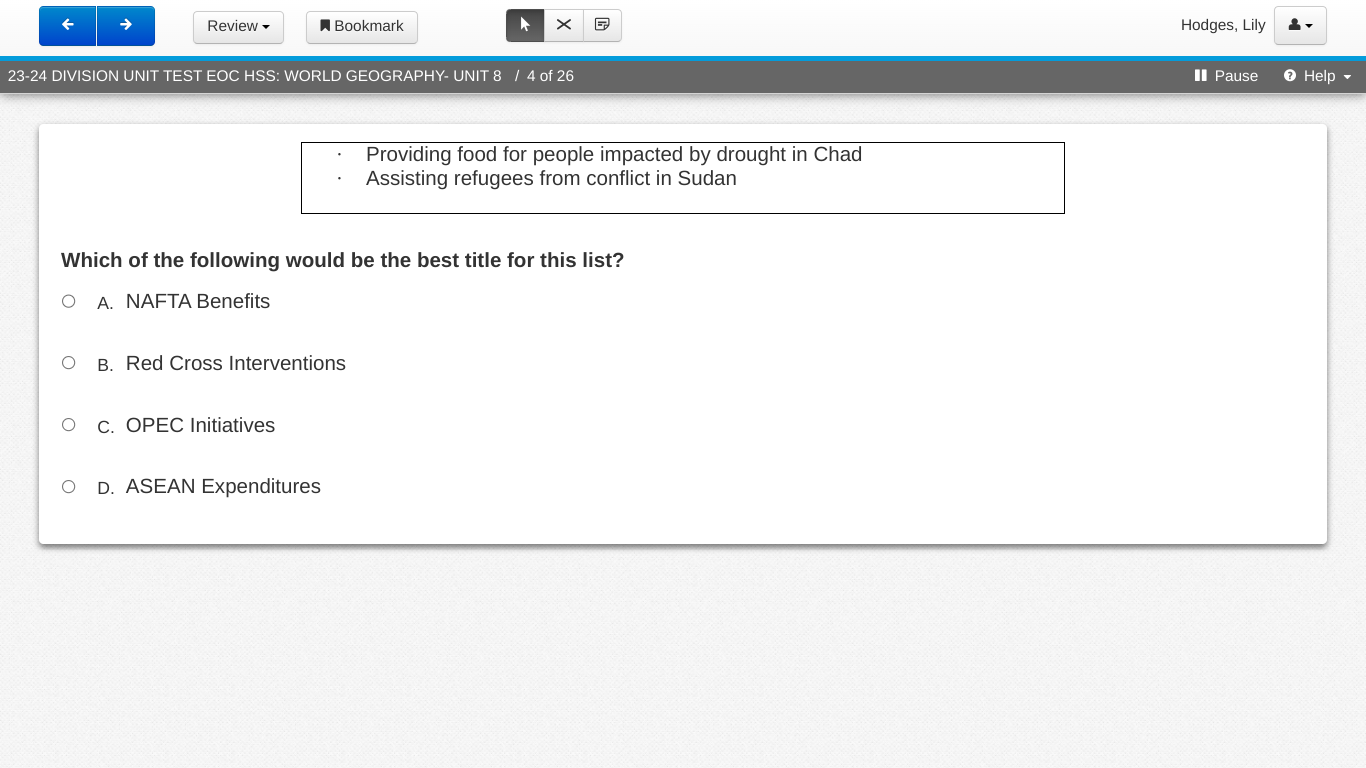
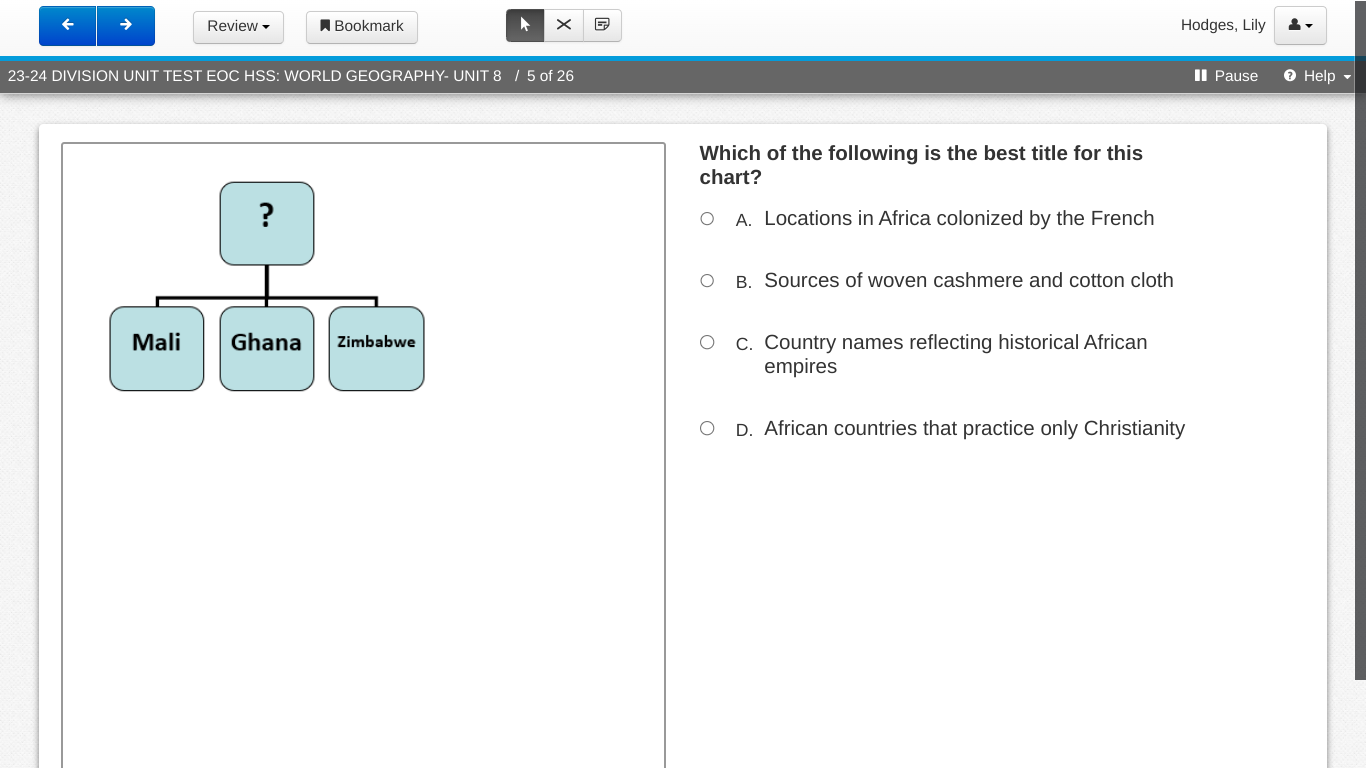
The best title for the chart would be "Locations in Africa colonized by the French".
 toga:
toga:
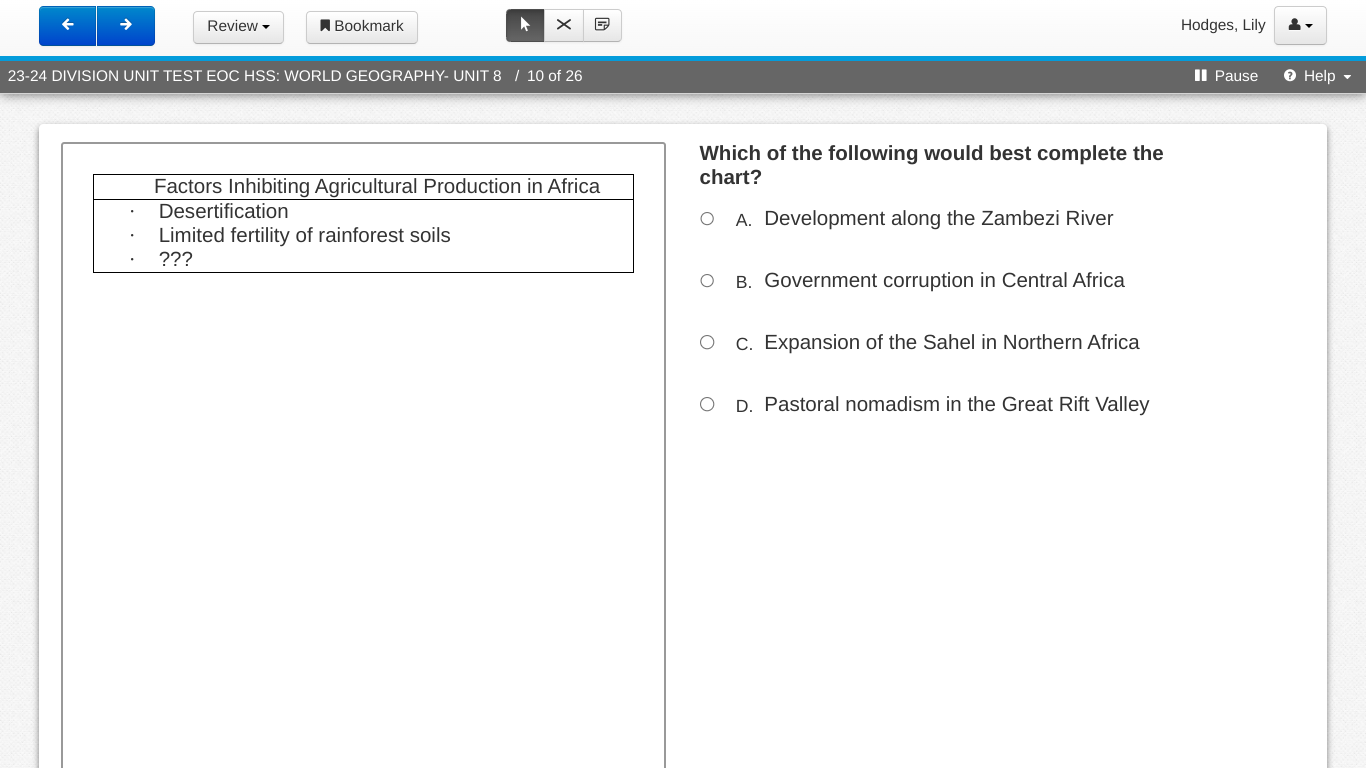
The best option to complete the chart would be C. Expansion of the Sahel in Northern Africa.
 toga:
toga:
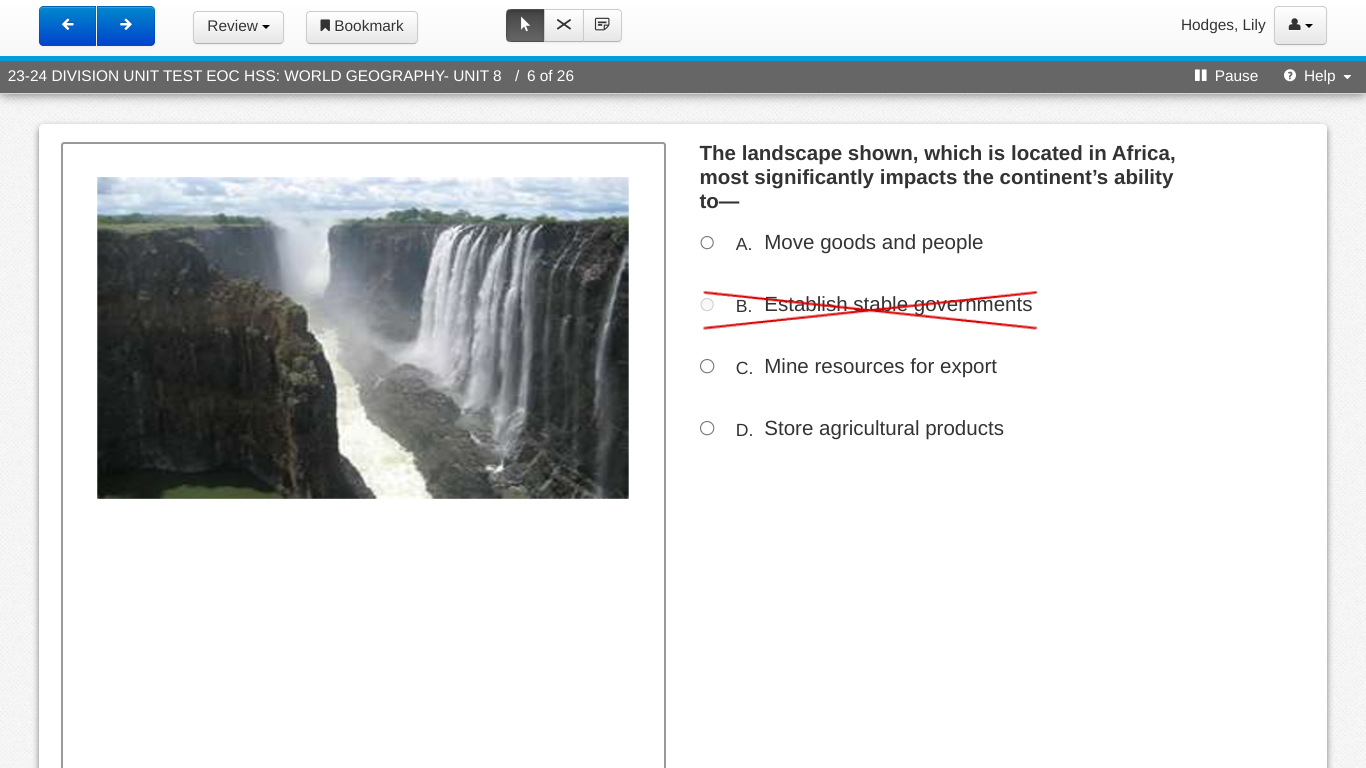
The landscape shown in Africa has a significant impact on the continent's ability to move goods and people. The diverse topography, including mountains, deserts, and rivers, affects the development of transportation infrastructure and can pose challenges for trade and movement of people. Additionally, the landscape can also affect the availability and accessibility of resources and can impact agricultural practices.
 toga:
toga:
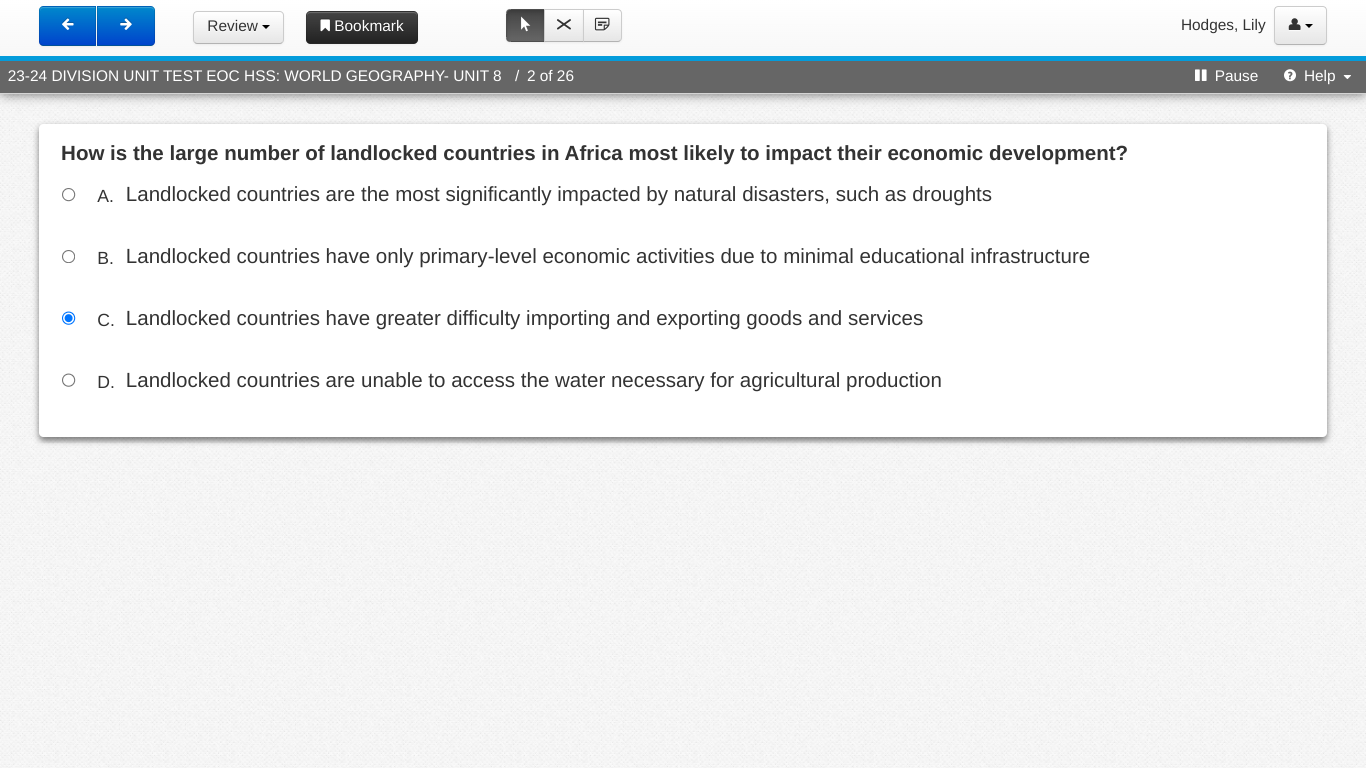
The large number of landlocked countries in Africa is most likely to impact their economic development by making it more difficult for them to import and export goods and services. Unlike countries with access to ports, landlocked countries have to rely on their neighbors to transport their goods to and from international markets, which can drive up transportation costs and make it harder to compete globally. This can lead to slower economic growth and development.
5172319:
so would this be B?
toga:
 toga:
toga:
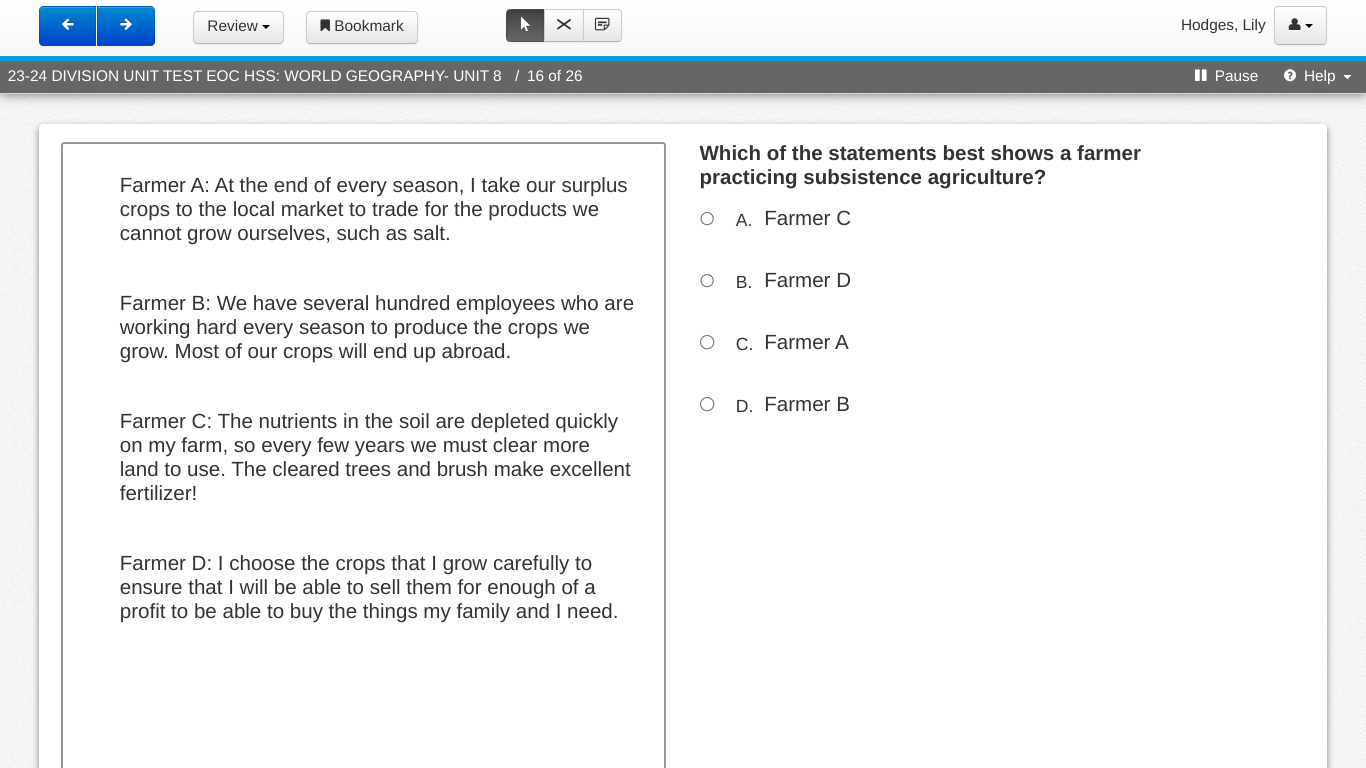
The statement that best shows a farmer practicing subsistence agriculture is Farmer A's statement: "At the end of every season, I take our surplus crops to the local market to trade for the products we cannot grow ourselves, such as salt."
toga:
sorry i am multitasking
 toga:
toga:
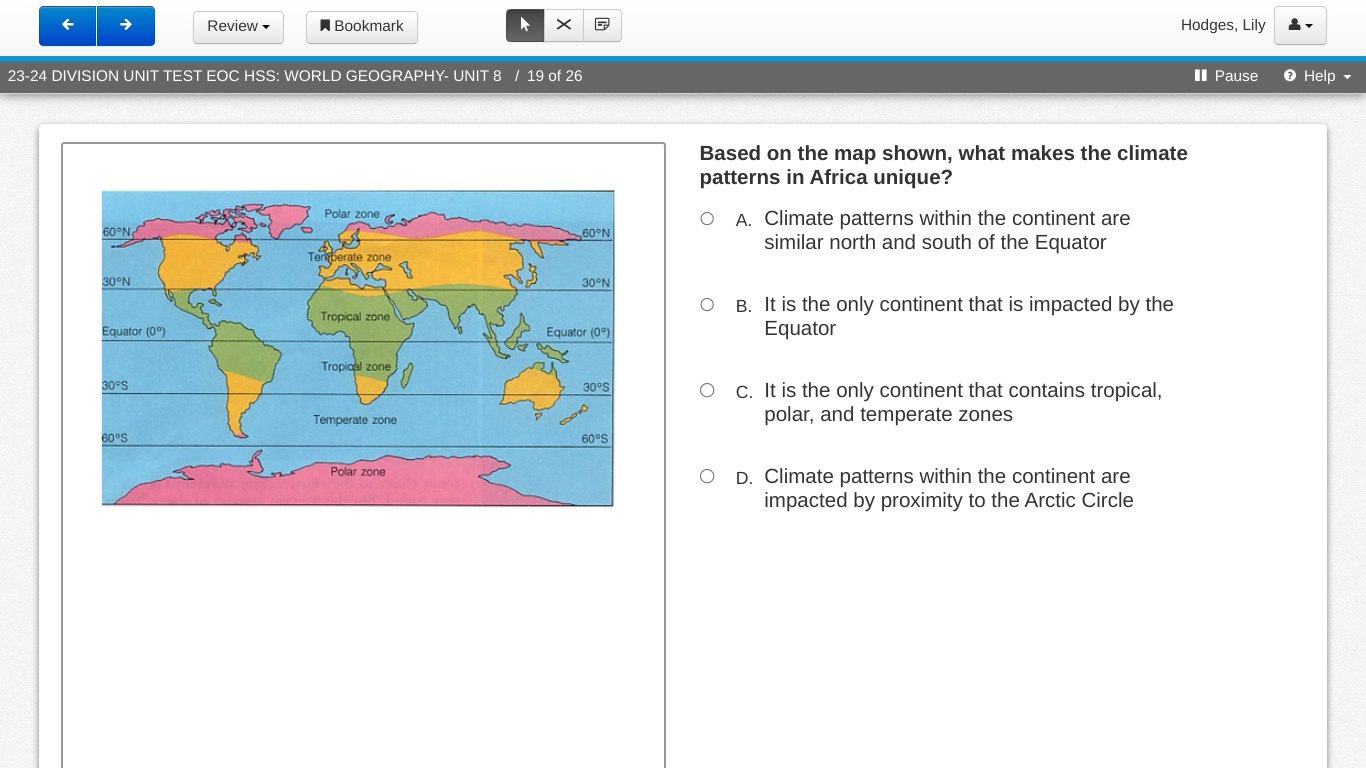
Based on the map shown, the unique feature of the climate patterns in Africa is that the continent contains tropical, polar, and temperate zones.
toga:
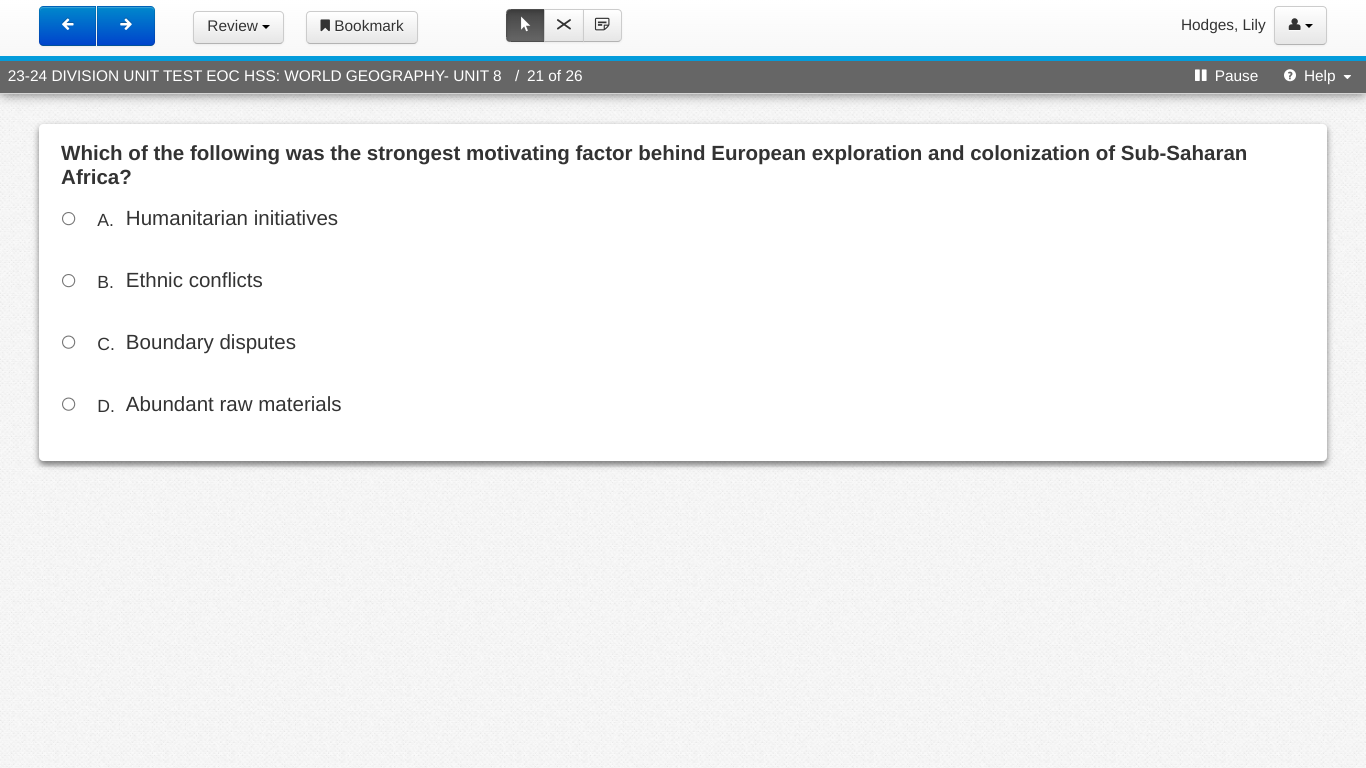
The strongest motivating factor behind European exploration and colonization of Sub-Saharan Africa was the abundance of raw materials. European powers sought to exploit the natural resources of Africa such as gold, diamonds, rubber, and other valuable commodities. This led to the establishment of colonial empires in Africa and the exploitation of its people for labor. While there were other factors such as humanitarian initiatives, ethnic conflicts, and boundary disputes, the desire for resources was the primary driving force behind European colonization of Sub-Saharan Africa.
toga:
are you taking a test
5172319:
nah this is js practice
 LILBOY:
idk
 Prettygirl099:
idk
Join our real-time social learning platform and learn together with your friends!
 DoltonCarlee:
what are y'all's options on S A T essays because honestly their not that bad
DoltonCarlee:
what are y'all's options on S A T essays because honestly their not that bad

 thereneelg:
Can someone give me a summary of article 231, The war guilt clause?? I need to explain what it is, but I can't find any shortened version of what it is and
thereneelg:
Can someone give me a summary of article 231, The war guilt clause?? I need to explain what it is, but I can't find any shortened version of what it is and
 luisaam2:
What should you do when the person you want to talk to the most is the one making
luisaam2:
What should you do when the person you want to talk to the most is the one making
 Breathless:
https://medal.tv/games/roblox/clips/nAYivIl6oXB6q9QAI?invite=cr-MSxCSk4sMTY4OTA4N
Breathless:
https://medal.tv/games/roblox/clips/nAYivIl6oXB6q9QAI?invite=cr-MSxCSk4sMTY4OTA4N
 Twaylor:
I'm not that good at law can someone fact check this without bias? June 29, 2026, the Supreme Court decided Chatrie v.
Twaylor:
I'm not that good at law can someone fact check this without bias? June 29, 2026, the Supreme Court decided Chatrie v.
 Demon25:
For a hoco proposal with a cheerleader and football player, what else should be a
Demon25:
For a hoco proposal with a cheerleader and football player, what else should be a
