
 Jasonisyours:
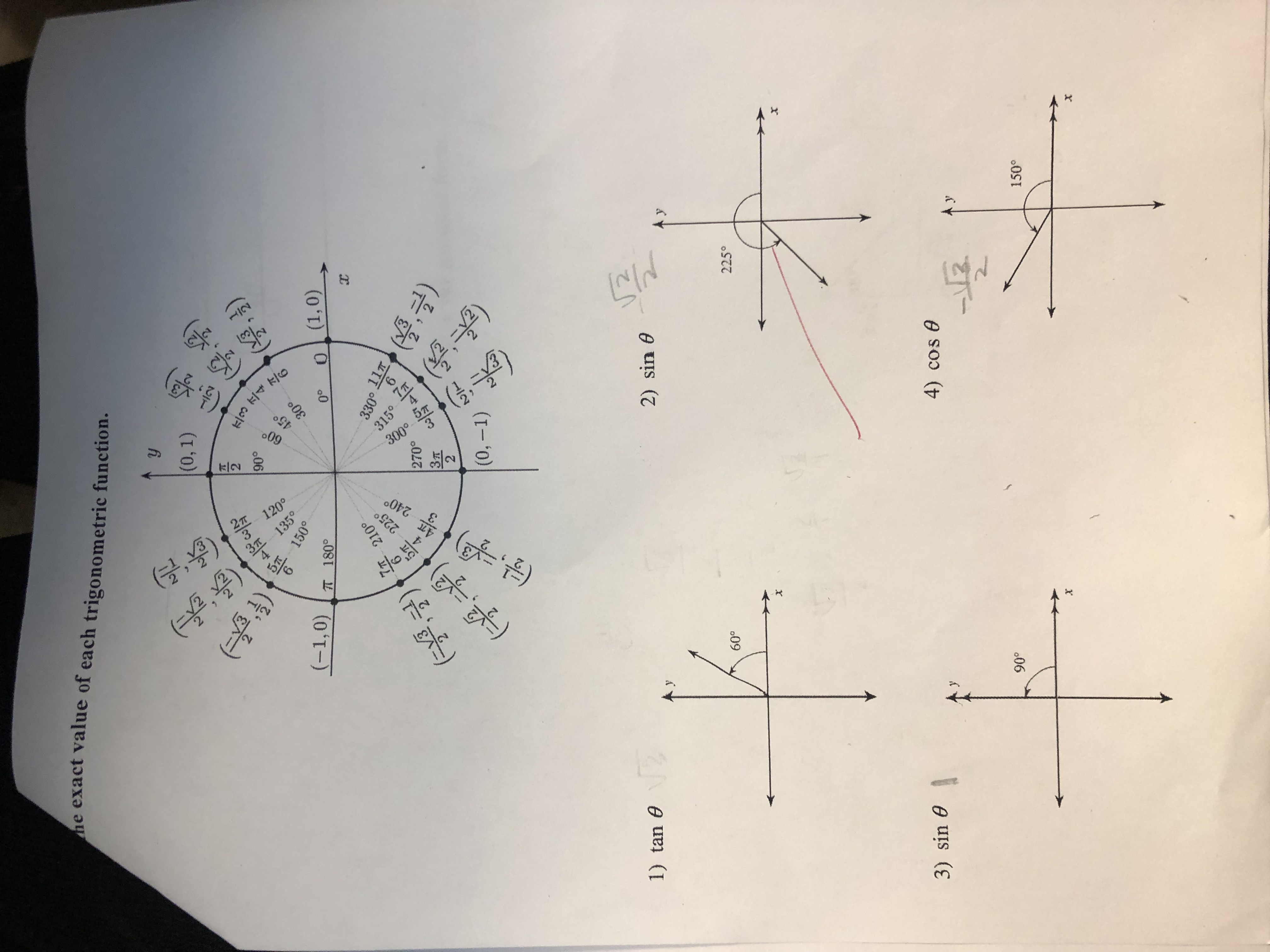
Y'all know how to solve this trigonometric function for #1
 Speedrunningban:
So I may be wrong but tan is sin over cos, so at that angle you see the coordinates representing (cos, sin), so all you do is take the y value, sin, and put it over the x value, cos, and there’s your answer
Speedrunningban:
If I were you I’d look up “how to find tan of coordinates on unit circle”
 RhianaB112:
Trigonometry Values Table: Angles (In Degrees) 0° 30° 45° 60° 90° 180° 270° Angles (In Radians) 0(rad) π/6(rad) π/4(rad) π/3(rad) π/2(rad) Π(rad) 3π/2(rad) sin 0 1/2 1/√2 √3/2 1 0 -1 cos 1 √3/2 1/√2 1/2 0 -1 0 tan 0 1/√3 1 √3 ∞ 0 ∞ cot ∞ √3 1 1/√3 0 ∞ 0 cosec ∞ 2 √2 2/√3 1 ∞ -1 sec 1 2/√3 √2 2 ∞ -1 ∞
RhianaB112:
Standard Angles in a Trigonometric Table: In a trigonometry table, the values of trigonometric ratios for the angles 0°, 30°, 45°, 60°, and 90° are widely utilised to answer trigonometry issues. These numbers have to do with calculating the lengths and angles of a right-angle triangle. In trigonometry, the standard angles are defined as 0°, 30°, 45°, 60°, and 90°. Important points on Trigonometric Table: Trigonometric values are calculated using the three major trigonometric ratios: Sine, Cosine, and Tangent. sin θ = Perpendicular / Hypotenuse cos θ = Base / Hypotenuse tan θ = perpendicular/ Base The standard angles in trigonometry are 0°, 30°, 45°, 60°, and 90° in a trigonometric table. These standard angle values of sine, cosecant, and tangent can also be used to determine the angle values of trigonometric functions cotangent, secant, and cosecant in a trigonometric table. Higher angle values of trigonometric functions, such as 120°, 390°, and so on, can be easily calculated using standard angle values from a trigonometry table. Conclusion: To obtain the value of any trigonometric ratio for a given angle, a trigonometric table is employed. The basic values of trig ratios for standard angles obtained in a trigonometry table can be used to compute trigonometric ratios of other angles. Engineering and architecture are two industries that use these values. Trigonometry can be used to, among other things, roof a house, make the roof inclined (in the case of single-family bungalows), and compute the height of a building’s roof. It is used by the navy and the aviation industry. It has a use in cartography (creation of maps). Satellite navigation systems also use trigonometry.
Speedrunningban:
Ok now yall just copy and pasting Random shi, might as well tell him to look it up at this point
 Luigi0210:
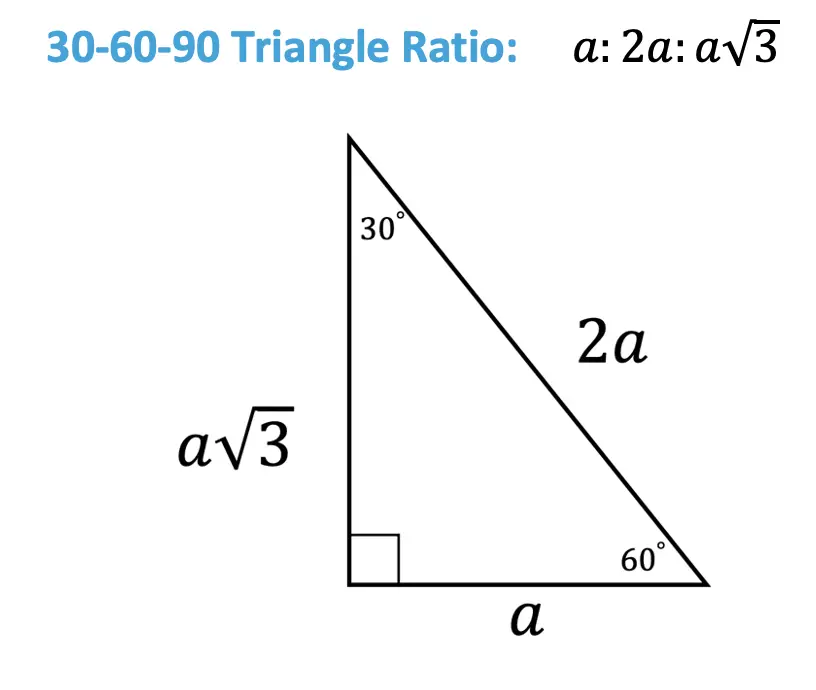
The important thing about trig is knowing your triangles. First thing you would need to do is draw your 60 triangle, so your ratios will be referenced from the 60 degrees.
 Luigi0210:
From there, you can apply the "tan" : \[\large tan(\theta) = \frac{opp}{adj} \] The opposite of 60 in this case would be \(\large \sqrt{3} \) The adjacent of 60 would be just 1 So it would be \[\large tan(60^o) = \frac{\sqrt{3}}{1} = \sqrt{3} \]
 surjithayer:
if you want to memorise the result then proceed as follows 1.write angles 0,30,45,60,90 2. for sin write below each angle 0,1,2,3,4from left to right. 3. for cos write below each angle in reverse order i.e, 4,3,2,1,0 4.divide each number by 4 e.g. ,0/4,1/4 ,...etc. 5. take the square root of each e.g,sqrt(0/4),sqrt (1/4) ,...etc.
Join our real-time social learning platform and learn together with your friends!
 DoltonCarlee:
what are y'all's options on S A T essays because honestly their not that bad
DoltonCarlee:
what are y'all's options on S A T essays because honestly their not that bad

 thereneelg:
Can someone give me a summary of article 231, The war guilt clause?? I need to explain what it is, but I can't find any shortened version of what it is and
thereneelg:
Can someone give me a summary of article 231, The war guilt clause?? I need to explain what it is, but I can't find any shortened version of what it is and
 luisaam2:
What should you do when the person you want to talk to the most is the one making
luisaam2:
What should you do when the person you want to talk to the most is the one making
 Breathless:
https://medal.tv/games/roblox/clips/nAYivIl6oXB6q9QAI?invite=cr-MSxCSk4sMTY4OTA4N
Breathless:
https://medal.tv/games/roblox/clips/nAYivIl6oXB6q9QAI?invite=cr-MSxCSk4sMTY4OTA4N
 Twaylor:
I'm not that good at law can someone fact check this without bias? June 29, 2026, the Supreme Court decided Chatrie v.
Twaylor:
I'm not that good at law can someone fact check this without bias? June 29, 2026, the Supreme Court decided Chatrie v.
 Demon25:
For a hoco proposal with a cheerleader and football player, what else should be a
Demon25:
For a hoco proposal with a cheerleader and football player, what else should be a
